产业升级

Search documents
出资比例最高70%!江苏出台政府投资基金新政
证券时报· 2026-03-07 11:52
Core Viewpoint - Jiangsu Province has introduced new policies for government investment funds to enhance their quality and effectiveness in attracting social investment, optimizing resource allocation, and promoting industrial upgrades [1]. Group 1: Investment Fund Classification and Support - Government investment funds are categorized into industrial investment funds and venture capital funds, focusing on supporting traditional industries and emerging industries respectively [1]. - The policies encourage venture capital funds to adopt a mother-child fund investment model, allowing for increased government contribution and management fee extraction for early-stage, high-risk investments [1]. Group 2: Management and Oversight Mechanisms - A comprehensive management mechanism for government investment funds will be established, with the Jiangsu Development and Reform Commission and the Finance Department overseeing fund allocation and management [2]. - Local governments are tasked with managing funds based on regional economic conditions, fiscal capacity, and existing fund situations, ensuring a balanced approach to fund distribution [2]. Group 3: Optimization of Fund Development Environment - The new regulations aim to eliminate regional barriers, allowing for better market resource allocation and encouraging the participation of high-quality fund managers [2]. - The policies propose to set scientific standards for reinvestment recognition and to potentially lower or eliminate reinvestment ratios [2]. Group 4: Exit Management and Structural Improvements - The policies emphasize strengthening exit management for funds, promoting the establishment of platforms for fund share transfer and valuation [3]. - The introduction of merger funds is encouraged to facilitate industrial upgrades and broaden exit channels, reflecting a shift from scale expansion to quality prioritization in fund management [3].

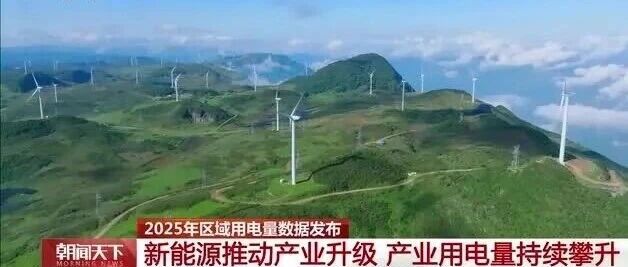
媒体报道︱2025年区域用电量数据 新能源发展推动产业升级
国家能源局· 2026-03-07 07:34
Key Points - The National Energy Administration released the regional electricity consumption data for 2025, indicating a significant impact of energy on industrial productivity layout due to deepening regional division of labor [2] - The rapid development of the new energy industry is driving profound adjustments in industrial regional layout, with accelerated construction of new energy projects in the western region [2] - By 2025, the electricity consumption of the electrical manufacturing, non-metallic, and non-ferrous industries in the western region will account for 21.9%, 39%, and 69.7% of their respective industry totals, representing increases of 13.6, 6, and 6.7 percentage points from 2020 [2] - The high-end equipment manufacturing industry in the central and western regions is developing rapidly, with electricity consumption expected to grow by 120% and 56% respectively by 2025, accounting for 17.9% and 14.3% of their industry totals, which is an increase of 2.4 and 4.2 percentage points from 2020 [2] - The central region is accelerating the development of the information industry and instrumentation sector, with electricity consumption projected to grow by 101.8% and 124.4% respectively by 2025, exceeding the national average by 32.4 and 94.6 percentage points, and accounting for 16.6% and 14.7% of their industry totals, which is an increase of 2.7 and 5.8 percentage points from 2020 [2]
对话李东生:想公开讲一些有建设性的真话
经济观察报· 2026-03-07 04:01
Core Viewpoint - The conversation emphasizes the need for the domestic business system to reduce unnecessary consumption and allow the market to function effectively [2] Group 1: Industry Challenges - In the past five years, nearly all new capacity in the photovoltaic industry has involved local capital participation [1][30] - The implementation of national subsidies for bulk consumer goods has led to local governments requiring companies to establish independent legal entities to qualify for these subsidies, resulting in TCL adding approximately 540 new legal entities [2][5][42] - The over-intervention of local funds in the market has distorted resource allocation, with local investment in photovoltaic projects often exceeding 50%, and in some cases, reaching 80% [7][30] Group 2: Financing Issues - The financing channels for large technology manufacturing are not smooth, with semiconductor display production lines requiring investments between 15 billion to 40 billion yuan, and financial institutions demanding that companies provide at least 40% of the total investment as their own capital [9][15] - The refinancing process is lengthy and complicated, making it difficult for companies to secure necessary funds for project investments [18][19] Group 3: Market Dynamics - The decline in television sales in China, with 32.9 million units sold in 2025, is attributed to a lack of attractive content rather than hardware issues, contrasting with the 49.9 million units sold in the U.S. [10][50] - The trade surplus of over 1.2 trillion USD in the previous year suggests a need for increased imports to stimulate domestic market demand [11][51] Group 4: Recommendations for Improvement - Local funds should have clear exit mechanisms and limited liability to prevent excessive market interference [8][39] - The government should consider special policies to support restructuring in the photovoltaic industry, including debt extension and waiving penalties for overdue loans [36][38] - To enhance service consumption, there should be a focus on differentiated service products that cater to various consumer needs [47][50] Group 5: Globalization and Strategic Partnerships - TCL's global revenue reached 356 billion yuan, with 170.1 billion yuan coming from overseas, indicating the importance of establishing local supply chains [62] - The joint venture with Sony aims to leverage both companies' strengths to enhance competitiveness in the television market [64][66]




两会|如何破解金融服务实体经济结构性矛盾?
券商中国· 2026-03-07 03:14
Core Viewpoint - The article discusses the need for financial services to better support the real economy, particularly focusing on how to direct funds towards innovative small and medium-sized enterprises (SMEs) and traditional businesses in need of transformation, addressing the imbalance in funding distribution [2]. Group 1: Financial Services and SMEs - There is a significant challenge in directing funds to innovative SMEs, which often struggle to access financing compared to larger, established companies [2]. - Suggestions include broadening private equity exit channels and innovating the investment-loan linkage mechanism to facilitate funding for key areas like technological innovation and industrial upgrades [2]. Group 2: Private Equity Fund Challenges - Private equity funds face difficulties in their investment cycle due to a slowdown in traditional exit channels like IPOs, leading to challenges in transferring and exiting investments [3]. - A proposal is made to establish a national market for private equity fund share trading in Hainan to improve transaction efficiency and transparency [3]. Group 3: Investment-Loan Linkage Mechanism - The current banking credit system is not well-suited for the characteristics of tech enterprises, which often have high upfront costs and long profit cycles [5]. - Recommendations include enhancing the investment-loan linkage mechanism to better align financial resources with technological innovation, and establishing standardized cooperation platforms between banks and private equity managers [5][6]. Group 4: Comprehensive Financial Service System - Strengthening direct financing channels in capital markets is essential to address structural contradictions in financial services [6]. - Suggestions include improving policies for merger and acquisition (M&A) funds and encouraging innovative credit products from financial institutions to support SMEs [6].

【宏观策略】稳健、务实,重视涨价与业绩线索——2026年3月资产配置报告
华宝财富魔方· 2026-03-06 08:40
Macro Overview - The external uncertainty remains high, with the US labor market showing short-term strength and inflation continuing to moderate [4] - In January, the US non-farm payroll increased by 130,000, significantly exceeding the expected 65,000, but this should not be interpreted as a robust labor market recovery [4] - January inflation in the US was mild and below expectations, indicating that the impact of tariffs on inflation may be nearing its peak, although the US-Iran conflict could lead to rising oil prices, adding uncertainty to the inflation outlook [4] - The actual reduction in tariffs is limited, and policy uncertainty is rising, with the Trump administration's new 15% tax rate showing minimal decline compared to previous rates [4] Domestic Economic Indicators - Consumer willingness to spend during the Spring Festival is strong, but overall consumption power still requires policy support [4] - The longest Spring Festival holiday in history has led to a significant increase in travel and tourism revenue, indicating strong consumer sentiment [4] - However, per capita consumption expenditure remains stable, and the service sector PMI is weaker than in previous years, suggesting that consumption power still needs policy backing [4] Policy and Economic Growth - The government maintains a focus on high-quality development, with fiscal spending remaining necessary [4] - The economic growth target for the upcoming Two Sessions is set at 4.6% to 5%, reflecting a commitment to high-quality economic development [4] - Fiscal policy is expected to maintain a 4% growth rate, with a focus on technology innovation and industrial upgrades, while also increasing support for livelihood and employment sectors [4] A-share Strategy - The strategy for A-shares is to remain cautious, with a focus on large-cap and cyclical stocks [4] - The domestic economic fundamentals show a decline in investment and consumption, while price indicators are stabilizing [4] - The A-share trading volume has rebounded, but the profit-making effect remains weak [4] - The external environment is influenced by geopolitical risks from Trump, but the impact on the domestic market is limited [4] Asset Allocation Views - The current asset allocation for A-shares, Hong Kong stocks, interest rate bonds, credit bonds, and US stocks is neutral [6] - The allocation for convertible bonds is relatively cautious, while the outlook for US bonds and Japanese stocks is neutral to optimistic [6] - The allocation for gold remains neutral, while oil is viewed with caution [6]

两会|专访全国人大代表、北京证监局原局长贾文勤:完善制度供给,引导资金流向科创领域
券商中国· 2026-03-06 06:20
Core Viewpoint - The article emphasizes the need for enhancing financial services throughout the entire lifecycle of technology innovation, particularly for technology-driven enterprises in key core technology sectors, through mechanisms like "green channels" for financing and mergers and acquisitions [1]. Group 1: Capital Market Support for Innovation - The capital market has unique advantages in sharing innovation risks and promoting the formation of innovation capital, with recent reforms aimed at optimizing systems and product supply to support new productive forces and industrial upgrades [2]. - The multi-tiered market system is being expanded to cover technology innovation more effectively, with reforms in the Sci-Tech Innovation Board, Growth Enterprise Market, and the steady development of the Beijing Stock Exchange [2]. - The merger and acquisition system has been enhanced to better support the development of new productive forces, with significant increases in the efficiency and convenience of M&A activities, particularly in the hard technology sector [3]. - Private equity and venture capital funds are increasingly directed towards strategic emerging industries, with a notable impact on the Sci-Tech Innovation Board and the Growth Enterprise Market [3]. - The development of Sci-Tech bonds has been supported, with over 2 trillion yuan raised for sectors like semiconductors, artificial intelligence, and high-end manufacturing [3]. Group 2: Regulatory Framework and Market Stability - The health of the capital market relies on a fair market order and strict law enforcement, with the China Securities Regulatory Commission (CSRC) maintaining a high-pressure stance on regulatory enforcement [6]. - The CSRC has taken significant actions against financial fraud and market manipulation, with over 2,500 administrative penalties issued during the 14th Five-Year Plan period, totaling more than 440 billion yuan in fines [6]. - In 2025, the CSRC handled 701 cases of securities and futures violations, with fines amounting to 154.7 billion yuan, reinforcing the foundation for stable and sustainable high-quality market development [6]. Group 3: Enhancing Quality of Listed Companies - The CSRC has implemented measures to promote the value growth and governance of listed companies, including enhancing operational standards and encouraging mergers and acquisitions [7]. - Specific recommendations for improving the quality of listed companies include enhancing market value management, promoting mergers and acquisitions towards new productive forces, and encouraging long-term capital investment [8]. - A comprehensive mechanism for preventing and addressing financial fraud is being established, alongside strict delisting regulations to ensure an orderly market ecosystem [8].

2026年两会政策-哪些积极信号
2026-03-06 02:02
Summary of Key Points from Conference Call Records Industry or Company Involved - The records primarily discuss the macroeconomic policies and industry outlook for 2026, focusing on various sectors including real estate, aviation, commercial aerospace, and consumer spending. Core Points and Arguments Macroeconomic Policy Adjustments - The GDP growth target for 2026 has been adjusted to 4.5%-5%, aligning with the "14th Five-Year Plan" average growth requirement of 4.17% [3][4] - The focus of policies has shifted from high growth to structural adjustments and quality improvements, with a fiscal deficit rate maintained at 4% [1][4] Real Estate Sector Insights - The "de-stocking" policy has re-emerged after 10 years, indicating a shift in focus from supply-side to demand-side measures [1][8] - Investment growth in the real estate sector needs to stabilize above 4% to support the overall economy [1][8] - The government is emphasizing support for multi-child families and adjustments to public housing loan rates, reflecting a demand-side policy shift [8] Aviation Industry Trends - The aviation sector is entering a phase characterized by low supply growth and market-driven pricing, with fleet growth expected to remain around 3% [1][20] - High passenger load factors are expected to drive ticket prices and profitability upward [20] - The demand for air travel is anticipated to be supported by family travel and visa-free entry policies [21] Commercial Aerospace Developments - The commercial aerospace sector is defined as a new pillar industry, with rocket launches expected to increase to 120-140 in 2026 and satellite numbers exceeding 600 [1][29] - The upcoming IPOs of private rocket companies are seen as a significant catalyst for the industry [1][29] Consumer Spending and Economic Recovery - Consumer spending is a major focus, with plans to enhance income and social security measures, including a 250 billion yuan long-term bond to support trade-in programs [12][14] - The government aims to stimulate service consumption and improve consumer confidence through various initiatives [12][14] Financial and Monetary Policy Outlook - Fiscal policy is expected to maintain a steady but restrained approach, with a focus on supporting domestic demand and social welfare [4][5] - Monetary policy remains accommodative, but short-term interest rate cuts are not anticipated, with structural support for demand expansion prioritized [5][6] Debt Market Implications - The government's fiscal and monetary policies are expected to have a protective effect on the bond market, although short-term market reactions may be muted due to previous expectations of rate cuts not being met [6][7] Key Observations for the Real Estate Market - The reintroduction of "de-stocking" in policy discussions signals potential for further policy support in urban renewal and housing stability [8][9] - The focus on "high-quality development" in the real estate sector is expected to reshape market expectations and investment strategies [9] Investment Opportunities and Risks - The records suggest a cautious but optimistic outlook for sectors like aviation and commercial aerospace, with specific companies highlighted for potential investment [11][30] - The real estate sector is advised to focus on companies that can adapt to the changing policy landscape and consumer demands [10][26] Other Important but Possibly Overlooked Content - The emphasis on "反内卷" (anti-involution) in various sectors indicates a broader regulatory focus on ensuring fair competition and preventing excessive price competition [3][16] - The agricultural sector is gaining importance, with specific targets for grain production and a focus on food security, reflecting a shift in policy priorities [35][36] This summary encapsulates the key insights and implications from the conference call records, providing a comprehensive overview of the macroeconomic landscape and sector-specific developments for 2026.
未来二十年,我们还能靠什么改变命运?
新消费智库· 2026-03-05 13:48
Core Viewpoint - The era of storytelling in business is over, and a return to practical business thinking is necessary as the market faces challenges and uncertainties [2]. Group 1: Potential New Opportunities - The aging population presents a significant market opportunity, particularly for "new elderly" who are tech-savvy and under-served by current products and services [4]. - There is a need for industrial and talent upgrades as traditional manufacturers seek to transition from B2B to B2C, highlighting opportunities in transformation services and vocational training [5]. - Consumption upgrades are emerging in rural and lower-tier cities, where brands are beginning to penetrate, creating opportunities for affordable brands similar to "10 yuan stores" [7]. - The "Giant Country Effect" will re-emerge, where brands that can meet national demand and achieve scale will experience substantial growth [8]. - The integration of artificial intelligence into industries is crucial for efficiency improvements, with a focus on practical applications rather than theoretical concepts [10]. - The concept of industrial cities is gaining traction, leading to the emergence of specialized cities that attract tech entrepreneurs to solve local problems [12]. - Public companies are increasingly turning to industrial venture capital as a strategy to find growth, leading to the capitalization of hidden champions in various sectors [13]. Group 2: Addressing Anxiety in Business - The current market anxiety stems from the realization that continuous growth is not the norm, and businesses must adapt to changing conditions [17]. - Companies should make decisive choices about their operations, focusing on profitability rather than merely sustaining unprofitable ventures [25]. - Engaging with others and expanding perspectives can alleviate anxiety and foster collaboration [27]. - Mastering a unique skill can provide stability in uncertain times, as truly unique talents remain scarce [30]. - A return to fundamental business practices, emphasizing management, organization, and marketing, is essential for sustainable growth [32].

李东生:我想说的话
经济观察报· 2026-03-05 12:58
Core Viewpoint - The article emphasizes the need for a more efficient business system in China that minimizes unnecessary consumption and allows the market to function effectively [1] Group 1: Company Overview - TCL, founded by Li Dongsheng, has evolved from a consumer electronics brand to a global technology conglomerate with total revenue reaching 356 billion yuan, driven by its core businesses in semiconductor displays and renewable energy [2] - The semiconductor display business is projected to exceed 100 billion yuan in revenue with a net profit of over 8 billion yuan by 2025, while the renewable energy sector is currently facing supply-demand imbalances [2][4] Group 2: Challenges Faced - The first challenge is the distortion in policy execution, where local governments impose unnecessary requirements for subsidies, leading TCL to establish approximately 540 new legal entities, increasing operational costs without adding social value [3][25] - The second challenge involves excessive local capital intervention in the market, with local funds often holding a significant stake in new photovoltaic projects, even when market conditions suggest a halt in expansion [4][16] - The third challenge is the difficulty in securing financing for large-scale semiconductor manufacturing projects, where financial institutions require a minimum of 40% equity from companies, complicating the funding process [6][9] Group 3: Market Dynamics - In 2025, China's television sales are expected to decline by 8.5% to 32.895 million units, contrasting with the U.S. market, which is projected to sell 49.9 million units, highlighting a disparity in content service attractiveness [7][29] - The article suggests that enhancing content services and promoting differentiated consumption could stimulate domestic demand, which is currently lagging behind GDP growth [28][30] Group 4: Recommendations for Improvement - Li Dongsheng proposes that local funds should have clear exit mechanisms and limited liability to prevent excessive market interference [5][22] - He advocates for a more streamlined financing process for heavy asset industries, suggesting that regulatory bodies should create special channels for these sectors to facilitate easier access to capital [9][10] - The article also emphasizes the importance of mergers and acquisitions to clear excess capacity in the renewable energy sector, suggesting that a conducive environment for such activities should be established [13][14] Group 5: Globalization and Supply Chain - TCL's global revenue reached 170.1 billion yuan, with a significant portion generated from overseas operations, indicating the importance of establishing local supply chains to enhance competitiveness [36] - The company aims to shift from merely exporting products to building supply chain capabilities abroad, which is essential for sustainable growth in the global market [35][36] Group 6: Future Outlook - The article discusses the potential for TCL's joint venture with Sony, which aims to leverage both companies' strengths to enhance competitiveness in the television market [38][40] - It highlights the necessity for local governments to support industries like semiconductors while ensuring that their involvement does not distort market dynamics [22][25]

百亿央企母基金招GP
FOFWEEKLY· 2026-03-05 09:36
Group 1 - The core viewpoint of the article is the establishment of the Chengtong Science and Technology Innovation Investment Fund (Jiangsu) Co., Ltd., which aims to promote technological innovation, industrial upgrading, and the cultivation of new productive forces through long-term, patient, and strategic capital [1] - The Chengtong Science and Technology Innovation Fund was established in December 2025 with a total scale of 10 billion yuan and a duration of 15 years [1] - The fund primarily invests in strategic emerging industries such as new materials, high-end equipment manufacturing, new generation information technology, new energy, life health, and nuclear-related fields, particularly focusing on key industries supported by Jiangsu Province [1] Group 2 - The fund is currently seeking to publicly select fund management institutions for its nuclear-related industry sub-fund, which must be registered within Jiangsu Province and have a scale of no less than 500 million yuan [1] - Investments for the sub-fund will focus on areas such as nuclear technology applications, electricity (including new types of electricity), and high-end equipment manufacturing, among others [1] - The sub-fund must comply with relevant laws, regulations, and self-regulatory rules, and is required to register its products with the Asset Management Association of China [1]