以销定产

Search documents
江荆消防为京东工业部署专属生产线,一场制造业与平台的双向奔赴
Sou Hu Cai Jing· 2025-12-05 11:45
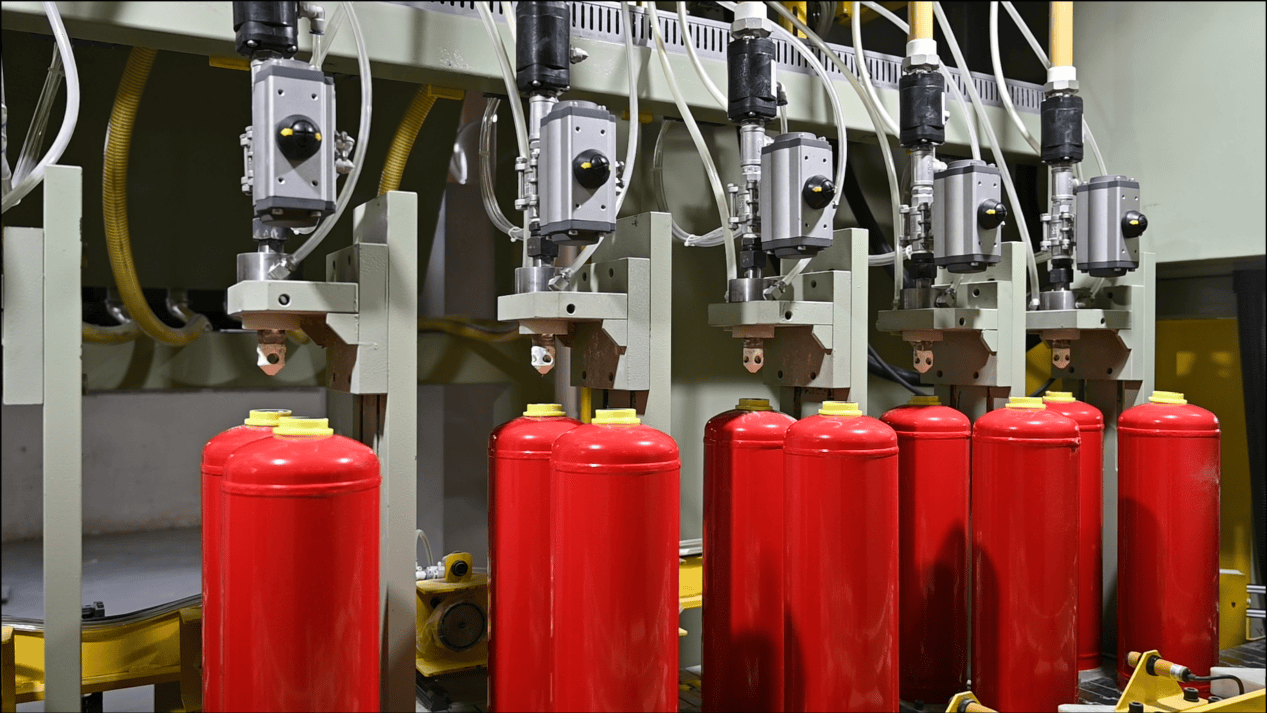
Core Insights - JD Group is focusing on supply chain innovation, avoiding unrelated business ventures, as indicated by its founder Liu Qiangdong ahead of the 618 shopping festival [1] - JD Industrial has initiated a proprietary brand cooperation strategy with leading manufacturing companies, including Jiangjing Fire Technology Co., Ltd., to enhance its supply chain capabilities [1] Group 1: Partnership Development - Jiangjing Fire, a well-established manufacturer with 46 years of history, is one of the largest fire extinguisher producers in China, but has faced challenges in marketing and brand promotion [3] - The partnership between JD Industrial and Jiangjing Fire evolved from a self-operated store model to a proprietary production line model, enhancing collaboration and order stability [4][5] - JD Industrial's commitment to providing a two-year order forecast of 100 million yuan has enabled Jiangjing Fire to invest in upgrading its production lines to fully automated systems [5][7] Group 2: Production and Quality Enhancement - The collaboration has led to significant improvements in production efficiency, with daily output capacity for fire extinguisher tanks increasing from 10,000 to 20,000 units due to automation [7] - JD Industrial's data-driven approach allows for accurate production forecasting, transforming the traditional reactive manufacturing process into a more proactive one [7][8] - The partnership has also extended to product development, with Jiangjing Fire working on specialized fire extinguishers for electric vehicles, leveraging JD's market insights [8] Group 3: Brand Strategy and Market Positioning - The next phase of collaboration focuses on brand enhancement, with JD Industrial's proprietary brands "Hui Xiang" and "Fa Li Chuang" targeting different market segments [8][9] - JD Industrial emphasizes quality as a fundamental criterion for selecting partners, ensuring that their standards exceed national regulations [9][11] - The partnership is characterized by mutual growth, with JD Industrial enhancing its supply chain control and Jiangjing Fire improving its service capabilities through JD's distribution network [11][12] Group 4: Industry Evolution - The collaboration represents a shift from traditional platform-manufacturer dynamics to a more complementary and symbiotic relationship [12][13] - JD Industrial's strategy of deepening its engagement with upstream manufacturing is exemplified by its work with Jiangjing Fire, showcasing a new model of industrial collaboration [13][14]


“双面”经纪人带活一方水产业
Xin Hua Ri Bao· 2025-12-04 22:33
如今,沈爱平的"经纪人版图"早已覆盖上兴镇及周边区域。他牵头实现统一种苗、统一用料,组建专业 服务团队上门指导疫病防控,让养殖成本降低、品质提升。作为连接长三角各大市场的"信息中枢",他 每天收集常州、南京、杭州、上海等多地市场价格动态,精准预判行情走势。"今天草鱼价高就推草 鱼,明天鲢鱼行情好就收鲢鱼,市场要掉价就建议养殖户暂不出售,减少供给稳价格。"沈爱平说,这 种灵活调控,目的是让养殖户的辛苦劳动能卖出最优价格。 "双面身份,忙得过来吗?"记者问。"现在养鱼都是智能化,比以前轻松多了。"沈爱平笑着说。他打开 手机,向记者展示智能监控小程序。"这个智能养殖系统可以实时监测水温、溶解氧、氨氮等数据,远 程就能操控增氧设备,让鱼塘实现精细化管理。以前要雇人24小时盯塘,现在一个工人就能搞定。"沈 爱平说。 □ 本报记者吴琼 "今天草鱼行情好,得赶早。"12月2日,凌晨5点的溧阳市上兴镇寒意正浓,实信水产养殖家庭农场农场 主沈爱平如约来到养殖户高红君的鱼塘。随着渔网起落,2万斤肥美的草鱼被稳稳捞起,按照前一天敲 定的5.5元/斤收购价,沈爱平装车后直奔常州凌家塘农贸市场。"跟着沈老板干,鱼的销路稳、价格公 道, ...
瑞达期货螺纹钢产业链日报-20251119
Rui Da Qi Huo· 2025-11-19 10:26
螺纹钢产业链日报 2025/11/19 研究员: 蔡跃辉 期货从业资格号F0251444 期货投资咨询从业证书号Z0013101 免责声明 本报告中的信息均来源于公开可获得资料,瑞达期货股份有限公司力求准确可靠,但对这些信息的准确性及完整性不做任何保证,据此投资,责任自负。 本报告不构成个人投资建议,客户应考虑本报告中的任何意见或建议是否符合其特定状况。本报告版权仅为我公司所有,未经书面许可,任何机构和个人 不得以任何形式翻版、复制和发布。如引用、刊发,需注明出处为瑞达期货股份有限公司研究院,且不得对本报告进行有悖原意的引用、删节和修改。 | 项目类别 | 数据指标 | 最新 | 环比 数据指标 | 最新 | 环比 | | --- | --- | --- | --- | --- | --- | | 期货市场 | RB主力合约收盘价(元/吨) | 3,070.00 | -20↓ RB主力合约持仓量(手) | 1631133 | -24336↓ | | | RB合约前20名净持仓(手) | -100308 | -30851↓ RB1-5合约价差(元/吨) | -46 | +3↑ | | | RB上期所仓单日报(日 ...
2.7亿人的饭桌:拼好饭把“国民食堂”搬上线
格隆汇APP· 2025-11-13 09:42
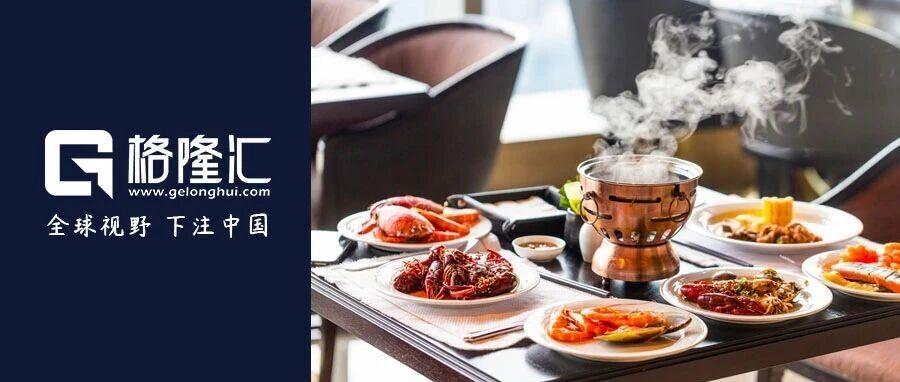
Core Viewpoint - The article discusses the rise of Meituan's "Pin Hao Fan" as a digital platform that provides affordable meal options for low-income groups, effectively acting as a "national canteen" that meets the daily dietary needs of millions of users [8][28]. Group 1: Economic Impact - As of the latest data, Meituan's "Pin Hao Fan" has surpassed 35 million daily orders and has over 270 million users, highlighting its significant role in the daily lives of ordinary people [8]. - The platform serves as a safety net for low-income individuals, providing affordable meal options that help maintain their dignity in consumption [9]. - The average order price on "Pin Hao Fan" ranges from 10 to 15 yuan, making it accessible for various consumer segments [25]. Group 2: Quality Assurance - To address concerns about quality, "Pin Hao Fan" launched the "Million Bright Kitchen" initiative, which includes live video broadcasts of kitchens and a "Food Safety Diary" feature for merchants to document their restaurant environments [10]. - The number of well-known brands joining "Pin Hao Fan" has increased by 64% over the past year, with over 5,000 restaurant brands now on the platform, ensuring quality assurance through established quality control systems [10]. Group 3: Support for Small Businesses - "Pin Hao Fan" provides a crucial support system for small and micro food businesses, allowing them to stabilize their operations in a competitive market [13]. - The platform's "fixed price" settlement model eliminates commission and delivery fees, providing clear profit visibility for merchants [13]. - Many merchants have reported a sales increase of over 30% after joining "Pin Hao Fan," with average cost reductions of over 20% due to improved operational efficiency [19]. Group 4: Supply Chain Efficiency - "Pin Hao Fan" utilizes a group ordering system to optimize production planning, allowing merchants to reduce waste and inventory costs [18]. - The average number of menu items for merchants on "Pin Hao Fan" is only 4.8, simplifying operations and enhancing efficiency [19]. - The platform's centralized delivery model has reduced average delivery costs from 7 yuan to 3.7 yuan, significantly improving delivery efficiency [22]. Group 5: Social Value - "Pin Hao Fan" addresses the needs of a large segment of the population, including approximately 600 million people with monthly incomes below 1,000 yuan, providing them with affordable meal solutions [28]. - The initiative aligns with a broader trend of rational consumption, where consumers prioritize value and practicality over brand prestige [27]. - The collaboration between government and platforms like "Pin Hao Fan" aims to balance food safety and accessibility, contributing to a more inclusive food supply system [28][29].
供应“腰斩”的金九银十,北方这个城市竟逆势增长22%
3 6 Ke· 2025-11-12 02:18
Core Insights - The real estate market is experiencing a significant supply reduction, with a nearly 50% decrease in supply in October compared to September, yet transactions have slightly increased by 2% [1][5][4] - Demand remains present in specific cities, with notable transaction growth in cities like Guangzhou, Chengdu, and Xiamen, where new home sales have increased by over 10% month-on-month [1][8][11] - The market is undergoing a structural adjustment, focusing on inventory reduction and the acquisition of idle land, rather than returning to previous peak levels [2][3] Market Overview - The overall market is in a "shrinking" phase, having experienced nearly four years of scale contraction since 2022, with no expectation of returning to the peak levels of 2020-2021 [2][4] - The average annual new housing demand in China is estimated to be around 880 million square meters [2] - The supply in 30 key cities in October was 5.22 million square meters, marking the second-lowest level of the year [4] City-Specific Performance - In October, 20 out of 30 key cities saw an increase in residential transaction volume, with 12 cities experiencing growth of over 10% [8][9] - Cities like Dongguan and Huizhou reported transaction increases exceeding 50%, attributed to low previous bases and concentrated project registrations [8][11] - Continuous month-on-month growth was observed in cities such as Guangzhou, Xiamen, and Xi'an, with Xi'an maintaining a high transaction volume above 500,000 square meters [9][12] Demand Dynamics - The cities with sustained transaction growth generally have a high absorption rate, with cities like Chengdu and Xi'an showing rates above 30% [11][12] - In Xi'an, the demand is driven by affordable housing products, while high-end products are experiencing a focus effect [12][16] - The market is shifting towards a model of "sales determine production," indicating a need for high-quality offerings in both affordable and luxury segments [16]

富特科技:存货激增近5倍至6.58亿 库存商品与合同履约成本占比大幅攀升引监管问询
2 1 Shi Ji Jing Ji Bao Dao· 2025-11-04 02:33
Core Viewpoint - The significant change in inventory structure of Fute Technology (301607.SZ) has drawn attention following the Shenzhen Stock Exchange's inquiry regarding its stock issuance to specific targets, highlighting the increase in inventory value and its implications for the company's operations [1][2]. Group 1: Inventory Changes - As of June 30, 2025, the company's inventory book value reached 658 million yuan, accounting for 29.84% of current assets [1]. - The balance of inventory goods surged from 30.1 million yuan at the end of 2022 to 141 million yuan by June 30, 2025, with its proportion rising from 11.07% to 25.83% [1]. - The contract fulfillment cost increased dramatically from 18.67 million yuan to 146 million yuan during the same period [1]. Group 2: Reasons for Inventory Changes - The structural change in inventory is attributed to two main factors: increased stockpiling to ensure stable supply for new client projects, particularly for international clients with longer shipping times, and significant investment in overseas technical service projects for major automotive clients like Renault and Stellantis [1]. - The company has adopted a "sales-driven production" model, supported by a strong order backlog, with over 80% of inventory covered by orders as of June 30, 2025 [2]. - Additionally, 88.14% of the inventory consists of items with a turnover age of less than one year, indicating good turnover conditions [2]. Group 3: Inventory Management - The company has made adequate provisions for potential declines in value for long-term stagnant items, carefully assessing the realizable net value of raw materials and finished products related to discontinued models based on scrap prices [2].
伟星新材:公司总体执行“以销定产”的原则
Zheng Quan Ri Bao· 2025-10-31 09:39
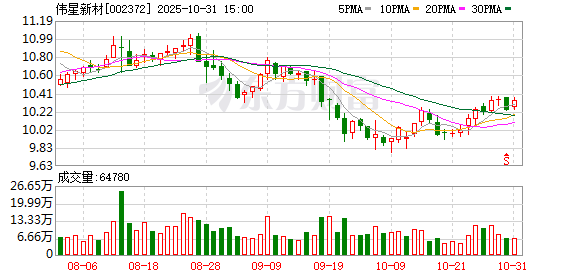
Core Viewpoint - The company, Weixing New Materials, has announced a strategy focused on "production based on sales" while maintaining appropriate inventory levels for certain standard products [2] Group 1 - The company has decided to reduce inventory levels at both the factory and sales ends due to current market demand and the need to lower capital costs [2] - The company plans to increase inventory levels in response to an improvement in market demand in the future [2]

广汇能源20251030
2025-10-30 15:21
Summary of Guanghui Energy Conference Call Company Overview - **Company**: Guanghui Energy - **Reporting Period**: First three quarters of 2025 Key Financial Metrics - **Revenue**: 22.53 billion CNY, down 14.63% year-on-year [2][3] - **Net Profit**: 1.012 billion CNY, down 49.03% year-on-year [2][3] - **Operating Cash Flow**: 4.315 billion CNY, up 6.14% year-on-year, indicating good cash flow management [2][3] Segment Performance Coal Segment - **Net Profit**: 560 million CNY, down 65.37% year-on-year, significantly impacted by falling coal prices [2][5] - **Production**: Total raw coal production reached 49.13 million tons, up 56% year-on-year [2][6] - **Sales Volume**: External sales of 40.02 million tons, up 39% year-on-year [2][6] - **Price Trends**: Average selling price of coal adjusted between 200 to 215 CNY per ton [18] Natural Gas Segment - **Net Profit**: 336 million CNY, up 101% year-on-year, marking it as a performance highlight [2][5] - **Sales Volume**: Anticipated sales of 4 ships of natural gas in Q4, expected to further contribute to profits [2][20] Chemical Products - **Methanol Sales Price**: Down 5% year-on-year [2][6] - **Ethylene Glycol Sales Price**: Up 4% year-on-year, with a successful turnaround in August [2][7] Strategic Adjustments - **Sales Strategy**: Shift from "volume-based pricing" to "sales-driven production" to maximize profits [11] - **Infrastructure Improvements**: Completion of the Naoliu Highway expansion, increasing transport capacity to 40 million tons/year, potentially adding 800 million CNY in toll revenue [12] Market Outlook - **Coal Price Expectations**: Anticipated stabilization and slight increase in coal prices due to tightening supply and growing demand in specific regions [8][21] - **Impact of National Policies**: Recent policy changes have led to a decrease in industrial coal production, which may benefit future pricing [8][22] Future Plans - **Dividends**: Commitment to distribute at least 90% of the average net profit over the past three years as dividends, with 30% of annual net profit allocated for dividends [26][27] - **Investment in Upgrades**: Ongoing projects to enhance production efficiency and environmental standards, including a 2 billion CNY investment in coal upgrading projects [13] Risks and Challenges - **Environmental Fees**: High water and soil conservation fees in Xinjiang, totaling 604 million CNY for the first three quarters, are a concern [15] - **Market Volatility**: Fluctuations in coal and natural gas prices due to seasonal demand and external market conditions [14][20] Conclusion - **Overall Performance**: Despite a decline in revenue and profit, Guanghui Energy shows resilience through improved cash flow and strategic adjustments in sales and production [2][3][28] - **Future Outlook**: Optimistic about Q4 performance with expected improvements in market conditions and operational efficiency [28][29]

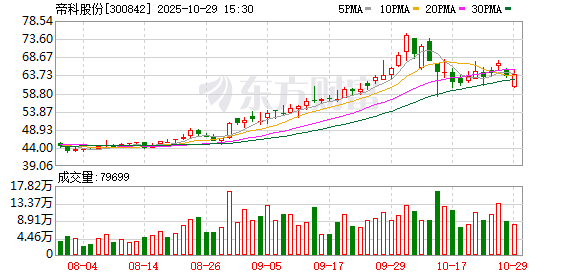
帝科股份:公司主要采取以销定产的生产模式和以产订购的采购模式
Zheng Quan Ri Bao· 2025-10-29 09:44
Core Viewpoint - The company adopts a production model based on sales orders and a procurement model based on production, allowing it to mitigate risks associated with silver price fluctuations through pricing strategies and hedging [2]. Group 1: Production and Procurement Models - The company implements a production model that aligns with sales orders and a procurement model that aligns with production needs, placing orders for silver powder on the same day sales orders are received [2]. - The pricing of conductive silver paste products and the main silver powder procurement prices are based on current or similar silver spot prices, enabling the company to pass on the impact of silver price fluctuations to downstream customers [2]. Group 2: Risk Management Strategies - To further reduce the risk of silver price volatility, the company hedges the silver price difference between sales orders and procurement orders using silver futures [2]. - The hedging strategy is closely related to the company's daily operational needs and has a clear business foundation [2]. Group 3: Financial Impact - Fluctuations in silver prices affect several financial statement items, including operating income, operating costs, investment income, and fair value change gains, but do not impact the company's long-term actual operating profits [2]. - During the recent rapid increase in silver prices, the company recognized fair value change losses for silver futures and silver leasing based on the silver spot price at the balance sheet date, while inventory cannot be recognized for appreciation [2].

中国面包,不该是奢侈品
虎嗅APP· 2025-10-22 10:12
Core Viewpoint - The article discusses the evolving landscape of the baking industry in China, highlighting the shift from high-priced trendy products to affordable, quality options that meet consumer needs and preferences [2][4][20]. Market Overview - The high-end baking segment, exemplified by products like "Panettone," has created a perception of value among consumers, but this trend is limited by the sustainability of high prices and marketing [2]. - The first half of 2025 saw a significant decline in the new consumption sector, with only 44 projects raising approximately 2.8 billion RMB, marking a low point in project numbers and disclosed amounts [4]. - The food and beverage sector experienced a 7.33% decline in stock prices, with revenue and net profit growth rates slowing significantly compared to the previous year [4]. Investment Insights - The food and beverage sector's PE valuation has dropped to 7.26%, indicating a potential "margin of safety" for investors [5]. - The demand for affordable, quality bread remains strong, with short-shelf-life bread showing resilience due to its fresh ingredients and low price point, ensuring stable repurchase rates [5][7]. Consumer Behavior - Consumers are increasingly prioritizing value over novelty, with a shift towards products that offer quality at reasonable prices [7][19]. - The concept of "comfort bread" is gaining traction, as consumers favor familiar, affordable options over high-priced alternatives [10][19]. Company Case Study: 桃李面包 (Tao Li Bread) - 桃李面包 has established itself as a trusted brand in the affordable bread market, leveraging a robust supply chain and consistent product quality to maintain consumer loyalty [11][13]. - The company has a strong cash flow, with a net cash flow from operating activities of 434 million RMB in the first half of 2025, indicating resilience amid industry challenges [13]. - 桃李面包's strategic focus on innovation, efficiency, and trust is driving its transformation to adapt to changing consumer preferences and market dynamics [20][21]. Future Outlook - The baking market is expected to continue growing, with the retail market projected to reach 611.07 billion RMB in 2024 and 859.56 billion RMB by 2029, with affordable bread maintaining over 65% market share [10]. - 桃李面包 is adapting to market changes by expanding its product offerings and exploring new sales channels, ensuring its relevance in a competitive landscape [20][21].