关键矿产

Search documents
美国国会两党力推25亿美元关键矿产战略储备计划
Hua Er Jie Jian Wen· 2026-01-16 00:04
Core Viewpoint - A bipartisan group of U.S. lawmakers is set to introduce a new bill to establish a $2.5 billion Strategic Resilience Reserve aimed at securing critical minerals and reducing dependence on external supply chains [1] Group 1: Legislative Proposal - The proposed legislation, named the SECURE Minerals Act, will be introduced by Senators Jeanne Shaheen and Todd Young, along with Representatives John Moolenaar and Rob Wittman [1] - The bill aims to create a critical minerals trading center, functioning similarly to the Strategic Petroleum Reserve and the Federal Reserve [1][2] - The reserve will be overseen by a seven-member committee appointed by the President and confirmed by the Senate, mirroring the governance structure of the Federal Reserve [2] Group 2: Economic Implications - The initiative is designed to enhance U.S. economic resilience and support high-paying jobs in key sectors such as aerospace, automotive, and technology [2] - The initial investment of $2.5 billion may be expanded if the bill passes, similar to the funding model of the CHIPS and Science Act, which authorized approximately $280 billion for semiconductor and scientific research [2] Group 3: Strategic Goals - The Strategic Resilience Reserve aims to establish a domestic critical minerals market, enhancing U.S. production capacity and ensuring a stable long-term supply for American businesses [3] - The competition for global rare earth and other raw materials is intensifying, with the U.S. seeking to gain greater autonomy and bargaining power in this global mineral race [3]
爆料:“未获中国技术,印度企业叫停”
Xin Lang Cai Jing· 2026-01-13 02:04
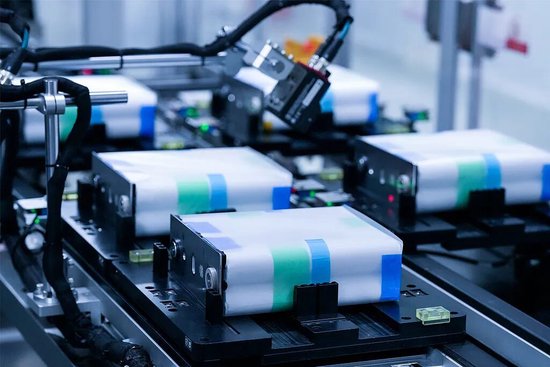
彭博社12日引述知情人士的消息称,印度信实公司在未能获得中国技术后,已叫停其在印度生产锂电池 的计划。报道称,这反映出,即使是印度最强大的企业,在建立独立清洁能源供应链方面也面临重重困 难。 美国为"夺岛"拉中俄挡枪 洲急回应但难掩分歧 外交部:美谋私利别拿他国当借 报道称,消息人士透露,信实集团原计划从今年开始生产电池,为此一直在与一家中国公司洽谈电池技 术许可事宜。这名人士宣称,由于中国方面对关键领域技术海外转让的规定,这家公司退出了拟议的合 作,谈判目前陷入僵局。 锂电池智能制造产业园 资料图 图源:视觉中国 不过,路透社12日报道称,信实公司发言人否认可再生能源计划有任何变化,包括一座电池超级工厂原 计划于2026年开始运营。发言人在一封电子邮件中表示:"电池储能系统制造、电池组制造和电芯制造 一直是我们储能计划的一部分,目前进展顺利。" 彭博社称,虽然暂停电池制造不会给信实公司立即造成经济打击,但"这凸显了其雄心勃勃的绿色能源 计划所面临的挑战"。报道称,若不能改善与北京的双边关系,那些被寄予厚望、有望助力印度完成碳 中和目标的印度企业就很难取得实质性进展。 赵 雷 国基曲 中朗沙 新闻背景。 美催 ...

委内瑞拉坐拥海量石油资源 同时还握有另一种美国亟需的东西
Xin Lang Cai Jing· 2026-01-11 10:33
Core Viewpoint - The Trump administration is interested in Venezuela's rich oil reserves and other commodities, emphasizing their importance for U.S. national security, but experts warn that extracting these resources is fraught with challenges and risks [1][4]. Group 1: Key Minerals and Rare Earth Elements - The U.S. Geological Survey lists 60 minerals as "critical minerals," essential for national economy and security, including aluminum, cobalt, copper, lead, nickel, and 15 rare earth elements [2][5]. - Rare earth elements are crucial for everyday technology products and military defense equipment, but their extraction and purification are complex processes [2][5]. - U.S. lawmakers are increasingly concerned about the country's heavy reliance on imports for critical minerals, with domestic projects for rare earth extraction taking years or even decades to develop [6]. Group 2: Venezuela's Mineral Resources - Venezuela is not listed among countries with rare earth resources by the U.S. Geological Survey, which includes China, the U.S., Brazil, and Greenland [3][7]. - Despite a lack of verified data on mineral reserves due to 25 years of governance by Hugo Chávez and Nicolás Maduro, experts believe Venezuela has various mineral resources, including tantalum and niobium from coltan and aluminum and gallium from bauxite [3][8]. - The "Orinoco Mining Arc" was designated for mineral exploration and extraction by the Maduro government in 2016, but illegal mining activities have plagued the region [8]. Group 3: Challenges in Mining Industry - Multiple factors, including a lack of geological data, low labor skill levels, organized crime, insufficient investment, and a volatile policy environment, severely hinder the development of Venezuela's mining industry [4][8]. - Analysts suggest that, based on current geological exploration potential, Venezuela is unlikely to achieve a significant position in the global critical minerals market for at least the next decade [4][8].
美国财长贝森特称澳大利亚、印度获邀参加七国集团关键矿产会议
Xin Lang Cai Jing· 2026-01-10 05:04
Group 1 - The core agenda of the G7 finance ministers meeting is critical minerals, with participation from Australia and other countries [1] - The meeting is hosted by U.S. Treasury Secretary Scott P. Benset, who has been advocating for a separate meeting on this topic since the G7 leaders' summit last summer [1] - An online meeting among finance ministers was held in December, prior to this in-person meeting [1] Group 2 - India has been invited to attend the meeting, but it is currently uncertain whether India has accepted the invitation [1] - The specific list of other countries invited to the meeting has not been disclosed [1]
美国财长贝森特邀请澳大利亚、印度参加财长会议 商讨关键矿产问题
Xin Lang Cai Jing· 2026-01-10 04:08
Group 1 - The core point of the article is that Australia will participate in a finance ministers' meeting in Washington to discuss critical mineral issues [1] - US Treasury Secretary Becerra mentioned that India was also invited to the meeting, but it is unclear whether India will attend [1]
担忧中方稀土反制,日本拉G7给自己壮胆
Guan Cha Zhe Wang· 2026-01-09 12:38
Core Viewpoint - Japan is intensifying efforts to seek support from G7 members and other countries in response to China's recent export control measures on critical minerals, which are perceived as a threat to global economic security [1][3][7]. Group 1: Japan's Diplomatic Efforts - Japanese Finance Minister Shunichi Suzuki announced a visit to the U.S. to discuss critical mineral issues with other "democratic countries" [1]. - Japan's Defense Minister Kishi Nobuo plans to meet with U.S. Defense Secretary Lloyd Austin to strengthen defense ties [1]. - Prime Minister Kishi's upcoming summit with South Korean President Yoon Suk-yeol aims to reaffirm the alliance between the U.S. allies [1][6]. Group 2: China's Export Controls - China's Ministry of Commerce announced strengthened export controls on dual-use products to Japan, with potential tightening on heavy rare earths [3]. - Reports indicate that China has begun to reduce exports of rare earths and related materials to Japan, impacting supply chains [3][4]. - Japanese officials are closely monitoring the situation, emphasizing the importance of maintaining smooth international trade in rare earths [3][4]. Group 3: Economic Implications - The current export controls have led to extended procurement cycles for rare earth magnets, particularly neodymium-iron-boron magnets, from 1-2 months to 3-4 months [4]. - Japanese companies are preparing for potential supply delays by stockpiling materials, with some firms reportedly holding about six months' worth of inventory [4]. - Analysts warn that prolonged restrictions on rare earth imports could result in a 0.43% reduction in Japan's nominal and real GDP if sustained for a year [7].
国金证券牟一凌:市场脱离低回报区域 可布局四条主线
Zheng Quan Shi Bao· 2026-01-04 17:40
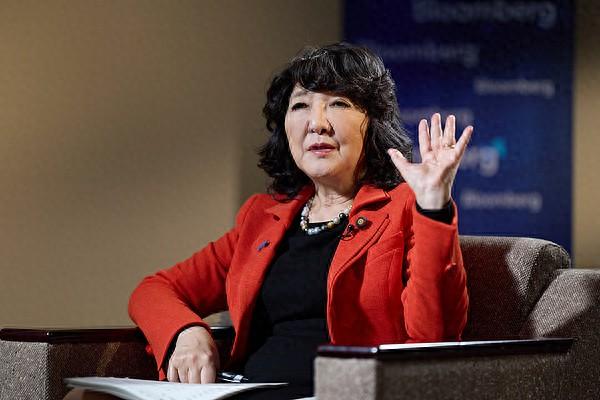
Group 1 - The chief strategist of Guojin Securities, Miao Yiling, predicts that the ROE of the A-share non-financial real estate sector will increase from 7.2% to 7.9% by 2026, indicating a shift from a "low return" zone to a higher profitability phase [1] - Miao suggests four main investment lines: industrial resources, equipment exports, consumer recovery, and non-bank financials, with a focus on tracking the demand for aluminum, copper, steel, and coal driven by power system construction [1] - In overseas markets, the U.S. and Europe are experiencing characteristics such as "investment stronger than consumption," profit differentiation among large and small enterprises, declining employment, and slowing wage growth, which provide a foundation for a sustained interest rate cut cycle [1] Group 2 - On the domestic consumption front, the drag of housing prices on household spending has diminished, with an increase in foreign tourists due to trade settlement rate recovery and visa-free entry, leading to improved net profit margins in industries such as aviation, hotels, duty-free, and food and beverages [2] - In terms of funding, there is a shift of household savings towards "fixed income+" investments, with pension and insurance funds continuously increasing their allocation to equities; the policy adjustments to lower insurance risk factors and relax brokerage leverage will resonate with the recovery of the non-bank sector and ROE [2]

毁灭你与你无关:中国人造钻石摧毁加拿大西北财政支柱!
Sou Hu Cai Jing· 2026-01-02 17:40
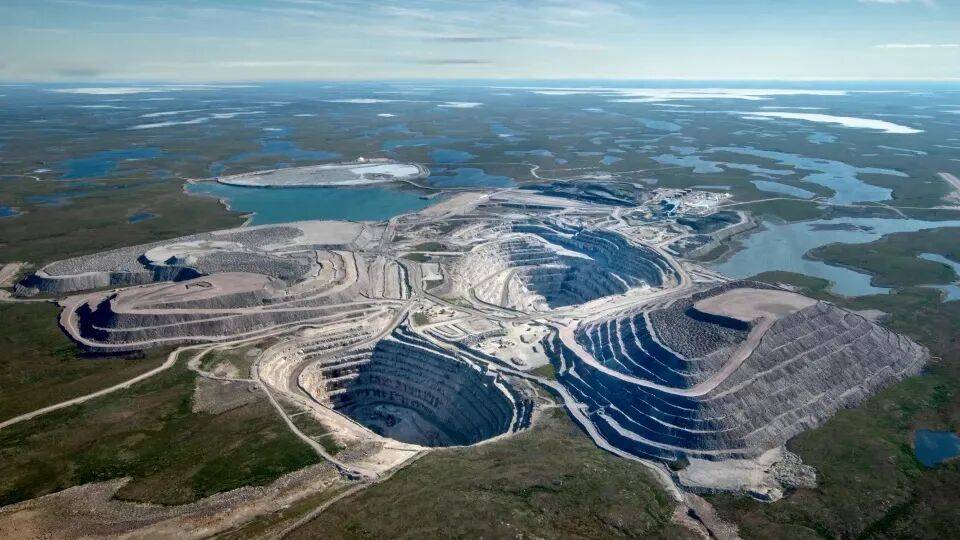
Core Insights - The diamond mining industry in Northwest Territories (N.W.T.) is experiencing a significant downturn, primarily due to the rise of synthetic diamonds, which are cheaper and more stable in supply, undermining the commercial value of natural diamonds [1][3]. Economic Impact - Over the past 25 years, diamond mines have been a crucial economic engine for N.W.T., employing over 1,500 residents and contributing approximately 20% to the region's GDP [3]. - The diamond industry has contributed over CAD 30 billion to the Canadian economy, with around CAD 20 billion remaining in the local economy [3]. Industry Challenges - Major mines such as Diavik are set to close, while Gahcho Kué is expected to operate only until 2031. The Ekati mine, although projected to run until 2040, is facing financial difficulties and is seeking government assistance [3][4]. - The international price index indicates a significant decline in natural diamond prices since 2022, compounded by U.S. tariff policies and weak global demand, further squeezing the high-cost mining operations in the region [3]. Fiscal Risks - The finance minister of N.W.T. has warned that the diamond mines contribute a substantial portion of local revenue, and continued contraction of the mining sector could lead to greater economic uncertainty [4]. - Population decline is a concern, as reduced employment opportunities may lead to outmigration, affecting federal funding and the scale of public services [4]. Future Prospects - N.W.T. leaders are looking towards critical minerals for long-term growth, which may result in the development of more, but smaller, mining operations [4]. - The region possesses nearly three-quarters of Canada's critical mineral resources, but infrastructure challenges remain, as current access routes are limited to winter use and the region relies heavily on costly diesel power [4]. Infrastructure Development - The federal government has identified the "Arctic Economic and Security Corridor" as a potential national project, which includes ports, all-weather roads, airport runways, and communication systems [4]. - Concerns exist regarding the risk of investing billions in infrastructure without clear private sector utilization, as maintenance costs could burden the regional economy [4]. Economic Dilemma - The region is in a dilemma, as without a significant increase in critical mineral prices, it is unlikely that any industry can replace the economic impact previously provided by diamond mining [5].
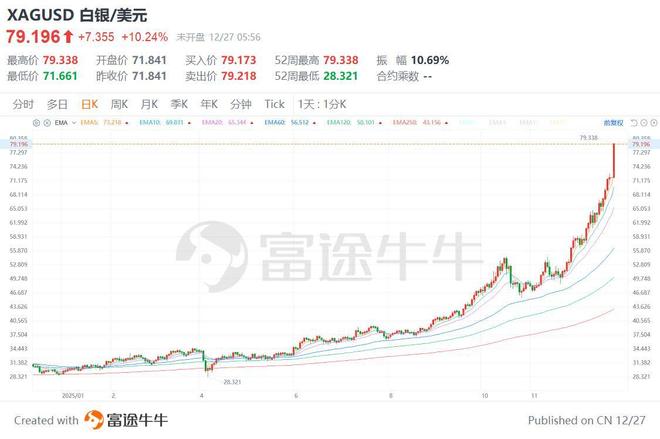
白银逼近80美元、年内狂飙174%,供应缺口与关键矿产标签推升热度
Ge Long Hui A P P· 2025-12-27 13:13
Core Viewpoint - The price of spot silver surged over 10% to $79.338 per ounce, reaching a historical high, with a year-to-date increase of 174% [1] Group 1: Market Dynamics - There is a persistent supply gap in the silver market, coupled with strong industrial demand [1] - The U.S. has classified silver as a "Critical Mineral," enhancing its strategic value and valuation premium [1] - Continuous inflow of investment funds has led to a typical trend acceleration phase in the silver market [1] Group 2: Expert Insights - Peter Grant, Vice President and Senior Metal Strategist at Zaner Metals, noted that expectations for further interest rate cuts in 2026, a weak dollar, and rising geopolitical tensions are driving greater volatility in precious metals within a thin liquidity market [1] - Despite potential profit-taking risks before year-end, the overall trend remains strong [1]
风口上的“铜博士”
Shang Hai Zheng Quan Bao· 2025-12-25 18:51
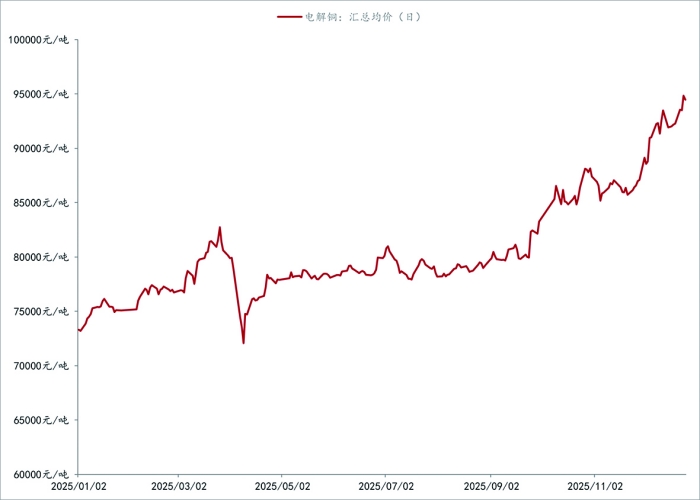
2025年国内电解铜价格走势 数据来源:上海钢联 ◎记者 霍星羽 王敬博 铜价变动常被视为经济晴雨表,因此被称为"铜博士"。2025年,"铜博士"站上了"风口"。 这一年,铜价强势突破前高,站上新高度:LME铜价突破11952美元/吨的峰值,沪铜主力合约首次超越 94000元/吨大关。 这一年,铜的史诗级大戏上演:全球铜库存向美国"迁徙",纽约铜价一度高出伦铜近3000美元/吨,而 这一差距又在一个交易日内大幅收窄。 这一年,铜的金融属性熠熠生辉:铜价对美联储降息的预期和落地作出反应,市场提前交易降息预期, 但铜价又在"靴子落地"后受到支撑。 这一年,铜的战略价值也为更多人所知:首次被列入美国关键矿产清单,矿业巨头跨界竞逐铜标的, AI算力浪潮下"新能源基建金属"地位强化,"铜博士"已悄然升咖。 2026年,铜的前景仍然值得期待:除铜精矿外,精炼铜供应或也转紧,宏观与基本面共振下,铜价重心 有望进一步上移。 价格震荡上行,产业冷暖不均 2025年铜价中枢上行,沪铜、伦铜接连突破历史前高。 数据印证着市场的热度。2025年前11个月,LME铜基金净持仓维持净多状态,且较去年大幅增加;国 内A股铜概念板块年内涨幅 ...