净资产收益率(ROE)

Search documents
2025年《财富》世界500强净资产收益率最高的50家公司
财富FORTUNE· 2025-07-30 01:09
Group 1 - The latest Fortune Global 500 list was released on July 29, 2025, highlighting the world's largest companies [1] - Cencora topped the Return on Equity (ROE) list with over 233%, while Home Depot fell to second place with an ROE of approximately 223% [2] - Apple and AbbVie ranked third and fourth in the ROE list, respectively [2] Group 2 - Pinduoduo is the only Chinese company in the top 50 for ROE, ranking 25th with over 36% [2] - Other Chinese companies in the top 10 of the ROE sub-list include TSMC, Quanta Computer, Zijin Mining Group, Lenovo, BYD, Meituan, CATL, Tencent, and Chery [2]


最新《财富》世界500强出炉,中国130家企业上榜
2 1 Shi Ji Jing Ji Bao Dao· 2025-07-29 11:11
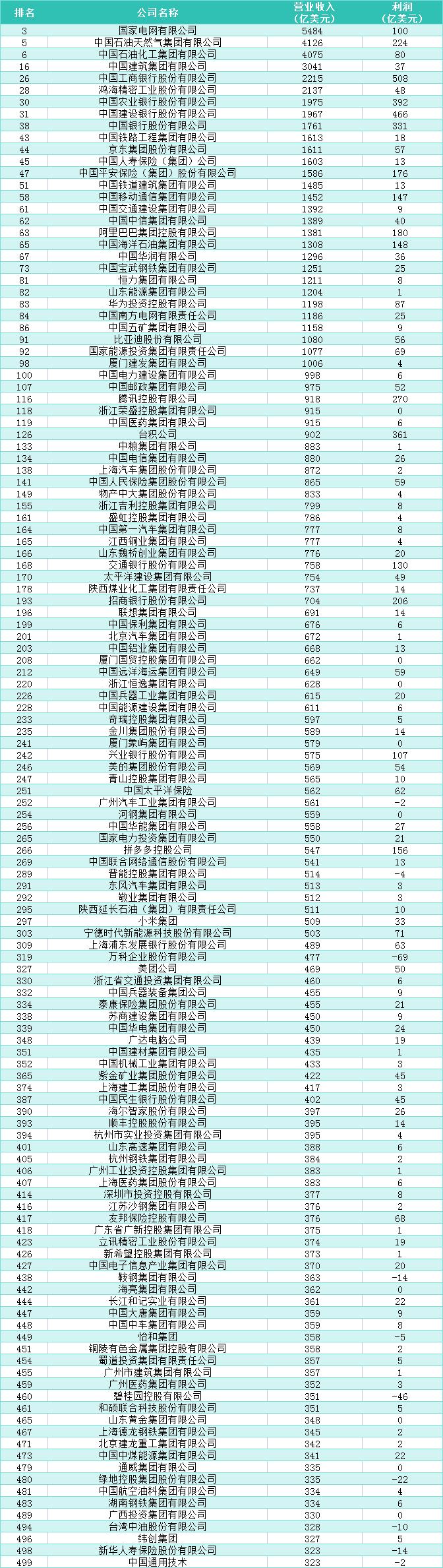
Core Insights - The 2025 Fortune Global 500 list was released, with Walmart retaining the top position for the twelfth consecutive year, followed by Amazon and China's State Grid Corporation [1] - Total revenue of the listed companies reached $41.7 trillion, accounting for over one-third of global GDP, with a year-on-year growth of 1.8% [1] - The profit margin of the listed companies increased to approximately $2.98 trillion, reflecting a 0.4% year-on-year growth [1] Company Performance - China had 130 companies on the list, with a total revenue of about $10.7 trillion and an average sales revenue of $82 billion [1] - Notable growth was observed in the Chinese automotive sector, with companies like Chery, BYD, and Geely showing significant revenue increases and improved rankings [1] - Pinduoduo saw the largest ranking increase among Chinese companies, rising 176 places to rank 266 [2] Financial Metrics - The top companies by revenue included State Grid Corporation ($548.4 billion), China National Petroleum Corporation ($412.6 billion), and Sinopec Group ($407.5 billion) [4][5] - Cencora topped the return on equity (ROE) list with over 233%, while Pinduoduo ranked 25th with over 36% ROE [2] - Nvidia led the profit margin rankings with over 55%, followed by Taiwan Semiconductor Manufacturing Company and SK Hynix [3]
ROE是衡量企业盈利能力的最佳指标
雪球· 2025-07-10 08:13
Core Viewpoint - The essence of investment is to buy the future cash flow generation ability of companies, with Return on Equity (ROE) being a critical indicator of this ability [2][3]. Group 1: Importance of ROE - ROE reflects how much net profit shareholders earn for every unit of equity invested, making it a more reliable measure of profitability than earnings per share [3][4]. - High ROE is preferred, and it should ideally be higher than competitors to indicate better management performance [3][4]. - Long-term evaluation of ROE is essential, with a recommended assessment period of at least five years to gauge a company's true performance [4][5]. Group 2: Historical Performance and Examples - Historical data shows that only 6 out of 1000 major U.S. companies had an ROE exceeding 30% over ten years, with 25 companies maintaining an average ROE of 20% without dipping below 15% in any year [4]. - Companies with high ROE often share common traits: low leverage and a focus on core business, leading to sustainable competitive advantages [5][9]. - A statistical analysis of companies with high ROE indicates that 97% of the time, they achieve over 10% annualized returns, with 55% achieving over 20% [8][10]. Group 3: Resilience in Adversity - The white liquor industry has faced numerous crises over the past 30 years, yet companies like Moutai and Wuliangye have managed to capture more market share during downturns [9][10]. - Despite short-term challenges, long-term investments in high ROE companies tend to yield positive returns, as evidenced by historical performance [11][12]. - Current market conditions show that even with low valuations, the ROE of leading companies in the industry remains strong, indicating sustained competitive strength [11][12].






银行是怎么赚钱的?一文说明白
雪球· 2025-07-05 04:49
Core Viewpoint - The article emphasizes the complexity of understanding bank profitability, highlighting that traditional metrics like interest margin, cost of expenses, and asset impairment losses do not provide a complete picture of a bank's true earning capacity [4][20][22]. Group 1: Understanding Bank Profitability - The profitability of banks cannot be solely determined by analyzing interest margins and impairment losses, as these metrics do not allow for effective peer comparison [4][22]. - For example, Bank A with a 2.5% interest margin and Bank B with a 2% interest margin can both achieve the same net profit of 1%, indicating that higher interest margins do not necessarily equate to better profitability [5][6][7]. - The article discusses the importance of understanding the underlying business model and risk management strategies of banks, particularly in the context of small and micro loans [14][18][19]. Group 2: Risk and Business Models - The article presents a case where high-interest loans can be associated with low risk, particularly in regions with strong micro-enterprise demand, suggesting that local knowledge can mitigate risks [11][13]. - It argues that small banks are better positioned to manage small and micro loans due to their flexibility and closer ties to local businesses [18][19]. - The discussion includes the notion that a bank's risk profile cannot be judged solely on its loan portfolio size or interest margins; rather, it requires a deeper analysis of the specific business practices and regional economic conditions [60][66]. Group 3: Financial Metrics and Valuation - The article introduces the concept of Return on Assets (ROA) and Return on Equity (ROE) as critical metrics for evaluating bank performance, with ROA being influenced by interest margin, cost of expenses, and impairment losses [25][31][48]. - A comparison of two banks, Industrial and Commercial Bank of China (ICBC) and Hangzhou Bank, reveals that despite ICBC having a larger asset base, Hangzhou Bank demonstrates a higher ROA and ROE due to its effective use of leverage [34][48][55]. - The article concludes that Hangzhou Bank's higher valuation should be reflected in its price-to-book (PB) ratio compared to ICBC, suggesting that current market valuations may not accurately represent the banks' underlying performance [76][78].



培育长线牛股 需下硬功夫
Zheng Quan Shi Bao· 2025-06-17 18:17
Group 1 - The core viewpoint of the articles emphasizes the cyclical and structural characteristics of the A-share market, highlighting the increasing scarcity of long-term bull stocks as institutional investors rise and market regulation strengthens [1] - As of June 13, 2023, there are 127 stocks that have increased by over 500% since 2015, which represents a low proportion of the entire A-share market [1] - The formation of long-term bull stocks reflects the market's discovery and recognition of corporate value, leading to resource allocation towards high-quality companies [1] Group 2 - To become a long-term bull stock, companies should focus on enhancing their business capabilities and ensuring sustainable operations rather than relying solely on short-term valuation increases [2] - The average diluted return on equity (ROE) for the 127 long-term bull stocks was 13.18% in 2015, which was 4.6 percentage points higher than the A-share average; this difference increased to 9.72 percentage points by 2024, with the ROE reaching 16.23% [2] - Long-term bull stocks exhibit unique advantages in profitability metrics such as gross profit margin, net profit margin, and return on equity [2] Group 3 - The presence of long-term bull stocks may attract more investors to focus on long-term value investment, encouraging a valuation system that emphasizes long-term growth potential and intrinsic value [3] - Investors are advised to develop a keen business insight to identify high-quality companies with long-term growth potential, rather than relying on market trends or subjective judgments [3] - The dynamic nature of market capitalization reflects a company's profitability, and high growth with high valuation carries risks; thus, selecting the best companies is crucial for risk management [3]
银行股的想象力
2025-06-09 15:30
Summary of Key Points from the Conference Call Industry Overview - The discussion primarily revolves around the banking sector and its investment dynamics in the context of both the U.S. and Chinese markets [2][4][7]. Core Insights and Arguments - U.S. mutual funds show a significant overweight in financial stocks compared to the S&P 500 index, with dividend-paying blue-chip funds holding over 20% in financial stocks, while growth-oriented funds hold less than 3% [4][5]. - Domestic investment behavior in China is influenced by declining real estate prices, leading investors to adopt a Sharpe ratio-based asset allocation strategy, which emphasizes stable long-term investments [2][6][7]. - The real estate market attracts investors due to its relatively stable returns and lower drawdown risks, while the appeal of non-standard products like trusts has diminished, prompting a search for new investment opportunities, particularly in ETFs and passive products [2][9]. - The price-to-book (PB) ratio of bank stocks is currently below 1, indicating that future returns are less than the opportunity cost of holding these stocks. The increase in PB from 0.5 to 0.7 is attributed to a decrease in the opportunity cost of holding bank stocks as other sectors show reduced vigilance [2][12]. - The decline in return on equity (ROE) is slower than the decrease in opportunity costs, explaining the current ROE of 0.7 compared to a previous 0.5, suggesting that bank stocks are not overvalued [2][13][15]. Additional Important Insights - The increase in passive investment could impact the market capitalization of bank and non-bank financial stocks, although this trend may not directly mirror the U.S. situation due to differing market conditions and investor behaviors [10][11]. - The long-term trend of bank stocks' market share in A-shares remains consistent despite short-term fluctuations, as the overall market capitalization of financial stocks remains high [11]. - The relationship between asset quality and valuation pressures can be understood through the PB ratio, where a PB less than 1 indicates negative future cash flow expectations, but recent increases in PB suggest a reduction in opportunity costs [12][14]. - The static view of a 0.7 PB ratio does not indicate overvaluation, as the valuation is influenced by changes in required returns and opportunity costs, which have decreased [15][16]. This comprehensive analysis highlights the current state of the banking sector, investment behaviors, and the implications for future investment strategies.
估值折让10%、ROE反转、AI加速,大摩看好中国股市“结构性复苏”
Hua Er Jie Jian Wen· 2025-05-26 08:31
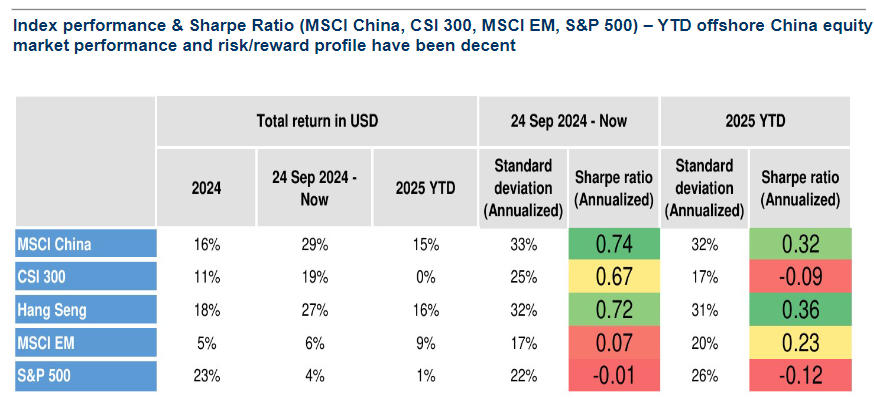
Core Viewpoint - The Chinese stock market is at a pivotal turning point, showing signs of structural improvement despite ongoing macroeconomic challenges [1] Group 1: Market Performance and Indicators - Morgan Stanley's report indicates that the MSCI China index has a total return of 16% in 2024 and 29% from September 24, 2024, to now, with a projected 15% return for 2025 YTD [2] - The report highlights a recovery in net asset return on equity (ROE) for Chinese companies, which is expected to rebound after hitting a low in the second half of 2024 [4] - The MSCI China index is trading at a forward P/E ratio of 11.1, approximately 10% lower than the MSCI Emerging Markets, indicating attractive valuation levels for long-term investors [13] Group 2: Economic and Policy Environment - The Chinese government has implemented a series of supportive policies for the private sector, which is expected to create a more favorable operating environment for businesses, particularly in technology and innovation [15] - The report notes that high-quality companies focusing on technology and shareholder returns are increasingly represented in the offshore Chinese stock market, enhancing overall market quality [10] Group 3: Sectoral Opportunities - China is demonstrating its capabilities in technological breakthroughs, particularly in artificial intelligence (AI), which presents structural opportunities for investors, especially in technology and manufacturing upgrades [3] - The performance of Chinese AI models is improving, providing a competitive edge for Chinese companies globally due to cost-effectiveness [16] Group 4: Geopolitical Considerations - While geopolitical uncertainties remain a concern, the MSCI China index has limited exposure to the U.S. market, accounting for less than 3%, which is the lowest among the top ten emerging market trading partners of the U.S. [23]
净资产收益率应该是比增长更重要的指标
雪球· 2025-05-13 07:56
Core Viewpoint - The article discusses the valuation and growth potential of Bull Group, emphasizing the importance of long-term return on equity (ROE) and the company's ability to maintain high profitability despite current growth rates showing a decline [2][6]. Group 1: Valuation Insights - The current PE ratio of Bull Group is 21, which may require downward adjustment due to declining growth rates, with projected revenue growth of 7.24% and net profit growth of 1.04% for 2024 [2]. - The author suggests that the valuation tolerance for Bull Group could be raised to around 20 times PE, given its average ROE of over 25% [6]. - Historical data shows that Bull Group has maintained a high ROE of 28.17% since its listing, indicating strong financial health and competitive positioning [5][6]. Group 2: Competitive Positioning - Bull Group is characterized as a cash cow with low debt and capital expenditure, possessing strong brand influence and channel control, with no significant competitors in its space [5]. - The company's high net profit margins are attributed to effective cost control rather than high gross margins, which hover around 40% [6]. - The article draws parallels between Bull Group and Midea, highlighting that both companies achieve substantial profits through rigorous expense management rather than exorbitant product pricing [6]. Group 3: Market Timing and Investment Strategy - The lowest valuation for Bull Group during the recent bear market was 18.67 times PE, presenting a potential buying opportunity [7]. - The article emphasizes that timing the market to buy at the lowest point is often more about luck than skill, suggesting that investors may need to accept higher prices in practice [7]. Group 4: Long-term Investment Philosophy - The article references the three thresholds for valuation as proposed by Graham, indicating that companies with strong competitive advantages can justify higher PE ratios [3][4]. - The long-term return on equity is a critical factor in determining the potential returns from holding a stock, as noted by Charlie Munger [6].


34家保险资管公司业绩出炉:21家营收、净利双增,国寿泰康平安净利均超20亿
Xin Lang Cai Jing· 2025-05-03 04:48
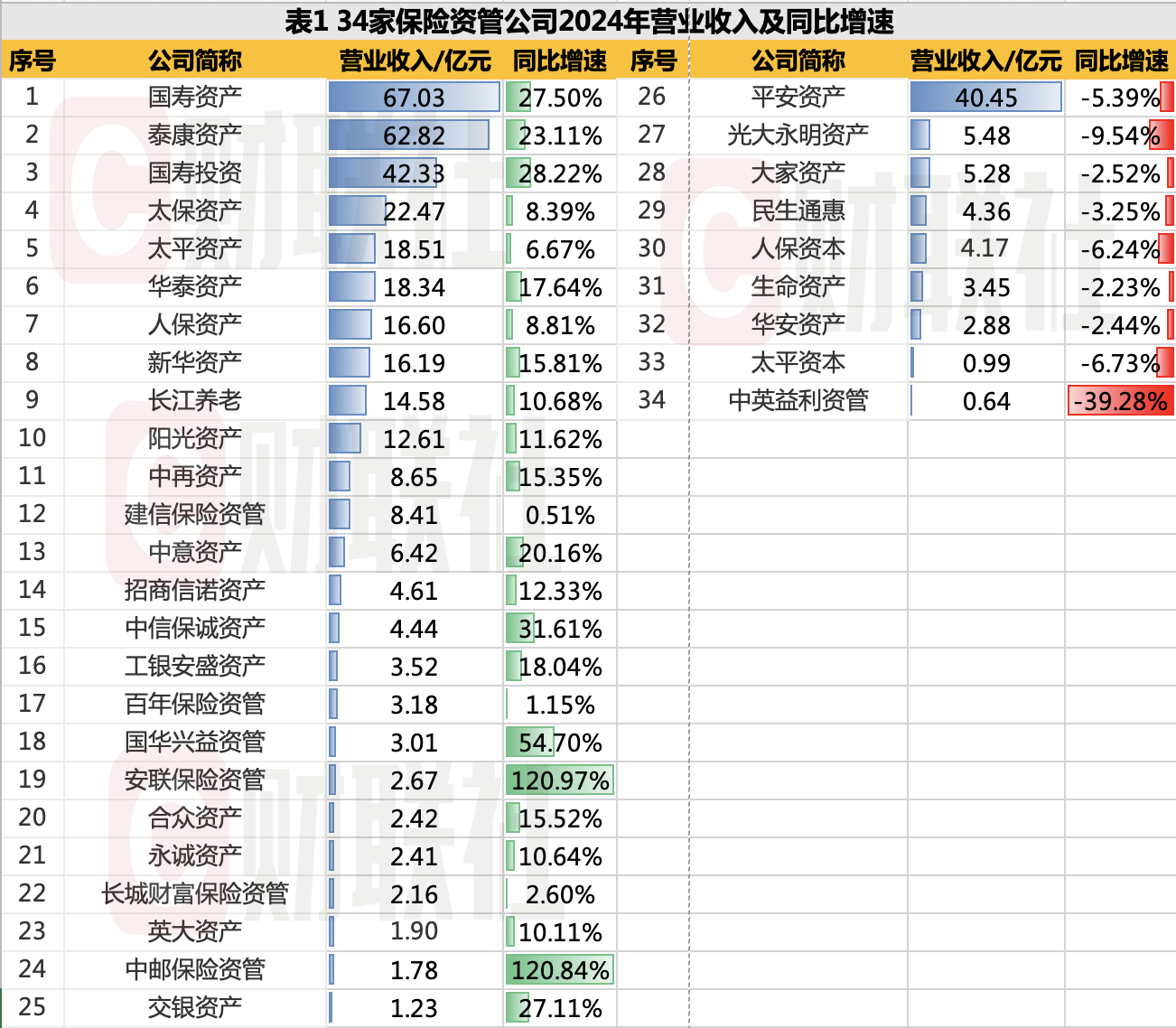
Group 1 - The core viewpoint of the news is that the performance of 34 insurance asset management companies in 2024 shows significant growth in both revenue and net profit, with a notable disparity among companies [1][3][6] - The total operating revenue of these companies reached 41.6 billion yuan, representing a year-on-year increase of 14.41%, while the total net profit was 18.507 billion yuan, up 17.4% year-on-year [1][6] - A total of 21 companies reported increases in both revenue and net profit, while 9 companies experienced declines in these metrics [1][3] Group 2 - Leading companies such as China Life Asset Management, Taikang Asset Management, and Ping An Asset Management reported net profits exceeding 2 billion yuan, with China Life Asset Management achieving a net profit of 3.857 billion yuan, up 34.08% [6][7] - The average return on equity (ROE) for the 34 companies reached 30%, an increase of 14 percentage points compared to the previous year, indicating improved shareholder returns [2][8] - The highest ROE was recorded at 71% for Minsheng Tonghui Asset Management, while the lowest was -12% for Allianz Asset Management, highlighting significant differences in performance among companies [9][10] Group 3 - Revenue growth was particularly strong for China Life Asset Management, which reported 6.703 billion yuan in revenue, a 27.5% increase, and Taikang Asset Management with 6.282 billion yuan, up 23.11% [3][5] - Conversely, Ping An Asset Management saw a decline in revenue, reporting 4.045 billion yuan, down 5.39% [3][5] - Among the 34 companies, 25 experienced revenue growth, while 9 reported declines, with the latter group including companies like Minsheng Tonghui Asset Management and Ping An Asset Management [4][6]
CNO Financial Group(CNO) - 2025 Q1 - Earnings Call Transcript
2025-04-29 15:00
Financial Data and Key Metrics Changes - Operating earnings per diluted share were $0.79, up 52%, and $0.74, up 42% excluding significant items [5][24] - Book value per diluted share, excluding AOCI, was $37.03, up 6% [7] - Capital and liquidity remain well above target levels after returning $117 million to shareholders [6] Business Line Data and Key Metrics Changes - Consumer division saw annuity collected premiums up 12%, account values up 7%, and premium per policy up 19% [10] - Health NAP was up 9%, with Medicare Supplement NAP up 24% and Medicare Advantage policies up 42% [13][14] - Worksite insurance sales were up 11%, with critical illness insurance up 37% and life insurance up 17% [19] Market Data and Key Metrics Changes - New money rates exceeded 6% for nine consecutive quarters [6] - Total investment income was up 16% for the quarter, marking the sixth consecutive quarter of growth [28] - The market value of invested assets grew 11% in the quarter [29] Company Strategy and Development Direction - The company aims to leverage its business model for sustained profitable growth and drive ROE expansion [8] - Focus on reaching the underserved middle-income market remains a key differentiator [9] - Introduction of new products like Optimize Clear to enhance service offerings [22] Management's Comments on Operating Environment and Future Outlook - Management acknowledges deteriorating visibility into macroeconomic drivers but expresses confidence in navigating volatility [7][31] - The company reaffirms its full-year guidance despite a more volatile environment [30] - Long-term commitment to improving run rate ROE by 150 basis points from 2025 to 2027 [31] Other Important Information - The company plans to launch a new series of investor briefings starting in June [34] - Fee income was adversely impacted by ASC 606 revenue recognition accounting [24] Q&A Session Summary Question: On buybacks, will the company lean into buybacks in the current macro environment? - Management indicated a willingness to continue elevated buyback levels due to strong cash flow [37] Question: Can you explain the GAAP accounting revenue recognition for Medicare Advantage? - Management provided details on how revenue recognition differs from cash flow, emphasizing the impact of sales mix on fee income [39][40] Question: What is the outlook for PAC in the Consumer division? - Management expects continued growth in PAC, despite potential quarter-to-quarter fluctuations [66] Question: How does the company view the demand for insurance products in a recession? - Management believes demand for products will remain strong due to demographic trends, despite potential economic downturns [70][71] Question: What are the implications of potential shifts from Medicare Advantage to Medicare Supplement? - Management expressed confidence that any shifts would not materially impact the business, as they can benefit from both product lines [76] Question: Can you elaborate on the geographic expansion in the worksite division? - Management confirmed ongoing disciplined geographic expansion contributing to sales growth [85]