
劳动参与率

Search documents
机构:过去三个月的就业人数平均只增加了3.5万人 劳动参与率正在下降
news flash· 2025-08-01 12:45
Group 1 - The average increase in employment over the past three months is only 35,000, marking the weakest hiring pace since the outbreak of the pandemic in 2020 [1] - The labor force participation rate is declining, with the labor force shrinking for the second consecutive month, which is a concerning sign [1] - Despite many individuals exiting the job market, the unemployment rate rose in July, indicating further economic concerns [1] Group 2 - Average hourly earnings increased by 0.3%, slightly up from 0.2% in June, with a year-over-year income growth of 3.9%, outpacing inflation and suggesting an increase in workers' purchasing power [1] - Employment indicators from household surveys showed a contraction in July, further highlighting the challenges in the labor market [1]
澳大利亚6月份失业率攀升至三年半以来的最高点
news flash· 2025-07-17 01:48
Core Insights - Australia's unemployment rate rose to its highest level in three and a half years in June, reaching 4.3%, up from 4.1% in May, indicating a significant shift in the labor market [1] - The net employment change in June was an increase of only 2,000 jobs, which fell short of market expectations of a 20,000 increase, following a decrease of 1,100 jobs in May [1] - Full-time employment saw a notable decline, with a loss of 38,200 positions in June, contributing to the overall rise in the unemployment rate [1] Employment Data - The labor force participation rate increased to 67.1%, suggesting a slight uptick in the number of individuals actively seeking work [1] - After a significant rise in working hours in May, there was a decrease of 0.9% in June, indicating potential volatility in labor demand [1]
就业状况指数指向“half full”还是“half empty”?——6月美国非农数据点评
一瑜中的· 2025-07-07 15:00
Core Viewpoint - The June non-farm payroll data exceeded expectations, indicating a robust job market, but there are mixed signals regarding employment strength and potential economic implications [1][3][14]. Group 1: Non-Farm Employment Data - In June, the U.S. added 147,000 non-farm jobs, surpassing the forecast of 106,000, marking the fourth consecutive month of exceeding expectations [1][14]. - Job growth was concentrated in four sectors: government (+73,000), education and healthcare services (+51,000), leisure and hospitality (+20,000), and construction (+15,000) [1][16]. - The employment diffusion index fell to 49.6%, indicating a low breadth of job growth compared to historical averages [14]. Group 2: Unemployment Rate - The unemployment rate decreased from 4.2% to 4.1%, below the expected 4.3%, with a decline in the labor force participation rate from 62.4% to 62.3% [2][20]. - Youth and female labor force participation saw significant declines, contributing to the drop in the unemployment rate [20][21]. Group 3: Wage Growth - Wage growth was below expectations, with hourly earnings increasing by 0.2% month-over-month, compared to the expected 0.3% [2][26]. - Weekly hours worked decreased from 34.3 to 34.2, leading to a 0.1% decline in weekly earnings, marking the first negative growth this year [2][26]. Group 4: Market Reactions - Following the non-farm report, market expectations for interest rate cuts diminished significantly, with July cut probabilities dropping from 25.3% to 4.7% and September from 91% to 70.7% [2][28]. - U.S. stock indices rose, with the Dow Jones up 0.77%, Nasdaq up 1.02%, and S&P 500 up 0.83%, while the dollar index increased by 0.35% [2][28].


美国6月非农:就业韧性超预期之下的结构性风险
LIANCHU SECURITIES· 2025-07-07 11:04
Employment Data - In June, the U.S. non-farm payrolls increased by 147,000, significantly exceeding the expected 106,000[3] - The unemployment rate fell to 4.1%, better than the anticipated 4.3%[3] - The labor force participation rate decreased to 62.3%, contributing to the decline in the unemployment rate[3] Employment Sector Performance - Government employment was the primary driver of the high job growth in June, adding 73,000 jobs compared to the previous month's 7,000[4] - Private sector job growth remained weak, with manufacturing jobs decreasing by 7,000 and wholesale trade jobs declining by 6,600[4] - The service sector added 68,000 jobs, but this was a slowdown from previous months[4] Structural Risks - The decrease in the labor force participation rate indicates underlying structural weaknesses in the labor market, despite the positive employment figures[5] - The rising number of unemployed individuals, despite a falling unemployment rate, suggests potential future challenges for the job market[5] - Immigration policies may lead to a continued decline in labor supply, potentially increasing unemployment rates without a corresponding rise in the unemployment rate[5] Market Implications - The strong employment data has raised expectations for interest rate cuts later in the year, with markets now betting on no rate cut in July and one cut each in September and December[5] - However, the long-term outlook for rate cuts has decreased significantly, reflecting increased risks to the U.S. economy[5] - The ongoing inflationary pressures from tariffs may complicate the fulfillment of market expectations for rate cuts[5]
非农的三个谜团(国金宏观钟天)
雪涛宏观笔记· 2025-07-07 08:08
Core Viewpoint - The resilience of the U.S. labor market is increasingly challenged by underlying individual vulnerabilities, as highlighted by the recent non-farm payroll data, which shows a complex picture of employment dynamics [1][3][18]. Group 1: Non-Farm Payroll Data Insights - In June, the U.S. non-farm payroll added 147,000 jobs, exceeding the expected 110,000, with an unemployment rate of 4.12%, better than the anticipated 4.3% [3]. - A significant portion of the job growth came from government employment, particularly in education, which accounted for 27% of the total non-farm increase [4][8]. - The surge in education jobs is attributed to the phased reactivation of the ARP-ESSER funding, which has raised concerns about the sustainability of this growth due to budget constraints [6][8]. Group 2: Employment Trends in Education and Healthcare - The education and healthcare sectors remain the only bright spots in private employment, showing stability since 2020 [9]. - However, there are signs of concern, such as a continuous decline in working hours, approaching the lowest levels seen after the pandemic's onset in early 2020 [11]. Group 3: Youth Unemployment and Labor Participation - The decline in the unemployment rate is partly due to a drop in labor force participation, which has reached its lowest level since January 2023 at 62.3% [14]. - The participation rate among 16-19-year-olds has also fallen to its lowest since 2020, indicating a trend of young unemployed individuals opting to "lie flat" [14][15]. - The decrease in labor participation cannot solely be attributed to the absence of illegal immigrants, as high-skilled labor participation has seen a more significant decline compared to low-skilled labor [15]. Group 4: Divergence in Employment Data - There is a divergence between non-farm payroll data and other labor market indicators, such as the ADP small non-farm employment trends and the rising number of unemployment claims, suggesting a weakening private sector job market [18]. - Despite the seemingly strong non-farm report, the underlying trends indicate increasing challenges for the Federal Reserve, particularly with more young and high-skilled workers withdrawing from the job market [18].
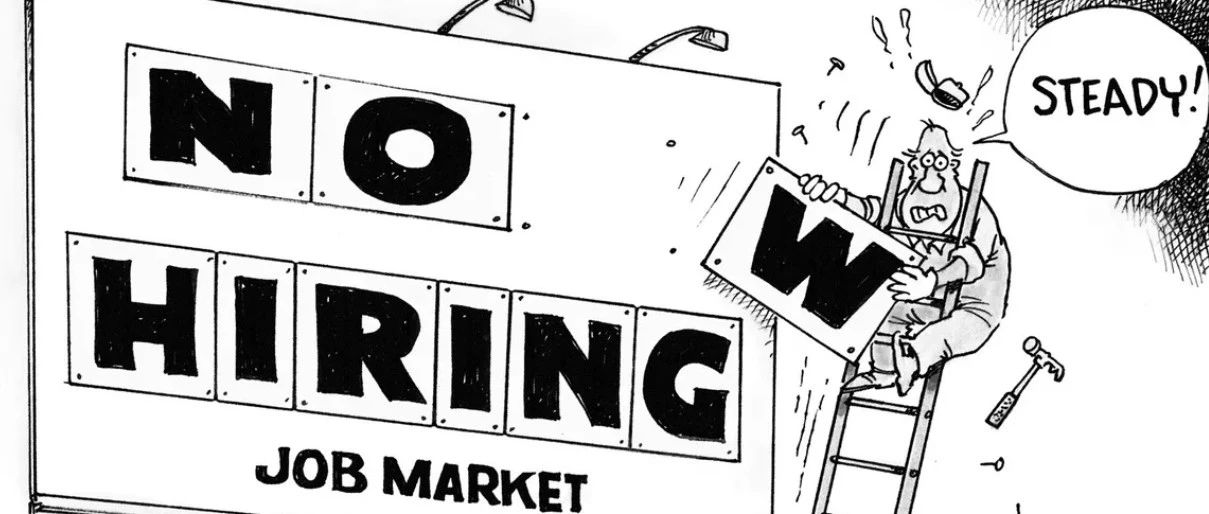
非农仍强,7月降息或落空
HUAXI Securities· 2025-07-04 01:46
Employment Data Insights - Non-farm employment increased by 147,000 in June, surpassing the forecast of 110,000 and the previous value was revised up to 144,000[1] - The unemployment rate fell to 4.1%, better than the expected 4.3% and the previous value of 4.2%[1] - Initial jobless claims have decreased from 250,000 on June 7 to 233,000 on June 28, a drop of 17,000[1] Government vs. Private Sector Employment - Government employment rose significantly, with state and local jobs increasing by 47,000 and 33,000 respectively, while federal jobs decreased by 7,000[2] - Private sector job growth was only 74,000, the lowest in eight months, indicating weakness in private employment[2] - The manufacturing and non-manufacturing employment indices fell to 45.0 and 47.2 respectively, indicating a contraction in private sector employment[2] Labor Market Dynamics - The unemployment rate's decline was primarily due to a drop in the labor force participation rate by 0.09%[3] - Employment among foreign-born individuals decreased by 348,000, suggesting ongoing challenges in labor market participation[3] - Over the last three months, employment for foreign-born individuals has declined by a total of 994,000[3] Wage Growth and Inflation - Average hourly earnings in the private sector rose by only 0.22% in June, down from 0.39% in May[4] - Year-on-year growth in total weekly earnings was 4.5%, lower than the three-month average of 5.0%[4] - The slowdown in wage growth may indicate manageable inflation pressures but could lead to reduced consumer spending[4] Federal Reserve Policy Outlook - Following the employment data release, the market's expectation for rate cuts decreased from 64 basis points to 51 basis points for the year[5] - The probability of a rate cut in September dropped from 94% to around 70%[5] - Current labor market data does not support immediate rate cuts, as the overall employment situation remains stable despite some weaknesses[5]
短视频直播平台带动 新兴职业爆发式增长
Shang Hai Zheng Quan Bao· 2025-06-26 18:47
Group 1 - The core viewpoint of the articles highlights the significant growth and impact of the short video and live streaming industry in China, particularly through platforms like Douyin, which is driving employment opportunities and economic activity [1][2]. - As of May 2025, the total number of active live streaming accounts is projected to reach approximately 193 million, with a year-on-year growth of about 7.2% [1]. - Douyin is expected to directly create over 49.21 million job opportunities and indirectly support an additional 15.34 million jobs, totaling over 64.55 million employment opportunities in 2024 [1]. Group 2 - The rapid increase in traffic on Douyin's e-commerce platform, with 8 billion daily views of short videos and 3.8 billion daily visits to live streaming rooms, has led to a 46% year-on-year growth in GMV (Gross Merchandise Volume) [1]. - The average ratio of content creators to backend support staff is 1:1.5, indicating that content creation roles can generate numerous direct employment opportunities across various fields such as content operation, live streaming assistance, and data analysis [2]. - The digital economy, represented by short video platforms, is enhancing labor participation rates and breaking down barriers for special groups in the labor market, which is seen as a positive development [2]. Group 3 - The rise of new technology positions driven by AI and big data is contributing to the continuous increase in job opportunities within the industry [3].
这份非农数据,正在撕裂美国的经济叙事!
Sou Hu Cai Jing· 2025-06-09 05:23
Group 1 - The U.S. added 139,000 jobs in May, exceeding market expectations of 126,000, but previous months' data was revised down by 95,000 jobs, with March's figures cut from 185,000 to 120,000 [1] - The unemployment rate remained stable at 4.2%, but this stability was due to a decrease of nearly 600,000 in the labor force, indicating a discrepancy between employer hiring intentions and household employment reports [3] - Average hourly wages increased by 0.4% in May, with a year-over-year rise of 3.9%, attributed to a tighter labor market rather than employer generosity, as full-time positions decreased by 620,000 [3][5] Group 2 - The manufacturing sector lost 8,000 jobs in May, signaling potential economic concerns, while the federal government cut 22,000 jobs, totaling nearly 60,000 cuts since January [5] - Some sectors, such as healthcare, added 62,000 jobs, and hospitality industries also saw growth, but the sustainability of these positions under economic pressure is questionable [5] - There was a notable decrease in both native-born and foreign-born workers, with 440,000 and 220,000 fewer workers respectively, highlighting the challenges in the job market [7] Group 3 - The overall employment data presents a façade of growth, but underlying issues suggest instability, with the labor market showing signs of weakening despite reported job increases [8]

5月美国非农数据点评:就业稳中趋弱,亮点在时薪增长
Huachuang Securities· 2025-06-08 00:25
Employment Data Summary - In May, the U.S. added 139,000 non-farm jobs, slightly exceeding the expectation of 130,000[2] - Job growth was concentrated in three sectors: education and healthcare services (+87,000), leisure and hospitality (+48,000), and finance (+13,000)[2] - The unemployment rate remained steady at 4.2%, with a slight increase in the labor force participation rate from 62.6% to 62.4%[4] Wage Growth Insights - Hourly wage growth was 0.4% month-on-month, surpassing the expected 0.3%, and year-on-year growth was 3.9%, up from a revised 3.8%[3] - The average weekly hours worked remained at 34.3 hours, indicating stable labor income growth[3] - Wage growth is crucial for protecting consumer purchasing power, especially for low- and middle-income groups, amid inflation concerns[5] Market Reactions and Economic Outlook - Market expectations for interest rate cuts have cooled, with the probability of a September rate cut dropping from 61.3% to 51.8%[3] - The anticipated number of rate cuts for the year decreased from 2.1 to 1.8, and the year-end policy rate expectation rose from 3.795% to 3.886%[3] - Following the report, U.S. stock indices rose, with the Dow Jones up 1.05% and the Nasdaq up 1.2%, indicating a rebound in risk appetite[3]
菲律宾4月失业率继续攀升
Zhong Guo Xin Wen Wang· 2025-06-06 11:02
Core Insights - The unemployment rate in the Philippines rose to 4.1% in April, marking the second consecutive month of increase, with the number of unemployed reaching 2.06 million [1] - The unemployment rates for February and March were 3.8% and 3.9%, respectively, indicating a month-over-month increase and a year-over-year rise of 0.1 percentage points [1] - The number of unemployed increased by 130,000 from March to April [1] Employment Sector Analysis - The services sector remains the largest employer in the Philippines, with 30.12 million jobs, accounting for 61.9% of total employment [1] - Agriculture and industry represent 20.6% and 17.5% of total employment, respectively [1] - From January to April, employment in agriculture, accommodation and food services, and transportation and warehousing saw a significant decline, while administrative and support services, construction, and fisheries experienced job growth [1] Employment Quality and Youth Participation - The underemployment rate in April rose to 14.6%, up from 13.4% in March, indicating that 7.09 million workers are seeking more hours or better job opportunities [1] - The labor force participation rate for the 15 to 24 age group increased from 29.4% to 31.8%, suggesting more youth are entering the labor market [1] - However, the unemployment rate for this age group also increased from 11.0% to 11.5%, reflecting heightened employment pressure among young individuals [1]