
品牌整合

Search documents
以待刊发内幕消息,东风集团股份停牌引发多重猜想
Bei Ke Cai Jing· 2025-08-13 11:25
Group 1 - Dongfeng Motor Group Co., Ltd. has been suspended from trading since August 11, pending the release of an internal announcement, and has not resumed trading as of August 13 [1] - The suspension has led to various speculations regarding potential IPOs, joint venture reforms, and commercial vehicle integration, but the company has stated that the announcement will clarify the situation [2] - Dongfeng Group has issued a profit warning for the first half of 2025, expecting a net profit of between 30 million to 70 million yuan, a decline of 90% to 95% compared to the same period in 2024, primarily due to decreased sales and profits in its joint venture passenger vehicle business [2] Group 2 - From January to July this year, Dongfeng Nissan, Dongfeng Honda, and Shenlong Automobile reported sales of 306,400 units, 173,400 units, and 30,400 units respectively, representing year-on-year declines of 16.8%, 31.2%, and 29.2% [2] - In July, both Dongfeng Nissan and Dongfeng Honda saw a year-on-year increase in sales, ending a previous trend of continuous decline [2] - Dongfeng Group has integrated its brands to form Yipai Technology, which reported sales of 27,800 units in July, a year-on-year increase of 92%, and cumulative sales of 132,500 units from January to July, a growth of 33.1% [3] Group 3 - Dongfeng Group has established a clear strategic plan for Yipai Technology, focusing on improving user satisfaction in the short term, creating popular products in the medium term, and fostering ecosystem co-creation for long-term development [3] - In July, Dongfeng Group announced an investment agreement with Lantu Automotive, where Dongfeng Asset Management will invest 1 billion yuan to enhance Lantu's R&D, branding, and marketing capabilities [3] - From January to July, Lantu Automotive achieved cumulative sales of 66,680 units, reflecting a year-on-year growth of 85.8% [4]

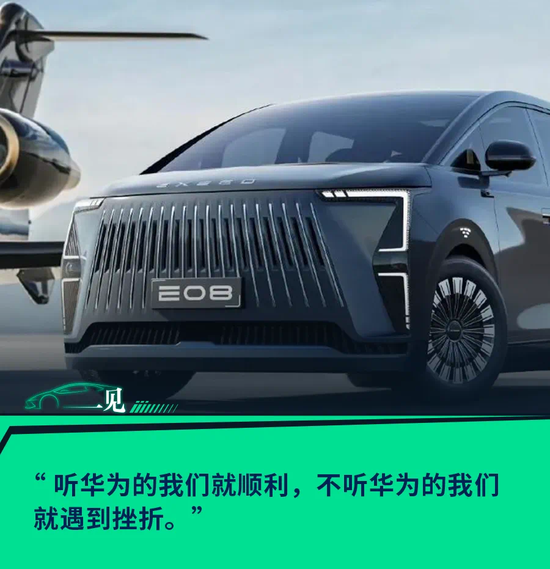
奇瑞首款豪华MPV停止开发,部分项目组员工转岗至智界
2 1 Shi Ji Jing Ji Bao Dao· 2025-08-05 23:49
Core Viewpoint - The article discusses the competitive landscape of the luxury MPV market in China, highlighting the strategic shift of Chery to prioritize its brand Zhijie over its previous model Xingjiyuan for the launch of the first MPV under the Hongmeng Zhixing platform. This decision is seen as a move to optimize resource allocation and enhance brand competitiveness in a growing segment of the automotive market. Group 1: Company Strategy - Zhijie is developing its first MPV, the EHV, based on the E0X-L platform, with plans for a launch in the first half of next year [1] - Chery has decided to stop the development of the Xingjiyuan E08 MPV, reallocating some of its project team to strengthen Zhijie's MPV development [1][2] - The decision to let Zhijie debut the luxury MPV is part of Chery's broader strategy to streamline its brand operations and reduce resource redundancy [2] Group 2: Market Dynamics - The luxury MPV segment is becoming increasingly competitive, with a notable rise in sales of new energy MPVs in China, which saw a 53.3% year-on-year increase in June [9] - The pricing strategy for Zhijie and Xingjiyuan models overlaps, with Zhijie S7 priced between 249,800 to 349,800 yuan and Xingjiyuan ES priced from 225,800 to 319,800 yuan [3] - Zhijie has shown stronger sales performance compared to Xingjiyuan, with cumulative sales of 64,300 units over the past seven months, surpassing Xingjiyuan's 44,200 units [11] Group 3: Production and Delivery Challenges - Zhijie S7 faced production delays due to equipment and hiring issues at its dedicated factory, leading to a shift in production to Chery's existing facility [3][5] - Initial delivery commitments for Zhijie S7 were extended from 4-6 weeks to over 12 weeks, causing customer dissatisfaction [5] - Chery's commitment to prioritize Zhijie as a strategic project indicates its importance in the company's future growth plans [5] Group 4: Future Prospects - The upcoming launch of the EHV MPV is seen as a critical opportunity for Zhijie to establish itself in the luxury MPV market [14] - The establishment of a dedicated factory for Zhijie is expected to alleviate resource allocation issues and enhance production efficiency [13] - The competitive landscape suggests that while Chery is entering the MPV market later than some rivals, it still has the potential to succeed with the right strategies and partnerships [15]

东风汽车整合三大自主品牌 央企新势力加速提振市占率
Zhong Guo Zheng Quan Bao· 2025-08-04 22:32
Core Viewpoint - Dongfeng Motor Group is accelerating the integration of its brands, officially merging Dongfeng Fengshen, Dongfeng Nami, and Dongfeng Yipai into Dongfeng Yipai Technology, which will serve as the main force in the group's independent passenger vehicle sector [1][2]. Group 1: Brand Integration - Dongfeng Yipai Technology was established to consolidate the three brands and optimize resources across R&D, production, supply chain, sales, and services, enhancing the efficiency of Dongfeng's independent passenger vehicle business [2]. - The integration aims to create a more complete product matrix, covering a wider consumer base, with Yipai targeting the 150,000 to 250,000 yuan market and Nami focusing on the 60,000 to 100,000 yuan segment [3]. Group 2: Operational Efficiency - The restructuring addresses previous inefficiencies by creating a closed-loop management system across the entire value chain, significantly improving decision-making speed and information flow [4]. - The integration will also benefit dealers by allowing them to sell a broader range of models, thus enhancing their operational capabilities and market competitiveness [3]. Group 3: Strategic Partnerships - Dongfeng Yipai Technology is expanding its collaboration with leading technology service providers, including CATL, Momenta, Baidu, Tencent, and AutoNavi, to build an "Yipai+" ecosystem [4]. - The partnership with Huawei is particularly noteworthy, progressing through three phases, with the current phase focusing on joint definition, development, co-creation, and marketing of products [4][5].
东风汽车整合三大自主品牌央企新势力加速提振市占率
Zhong Guo Zheng Quan Bao· 2025-08-04 21:06
Core Viewpoint - Dongfeng Motor Group is accelerating the integration of its brands, officially merging Dongfeng Fengshen, Dongfeng Nami, and Dongfeng Yipai into Dongfeng Yipai Technology, which will serve as the main force in the group's independent passenger vehicle sector [1][2]. Group 1: Brand Integration - Dongfeng Yipai Technology was established to consolidate three brands, focusing on centralized R&D, production, supply chain, sales, and service, enhancing resource allocation for the independent passenger vehicle sector [1][2]. - The integration aims to create a more complete product matrix, covering a wider consumer base, with Yipai targeting the 150,000 to 250,000 yuan market and Nami focusing on the 60,000 to 100,000 yuan segment [2]. Group 2: Operational Efficiency - The merger is expected to improve operational efficiency by closing the gaps in the previous decentralized structure, allowing for better information flow and decision-making [3][4]. - The integration will also benefit dealers by allowing them to sell multiple models, thus enhancing their operational capabilities and market competitiveness [3]. Group 3: Strategic Partnerships - Dongfeng Yipai Technology is expanding its collaboration with leading technology service providers, including CATL, Momenta, Baidu, Tencent, and AutoNavi, to create an "Yipai+" ecosystem [3]. - The partnership with Huawei is particularly significant, involving joint definition, development, co-creation, and marketing, aimed at integrating Dongfeng's mechanical expertise with Huawei's smart technology [4].
合并领克、回归吉利,亏损近300亿的极氪如何盈利突围?
Xin Lang Cai Jing· 2025-07-08 05:57
Core Insights - July marks a critical juncture for Zeekr, with June sales figures showing a total of 43,012 units, but core brand deliveries at only 16,702 units, reflecting a 17% year-on-year decline [1] - The launch of the new flagship SUV 9X on July 9 is highly anticipated, as its market response will significantly impact investor sentiment amid increasing competition from Xiaomi's YU7 SUV [1][3] - Zeekr's challenges include declining delivery volumes, a lackluster market response, and ongoing financial losses, with a cumulative net loss of 26.22 billion yuan from 2021 to 2024 [5][6] Company Overview - Zeekr was established as an independent brand by Geely in 2021 to target the high-end electric vehicle market, successfully launching the Zeekr 001, which sold over 70,000 units in its first full year [3][4] - The company went public on the New York Stock Exchange in May 2024, but has since struggled with market competition and valuation, currently valued at around $6.5 billion, significantly lower than competitors like NIO and Li Auto [5][6] Market Dynamics - The competitive landscape in the Chinese electric vehicle market is intensifying, with new entrants like Xiaomi and established players like BYD and Geely increasing their market share [4][10] - Zeekr's market position is under pressure, as it has not consistently ranked among the top in monthly delivery figures, and its stock performance has been underwhelming [5][10] Financial Performance - Zeekr's financial struggles are evident, with net losses of 4.5 billion yuan in 2021, 7.66 billion yuan in 2022, 8.26 billion yuan in 2023, and 5.79 billion yuan in 2024, totaling 26.22 billion yuan [6][7] - The company's gross margin improved to 16.5% in Q1 2025, with Zeekr brand gross margin reaching 21.2%, indicating potential for operational efficiency post-integration with Geely [7][8] Strategic Moves - The integration back into Geely is seen as a strategic move to reduce costs and enhance operational efficiency, with expectations of significant benefits from shared resources and capabilities [6][8] - The upcoming Zeekr 9X is positioned as a critical test for the brand's ability to demonstrate its high-end product and technology capabilities, which will influence its valuation and investor confidence [12][13]
贝泰妮(300957):2024年报及2025一季报点评:产品渠道阶段性调整,库存持续消化
Changjiang Securities· 2025-05-26 02:15
Investment Rating - The investment rating for the company is "Buy" and is maintained [6] Core Views - The company reported a revenue of 5.736 billion yuan for 2024, representing a year-on-year growth of 3.87%, while the net profit attributable to shareholders was 500 million yuan, a decline of 33.53% year-on-year. For Q1 2025, the revenue was 949 million yuan, down 13.51% year-on-year, and the net profit attributable to shareholders was 28.34 million yuan, a decrease of 83.97% year-on-year [2][4] Summary by Sections Revenue Analysis - In 2024, the company's revenue from online, offline, and OMO channels was 3.91 billion, 1.27 billion, and 520 million yuan respectively, with year-on-year changes of 10%, -11%, and flat. The online channel outperformed the offline channel, with Tmall showing better performance than the market average [10] - The main brand, Winona, generated 4.91 billion yuan in revenue, a year-on-year decline of 5%, while smaller brands experienced high double-digit growth, contributing to overall revenue stability [10] Profitability Analysis - The gross profit margin for 2024 was 73.74%, remaining stable year-on-year. However, the sales expense ratio increased by 2.7 percentage points to 49.97%, and the management expense ratio rose by 1.5 percentage points to 8.94%. This led to a decline in the net profit margin from 13.7% to 8.8% [10] - In Q1 2025, the revenue decreased by 13.5%, but the gross profit margin improved by 5.4 percentage points to 77.5% due to operational optimizations and a focus on core products [10] Investment Recommendations - Despite the challenges in revenue and profit, the company is expected to see a recovery in profit margins due to ongoing inventory optimization and stable pricing for core products. The projected EPS for 2025-2027 is 1.66, 2.04, and 2.49 yuan respectively, supporting the "Buy" rating [10]
中金:维持吉利汽车(00175)跑赢行业评级 目标价26.00港元
智通财经网· 2025-05-19 01:56
Core Viewpoint - Company is expected to benefit from the integration and release of profit elasticity, leading to an upward revision of net profit estimates for 2025 and 2026 by 15.5% and 6.1% to 16.2 billion and 17.6 billion CNY respectively, with a target price increase of 23.5% to 26.00 HKD, indicating a potential upside of 31.7% from the current stock price [1] Group 1: Financial Performance - In Q1 2025, the company achieved revenue of 72.5 billion CNY, a year-on-year increase of 25%, and a net profit attributable to shareholders of 5.67 billion CNY, a significant year-on-year increase of 264%, aligning with the bank's expectations [2] - The revenue growth was driven by strong sales and the consolidation of Lynk & Co, with passenger vehicle sales increasing by 48% year-on-year to 703,800 units, including 339,000 units of new energy vehicles, which accounted for over 50% of total sales [3] Group 2: Profitability Improvement - The company's gross margin improved by 0.2 percentage points year-on-year to 15.8%, attributed to the scale effects of the new energy business and the GEA modular architecture reducing manufacturing costs [4] - The integration of Lynk & Co and Zeekr has led to enhanced cost control, with selling and administrative expense ratios decreasing by 2.1 percentage points and 0.6 percentage points to 5.0% and 1.9% respectively [4] Group 3: Strategic Initiatives - The "One Geely" strategy has accelerated brand integration and resource focus, showing initial effects in Q1 2025, with clearer brand positioning and significant scale effects in supply chain and production capacity [5] - The company is establishing a competitive advantage in global markets, particularly in the Middle East and Asia-Pacific, while leveraging brand synergies with Lynk & Co, Zeekr, and Volvo to penetrate the European market [5]

“时间不等人”!吉利大整合,要花多少钱?
21世纪经济报道· 2025-05-17 07:34
Core Viewpoint - Geely Automobile is undergoing a significant restructuring and integration process, particularly with the privatization of Zeekr, aiming to consolidate resources and enhance competitiveness in the rapidly evolving electric vehicle market [2][3][10]. Group 1: Integration and Restructuring - The integration between Geely and Zeekr was announced just eight days after the privatization offer, highlighting the urgency in the current market environment [2][3]. - Geely has established four main brands post-integration: Zeekr (global luxury tech), Lynk & Co (global high-end new energy), Galaxy (mainstream new energy), and China Star (mainstream fuel vehicles) [3][10]. - The goal of the merger is to eliminate redundant investments and reduce costs, targeting production cost reductions of over 3%, R&D optimization of 10-20%, and management efficiency improvements of 10-20% [3][20]. Group 2: Financial Implications - Geely's Q1 2025 financial results showed revenue of 72.5 billion RMB, a 25% year-on-year increase, and a net profit of 5.67 billion RMB, up 264% [9][23]. - The privatization of Zeekr is estimated to cost Geely over 2 billion USD to acquire the remaining 34.3% of shares, raising concerns about cash flow pressures [9][10]. - Geely's cash reserves were reported at 35.2 billion RMB, significantly lower than BYD's, and decreased by approximately 7.8 billion RMB from the previous quarter [9][10]. Group 3: Management Changes - Following the merger, An Conghui will transition from CEO of Zeekr to CEO of Geely Holding Group, while Gan Jiayue will become CEO of the newly formed Geely Automobile Group [12][16]. - The restructuring includes the introduction of a rotating presidency system, aimed at fostering leadership talent and reducing decision-making errors [18][19]. Group 4: Challenges and Future Outlook - The integration process has faced challenges, including communication costs and differing employee incentive mechanisms between Geely and Zeekr [20][23]. - Despite achieving profitability in the latest quarter, Zeekr has accumulated significant losses over the past few years, totaling over 26 billion RMB [23]. - Geely aims to achieve a growth target exceeding 5% and improve efficiency in R&D and management by 15-20% [21][22].
吉利汽车(0175.HK):推动极氪私有化 《台州宣言》深化落地 利好公司长期发展
Ge Long Hui· 2025-05-17 02:23
Core Viewpoint - Geely Auto plans to acquire all issued shares of Zeekr at a suggested purchase price of $2.57 per share or $25.66 per American Depositary Share, aiming for full integration of Zeekr as a wholly-owned subsidiary [1][2] Group 1: Acquisition Details - The acquisition price represents a premium of approximately 13.6% over the last trading day closing price of Zeekr's American Depositary Shares on the NYSE and a 20% premium over the volume-weighted average price for the last 30 trading days [1] - Geely currently holds about 65.7% of Zeekr's shares, and upon completion of the transaction, Zeekr will be fully merged into Geely Auto [1] Group 2: Strategic Implications - This acquisition is seen as a further implementation of the "Taizhou Declaration," which aims to consolidate brands under Geely Auto, enhancing brand positioning and internal resource integration [2] - Full ownership of Zeekr is expected to improve Geely's profitability, as Zeekr has shown continuous improvement in earnings, with a reported profit of 150 million yuan in Q4 2024 [2] Group 3: Product Strategy and Innovation - Geely Auto is set to launch 10 new energy models in 2025, including 5 new models and several facelifts under the Geely brand, alongside new models from Zeekr and Lynk & Co [3] - The company is focusing on electrification and intelligence, with significant advancements in smart driving capabilities expected across its new and updated models [3][4] Group 4: Financial Outlook - The new GEA architecture supports the upcoming product cycle, with a solid foundation in fuel vehicles and innovative overseas expansion strategies [4] - Geely Auto's net profit for 2025 is projected to be 16.1 billion yuan, with a corresponding PE ratio of 9.8X, indicating strong profitability potential [4]
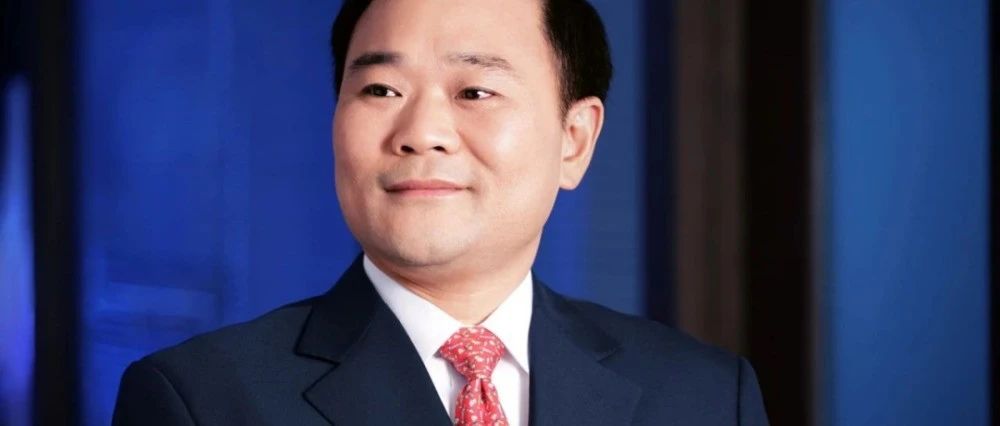
李书福重塑吉利:资源集中、管理分权
2 1 Shi Ji Jing Ji Bao Dao· 2025-05-16 14:44
Core Viewpoint - Geely Automobile Holdings Limited is undergoing a significant restructuring by privatizing Zeekr Intelligent Technology, aiming to consolidate its brands and resources to enhance competitiveness in the evolving automotive market [1][4]. Group 1: Merger and Integration - The merger between Geely and Zeekr was announced just eight days after the privatization offer, indicating a swift response to market conditions [1]. - Geely plans to establish two main divisions post-merger: the Galaxy Division and the Zeekr Division, with four primary brands: Zeekr (global luxury tech), Lynk & Co (high-end new energy), Galaxy (mainstream new energy), and China Star (mainstream fuel) [2]. - The merger aims to eliminate redundant investments and reduce costs, targeting production cost reductions of over 3%, R&D optimization of 10-20%, and management efficiency improvements of 10-20% [2][11]. Group 2: Financial Performance and Projections - Geely reported a revenue of 72.5 billion RMB for Q1 2025, a 25% year-on-year increase, and a net profit of 5.67 billion RMB, up 264% [4]. - The cash reserves of Geely as of March 31, 2025, were 35.2 billion RMB, approximately one-third of BYD's cash reserves, indicating potential liquidity pressure [4]. - The privatization of Zeekr is expected to allow investors to exchange shares, reducing the cash outflow required for the merger and enabling Geely to allocate more funds for core business development [5]. Group 3: Management Changes - Following the merger, An Conghui will transition from managing Zeekr to becoming the CEO of Geely Holdings, while Gan Jiayue will take over as CEO of the merged Geely Automobile Group [2][9]. - The introduction of a rotating presidency system within Geely aims to prevent power concentration and foster leadership talent, although it may lead to strategic inconsistencies [9][10]. - The restructuring reflects Geely's historical pattern of consolidation, with the last major integration occurring in 2014, which significantly improved its market position [2][7]. Group 4: Challenges and Future Outlook - The integration process has faced challenges, including communication costs and differing employee incentive mechanisms between the two companies [11]. - Despite recent profitability, Zeekr has accumulated significant losses over the past few years, which will impact Geely's financial statements post-merger [13]. - The company aims to achieve a growth target exceeding 5% and improve R&D and management efficiency by 15-20% [11].