外卖大战

Search documents
餐饮会员流量跟踪系列:从美团与霸王茶姬财报再议外卖大战的得与失
Guoxin Securities· 2025-12-01 15:30
Investment Rating - The report maintains an "Outperform" rating for the industry [5][37]. Core Insights - The report analyzes the recent financial performance of major players in the food delivery sector, including Meituan, JD Group, Alibaba, and Bawang Chaji, highlighting the impact of the ongoing delivery battle on their operations and profitability [1][2][3]. - It emphasizes that the low-frequency, low-ticket order subsidies are the primary reason for the significant losses in the instant retail business, which includes food delivery [2][19]. - The report suggests that the platforms are likely to return to a more rational subsidy strategy, focusing on high-ticket orders to improve unit economics [2][19]. Summary by Sections Meituan - In Q3 2025, Meituan reported revenues of 954.9 billion yuan, a year-on-year increase of 2.0%, but faced an adjusted net loss of 160.1 billion yuan, shifting from profit to loss [1][6]. - The core local business revenue was 674.5 billion yuan, down 2.8%, with an operating loss of 140.7 billion yuan [8][10]. - The food delivery segment is expected to see a 15% increase in order volume, but a 13% decline in revenue due to a decrease in average order value (AOV) and lower monetization rates [8][10]. JD Group and Alibaba - JD Group's Q3 2025 new business losses reached 157 billion yuan, while Alibaba's instant retail business incurred losses of approximately 361 billion yuan, with a per-order loss of about 5.3 yuan [2][17]. - Both companies are experiencing significant pressure on their overall performance due to the losses in their instant retail segments [2][19]. Bawang Chaji - Bawang Chaji reported a revenue of 32.08 billion yuan in Q3 2025, a decrease of 9.4%, with an adjusted net profit of 5.03 billion yuan, down 22.2% [3][21]. - The company has chosen a cautious approach to the delivery battle, avoiding price wars to maintain brand integrity and product strategy [3][32]. - The report notes that Bawang Chaji's same-store GMV declined by 27.9% in the Greater China region, reflecting the competitive pressures in the market [21][32]. Recommendations - The report recommends focusing on leading restaurant brands that are likely to benefit from increased subsidy efforts and are in a strong operational season, such as Guoquan, Haidilao, Yum China, and Xiaocaiyuan [3][37]. - It also highlights the potential of tea brands like Guming and Mixue Group, which are actively expanding their product offerings and private traffic strategies [3][37].
美团守擂:用比对手更少的资源跟进,长期确定性增加
Jing Ji Guan Cha Wang· 2025-12-01 08:41
Core Insights - Meituan's Q3 earnings report highlights its resilience amid fierce competition in the food delivery market, maintaining a leading position in high-value orders despite significant losses [1][2][3] - Goldman Sachs maintains a "Buy" rating on Meituan, citing its strong execution capabilities and the current attractive stock price as key investment factors [1] User Metrics - Meituan's transaction user base has surpassed 800 million, with daily active users (DAU) increasing by over 20% year-on-year, and monthly transaction users for food delivery reaching a historical high [1][3] - The company holds over 70% market share in orders exceeding 30 yuan and over 66% in orders above 15 yuan, indicating strong market dominance in higher-priced segments [2][3] Financial Performance - In Q3, Meituan's core local business revenue (food delivery + in-store) was 67.4 billion yuan, remaining stable compared to the previous year, despite a slowdown in service marketing revenue growth [3] - Adjusted net loss for Q3 was 16 billion yuan, primarily due to losses in the core local business, but this loss is considered manageable compared to competitors [2][3] New Business Developments - Meituan's instant retail business has shown significant growth, with new user acquisition and transaction frequency both increasing [5] - The company has made notable progress in international markets, with its Keeta business achieving monthly profitability in Hong Kong ahead of schedule [5] Ecosystem and Community Support - Meituan has implemented comprehensive support for delivery riders, including pension insurance, welfare benefits, and housing support, covering over a million riders and their families [7][8] - The company has launched initiatives to assist merchants in navigating competitive pressures, including a 2.8 billion yuan support plan and upgrades to its merchant evaluation system [7] Technological Advancements - Meituan has invested 6.9 billion yuan in R&D in Q3, a 31% increase year-on-year, focusing on AI tools and applications to enhance service efficiency [5][6] - The company has expanded its drone delivery services, achieving over 670,000 commercial orders by September, showcasing its commitment to technological innovation [8]

奶茶黑马赚钱快分红狠,古茗一年分红37亿,创始人王云安独揽15亿
3 6 Ke· 2025-12-01 03:46
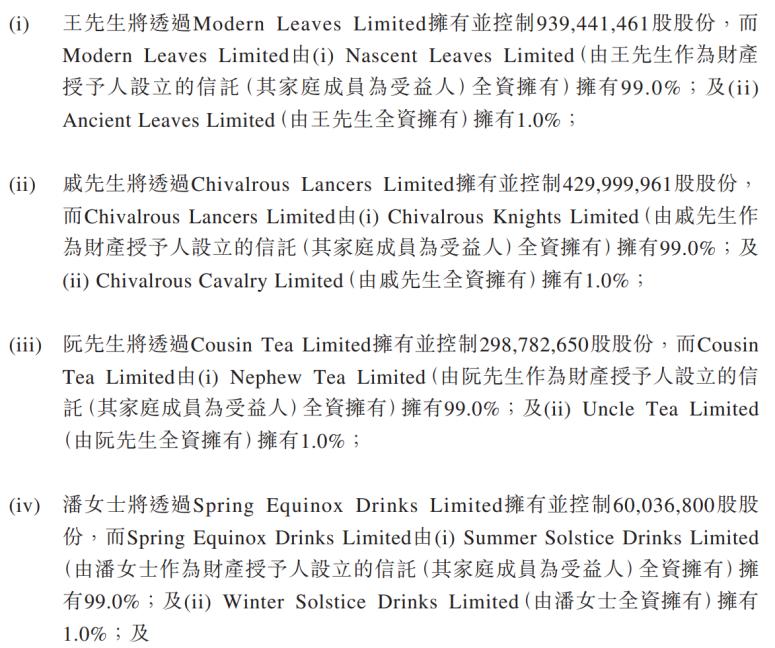
古茗突然宣布大手笔分红,创始人王云安及一众高管成为最大赢家。 古茗(1364.HK)日前发布公告称,公司计划派发特别股息0.93港元/股,以23.78亿总股本计算,合计派发股息22.12亿港元,且无须缴纳预 扣税。 这已是古茗年内第二次宣布派息。今年1月,古茗就宣布分红17.4亿元人民币。截至6月底,这笔股息已派发了8.7亿元,其余部分将于明年 3月前派发完毕。 上市刚9个多月,古茗的分红额已经超过了公司的募资额。今年2月上市时,古茗的募资净额为19.30亿港元,而年内两次分红就分出了超37 亿元。 值得注意的是,由于古茗股权极为集中,上述分红多数流入了古茗创始人、董事长兼CEO王云安及部分高管的海外信托之中。 截至今年6月底,王云安、戚侠、阮修迪、潘萍萍4位控股股东通过家族信托,合计控制公司72.77%的股权。算下来王云安4人从本次派息 中分得约16亿港元,约合14.7亿人民币。若算上年初那次分红,王云安4人共可取得超28亿元分红,其中王云安独揽逾15亿元。 此外,随着古茗市值拔升,王云安等人的身价也水涨船高。以古茗596亿港元的市值计算,四位控股股东的合计持股市值约为433亿港元, 王云安个人的身价为23 ...

美团没有被彻底拖住
36氪· 2025-11-30 23:53
Core Insights - The article discusses the intense competition in the food delivery market, highlighting that there are no clear winners in the ongoing battle, particularly in Q3 2025, where both Alibaba and Meituan faced significant losses [4][10]. - Meituan's core local business segment reported a revenue decline of 2.8% year-on-year, resulting in an operating loss of 14.1 billion yuan, marking its first loss since Q4 2022 [4][9]. - Alibaba's aggressive strategy led to a profit drop of approximately 30 billion yuan, with significant investments in subsidies that have nearly exhausted their planned 50 billion yuan budget [10]. Meituan's Performance - Meituan's operating profit for its core local business was 14.6 billion yuan in Q3 2024, contrasting sharply with a loss of 14.1 billion yuan in the same period this year, indicating a significant shift in financial performance [9]. - The increase in sales and marketing expenses by 90.9% to 35.9% of revenue reflects the high cost of maintaining market share amid fierce competition [9][10]. - Despite the losses, Meituan's average order value (AOV) remains significantly higher than competitors, with over 70% market share in orders above 30 yuan [10]. Competitive Landscape - The competition has intensified with new entrants and existing players like Alibaba and JD.com increasing their efforts in the food delivery and local services market [13]. - Douyin (TikTok) is emerging as a formidable competitor, with its life services projected to exceed 800 billion yuan in GTV by 2025, narrowing the gap with Meituan [13]. - The article notes that both Alibaba and Meituan are still in the process of optimizing their user experience (UE) and expanding their instant retail offerings [11][12]. New Business Developments - Meituan's new business segment saw a revenue increase of 15.9% year-on-year to 28 billion yuan, although operating losses increased by 24.5% to 1.3 billion yuan [17]. - The company is expanding its offline retail efforts, with initiatives like the "Happy Monkey" discount supermarket and "Little Elephant" supermarket gaining traction [18]. - Meituan's overseas business, particularly in Brazil, is set to launch in December, with significant investments aimed at capturing market share in a competitive landscape dominated by iFood [19][20]. Future Outlook - Meituan's management expresses confidence in maintaining efficiency and market share despite ongoing losses, emphasizing the importance of patience and strategic focus [7][15]. - The company aims to leverage its strengths in high-value orders and continue exploring new opportunities in both domestic and international markets [10][20].

Q3之后,美团险胜会不会是外卖大战的终局?
Sou Hu Cai Jing· 2025-11-30 13:04
Core Insights - Meituan reported Q3 revenue of 95.5 billion yuan, a 2% year-on-year increase, but incurred a quarterly loss of 18.6 billion yuan, raising concerns about its high expenditure in the competitive food delivery market [2][3] - Despite the significant loss, Meituan's user base and engagement metrics improved, with over 800 million transaction users and a more than 20% year-on-year increase in daily active users [4][5] - The company aims to maintain its market dominance in food delivery, viewing the ongoing price war as a necessary strategy to protect its core business [6][8] Financial Performance - The substantial quarterly loss of 18.6 billion yuan is notable, especially compared to the profit from the same period last year, indicating a strategic investment in user retention and market share [3][9] - Meituan's cash reserves stood at approximately 141.3 billion yuan, providing a buffer for continued investment in the competitive landscape [11][12] - The increase in sales and marketing expenses by 90.9% to 34.3 billion yuan was primarily due to higher rider subsidies, reflecting a focus on strengthening its delivery infrastructure [15][16] Market Dynamics - The competitive landscape is shifting, with other players like Alibaba also reporting losses, suggesting that the price war may be nearing its end [13][14] - Meituan's market share in high-value orders remains strong, with over 66% in orders priced above 15 yuan, indicating a solid customer base that is less price-sensitive [21][22] - The ongoing battle for market share may lead to a "tragic victory" for Meituan, where the costs incurred could ultimately solidify its market position despite short-term losses [15][24] Strategic Outlook - The company is expected to benefit from a potential reduction in competitor subsidies, which could enhance user retention and profitability in the long run [25][30] - Meituan's operational efficiency in delivery services remains a competitive advantage, making it difficult for new entrants to disrupt its market position [18][20] - The future of the food delivery market may hinge on innovation and user experience rather than just price competition, as seen in other industries [36][39]
利润减少数百亿,外卖大战还打吗?
财联社· 2025-11-29 14:45
Core Viewpoint - The intense competition in the food delivery sector has significantly impacted the profits of major platforms like Meituan, Alibaba, and JD.com, leading to a shift towards refined operations in the ongoing battle for market share [1][2][5]. Financial Performance - In Q3, Meituan's core local business segment reported a loss of 14.1 billion yuan, down from a profit of 14.6 billion yuan in the same period last year, with a profit margin decline from 21% to -20.9% [2]. - Alibaba's e-commerce group adjusted EBITA was 10.497 billion yuan, a decrease of 33.83 billion yuan year-on-year [2]. - JD.com reported a loss of 15.736 billion yuan in new business operations, an increase in losses by 15.121 billion yuan compared to the previous year [2]. Market Dynamics - The three major platforms collectively saw a reduction of over 77 billion yuan in operating profits from food delivery and related businesses compared to last year [3]. - Meituan's shift from profit to loss in its core local business is attributed to declining gross margins and increased spending on user incentives and advertising to maintain market position amid fierce competition [3]. - Both Meituan and Alibaba's management emphasized that the price war is unsustainable and does not create real value for the industry [3][4]. Strategic Shifts - The food delivery battle is expected to evolve into a long-term engagement, with intensified competition between Alibaba and Meituan, impacting JD.com, Douyin, and Pinduoduo significantly [5]. - Meituan is focusing on enhancing cooperation with brand merchants and expanding its "brand officer flag lightning warehouse" for 24-hour delivery services [6]. - JD.com is witnessing an increasing conversion rate of new users from food delivery to other services, with nearly 50% of early food delivery users transitioning to other business areas [6]. Future Outlook - The future competition among food delivery platforms will shift towards refined operations, focusing on unit economic efficiency and multi-business collaboration [7]. - Instant retail is set to become the main battleground, with platforms like Meituan and Alibaba enhancing their operational efficiencies and expanding their service offerings [7]. - A recent report from JPMorgan highlights that platforms may shift subsidies towards higher-ticket lunch and late-night orders, which could improve profitability per order [7].


霸王茶姬发布第三季度财报 海外市场GMV增长超75%
Zheng Quan Shi Bao Wang· 2025-11-28 15:11
Core Insights - The company reported a total GMV of 7.93 billion yuan for Q3 2025, a decrease from 8.3 billion yuan in the same period of 2024 [1] - Net revenue for Q3 2025 was 3.208 billion yuan, down from 3.54 billion yuan year-on-year [1] - Adjusted net profit for Q3 2025 was 503 million yuan, compared to 646 million yuan in the previous year [1] Financial Performance - The company had a total cash and cash equivalents of 9.142 billion yuan as of September 30, 2025, with no interest-bearing debt, indicating healthy cash flow [1] - A special cash dividend of approximately 177 million USD will be distributed, equating to 0.92 USD per share for eligible shareholders [1] Business Segments - Franchise tea houses generated net revenue of 2.812 billion yuan in Q3 2025, down from 3.299 billion yuan in the same period of 2024, primarily due to a decrease in cup sales [1] - Franchise tea shops accounted for 87.6% of the company's total net revenue in Q3 2025 [1] International Expansion - The overseas business saw a GMV exceeding 300 million yuan, with a year-on-year increase of 75.3% and a quarter-on-quarter growth of 27.7% [2] - The company entered the Philippines and Vietnam markets in Q3 2025, with overseas store count reaching 262 [2] - The company opened three new stores in the Philippines on August 29, 2025, marking its official entry into the market [2] Market Strategy - The company refrained from participating in aggressive price competition during the intensified delivery battle initiated by e-commerce platforms, while membership numbers grew to 222 million, a 36.7% increase year-on-year [2] - The company launched a "super tea warehouse" in Hong Kong and opened several themed stores in mainland China during Q3 2025 [2] - Product innovation included the nationwide launch of "Dian Olive" vitality light fruit tea and regional limited-time offerings [2]
外卖大战 “烧” 到拼多多?
36氪未来消费· 2025-11-20 07:23
Core Viewpoint - Pinduoduo's Q3 financial results indicate a slowdown in growth, particularly in advertising revenue, which has dropped to single-digit growth for the first time, raising concerns about the company's future performance [2][5][6]. Financial Performance - In Q3, Pinduoduo reported revenue of 108.3 billion yuan, a year-on-year increase of 9%, slightly above market expectations and better than the previous quarter's 7% growth [3]. - Operating profit for the quarter was 27.1 billion yuan, reflecting a year-on-year growth of only 1% [3]. - Following the earnings report, Pinduoduo's stock price fell over 7%, marking its worst single-day performance since the release of Q1 results [4]. Advertising Revenue - Pinduoduo's advertising revenue for the quarter was 53.3 billion yuan, missing expectations by 2.1 billion yuan and showing only an 8% year-on-year increase [5]. - This marks the first time Pinduoduo's advertising revenue growth has fallen to single digits, contrasting with Alibaba's 10% growth in customer management revenue for Q2 [6][7]. Reasons for Slowdown - The management team attributed the slowdown to increased competition and the unsustainability of high growth rates as the platform scales [8]. - Analysts suggest that the decline in advertising revenue may be due to a slowdown in GMV growth, which was only 9% in Q3, slightly above the industry average [9]. - Increased competition from platforms like Douyin and the impact of the instant retail battle are also seen as contributing factors [9]. Marketing Expenses and Subsidies - Pinduoduo's marketing expenses decreased by 0.5% year-on-year to 30.3 billion yuan, which was 2.6 billion yuan less than market expectations, as national subsidies have lessened [12]. - The reduction in subsidies has alleviated some financial pressure on Pinduoduo, allowing for a potential recovery in operating profit [12]. International Expansion - Pinduoduo's commission revenue reached 54.9 billion yuan in Q3, a 10% year-on-year increase, driven by clearer tariff policies and the expansion of Temu in international markets [14]. - Temu has seen significant growth, leading in global e-commerce app downloads and monthly active users, with a total download count exceeding 1.2 billion [15]. - However, international expansion poses challenges due to varying compliance requirements across countries and logistical issues in Latin America [16]. Future Outlook - Temu is expected to achieve breakeven in the first half of 2026 and potentially turn a profit in the second half, which could signal a new phase of profitability for Pinduoduo [17].


纠结的外卖大战:瑞幸净利润下滑
2 1 Shi Ji Jing Ji Bao Dao· 2025-11-20 02:08
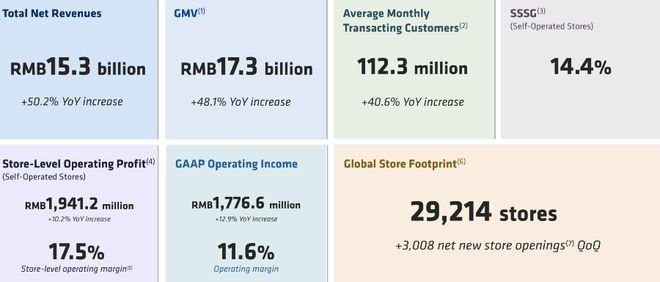
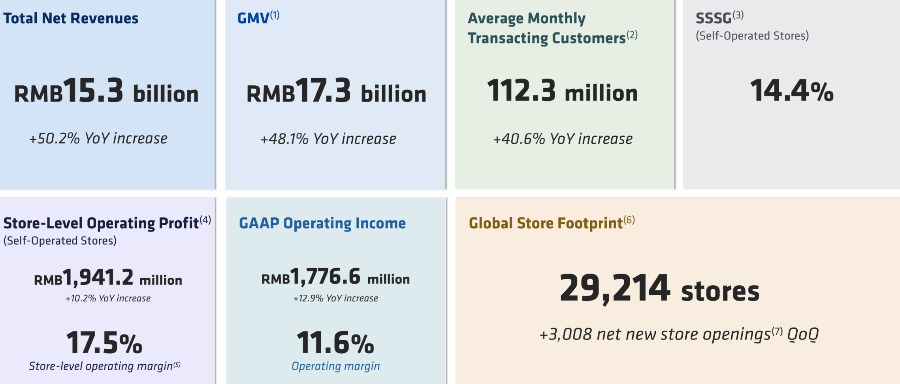
Core Insights - Luckin Coffee's revenue increased by 50.2% year-on-year to RMB 15.287 billion in Q3 2025, but net profit decreased by 2.7% to RMB 1.278 billion, primarily due to the impact of the delivery battle [1][5]. Financial Performance - Total net revenues reached RMB 15.3 billion, with a year-on-year increase of 50.2% [2]. - Gross Merchandise Volume (GMV) grew by 48.1% year-on-year to RMB 17.3 billion [2]. - Average monthly transacting customers increased by 40.6% year-on-year to 112.3 million [2]. - Store-level operating profit rose by 10.2% year-on-year to RMB 1.941 billion, with an operating margin of 17.5% [2]. - GAAP operating income increased by 12.9% year-on-year to RMB 1.777 billion [2]. Store Expansion - The company added 3,008 new stores in Q3, reaching a total of 29,214 stores, marking an 11.5% quarter-on-quarter growth [3]. - Self-operated stores accounted for 18,882, while franchise stores numbered 10,332 [3]. Customer Engagement - Monthly average transacting users hit a record high of 112 million, with 42 million new users added in the quarter [3]. - Same-store sales increased by 14.4% year-on-year, recovering from previous declines [3]. Cost Structure - Raw material costs as a percentage of total net revenue decreased from 39% to 36% year-on-year, despite a 41% increase in absolute value to RMB 5.5 billion [3]. - Rent and other operating costs as a percentage of total net revenue fell from 22% to 20%, with a 36% increase in absolute value to RMB 3.1 billion [4]. - Sales and marketing expenses decreased from 6% to 5% of total net revenue, with a 28% increase in absolute value to RMB 751 million [4]. Delivery Costs - Delivery expenses surged by 211.4% year-on-year to RMB 2.89 billion, accounting for 18.9% of total revenue, which negatively impacted operating profit margins [5]. - The company’s net profit decline was attributed to the rising delivery costs associated with the competitive landscape [5]. Competitive Landscape - The delivery battle has intensified, with competitors like KFC and Pizza Hut showing more stable profit margins [6]. - Luckin Coffee is compelled to engage in price competition to maintain market share in the high-frequency coffee consumption sector [7]. Strategic Direction - The company is exploring structural solutions, including a shift towards in-store pickup as a primary consumption method [9]. - The CEO emphasized that delivery costs are too high relative to the pricing sensitivity of coffee, and the focus will return to in-store consumption over time [10]. - The company anticipates short-term fluctuations in same-store sales growth due to the tapering of delivery subsidies [11].

纠结的外卖大战:瑞幸净利润下滑丨咖啡财报观察
2 1 Shi Ji Jing Ji Bao Dao· 2025-11-20 02:05
Core Insights - Luckin Coffee's revenue increased by 50.2% year-on-year to RMB 15.287 billion in Q3 2025, while net profit attributable to shareholders decreased by 2.7% to RMB 1.278 billion, primarily due to the impact of the delivery battle [1][6]. Financial Performance - Total net revenues reached RMB 15.3 billion, with a year-on-year increase of 50.2% [2]. - The company's gross merchandise volume (GMV) grew by 48.1% year-on-year to RMB 17.3 billion [2]. - Average monthly transacting customers increased by 40.6% year-on-year to 112.3 million [2]. - Store-level operating profit rose by 10.2% to RMB 1.941 billion, with a store-level operating margin of 17.5% [2]. - GAAP operating income increased by 12.9% to RMB 1.777 billion [2]. Store Expansion - In Q3, Luckin Coffee added 3,008 new stores, reaching a total of 29,214 stores, marking an 11.5% quarter-on-quarter growth [3]. - The number of self-operated stores is 18,882, while franchise stores account for 10,332 [3]. Cost Structure - The proportion of raw material costs to total net revenue decreased from 39% in 2024 to 36% in 2025, despite a 41% year-on-year increase in absolute value to RMB 5.5 billion [3][4]. - Rent and other operating costs as a percentage of total net revenue fell from 22% to 20%, with absolute costs rising by 36% to RMB 3.1 billion [4]. - Sales and marketing expenses decreased from 6% to 5% of total net revenue, with absolute expenses growing by 28% to RMB 751 million [4]. - General and administrative expenses also decreased from 6% to 5% of total net revenue, with absolute expenses increasing by 25% to RMB 793 million [5]. Delivery Costs and Profitability - Delivery costs surged by 211.4% year-on-year to RMB 2.89 billion, accounting for 18.9% of total net revenue, which negatively impacted operating profit margin, reducing it to 11.6% [6]. - The increase in delivery costs is attributed to the competitive delivery battle, contrasting with Yum China, which reported a 7.8% increase in operating profit [6][8]. Market Dynamics - The coffee and tea beverage sector is characterized by high-frequency consumption, necessitating competitive pricing strategies to maintain market share [7]. - Luckin Coffee is exploring structural solutions, emphasizing in-store pickup as a primary consumption method, while delivery serves as a supplementary channel [9].