差异化竞争

Search documents
银行消费贷优惠出新:增额度 长期限 低利率
Zheng Quan Ri Bao· 2026-01-19 16:10
Core Viewpoint - The domestic consumer loan market is experiencing a surge in various promotional measures driven by regulatory policies and proactive bank strategies, aimed at reducing financing costs and stimulating consumer demand [1][4]. Group 1: Promotional Measures - Multiple banks have updated their consumer loan policies focusing on lowering interest rates, extending repayment periods, increasing loan limits, and enhancing services to meet consumer needs in areas such as car purchases, home renovations, education, and travel [2][3]. - For instance, China Construction Bank's "Jianyi Loan" offers a maximum loan amount of 1 million yuan with a repayment period of up to 84 months and an annual interest rate ranging from 3.00% to 3.40% [2]. - Similarly, Guangfa Bank's promotional campaign features an annual interest rate starting at 3.0% and a maximum credit limit of 1 million yuan, with flexible repayment options [2]. Group 2: Market Dynamics - The recent wave of consumer loan promotions is a response to government policy guidance and banks' strategic initiatives, particularly in light of the State Council's meeting on January 9, which emphasized enhancing consumer capacity through optimized loan policies [4][5]. - The People's Bank of China announced a 0.25 percentage point reduction in relending and rediscount rates, significantly lowering banks' funding costs and supporting credit concessions [4]. - Analysts suggest that the combination of fiscal and financial policies is aimed at boosting domestic demand, with banks leveraging these measures to capture market share and address key consumer needs [4][5]. Group 3: Competitive Landscape - The introduction of these promotional measures has intensified competition among banks, particularly as they seek to establish consumer loans as a core growth area amid slowing mortgage loan growth [5][6]. - While this strategy lowers financing barriers for consumers, it may lead to increased homogenization in offerings, potentially compressing interest margins for smaller banks [5][6]. - Future policies are expected to expand the coverage of interest subsidies and enhance regulatory oversight on fund usage to ensure resources are directed towards genuine consumer spending [6].
上海合晶:在销售模式方面,公司主要通过直销和经销两种方式开展全球业务
Zheng Quan Ri Bao Wang· 2026-01-19 11:44
证券日报网讯1月19日,上海合晶在互动平台回答投资者提问时表示,根据公司已公开信息,上海合晶 客户覆盖全球多个国家和地区,客户包括欧盟企业,并且与上海合晶保持长期战略合作伙伴关系。在经 营策略上,公司通过布局全球多元化客户结构应对国际贸易环境变化,并持续推进高端国产化替代及差 异化竞争。在销售模式方面,公司主要通过直销和经销两种方式开展全球业务。关于具体业务收入和贸 易方式,属于未公开的商业细节,不便说明。 ...
隆基绿能去年业绩呈修复态势
Zheng Quan Ri Bao· 2026-01-18 16:44
"目前,公司BC二代高功率组件已进入交付阶段,其中量产功率峰值达到680W,最高转换效率突破至25.2%。"上述隆基绿 能负责人表示,680W组件已成为当前行业内可稳定交付的最高功率产品。 本报记者 殷高峰 1月18日晚间,隆基绿能科技股份有限公司(以下简称"隆基绿能")披露2025年业绩预告,预计2025年归属于上市公司股 东的净亏损为60亿元至65亿元。 "公司业绩亏损主要受制于产品价格持续低迷和成本压力。"隆基绿能相关负责人对《证券日报》记者表示,光伏企业去年 的经营环境依然严峻复杂。叠加去年第四季度银浆、硅料成本大幅上涨,显著推升了硅片、电池及组件产品成本,使得企业经 营进一步承压。 值得关注的是,尽管2025年仍处于亏损状态,但相比2024年亏损86.18亿元,隆基绿能业绩修复态势明显。 万联证券投资顾问屈放在接受《证券日报》记者采访时表示,当前,光伏行业已进入深度调整期,技术革新与差异化竞争 优势被视为企业突围的关键,这也是整治"内卷式"竞争的重要路径。伴随着行业整治"内卷式"竞争的深入,头部企业的经营环 境有望进一步改善,隆基绿能业绩在2026年有望止跌企稳。 根据公告,尽管业绩承压,但隆基绿能 ...

未来4年武汉甲级写字楼市场新增供应超百万方 精细化运营与差异化竞争成关键
Zhong Guo Jing Ying Bao· 2026-01-16 23:58
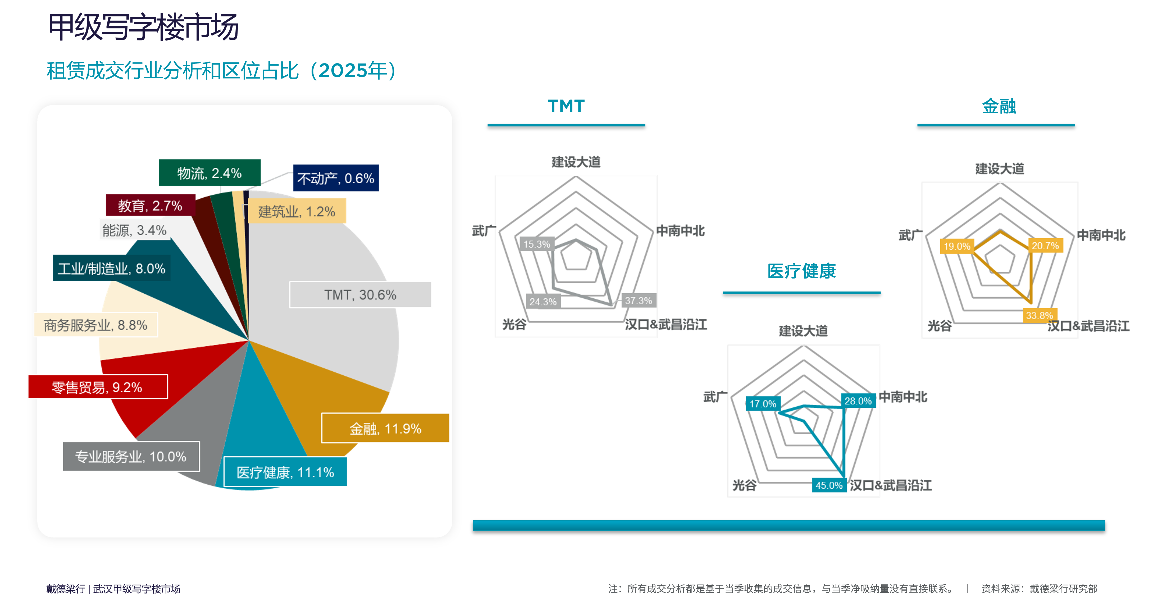
Core Insights - The Wuhan Grade A office market is expected to experience a significant increase in supply, with approximately 1.12 million square meters set to be added over the next four years, primarily concentrated in the Hankou and Wuchang riverside areas [1][4]. Grade A Office Market Overview - In 2025, the Wuhan Grade A office market will see an addition of about 230,000 square meters, raising the total stock in the core business district to 3.433 million square meters [4]. - The TMT (Technology, Media, and Telecommunications) sector is projected to be the main driver of leasing activity, accounting for 35.9% of the new space leased in 2025 [4][6]. - Average rental rates for Grade A offices in Wuhan fell to 73.3 yuan per square meter per month, a decrease of 11.2% year-on-year, while the vacancy rate rose to 39.1%, an increase of 2.7 percentage points compared to the previous year [5]. Market Dynamics and Trends - The overall demand for Grade A office space in Wuhan is undergoing a phase of contraction due to cautious expansion attitudes among companies, with a net absorption of 59,000 square meters in 2025, reflecting a year-on-year decline of 33.4% [5][6]. - Operators are adopting diversified leasing strategies, including co-working spaces and customized services, to attract tenants amid rising competition and increased vacancy rates [5][6]. Sector-Specific Demand - The main sectors supporting the Grade A office leasing market in 2025 are TMT, finance, and healthcare, contributing 30.6%, 11.9%, and 11.1% respectively to the leasing activity [6]. - Cost control remains a core driver for relocations, accounting for 58.3% of demand, while new demand remains limited [6]. Future Outlook - The competition in the Grade A office market is expected to intensify, particularly along the Yangtze and Han rivers, challenging landlords to enhance operational efficiency and differentiate their offerings [6].

元祖股份:预计2025年归母净利润同比下降52%至43%
Bei Jing Shang Bao· 2026-01-16 13:02
Core Viewpoint - Yuanzi Co., Ltd. expects a decline in net profit attributable to shareholders for the fiscal year 2025, projecting a range of 119 million to 143 million yuan, representing a year-on-year decrease of 52% to 43% [1] Group 1: Performance Outlook - The company attributes the performance decline to multiple factors, including a slowdown in consumer market demand and intensified industry competition [1] - The company is optimizing its existing store network and enhancing single-store operational quality while actively investing resources in high-potential regions [1] Group 2: Expansion Strategy - Yuanzi Co., Ltd. has successfully opened its first batch of stores in locations such as Shanghai Hongqiao Airport, Shenzhen, and Quanzhou [1] - The company plans to achieve a net increase of over 20 stores nationwide in 2025 compared to 2024, aiming to establish a more balanced and sustainable growth pattern [1] Group 3: Financial Pressure - The new markets are still in the early stages of development, and their revenue contributions have not yet fully materialized, leading to pressure on overall profits due to high fixed costs associated with new store openings, such as rent and salaries [1] Group 4: Future Strategy - The company maintains confidence in the long-term development of the industry and plans to enhance its core competitiveness through targeted marketing and differentiated competition strategies [1] - Yuanzi Co., Ltd. aims to continuously create value for investors [1]

信达澳亚基金:执主动投资之笔 书高质量发展新华章
Zhong Guo Zheng Quan Bao· 2026-01-12 20:45
Core Viewpoint - The article discusses how small and medium-sized fund companies can differentiate themselves and thrive in an increasingly competitive public fund industry, emphasizing the importance of focusing on customer needs and developing specialized investment strategies [1][2]. Group 1: Industry Trends and Strategies - The China Securities Regulatory Commission issued an action plan in May 2025 to promote high-quality development in the public fund industry, which includes support for differentiated development and specialized operations for small and medium-sized fund companies [1]. - The company aims to transition from a focus on active equity investment to a broader active investment strategy, targeting areas such as technology-driven active investments, "fixed income+" absolute return strategies, and "index+" strategies [1][3]. - The company emphasizes the need for a pragmatic approach to product development, focusing on deepening product competitiveness and ensuring that offerings align with customer asset allocation needs [2][3]. Group 2: Customer-Centric Approach - The company believes that understanding customer needs is crucial for designing financial products that truly meet their asset allocation requirements [1][2]. - The company rejects a "one-size-fits-all" mentality in product design, advocating for a tailored approach that balances product design with investment logic based on customer needs [2]. Group 3: Investment Focus - The company plans to focus on "fixed income+" and "index+" strategies to cater to diverse investor needs, particularly in a low-interest-rate environment where "fixed income+" products can provide stable returns while enhancing yield potential [4][5]. - The "index+" strategy is designed to appeal to younger investors who prefer personalized investment approaches, allowing them to invest based on specific industries or themes [5]. Group 4: Talent Development and Team Dynamics - The company recognizes that talent development is essential for success in active investment and aims to create an environment that nurtures potential talent rather than relying on mass production [6][8]. - A stable fund manager training mechanism has been established, with a focus on internal cultivation complemented by external recruitment to build a multi-tiered fund manager supply system [6][7]. - The company promotes collaboration among fund managers and researchers, ensuring that the relationships are optimized to enhance decision-making and prevent homogenization of investment strategies [7]. Group 5: Future Directions - The company plans to focus on four key areas for future development: long-term performance assessment, product design centered on customer needs, scientific and refined investment management, and strengthening customer service with professional insights [8][9]. - The company aims to establish a strong reputation for its active investment capabilities, particularly in technology investments and the performance of its "fixed income+" and "index+" products [9].
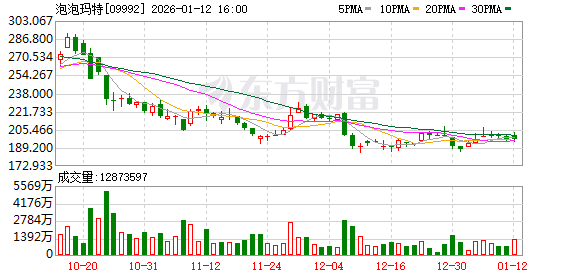
泡泡玛特联手荣耀,潮玩手机要来了?
Guo Ji Jin Rong Bao· 2026-01-12 14:49
Core Viewpoint - Pop Mart is launching a collaboration with Honor, a leading smartphone brand, to create a trendy toy-themed smartphone, which has generated significant interest in both the toy and tech communities [2][4]. Group 1: Collaboration Details - The collaboration is not a self-developed phone by Pop Mart but an IP co-branding partnership with Honor [2]. - The specific collaboration model between Honor and Pop Mart has not been disclosed yet, but it could range from lightweight branding to deep customization across the product lifecycle [4]. - Pop Mart is known for its "IP + blind box" model, successfully creating and operating several popular IPs, including MOLLY and SKULLPANDA, and has established three core business segments: consumer products, service experiences, and entertainment [4]. Group 2: Financial Performance - In the first half of 2025, Pop Mart reported revenue of 13.88 billion yuan, a year-on-year increase of 204.4%, and an adjusted net profit of 4.71 billion yuan, up 362.8% [5]. - The THE MONSTERS series, which includes the LABUBU IP, generated revenue of 4.81 billion yuan, marking a 668% increase and accounting for 34.7% of total revenue [5]. - Other IPs like MOLLY, SKULLPANDA, CRYBABY, and DIMOO also surpassed 1 billion yuan in revenue [5][6]. Group 3: Market Context - Honor, originally a sub-brand of Huawei, has become a leading smartphone brand in China, holding a market share of 19.5% in Q2 2022, 19.4% in Q3 2023, and 17.1% in Q1 2024 [6]. - The Chinese smartphone market is experiencing intense competition, with Honor facing challenges from brands like vivo, Apple, and Huawei, which have recently outperformed it in terms of shipment volumes [7][8]. - The overall smartphone market in China saw a slight decline in shipments, with a total of approximately 68.5 million units shipped in Q3 2025, down 0.5% year-on-year [8][9].

【独家专访】宁波面包界 “卷王”!全国独家九重奏米贝果爆火,粉丝追着买!
东京烘焙职业人· 2026-01-08 08:33
Core Viewpoint - The article highlights the entrepreneurial journey of Xu Weiwei, the founder of "Pu~huhu," a bakery that has quickly gained popularity in the competitive baking market by offering unique products and a warm, community-oriented atmosphere [2][5][8]. Group 1: Brand Overview - "Pu~huhu" was established in 2023 and has become a popular destination in the Jiangsu-Zhejiang-Shanghai region, particularly known for its innovative "Nine-layer Rice Bagel" [5][23]. - The bakery aims to create a sense of belonging and warmth, contrasting with the cold, trendy image of many contemporary bakeries [8][10]. Group 2: Product Innovation - The "Nine-layer Rice Bagel" features a complex structure with multiple layers, including matcha cheese, local specialties, and various textures, designed to create a unique taste experience [15][23]. - The brand also offers a variety of flavors, including chocolate, strawberry caramel pudding, and tiramisu, to cater to diverse consumer preferences [15]. Group 3: Market Strategy - "Pu~huhu" employs a strategy of continuous product innovation, launching 1-2 new items weekly while maintaining popular staples to build customer loyalty [34]. - The bakery focuses on high-quality ingredients and personalized customer service, enhancing the overall customer experience [36][37]. Group 4: Customer Engagement - The brand utilizes a tiered customer management system to enhance retention, offering exclusive benefits to different customer segments [39]. - Interactive activities, such as online contests and offline appreciation events, are organized to foster emotional connections with customers [39]. Group 5: Lessons Learned - Xu Weiwei reflects on early challenges, including over-investment in equipment and a broad product range that diluted brand identity, leading to a strategic pivot towards a more focused product offering [44][45]. - The importance of a clear brand positioning and operational efficiency is emphasized as critical for sustainable growth [46]. Group 6: Future Plans - The company plans to continue innovating with healthier product options and expand its market presence through enhanced online experiences and community engagement [48][49].

现代财险总裁张宗韬:中小财险公司不能用传统车险模式做新能源车险,差异化竞争才是出路
Mei Ri Jing Ji Xin Wen· 2026-01-04 14:20
Core Insights - The Chinese automotive market is experiencing significant growth, with total vehicle production and sales reaching 31.23 million and 31.12 million units respectively from January to November 2025, marking year-on-year increases of 11.9% and 11.4% [1] - New energy vehicles (NEVs) are a key growth driver, with production and sales increasing by over 30% year-on-year, and their market share approaching 50% at 47.5% [1] - Despite the growth in NEVs, the insurance sector faces challenges, with a reported underwriting loss of 5.7 billion yuan in 2024 for NEV insurance, highlighting ongoing profitability issues for smaller insurers [1][2] Industry Overview - The insurance industry is dominated by major players known as the "Big Three" (People's Insurance, Ping An, and Taikang), which maintain a strong market position due to their established brand influence and extensive networks [2] - The NEV insurance market is characterized by high premiums and high claims, creating a dilemma for many insurers regarding whether to underwrite these policies [2] - The competitive landscape is intensifying, with the "Big Three" achieving underwriting profitability through cost control measures, while smaller insurers continue to struggle with losses [2][3] Challenges for Small Insurers - Small insurers face significant hurdles in achieving underwriting profitability due to higher claim rates associated with NEVs compared to traditional fuel vehicles [2][3] - The evolving nature of driving behaviors and risks for NEVs complicates underwriting processes, as even experienced drivers may encounter unexpected risks [3] - Technical challenges related to the design and repair of NEVs, such as expensive parts and complex repair requirements, further increase claims costs for insurers [3] Strategic Recommendations - Small insurers are encouraged to adopt differentiated strategies and innovate to overcome market challenges, focusing on niche segments and enhancing technical capabilities [3][4] - A shift in strategic focus is necessary, moving away from direct competition with larger firms in established markets to developing unique value propositions [5][6] - Key strategic considerations include clear decision-making on product offerings, differentiation in customer targeting, resource allocation, and aligning operational systems with strategic goals [7][8]
我们该怎样记住2025年的中国汽车?
Xin Lang Cai Jing· 2026-01-04 11:30
Core Insights - The Chinese automotive industry has undergone a significant transition in 2025, moving towards the popularization of electrification and the acceptance of safety and responsibility in intelligent driving, while the focus has shifted from expansion to efficiency, governance, and organizational capability [2][69]. Group 1: Industry Competition and Regulation - The Chinese automotive sector has seen a comprehensive intervention from the government to restore competitive order, addressing issues like price wars and production consistency [4][70]. - The intervention marks a shift from merely addressing price control to tackling the root cause of competition, which is the high degree of product and capability homogeneity among companies [6][73]. - The need for differentiation in competition is emphasized, suggesting that true market differentiation must be established to eliminate the cycle of homogeneous competition [9][75]. Group 2: State-Owned Enterprise Reform - The establishment of a new state-owned enterprise, Changan Automobile, marks a significant reform in the state-owned automotive sector, indicating a shift from scale and form to mechanisms and efficiency [10][14]. - The reform aims to enhance the capabilities of state-owned enterprises, focusing on creating irreplaceable advantages in key areas [12][14]. - The changes in state-owned enterprises reflect a broader trend towards efficiency and capability building in the face of new industry challenges [15][64]. Group 3: Intelligent Driving and Safety - The rapid adoption of intelligent driving technologies has led to a shift in focus from technical capabilities to safety and responsibility, with companies facing increased scrutiny over their marketing practices [16][18]. - A significant traffic accident in March 2025 highlighted the urgent need for clear definitions of responsibility and safety standards in intelligent driving [18][21]. - Companies like Geely are taking proactive steps to enhance safety standards, indicating a broader industry trend towards building safety as a core competency [21][23]. Group 4: Globalization and Market Dynamics - The Chinese automotive industry is increasingly viewed as a key player in global market dynamics, with companies recognizing the need for localized manufacturing and long-term partnerships abroad [44][46]. - The shift from merely exporting products to establishing a presence in foreign markets reflects a deeper understanding of the complexities of global trade [44][46]. - The evolving landscape of international relations, particularly between China and the West, is reshaping how Chinese automotive companies approach global expansion [43][48]. Group 5: Capital Market Engagement - The surge of Chinese automotive companies seeking IPOs in Hong Kong indicates a strategic reassessment of capital and risk in light of global market changes [56][58]. - The focus on stable cash flow and clear profit models is becoming essential as the industry transitions into a phase of stock competition and technological differentiation [56][58]. - The choice of Hong Kong for IPOs reflects a desire for regulatory stability and alignment with global standards, enhancing transparency and governance [58][61]. Group 6: Industry Consolidation and Efficiency - A trend of strategic consolidation is emerging, with companies prioritizing resource concentration and efficiency over brand proliferation [66][66]. - Major global automakers are also reducing operations and focusing on core competencies, indicating a broader industry recognition that scale alone may not ensure safety in a volatile market [66][66]. - The end of the expansion phase in the automotive industry signals the beginning of a more competitive environment that tests endurance, efficiency, and organizational capabilities [66][66].