微创新

Search documents
海泰新光总经理郑耀: 解码“光”力量 “微创新”塑造新格局
Zhong Guo Zheng Quan Bao· 2025-07-31 21:37
Core Insights - The article highlights the innovative advancements made by Haitai New Light in the endoscope industry, including the introduction of the first LED light source, the first fluorescence endoscope, and the first optical de-fogging system, positioning the company as a leader in the global endoscope market [1][2][4] Company Background - Haitai New Light transitioned from a micro-projection display business to the medical endoscope sector in 2008, leveraging its deep understanding of optical technology [2][3] - The company initially faced challenges with its micro-projection technology but successfully pivoted to endoscopes by developing a LED light source that outperformed existing solutions [2][4] Technological Innovations - The introduction of LED technology in endoscopes marked a significant shift, improving brightness by over 20% compared to traditional xenon lamps [2] - Haitai New Light developed the world's first fluorescence endoscope with a focus on achieving focal functionality for 10mm and 5mm laparoscopes, which gained popularity in North America [4] - In 2023, the company launched the first optical de-fogging endoscope system, utilizing specific light to achieve thermal balance and eliminate fog, a problem that had plagued traditional systems [5] Market Position and Strategy - Haitai New Light aims to establish its own brand in the domestic market, moving beyond being an ODM for international companies, and has initiated a comprehensive marketing strategy to support this goal [6][7] - The company has built a competitive edge by being the only domestic manufacturer with capabilities in light source, lens, and imaging system design and production [6] Industry Trends - The Chinese endoscope market is projected to grow from approximately 24.8 billion yuan in 2021 to 60 billion yuan by 2030, with a compound annual growth rate of 8.1% from 2025 to 2030 [7] - The endoscope sector is recognized as a rapidly growing segment within the global medical device market, with applications across various medical fields [7][8] Future Outlook - Haitai New Light has outlined a strategic plan termed "one vertical and two horizontals," focusing on deepening its core product offerings while expanding into related technologies such as AI and robotics [8] - The company anticipates significant growth in its self-branded products over the next few years, driven by an expanded marketing team and sales channels [7][8]

解码“光”力量 “微创新”塑造新格局
Zhong Guo Zheng Quan Bao· 2025-07-31 21:02
Core Viewpoint - The article highlights the innovative advancements made by Haitai New Light in the endoscope industry, emphasizing its unique technologies and strategic vision to become a leader in the medical optical field [1][6]. Company Overview - Haitai New Light transitioned from micro-projection display to the medical endoscope sector, achieving significant innovations such as the first LED light source, the first fluorescence endoscope, and the first optical de-fogging system [1][3]. - The company focuses on "micro-innovation" to meet clinical needs and enhance product quality, ensuring that its developments align closely with market demands [5][6]. Technological Innovations - The introduction of LED light sources has revolutionized endoscope technology, improving brightness by over 20% compared to traditional xenon lamps [1][2]. - Haitai New Light developed the world's first fluorescence endoscope with a focal length capability, which gained popularity in North America [3]. - In 2023, the company launched the first optical de-fogging endoscope system, utilizing specific light to achieve thermal balance and eliminate fog [3][4]. Market Position and Strategy - The company aims to establish its own brand in the domestic market, moving beyond being an ODM for international brands, and has initiated a comprehensive marketing strategy to support this goal [5][6]. - Haitai New Light's market share has increased as domestic brands rise, with international giants' market share dropping from 70-80% to around 50% [6][7]. - The company plans to expand its product line and integrate AI and robotic technologies to provide comprehensive solutions for minimally invasive surgery [4][7]. Industry Growth Potential - The Chinese endoscope market is projected to grow from approximately 24.8 billion yuan in 2021 to 60 billion yuan by 2030, with a compound annual growth rate of 8.1% from 2025 to 2030 [6][7]. - The endoscope sector is recognized as a rapidly growing segment within the global medical device market, with applications across various medical fields [6].
微创新阶段,积小步至千里
HTSC· 2025-07-25 09:26
Investment Rating - The report maintains a "Buy" rating for the following companies: Roborock (石头科技), Ecovacs (科沃斯), and Ezviz (萤石网络) with target prices of 253.23, 82.25, and 42.61 respectively [9]. Core Insights - The industry is currently in a micro-innovation phase, with companies focusing on incremental product improvements rather than major breakthroughs. This has led to a significant increase in sales and market share for leading brands [12][45]. - Demand has been bolstered by government subsidy policies, particularly the "old-for-new" program, which has resulted in double-digit growth in sales for floor cleaning robots [24][27]. - The competitive landscape is shifting towards a concentration of market share among top brands, with Roborock and Ecovacs leading the way [38][41]. Product Innovation - The industry has transitioned into a micro-innovation stage after two major innovation waves in 2016 and 2020. Companies are now focusing on product iterations that enhance performance without significantly increasing prices [12][45]. - Key technological advancements include the introduction of bionic mechanical arms and active water cleaning technologies, which have driven sales growth for specific models [16][18]. Demand Dynamics - The "old-for-new" subsidy policy has expanded to include more categories of household appliances, which has positively impacted sales. In 2025, the policy is expected to drive significant consumer spending [24][26]. - Sales data shows that online sales of floor cleaning robots in China reached 78.3 billion, 29.8 billion, and 47.7 billion yuan in Q4 2024, Q1 2025, and Q2 2025 respectively, with year-on-year growth rates of 86.7%, 62.9%, and 36.4% [27][29]. Competitive Landscape - The market concentration has increased, with the top four brands accounting for 85.0% of the market share in H1 2025, up 2.1 percentage points year-on-year. Roborock and Ecovacs have seen their market shares increase to 28.1% and 26.3% respectively [2][38]. - The competitive strategies of leading brands focus on high cost-performance ratios, which have been crucial for their market share gains [41]. Company Performance - Roborock has solidified its position as the leading brand in the domestic market, achieving a market share of 28.1% in H1 2025, with significant sales during promotional events [3][48]. - Ecovacs has shown a notable recovery in profitability, with a projected revenue of 49.0 billion yuan in H1 2025, reflecting a year-on-year growth of 25% [4][63]. - Ezviz has leveraged its AI capabilities to differentiate itself in the market, focusing on both B2B and B2C segments [5]. Future Outlook - The second half of 2025 is expected to see continued product launches and a recovery in subsidy policies, which will support demand resilience [2][43]. - The report anticipates that the introduction of new products will drive further growth in the industry, as companies continue to innovate within the micro-innovation framework [45].


不想换工作,如何提升工作收入呢?| 螺丝钉带你读书
银行螺丝钉· 2025-06-21 10:20
Core Viewpoint - The article emphasizes the importance of continuous self-improvement and innovation within one's current job to enhance income potential, rather than switching industries or jobs entirely [4][5][6]. Group 1: Industry Selection for Income Growth - The article discusses three key criteria for selecting high-income potential industries: long lifespan (long slope), proximity to money (thick snow), and being in a period of industry dividends [3]. - It highlights that many individuals are already entrenched in their current jobs, making it challenging to switch industries [4]. Group 2: Becoming an Industry Expert - To increase income, individuals should strive to become experts in their field through gradual innovation rather than mere repetition of tasks [5][6]. - The article suggests that even small improvements can lead to becoming a leading expert over time [6][7]. Group 3: Shifting Perspectives - It encourages a shift in perspective from "working within the company" to "working within the industry," which can help individuals position themselves as experts rather than just employees [10][12]. - The article argues that being an expert provides bargaining power, unlike being a mere worker [13][14]. Group 4: Profit Centers vs. Cost Centers - The article advises individuals to aim for roles in profit centers rather than cost centers, as the latter are often the first to face cuts during economic downturns [15][18][20]. - It notes that the same department can be a profit center in one company and a cost center in another, highlighting the importance of strategic positioning [16][17]. Group 5: Entrepreneurship and One-Person Companies - Establishing a "one-person company" is presented as a viable way to increase income, especially for skilled professionals like dentists and lawyers who can operate independently [21][23]. - The article acknowledges the challenges of starting a business, including high failure rates, but emphasizes the potential for higher income through self-employment [26][30]. Group 6: Equity Incentives - For those unwilling to take on the risks of entrepreneurship, seeking companies that offer equity or profit-sharing incentives is recommended as a way to capture full labor value [32][33]. - The article stresses that both paths require significant experience and expertise to be successful [34]. Group 7: Identifying Industry Growth Points - Understanding industry trends and identifying growth points is crucial for accumulating relevant skills and staying ahead [35][47]. - The article uses the example of the index fund industry, which saw explosive growth after a slow start, to illustrate the importance of early positioning in emerging sectors [39][41][44].


美妆原料成分赛道开启“微创新”突围战
Xiao Fei Ri Bao Wang· 2025-06-13 02:41
Core Insights - The total number of cosmetic registrations surged by 52.87% in April 2025 compared to March, reaching 38,261, with domestic non-special cosmetics dominating the market at 94.97% [1] - The implementation of the "Cosmetic Safety Assessment Technical Guidelines" has led to longer registration processes and increased costs, causing a structural decline in the number of registrations for various efficacy categories [1] - The market for functional skincare products is undergoing a structural adjustment, with a notable shift towards gentle ingredients and innovative raw materials [4][6] Market Dynamics - The market for efficacy-based skincare products in China expanded from 10.2 billion to 37 billion yuan from 2017 to 2022, with projections to reach 62.3 billion yuan by 2026 [2] - The registration of lip care products increased significantly, with a rise from 0.6% to 1.6% of total registrations, indicating a growing consumer demand for specific benefits such as wrinkle reduction and sensitivity relief [3] Ingredient Trends - Sodium hyaluronate (hyaluronic acid) led the active ingredient market with 16,400 registrations, benefiting from technological advancements that enhance its efficacy [4] - Traditional active ingredients like allantoin and Sophora flavescens extract saw a decline in demand, while natural oils like squalane and jojoba oil remained resilient [4] - The non-active ingredient market experienced a downward trend, with all ingredient registrations declining by 15.82% to 53.17% [4] Regulatory Environment - Local governments are exploring efficient service models to address the complexities of the registration process, with initiatives in Qingdao and Anhui aimed at reducing registration times and costs [6] - National policies are being released to support innovation in cosmetic ingredients, including provisions for simultaneous application of new ingredients and associated products [6] Innovation and Consumer Demand - The dual pressures of stringent regulations and rising costs are pushing the beauty industry towards "micro-innovation" rather than major overhauls, focusing on formula optimization and process upgrades [1][6] - There is a strong consumer demand for innovative and effective ingredients, indicating a shift in market dynamics where new raw materials are beginning to challenge traditional ingredients [4][6]
一年测试超30款游戏,这家SLG大厂却变得保守了
3 6 Ke· 2025-05-22 11:27
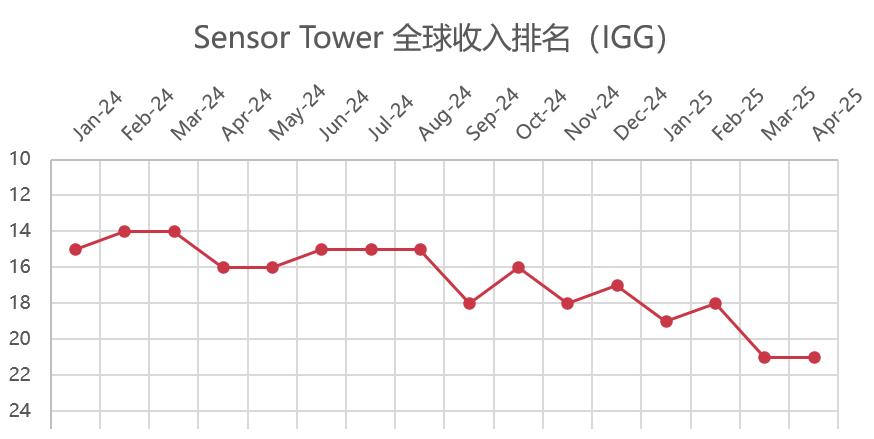
Core Insights - IGG has become more conservative after experiencing significant fluctuations in its business performance, with a revenue of over 5.7 billion HKD (approximately 5.2 billion RMB) last year, marking a 9% year-on-year growth, and a profit increase of 697% to 580 million HKD, compared to previous losses [1][27] - Despite the recovery, IGG's competitive edge is diminishing, as evidenced by its drop from around 15th to over 20th place in the global revenue rankings by Sensor Tower [1] Product Strategy - IGG maintains a testing rhythm of about 30 new products annually, shifting its focus back to the SLG genre, moving away from niche categories [3][4] - Over half of the new products tested in the past two years are SLG games, with three major upcoming titles: SLG "Project PSS," casual social game "Tycoon Master," and SLG "Frozen War" [4][20] - "Project PSS" is a significant investment, building on the previous title "Rebirth of Glory," which incorporates elements from top competitors while adding RTS features [4][5] Game Development - "Rebirth of Glory" features enhanced production mechanics and a more complex gameplay structure compared to its competitors, focusing on resource management and strategic gameplay [5][6] - IGG is also exploring various SLG gameplay innovations, including titles like "Dawn Gathering" and "Myco Citadel," which incorporate different thematic elements and gameplay styles [8][10] - The company is testing new SLG products that blend RPG elements and casual gameplay, indicating a shift towards integrating lighter mechanics into traditional SLG frameworks [18][20] Financial Performance - Despite last year's recovery, the revenue from the gaming segment has slightly declined due to the drop in income from "King of Kingdoms," indicating that the gaming business has not fully returned to growth [27][30] - The APP business has seen significant growth, with monthly active users increasing from 9.5 million in 2023 to 62 million in 2024, contributing to a revenue increase from 100 million HKD in 2022 to 1.09 billion HKD in 2024 [32] Market Position - IGG's anxiety about its market position is evident, as it struggles to find new hits that can surpass "King of Kingdoms," leading to a more cautious approach in product development [33] - The company is focusing on creating reliable products rather than taking risks on innovative but uncertain concepts, reflecting a strategic shift in response to market pressures [33]

月销700万杯!今夏第一个爆品,古茗、益禾堂都在卖
3 6 Ke· 2025-05-18 04:18
Core Viewpoint - The popularity of lemon water has surged this summer, with major brands like Yihotang and Guming innovating their offerings to capture consumer interest, leading to significant sales growth [1][2][4]. Group 1: Sales Performance - Yihotang's new mint lemon water, priced at 5 yuan, sold over 700 million cups within a month, becoming the top-selling item in stores [4]. - Guming launched a new plum lemon water in May, priced from 7.9 yuan, which also gained unexpected popularity among consumers [6]. - Social media engagement around lemon water has increased, with over 800,000 related posts, indicating a strong consumer trend [2]. Group 2: Product Innovation - Brands are introducing new flavors and ingredients to lemon water, such as mint and plum, enhancing its appeal and refreshing taste [8][10]. - The visual presentation of these drinks has also been emphasized, with vibrant colors and garnishes attracting consumers to share on social media [10]. - Incorporating "super plants" like kale and bitter melon into lemon water has added health benefits and diversified flavor profiles [12][14]. Group 3: Market Dynamics - The lemon water market is highly competitive, with established players like Mixue selling over 10 billion cups annually, generating over 4 billion yuan in revenue [15]. - Brands are focusing on balancing classic flavors with innovative twists to attract consumers, as seen in the use of different lemon varieties and additional flavor elements [18][20]. - Pricing strategies are crucial, with many consumers viewing lemon water as a high-value summer beverage, necessitating brands to offer competitive pricing while ensuring quality [21][23]. Group 4: Future Opportunities - The industry is exploring micro-innovations to keep classic products like lemon water relevant, suggesting that small changes can lead to significant market impact [24]. - There is potential for further innovation by integrating health and wellness trends into lemon water offerings, appealing to a broader consumer base [20].

复宏汉霖全球化:4年内,在美获批至少8款产品
2 1 Shi Ji Jing Ji Bao Dao· 2025-04-21 11:10
记者/ 韩璐 编辑/ 谭璐 "至今,我们已经为全球75万名患者提供治疗方案和医疗支持。" 近日,复宏汉霖举办2025全球研发日(R&D Day)活动,复宏汉霖执行董事兼首席执行官朱俊打趣 道,之前做医生的时候,一年只能看1000个病人,要活到750岁,才能看75万个患者。 "一位患者的年治疗费用最少3万,累计销售额超过200亿元。"朱俊表示。 2024年,已上市的6款产品,合计为复宏汉霖带来近50亿元销售收入,带动公司营收57.244亿元,利润 8.205亿元,同比增长超过五成。 接下来,复宏汉霖将用更多创新靶点与全球化,创造更大的临床价值。 自有章法 "我们的全球化自有章法。"朱俊介绍,公司针对美国、欧盟、日本、东南亚、中东、拉美六大市场的不 同特点,稳步推进。 目前,复宏汉霖在日本招募资深临床团队,深入了解其医疗需求和临床实践特点,力求在汉斯状结直肠 癌数据出炉后,迅速高效地将产品推向市场。 而东南亚、中东和拉美市场,蕴含着巨大的发展潜力,普遍存在"缺医少药"的问题。 "哪里有市场、哪里有病人、哪里有需求,我们就去哪里。"朱俊表示。 创新为底 美国市场是全球生物医药的高地,竞争异常激烈。复宏汉霖选择自主运 ...
副牌退潮,“孤勇者”只剩海底捞
创业邦· 2025-03-03 09:55
Core Viewpoint - The article discusses the rapid expansion of Haidilao's sub-brands in the competitive restaurant industry, highlighting both successes and failures of various brands under different companies, and emphasizes a shift towards cautious and strategic growth in the face of market challenges [1][19]. Summary by Sections Haidilao's Sub-brands - Haidilao has launched several sub-brands, including "Haini Beef Spicy Hotpot" and "Congqian Yinyuan Claypot Dishes," with plans to open 25 and 1 locations respectively in 2024 [1][2]. - The sub-brand "Yanquan" has opened at least 30 locations since its launch, focusing on grilled meat with a unique offering of "grilled meat + fruit" [4]. - Other sub-brands have been more cautious, with many still in the market validation phase [4]. Industry Trends - The restaurant industry has seen a trend of rapid openings and closures, with many brands failing to establish a sustainable presence [6][10]. - For instance, the tea brand "Chamao" launched by Kudi closed 25 stores, reflecting a high closure rate of 22.32% [7]. - High-end brands like "Nawen Dashi is Chef" have also struggled, leading to their closure within months [11]. Market Challenges - The overall performance of major restaurant brands has declined, with significant drops in same-store sales reported for brands like Taier and Song Hotpot [11]. - Taier's average monthly sales per store fell from approximately 800,000 yuan to 600,000 yuan, indicating a troubling trend for profitability [11]. Strategic Shifts - There is a noticeable shift in strategy among restaurant giants, moving from aggressive sub-brand expansion to more measured and innovative approaches within existing brands [12][19]. - Companies are focusing on micro-innovations and leveraging existing supply chains to reduce costs and improve operational efficiency [17]. - The emphasis is now on understanding consumer needs and maintaining a competitive edge in core areas rather than expanding into numerous sub-brands [19]. Conclusion - The article concludes that the future of the restaurant industry will depend on brands' ability to adapt to market conditions, understand their consumers, and maintain a stronghold in their core competencies [19].