房地产泡沫

Search documents
付鹏:日本三十年大萧条对中国的启示
2025-08-11 14:07
Summary of Key Points from the Conference Call Industry or Company Involved - The discussion primarily revolves around the historical economic development of Japan, particularly post-World War II, and its implications for current economic conditions in China. Core Points and Arguments 1. Historical data on Japan's economy is challenging to obtain, especially from before the 1990s, but some insights have been gathered from various databases like Bloomberg and CEIC [1][2] 2. A chart was created to illustrate five key data sets regarding Japan's economy, including housing prices, household leverage, savings growth, and demographic changes [3] 3. Post-WWII, Japan experienced rapid economic recovery due to U.S. support and external demand, particularly during events like the Korean War, leading to significant growth from 1955 to 1973 [4] 4. Economic structure, rather than interest rates, is a primary determinant of economic performance; Japan's interest rates were appropriate given its growth during the 1960s [5] 5. Japan's industrialization reached a mature stage by the 1970s, but it lagged in high-tech sectors compared to the West [6] 6. The 1970s oil crisis significantly impacted Japan, revealing vulnerabilities in its reliance on external demand and leading to a shift towards internal demand stimulation [7][8] 7. Japan's government implemented policies to boost domestic demand and initiated supply-side reforms in response to the energy crisis [9][10] 8. The government also supported innovation in high-tech industries, which laid the foundation for Japan's electronics sector in the following decades [12][13] 9. Japan's heavy industry faced environmental challenges, prompting a shift towards energy efficiency and renewable energy sources in the late 1970s [14][15] 10. The economic transformation in Japan during the 1970s and 1980s is often cited as a model for other countries, including China, facing similar transitions [16][17] 11. The service sector grew significantly during Japan's economic transition, but it posed risks for sustainable income growth compared to manufacturing [17][18] 12. The relationship between income growth and debt levels is critical; a divergence can lead to economic instability [18] 13. Japan's real estate bubble in the late 1980s was fueled by low interest rates and speculative investments, leading to a significant economic downturn [19][20] 14. The first and second real estate bubbles in Japan had different underlying conditions, with the second bubble being more problematic [20][21] 15. The rapid urbanization and labor migration in Japan supported economic growth and real estate demand, but also led to demographic challenges [22][23] 16. The government’s efforts to stimulate internal demand in the 1970s resulted in a housing market boom, which was unsustainable [24][25] 17. The tightening of monetary policy in the early 1970s aimed to cool the overheating economy and control inflation, leading to a decline in real estate prices [26][27] 18. The economic slowdown from the mid-1980s onwards revealed structural issues in Japan's economy, despite maintaining a positive growth rate [27][28] 19. The second real estate bubble's burst was attributed to a combination of domestic and international economic pressures, including the Plaza Accord [32][33] 20. The long-term effects of the real estate bubble and subsequent economic stagnation have shaped Japan's current economic landscape, including low growth and high debt levels [34][35] Other Important but Possibly Overlooked Content 1. The historical context of Japan's economic policies provides valuable lessons for current economic strategies in China, particularly regarding the balance between external and internal demand [4][8] 2. The transformation of Japan's economy highlights the importance of innovation and technology in sustaining growth, which is relevant for other developing economies [12][13] 3. The challenges faced by Japan in managing its service sector growth and income distribution can serve as a cautionary tale for other nations undergoing similar transitions [17][18] 4. The demographic shifts and urbanization trends in Japan have long-term implications for economic stability and growth, which are pertinent to current global economic discussions [22][23]
付鹏谈香港楼市:从财富绑定到社会撕裂的深层危机
2025-08-11 14:06
Summary of Key Points from the Conference Call Industry Overview - The discussion primarily revolves around the **Hong Kong real estate market** and its socio-economic implications. Core Insights and Arguments 1. The perception that Hong Kong is a small place leading to high property prices is misleading; local residents have actively resisted development due to vested interests in maintaining high property values [1][2] 2. The intertwining of interests between real estate developers and the government has led to a situation where residents are trapped by high property prices, resulting in a collective reluctance to support further development [2] 3. The impact of the 1997 Asian Financial Crisis is significant; many individuals who were young during the crisis are now in their 50s and 60s, having borne the brunt of the real estate bubble's consequences [3] 4. The concept of housing as a means of achieving happiness is questioned; the rising property values have not translated into improved quality of life for many residents, particularly those in the middle and lower classes [4] 5. The financial burden on residents is exacerbated by stagnant wages and high debt levels, leading to a culture of thriftiness and reliance on second-hand markets [6] 6. The phenomenon of deflation in basic goods and inflation in financial assets creates a disparity where the lower-income population struggles while the wealthy benefit from rising asset prices [7][8] 7. The social fabric is strained as the younger generation feels disconnected from the affluent lifestyle of the wealthy, leading to a growing resentment towards the rich [15][18] 8. The influx of mainland Chinese buyers has intensified social tensions, contributing to a K-shaped economic divide between the wealthy and the rest of society [15][16] Other Important but Potentially Overlooked Content 1. The historical context of housing debt in Hong Kong reveals a cycle of financial distress, where many residents are trapped in a cycle of debt repayment without hope of recovery [12] 2. The cultural differences in coping with financial distress between Western and Asian populations highlight a unique aspect of Hong Kong's socio-economic challenges [5] 3. The monopolization of various sectors by a few wealthy families limits opportunities for innovation and entrepreneurship among the youth [14] 4. The emotional and psychological impact of financial instability on families, particularly those with a history of debt, shapes the current socio-economic landscape [16][17]
又一“鬼城”出现!房子价格从2万跌破到4千,却依然无人问津
Sou Hu Cai Jing· 2025-08-06 06:48
Core Insights - The real estate market in Langfang has drastically changed from a booming market to one with low demand and falling prices, highlighting a significant shift in buyer sentiment and market dynamics [3][4][21]. Group 1: Market Trends - Langfang's property prices have plummeted from nearly 20,000 yuan per square meter to around 4,000 yuan, with less than 30% of residential units being occupied [3][13]. - The rapid increase in housing supply from 18,000 units in 2017 to 35,000 units in 2021 has led to a severe imbalance between supply and demand, resulting in unsold inventory [17][21]. - The introduction of a purchase restriction policy in 2017 significantly dampened speculative buying, contributing to the market's downturn [15][19]. Group 2: Demographic Challenges - The population growth in Langfang from 4.2 million to 4.6 million over ten years is minimal compared to the growth in Beijing, indicating a lack of attractiveness for residents [21][23]. - Many young professionals are leaving Langfang for better opportunities in Beijing and Tianjin, with 80% of those migrating being university graduates [23][25]. - The local education and healthcare systems are perceived as inferior, leading families to prefer purchasing homes in neighboring cities despite higher costs [25][27]. Group 3: Economic Factors - Traditional industries in Langfang, such as furniture manufacturing and metal processing, have been declining due to stricter environmental regulations, further exacerbating economic challenges [23][25]. - The lack of high-tech industries and job opportunities has made it difficult for residents to find stable employment, leading to a stagnant local economy [23][25]. - The real estate market's decline has also affected the brokerage industry, with many agents leaving due to low transaction volumes [19][21]. Group 4: Future Outlook - The government is shifting focus towards developing affordable housing and improving local infrastructure, which may help revitalize the market in the long term [35][37]. - There is potential for recovery if the local economy improves and more people are attracted to live and work in Langfang, emphasizing the importance of job creation and quality of life [35][37].


业内权威人士:地产狂欢时代结束了,人们需要面对现实
Sou Hu Cai Jing· 2025-07-22 23:36
Core Viewpoint - The Chinese real estate market is facing significant challenges and risks as the previous growth momentum fades, revealing underlying issues and a potential shift in market dynamics [1][9]. Group 1: Market Trends - Real estate development investment in China is projected to decline by 11.2% year-on-year in the first half of 2025, amounting to 466.58 billion yuan, marking a further increase in the decline from 9.9% in the first quarter [1]. - Despite a reported 10% year-on-year increase in the total transaction volume of new and second-hand homes in the first quarter, this growth is largely attributed to a low base from the previous year and is concentrated in core urban areas [2]. - The broad inventory of residential properties is approximately 2.15 billion square meters, with a depletion cycle of 28.9 months, indicating a significant oversupply in the market [2]. Group 2: Price Dynamics - Goldman Sachs predicts a potential further decline in Chinese housing prices by 20%, supported by data showing unsold housing inventory far exceeding two years of demand [2]. - Vacancy rates are concerning, with first-tier cities at 7%, second-tier cities at 12%, and third-tier cities at 16%, indicating a substantial number of empty homes in the market [2]. Group 3: Consumer Behavior - The attitude of the younger generation towards real estate has shifted fundamentally, with many preferring to save rather than take on heavy mortgage debt, reflecting a change from panic buying to a more rational approach [5][7]. - High-net-worth individuals are the primary active participants in the market, as evidenced by the structural changes in transaction volumes in cities like Shenzhen, where lower-priced homes are seeing decreased sales [3]. Group 4: Commercial Real Estate - The commercial real estate sector, particularly office spaces, is experiencing a downturn, with average rents in major city business districts declining by 0.73% quarter-on-quarter and 2.1% year-on-year [6]. - The shift towards remote work and the struggles of small businesses are contributing to reduced demand for office space [6]. Group 5: Government and Policy Response - Local governments are caught in a dilemma of stabilizing the housing market while avoiding over-reliance on real estate, with some implementing "old-for-new" policies to acquire existing homes for affordable housing [7]. - The government is advocating for a new model of real estate development focused on quality rather than quantity, although this transition may be challenging for both developers and consumers [8]. Group 6: Investment Outlook - Investors are advised to reassess the value of real estate as an investment, as it may no longer be the best option and could become a high-risk asset [9]. - Developers must adapt to new market realities, moving away from high-leverage, high-turnover models towards more sustainable, quality-focused operations [9].
90年代日本房地产泡沫破裂:当年那些没买房的人,后来都怎么样?
Sou Hu Cai Jing· 2025-07-22 07:59
Economic Context - The 1980s marked a critical turning point in the global economy, with the U.S. facing severe economic challenges such as rising fiscal deficits and trade imbalances, prompting the government to seek new economic strategies [4] - Japan, in contrast, experienced rapid economic growth, becoming the world's second-largest economy, leading to an overheated economy and a need for measures to control this growth [4][5] - The Plaza Accord of September 1985 was a significant moment, aiming to address global economic imbalances by promoting the depreciation of the dollar, particularly against the yen, which had implications for both U.S. and Japanese economic policies [5] Real Estate Boom - Following the Plaza Accord, the depreciation of the dollar and appreciation of the yen had positive short-term effects on both economies, with Japan's real estate market entering a phase of unprecedented prosperity [5][6] - Real estate became a high-return investment tool, with banks loosening lending policies and providing low-interest loans, leading to a surge in demand for real estate [6][7] - The real estate market in Japan saw extreme price increases, particularly in major cities like Tokyo, where property prices reached unprecedented levels [6] Bubble Burst - By 1992, the Japanese real estate market began to show signs of weakness, leading to a rapid decline in property prices as demand plummeted and unsold properties accumulated [8] - The bursting of the real estate bubble resulted in significant financial distress for many investors and homeowners, with many facing negative equity as property values fell below their mortgage amounts [9][11] - The economic impact was severe, with related industries such as construction, finance, and retail suffering greatly, leading to increased bankruptcies and rising unemployment [11][13] Societal Impact - The economic downturn led to widespread despair, with many families unable to cope with financial pressures, resulting in a tragic increase in suicide rates during this period [13][14] - The crisis prompted a societal reflection on economic practices and values, shifting perceptions of wealth and success, particularly regarding real estate as a symbol of status [16] - Interestingly, families that had previously been unable to afford housing found new opportunities as property prices fell, leading to a shift in the housing market dynamics [16]
房市占比跌半,目标近了,好日子马上就要来了!
Sou Hu Cai Jing· 2025-07-22 03:57
Group 1 - The core viewpoint of the article is that the decline in the real estate sector's contribution to GDP from 15.9% to 7.17% is a necessary phase for China's economic restructuring and sustainable development, rather than a sign of economic downturn [1][10] - The real estate market has been a vehicle for trading "survival rights" and "development rights," with properties serving as "city entry tickets" that bundle urban resources beyond mere housing [2][4] - The significant scale of the real estate market, with a total value of 400-500 trillion yuan and a sales area of 1.7 billion square meters in 2021, highlights the underlying risks associated with its bubble-like growth [6] Group 2 - The rapid decline in the real estate sector's GDP contribution has led to fears of corporate losses and economic downturn, but a gradual deflation of the bubble is preferred over a sudden collapse, as seen in the 2008 U.S. subprime mortgage crisis [8][9] - Companies like Vanke reported substantial losses while still managing to deliver housing units and maintain a high repayment rate, indicating a strategy to stabilize the market and avoid a sudden shock [9] - The emergence of new industries, such as advanced manufacturing and digital economy, is becoming the backbone of economic growth, as evidenced by a 30% increase in electric vehicle sales and significant global market shares in solar components [11] Group 3 - The decline in real estate's GDP share is viewed as a positive signal, indicating a shift away from dependency on real estate and alleviating the financial burdens on individuals [12] - The current economic adjustments are seen as a critical step towards a healthier economic system, allowing for fairer resource allocation and improved living standards for the population [12]
孟晓苏:日本楼市崩盘与二十年低迷,政策失误与舆情失控的历史教训
凤凰网财经· 2025-07-11 12:50
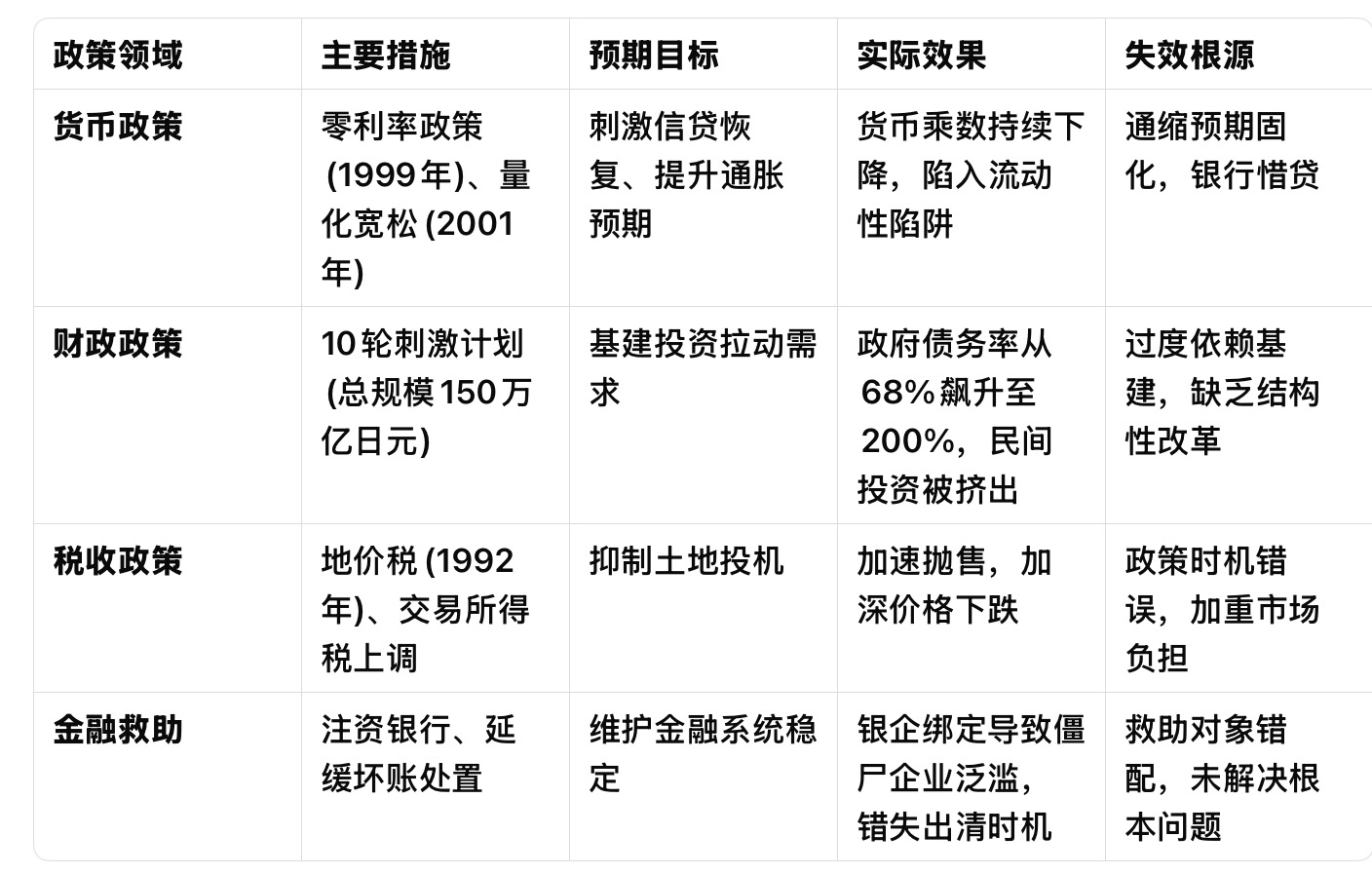
Core Viewpoint - The article discusses the lessons learned from Japan's real estate bubble and subsequent crash, emphasizing the importance of balanced policy-making and effective public sentiment management in preventing similar crises in other countries, particularly China [2][19][26]. Group 1: Background and Initial Conditions - Japan's real estate market experienced a massive bubble in the late 1980s, fueled by nationalistic sentiments and excessive lending practices, leading to a collective societal blindness towards the risks of real estate speculation [3][4]. - The bubble burst in 1991, resulting in a prolonged economic downturn known as the "lost two decades," characterized by a significant decline in real estate prices and manufacturing demand [1][19]. Group 2: Policy Responses and Market Reactions - The Japanese government initially adopted a "bubble bursting" strategy in 1989, which involved aggressive interest rate hikes and credit restrictions, ultimately leading to a catastrophic market collapse [6][8]. - The Nikkei 225 index fell nearly 50% within ten months, and commercial land prices in Tokyo dropped by 15% in a single year, marking a reversal of a 36-year upward trend [6][8]. Group 3: Taxation and Market Dynamics - In 1992, the introduction of heavy taxation, including a land tax and increased transaction taxes, exacerbated the market downturn by raising holding costs and forcing many investors to sell their properties [10][12]. - The proliferation of "foreclosure properties" during the crisis distorted market pricing, leading to a downward spiral in property values and a significant drop in consumer demand [11][16]. Group 4: Government Crisis Management Failures - The Japanese government's delayed response to the crisis, including a lack of timely rescue measures and a focus on bailing out banks rather than supporting the real economy, contributed to the prolonged economic stagnation [12][13]. - The failure to adjust policies in response to changing public sentiment and economic conditions resulted in a loss of public trust and further complicated recovery efforts [15][19]. Group 5: Lessons for China - The article highlights the need for balanced policy-making that considers both tightening and stimulus measures, as well as the importance of managing public expectations to avoid panic and market instability [20][21][22]. - It emphasizes the necessity of a coordinated risk prevention framework to mitigate systemic risks across different markets, as well as the importance of timely and appropriate tax policies during economic downturns [23][24]. - The experience of Japan serves as a cautionary tale for China, underscoring the need for structural reforms in the real estate sector to ensure long-term market health and stability [25][26].
日本楼市崩盘与二十年低迷:政策失误与舆情失控的历史教训
Feng Huang Wang Cai Jing· 2025-07-11 09:26
Group 1 - The core argument of the articles revolves around the lessons learned from Japan's real estate bubble and its subsequent collapse, emphasizing the importance of policy balance and timely intervention in crisis management [1][19][25] - Japan's real estate market experienced a significant bubble from the mid-1980s, driven by excessive lending and speculative behavior, which ultimately led to a severe economic downturn known as the "Lost Decade" [2][3][19] - The initial response to the bubble involved aggressive monetary tightening by the Bank of Japan, which was later criticized for being too abrupt and poorly timed, exacerbating the economic crisis [5][6][19] Group 2 - The media played a crucial role in shaping public perception and policy direction, initially promoting the idea of bursting the bubble, but later turning against the government and financial institutions during the crisis [3][15][21] - The introduction of punitive tax measures during the downturn, such as the land tax and increased transaction taxes, further strained the market and led to increased selling pressure among investors [9][10][19] - The proliferation of foreclosed properties, or "law auction houses," created a downward spiral in property prices, significantly impacting market expectations and leading to a broader economic malaise [10][11][17] Group 3 - The Japanese government's financial rescue efforts were criticized for prioritizing banks over the real economy, leading to a prolonged economic stagnation and a lack of effective recovery measures [12][19][25] - The lessons from Japan's experience highlight the need for a balanced approach in policy-making, considering both the prevention of asset bubbles and the support for economic growth [20][21][25] - Japan's post-2013 economic reforms, under the "Abenomics" framework, aimed to revitalize the real estate market and stimulate economic growth, providing insights for other countries facing similar challenges [18][24][25]
韩国央行预警:持续宽松加剧楼市与债务风险
news flash· 2025-06-25 02:15
Core Viewpoint - The Bank of Korea warns that ongoing monetary easing may exacerbate risks in the housing market and increase debt levels, posing a threat to financial stability [1] Group 1: Financial System Stability - Despite increased volatility in financial and foreign exchange markets during the first half of the year, the overall financial system remains stable [1] - Political uncertainty has risen due to the leadership vacuum following the impeachment of former President Yoon Suk-yeol, alongside continued trade pressures from the Trump administration [1] Group 2: Housing Market and Debt Concerns - The central bank has raised alarms about the rising housing prices in the Seoul metropolitan area, which could accelerate debt accumulation [1] - There is a significant policy dilemma for the Bank of Korea in balancing economic support during a slowdown while avoiding a repeat of past real estate bubbles triggered by previous easing cycles [1]
吴晓灵再预测中国楼市走势,或大概率是正确的,提前做好2个准备
Sou Hu Cai Jing· 2025-06-24 13:24
Core Viewpoint - The real estate market is undergoing a prolonged adjustment period, with significant price declines in major cities, confirming predictions made by Professor Wu Xiaoling in 2018 about the end of the real estate bubble [1][3]. Group 1: Market Trends - Since 2021, domestic housing prices have been on a downward trend, initially affecting second and third-tier cities like Zhengzhou, Tianjin, and Shijiazhuang, and now extending to first-tier cities such as Beijing, Shanghai, Guangzhou, and Shenzhen [5]. - In Shanghai, the average price in the city center has dropped by over 30% [5]. - The nationwide second-hand housing market is experiencing a widespread price decline, indicating a persistent trend of asset depreciation [5]. Group 2: Investor Sentiment - Professor Wu has warned investors, particularly younger demographics, to be cautious of asset depreciation and debt crisis risks, which are increasingly becoming a reality [3]. - Investors who purchased properties at high prices in previous years are facing dual pressures of reduced income and increased holding costs, leading to significant debt risks [3]. Group 3: Impact on Speculators - Speculators holding multiple properties are experiencing mounting debt pressure, exacerbated by the ongoing effects of the pandemic [6]. - Despite banks lowering mortgage rates to historical lows, many speculators are struggling with business downturns and unemployment, resulting in heightened repayment pressures compared to ordinary homeowners [6].