
智驾平权

Search documents
智驾行业杀入“曼哈顿时刻”
Xin Lang Cai Jing· 2026-01-10 01:29
Core Insights - The autonomous driving industry is approaching a state of transparency, with multiple automakers and tech companies targeting the sub-100,000 yuan market for advanced driving features [1][4][9] - The competition has intensified, with companies like BYD, Chery, and Geely launching models equipped with high-level autonomous driving capabilities at lower price points [5][6][7] - The industry is witnessing a convergence of algorithmic approaches, with discussions around VLA and world model architectures, as companies aim to enhance the usability of autonomous driving features [3][20][21] Group 1 - The introduction of advanced driving features in vehicles priced below 100,000 yuan has become a key focus for both automakers and autonomous driving technology providers [1][2][4] - Companies like Horizon Robotics and Huawei are planning to expand their advanced driving capabilities into lower price segments, aiming to break the perceived barriers of high costs associated with such technologies [8][11] - The competition is not only about vehicle pricing but also about the technological advancements in algorithms and hardware, with a significant push towards reducing costs in chips and sensors [10][11][13] Group 2 - The industry is transitioning from a phase of diverse approaches to a more consolidated focus on effective algorithmic solutions, with VLA and world model architectures being at the forefront of discussions [3][20][21] - The recent approval of L3-level conditional autonomous driving vehicles by the Ministry of Industry and Information Technology marks a significant milestone, indicating a potential "breakthrough year" for L3 technology [4][28] - Companies are also exploring the integration of autonomous driving technologies into broader applications, such as logistics and robotics, indicating a shift towards a more comprehensive ecosystem [30][33] Group 3 - The competitive landscape is evolving into a "red ocean" as more players enter the sub-100,000 yuan market, necessitating a focus on efficiency and differentiation [9][13] - The advancements in chip technology and the reduction in costs for essential components like lidar are enabling more companies to offer competitive autonomous driving solutions [10][11] - The push towards L3 and L4 capabilities is becoming a race among automakers and tech firms, with significant investments and developments expected in the coming years [29][30]


【金牌纪要库】英伟达发布Alpamayo开源AI模型推动“智驾平权”,有望大幅降低高阶智驾准入门槛,推动L3/L4加速进入商业化
财联社· 2026-01-09 15:11
Core Insights - Nvidia's release of the Alpamayo open-source AI model is expected to significantly lower the entry barriers for advanced autonomous driving, accelerating the commercialization of L3/L4 levels [1] - The necessary condition for achieving L3 safety redundancy is a core incremental hardware that is anticipated to form a high-growth market worth billions, with companies already positioned technologically [1] - The industry is transitioning from research and development to pre-installation mass production, which is expected to meet the demands of autonomous driving for rapid precise control, multiple redundancy designs, and high decoupling of software and hardware, leading to a substantial increase in L3 penetration rates [1]


重要股东四维图新不急于减持,佑驾创新(02431)以高含金量基本面“锁定”长期资金
智通财经网· 2026-01-05 12:14
Core Viewpoint - The article emphasizes that despite short-term market fluctuations and emotional impacts, the long-term value of a company is rooted in its fundamentals and growth prospects, suggesting that current price dips may present strategic buying opportunities for investors [1][10]. Company Overview - Youjia Innovation (佑驾创新) is recognized as a high-growth company in the intelligent driving sector, having achieved significant milestones and is considered a rare potential stock in smart driving [1][4]. - The company successfully listed on the capital market at the end of 2024, demonstrating its solid fundamentals and strong growth expectations [2][3]. Financial Performance - Youjia Innovation's revenue grew at a compound annual growth rate (CAGR) of over 50% from 2022 to 2024, with a 46% increase in revenue to 346 million yuan in the first half of the previous year [3][4]. - The company completed two strategic financings post-listing, which bolstered its research and market expansion efforts [3]. Business Developments - The company has made significant advancements in various core areas, including Advanced Driver Assistance Systems (ADAS), Driver Monitoring Systems (DMS), and vehicle-road collaboration [4][5]. - As of June 30, 2025, Youjia Innovation has partnered with 42 vehicle manufacturers, expanding its influence in both domestic and international markets [4]. Product Innovations - Youjia Innovation launched several intelligent driving solutions in the first half of 2025, including the iPilot 4 Plus and iPilot 4 Max, to meet the growing demand for mid-to-high-level intelligent driving [4]. - The company also introduced the iCabin Lite product and the "Smart Butler BamBam" for intelligent cockpit solutions, securing orders worth approximately 320 million yuan [5]. Market Position and Future Outlook - The intelligent driving industry is evolving, with the recent approval of L3-level autonomous driving vehicles in China marking a significant step towards commercialization [8][9]. - Youjia Innovation is well-positioned to leverage its L4 capabilities and extensive L2 data to enhance its L3 solutions, indicating strong growth potential [8][9]. - The company is expected to experience a revaluation as it continues to demonstrate its unique growth path and capitalize on policy support [9][10].

2025汽车智能化复盘:从狂热到理性的转折之年
3 6 Ke· 2026-01-05 08:43
Core Insights - The year 2025 is seen as a watershed moment for automotive intelligence, with significant advancements in smart driving technology and regulatory frameworks [1][3] - The concept of "smart driving equity" is introduced, allowing vehicles priced at 70,000 yuan to feature advanced driving assistance systems, thus redefining market standards [5][20] - The industry is experiencing a shift from high-end exclusive features to more accessible smart driving technologies across various vehicle price segments [3][5] Group 1: Technological Advancements - BYD's "smart driving equity" initiative includes the launch of the "Tianshen Eye" system across its entire range, from 69,800 yuan to luxury models, challenging the notion that smart driving is only for high-end vehicles [5] - Major AI models like DeepSeek and Huawei's Pangu are being integrated into vehicles, enhancing user interaction through semantic understanding and proactive service capabilities [7] - The introduction of the Huawei ADS 4.0 system marks a significant regulatory compliance breakthrough, enabling conditional Level 3 autonomous driving on highways [10] Group 2: Regulatory Developments - The tragic accident involving a Xiaomi SU7 led to the establishment of the strictest Level 2+ smart driving regulations, mandating clear labeling of system capabilities and prohibiting misleading advertising [8] - The release of the "Automotive Industry Stabilization Growth Work Plan (2025-2026)" officially opens the door for Level 3 autonomous driving under specific conditions, establishing a framework for responsibility and insurance [14] Group 3: Market Dynamics - China's new energy vehicle penetration rate exceeded 50% in 2025, with exports reaching 4.95 million units, significantly outpacing Japan's 3.06 million units [20] - The integration of high-level smart driving and intelligent cockpit features in exported vehicles is becoming a key factor for international consumers [20] - The automotive industry is transitioning from a focus on technological showcases to scalable implementations, with smart driving technologies extending beyond urban environments to industrial applications [22]
观车 · 论势 || 疾风知劲草,新局自此开
Zhong Guo Qi Che Bao Wang· 2026-01-05 01:24
Core Viewpoint - The Chinese automotive industry in 2025 is characterized by a "reversal," with a shift from irrational competition and price wars to a more regulated and innovative landscape [1][5]. Group 1: Industry Regulation and Order - The internal forces seeking order have awakened, leading to a collective consensus against "involution" in the industry, with various government departments implementing measures to regulate competition [1][2]. - The Ministry of Industry and Information Technology and other agencies have introduced comprehensive governance measures to address irrational competition, resulting in a significant reduction in promotional pricing and discounts in the passenger car market [1][2]. Group 2: Corporate Integration and Efficiency - Major automotive companies are undergoing integration to enhance efficiency and reduce costs, as seen with Geely's integration of Zeekr and NIO's consolidation of brands [2]. - The trend of corporate integration reflects a consensus among automakers to pool resources and strengthen their competitive positions in the market [2]. Group 3: Innovation and Technology - Innovation is driving the industry forward, with advancements in technology making features like assisted driving more accessible, as evidenced by a 64% penetration rate of combined assisted driving vehicles in the new car market [3]. - The automotive industry's boundaries are blurring as companies expand into areas like robotics and smart devices, indicating a long-term evolution of technology and business models [3]. Group 4: Market Expansion and Globalization - Incentive policies such as trade-in programs are effectively stimulating the existing market, while the expansion of charging networks and sales channels is awakening the potential of county-level markets [4]. - China's automotive exports reached 6.343 million units in the first 11 months of the year, marking an 18.7% year-on-year increase, with a shift towards new export models like technology and localized production [4]. Group 5: Future Outlook - The automotive industry is expected to continue addressing "involution" in 2026, with new guidelines being introduced to ensure compliance in pricing behavior [5]. - The industry aims to achieve stable growth while navigating uncertainties such as policy changes and international market conditions, striving for a more competitive and resilient automotive landscape [6].
自动驾驶2025年终盘点:走出“青春期”,从技术炫技到全球落地
3 6 Ke· 2025-12-31 04:27
Core Insights - The autonomous driving industry reached a significant milestone in 2025, transitioning from a conceptual phase to practical applications, with various companies achieving regulatory approvals and launching commercial operations [1][3][21] Industry Developments - In 2025, Chinese autonomous driving companies accelerated their global expansion, with notable projects such as MOGOX and BYD winning Singapore's first L4 autonomous bus pilot project, marking a significant entry into developed countries' public transport systems [3][5] - The successful implementation of L3 autonomous driving regulations in Beijing and Chongqing established a framework for commercial operations, with the first L3 vehicles receiving conditional approval for operation in specific areas [8][9][11] Technological Advancements - The industry saw a shift towards end-to-end architectures and localized adaptations, with companies like Huawei introducing advanced systems that significantly reduce latency and improve performance in complex driving scenarios [12] - The introduction of affordable high-level autonomous driving features in vehicles, such as the BYD Qin L DM-i, has increased market penetration, with the adoption rate for advanced driving features in vehicles under 150,000 yuan rising from 5% to 18% by the end of 2025 [13] Capital Market Activities - The dual listing of Pony.ai and WeRide on the Hong Kong Stock Exchange marked a significant event in the capital market, with both companies focusing their fundraising efforts on commercializing L4 technology [16][18] - Despite initial stock price declines post-listing, the dual listing is seen as a benchmark for the industry, providing a stable financing channel and highlighting the long-term value of autonomous driving technologies [19] Globalization and Market Expansion - The global rollout of Robotaxi services accelerated, with partnerships like WeRide and Uber launching operations in Dubai, while Tesla initiated limited testing in the U.S. [6][21] - The successful deployment of autonomous driving solutions in high-density urban environments, such as Singapore, enhances China's influence in global autonomous driving standards [6][21] Regulatory and Safety Considerations - The industry faced challenges related to safety and regulatory compliance, with incidents prompting a reevaluation of operational safety measures and the establishment of stricter regulatory frameworks [20][21] - The balance between innovation and regulation is crucial for the sustainable development of the autonomous driving sector, as evidenced by the regulatory responses to safety incidents [20][21]
中国经济这一年:汽车产业迎三大变革
Zhong Guo Xin Wen Wang· 2025-12-29 07:39
Group 1 - The core viewpoint of the articles highlights the structural transformation of the Chinese automotive industry in 2025, driven by three significant changes that indicate new directions for future development [1] Group 2 - 2025 is anticipated to be the "Year of Universal Intelligent Driving," with automatic driving technology transitioning from luxury models to standard features in the mass market, making intelligent driving more accessible to ordinary consumers [2] - The penetration rate of passenger cars equipped with combined driving assistance functions reached 64% in the first three quarters of this year, with sales increasing by 21.2% year-on-year [2] Group 3 - New energy vehicles (NEVs) are becoming the dominant force in the market, with their sales surpassing 50% of total new car sales for the first time, reaching 51.6% in October [3] - The domestic sales of new energy passenger vehicles accounted for 53.6% of total passenger vehicle sales in the first 11 months of this year, indicating a shift from policy-driven to market-driven growth [3][4] Group 4 - The industry is maturing as internal driving forces are fully activated, with issues like range anxiety and charging convenience being largely resolved, making intelligent features and cost advantages key attractions for consumers [4] Group 5 - The competitive landscape is shifting from price wars to quality competition, with a significant reduction in harmful price-cutting practices and a focus on technological development and user service [5] - The supply chain ecosystem is undergoing systematic recovery, with mainstream automakers shortening supplier payment cycles to 60 days, improving the financial dynamics between automakers and suppliers [5]
(年终特稿)中国经济这一年:汽车产业迎三大变革
Zhong Guo Xin Wen Wang· 2025-12-29 07:03
中新社记者 刘文文 新能源汽车正以不可逆转的趋势,逐渐从市场新秀蜕变为主导力量。 2025年,中国汽车产业在"换挡提速"中迎来结构性重塑。其中,三个重要变革为行业写下鲜明注脚,也 指明了中国汽车未来发展的新方向。 北方工业大学汽车产业创新研究中心研究员张翔对中新社记者表示,这一转变无疑是今年汽车产业发展 的分水岭事件。中国汽车工业协会数据显示,10月新能源汽车新车销量占汽车新车总销量比重首超 50%,达51.6%,占有率首次过半。这不仅意味着燃油车主导时代的加速落幕,更表明新能源汽车的市 场认可度实现质的飞跃。 智驾"驶"入寻常百姓家 中新社北京12月29日电 题:中国经济这一年:汽车产业迎三大变革 2025年堪称"全民智驾元年"。罗兰贝格汽车行业首席研究员陈春栋受访时表示,这一年,自动驾驶技术 实现从高端车型"奢侈品"到大众市场"标配"的跨越,一场以智驾普惠化为核心的产业浪潮全面掀起。 今年以来,"智驾平权"趋势愈发明显。具备L2级组合驾驶辅助功能的车型价格已下探至10万元人民币区 间。如埃安i60等车型凭借"越级"智驾配置成为市场热门,打破了智驾与高端车的固有绑定,让更多普 通消费者体验到科技出行的便利。 ...
中国智驾产业变迁:从封闭交付到普惠生态
雷峰网· 2025-12-25 09:24
Core Viewpoint - Over the past decade, China's intelligent driving industry has transitioned from a closed chain to an inclusive ecosystem, driven by technological advancements and collaborative efforts among local companies [1][36]. Group 1: Industry Evolution - In 2011, Tesla's CEO Elon Musk dismissed BYD as a competitor, highlighting the significant gap in technology and product appeal between Chinese automakers and Tesla at that time [2][3]. - By 2024, Chinese automakers like BYD and Geely have surpassed Tesla in sales, becoming part of the top ten global car manufacturers, showcasing the rapid evolution of the industry [4]. - The core of Tesla's sustained optimism lies in its self-developed chips and intelligent driving capabilities, which have spurred a wave of research and development in China's intelligent driving sector [4]. Group 2: Key Players and Partnerships - The critical turning point for China's intelligent driving industry occurred between 2019 and 2020, marked by the emergence of companies like Horizon Robotics and Momenta, which began to establish themselves in the market [6]. - The collaboration between Changan Automobile and Horizon Robotics exemplifies how local companies are building flexible and open supply chain systems, enhancing their control over core technologies [10][12]. - The partnership between Li Auto and Horizon Robotics allowed for rapid development and deployment of advanced driving features, demonstrating the importance of open collaboration in overcoming technological challenges [13][17]. Group 3: Technological Advancements - The shift from Mobileye's closed delivery model to more open and collaborative approaches has catalyzed the development of local intelligent driving technologies, enabling companies to gain autonomy over their systems [9][18]. - Horizon Robotics' introduction of the Journey 5 chip, which offers high performance and supports advanced driving needs, has positioned the company to compete in the high-end intelligent driving market [23][24]. - The "HSD Together" model proposed by Horizon Robotics aims to enhance collaboration across the supply chain, significantly reducing development costs and time to market for automotive companies [27][28]. Group 4: Market Accessibility and Inclusivity - The evolution of intelligent driving technology is making advanced features more accessible to a broader range of consumers, breaking down price barriers that previously limited adoption to high-end vehicles [30][31]. - BYD's upcoming "Heavenly Eye" system, powered by Horizon Robotics' Journey 6 chip, aims to provide advanced driving capabilities across its entire model range, including lower-priced vehicles [30]. - The introduction of Horizon Robotics' HSD full-scene driving assistance system is set to make high-level intelligent driving features available in mid-range vehicles, promoting inclusivity in the market [31][33].

华创证券:首予禾赛-W“强推”评级 目标价235.93港元
Zhi Tong Cai Jing· 2025-12-23 02:05
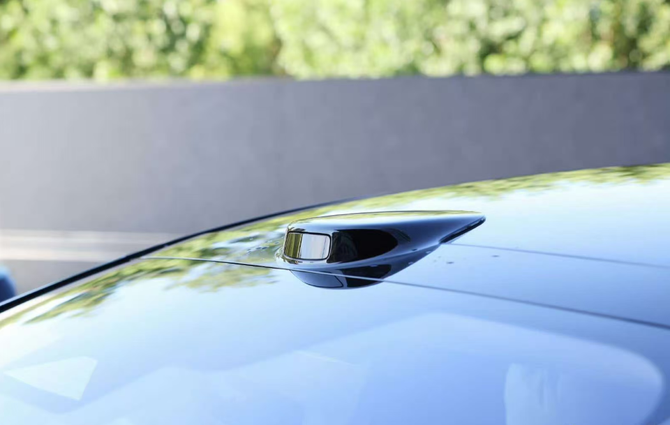
据盖世汽车,随"智驾平权趋势发展,激光雷达2025年国内装机量有望冲击250万颗、渗透率达9.0%, 价格也下探至近1450元。展望未来,受益于L2+/L3/L4法规逐步落地,激光雷达渗透率有望持续提升;而 价格端,当前单颗激光雷达价格下行空间有限,叠加高性能、多颗的方案有望成为趋势,车载激光雷达 市场规模有望快速扩容。该行预计2030/2035年全球车载激光雷达市场规模有望达90/148亿美元。 作为全球领先的激光雷达企业,公司中长期的竞争壁垒与投资价值突出 禾赛科技是全球领先的激光雷达研发与制造企业 公司2014年成立,2023年于纳斯达克上市,2025年9月于港交所上市,构建了 AT/ET/FT/Pandar/OT/XT/QT/JT8大产品系列,覆盖ADAS、自动驾驶及机器人市场。2020至2024年,公 司激光雷达交付量从0.4万台快速增长至50.2万台,预计2025年有望交付超150万台。2024年公司首次达 成全年Non-GAAP盈利,也实现了全年经营和净现金流为正。25Q3公司实现净利润2.6亿元、创历史新 高,全年净利润指引上调至3.5-4.5亿元,呈现持续高速增长趋势。 随智驾市场演进,激光 ...