物价合理回升

Search documents
国家发改委谈物价如何合理回升:扩需求治内卷,理顺价格关系
Nan Fang Du Shi Bao· 2026-01-20 05:57
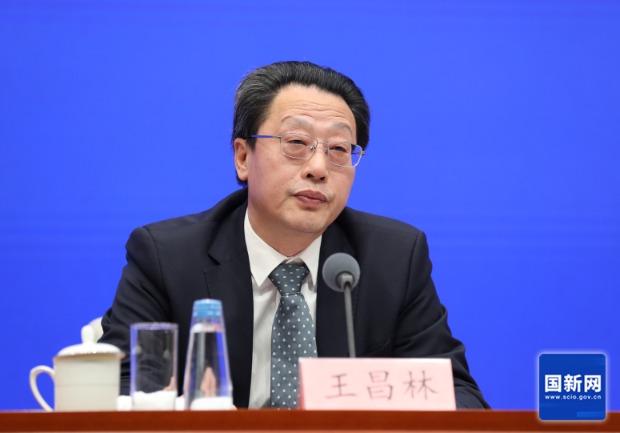
南都讯 记者杨文君潘珊菊发自北京 "十五五"开局之年,物价如何合理回升?国家发改委副主任王昌林1 月20日在国新办发布会上回应,主要是两端发力,一方面要着力扩大需求,另一方面要整治内卷。同 时,进一步理顺价格关系,促进资源高效配置,持续做好重要民生商品保供稳价,抓好重要民生商品产 供储销全链条调控,确保量足价稳。 南都N视频记者从现场获悉,总量政策方面,将实施更加积极的财政政策和适度宽松的货币政策,把促 进物价合理回升作为货币政策的重要考量,发挥存量政策和增量政策的集成效应,推动形成经济增长和 物价回升的良性互动。 在结构政策方面,要深入实施提振消费专项行动,制定实施城乡居民增收计划,优化实施"两新"政策, 扎实推进"两重"建设,也就是国家重大战略实施和重点领域安全能力建设,从而推动供需更加平衡匹 配。要深入整治"内卷式"竞争,制定全国统一大市场建设条例,"规范地方政府和企业行为,强化市场 优胜劣汰机制。"王昌林说。 (文章来源:南方都市报) 国家发改委副主任王昌林。 他认为,物价问题既关系经济运行,也跟人民群众生活息息相关,应该辩证来看。大家知道,如果物价 快速升高,将推高居民生活成本;如果物价降低,在短期 ...

国家发改委:将持续推动物价合理回升
Xin Lang Cai Jing· 2026-01-20 05:29
Core Viewpoint - The National Development and Reform Commission (NDRC) emphasizes the importance of promoting a reasonable recovery of prices as a key macroeconomic goal, balancing the need for economic growth and consumer welfare [1][2]. Group 1: Price Trends - Since the fourth quarter of 2025, there have been positive changes in price trends, with the Consumer Price Index (CPI) rising for four consecutive months, reaching a year-on-year increase of 0.8% in December, the highest in nearly 34 months [2]. - The core CPI has maintained a year-on-year growth rate of 1.2% for three consecutive months, marking a high not seen in nearly 50 months [2]. - The Producer Price Index (PPI) has seen a narrowing decline, with a year-on-year decrease of 1.9% in December, recovering 1.7 percentage points from its low earlier in the year [2]. Group 2: Policy Measures - The NDRC plans to implement a series of regulatory and reform measures to promote a moderate recovery in prices, focusing on structural adjustments and ensuring the stability of essential goods prices [2][3]. - A more proactive fiscal policy and moderately loose monetary policy will be adopted, with the promotion of reasonable price recovery being a key consideration in monetary policy [2]. - The NDRC will also implement actions to boost consumption, develop income increase plans for urban and rural residents, and optimize policies to ensure a balanced supply and demand [3]. Group 3: Structural and Reform Policies - The NDRC aims to address "involution" competition and establish a unified national market construction regulation to enhance market efficiency and ensure the exit of inefficient production capacities [3]. - There will be a focus on ensuring the stable supply and pricing of essential goods, with comprehensive regulation across the entire supply chain to maintain adequate supply and stable prices [3].
央行开年首场发布会放大招 楼市、汇市将迎哪些变化?
Di Yi Cai Jing· 2026-01-15 14:33
Core Viewpoint - The People's Bank of China (PBOC) has signaled that there is room for further interest rate cuts and reserve requirement ratio (RRR) reductions in 2026, alongside measures to enhance structural monetary policy tools and support [1][2] Group 1: Monetary Policy Adjustments - The average statutory deposit reserve ratio for financial institutions is currently 6.3%, indicating potential for RRR cuts [2] - The PBOC plans to lower the interest rates on various structural monetary policy tools, effective January 19, 2026, with specific rates for agricultural and small business loans set at 0.95%, 1.15%, and 1.25% for different terms [7] - A new re-lending program for private enterprises will be established, with a total quota of 1 trillion yuan, aimed at supporting small and medium-sized enterprises [8] Group 2: Government Bond Operations - The PBOC will flexibly conduct government bond buying and selling operations to maintain liquidity and support the smooth issuance of government bonds [3] - In 2025, the issuance of government bonds reached 16 trillion yuan, with a net increase of 6.6 trillion yuan, indicating a robust bond market [3] Group 3: Real Estate Support - The minimum down payment ratio for commercial property loans has been reduced from 50% to 30%, aimed at stimulating the commercial real estate market [4] - This reduction is part of a broader strategy to address inventory issues in the commercial property sector [4] Group 4: Exchange Rate Policy - The PBOC maintains a clear and consistent exchange rate policy, emphasizing the stability of the RMB at a reasonable equilibrium level [5][6] - The external environment is expected to support the stability of the foreign exchange market, with major developed economies likely to continue their easing policies [5] Group 5: Price Stability Considerations - The PBOC aims to promote reasonable price recovery as a key consideration in monetary policy, with the CPI showing a year-on-year increase of 0.8% as of December 2025 [10] - The central bank will continue to implement a moderately accommodative monetary policy to foster an environment conducive to price recovery [10]
央行开年首场发布会放大招,楼市、汇市将迎哪些变化?
Di Yi Cai Jing· 2026-01-15 14:26
Core Viewpoint - The People's Bank of China (PBOC) is implementing a series of monetary policy measures, including lowering the minimum down payment ratio for commercial property loans to 30%, indicating a proactive approach to stimulate the economy and support the real estate market [4]. Group 1: Monetary Policy Adjustments - The PBOC signals that there is still room for interest rate cuts and reserve requirement ratio (RRR) reductions in 2026, with the current average RRR at 6.3% [2]. - The PBOC will lower the interest rates on structural monetary policy tools by 0.25 percentage points starting January 19, 2026, with new rates for various loan types [7]. - The PBOC plans to increase the quota for agricultural and small business loans by 500 billion yuan, integrating it with the rediscount quota [8]. Group 2: Support for Real Estate Market - The minimum down payment for commercial property loans has been reduced from 50% to 30%, aimed at boosting the commercial real estate market and reducing inventory [4]. - The PBOC's actions reflect a heightened focus on supporting the commercial real estate sector, indicating a shift in regulatory priorities [4]. Group 3: Government Bond Operations - The PBOC will flexibly conduct government bond buy-sell operations to maintain liquidity and support the issuance of government bonds, with a total of 16 trillion yuan in government bonds issued in 2025 [3]. - The PBOC's bond operations are intended to enhance the coordination between monetary and fiscal policies, ensuring a stable environment for government bond issuance [3]. Group 4: Currency and Exchange Rate Policy - The PBOC maintains a clear and consistent exchange rate policy, emphasizing the stability of the RMB against external economic conditions [5][6]. - The PBOC will continue to monitor cross-border capital flows and enhance the resilience of the foreign exchange market [5]. Group 5: Economic Growth and Price Stability - The PBOC aims to promote stable economic growth and reasonable price recovery as key considerations in its monetary policy, with CPI rising to 0.8% year-on-year as of December 2025 [10]. - The PBOC will implement a moderately loose monetary policy to create a conducive environment for price recovery [10].
央行再出政策组合拳:结构性工具“降价增量扩容”,降准降息可期
2 1 Shi Ji Jing Ji Bao Dao· 2026-01-15 13:47
Core Viewpoint - The People's Bank of China (PBOC) is implementing a series of monetary policy measures to support high-quality economic development and stabilize growth, including structural interest rate cuts and targeted loans for private enterprises [1][2]. Group 1: Monetary Policy Measures - The PBOC will introduce eight policy measures, including a 0.25 percentage point reduction in the interest rates of various structural monetary policy tools, bringing the one-year re-lending rate down from 1.5% to 1.25% [2]. - The measures also include increasing the quotas for agricultural and small business re-lending, and establishing a separate re-lending program for private enterprises with a quota of 1 trillion yuan [3][4]. - Additional policies aim to enhance support for technology innovation, carbon reduction, and consumer services, while lowering the minimum down payment ratio for commercial property loans to 30% [2][3]. Group 2: Support for Private Enterprises - The newly established re-lending program for private enterprises will focus on supporting small and medium-sized private companies, with a total quota of 1 trillion yuan, which includes 500 billion yuan from existing funds and an additional 500 billion yuan [3][4]. - The PBOC aims to improve financing accessibility for medium-sized private enterprises, which have been relatively underserved compared to larger firms [3]. Group 3: Economic Outlook and Stability - The PBOC indicates that there is still room for further cuts in reserve requirement ratios and interest rates, with the current average reserve requirement ratio at 6.3% [6]. - The central bank emphasizes the importance of maintaining a stable currency and low financing costs to support economic recovery and growth [10]. - Recent data shows a positive trend in consumer prices, with the CPI rising by 0.8% year-on-year in December 2025, indicating a recovery in the price level [8].
货币政策新年有新意 促进物价合理回升成重要考量
Shang Hai Zheng Quan Bao· 2026-01-12 23:47
Group 1 - The core viewpoint of the articles emphasizes the continuation of a moderately loose monetary policy in 2026, focusing on stabilizing economic growth and ensuring reasonable price recovery [1][2][3] - The People's Bank of China (PBOC) aims to enhance the effectiveness of monetary policy transmission and implementation, with a greater emphasis on the quality of policy outcomes [5][6] - Analysts predict that the monetary policy will adapt to external economic conditions, particularly with the U.S. entering a rate-cutting cycle, providing a more favorable environment for China's monetary adjustments [2][6] Group 2 - The monetary policy is expected to exhibit three major changes: a focus on high-quality development alongside price stability, innovation in liquidity transmission mechanisms, and a combination of total easing with precise structural tools [3][4] - There is a shift in policy goals regarding social financing costs, moving from promoting a decrease to maintaining low levels, reflecting the current economic context [4][5] - The PBOC plans to utilize various policy tools flexibly and efficiently, including reserve requirement ratio (RRR) cuts and interest rate adjustments, to support economic growth while mitigating risks [6][7] Group 3 - The anticipated monetary policy adjustments are expected to lead to an increase in new RMB loans and social financing, supporting consumer spending and stabilizing the real estate market [7] - The focus will also be on enhancing the integration of existing policies and improving their efficiency rather than merely increasing the scale of monetary interventions [4][5] - The PBOC is likely to innovate in providing liquidity directly to non-bank financial institutions, indicating a potential evolution in monetary policy tools [7]
货币政策新年有新意 促进物价合理回升成重要考量 探索开展金融市场宏观审慎管理
Shang Hai Zheng Quan Bao· 2026-01-12 18:35
Group 1 - The core viewpoint of the article emphasizes the continuation of a moderately loose monetary policy in 2026, focusing on stabilizing economic growth and ensuring reasonable price recovery as key considerations for monetary policy [3][5][6] - The monetary policy will adapt to the macroeconomic environment, with a strong emphasis on supporting the economy through counter-cyclical adjustments and enhancing the efficiency of existing policies rather than simply increasing them [4][6][7] - Analysts predict that the monetary policy will see three major changes: a greater focus on high-quality development and price stability, innovation in liquidity transmission mechanisms, and a combination of overall easing with precise structural tools [5][9] Group 2 - The People's Bank of China (PBOC) is expected to pay more attention to the effectiveness of policy transmission and implementation quality, with plans to narrow interest rate corridors and stabilize government bond yield curves [7][8] - The central bank will flexibly and efficiently utilize various policy tools such as reserve requirement ratio (RRR) cuts and interest rate reductions, adapting to internal and external economic conditions [8][9] - There is an anticipated increase in new RMB loans and social financing, supported by the moderately loose monetary policy, which aims to boost consumer spending, stabilize investment, and support the real estate market [9]

国投期货点石成金
Guo Tou Qi Huo· 2026-01-08 11:55
Report Industry Investment Rating - Not provided Core Viewpoints - In the medium to long - term bullish process, it is more appropriate to allocate varieties with relatively low volatility, and it is recommended to buy silicon manganese and silicon iron on dips [2][6] - The recent price increases of silicon manganese (2.07%) and silicon iron (2.56%) are relatively large intraday increases [2] Summary by Related Content Price Performance - Today, the silicon manganese price rose 2.07% and the silicon iron price rose 2.56%, which are relatively large intraday increases [2] Policy Impact - The upcoming policy in Shaanxi to charge additional electricity fees for restricted and eliminated production capacities in the ferroalloy industry from July 1, 2026, may be driven by market sentiment and bring some upward momentum [3] - "Price recovery" or "anti - involution" information has a relatively large impact on commodity prices, and currently, there is more of an emotional positive effect on the ferroalloy industry [3] Fundamental Analysis - The main contradiction of silicon manganese lies in the structural problem of manganese ore inventory. The reduction in shipments from Gabon and Ghana will gradually manifest before the Spring Festival, with port inventory difficult to continuously accumulate and likely to gradually decline. Manganese ore prices are likely to rise, and semi - carbonate ore may rise faster than manganese oxide ore [4] - Silicon iron has relatively fewer fundamental contradictions, with a healthy oversupply in supply. Due to the reduction of electricity fees, its price and fundamentals are weaker than those of silicon manganese, but its upward momentum is more reliable from a technical analysis perspective [6]
博道基金董事长莫泰山:2026年A股将温和上涨,科技仍是基本面主线
Xin Lang Cai Jing· 2025-12-31 12:42
Core Viewpoint - The A-share market is expected to experience moderate growth in 2026, with structural opportunities emerging amidst a stable macroeconomic environment and improving corporate earnings [1][14]. Macroeconomic Environment - The focus for 2026 will be on expanding domestic demand and a reasonable recovery in prices, which are seen as key concerns for the macroeconomy [1][4]. - Investment in domestic demand is anticipated to stabilize and recover, with a greater emphasis on human capital investment compared to material investment [5][6]. - Consumer spending is expected to be boosted by improving corporate profits, which will positively impact residents' income over time [6][7]. Corporate Earnings and Market Valuation - Corporate earnings are projected to grow by 10%-15% in 2026, marking the highest growth rate in three years [10][14]. - Current market valuations are considered reasonable, with significant structural differentiation among sectors, indicating that various industries may benefit from the economic cycle's upward trend [10][11]. Liquidity Environment - The liquidity environment in 2026 is expected to remain relatively loose, with potential monetary policy easing at the beginning of the year [2][11]. - The ongoing global liquidity conditions are likely to support the Chinese asset revaluation narrative, with the RMB expected to appreciate moderately [12][13]. Focus on Technology - The technology sector remains a critical focus for 2026, with attention on the capital expenditure plans of tech giants and the commercial progress of leading AI models [9][14]. - The anticipated advancements in AI and related applications are expected to drive significant changes in the market landscape [9]. Structural Opportunities - The market is expected to present structural opportunities beyond just technology, as various sectors may experience recovery and growth due to improving economic conditions [10][14]. - The potential for a rebound in the inventory cycle and increased capacity utilization in traditional industries is highlighted as a positive sign for corporate profitability and market performance [8][10].
央行:加强货币财政政策协同配合 促进经济稳定增长和物价合理回升
Jing Ji Guan Cha Wang· 2025-12-24 11:36
Core Viewpoint - The People's Bank of China (PBOC) emphasizes the need for a moderately loose monetary policy to address the challenges posed by the changing external environment and to promote stable economic growth and reasonable price recovery [1] Economic Analysis - The global economic growth momentum is insufficient, with increasing trade barriers and divergent economic performances among major economies [1] - Domestic economic operation is generally stable and progressing, with new achievements in high-quality development, but there are still prominent issues such as strong supply and weak demand [1] Policy Recommendations - The PBOC suggests enhancing counter-cyclical and cross-cyclical adjustments to better utilize both the total and structural functions of monetary policy tools [1] - There is a call for improved coordination between monetary and fiscal policies to support economic stability and price recovery [1]