用户思维

Search documents
刘强东开始抢汽车人了,多个岗位年薪超百万
2 1 Shi Ji Jing Ji Bao Dao· 2025-10-15 16:06
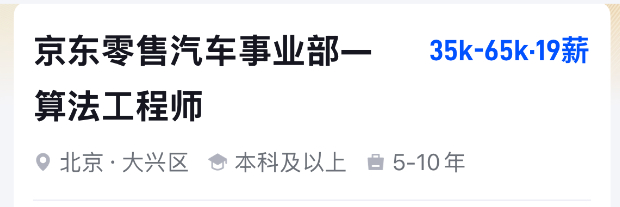
Core Insights - JD.com is expanding its automotive division by recruiting for multiple positions, indicating a strategic push into the car sales market following its announcement to sell vehicles in collaboration with GAC Group and CATL [1][3][7] Recruitment and Job Roles - JD.com is offering high salaries for key positions in its automotive division, with algorithm roles reaching up to 1.23 million yuan and procurement roles exceeding 1.1 million yuan, targeting candidates with relevant industry experience [1][3] New Vehicle Launch - JD.com, in partnership with GAC Group and CATL, is set to launch a new electric vehicle priced between 100,000 and 120,000 yuan during the Double Eleven shopping festival on November 9 [3][5] - The new model will feature a rechargeable and swappable battery, tailored specifically for JD.com users [3][5] Strategic Partnerships - The collaboration between JD.com, GAC, and CATL has been in the works since last year, with previous agreements focusing on battery subscription services and electric vehicle infrastructure [3][5][7] - JD.com is not involved in the manufacturing of vehicles but focuses on sales and after-sales services, emphasizing its role as a retailer rather than a manufacturer [7] Sales Model Innovation - JD.com aims to revolutionize the automotive sales model, leveraging its extensive experience in e-commerce to simplify the car buying process, akin to purchasing a smartphone [10][22] - The company plans to offer a comprehensive automotive ecosystem that includes sales, customization, maintenance, and after-sales services [10][22][23] GAC's Strategic Shift - GAC Group is undergoing a transformation towards a user-centric approach, highlighted by the establishment of a user insight department and the adoption of Huawei's Integrated Product Development (IPD) process [25][26] - The partnership with JD.com is seen as a crucial step in enhancing GAC's ability to gather user feedback and optimize product offerings in a competitive market [26][27]




刘强东开始抢汽车人了,多个岗位年薪超百万
21世纪经济报道· 2025-10-15 15:43
Core Viewpoint - JD.com is expanding its automotive business by launching a new car model in collaboration with GAC Group and CATL, aiming to innovate the car sales model and enhance user experience in the automotive market [3][7][21]. Group 1: Recruitment and Job Opportunities - JD.com has released multiple job openings in its automotive division, with positions such as algorithm roles offering salaries up to 1.23 million yuan and automotive procurement roles exceeding 1.1 million yuan [1]. - The recruitment emphasizes the need for candidates with experience in the automotive industry, particularly in supply chain management and procurement processes [1]. Group 2: New Car Launch - JD.com, in partnership with GAC Group and CATL, announced the launch of the "National Good Car," which will be exclusively sold on JD.com starting November 9, with an estimated price range of 100,000 to 120,000 yuan [3][5]. - The new model features a rechargeable and swappable battery, highlighting the collaboration's focus on innovative automotive solutions [3]. Group 3: Strategic Partnerships - The collaboration between JD.com, GAC Group, and CATL builds on previous partnerships, including a strategic alliance with CATL's battery service arm to create integrated battery services [3][5]. - JD.com has also partnered with several other automotive manufacturers to introduce multiple new models, indicating a broader strategy to penetrate the automotive market [5]. Group 4: Sales Model Innovation - JD.com is positioning itself as a seller rather than a manufacturer, focusing on user insights and exclusive sales, which may lead to changes in the automotive sales model [7][20]. - The company aims to replicate its successful mobile phone sales strategy in the automotive sector, offering a comprehensive ecosystem that includes purchasing, customization, and after-sales services [20]. Group 5: GAC Group's Strategic Shift - GAC Group is undergoing a transformation towards a user-centric approach, incorporating user insights into product development and sales strategies [21][22]. - The partnership with JD.com is seen as a critical step in GAC's transition to a more user-focused business model, leveraging JD's e-commerce capabilities to enhance customer engagement and product offerings [22][23]. Group 6: Challenges Ahead - The collaboration faces challenges, including ensuring the quality and durability of vehicles as they are high-value consumer goods, and managing the supply chain effectively to meet potential demand for multiple vehicle models [24].

京东如何教广汽“造车”
2 1 Shi Ji Jing Ji Bao Dao· 2025-10-15 14:07
Core Viewpoint - JD.com has announced a collaboration with GAC Group and CATL's Times Electric to launch a new electric vehicle called "National Good Car," which will be exclusively sold by JD.com during the Double Eleven shopping festival on November 9 [2][3]. Group 1: Product and Pricing - The new vehicle is estimated to be priced between 100,000 to 120,000 yuan and is likely to be a battery-swappable model from GAC Aion, utilizing CATL's "Chocolate Battery Swap" technology [3]. - JD.com aims to provide a full-cycle car purchasing experience, allowing customers to choose standard models and customize options, including vehicle accessories and maintenance services [8][14]. Group 2: Strategic Partnerships - The collaboration builds on previous partnerships, with Times Electric having established strategic alliances with several automakers, including FAW, Changan, BAIC, and Chery, to launch 10 battery-swappable models across various market segments [5]. - JD.com has previously invested in NIO and launched a vehicle trading platform in 2018, indicating its long-standing ambition in the automotive sector [8][14]. Group 3: Role of JD.com - JD.com is positioned as a seller rather than a manufacturer in this partnership, focusing on consumer insights and exclusive sales without involvement in the vehicle development process [7][15]. - The collaboration allows GAC to leverage JD.com's e-commerce capabilities to enhance user insights and optimize product design based on consumer feedback [16]. Group 4: Market Dynamics - GAC's shift towards a user-centric approach is highlighted by its recent initiatives, including the introduction of the Huawei Integrated Product Development (IPD) process to better align with consumer needs [15][16]. - The partnership with JD.com is seen as a strategic move to explore new sales channels and adapt to the competitive landscape of the electric vehicle market [16]. Group 5: Challenges Ahead - The collaboration faces challenges, including ensuring the quality and durability of the vehicles, as consumers prioritize safety in large purchases like cars [17]. - Coordinating production capacity with a potentially high number of vehicle SKUs based on online consumer research will test the supply chain capabilities of both companies [17].
比亚迪汉长续航版上市 补贴后售价15.98万元
Zhong Guo Zhi Liang Xin Wen Wang· 2025-10-12 13:51
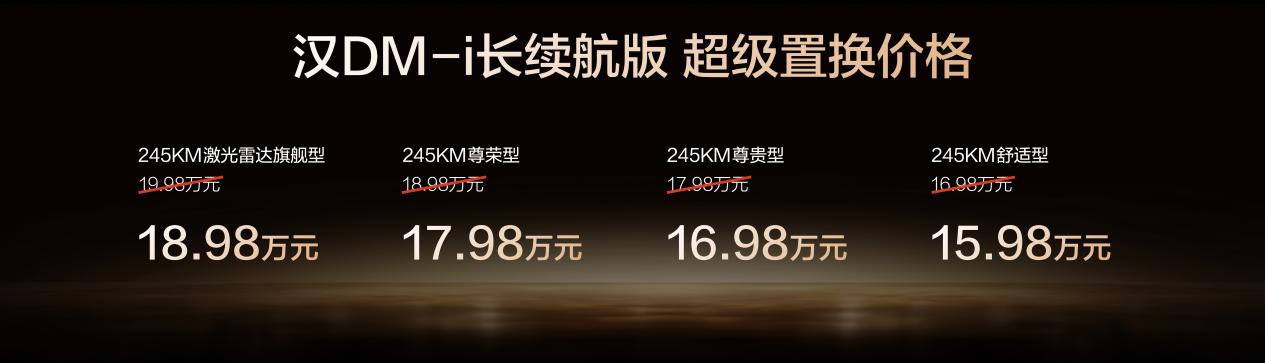
Core Insights - BYD's Han Long Range version officially launched on October 11, 2025, focusing on six luxury dimensions: aesthetics, comfort, ecology, intelligence, safety, and efficiency [1] - The Han DM-i Long Range version offers a pure electric range of 245 kilometers and a fuel consumption of only 3.44L/100km, while the Han EV Long Range version has a lower energy consumption of 10.6kW·h per 100 kilometers [1][3] - The Han family has achieved cumulative sales of over one million vehicles, demonstrating a strong market presence [1] Product Features - The Han DM-i Long Range version includes four models priced between 159,800 to 189,800 yuan after subsidies, while the Han EV Long Range version has three models priced between 173,800 to 205,800 yuan [1] - New color options include Frosted Gold, Pine Shadow Green, and Distant Peak Blue, catering to the aesthetic preferences of younger consumers [5] - The interior features upgrades such as a laser-etched panel and high-quality leather materials, enhancing the luxury experience [7] Comfort and Technology - The Han Long Range version boasts a smart cooling and heating refrigerator, active noise cancellation technology, and a special anti-motion sickness system, creating a serene travel environment [9] - It is equipped with the DiLink 100 smart cockpit and integrates with Deepseek's large model, adding features like car interconnectivity and karaoke [11] - The vehicle includes a high-end intelligent chassis system, Cloud-Ride C, which adjusts suspension damping based on road conditions [12] Safety Enhancements - The Han Long Range version features the TBC high-speed tire blowout stability system, which enhances safety during high-speed driving [15] - The "Eye of God" driver assistance system supports various driving and parking scenarios, with a commitment to cover any safety issues arising from its use [14] Customer Services - BYD offers exclusive services for Han owners, including vehicle pick-up and drop-off services, and parking assistance at key locations [17] - The company plans to push OTA updates to improve fuel consumption for the Han DM-i, aiming to reduce it from 3.8L to 3.35L per 100 kilometers [17] - Special promotions are available for the Han EV 506KM model, including a limited-time discount and trade-in subsidies [17]

引入华为IPD流程,给广汽带来的最大改变是什么?
2 1 Shi Ji Jing Ji Bao Dao· 2025-09-27 10:47
Core Viewpoint - The company is undergoing significant transformations to adapt to the changing automotive market, focusing on user needs and insights rather than traditional market scanning methods [1] Group 1: Company Transformation - The company initiated the "Panyu Action" last year, indicating a strategic shift towards innovation and development [1] - The company is learning from Huawei's Integrated Product Development (IPD) process to enhance its product development capabilities [1] Group 2: Market Positioning - As a traditional automaker, the company acknowledges a lack of focus on user-centric thinking compared to new energy vehicle manufacturers [1] - The current market environment has no vacant spaces, and the competition is now centered around capturing consumer mindsets [1] - The company is now prioritizing insights into user needs and understanding consumer behavior [1]
21对话|引入华为IPD流程,给广汽带来的最大改变是什么?
2 1 Shi Ji Jing Ji Bao Dao· 2025-09-27 10:37
Core Insights - The company is undergoing significant transformations, including the "Panyu Action" and the adoption of Huawei's Integrated Product Development (IPD) process to enhance its operational efficiency and product development capabilities [2] Group 1: Company Strategy - The company acknowledges that as a traditional automaker, it has lagged behind new energy vehicle manufacturers in terms of user-centric thinking [2] - The current market environment is characterized by a lack of untapped market space, leading the company to focus more on understanding user needs and insights [2]
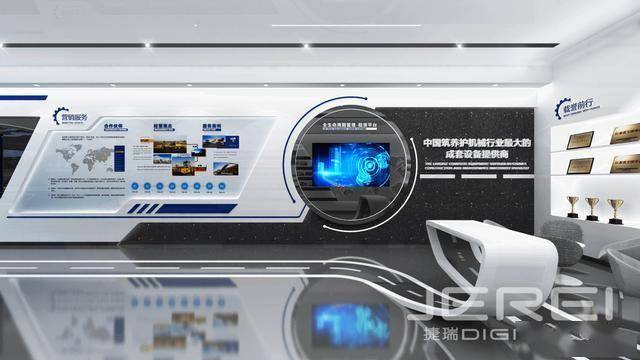
企业展厅——以空间叙事构建品牌价值场域
Sou Hu Cai Jing· 2025-08-28 08:47
Core Insights - The article emphasizes the transformation of corporate exhibition spaces from traditional display areas to core platforms for brand value expression, highlighting the importance of immersive experiences in conveying corporate strategy, culture, and technology [1] Group 1: Exhibition Hall Design - The design of corporate exhibition halls should prioritize user needs, with a focus on understanding the audience's profile, such as investors, partners, and general visitors [3] - A multi-layered narrative framework is essential for exhibition design, as demonstrated by a renewable energy company's exhibition that uses a storyline of "crisis awakening - technological breakthrough - ecological co-construction" [3] - The integration of technology should serve content expression, avoiding a cold, tech-heavy feel while enhancing product memory through interactive elements [3] Group 2: Spatial Layout Design - Spatial layout is a balance between audience movement and information density, with different layouts suited for varying narrative strengths [4] - The use of vertical space can enhance the perception of area, as seen in a project that utilized mirror ceilings and LED light strips to create a sense of expanded space [4] - Lighting design plays a crucial role in setting the emotional tone of the space, with different color temperatures used to evoke specific feelings in various exhibition areas [4] Group 3: Exhibition Hall Operation - A dynamic updating mechanism is recommended to maintain the vitality of the exhibition hall, combining fixed core exhibits with rotating auxiliary areas [5] - Data-driven operations can enhance space efficiency, utilizing tools like heat maps and eye-tracking to optimize visitor engagement [5] - The evolution of exhibition halls from "physical containers" to "ecological platforms" reflects a shift towards deeper brand-audience interactions, transforming visits into meaningful dialogues [5]
上半年增速最快的电动两轮车,为什么是九号?
Zhong Guo Jing Ji Wang· 2025-08-15 08:45
Core Insights - Ninebot Company reported impressive financial results for the first half of 2025, with revenue reaching 11.742 billion yuan, a year-on-year increase of 76.14%, and net profit attributable to shareholders at 1.242 billion yuan, up 108.45% [1] - The smart electric two-wheeler segment has emerged as the growth engine for Ninebot, generating revenue of 6.823 billion yuan, reflecting a year-on-year growth of 101.7% [1] - Ninebot's electric two-wheelers achieved sales of 2.39 million units in China during the first half of the year, marking a 99.5% increase year-on-year, making it the fastest-growing brand in the industry [1] Industry Evolution - The rise of smart electric two-wheelers, represented by Ninebot, marks a significant turning point in the industry, shifting competition from price to product and brand strength [2] - The transition from basic transportation to interactive smart terminals signifies a major evolution in user perception and demand, akin to the "iPhone moment" in technology [2] - Companies are now required to innovate and adopt user-centric thinking, moving beyond mere imitation of smart features to fostering a culture of innovation [2][3] User Experience and Service Focus - The second half of the competition will emphasize user experience and service, reflecting a deeper understanding of emotional needs beyond functional requirements [4] - Ninebot has established comprehensive service centers in major cities, aiming to provide professional and convenient service experiences, thus elevating after-sales service standards [4] - The launch of the "Safe Driving 99" training program and the establishment of the Ninebot Safe Driving Academy represent a commitment to enhancing user safety and driving skills [4][5] Long-term User-Centric Approach - Ninebot's recent initiatives serve as a model for the electric two-wheeler industry, emphasizing that user-centric thinking should be a long-term commitment throughout the product lifecycle [6] - Brands that can genuinely empathize with users and integrate smart technology will likely lead the market and drive industry development in the future [6]
入局文旅转型?华侨城退出,珠江钢琴接盘白水仙瀑景区运营
Nan Fang Du Shi Bao· 2025-08-11 14:42
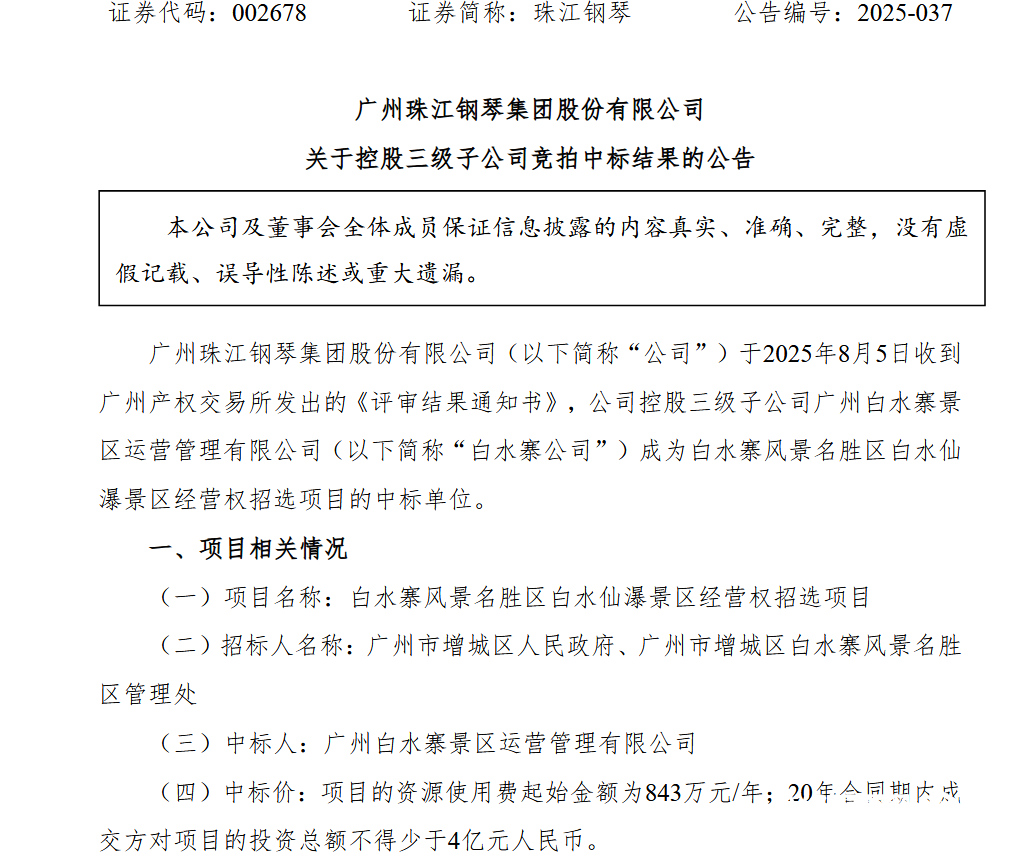
Core Viewpoint - Zhujiang Piano has acquired the management rights of the Bai Shui Xian Waterfall Scenic Area, aiming to transform it into a national 5A tourist attraction within five years, amidst a backdrop of declining revenue in its main business [1][2][12]. Summary by Sections Acquisition Details - Zhujiang Piano's subsidiary, Guangzhou Bai Shui Zhai Scenic Area Operation Management Co., Ltd., won the bid for the Bai Shui Xian Waterfall Scenic Area, with a contract period of 20 years and a minimum investment of 400 million yuan [2][5]. - The annual resource usage fee for Zhujiang Piano is set at 8.43 million yuan [2][5]. Strategic Goals - The company plans to invest in the development, management, and promotion of the scenic area, with the goal of achieving national 5A status or becoming a national-level tourist resort within five years [5][12]. - Zhujiang Piano aims to enhance the annual visitor count by 1.5 million, integrating surrounding towns and rural areas to boost local economies [14][12]. Background on Previous Management - The previous operator, Overseas Chinese Town Group, failed to meet the 5A status goal during its management tenure, which lasted less than seven years [6][9]. - The group had committed to a total investment of 1 billion yuan but did not achieve the desired outcomes, leading to its exit from the project [9][10]. Financial Performance - Zhujiang Piano reported a significant decline in revenue, with a 39.97% drop to 677.17 million yuan in 2024, and a net loss of 235.62 million yuan, marking a shift from profit to loss [16][15]. - The company is exploring new markets and product lines, including home furnishings, to diversify its revenue streams [12][17]. Industry Context - The overall environment for the musical instrument industry is challenging, with a slowdown in growth and a need for companies to adapt to changing consumer preferences [15][17]. - Experts suggest that companies like Zhujiang Piano should shift from a manufacturing mindset to a focus on user experience and storytelling to regain market confidence [15].


价盘稳、不压货,月销量一年翻了3倍,这个品牌在四川卖爆了!
Sou Hu Cai Jing· 2025-07-31 09:41
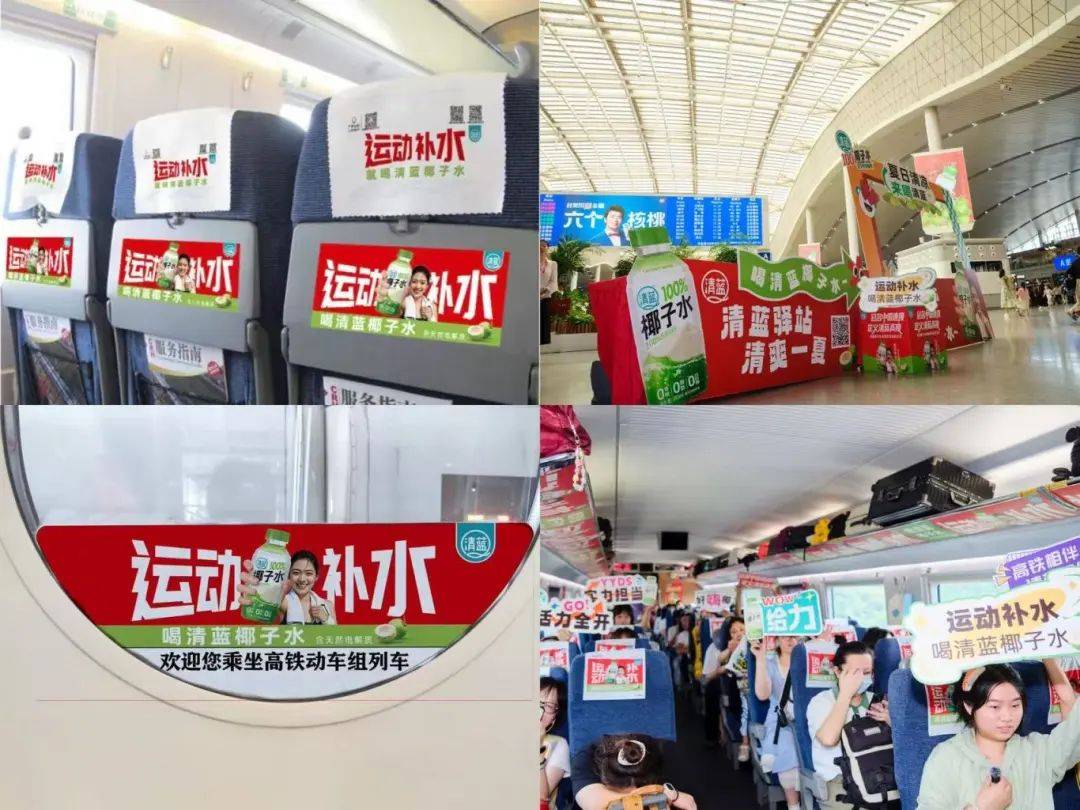
Core Insights - The article highlights the significant rise in popularity and sales of coconut-based beverages, particularly focusing on the brand Qinglan, which has seen a threefold increase in monthly shipments in the Sichuan region compared to the previous year [1][3][14]. Sales Performance - Qinglan's monthly shipment in Sichuan has exceeded 100,000 cases, up from approximately 30,000 cases in the same month last year, marking a growth of about 233% [3][12]. - The sales revenue for Qinglan's distributors in Sichuan has also surged, with one distributor's sales increasing from 600,000-700,000 yuan in 2023 to an expected 2.5 million yuan in 2025 [3][12]. Market Strategy - Qinglan has effectively utilized high-visibility marketing strategies, including naming a high-speed train after its product and advertising on major train routes, enhancing brand recognition [1][3]. - The brand has achieved a distribution coverage rate of over 50% in Sichuan, with some areas reaching as high as 80%, indicating strong market penetration [12][21]. Product Quality and Consumer Demand - The success of Qinglan is attributed to its high-quality products, which are sourced directly from Southeast Asia and produced using advanced sterile production lines [15]. - Qinglan's product strategy aligns with the evolving consumer preferences for healthier, natural beverages, offering products with no additives, colors, or preservatives [15][25]. Distributor Relations - Qinglan maintains a non-pressure sales approach, allowing distributors to manage their inventory without the burden of forced sales targets, which has fostered long-term partnerships [10][17]. - The brand provides comprehensive support to its distributors, including marketing assistance and timely after-sales service, which enhances distributor confidence and performance [17][21]. Market Trends - Despite a general decline in beverage sales reported by some distributors, Qinglan has managed to achieve significant growth, showcasing its resilience in a challenging market environment [23][25]. - The brand's innovative product offerings and effective marketing strategies have positioned it as a leading player in the coconut beverage segment, appealing to both consumers and distributors alike [25].