
碳边境调节机制(CBAM)

Search documents
专访|刘振民:望美国重返《巴黎协定》,须关注单边措施对能源转型危害
Sou Hu Cai Jing· 2025-11-24 01:39
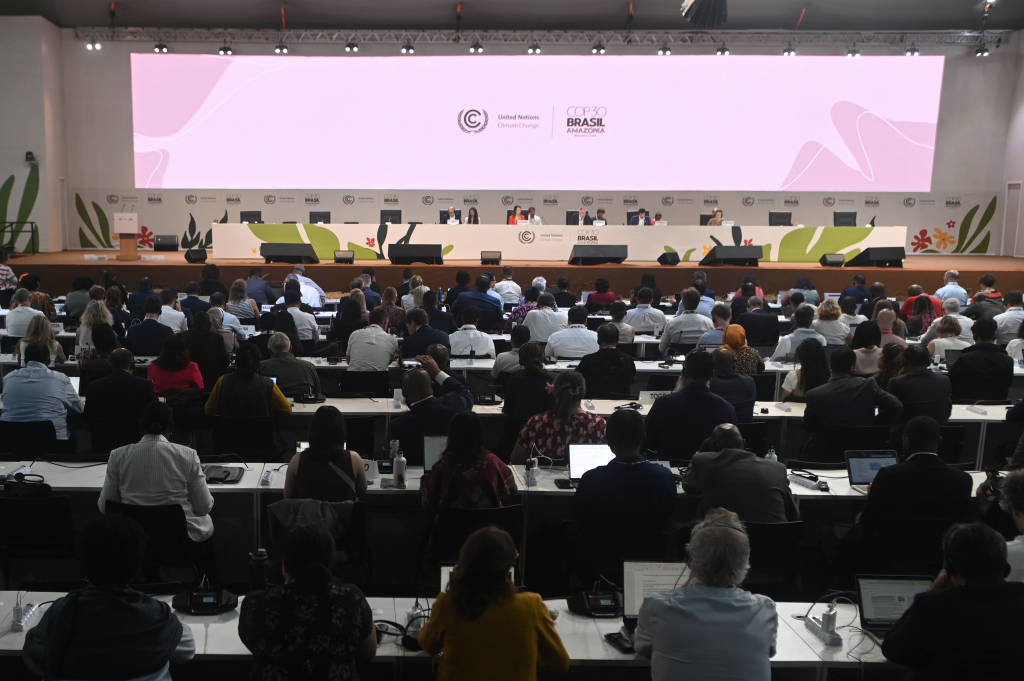
Core Viewpoint - The 30th United Nations Climate Change Conference (COP30) concluded in Belem, Brazil, amidst significant political pressure and global expectations, focusing on key issues such as funding, energy transition, trade, and international cooperation [1][3]. Group 1: U.S. Absence and Its Impact - The absence of the U.S. federal government at COP30 marked a historic moment, raising concerns about the future of global climate governance [3][6]. - The lack of U.S. representation has created challenges in funding negotiations and political coordination among developed countries, particularly affecting financial commitments to developing nations [7][20]. - Despite the absence of federal representatives, many local government and business leaders from the U.S. attended, indicating a division in U.S. domestic opinion on climate change [8][9]. Group 2: Energy Transition and NDCs - The conference emphasized the importance of energy transition, with over 120 countries submitting new Nationally Determined Contributions (NDCs) ahead of the 2035 deadline [12][15]. - China advocates for maintaining the UAE consensus on energy transition, opposing new, separate roadmaps that do not consider renewable energy development [13][14]. - China's ambitious targets include a reduction of greenhouse gas emissions by 7%-10% from peak levels by 2035 and increasing non-fossil energy consumption to over 30% [15][16]. Group 3: Trade Issues and Funding Challenges - Development countries united in opposition to unilateral trade measures proposed by developed nations, particularly the EU's Carbon Border Adjustment Mechanism (CBAM) [17][18]. - Funding remains a critical issue, with developing countries urgently needing financial support to address climate change, as mandated by the Paris Agreement [20]. - The COP30 outcomes included a commitment to double adaptation funding by 2025 and at least triple it by 2035, urging developed nations to fulfill their financial obligations [20][21].

CF(CF) - 2025 Q3 - Earnings Call Transcript
2025-11-06 17:02
Financial Data and Key Metrics Changes - For the first nine months of 2025, the company reported adjusted EBITDA of approximately $2.1 billion, with net earnings attributable to common stockholders of about $1.1 billion, or $6.39 per diluted share [5][21][22] - In the third quarter of 2025, net earnings attributable to common stockholders were $353 million, or $2.19 per diluted share, with EBITDA and adjusted EBITDA both around $670 million [21][22] - The trailing 12-month net cash from operations was $2.6 billion, and free cash flow was $1.7 billion, with a free cash flow to adjusted EBITDA conversion rate of 65% [21][22] Business Line Data and Key Metrics Changes - The ammonia utilization rate for the first nine months of 2025 was 97%, with expectations to produce approximately 10 million tons of gross ammonia for the full year [14] - Significant progress was made in strategic initiatives, including the full utilization of expanded diesel exhaust fluid rail load-out capabilities, leading to record DEF shipments [14][15] Market Data and Key Metrics Changes - The global nitrogen supply-demand balance remained tight, with robust demand from North America, India, and Brazil, while product availability was constrained due to low global inventories and outages [17][18] - The company anticipates that the global nitrogen supply-demand balance will remain constructive, with strong demand expected to continue [17][18] Company Strategy and Development Direction - The company aims to become the world's leader in clean ammonia and has reduced GHG emissions intensity by 25% from its original baseline [6][7] - Plans for the development of the world's largest ultra-low emissions ammonia plant at the Blue Point Complex in Louisiana are underway, with expectations for significant financial and societal benefits [9][10] Management's Comments on Operating Environment and Future Outlook - Management expressed confidence in the strong demand for nitrogen, stating that nitrogen demand is largely inelastic and not significantly affected by grower profitability [11][12] - The company highlighted the misconception in the market regarding its valuation, noting that it trades at a low cash flow multiple compared to its strong free cash flow generation [13] Other Important Information - An incident at the Yazoo City, Mississippi complex was reported, but all employees and contractors were safe, and the investigation is ongoing [4][24] - The company returned $445 million to shareholders in the third quarter of 2025 and approximately $1.3 billion for the first nine months [22][23] Q&A Session Summary Question: Current market conditions and mid-cycle expectations - Management acknowledged that current conditions are above mid-cycle and expect full-year results to exceed mid-cycle numbers due to strong industry conditions [33][34] Question: Pricing premiums for low-carbon ammonia - The company is currently achieving a premium of $20-$25 per ton for low-carbon ammonia sold in Europe, with expectations for this to increase as demand grows [37] Question: Potential risks in the nitrogen outlook - Management indicated that while they assess market conditions daily, they see healthy demand growth and limited supply, making it difficult to identify significant risks [41][42] Question: Addressing the valuation disconnect - Management noted that the market does not fully recognize the company's financial strengths and that continued share repurchases will help address this valuation gap [46][70] Question: Future capital expenditures and maintenance - The company expects to maintain a capital expenditure range of approximately $550 million for its non-Bluepoint network, with additional investments for Bluepoint [50][51] Question: Impact of the Yazoo City incident on production - Management confirmed that the ammonia plant at Yazoo City was not directly affected and production plans remain on track [52]

印度和欧盟同意继续就钢铁、汽车工业和碳税问题进行磋商
Shang Wu Bu Wang Zhan· 2025-10-31 16:40
Core Points - India and the European Union have agreed to continue discussions on sensitive issues related to steel, automotive industries, and carbon taxes as part of the proposed free trade agreement [1] - Indian Commerce Minister Piyush Goyal met with EU Trade Commissioner Valdis Dombrovskis, advocating for the elimination of tariffs and non-tariff barriers, and the establishment of a transparent and predictable regulatory framework to enhance bilateral trade [1] - The discussions will focus on the carbon border adjustment mechanism (CBAM) and other EU regulations, which could impose tariffs ranging from 20% to 35% on Indian exports of steel, aluminum, and cement to the EU, representing a significant loss for India [1]
系统构建我国产品碳足迹管理体系
Zhong Guo Huan Jing Bao· 2025-09-17 23:18
Group 1 - The core viewpoint emphasizes the importance of establishing a product carbon footprint management system to quantify and reduce carbon emissions, which aids in green transformation and enhances market competitiveness [1][5] - The Chinese government has prioritized the development of a product carbon footprint management system since the 18th National Congress, with policies being rapidly introduced to standardize carbon footprint accounting and management [2][5] - The current product carbon footprint management system in China is still in need of improvement, particularly in areas such as data transparency, accuracy, and the establishment of regulatory frameworks [2][3][4] Group 2 - Supply chain carbon footprint management faces challenges due to complexity and lack of regulatory frameworks for evaluation and disclosure [3][4] - There is a significant discrepancy in carbon footprint certification standards across different countries, complicating global trade and compliance for Chinese enterprises [4][7] - The establishment of a carbon footprint data sharing platform is crucial for enhancing data transparency and accuracy, requiring collaboration among government, industry associations, and third-party organizations [5][6] Group 3 - Improving carbon labeling certification and information disclosure systems is essential for promoting green transformation in supply chains [6][8] - Strengthening international recognition of carbon footprint certification standards can reduce trade barriers and enhance China's influence in global carbon management [7][8] - The cultivation of professionals in carbon footprint management is vital for supporting the development of the management system, necessitating collaboration between educational institutions and industry [8][9][10]
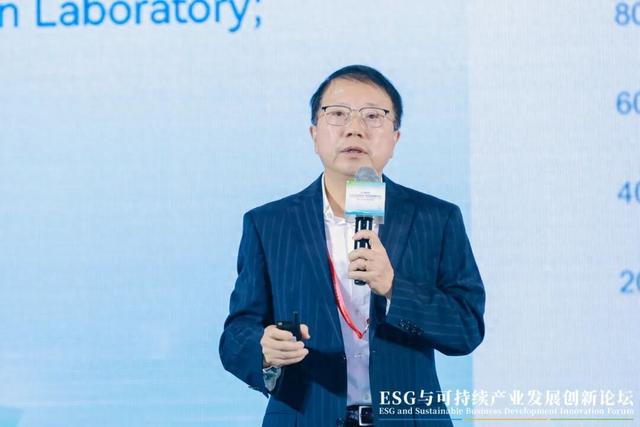
2025鼓浪屿论坛|李宁:能源创新与数字赋能助力ESG及产业升级
Guan Cha Zhe Wang· 2025-09-16 09:32
Core Viewpoint - The forum focused on "creating digital product passports to support sustainable trade development," highlighting the importance of energy innovation and digital empowerment in achieving ESG goals and industrial upgrades [1][3]. Group 1: Energy Structure and Challenges - The global energy structure is still dominated by fossil fuels, accounting for 80% of the total energy mix, with significant regional disparities in energy reliance [3]. - Non-OECD countries in regions like Asia-Pacific and the Middle East continue to heavily depend on fossil fuels, resulting in high carbon intensity, while OECD countries have lower carbon intensity due to decreasing coal usage [3]. - The upcoming EU Carbon Border Adjustment Mechanism (CBAM) and Digital Product Passport (DPP) regulations will pose significant challenges for developing countries outside the EU [3]. Group 2: Opportunities in Energy Transition - Historical data shows that global wind and solar power installations have increased by tens of thousands to hundreds of thousands of times over the past 30 years, with China nearing a 500,000-fold increase by 2024, showcasing a new low-carbon development path [3][4]. - Achieving net-zero emissions by 2050-2060 requires an annual growth rate of over 8%-10% in zero-carbon energy or faster growth in negative carbon technologies [3]. Group 3: AI and Energy Innovation - The synergy between AI and energy is seen as a major trend for energy innovation, focusing on clean, low-carbon, and efficient energy solutions [4]. - The "AI + Energy" action plan released by the National Energy Administration and the National Development and Reform Commission is a response to the growing energy demands of AI data centers [4]. Group 4: Trade and Investment Opportunities - The EU's CBAM and DPP should be viewed as opportunities rather than just challenges, as China's green products like photovoltaics, lithium batteries, and electric vehicles can provide significant carbon reduction benefits during their usage phase [5]. - The DPP can transform invisible environmental benefits into visible, inclusive real-world assets, attracting investment and financing to create a new paradigm for development in the Global South [5].

中孚实业:破局启新程,逐梦铸华章-20250609
GOLDEN SUN SECURITIES· 2025-06-09 05:48
Investment Rating - The report gives a "Buy" rating for the company, indicating a positive outlook for investment [4]. Core Viewpoints - The company has successfully restructured and improved its profitability after facing significant losses and a risk of delisting in previous years. It has a solid market position and a well-established industrial chain in coal, electricity, aluminum, and aluminum processing [1][14]. - The company is focusing on green transformation and expanding its electrolytic aluminum production capacity, which is expected to enhance its profitability due to lower electricity costs in the Sichuan region starting in 2025 [2][3]. - The report highlights the importance of the green aluminum pricing mechanism and the company's potential to gain cost pricing power and market access in the European and American green supply chains [4]. Summary by Sections Section 1: Company Overview - The company was established in 1993 and listed on the Shanghai Stock Exchange in 2002. It has a comprehensive industrial chain with capacities of 2.25 million tons of coal, 750,000 tons of aluminum, and 690,000 tons of aluminum processing [1][14]. - After a significant restructuring in 2021, the company returned to profitability in 2021 and successfully lifted its delisting risk in 2022 [1][14]. Section 2: Electrolytic Aluminum and Green Transformation - In September 2023, the company acquired a 25% stake in Zhongfu Aluminum, increasing its electrolytic aluminum capacity to 630,000 tons, with plans to reach 750,000 tons by 2025 [2]. - The company anticipates a decrease in electricity costs for its electrolytic aluminum production in Sichuan starting in 2025, which will enhance its profitability [3]. Section 3: Green Transition and High-Quality Development - The report discusses the impact of carbon reduction policies and the evolving pricing logic for aluminum, emphasizing the importance of green transformation for future competitiveness [4]. - The company is positioned to benefit from the green aluminum market, with expectations of significant growth in profitability from 2025 to 2027 [4]. Section 4: Financial Forecast and Valuation - The company is projected to achieve net profits of 1.8 billion, 2.3 billion, and 2.7 billion yuan for the years 2025, 2026, and 2027, respectively, with corresponding P/E ratios of 8.1, 6.3, and 5.5, indicating a favorable valuation compared to peers [4][5].

欧盟碳市场行情简报(2025年第84期)-20250521
Guo Tai Jun An Qi Huo· 2025-05-21 03:07
Report Title - The report is titled "EU Carbon Market Market Briefing (Issue 84, 2025)" [1] Report Date - The report was released on May 21, 2025 [2] Investment Rating - No investment rating is provided in the report Core View - The EUA market is expected to move in a volatile range of €67 - 75. Geopolitical conflicts have pushed up TTF prices, and EUA has followed suit [2] Market Conditions Auction - On May 20, 2025, the EUA auction price was 70.69 euros/ton, a 1.80% increase, with a bid - cover ratio of 1.39 and auction revenue of 22,942 million euros. The auction volume was 324,550,000 tons. On May 19, 2025, the auction price was 69.44 euros/ton, with a bid - cover ratio of 1.29 and auction revenue of 22,537 million euros [2][4] Futures - On May 20, 2025, the EUA futures settlement price was 73.18 euros/ton, a 3.92% increase, and the trading volume was 29,300 lots, a decrease of 0.52. The open interest was 316,700 lots, unchanged [2][5] Spot - On May 20, 2025, the EUA spot settlement price was 72.14 euros/ton, a 3.95% increase. The trading volume was 2,794 lots, a 1.12% increase. The container shipping carbon cost was 489 US dollars/TEU [5] Strategy and Logic Bullish Factors - Improved UK - EU relations may bring prospects for trade facilitation and economic integration; European stock indices closed higher; EUA auctions will be reduced by four in the next two weeks, providing short - term price support; Israel's plan to air - strike Iranian nuclear facilities has pushed up oil prices; Tensions between Russia and Ukraine have increased after the US - Russia leaders' call [2] Bearish Factors - Russia has initiated a WTO dispute over the EU's Carbon Border Adjustment Mechanism (CBAM) [3]
碳边境调节机制下,中欧合作机遇与挑战并存丨能源思考
Di Yi Cai Jing· 2025-05-18 11:30
Core Viewpoint - The article emphasizes the need for deeper cooperation between China and the EU in light of the uncertain international political and economic landscape, particularly focusing on fair trade rules and maximizing the benefits of the Carbon Border Adjustment Mechanism (CBAM) for sustainable development [1][6]. Summary by Relevant Sections Potential Impact of EU CBAM - The EU's CBAM may lead to increased costs for certain member states, with significant disparities in impact, particularly affecting countries like Bulgaria, Ireland, and Greece that rely heavily on imports from non-EU countries [2]. - For China, the short-term effects of CBAM are limited, but the long-term implications are substantial, as the mechanism initially targets industries like steel and aluminum, which are significant in China's exports to the EU [2]. Opportunities and Challenges in China-EU Economic Cooperation - China and the EU share a consistent stance on climate action, which can be leveraged to enhance cooperation in clean energy projects under the Belt and Road Initiative, focusing on nuclear, wind, and solar energy [3]. - The challenges posed by CBAM include its role as a tool for achieving climate goals, which may restrict trade flexibility and highlight differences in resource endowments and development stages between China and the EU [4]. Development Directions for China-EU Economic Cooperation - Strengthening policy dialogue and coordinating carbon pricing mechanisms is essential to reduce friction caused by climate policies, with suggestions for regular discussions on carbon pricing and CBAM implementation details [7]. - Improving the carbon emission accounting system to enhance data credibility and accuracy is crucial, with proposals for unified standards and data sharing to mitigate uncertainties in CBAM implementation [8]. - Exploring mechanisms for redistributing CBAM revenues to support low-carbon transitions in developing countries can help alleviate the impact of CBAM on global trade dynamics [9]. - Promoting green technology cooperation is vital, leveraging China's strengths in clean energy and the EU's comprehensive green governance framework to enhance low-carbon industrial development [9].