自有品牌战略

Search documents
上海8元12瓶水,奥乐奇低价优势,门店数量领先沃尔玛
Sou Hu Cai Jing· 2025-11-08 05:46
Core Insights - The article highlights the significant price advantages offered by the discount retailer, Aldi, particularly in Shanghai, where basic necessities are sold at remarkably low prices, such as 12 bottles of water for 8 yuan [1][3] - Aldi's global store count exceeds 14,000, surpassing that of Walmart, showcasing its extensive reach and competitive positioning in the retail market [1] Pricing Strategy - Aldi's pricing strategy is evident in its lower prices compared to traditional supermarkets, such as selling grapefruit for 0.66 yuan versus 1.2 yuan at regular stores, demonstrating a substantial price gap that attracts consumers [3] - The retailer offers organic eggs at 2.6 yuan for six, significantly cheaper than the 3 yuan charged by regular supermarkets, indicating a focus on affordability without compromising quality [3] Product Offering - Aldi's private label products dominate its shelves, with 80-90% of items bearing its own brand, allowing for lower prices through direct supplier relationships and bulk purchasing [8][10] - The limited SKU count, only one-tenth of that found in regular supermarkets, simplifies consumer choices and enhances the shopping experience [10] Store Operations - Aldi's smaller store size, approximately one-fifth of typical supermarkets, reduces rental and renovation costs, contributing to lower prices for consumers [12] - The store layout is designed for efficiency, with minimal staff and a self-service model that further reduces operational costs [12][14] Technological Integration - Aldi employs technology to streamline operations, such as prominent barcodes for easy scanning and self-checkout systems, which help minimize labor costs [14] Market Expansion - Since its expansion beyond Germany in the late 1960s, Aldi has disrupted local retail markets in various regions, including Europe, America, and Australia, and has recently entered the Chinese market [16] - The company's ability to maintain growth during economic downturns is attributed to its strong price advantage and focus on private label products, appealing to cost-conscious consumers [18] Business Philosophy - Aldi's operational philosophy emphasizes maximizing value for consumers by offering high-quality products at low prices, with a streamlined approach to store management and supply chain efficiency [20]


步步高前三季实现营收31.94亿元 现金流同比增长260.89%
Zheng Quan Ri Bao Wang· 2025-10-27 10:41
Core Insights - The overall business performance of Bubu Gao is steadily improving, benefiting from the cultural transformation inspired by the "Fat Donglai" business model, leading to enhanced operational efficiency, profitability, gross margin, and cash flow [1] Financial Performance - For the first three quarters of 2025, Bubu Gao achieved a revenue of 3.194 billion yuan, representing a year-on-year growth of 26.48%, particularly with significant increases in supermarket sales [1] - The net profit attributable to shareholders reached 225 million yuan, indicating an improvement in overall store efficiency and profitability [1] - The net cash flow was 399 million yuan, a substantial increase of 260.89% compared to the same period last year [1] Operational Improvements - The strong revenue growth reflects the effectiveness of Bubu Gao's systematic reforms, including the adjustment of potential stores and the implementation of a private label strategy, which have significantly upgraded overall operational performance [2] - The reopening of the Changsha Yanghu Huiju store on September 21 marked the completion of adjustments in 20 stores, which have become engines for performance growth [2] - Enhancements in store operations included upgrades to hardware facilities, optimization of store layout and product structure, as well as improvements in employee compensation, operating hours, and benefits [2] Supply Chain and Product Strategy - Bubu Gao has established strategic partnerships with over 200 quality suppliers through direct sourcing, resulting in competitive pricing and improved freshness of products, which has driven sales growth across all categories, particularly in fresh and prepared foods [2] - The launch of the private label brand BL (Better Life Better Love) in March 2025 has quickly gained traction, with over 70 products covering various categories, emphasizing high cost-performance and differentiation [3] - The brand's sales have been increasing monthly, with a steady rise in gross margin and market share, contributing to the company's retail transformation and establishing a clear growth path for the brand [3] Strategic Focus - Bubu Gao has maintained a flexible combination of "shopping centers + supermarkets" for 30 years, creating a high-frequency and high-quality commercial ecosystem that meets diverse consumer needs [3] - The company is committed to strategic determination and open cooperation, focusing on core regions and deepening retail fundamentals to solidify its development foundation [4]

量贩零食表现强劲 万辰集团前三季度实现营收超365亿
财联社· 2025-10-21 13:02
Core Viewpoint - Wanchen Group has demonstrated significant growth in its financial performance, primarily driven by its strong performance in the bulk snack business, indicating a robust market position and effective business strategies [1][3][6]. Financial Performance - For Q3 2025, Wanchen Group reported total revenue of 13.98 billion yuan, a year-on-year increase of 44.15%, and a net profit attributable to shareholders of 380 million yuan, up 361.22% [1]. - In the first three quarters, the company achieved revenue of 36.562 billion yuan, representing a 77.37% year-on-year growth, with a net profit of 855 million yuan, up 917.04% [1]. Bulk Snack Business - The bulk snack segment generated revenue of 36.158 billion yuan in the first three quarters, accounting for 98.90% of total revenue, with a net profit of 1.595 billion yuan [3]. - Wanchen Group's strategic execution and business model optimization have contributed to the rapid development of its bulk snack business, with over 15,300 stores nationwide [3][5]. Membership and Consumer Engagement - As of August, the group had over 150 million registered members, with 110 million active members in the first eight months, resulting in 1.5 billion transactions [5]. - The average monthly consumption frequency for active members reached 2.9 times in August, indicating strong consumer engagement [5]. Competitive Advantage - Wanchen Group maintains a competitive edge through its product quality and supply chain efficiency, offering prices 20% to 30% lower than traditional retail formats [6][9]. - The company has a diverse product matrix with 1,800 to 2,000 SKUs in stores, regularly introducing new products to enhance the shopping experience [6][9]. Supply Chain and Logistics - The company operates 51 temperature-controlled warehouses and 13 cold chain facilities, ensuring efficient logistics with an average distance of 124 kilometers between stores and warehouses [9][10]. - Wanchen Group achieves over 99% order fulfillment rates for its flagship brand "Haoxianglai," surpassing the industry average of 90%-95% [10]. Market Outlook - The bulk snack retail sector is projected to grow significantly, with an expected compound annual growth rate of 36.5% from 2024 to 2029, reaching a market size of 613.7 billion yuan by 2029 [12]. - Wanchen Group is expanding its product categories and upgrading store models to capture market potential, including the introduction of a "cost-saving supermarket" model [12][14]. Social Responsibility - The company is actively engaged in corporate social responsibility initiatives, including donations to youth development foundations and educational projects in rural areas [14][16]. - These efforts enhance the brand's reputation and consumer trust, contributing to its market leadership [16]. Future Prospects - With a solid store network, large membership base, innovative product offerings, and efficient supply chain, Wanchen Group is well-positioned for sustained growth in the competitive retail landscape [16][17].
零售巨头转身,自有品牌能否再造大润发?
Guan Cha Zhe Wang· 2025-10-17 09:05
Core Insights - The article discusses the strategic shift of RT-Mart towards private label brands in response to the challenges faced in the retail industry, particularly during a downturn in consumer spending [1][5][6] Group 1: Company Strategy - RT-Mart is launching a "Private Label Festival" in October 2025, featuring nearly 500 private label products across various categories, aiming to balance cost control and quality experience [5][10] - The private label strategy includes two main series: "Super Savings," which focuses on cost-effective products, and "RT-Mart Selection," which emphasizes quality and local specialties [5][10] - The company aims to leverage its supply chain to ensure quality control and competitive pricing, moving away from traditional brand partnerships [10][11] Group 2: Market Context - The traditional supermarket model is under pressure from online platforms and new retail formats, leading to a significant decline in the number of physical stores and sales [6][11] - Consumer behavior has shifted towards value-driven purchasing, with a growing demand for high-quality, cost-effective products [6][11] - The retail industry is transitioning from a "channel dividend" to a "supply chain dividend," necessitating a focus on supply chain integration and brand storytelling [11][16] Group 3: Financial Performance - Financial data indicates a decline in revenue for RT-Mart's parent company, with a drop from approximately 83.66 billion yuan to 71.55 billion yuan between 2023 and 2025 [7][10] - The gross profit also decreased slightly, from 20.58 billion yuan to 17.24 billion yuan during the same period [7] Group 4: Competitive Landscape - RT-Mart faces competition from established private label brands like Walmart's "Great Value" and Sam's Club's "Member's Mark," which have already gained market recognition [13][14] - The rise of hard discount chains and online platforms offering low-priced products poses additional challenges to RT-Mart's market position [14][15] - The company must quickly innovate and adapt to consumer preferences to remain competitive in a crowded market [15][16]

大润发公布“超省+润发甄选”双品牌矩阵战略 瞄准分层消费
Huan Qiu Wang· 2025-10-13 04:17
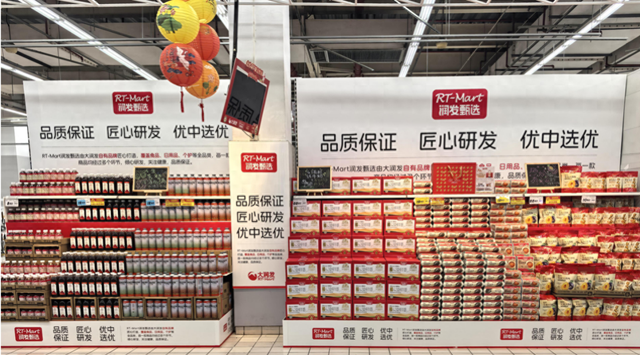
Core Insights - Dazhonghua has launched a "Private Brand Festival" across nearly 500 stores and online platforms, focusing on two core brands: "Chao Sheng" and "Runfa Selection," aimed at addressing the current trend of consumer segmentation with a strategy of "low price without low quality, high price without high coldness" [1][3] Group 1: Brand Strategy - The "Chao Sheng" series emphasizes extreme cost performance by directly connecting with factories and reducing intermediaries, offering high-repurchase rate products like 11.8 yuan/bag shredded pork jerky and 4.9 yuan/package of fresh-keeping film, directly competing with e-commerce prices [1][3] - The "Runfa Selection" series focuses on quality upgrades, introducing over 20 regional products such as organic milk from Inner Mongolia and rice from Panjin, aiming to meet consumer demands for "quality-price ratio" across health, flavor, and certification dimensions [3] Group 2: Future Plans - Dazhonghua plans to continue its 1+1 dual brand strategy, with "Chao Sheng" focusing on price competitiveness and maintaining product quality at or above national standards, while "Runfa Selection" targets consumers' needs for high quality at market prices, emphasizing health trends, local flavors, and authoritative certifications [3] - By September 2025, the two brands aim to launch nearly 500 SKUs covering over 50 categories, including snacks, beverages, grains, condiments, and household cleaning products [3] Group 3: Strategic Adjustments - Since acquiring Gaoxin Retail from Alibaba Group in February 2025, the company has been undergoing strategic adjustments, with plans to transform hypermarkets into community lifestyle centers [4]
量贩零食们的低价战事
Zhong Guo Jing Ying Bao· 2025-10-10 21:12
Core Insights - The competition between two major snack giants, Mingming Hen Mang and Wancheng Group, for the title of "first stock in Hong Kong" is intensifying as both companies have submitted their IPO applications to the Hong Kong Stock Exchange [1][6] - Both companies aim to utilize the raised funds for store expansion and supply chain optimization, indicating a strategic focus on enhancing their "low-price advantage" in the competitive landscape [1][7] Group 1: Market Dynamics - The extreme low pricing strategy of the snack retail sector is attributed to several factors, including the use of private label bulk products and optimized supply chain operations [3][4] - The supply chain efficiency is enhanced through direct sourcing, improved transportation, and strategic inventory management, which collectively reduce costs and allow for lower retail prices [3][4] Group 2: Financial Performance - Mingming Hen Mang's revenue for 2022, 2023, and 2024 is reported at 4.286 billion, 10.295 billion, and 39.344 billion respectively, with adjusted net profits of 81 million, 235 million, and 913 million [6] - Wancheng Group, which transitioned from a mushroom company to the snack retail sector, saw its revenue surge from under 600 million in 2022 to 32.3 billion in 2024 [6][7] Group 3: Competitive Strategies - Mingming Hen Mang focuses on internal growth and supply chain optimization, while Wancheng Group employs a strategy of mergers and acquisitions to consolidate regional snack brands under a unified brand [6][7] - Both companies are investing in digital infrastructure and logistics to enhance operational efficiency and meet diverse consumer demands [7][10] Group 4: Industry Trends - The snack retail sector is experiencing a shift towards self-owned brands as a means to improve profit margins amidst intense price competition [9][10] - The average gross margin for Wancheng Group is reported at 11.49%, while Mingming Hen Mang's gross margins from 2022 to 2024 are relatively low, indicating challenges in maintaining profitability [9]
药师帮(09885.HK)第三季厂牌首推业务(包括集团自有品牌业务)交易总额6.58亿元 同比...
Xin Lang Cai Jing· 2025-10-09 11:54
Core Insights - The core strategy of the company is to enhance profitability through the launch of its own brand products, which is a key component of its "upward move" plan [1] Business Strategy - The company is actively seeking deep collaborations with pharmaceutical companies to help them launch products tailored to downstream demand, aiming to convert potential market opportunities into tangible sales [1] - The company leverages its established brand influence and channel advantages to strategically expand its own brand product offerings, focusing on high-quality products that meet diverse market needs [1] Financial Performance - For the three months ending September 30, 2025, the total transaction value of the brand launch business, including the company's own brand business, reached 658 million yuan, representing a year-on-year increase of 163.0% [1]
加快品牌价值跃迁 普莱得自有品牌收入占比已超过20%
Quan Jing Wang· 2025-08-28 02:58
Group 1 - The core viewpoint of the articles highlights that Pruide (301353.SZ) has successfully increased its self-owned brand revenue to over 20% and is enhancing its brand influence through platforms like Tmall, Amazon, and Walmart [1][2] - The company is recognized as a "little giant" enterprise under the national specialized and innovative category, leveraging its technical strength and manufacturing experience in the electric tools sector to advance its OBM strategy [1] - Pruide has established a differentiated brand authorization system with brands such as "Hengdong," "NEUMASTER," "PRULDE," "Bangta," and "BATAVIA," tailored to meet the market demands of various countries and regions [1] Group 2 - In the first half of 2025, the company's European subsidiary BATAVIA.BV reported over 80% year-on-year revenue growth, indicating strong momentum for its self-owned brands in international markets [2] - The company has strengthened its overseas supply chain response capabilities through its production base in Thailand and optimized logistics efficiency with an overseas warehouse model, creating a global marketing network covering key markets like the US, Europe, Australia, and India [2] - As the proportion of self-owned brand revenue continues to rise, Pruide is transitioning from manufacturing advantages to brand value, enhancing its brand influence and international competitiveness [2]
美妆上市公司净利暴跌1316%
3 6 Ke· 2025-08-27 06:13
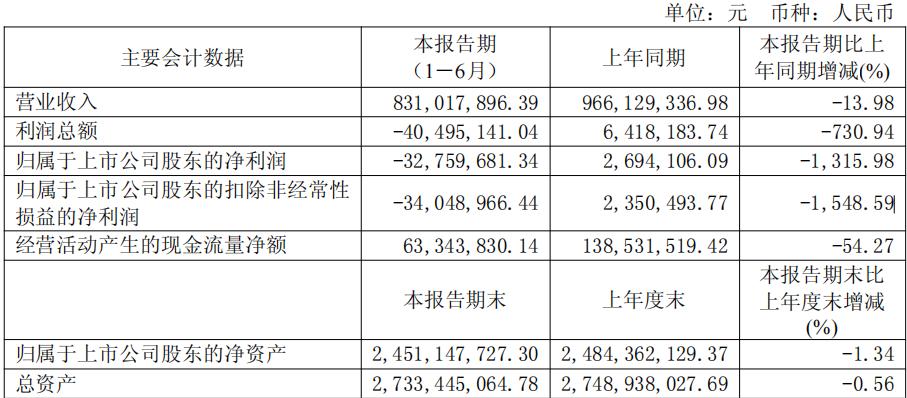
Core Viewpoint - The recent divorce case involving the founder of Liren Lizhuang has concluded, resulting in significant changes in the company's shareholding structure, while the company faces declining financial performance and challenges in its business model [1][29]. Financial Performance - Liren Lizhuang reported a revenue of 831 million yuan for the first half of 2025, a year-on-year decrease of 13.98% [2][6]. - The net profit attributable to shareholders was a loss of 32.76 million yuan, a staggering decline of 1315.98% compared to the previous year [2][6]. - The total profit for the period was a loss of 40.50 million yuan, down 730.94% from a profit of 6.42 million yuan in the same period last year [2]. Stock Performance - Since its peak stock price of 54.89 yuan in September 2020, Liren Lizhuang's stock has plummeted nearly 80%, closing at 10.37 yuan on the day of the report [3][6]. - The company's market capitalization has shrunk by over 80%, now standing at approximately 4.15 billion yuan [3]. Business Model and Revenue Sources - The company's revenue model primarily consists of e-commerce retail and brand marketing services, with e-commerce retail accounting for 91.12% of total revenue, generating 757 million yuan [5][6]. - Liren Lizhuang's reliance on platforms like Tmall is significant, with Tmall domestic and international revenues at 516 million yuan and 27 million yuan, respectively [8][10]. Brand Development - The company's self-owned brands have seen a sales increase of over 80% year-on-year, although they still represent a small portion of total revenue [11][12]. - Liren Lizhuang operates six self-owned brands, with the brand Yuyongchu achieving top sales in its category shortly after launch [11]. Challenges and Market Position - The termination of partnerships with major Korean brands has put additional pressure on Liren Lizhuang, contributing to its financial struggles [2][36]. - The company faces intense competition from emerging platforms and other traditional TP companies that have successfully adapted to market changes [10][30]. - The recent divorce case of the founder has been linked to the company's declining performance, with significant operational disruptions during the legal proceedings [17][29]. Future Outlook - The company must accelerate its strategic transformation and enhance its core competitiveness to survive and thrive in a competitive market environment [36].

定义新标准,激活新市场:汇通达网络(9878.HK)携手桃花潭的“酒水样本”
Cai Fu Zai Xian· 2025-08-27 02:18
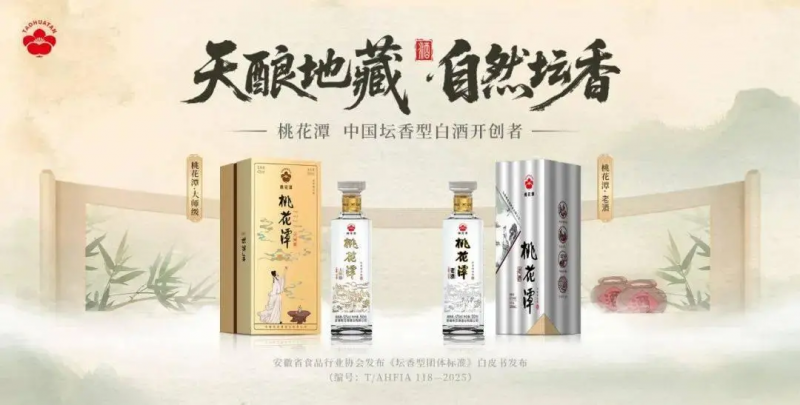
Core Viewpoint - Huitongda Network (9878.HK) is advancing its self-owned brand strategy in the liquor industry, focusing on an "integrated production and sales" model, achieving a favorable performance characterized by both volume and price increases [1] Group 1: Self-Owned Brand Strategy - Huitongda's self-owned brand strategy has been upgraded with the release of the "Tanshang Type Group Standard" white paper in collaboration with Anhui Taohua Tan Liquor Industry, marking a new phase of systematic and standardized empowerment [1][3] - The "Tanshang Type" standard aims to redefine brand value amidst the traditional dominance of three main fragrance types in the liquor industry, catering to diverse consumer flavor preferences [3][5] Group 2: Product Development and Market Positioning - The "Tanshang Type" liquor, developed over three years, features a unique style characterized by "elegant fragrance and smooth taste," utilizing high-quality sorghum and traditional fermentation techniques [3][6] - The release of the standard signifies a shift from brand and channel integration to "industry standard definition," enhancing Huitongda's self-owned brand strategy [5] Group 3: Market Activation and Sales Strategy - Huitongda is leveraging a dual approach of "integrated production and sales" and "cultural empowerment" to tap into the vast liquor market, creating new opportunities for super products in lower-tier markets [8] - The company is building a comprehensive sales matrix by integrating high-quality brewing resources and utilizing a nationwide network of member stores, alongside e-commerce and cultural tourism channels [8] Group 4: Cultural Integration and Consumer Engagement - Huitongda's products are designed to resonate with emotional consumer needs, incorporating cultural narratives and historical elements to enhance brand value and consumer experience [8][10] - The existing product series covers various market segments, from high-end collectibles to mass consumption, ensuring a complete pricing range and consumption pathways [8] Group 5: Industry Innovation and Competitive Advantage - Industry experts note that innovative fragrance types are becoming a benchmark for evaluating liquor companies, with Huitongda's focus on quality and ecological factors supporting its brand differentiation [10] - The combination of self-owned brands, standard formulation, and cultural empowerment positions Huitongda to reshape the traditional liquor industry, transitioning from scale competition to value competition [10]