自研芯片

Search documents
雷军爆料2026年重磅新品:自研芯片、OS、AI大模型将“大会师”
Sou Hu Cai Jing· 2026-01-08 07:06
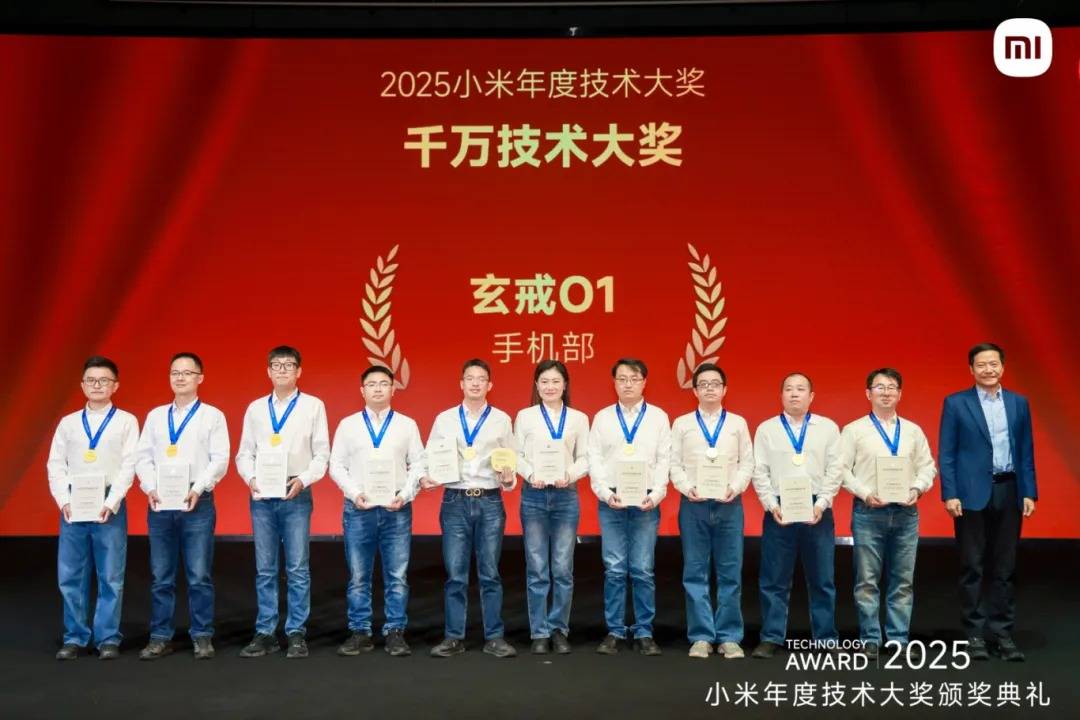
Group 1 - The core event was the awarding of Xiaomi's self-developed chip "Xuanjie O1" at the "Ten Million Technology Awards" ceremony held in Beijing [1] - Xiaomi's founder and CEO Lei Jun announced that in 2026, the company will launch a terminal product that integrates self-developed chips, OS, and AI models, speculated to be the Xiaomi 17S Pro with the new Xuanjie O2 chip [3] - The Xuanjie O2 chip is expected to be released around September this year, utilizing the latest Arm public architecture, with an IPC improvement of at least 15% and the potential integration of the Arm Cortex-X9 series super-large core [5] Group 2 - Xiaomi is concurrently advancing its self-developed Xuanjie 5G baseband, which has reportedly achieved key breakthroughs, although it is not confirmed if it will launch alongside the Xuanjie O2 [7] - In the AI model sector, Xiaomi's open-source self-developed model MiMo-V2-Flash has shown impressive performance, with a total parameter count of 309 billion and 15 billion active parameters, outperforming competitors in response speed and ranking among the top tier of open-source models [10] - The integration of Xuanjie O1, Xuanjie O2, and MiMo-V2-Flash signifies a rapid closure of Xiaomi's self-developed ecosystem, marking a new phase of deep collaboration between hardware and software, enhancing user experience and setting a new benchmark for self-developed technology integration in the industry [10]


雷军预告小米神秘新品:有望实现芯片/AI/OS大会师
Sou Hu Cai Jing· 2026-01-08 06:13
Core Insights - Xiaomi's Chairman and CEO Lei Jun announced that by 2026, the company aims to achieve the integration of self-developed chips, operating systems, and AI models in a terminal product, likely a flagship smartphone [1] Group 1: Chip Development - Xiaomi has developed a complete underlying technology stack, with its self-developed mobile SoC chip, Xuanjie O1, set to be officially released on May 22, 2025. This chip utilizes TSMC's second-generation 3nm (N3E) process, integrating 19 billion transistors and featuring a 10-core 4-cluster CPU architecture [3] - The Xuanjie O1 chip includes two Cortex-X925 super-large cores with a frequency of 3.9GHz, four performance cores at 3.4GHz, two efficiency cores at 1.9GHz, and two efficiency small cores at 1.8GHz, along with a 16-core Arm Immortalis-G925 GPU. It will debut in the Xiaomi 15S Pro special edition, marking a significant step in Xiaomi's core hardware development [3] Group 2: Operating System Development - Xiaomi officially launched its third-generation ecosystem operating system, Surge OS 3, in August 2025, which is deeply customized based on Android 16. The system was first pushed in the Chinese market in September 2025 and later expanded to India, Europe, and Southeast Asia [5] - Surge OS 3 incorporates technologies such as hotspot compilation acceleration, resulting in faster application launches and lower gaming power consumption. In a stress test involving the continuous launch of 22 applications, it maintained smooth animations, achieving a system efficiency optimization improvement of 10% [5] Group 3: AI Development - Xiaomi's large model team, led by former DeepSeek researcher Luo Fuli, is set to release and open-source its flagship model MiMo-V2-Flash in December 2025. This follows the earlier open-sourcing of models like MiMo-7B and MiMo-Embodied, establishing a capability system that covers inference, multi-modal, and embodied intelligence [7]
雷军:小米将发布机器人业务的新进展
Sou Hu Cai Jing· 2026-01-08 04:17
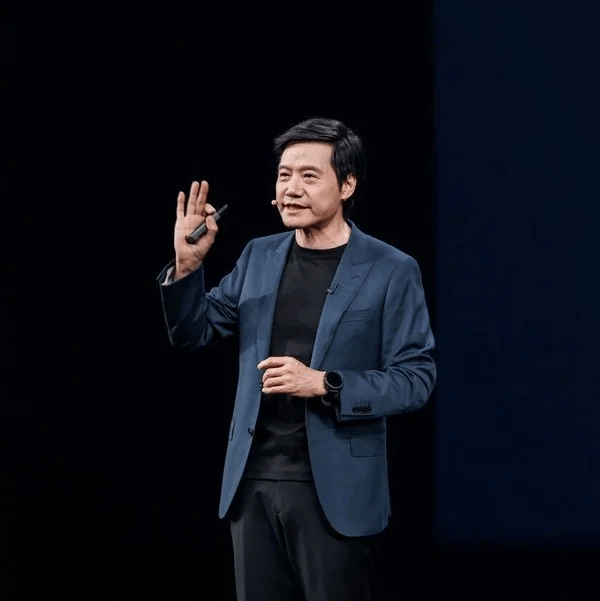
Group 1 - Xiaomi's founder Lei Jun announced new developments in the company's robotics business expected in 2026, with further details to be shared later [1] - Xiaomi has been an early player in the development of robotic dogs and humanoid robots, launching "CyberDog" in 2021 and "CyberOne" in 2022, with the "CyberDog" team winning the highest award at the 2021 Xiaomi Annual Technology Awards [1] - Despite the recent surge in embodied intelligence, Xiaomi has not released an updated version of its humanoid robot and has ceased public demonstrations of previous models, although patent applications and job postings indicate ongoing research and development [1] Group 2 - Xiaomi's Beijing Xiaomi Robotics Technology Co., Ltd. registered a copyright for the "third-generation humanoid robot CyberOne" in October 2025, seen as evidence of the company's continued development in humanoid robotics [2] - Xiaomi has been investing in the robotics field for four to five years, with a focus on the potential of humanoid robots in industrial applications, although the practical implementation remains challenging [2] - In addition to robotics, Lei Jun revealed plans for Xiaomi to achieve a convergence of self-developed chips, operating systems, and AI models in a terminal product by 2026 [4] Group 3 - Xiaomi's self-developed 3nm smartphone SoC, released in May 2025, positions the company as the fourth globally to design such a chip, following Apple, Qualcomm, and MediaTek [4] - The team behind the 3nm chip received the highest award at the 2025 Xiaomi Annual Technology Awards, with further advancements expected in the future [4] - Xiaomi plans to invest 200 billion yuan in research and development over the next five years, focusing on core technologies such as chips, AI, and operating systems [4]


雷军:小米终端今年有望实现自研芯片、OS、AI大模型“大会师”
Sou Hu Cai Jing· 2026-01-08 03:13
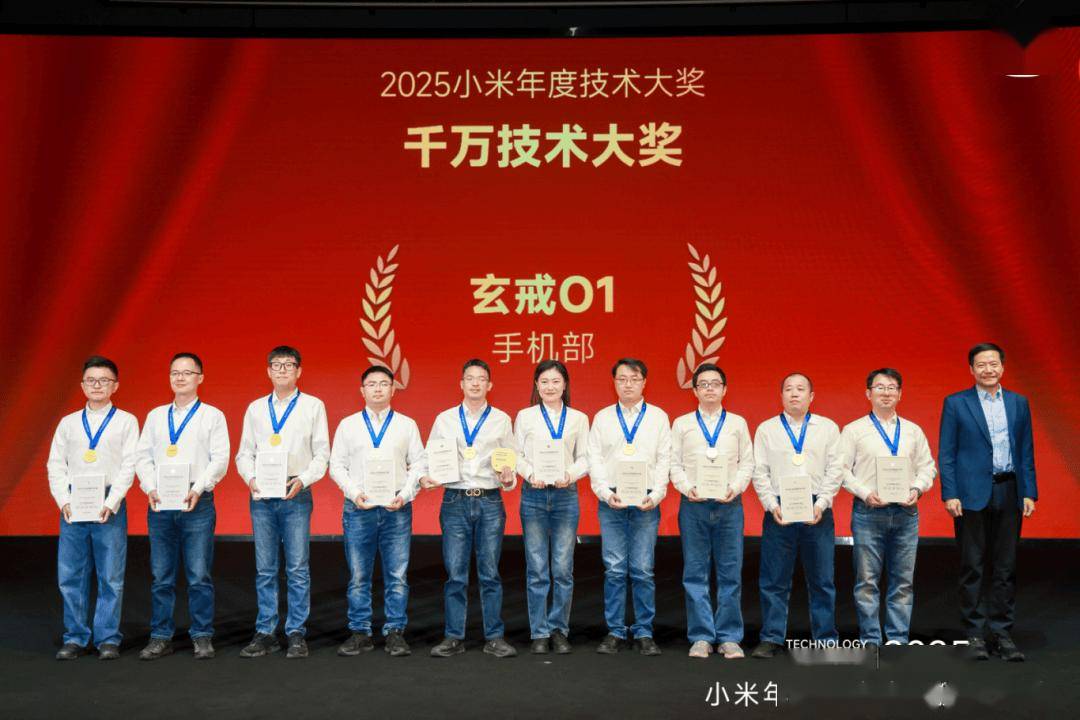
Core Insights - Xiaomi's self-developed chip "Xuanjie O1" won the highest award at the 2025 Xiaomi "Ten Million Technology Award" ceremony held on January 7, 2025, marking a significant achievement in the company's technological innovation [1][3] - The "Xuanjie O1" chip utilizes a second-generation 3nm process and features a ten-core four-cluster architecture, achieving full functionality in just six days, positioning Xiaomi among the top global players in mobile chip performance [3] - Xiaomi aims to integrate self-developed chips, operating systems, and AI models in a single terminal by 2026, while also focusing on innovation in robotics [3][6] Award Details - The highest award was given to the "Xuanjie O1" team, with ten other projects receiving second and third prizes at the annual technology awards [3] - Approximately two-thirds of the awarded projects in 2025 utilized AI technology, covering various fields such as materials, chip design, operating systems, smart driving, and smart home appliances [3] Future Investment Plans - Xiaomi has committed to investing 200 billion yuan in research and development over the next five years, focusing on core technologies such as chips, AI, and operating systems to build a comprehensive ecosystem [6]
手机业务如何应对内存风险、AIot、电车、研发布局.....一文读懂小米高管在高盛电话会发言
硬AI· 2026-01-07 15:35
Core Viewpoint - Xiaomi is focusing on increasing the average selling price of smartphones as a primary operational goal for 2026, while significantly boosting investments in artificial intelligence to transform its entire business line and setting an annual delivery target of 550,000 electric vehicles [1][3]. Group 1: Smartphone Business - Xiaomi's strategy to counter the unprecedented rise in memory chip costs involves increasing the average selling price (ASP) of its smartphones [5][6]. - The upcoming Xiaomi 17 Ultra will be priced 500-700 RMB higher than the Xiaomi 15 Ultra, reflecting the company's commitment to price increases [6]. - The company aims to improve its market share in China by 1 percentage point annually, emphasizing the strategic importance of the Chinese market for its premiumization strategy [8]. Group 2: AIoT Business - The AIoT segment is positioned as a profit stabilizer for Xiaomi, with expectations of approximately 20% year-on-year revenue growth in 2025 and a 2-2.5 percentage point expansion in gross margin [10]. - Xiaomi plans to increase the number of its retail stores from about 500 in 2025 to over 1,000 in 2026, while expanding product categories and exploring partnerships with cross-border e-commerce platforms [10][11]. - Currently, overseas AIoT revenue accounts for about 30% of total revenue, with the company viewing its overseas smartphone revenue (60%) as a long-term reference for AIoT business expansion [10]. Group 3: Electric Vehicle Business - Xiaomi has raised its 2026 delivery target for electric vehicles to 550,000, significantly higher than the previously set target of 410,000 for 2025 [13]. - The growth is driven by increased manufacturing capacity and consumer confidence in new vehicle models, including the SU7 and a new third model [14]. - The company aims to focus on the high-end electric vehicle market, which constitutes 50% of annual passenger car sales in China, while accounting for 80-90% of industry profits [15]. Group 4: R&D Investments - Xiaomi plans to invest 200 billion RMB in R&D from 2026 to 2030, focusing on AI, intelligent driving, and chip development [16]. - The company aims to leverage AI to empower its ecosystem and internal operations, with a significant portion of its code being AI-generated [17]. - Xiaomi has invested 135 billion RMB in the development of its XRING O1 chip over the past four years, with plans to enhance its self-developed smart electric vehicle chips [19][20].

玄戒O1芯片获小米千万技术大奖
Guan Cha Zhe Wang· 2026-01-07 13:52
Group 1 - Xiaomi awarded its 2025 Technology Awards, with the top prize going to the "Xuanjie O1" chip, and the second and third prizes awarded to the 2200MPa Xiaomi Ultra-Strong Steel and Xiaomi Smart Glasses, respectively [1] - Xiaomi's chairman Lei Jun mentioned the potential for the company to achieve a convergence of self-developed chips, operating systems, and AI models in a single terminal product this year [1] - The "Xuanjie O1" chip, launched in May last year, features a die area of 109mm, utilizes second-generation 3nm process technology, and contains over 19 billion transistors [1][3] Group 2 - The "Xuanjie O1" chip includes a 16-core GPU with the latest Immortalis-G925 and employs dynamic performance adjustment technology for GPU operation based on running scenarios, achieving single-core and multi-core performance scores of 3008 and 9509, respectively [1] - Xiaomi denied market speculation that the "Xuanjie O1" is based on a customized Arm chip, asserting that it was entirely designed by the Xuanjie team over a four-year development period [3] - The 2200MPa Xiaomi Ultra-Strong Steel is the highest strength hot-formed steel currently in mass production, with a 40% increase in tensile strength and a 24% increase in yield strength compared to 1500MPa hot-formed steel [3] Group 3 - The Xiaomi Smart Glasses feature a dual-chip architecture that allows for ultra-low power consumption, automatically activating the Qualcomm AR1 flagship chip in complex scenarios while seamlessly switching to a low-power Bluetooth audio processor in low-load situations [5] - Since 2019, Xiaomi has held an annual technology awards ceremony for engineers, with Lei Jun attending each year; the 2025 award has been upgraded to a prize of ten million RMB [9]

手机业务如何应对内存风险、AIot、电车、研发布局.....一文读懂小米高管在高盛电话会发言
Hua Er Jie Jian Wen· 2026-01-07 08:54
Core Viewpoint - Xiaomi is focusing on increasing the average selling price of smartphones as a primary operational goal for 2026, while significantly boosting investments in artificial intelligence to transform its entire business line and setting an annual delivery target of 550,000 electric vehicles [1][2]. Group 1: Smartphone Business - Xiaomi's strategy to counter the rising costs of storage chips involves increasing the average selling price (ASP) of smartphones, with a clear focus on high-end models [3][4]. - The upcoming Xiaomi 17 Ultra will be priced 500-700 RMB higher than the Xiaomi 15 Ultra, reflecting this strategy [3]. - The company aims to increase its market share in China by 1 percentage point annually, emphasizing the strategic importance of the Chinese market for its high-end strategy [4]. Group 2: AIoT Business - The AIoT segment is positioned as a profit stabilizer for Xiaomi, with expectations of approximately 20% year-on-year revenue growth in 2025 and a margin expansion of 2-2.5 percentage points [5]. - Xiaomi plans to increase the number of its retail stores from about 500 in 2025 to over 1,000 in 2026, while expanding product categories and exploring partnerships with cross-border e-commerce platforms [5]. - Currently, overseas AIoT revenue accounts for about 30%, with overseas smartphone revenue at 60%, indicating potential for future growth in AIoT [5]. Group 3: Electric Vehicle Business - Xiaomi has raised its delivery target for electric vehicles to 550,000 units for 2026, significantly up from the previous target of 410,000 units for 2025 [6][7]. - The growth is driven by increased manufacturing capacity and consumer confidence in new models, including the SU7 facelift and a third model set for release in the second half of 2026 [6]. - The company aims for a healthy gross margin of over 20% in the electric vehicle segment, although margins may be lower in 2026 due to tax incentives and changes in product mix [6][7]. Group 4: R&D Investments - Xiaomi plans to invest 200 billion RMB in R&D from 2026 to 2030, focusing on AI, autonomous driving, and chip development [8][9]. - AI investments are expected to account for 25% of the 320-330 billion RMB R&D budget in 2025, with a commitment to maintaining reasonable levels of investment [9]. - The company has a strong focus on developing its own chips, with significant investments already made in the XRING O1 chip, which is expected to enhance its capabilities in the electric vehicle sector [11].
小米“二号人物”拟减持140亿!股民怎么办?
Xin Lang Cai Jing· 2025-12-29 13:39
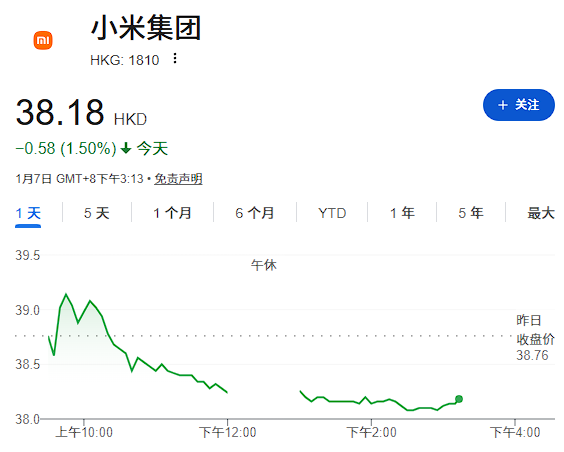
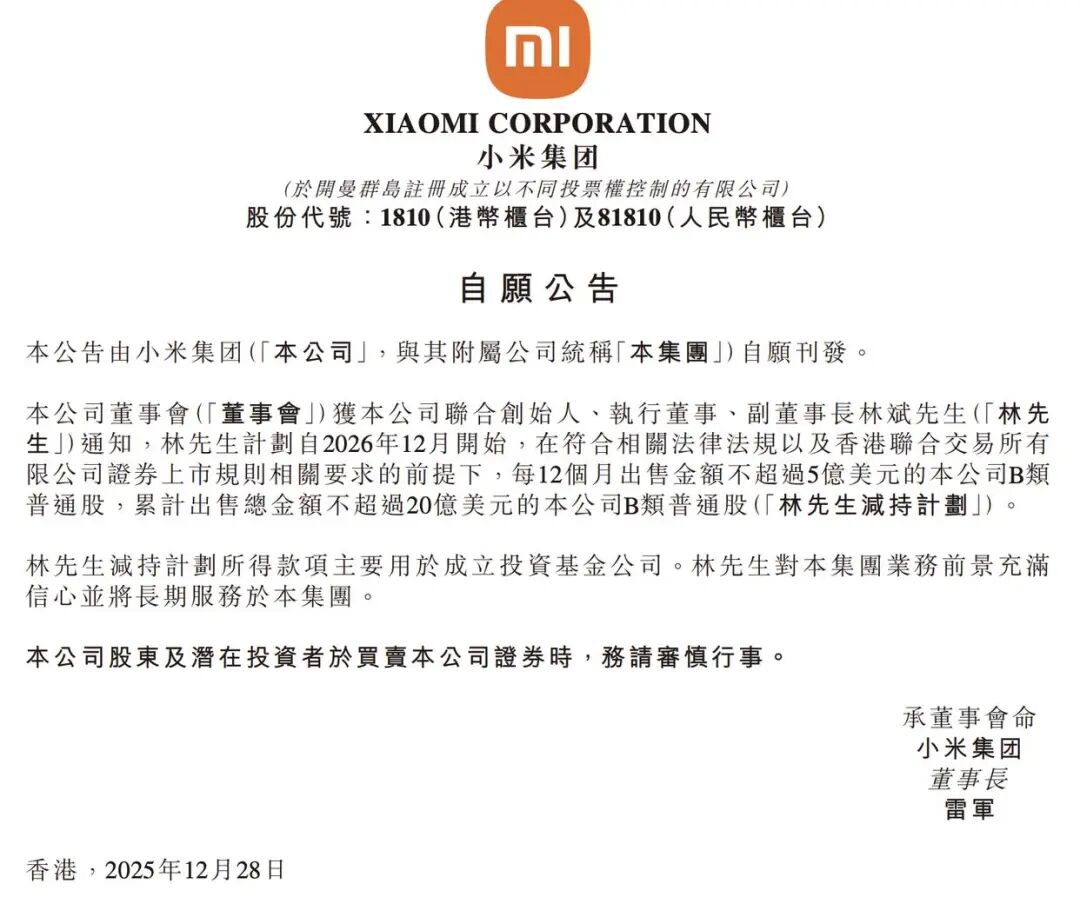
(来源:上市之家) 随着股价近期的大跌,雷军的1亿港元并未挽回颓势,而这位小米"二号人物"的巨额减持计划,可能给公司未来股价带来持续四年的阴影。 12月28日,小米集团(1810.HK)在港交所发布公告称,公司收到联合创始人、执行董事、副董事长林斌的通知。根据该通知,林斌计划自2026年12月开 始,在符合相关法律法规及港交所上市规则的前提下,以每12个月为周期,出售不超过5亿美元的公司B类普通股,累计出售总金额上限为20亿美元(约 合超140亿人民币)。 "对未来业务前景充满信心并将长期服务于集团。"公告中还这样表示。 12月29日,小米集团股价低开超3%,报收38.58港元。 巧合的是,雷军近日1亿港元增持小米集团260万股的平均价,也为每股约38.58港元。 01 "二号人物"减持 在公司官网的介绍中,林斌的位置在雷军之下,卢伟冰之上,被视为小米的"二号人物"。百度百科介绍中显示,他是一位美籍华裔企业家。 小米集团在公告中解释了此次减持的目的,指出林斌减持所得款项将主要用于成立一家投资基金公司。同时,公司特别强调,林斌对小米集团的业务前 景"充满信心",并承诺将"长期服务于本集团",以此向市场传递稳定信 ...
雷军:2025,迎接风暴
3 6 Ke· 2025-12-22 00:40
Core Insights - The article discusses the transformation of Lei Jun, the founder and CEO of Xiaomi, as the company navigates both achievements and challenges in 2025, marking the 15th anniversary of Xiaomi and the 4th year of its automotive venture [1][4]. Financial Performance - Xiaomi has seen significant growth in revenue and profit for three consecutive quarters, with a notable performance in the automotive sector, where the SU7 series became the best-selling sedan over 200,000 yuan in the past year [1]. - In Q3 2025, Xiaomi's automotive business delivered 109,000 vehicles, generating revenue of 29 billion yuan with a gross margin of 25.5%, achieving operational profitability for the first time with an operating profit of 700 million yuan [4]. Product Development - Xiaomi launched the self-developed 3nm flagship SoC chip, Xuanjie O1, becoming one of the first companies in mainland China to release such a chip, which is also integrated into the Xiaomi 15S Pro smartphone [6]. - The automotive business reached a milestone with the production of its 500,000th vehicle in just over 1 year and 7 months, setting a record for the fastest in the domestic new energy vehicle industry [4]. Brand Challenges - Despite the successes, Xiaomi and Lei Jun faced significant public scrutiny due to safety concerns following accidents involving the SU7 and questions regarding the authenticity of marketing claims [3][4]. - Lei Jun expressed frustration over the negative publicity, stating that Xiaomi has been one of the most criticized brands post-launch of its automotive line [3]. Strategic Direction - Xiaomi is transitioning from an internet company to a hard-tech company, emphasizing the importance of self-developed chips as a critical path for success [9]. - The company plans to invest over 32 billion yuan in R&D in 2025, with a projected total investment of 200 billion yuan over the next five years [9]. Manufacturing Expansion - In October 2025, Xiaomi's smart home appliance factory in Wuhan commenced operations, marking the third major smart manufacturing base for the company, which aligns with its "human-vehicle-home ecosystem" strategy [9].
蔚来公布,缺芯了
半导体芯闻· 2025-12-17 10:31
Core Viewpoint - NIO has announced a change in the technical solution for the rear entertainment expansion feature of the new ES8 due to a shortage of supply for the required chips, effective from December 22, 2025, to ensure vehicle delivery [1] Group 1: Changes in Features - The new ES8 will no longer support local video playback via USB drives, although lossless music playback and wireless screen mirroring will remain unaffected [1] - The ability to output the vehicle's screen to an external display via the USB-C port in the armrest will also be discontinued, but data input and wired screen mirroring will still be supported, with a maximum resolution of 1080P [1] Group 2: Compensation Measures - NIO will provide a one-time compensation of 15,000 points to users who lock in the new ES8 with the new technical solution before December 31, 2025, credited to the primary user's account within three days of vehicle delivery [1] - Users can opt for the original technical solution after chip supply improves by paying 12,000 points or 1,200 yuan for retrofitting [1] Group 3: Chip Development and Strategy - NIO's founder, Li Bin, announced the successful application of the self-developed 5nm automotive-grade intelligent driving chip, Shenji NX9031, in multiple models, marking a significant milestone in NIO's chip strategy [7] - The Shenji NX9031 chip is noted for its high performance, equivalent to four NVIDIA Orin-X chips, and is designed to support long-term upgrades of intelligent driving algorithms and software [10] - NIO aims to ensure that its intelligent driving chips can operate safely under extreme conditions and provide high bandwidth and processing power for a decade [8] Group 4: Challenges and Achievements - NIO faced significant challenges during the chip development process, including the abrupt termination of a partnership, but managed to overcome these obstacles and advance the project ahead of schedule [9] - The successful first-time tape-out of the Shenji NX9031 chip is a notable achievement, as it is the first automotive-grade 5nm chip to be mass-produced and deployed in vehicles [10] - NIO's commitment to self-research and development in chip technology is seen as a long-term strategy to enhance competitiveness in the automotive industry [11]