
芯片自主研发

Search documents
华尔街见闻早餐FM-Radio|2026年1月1日
Sou Hu Cai Jing· 2025-12-31 23:52
Market Overview - In 2025, U.S. stock and bond markets faced declines, with major indices experiencing four consecutive days of losses. However, the tech sector supported the Nasdaq, which rose over 20% for the year, while Nvidia and Google saw annual gains of nearly 40% and 65%, respectively [1] - The U.S. unemployment claims fell to 199,000, nearing historical lows, while the dollar index rose to a one-week high despite an eight-year record annual decline [1][11] - The offshore RMB broke through 6.98, reaching a 15-month high, with an annual increase of over 3000 points, reversing three years of decline [1] - The cryptocurrency market saw significant declines, with Bitcoin dropping over 6% and Ethereum falling more than 10% for the year [1] - Precious metals experienced a significant annual increase, with gold and silver rising over 60% and nearly 150%, respectively, marking the largest annual gains since 1979 [1][3] A-Share Market - The Shanghai Composite Index closed at 3968.84 points, up 0.09%, while the Shenzhen Component Index fell 0.58% to 13525.02 points. The ChiNext Index dropped 1.23% to 3203.17 points [3] - The A-share market saw a strong performance in 2025, with the Shanghai Index gaining nearly 20% and the ChiNext Index soaring close to 50% [1] Commodity Market - The commodity market in 2025 displayed a historic divergence, with precious metals leading a bull market. Silver surged over 140%, while gold rose over 60%, marking the strongest performance since 1979 [14] - Copper prices increased over 40%, achieving the largest annual gain since 2009, while energy and agricultural products faced a bear market, with crude oil prices dropping over 15% [14] Regulatory Changes - The China Securities Regulatory Commission (CSRC) announced a reduction in public fund subscription fees and sales service fees, with no sales service fees for fund shares held for over a year [8] - The CSRC's measures aim to enhance investor protection and improve the investment environment [8] Manufacturing Sector - China's official manufacturing PMI for December was reported at 50.1, returning to the expansion zone, while the non-manufacturing PMI was at 50.2. This indicates a recovery in manufacturing and service sectors [9][10] - The increase in PMI is attributed to policy support, rising external demand, and a favorable seasonal effect due to the late timing of the Spring Festival [10] Technology Sector - OpenAI reported an average employee compensation of $1.5 million, setting a record in the tech industry, with stock compensation expected to increase significantly in the coming years [12] - The launch of the first personal robot by Upwind New Materials marks a strategic entry into the personal robotics market, showcasing advancements in technology [21]


国家主席习近平发表二〇二六年新年贺词
第一财经· 2025-12-31 11:39
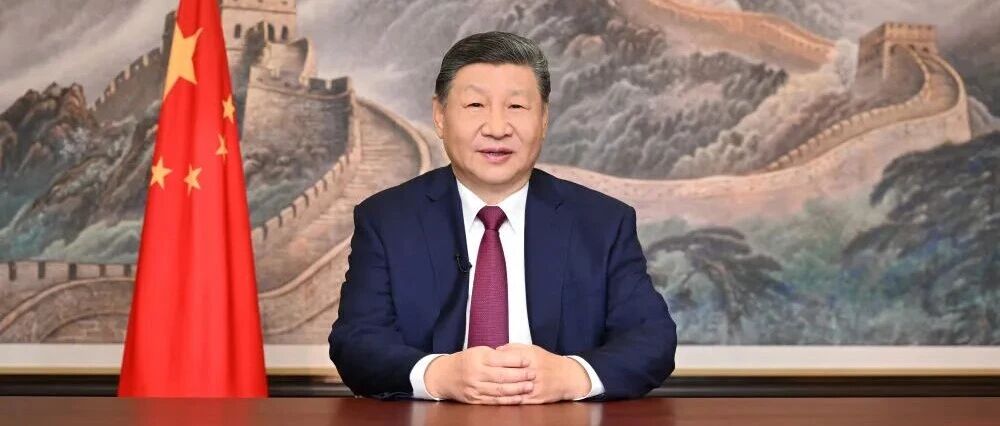
新年前夕,国家主席习近平通过中央广播电视总台和互联网,发表了二〇二六年新年贺词。全文如下: 大家好!岁序更替,华章日新。在新年到来之际,我在北京向大家致以美好的祝福! 2025年是"十四五"收官之年。5年来,我们踔厉奋发、勇毅前行,克服重重困难挑战,圆满完成目标 任务,在中国式现代化新征程上迈出了稳健步伐。我国经济总量连续跨越新关口,今年预计达到140万 亿元,经济实力、科技实力、国防实力、综合国力跃上新台阶,绿水青山成为亮丽底色,人民群众获得 感幸福感安全感不断增强。5年历程极不寻常,成绩来之不易。大家拼搏进取、耕耘奉献,铸就了欣欣 向荣的中国。我向每一位辛勤付出的奋斗者致敬! 我们继续敞开胸怀拥抱世界。上合组织天津峰会、全球妇女峰会成功举办,海南自贸港全岛封关运作。 为更好应对气候变化,我国宣布新一轮国家自主贡献。继"三大倡议"之后,我提出全球治理倡议,推 动建设更加公正合理的全球治理体系。当今世界变乱交织,一些地区仍被战火笼罩。中国始终站在历史 正确一边,愿同各国携手促进世界和平发展,推动构建人类命运共同体。 前不久,我出席了全运会开幕式,粤港澳三地同心同行,令人欣慰。要坚定不移贯彻"一国两制"方 针, ...
国家主席习近平发表二〇二六年新年贺词
21世纪经济报道· 2025-12-31 11:23
我们以文化滋养精神家园。文博热、非遗热不断升温,世界遗产再添新员,悟空和哪吒风靡全 球,古韵国风成为年轻人眼中的"顶流审美"。文旅市场人气火爆,"城超""村超"热闹非凡,冰 雪运动点燃冬日激情。传统与现代交融,中华文化绽放更加灿烂的光芒。 2025年是"十四五"收官之年。5年来,我们踔厉奋发、勇毅前行,克服重重困难挑战,圆满完 成目标任务,在中国式现代化新征程上迈出了稳健步伐。我国经济总量连续跨越新关口,今年 预计达到140万亿元,经济实力、科技实力、国防实力、综合国力跃上新台阶,绿水青山成为 亮丽底色,人民群众获得感幸福感安全感不断增强。5年历程极不寻常,成绩来之不易。大家 拼搏进取、耕耘奉献,铸就了欣欣向荣的中国。我向每一位辛勤付出的奋斗者致敬! 这一年,令人难忘的是,我们隆重纪念中国人民抗日战争暨世界反法西斯战争胜利80周年,设 立台湾光复纪念日。国之盛典威武雄壮,胜利荣光永载史册,激励中华儿女铭记历史、缅怀先 烈、珍爱和平、开创未来,凝聚起中华民族伟大复兴的磅礴伟力。 我们依靠创新为高质量发展赋能。科技与产业深度融合,创新成果竞相涌现,人工智能大模型 你追我赶,芯片自主研发有了新突破,我国成为创新力上 ...
聚焦“海洋芯片”自主研发 全国高校首个船海核领域集成电路学院成立
Yang Shi Xin Wen· 2025-12-07 04:44
Core Viewpoint - The establishment of the Integrated Circuit College at Harbin Engineering University marks the first of its kind in the marine nuclear field among Chinese universities, focusing on the development of "marine chips" and related technologies [1] Group 1: College Establishment and Focus - The Integrated Circuit College will leverage Harbin Engineering University's strengths in shipbuilding, naval equipment, marine development, and nuclear energy applications [1] - The college will concentrate on autonomous research and development of "marine chips," covering areas such as marine sensors, underwater intelligent systems, multi-physical field detection, and micro-electromechanical systems [1] Group 2: Research and Development Areas - Research areas include "Micro-nano semiconductors and optoelectronic integrated devices," "Integrated circuit design technology and system chips," "Integrated circuit processing technology and sensors," and "Advanced packaging and intelligent micro-system integration" [1] - The college aims to promote breakthroughs in key core technologies through industry-education integration and establish a high-level teaching and research faculty [1] Group 3: Educational Programs - The college will offer a continuous undergraduate and doctoral program, with a joint training model between the university and enterprises [1] - The training program consists of one year of foundational study, two years of laboratory research practice, and one year of enterprise graduation design, implementing a "dual mentor system" [1] - The college plans to train approximately 60 innovative talents each year who are proficient in the entire chip process technology [1]
突破“卡脖子”!清华学覇干出又一个世界第一
创业家· 2025-11-19 10:13
Core Viewpoint - The article highlights the rapid advancement of Chinese companies in the CMOS image sensor (CIS) market, particularly focusing on the success story of Geke Micro, which has transitioned from low-end to high-end products in the industry [5][24]. Group 1: Company Background and Development - Geke Micro was founded in 2003 by Zhao Lixin and his partners, who recognized the potential of the CMOS image sensor market after the launch of the first camera phone by Sharp [6][8]. - The company initially faced significant challenges, including a lack of market experience and management issues, but eventually found success by starting with lower pixel products and gradually moving up the value chain [17][18]. - By 2014, Geke Micro had become the leading supplier of CMOS sensors in China, with shipments exceeding 940 million units and sales surpassing $350 million [22]. Group 2: Market Position and Challenges - Despite achieving high shipment volumes, Geke Micro lagged in revenue compared to global leaders like Sony, which dominated the high-end market [24]. - In 2020, Geke Micro's revenue from CIS chips was approximately 5.86 billion yuan, accounting for only 5% of the global market, while Sony's revenue was $9.4 billion, capturing 40% of the market [24]. Group 3: Strategic Transformation and Future Goals - To address the revenue gap, Geke Micro initiated a transformation towards high-end products, aiming for $3 billion in revenue by optimizing its business model from Fabless to Fab-Lite [25][26]. - The company went public in August 2021, raising approximately 3.593 billion yuan to fund its transition to a Fab-Lite model, which combines in-house manufacturing with outsourcing [26]. - By 2023, Geke Micro's new factory was operational, significantly reducing the production cycle for high-end products, with revenue from products over 13 million pixels reaching 1 billion yuan [27].

反转!荷兰光刻机要“凉”?日本光刻机在中国卖疯,利润暴涨82%
Sou Hu Cai Jing· 2025-11-05 14:27
Core Viewpoint - The semiconductor equipment market in China is experiencing a significant shift, with Japanese companies like Nikon and Canon capitalizing on the restrictions faced by ASML, leading to a dramatic increase in their sales in the Chinese market [2][4][16]. Group 1: ASML's Market Position - In 2023, ASML delivered 225 lithography machines to China, generating over €6.4 billion, making China its second-largest market, accounting for 29% of total sales [4]. - By Q3 2023, Chinese orders constituted 46% of ASML's global revenue, driven by the rapid growth of China's chip industry [4]. - Following U.S. pressure, ASML faced export restrictions starting January 2024, predicting a 10% to 15% impact on sales in China for that year [6][8]. Group 2: Japanese Competitors' Strategy - Nikon and Canon have shifted their focus to mature technologies, such as DUV and i-line, which are suitable for the majority of Chinese chip manufacturers producing 28nm and above chips [8][10]. - Nikon launched a new i-line lithography machine in 2024, its first in 25 years, priced 20% to 30% lower than Canon's offerings, aiming to penetrate the Chinese market [12]. - Canon expanded its service network in China, increasing technical staff by 50% to support its lithography equipment [14]. Group 3: Market Dynamics and Trends - In Q1 2024, Japan's semiconductor equipment exports to China surged to ¥521.2 billion, a staggering 82% increase year-on-year, marking the highest level since 2007 [16]. - By 2024, Japan's semiconductor equipment exports to China reached $9.63 billion, a 28.23% increase, with Japan becoming the largest supplier to China [16][20]. - The overall semiconductor equipment market is projected to grow by 25.4% in 2024, with China's semiconductor manufacturing equipment market expected to reach $23.89 billion [20][22]. Group 4: Future Outlook - ASML has lowered its sales target for 2025 from €3-4 billion to €3-3.5 billion due to a weakening Chinese market [22]. - Nikon and Canon have also adjusted their forecasts, with Nikon expecting a decline in net profit by 22% to ¥35 billion [18][24]. - The Chinese market is anticipated to grow at a compound annual growth rate of 14.63% from 2025 to 2035, indicating a long-term shift in the semiconductor equipment landscape [22].


全球车企被卡了一个月“脖子”,终于能缓一口气了
2 1 Shi Ji Jing Ji Bao Dao· 2025-11-02 10:49
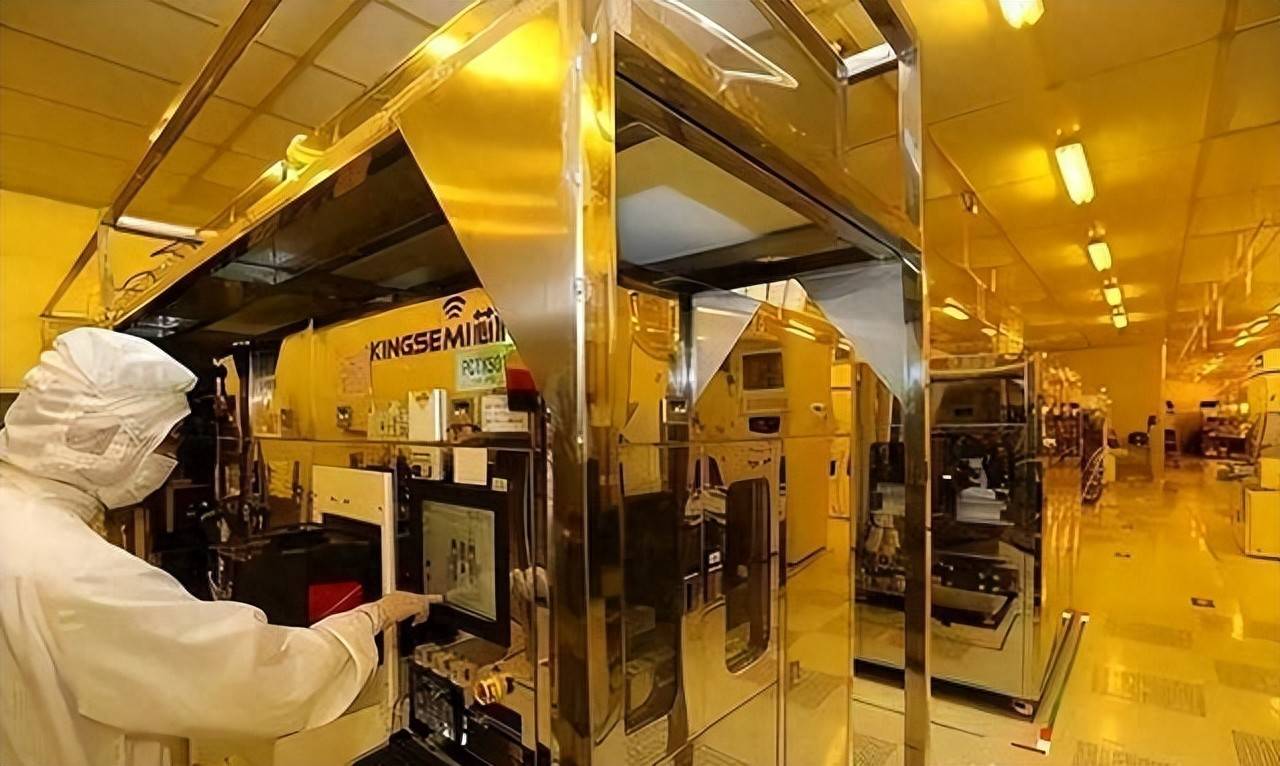
Core Viewpoint - The global automotive industry is facing a significant chip shortage exacerbated by the Dutch government's intervention in the semiconductor company Nexperia, which has led to supply chain disruptions and production halts among major automakers [1][2][5]. Group 1: Supply Chain Disruptions - The Dutch government has taken control of Nexperia, a subsidiary of the Chinese company Wingtech Technology, citing national security concerns, which has triggered a global chip supply crisis [2][5]. - Nexperia's actions have resulted in a substantial debt of 1 billion RMB owed to its packaging and testing factory in Dongguan, China, raising concerns about the reliability of the supply chain [1][2]. - Major automakers like Volkswagen and Honda have reported production halts and significant financial impacts due to the ongoing chip shortages [2][9]. Group 2: Impact on Automakers - Volkswagen reported its first quarterly loss in five years, warning that chip shortages could jeopardize its annual profit targets [2][9]. - Honda's factories in Mexico and Canada have announced production cuts and temporary shutdowns due to the lack of chips, which are critical for vehicle functionality [2][9]. - The European Automobile Manufacturers Association has warned of potential production interruptions across Europe if Nexperia's supply does not resume soon [3][9]. Group 3: Market Position of Nexperia - Nexperia is a leading supplier of discrete and power semiconductors, holding over 30% of the global market share in automotive power semiconductors [8][12]. - The company's components are essential for various vehicle functions, and their absence can halt production lines, as even low-cost components are critical for vehicle assembly [8][12]. - The semiconductor market is characterized by long certification processes, making it difficult for automakers to quickly switch suppliers in response to shortages [11][12]. Group 4: Responses from the Industry - Automakers are actively seeking alternative suppliers to mitigate the impact of Nexperia's supply disruptions, but the transition is complicated by lengthy certification processes and increased costs [11][12]. - The automotive industry is facing a shift in supply chain risks from predictable shortages to acute disruptions caused by geopolitical factors [13][17]. - The situation has prompted discussions about increasing domestic semiconductor production capabilities in response to geopolitical tensions and supply chain vulnerabilities [17].


被两大电网“拉黑”影响巨大!鼎信通讯前三季度净利暴跌1082%
Shen Zhen Shang Bao· 2025-10-28 07:26
Core Viewpoint - Qingdao Dingshin Communication Co., Ltd. reported a significant decline in revenue and profit for the first three quarters of 2025, primarily due to adverse external conditions and loss of orders from major power grids [1][4][5]. Financial Performance - The company's revenue for the first three quarters was 1.066 billion yuan, a year-on-year decrease of 52.71% [1]. - The net profit attributable to shareholders was a loss of 336 million yuan, a year-on-year decline of 1082.52% [1]. - The basic earnings per share (EPS) was -0.52 yuan [1]. - For Q3 2025, revenue was 362 million yuan, down 55.8% year-on-year [1]. - The net profit for Q3 was a loss of 117 million yuan, a year-on-year decrease of 679.4% [1]. Asset and Equity Position - As of the end of Q3, total assets were 3.872 billion yuan, a decrease of 16.9% from the end of the previous year [2]. - The net assets attributable to shareholders were 2.801 billion yuan, down 10.7% from the end of the previous year [2]. Profitability Metrics - The gross margin for the first three quarters was 27.66%, a decrease of 11.38 percentage points year-on-year [2]. - The net margin was -31.55%, down 30.29 percentage points from the same period last year [2]. - In Q3, the gross margin was 26.86%, a year-on-year decline of 10.19 percentage points [2]. Expense Management - Total operating expenses for Q3 were 604 million yuan, a reduction of 211 million yuan year-on-year [2]. - The expense ratio was 56.65%, an increase of 20.49 percentage points from the previous year [2]. - Sales expenses decreased by 34.16%, management expenses by 16.56%, R&D expenses by 22.32%, and financial expenses by 25.85% [2]. Shareholder Dynamics - As of the end of Q3, the total number of shareholders was 33,800, an increase of 5,361 or 18.85% from the end of the previous half [3]. - The average market value per shareholder remained unchanged at 154,400 yuan [3]. Regulatory Issues - The company faced regulatory warnings from the Shanghai Stock Exchange due to inaccurate information disclosure regarding a technology authorization agreement with PingTouGe [7][8]. - The company clarified that the agreement only involved specific technology rights for chip development, not related to AI or other high-demand products [7][8].


雷军开讲 “机圈”风起
Bei Jing Shang Bao· 2025-09-25 16:53
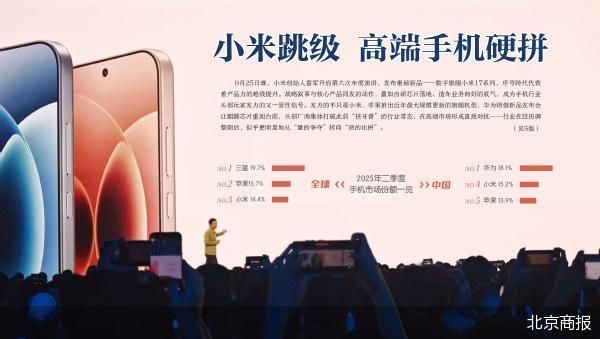
Core Insights - Xiaomi has undergone significant transformation over the past five years, including self-developed chips and automotive production, marking a pivotal change in its trajectory [1][3] - The launch of the Xiaomi 17 series, skipping the "16" designation, symbolizes a leap in product capability [1] - The competitive landscape is intensifying with major players like Apple and Huawei also making significant advancements in their product offerings [1][5] Xiaomi's Strategic Shift - The year 2025 is identified as a transformative year for Xiaomi, with stock prices surpassing 40 HKD and a market capitalization exceeding 1 trillion HKD [3] - Xiaomi's self-developed Xuanjie series chips represent a key technological breakthrough, supporting its strategic shift towards becoming a hard-tech company [3][4] - CEO Lei Jun's personal involvement in promoting the Xiaomi 17 series signifies a substantial enhancement in product strength [3] Industry Competition - In Q2 2025, Samsung leads the global smartphone market with a 19.7% share, followed by Apple at 15.7%, and Xiaomi at 14.4% [5] - In the Chinese market, Huawei has reclaimed the top position with an 18.1% share, while Xiaomi ranks fourth at 15.2% [5] - Apple and Huawei have recently showcased their advancements, with Apple launching the iPhone 17 series and Huawei reintroducing its Kirin chip [5][6] Differentiation Strategies - OPPO has adopted a strategy focusing on system ecosystem improvements, launching ColorOS 16 to enhance user experience, which includes a 40% increase in app responsiveness [7][8] - This approach allows OPPO to avoid direct competition with Xiaomi and Huawei in hardware while solidifying its position in the mid-range market [7][9] - The smartphone industry is facing diminishing returns on traditional hardware innovations, prompting a shift towards software experience as a key differentiator [8][9] Market Dynamics - The smartphone market has transitioned into a phase of competition for existing customers, with companies needing to either offer groundbreaking products or engage in price wars [8][9] - The current competitive environment is seen as the beginning of a new cycle, with the potential for significant industry restructuring as companies adapt to market pressures [9]
鼎信通讯:公司获得的平头哥公司授权技术仅用于自主研发MCU芯片
Xin Lang Cai Jing· 2025-09-22 12:13
Core Viewpoint - The company has signed an authorization agreement with PingTouGe, allowing it to use specific technology rights for its own chip development, focusing on traditional power and security applications [1] Group 1: Agreement Details - The company will utilize the E801/E802/E803 technology rights exclusively for the development of its MCU chips [1] - The authorized technology is limited to traditional power and security products, specifically related to electric meters and security products [1] - There is no association between the authorized technology and AI intelligent reasoning chips [1] Group 2: Business Relationship - Apart from the technology authorization, there are no other business collaborations between the company and PingTouGe [1]