
获利回吐

Search documents
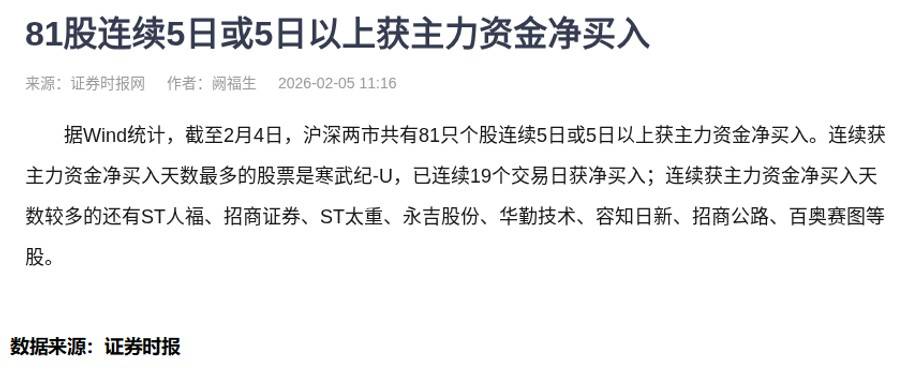
融资盘持续加仓,这种打法机构常用
Sou Hu Cai Jing· 2026-02-05 07:47
近期据统计,沪深两市已有81只个股,连续5日或更久获大资金持续关注,其中有个股已连续19个交易日获青睐,还有不少市场熟 知的公司在列。很多人看到这类消息,第一反应就是想着赶紧进场,却往往陷入要么踏空、要么被套的尴尬循环。其实问题的根源 不在消息本身,而在于大多数人只盯着表面的价格变化,完全没看懂背后真实的资金交易行为。量化大数据的核心价值,就是帮我 们跳出这种主观判断的误区,用客观数据还原市场的真实状态,接下来就用具体数据拆解给你看。 一、交易不止买卖,还有两种关键行为 多数人以为市场只有买和卖两种交易行为,但通过量化大数据长期跟踪,实际存在至少四种核心交易状态,其中「获利回吐」和 「空头回补」是最容易被忽略的关键信号,直接关联价格趋势的潜在转向。 看图1: 这张图里的「主导动能」数据,清晰标注四种状态:红柱「做多主导」,代表资金积极参与推升价格;黄柱「获利回吐」,代表前 期获利资金开始兑现;绿柱「做空主导」,代表资金参与意愿降温;蓝柱「空头回补」,代表前期观望资金重新进场。这两种容易 被忽略的行为,正是打破踏空、被套循环的核心。二、价格上行看回吐,避开阶段震荡 很多人在价格持续走高时,要么怕踏空急忙进场,要 ...

融资资金扎堆布局,股价背后藏着胜负手
Sou Hu Cai Jing· 2026-02-04 06:39
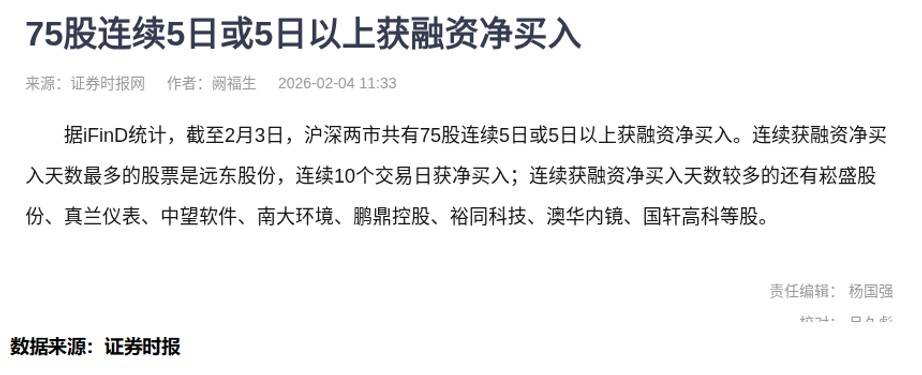
最近刷到一组市场数据,沪深两市已有75只个股连续5日或更久获融资净买入,其中远东股份连续10个交易日获净买入,还有崧盛 股份、真兰仪表等多只个股也在榜单之列。不少人看到这类消息,第一反应就是跟着布局,觉得资金青睐的品种肯定有潜力,之前 有个朋友就踩过这个坑——看到某只票连续获融资加仓,立刻跟进,结果刚进场就遭遇价格调整,亏了不少才离场。这就是典型的 被表面消息牵着走,忽略了市场的真实逻辑:所谓利好未必带来价格走高,利空也未必导致价格回落。而量化大数据的核心优势, 就是能帮我们突破这种主观偏见,穿透表面现象,看清市场最真实的一面,避免再犯类似的错误。 绝大多数人对市场的认知还停留在"买的人多就涨,卖的人多就跌"的层面,但通过量化大模型对交易行为的长期跟踪整理,会发现 真实的交易场景远不止这么简单,至少存在四种核心交易行为:红柱代表「做多主导」,意味着多数时候价格易走高;黄柱代表 「获利回吐」,做多资金开始兑现利润,价格走高势头放缓;绿柱代表「做空主导」,意味着多数时候价格易回落;蓝柱代表「空 头回补」,做空资金开始重新买入,价格回落势头放缓。 看图1,有只品种看似价格还在稳步走高,甚至有人觉得是进场的好时机,但 ...
短期获利回吐及事件利空 黄金或仍维持高波动
Jin Tou Wang· 2026-02-03 08:47
上海黄金交易所:经研究决定,拟对黄金部分合约交易保证金水平和涨跌停板比例进行调整。现将相关 事项通知如下:自2026年2月4日(星期三)收盘清算时起,Au(T+D)、mAu(T+D)、Au(T+N1)、 Au(T+N2)、NYAuTN06、NYAuTN12等合约的保证金比例从16%调整为17%,下一交易日起涨跌幅度限 制从15%调整为16%;CAu99.99合约保证金每手120,000元调整至每手150,000元。 2月2日芝加哥商业交易所(CME):黄金期货成交量为447704手,较上个交易日减少138224手。未平仓合 约为415310手,较上个交易日减少10206手。 分析观点: 信达期货研报:短期内黄金受到获利回吐以及事件利空,或仍将维持高波动、强事件驱动的运行特征。 特朗普相关表态、地缘局势演变以及美联储人事与政策预期,仍是影响市场情绪的核心变量。在缺乏新 的实质性风险升级或明确政策转向之前,高位震荡与反复拉锯或成为常态。但从中期视角看,政策不确 定性、地缘风险常态化以及美元体系内在矛盾并未彻底消除,黄金作为非信用资产的配置价值仍具韧 性。若后续继续因情绪退潮或预期修正引发进一步回调,更多可能体现为 ...
21评论|金银价为何突然大跌?
2 1 Shi Ji Jing Ji Bao Dao· 2026-02-02 09:30
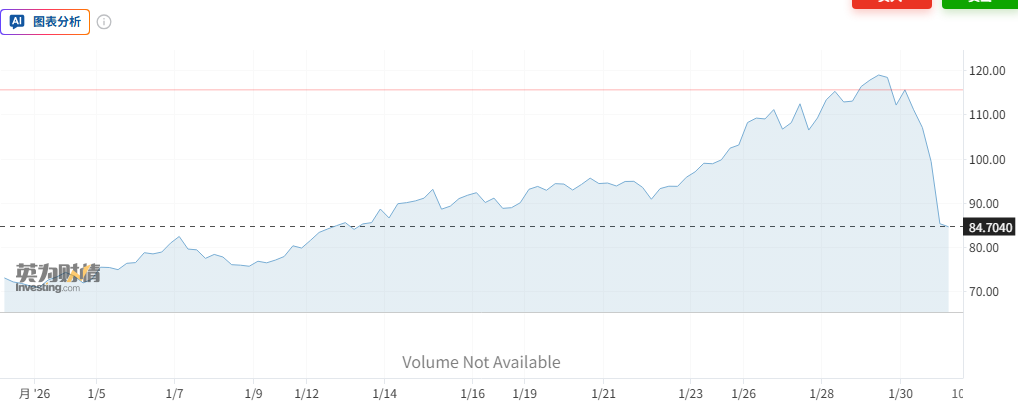
Core Viewpoint - The recent volatility in the international gold and silver markets is attributed to a combination of factors, including a sudden shift in U.S. Federal Reserve policy expectations, profit-taking, and structural weaknesses in the global precious metals market [2][3][4]. Group 1: Market Dynamics - On January 29, spot gold prices briefly exceeded $5,600, followed by a significant decline, dropping to $4,653 by February 2, while silver prices fell over 35% from a peak of $128 on January 30 [2]. - The shift to a hawkish stance by the Federal Reserve, influenced by President Trump's nomination of Kevin Walsh, led to a stronger dollar, which negatively impacted gold and silver prices [2][5]. - Technical indicators showed that both gold and silver were in overbought territory, prompting a rapid sell-off as investors took profits, resulting in gold dropping over $600 in a single day and silver nearly $40 [3][4]. Group 2: Structural Weaknesses - The influx of speculative and leveraged funds into the precious metals market created a fragile trading environment, where a price reversal triggered forced liquidations, exacerbating the decline [4][6]. - The current global financial system's reliance on the dollar and low interest rates has reached historical highs, making it sensitive to changes in U.S. monetary policy, which could lead to significant adjustments in emerging markets and high-debt countries [5][6]. - The potential for delivery defaults in the silver market raises concerns about the integrity of pricing mechanisms, which could have cascading effects on gold and credit markets [6][7]. Group 3: Financial System Implications - The recent turmoil in the precious metals market reflects broader vulnerabilities in the international financial system, highlighting the risks associated with low interest rates, high debt levels, and geopolitical uncertainties [6][7]. - Despite the volatility, the overall impact on the financial system appears manageable for now, with major stock indices showing only minor declines and investor sentiment remaining relatively stable [6][7]. - The situation serves as a stress test for the global market, revealing weaknesses and the potential for increased risk in the financial landscape [7].
黄金最脆弱的时刻?仅需5%的获利盘出逃,就足以抵消全球实物需求
Hua Er Jie Jian Wen· 2026-02-02 04:47
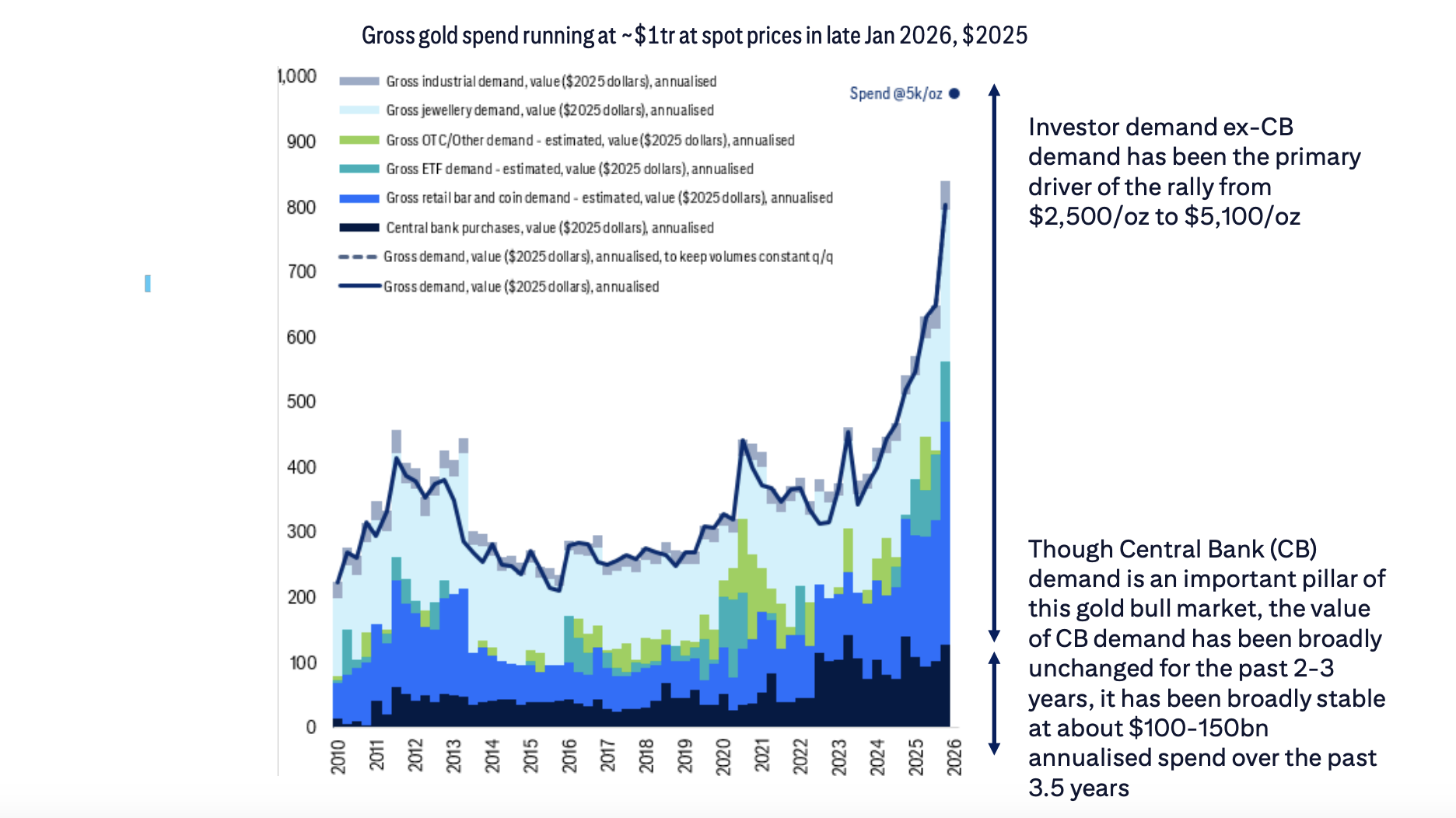
Core Viewpoint - The surge in gold prices over the past three years has created approximately $20 trillion in unrealized gains for investors, but this "wealth sword" could reverse at any moment, with a mere 5% of these gains (around $1 trillion) potentially offsetting all current physical demand and delivering a devastating blow to gold prices [1][5]. Group 1: Price Predictions - Citigroup maintains a target price of $5,000 per ounce for the next 0-3 months but expresses caution for the second half of 2026, predicting a decline to $4,000 per ounce by 2027 [1][10]. - The forecast for gold prices includes a quarterly breakdown: $5,000 in Q1 2026, $4,800 in Q2, $4,400 in Q3, and $4,200 in Q4, with an average price of $4,600 for the year [10]. Group 2: Market Dynamics - The current bull market in gold is primarily driven by massive capital allocation from investors rather than central bank purchases, with market-driven investments reaching a historical high of approximately $1 trillion [2][5]. - The physical gold market is structurally weak, as its supply value accounts for only about 0.1% of global household wealth, indicating that any significant shift in asset allocation towards gold would require a substantial increase in supply [4]. Group 3: Risks and Future Outlook - The potential for profit-taking is rising, especially as geopolitical risks are expected to ease by the second half of 2026, which could lead to a decrease in hedging demand for gold [1][7]. - Historical trends suggest that during significant corrections in the U.S. stock market, gold prices often decline first, adding another layer of risk for investors [9].
金银价暴跌,国内金饰克价一夜大跌上百元;柜姐:不能因降价就退货
Mei Ri Jing Ji Xin Wen· 2026-01-31 06:22
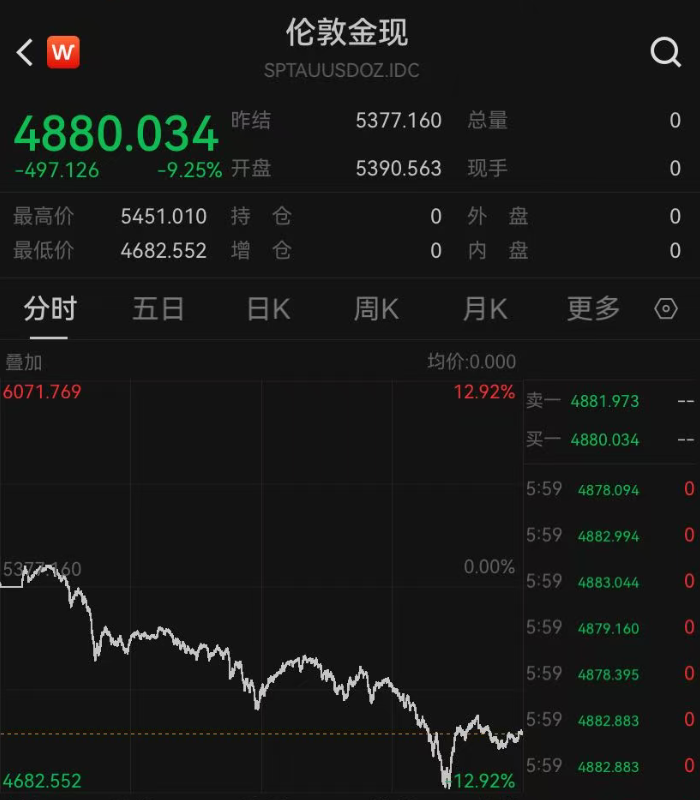
Core Viewpoint - The nomination of Kevin Warsh as the Federal Reserve Chairman by President Trump has triggered hawkish market expectations, leading to a panic sell-off in precious metals, with gold experiencing its largest drop in 40 years and silver hitting a historic intraday decline [1][3]. Group 1: Market Reactions - Gold prices fell over 12%, reaching a low of $4682 per ounce, marking the largest single-day drop since the early 1980s, and closed down 9.25% at $4880 per ounce [1]. - Silver saw a dramatic decline of over 36%, with an intraday low of $74.28 per ounce, ultimately closing down 26.42% at $85.259 per ounce [3]. - Domestic gold jewelry prices also plummeted, with major brands reporting significant price drops, such as Chow Sang Sang's gold price falling from 1708 RMB per gram to 1543 RMB per gram within two days [5]. Group 2: Market Sentiment and Trading Dynamics - The sharp decline in gold prices has led to a cautious market sentiment, with many traders and consumers adopting a wait-and-see approach, resulting in a significant drop in transaction volumes [7]. - Analysts attribute the sell-off to profit-taking pressures accumulated from previous gains, the announcement of the Fed Chairman, and the cascading effect of leveraged positions being liquidated [9]. - The market is currently trading based on "Warsh's hawkish expectations," which has contributed to a stabilization of the dollar and a subsequent decline in gold and silver prices [9]. Group 3: Trading Conditions and Regulations - Major precious metal exchanges have raised margin requirements for gold futures trading, increasing the financial pressure on high-leverage traders [10]. - The decline in precious metal prices has triggered a cycle of forced selling, where stop-loss orders are activated, leading to further price drops and additional margin calls [10]. - The legal framework surrounding gold purchases indicates that physical gold items generally do not qualify for a seven-day return policy, complicating consumer options in a volatile market [18].


金银价暴跌,国内金饰克价一夜大跌上百元;柜姐:不能因降价就退货!有珠宝城成交降至冰点,专家:不要搞“赌博式投资”
Mei Ri Jing Ji Xin Wen· 2026-01-31 04:17
Group 1 - The nomination of Kevin Warsh as the Federal Reserve Chairman has triggered hawkish market expectations, leading to a panic sell-off in precious metals [1] - Gold experienced its largest drop in 40 years, with spot prices falling over 12% to a low of $4682 per ounce, and closing down 9.25% at $4880 per ounce [1] - Silver saw a historic intraday drop of over 36%, reaching a low of $74.28 per ounce, and closing down 26.42% at $85.259 per ounce [3] Group 2 - Domestic gold jewelry prices have fluctuated significantly, with major brands like Chow Sang Sang and Lao Feng Xiang reporting sharp declines in gold prices, dropping by 140 CNY per gram overnight [5] - Market sentiment has turned cautious, with a significant decrease in transactions as consumers are uncertain about pricing and discounts [7] - Analysts suggest that ordinary residents should avoid speculative investments in gold and maintain a balanced investment strategy [7] Group 3 - The sharp decline in gold prices is attributed to profit-taking pressures, the announcement of the Fed Chairman candidate, and the effects of leveraged trading [8] - The market is currently trading on "hawkish expectations" due to Warsh's nomination, which is stabilizing the dollar and contributing to the drop in gold and silver prices [8] - High leverage positions in the futures market are being liquidated, exacerbating downward pressure on prices [9] Group 4 - Major exchanges have raised margin requirements for gold futures trading, increasing pressure on leveraged traders [9] - A cycle of forced selling has emerged, where price drops trigger stop-loss orders, leading to further declines [9] Group 5 - Retail gold stores generally do not accept returns on gold bars and jewelry after purchase, with online platforms having complex return policies [10][12] - Consumers have reported experiences of being charged high fees for returns, with some platforms not clearly communicating these fees [14] - Legal perspectives indicate that gold jewelry and bars purchased in-store are generally not eligible for a no-reason return policy [16] Group 6 - Major banks in China, such as China Construction Bank and Industrial and Commercial Bank of China, are adjusting their gold accumulation business, raising minimum investment amounts and implementing limits on transactions [18][20]
史诗级暴跌,原因找到了
财联社· 2026-01-31 03:08
2026年1月30日晚,对于众多贵金属及其衍生品投资者来说,注定是难眠的一夜:在经历了数日的历史性上涨之后,黄金和白银突然遭遇 了本轮涨势中最剧烈的单日下跌——这对火热的贵金属市场来说无疑是一记当头棒喝。 此前长期大涨累积的获利回吐压力、美联储主席人选的消息落地,以及杠杆资金的踩踏效应,交织促成了这场史诗级跳水行情的上演。 黄金创下近40年最大单日跌幅,最高跌超12%;白银则刷新历史最大日内跌幅纪录,一度跌超36%。现货铂金和钯金也未能幸免于难,分 别重挫17.59%和14.89%。 一场蓄力多日的"跳水" 自1月初以来,黄金价格从4000美元附近一度攀升至历史高位5626.80美元/盎司,月度涨幅超三成。白银更是从月初的70美元/盎司左右 一度攀升至120美元/盎司,累计涨幅高达60%以上。 本周,这场上涨行情进入"白热阶段":受地缘政治紧张局势、降息预期以及大量资金流入贵金属ETF等因素推高,金银价格呈直线拉升态 势,短短三个交易日涨幅惊人。 现货白银过去一个月走势 在这一背景下,贵金属市场已经积累了大量短期获利盘,一场"跳水"运动似乎已经在蓄力之中。 而引发跳水行情的"哨声",是一则" 特朗普宣布提名凯 ...

史诗级暴跌,原因找到了
Feng Huang Wang· 2026-01-31 02:39
2026年1月30日晚,对于众多贵金属及其衍生品投资者来说,注定是难眠的一夜:在经历了数日的历史性上涨之后,黄金和白银突然遭遇了本轮 涨势中最剧烈的单日下跌——这对火热的贵金属市场来说无疑是一记当头棒喝。 自1月初以来,黄金价格从4000美元附近一度攀升至历史高位5626.80美元/盎司,月度涨幅超三成。白银更是从月初的70美元/盎司左右一度攀升 至120美元/盎司,累计涨幅高达60%以上。 本周,这场上涨行情进入"白热阶段":受地缘政治紧张局势、降息预期以及大量资金流入贵金属ETF等因素推高,金银价格呈直线拉升态势,短 短三个交易日涨幅惊人。 现货白银过去一个月走势 在这一背景下,贵金属市场已经积累了大量短期获利盘,一场"跳水"运动似乎已经在蓄力之中。 而引发跳水行情的"哨声",是一则"特朗普宣布提名凯文·沃什为下任美联储主席"的利空消息。 J. Safra Sarasin Sustainable Asset Management外汇策略师Claudio Wewel指出,由于新任主席人选偏向鹰派货币政策,这显然打破了市场此前预 期,导致美元指数大幅走强,以美元计价的金银同步走弱,形成 "美元强、金银弱" 的 ...
金、银、铜暴跌,疯狂涨势过后投资者获利了结
Wen Hua Cai Jing· 2026-01-31 00:55
Group 1 - Gold, silver, and copper prices experienced a significant drop after reaching historical highs, as investors began to lock in profits amid fading hopes for substantial interest rate cuts in the U.S. and a stabilizing dollar [1] - In January, gold and silver prices rose by 17% and 38% respectively, driven by a "fear of missing out" mentality that amplified price volatility [1] - Copper prices reached a historical high of $14,527.50 per ton on Thursday but fell back on Friday, with a cumulative increase of approximately 6% in January following an over 11% rise in December [1] Group 2 - Analysts suggest that as funds continue to flow into the relatively small and crowded market, prices may remain highly volatile [2] - There are expectations that copper, aluminum, and other industrial metals will further decline before the Chinese Lunar New Year holiday begins on February 16 [2]