
金融改革

Search documents
低利率挑战、融资难、跨境风险…尚福林解析“十五五”金融改革难点
Feng Huang Wang Cai Jing· 2025-12-27 09:50
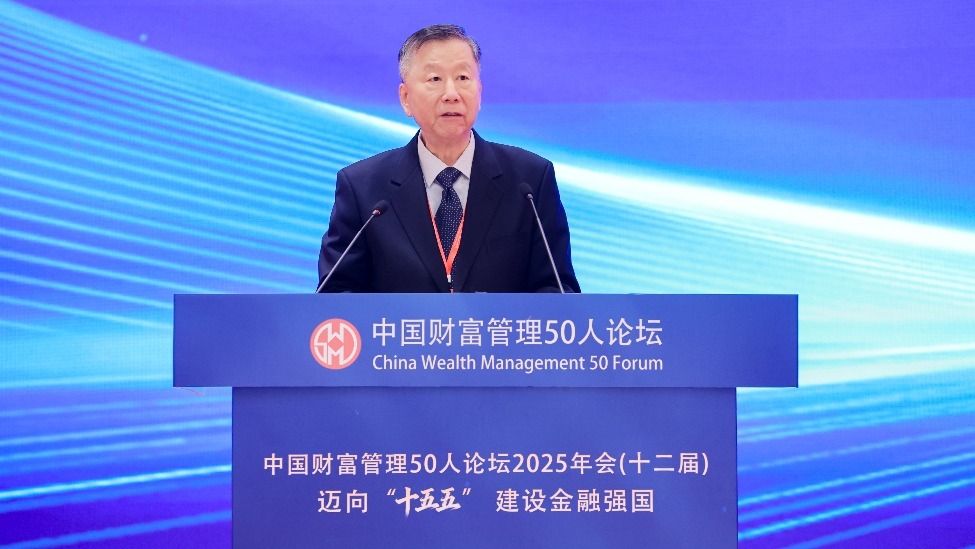
凤凰网财经讯 12月27日,中国财富管理50人论坛2025年会在京举办,本届年会以"迈向'十五五'建设金融强国"为主题。中国财富管理50人 论坛理事长、原银监会主席、证监会原主席尚福林在致辞中表示,建设金融强国是一项开创性的系统工程,"十五五"时期是关键的攻坚 期。 回顾"十四五"时期,尚福林表示,我国金融业实现了规模增长与质量提升的历史性跨越,为金融强国建设奠定了坚实基础。 "我们也要清醒认识到,'十五五'时期金融发展仍将面临一些结构性和机制性挑战。"尚福林指出,比如,社会资金配置结构不平衡问题仍 有待解决,低利率、低息差时代到来也增大了资产配置难度,传统的融资和风控模式与新经济新业态的现实需求不够适配,民营、小微企 业融资难、融资贵仍不同程度存在;直接融资占比有待提高,资本市场投资和融资功能的协调性有待进一步增强,基础性制度仍需完善; 高水平双向开放要求更高,跨境风险传染渠道更加多元、更加复杂;金融科技的新业态、新技术带来的新型风险对金融监管提出更高要 求。这些问题是"十五五"时期金融改革发展的重点,也是建设金融强国必须攻克的难关。 在他看来,迈向"十五五",加快建设金融强国,是质的有效提升和量的合理增长 ...

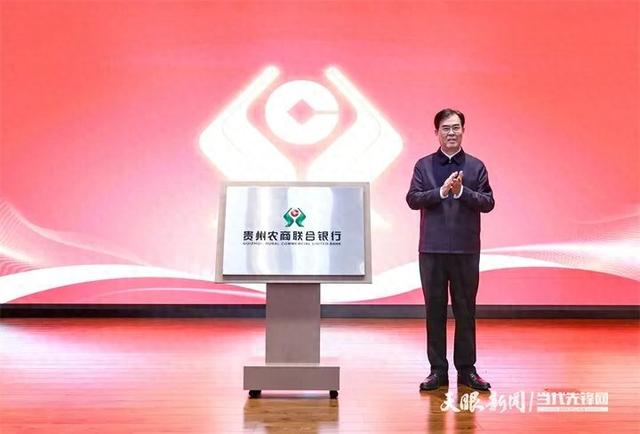
贵州省长李炳军为贵州农商联合银行揭牌
Xin Lang Cai Jing· 2025-12-25 13:17
Group 1 - The establishment of Guizhou Rural Commercial Bank is a significant measure for deepening the reform of rural credit cooperatives and improving the financial system in Guizhou Province [3] - The bank aims to enhance its service efficiency and play a crucial role in supporting the high-quality development of the province by focusing on agricultural and small micro-enterprise needs [3][5] - Emphasis is placed on strengthening party building, improving governance mechanisms, and enhancing core competitiveness while ensuring risk prevention and regulatory compliance [3] Group 2 - The unveiling ceremony was attended by key provincial leaders, including the Governor of Guizhou, who highlighted the importance of financial support for rural revitalization [2][5] - The bank is expected to innovate financial products tailored to the needs of the agricultural sector and small businesses, directing more resources to critical areas of rural development [3] - The focus will also be on reducing the comprehensive financing costs for the real economy while maintaining a strong regulatory framework to prevent systemic financial risks [3]
金融改革迎关键,资本市场扫雷风暴将至,背后藏两大核心密码
Sou Hu Cai Jing· 2025-12-18 12:49
Group 1 - The financial market is currently facing significant issues, particularly with financial fraud among listed companies, which often goes undetected for years before being exposed [2][4] - The reasons for the persistence of financial fraud include light penalties and the failure of intermediary institutions, such as accountants and auditors, to fulfill their roles as gatekeepers [4][5] - There is a need for a shift from administrative penalties to criminal penalties and civil compensation, particularly through the establishment of a group litigation mechanism for small investors [5] Group 2 - The core of financial reform is driven by changing public demand, with projections indicating that by the end of 2025, per capita GDP will reach $14,000, leading to a greater need for diverse and professional wealth management services [8] - The financial landscape is evolving due to two main forces: the trend of "disintermediation," where borrowers and investors seek to bypass traditional banks, and technological advancements that enhance financial services accessibility [11] - The ultimate goal of financial reform is to establish a new international financial center by 2035, which requires a stable legal framework, a strong spirit of contract, and market transparency to attract global capital [15][17]

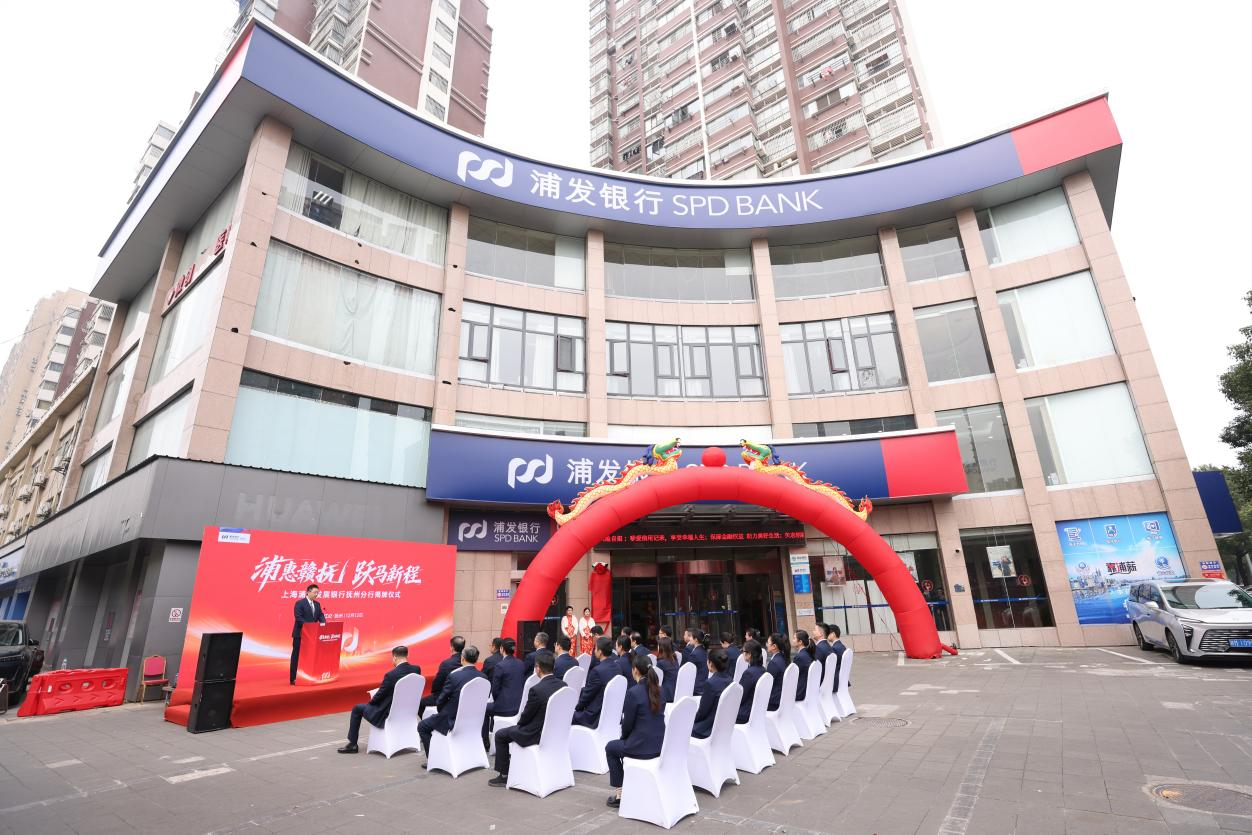
浦发银行抚州分行揭牌开业焕新启航
Zhong Guo Jin Rong Xin Xi Wang· 2025-12-16 11:53
浦发银行抚州分行的成立,是浦发银行落实国家金融改革部署、防范化解金融风险、优化区域战略布局、提升金融服务能级的重要成果,也是浦发银行南昌 分行完善服务网络、服务区域经济社会发展的具体行动。浦发银行党委委员、公司业务总监汪素南出席揭牌仪式并向抚州分行负责人授牌,南昌分行班子成 员、相关部门负责人和抚州分行干部员工代表参加仪式。 当天,浦发银行抚州分行及其辖属抚州临川支行、抚州唱凯支行同时揭牌开业。至此,浦发银行南昌分行在江西省开设的网点总数达41家,进一步完善立足 南昌、辐射全省的金融服务网络。 转自:新华财经 12月12日,浦发银行抚州分行揭牌正式开业,成为浦发银行南昌分行辖属的第6家二级分行,标志着浦发银行收购村镇银行设立的首家二级分行焕新启航, 同时也成为江西省内村镇银行改革后设立二级分行机构的首个成功案例。 编辑:穆皓 浦发银行南昌分行党委书记、行长郝佳表示,20年来,浦发银行南昌分行认真贯彻落实江西省委、省政府决策部署,紧跟监管要求和总行战略导向,以服务 全省经济社会高质量发展为己任,统筹运用多元金融服务模式,多渠道引资入赣,累计向江西提供各类融资超8000亿元,成为助推江西经济社会发展的重要 金融力 ...

美国砸出资本大招!私人市场向全民开放,全球资本要变天?
Xin Lang Cai Jing· 2025-12-13 21:16
Core Insights - The U.S. House of Representatives passed the Investment Act with a vote of 302, breaking down barriers for ordinary investors to access private markets, previously reserved for the wealthy [3][4] - The act allows individuals to invest in unicorns by passing an SEC-approved exam, eliminating the previous wealth threshold of $1 million in net assets or $200,000 in annual income [3][4] - The cap on venture capital fund sizes has increased from $10 million to $50 million, significantly expanding access to private market investments [3][4] Investment Landscape - The U.S. private market has seen a 15.7% annual return over the past decade, compared to 9.2% for the S&P 500, indicating a strong demand for alternative investment channels [4] - The number of publicly listed companies in the U.S. has decreased from 7,322 in 1996 to less than 4,000 in 2025, while the number of unicorns has surged from 39 in 2013 to 1,207 in 2025, highlighting a shift in asset availability [4][5] - The act aims to address capital misallocation by allowing ordinary investors access to high-potential startups, thus injecting capital into underfunded regions [5] Global Capital Flow - The reform is expected to attract high-quality startups to the U.S., with financing costs for U.S. startups projected to decrease by 15%-20% [7] - Foreign investors held $21.2 trillion in U.S. equities as of September 2025, and the act is anticipated to reverse the trend of capital outflow from the U.S. [7] - Other regions, including Europe and Southeast Asia, are beginning to explore similar reforms, indicating a potential global shift towards capability-based investor access [7] Implications for China - The reform presents both challenges and opportunities for China, with potential short-term capital outflows to the U.S. but a long-term need for China to enhance its capital market openness [8][9] - China's Qualified Foreign Institutional Investor (QFII) system could be optimized to allow more ordinary investors to participate in innovative enterprises [9] - The competition will push Chinese startups to enhance their core competencies and accelerate the evolution of the domestic venture capital industry [9][11] Strategic Insights for Entrepreneurs and Investors - Entrepreneurs must focus on core technologies and sustainable business models to thrive in a more competitive global capital environment [11] - Investors should leverage China's capital market openings to invest in high-growth companies benefiting from global capital flows [11] - The essence of the Investment Act is to innovate the system to release capital vitality, emphasizing the importance of efficiently matching capital supply and demand [11][12]

潘功胜:继续实施好适度宽松的货币政策,防范化解重点领域金融风险
Xin Hua She· 2025-12-12 06:39
Core Viewpoint - The Central Economic Work Conference held on December 10-11 in Beijing emphasized the importance of maintaining a stable economic growth and financial market through appropriate monetary policy and risk management [1] Group 1: Monetary Policy - The People's Bank of China will continue to implement a moderately loose monetary policy, focusing on the strength, rhythm, and timing of policy implementation to create a favorable monetary and financial environment for economic stability [1] - The central bank aims to prevent and resolve financial risks in key areas to maintain financial stability [1] Group 2: Global Financial Governance - The conference highlighted the need to actively practice the global governance initiatives proposed by General Secretary Xi Jinping, promoting improvements in global financial governance [1] - There is a call for deepening financial reforms and high-level opening-up to safeguard national financial security [1]
潘功胜:继续实施好适度宽松的货币政策
财联社· 2025-12-12 06:27
Core Viewpoint - The Central Economic Work Conference held on December 10-11 in Beijing, with significant guidance from General Secretary Xi Jinping, aims to set a clear direction for economic work in the upcoming year and the "14th Five-Year Plan" period [1][2] Group 1: Economic Policy - The People's Bank of China, represented by Governor Pan Gongsheng, emphasized the importance of implementing a moderately loose monetary policy to support stable economic growth and financial market stability [2] - The conference provided a scientific and clear directive for a good start to the "14th Five-Year Plan" period, aligning with the development blueprint set by the 20th National Congress [2] Group 2: Financial Stability - The focus will be on preventing and mitigating financial risks in key areas to maintain overall financial stability [2] - The People's Bank of China will actively promote global governance initiatives proposed by Xi Jinping, aiming to enhance global financial governance and deepen financial reforms [2]

中央经济工作会议定调金融改革,中小金融机构如何减量提质?
Di Yi Cai Jing· 2025-12-11 15:06
并非首提。 作为我国金融体系的重要组成部分,中小金融机构对区域经济发展、社会稳定以及金融生态完善起着不 可或缺的作用。"十四五"期间,中小金融机构改革化险工作力度明显加大、节奏明显加快。 12月10日至11日,中央经济工作会议在北京举行。会议在部署2026年经济工作重点任务时提到,要坚持 改革攻坚,增强高质量发展动力活力。其中提到,深入推进中小金融机构减量提质,持续深化资本市场 投融资综合改革。 央行数据显示,截至2025年9月末,我国参加存款保险的金融机构有3398家,相比2020年末的4025家少 了627多家。此外,随着新一轮省联社改革加速推进,2022年以来已有十余地组建了新的省级农信机 构。就在今年10月,吉林多地金融监管部门陆续批复同意了农业银行整合当地多家农商行,涉及分支机 构近200家,这一农信系统改革创新模式引起了市场的广泛关注。 如何理解中小金融机构"减量提质"?"'减量提质'意味着中小金融机构有望继续通过合并重组等方式压降 数量,同时提高公司治理和风险管控能力,更好地防范风险和服务实体经济。"中金公司研究部总监、 银行业分析师林英奇对第一财经表示。 尽管关于"减量提质"这一提法在过去并不 ...
中信证券研究:中央经济工作会议学习体会
Xin Lang Cai Jing· 2025-12-11 14:34
Economic Policy - The meeting emphasized the continuation of a more proactive fiscal policy and moderately loose monetary policy, focusing on the integration effects of stock and incremental policies [1][6] - The fiscal policy maintains a proactive stance, with a reduction in the emphasis on increasing the deficit ratio compared to last year, while highlighting the need to maintain necessary fiscal deficits, total debt scale, and total expenditure [1][6] - The expected fiscal budget deficit ratio for next year is projected to remain around 4%, with a slight increase in special bonds for local governments [1][6] - The monetary policy will utilize various tools such as reserve requirement ratio cuts and interest rate reductions, with a potential interest rate cut of about 10 basis points expected in the first half of next year [1][6] Domestic Demand Expansion - The meeting outlined the direction for building a strong domestic market, focusing on boosting consumer spending and increasing income [2][7] - Specific actions include implementing special initiatives to stimulate consumption and developing plans to increase urban and rural residents' income [2][7] - The goal is to stabilize fixed asset investment and reduce its drag on the economy, with an increase in central budget investment and the use of new policy financial tools to support investment growth [2][7] Industrial Development - There is a stronger emphasis on building innovative systems and mechanisms, with clear policy expectations for education, technology, and talent development [2][7] - The industrial policy is expected to follow the "14th Five-Year Plan" framework, focusing on traditional industries, emerging future industries, and AI technology integration [2][7] Reform Initiatives - The meeting highlighted four key areas for reform: unifying the market, stimulating the vitality of various business entities, tax system reform, and financial-related reforms [3][8] - Emphasis on addressing "involution" competition and optimizing the layout of state-owned enterprises while supporting private enterprises through relaxed access and resolving payment arrears [3][8] - Tax reforms will focus on improving the local tax system and potentially shifting consumption tax collection to local levels [3][8] Social Welfare - A comprehensive plan was proposed to address key social issues such as employment, education, healthcare, and social security [4][9] - New measures include encouraging flexible employment participation in insurance, increasing high school enrollment, and optimizing drug procurement and healthcare payment reforms [4][9] - The meeting also stressed the importance of stabilizing the birth rate and addressing risks in key areas, particularly in real estate and local government debt management [4][9]

港大经管学院上海中心启用
Jie Fang Ri Bao· 2025-12-08 01:40
Core Insights - The establishment of the Shanghai Center of the Hong Kong University (HKU) Business School marks a significant milestone in higher education cooperation between Hong Kong and Shanghai, with over 7,000 alumni resources from the East China Alumni Association [1] - The new center operates under a development model of "one school, three platforms, and two engines," focusing on international academic exchange, industry transformation services, and technology incubation services, particularly in digital intelligence and financial technology research [1] - The ongoing collaboration between HKU and Fudan University aims to leverage both institutions' resources to cultivate scarce management talents for the country, integrating economics, management, and technology [1] Event Highlights - The Shanghai-Hong Kong Forum will be held annually, with notable attendance from influential figures such as Zhou Hanmin, a member of the National Committee of the Chinese People's Political Consultative Conference and president of the Shanghai Public Diplomacy Association [2]