
长江经济带发展

Search documents
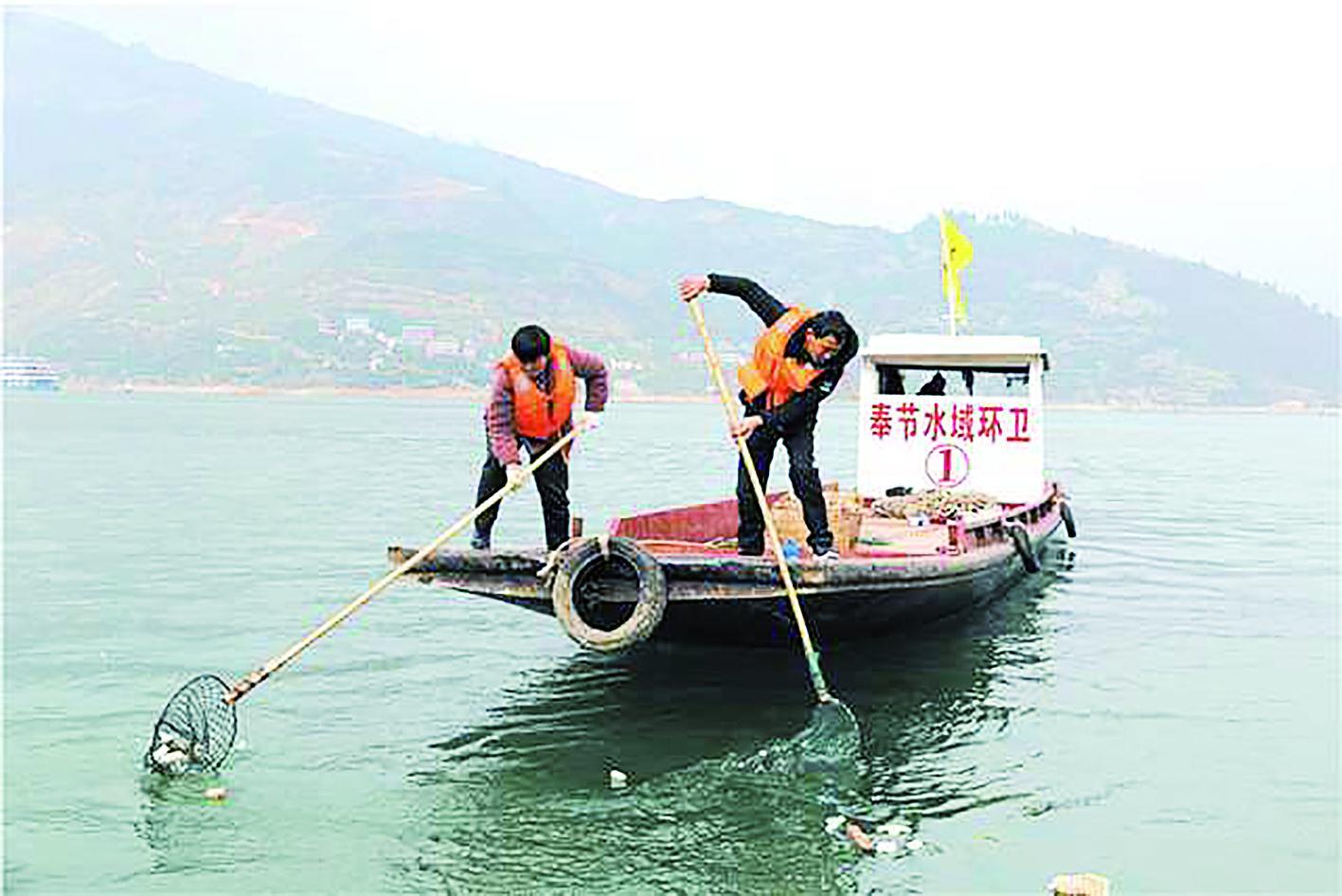
严格落实长江十年禁渔 长江鲟等珍稀鱼类频繁现身
Xin Lang Cai Jing· 2026-01-15 17:23
Core Viewpoint - The press conference highlighted Chongqing's achievements in ecological protection and sustainable development over the past decade, emphasizing the importance of collaborative governance in preserving the Yangtze River ecosystem and promoting green development [3][4][5]. Group 1: Ecological Achievements - Chongqing has maintained a water quality in the Wu Mountain section that has been better than the incoming water quality for eight consecutive years, showcasing effective upstream and downstream management [4]. - The city has achieved an air quality improvement, with over 325 days of good air quality for six consecutive years, and PM2.5 levels reduced to 31 micrograms per cubic meter, marking a historical low [4]. - The forest coverage rate in Chongqing has increased to over 55% over the past decade, with afforestation efforts covering 2.017 million acres [4]. Group 2: Biodiversity and Species Protection - The implementation of a ten-year fishing ban in the Yangtze River has led to an increase in fish species and improved aquatic biodiversity, with the integrity index rising by two levels [5]. - Successful conservation efforts have been noted for endangered species, including the Yangtze sturgeon and the black leaf monkey, with the latter's population growing [5]. Group 3: Sustainable Development Initiatives - Chongqing has established 170 national-level green factories and 16 green parks, with the output of these factories increasing by 24.4 percentage points since the end of the 13th Five-Year Plan [5]. - The city has made significant strides in renewable energy, with installed capacity for renewable energy generation increasing fivefold since the end of the 13th Five-Year Plan [5]. Group 4: Policy and Governance - Chongqing has created 18 national ecological civilization demonstration zones and has implemented over 30 local regulations in the ecological environment sector [7]. - The city has established a horizontal ecological protection compensation mechanism and a cross-provincial biodiversity protection alliance to enhance collaborative governance [7]. Group 5: Local Economic Development - The development of the red leaf economy in Wushan has attracted millions of tourists annually, contributing to local economic growth [9]. - The brand value of Wushan's pear has exceeded 10.5 billion yuan, demonstrating the successful integration of ecological protection with economic benefits [9]. Group 6: Pollution Control Measures - The press conference emphasized the importance of addressing shipping pollution as a critical aspect of water environment protection in the Yangtze River [11]. - A new regulation on ship pollution prevention is set to take effect in January 2025, aiming for a "zero discharge" model for ship pollution in Chongqing [11].

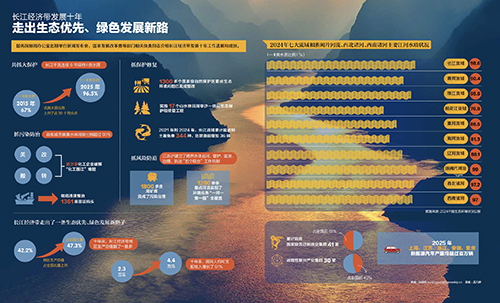
长江经济带发展十年
Jing Ji Wang· 2026-01-15 08:41
Group 1 - The article discusses the development of the Yangtze River Economic Belt over the past decade, emphasizing a new path of ecological priority and green development [1] - It highlights the importance of sustainable practices in economic growth, aiming to balance environmental protection with industrial advancement [1] Group 2 - The article mentions specific initiatives and policies implemented to promote green development within the Yangtze River region [1] - It outlines the economic impact of these initiatives, including potential growth in green industries and job creation [1]
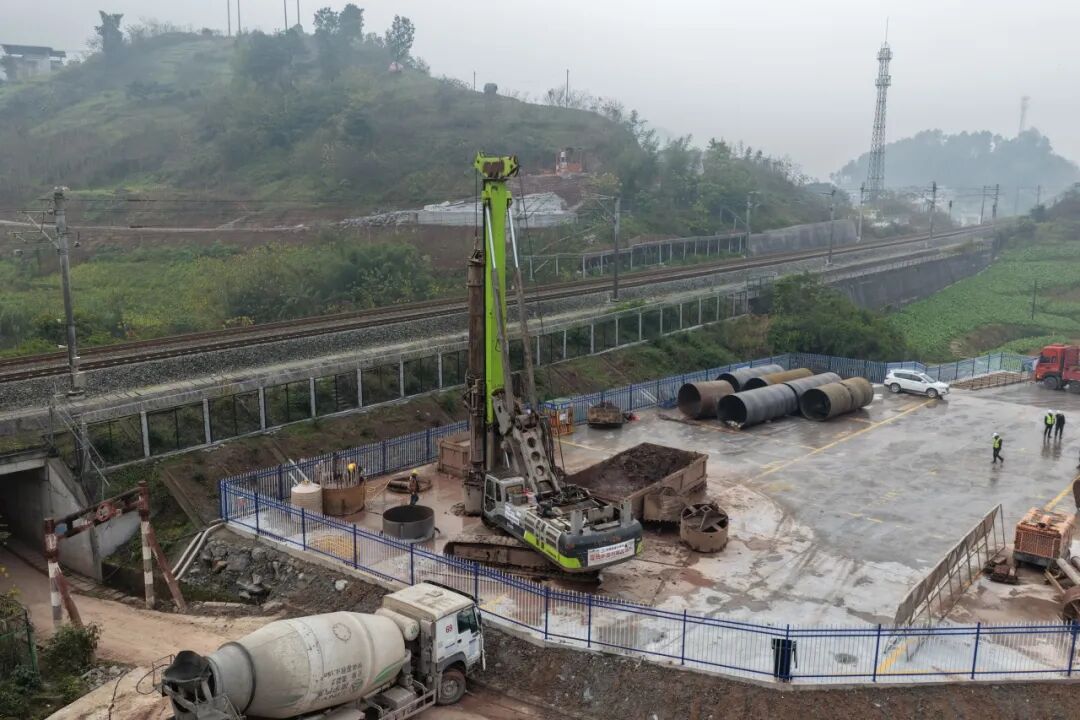
时速350公里!这两条高铁有新进展,都和重庆有关→
Xin Lang Cai Jing· 2026-01-11 05:53
Group 1: Project Progress - The construction of the Yichang to Fuling section of the Shanghai-Chongqing-Chengdu Yangtze River High-Speed Railway has entered a new phase with the completion of the first pile foundation for the main pier of the Beiyan Village Super Bridge, marking the start of the main construction phase for this bridge [1][3] - The Chengdu-Chongqing Central Line High-Speed Railway has made significant progress with the completion of the contact network installation over the Chengdu-Chongqing Railway, indicating important advancements in the project [5][8] Group 2: Technical Details - The Beiyan Village Super Bridge spans 778.994 meters and consists of 174 pile foundations and 22 piers, with complex geological conditions requiring innovative construction techniques [3][6] - The construction of the pile foundations involves a diameter of 2 meters and a length of 35 meters, requiring 109.90 cubic meters of concrete, with high safety and environmental control measures in place due to proximity to operational railway lines [6][8] Group 3: Economic and Social Impact - Upon completion, the Shanghai-Chongqing-Chengdu Yangtze River High-Speed Railway will create a new high-speed rail corridor between the Sichuan-Chongqing region and the Central China region, significantly enhancing travel convenience for local residents and contributing to the high-quality development of the Yangtze River Economic Belt [5] - The Chengdu-Chongqing Central Line High-Speed Railway will connect with multiple lines, improving the transportation network in the Chengdu-Chongqing area and facilitating the construction of the Chengdu-Chongqing Twin City Economic Circle [9]
为长江经济带发展提供水安全保障
Xin Lang Cai Jing· 2026-01-10 12:18
Core Viewpoint - The Ministry of Water Resources has implemented comprehensive measures for the protection and governance of the Yangtze River, focusing on ecological sustainability and systematic management to ensure water security for the economic development of the Yangtze River Economic Belt [1][5]. Group 1: Governance and Planning - A coordination mechanism office has been established to promote water management tasks along the Yangtze River, enhancing legal and institutional frameworks [1]. - The Ministry has developed a clear planning system, including various specialized plans for water development and ecological protection, ensuring consistent implementation and supervision [1]. Group 2: Flood Control and Disaster Reduction - A comprehensive flood control and disaster reduction system has been established, integrating various engineering and non-engineering measures, significantly improving flood control capabilities in the Yangtze River basin [2]. Group 3: Ecological Protection and Restoration - The Ministry has conducted extensive ecological flow assessments and implemented management systems to ensure ecological flow standards are met, achieving over 97% compliance from 2021 to 2024 [3]. - Actions to restore the health of the Yangtze River have led to improved water ecological environments and the revival of 17 major rivers and lakes [3]. Group 4: Legal and Institutional Framework - The legal framework for water management in the Yangtze River basin has been strengthened, with the introduction of the first basin-specific law, the "Yangtze River Protection Law," and subsequent regulations to fill management gaps [4]. Group 5: Economic and Social Impact - The Yangtze River basin has seen significant improvements in economic indicators, with the regional GDP more than doubling and the proportion of national GDP increasing from 42.2% to 47.3% [4]. - The area of soil erosion has been reduced by 6.85 million square kilometers, a decrease of 17.81% since 2013, contributing to enhanced forest coverage and water conservation [4].
构建“五区、四廊”总体保护格局
Xin Lang Cai Jing· 2026-01-09 21:49
Core Viewpoint - The Sichuan Provincial Government has issued a planning document for the historical and cultural protection and inheritance system from 2025 to 2035, aiming to establish a multi-level and multi-element system by 2030 and increase the number of national historical and cultural cities to 10 by 2035 [1][2]. Group 1: Overall Protection Framework - The planning proposes a "Five Districts and Four Corridors" protection framework, which includes five cultural districts and four cultural corridors [2]. - The five cultural districts are: Chengdu Plain Shu Culture District, Northeast Sichuan Shu Road Culture District, South Sichuan Salt and Wine Culture District, Northwest Sichuan Ethnic Culture District, and Panxi Ethnic Culture and Third-Line Construction District [2]. - The four cultural corridors are based on the Long March route, the Yangtze and Yellow Rivers, trade routes like the Shu Road and Southern Silk Road, and the Third-Line construction routes [2]. Group 2: Protection Object Catalog - The planning outlines a provincial protection object catalog that includes 21 categories such as historical and cultural cities, towns, villages, traditional villages, historical cultural blocks, historical buildings, and various types of cultural heritage [2]. Group 3: Key Initiatives - The planning identifies 11 key initiatives focusing on integrating cultural heritage into urban construction, enhancing cultural tourism integration, and promoting historical culture [3]. - In urban construction, it emphasizes the integration of national strategies like the Belt and Road Initiative and the Chengdu-Chongqing Economic Circle, while promoting urban features and improving public services [3]. - For cultural tourism, specific experience routes are to be developed in various cultural districts, such as Shu culture, Three Kingdoms culture, and ecological culture [3]. Group 4: Cultural Promotion - The planning aims to strengthen systematic research and inheritance of significant cultural elements like Sanxingdui and the Three Kingdoms, and to create a regional cultural identity system [4]. - It includes initiatives to engage the public in cultural heritage projects and promote cultural activities in schools and communities [4].
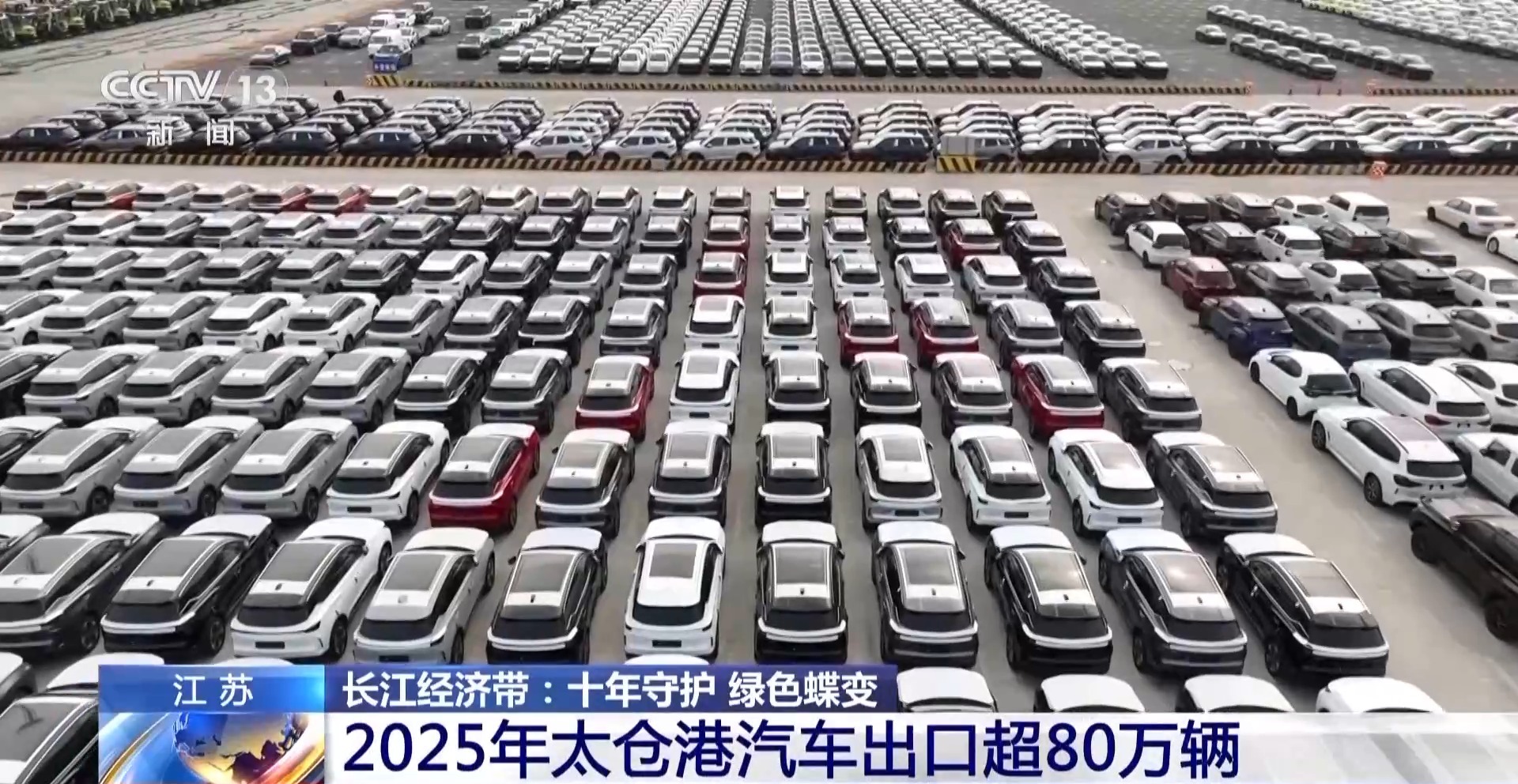
视频丨去年汽车出口超80万辆 太仓港见证中国制造“出海”加速度
Yang Shi Xin Wen Ke Hu Duan· 2026-01-09 03:22
Core Viewpoint - The Yangtze River Economic Belt, covering 11 provinces and cities, plays a crucial role in China's economy, with significant growth in transportation infrastructure and export activities, particularly in the automotive sector from Taicang Port [1][10]. Group 1: Economic and Transportation Development - The Yangtze River Economic Belt accounts for approximately half of China's population and economic output, with the construction of a comprehensive transportation corridor along the river [1]. - The high-level navigable waterways of the Yangtze River have increased from 8,000 kilometers to 11,000 kilometers over the past decade, and the cargo throughput at major ports has grown by 71%, reaching 4.2 billion tons [1]. Group 2: Taicang Port's Automotive Export Growth - Taicang Port has seen a rapid increase in automotive exports, with over 800,000 vehicles exported in 2025, representing at least one out of every ten vehicles exported from China [6][4]. - The port serves as a critical hub for vehicles produced in regions like Chongqing, Hubei, and Anhui, facilitating their global distribution [8]. Group 3: Strategic Advantages and Innovations - Taicang Port benefits from a strategic location with a 38-kilometer golden coastline and deep-water channels exceeding 12 meters, accommodating both inland and ocean-going vessels [8]. - The port has implemented a regional customs integration with Shanghai, simplifying the customs process to "one declaration, one inspection, one release," which enhances efficiency for high-value exports [12]. Group 4: Green Development Initiatives - Taicang Port has adopted smart management systems, utilizing digital twin technology for comprehensive control of port operations, transitioning from manual responses to intelligent interventions [14]. - The port has also completed a pilot project for pile foundation protection in deep-water, high-flow environments, contributing to the safety of the Yangtze River shoreline [16].
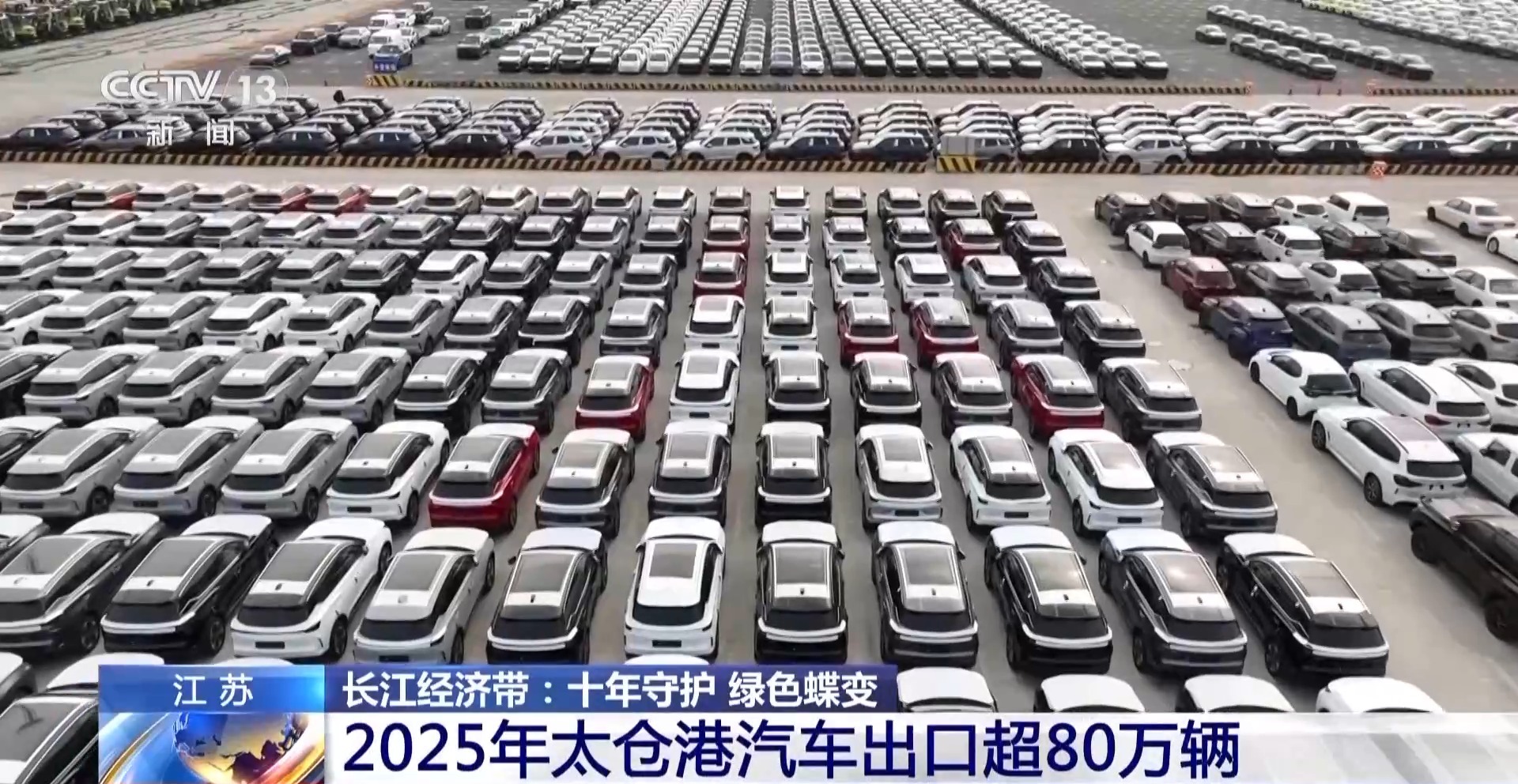
去年汽车出口超80万辆 太仓港见证中国制造“出海”加速度
Yang Shi Xin Wen Ke Hu Duan· 2026-01-09 01:48
Core Insights - The Yangtze River Economic Belt, covering 11 provinces and cities, accounts for about half of China's population and economic output, with significant infrastructure developments over the past decade [1] - The Taicang Port has seen a rapid increase in automobile exports, with over 800,000 vehicles exported in 2025, representing a substantial portion of China's total automobile exports [3] - Taicang Port's strategic location and deep-water channels enhance its capacity to handle both inland and ocean-going vessels, facilitating efficient logistics for automobile exports [5] Group 1: Infrastructure and Economic Impact - The Yangtze River's high-level navigation channels have expanded from 8,000 kilometers to 11,000 kilometers, and the cargo throughput at major ports has increased by 71% to 4.2 billion tons [1] - Taicang Port is recognized as the largest foreign trade port along the Yangtze River, benefiting from regional integration and institutional innovations in the Yangtze River Delta [7] Group 2: Export Growth and Product Diversification - In 2025, Taicang Port's automobile export volume surpassed 800,000 units, indicating that at least one out of every ten exported vehicles in China originated from this port [3] - The port is not only focused on automobiles but also sees growth in high-value products such as lithium batteries and photovoltaic products, contributing to the diversification of exports [9] Group 3: Technological and Environmental Innovations - Taicang Port has implemented smart scheduling and control systems, achieving a closed-loop management process for terminal operations, which enhances efficiency and safety [11] - The port has also completed a pilot project for pile foundation protection in deep-water, high-flow environments, showcasing its commitment to green development and the protection of the Yangtze River shoreline [13]
十年守护换来绿色蝶变 东西协作产业协同释放长江经济带新活力
Yang Shi Xin Wen Ke Hu Duan· 2026-01-08 16:03
Group 1 - The Yangtze River Economic Belt covers 11 provinces and cities, accounting for about half of the national population and economic total [1] - The development strategy of the Yangtze River Economic Belt has been implemented for ten years, focusing on ecological protection rather than large-scale development [1] - The "Zhechuan Industrial Cooperation Demonstration Park" in Yibin, Sichuan, has transformed the textile industry into a key component of the Yangtze River Economic Belt, promoting green ecology and regional coordinated development [1] Group 2 - The park has a planned area of 6.91 square kilometers, with approximately 5 square kilometers completed, housing 46 textile enterprises, of which 39 are operational, 6 are under construction, and 1 is planned [1][2] - The park aims for a transition from labor-intensive to technology-intensive textile production, with higher environmental standards for enterprise admission [3] - Modern production lines in the park require only a small number of workers, with significant technological innovations and collaborations with educational institutions driving further innovation [3]
数据里的中国|10年,长江经济带的故事更“绿”更“新”
Xin Lang Cai Jing· 2026-01-07 04:51
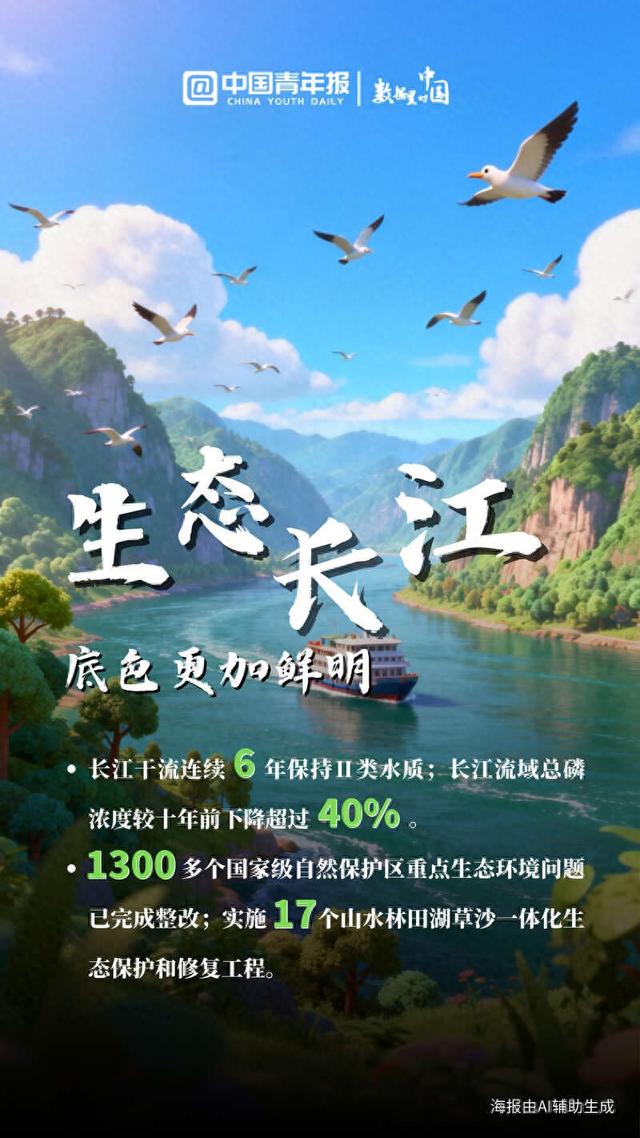
Core Viewpoint - The Yangtze River Economic Belt has made significant progress over the past decade, balancing ecological protection with economic development, contributing nearly half of China's GDP while accounting for about one-third of the country's energy consumption and carbon emissions [1]. Group 1: Economic Development - The Yangtze River Economic Belt has contributed nearly 50% of China's GDP over the past decade [1]. - The cargo throughput of major ports along the Yangtze River has increased by 100%, reaching 2.7 billion tons, maintaining its position as the world's leading inland river [10]. - The number of national-level advanced manufacturing clusters has reached 4, while strategic emerging industry clusters have reached 30, accounting for 51% and 45% of the national total, respectively [4]. Group 2: Ecological Protection - The implementation of the "Ten-Year Fishing Ban Plan" on the Yangtze River has provided support for 231,000 retired fishermen, with 12,000 difficult fishermen included in the social security system [15]. - The South-to-North Water Diversion Project has delivered over 84 billion cubic meters of water, benefiting 48 cities and 195 million people along the route [16]. Group 3: Cultural Heritage - The Longzhou Ancient City Ruins have been successfully listed as a World Cultural Heritage site, and the archaeological discoveries at Sanxingdui have garnered global attention [11]. - The establishment of the Yangtze National Cultural Park aims to protect and utilize cultural heritage along the river [11].
重庆港口货物吞吐量突破2.4亿吨
Xin Hua She· 2026-01-07 02:52
Core Insights - The port cargo throughput in Chongqing is expected to exceed 240 million tons by 2025, representing a 50% increase compared to ten years ago [1] - Chongqing has developed a comprehensive multi-modal transport system along the Yangtze River, establishing a leading transportation network in the western region [1] - The railway, highway, and 1,000-ton level waterway mileage in Chongqing has increased by 62%, 89%, and 35% respectively over the past decade [1] - The Yangtze River mainline from Chongqing to Wuhan has been fully connected, allowing 5,000-ton vessels to reach the main city year-round [1] - The "Qianli Qingzhou" brand for inland shipping has been established, with 13 routes developed and a total cargo volume of 2.4 million tons, reducing logistics costs by approximately 25% [1] - The proportion of transshipment goods from surrounding provinces to Chongqing Port has increased from 43% to 50% over the past decade [1] Future Developments - Chongqing aims to create a systematic and integrated inland open hub, focusing on the "Qianli Qingzhou" service to provide door-to-door multi-modal transport [2] - The city plans to regularly operate direct shipping routes and promote the synergy between the Yangtze River Golden Waterway and new transport corridors in the western region [2] - There is an emphasis on enhancing the efficiency of the Yangtze River Golden Waterway [2]
