精细化运营

Search documents
紧抓业绩、节约成本、强化合规,多家险企定调下半年怎么干
Bei Jing Shang Bao· 2025-07-20 12:57
Core Insights - The insurance industry is focusing on deepening reforms, driving development, managing risks, and reducing costs to enhance efficiency in the second half of 2025 [1][3] Group 1: Performance Review - Several insurance companies reported their performance for the first half of 2025, with East Wu Life achieving a new single premium of 744 million yuan, a 10% year-on-year increase, and a completion rate of 62.5% of their annual target [3] - Everbright Sun Life reported a 22% year-on-year increase in revenue, with original premium income growing by 6% and new single premium increasing by 64% [3] - Zhejiang Merchants Insurance announced a net profit exceeding 60 million yuan, marking its best operational performance in history [3] - Huahai Property Insurance reported a premium income of 1.06 billion yuan and a net profit of 17.9 million yuan as of June 30 [3] Group 2: Strategic Focus - The industry recognizes that extensive growth is no longer sustainable, and emphasizes refined operations and cost reduction as key to enhancing competitiveness [4] - Huahai Property Insurance aims to optimize internal operational processes and reduce operational costs to improve overall efficiency [4] - Yanzhao Property Insurance is focusing on strengthening cost analysis and establishing a customer-based cost accounting system to further enhance cost reduction and efficiency [4] Group 3: Compliance and Risk Management - Strengthening internal control and compliance has been highlighted as a key focus for many insurance companies [5] - East Wu Life emphasized the increasing complexity of compliance and risk management challenges, stressing the need to adhere to compliance standards for sustainable operations [5] - Zhejiang Merchants Insurance aims to enhance its risk control system and improve compliance awareness to build customer trust and support long-term development [5]


OpenAI的Agent来了,被批“鸡肋”升级?
2 1 Shi Ji Jing Ji Bao Dao· 2025-07-18 11:26
Core Viewpoint - The AI Agent competition is intensifying, but there remains a gap between capability and practicality, as demonstrated by OpenAI's recent launch of ChatGPT Agent, which aims to serve as a comprehensive assistant for complex tasks [1][5]. Group 1: Product Features and Performance - ChatGPT Agent integrates the visual interaction capabilities of Operator with the information synthesis abilities of DeepResearch, allowing it to manage visual browsers, text browsers, and code terminals simultaneously [2]. - The Agent can perform complex task chains, such as automating office tasks, generating meeting briefs, conducting competitive analysis, planning weekly menus, and creating detailed research reports [3]. - In performance tests, ChatGPT Agent achieved a pass@1 score of 41.6% in the HLE test and an overall accuracy of 45.54% in the SpreadsheetBench test, outperforming Microsoft's Copilot in Excel [3]. Group 2: User Experience and Feedback - Despite impressive performance metrics, user experiences have been mixed, with some reporting that the Agent's task completion rate is around 50%, and efficiency issues have been noted, such as a task taking significantly longer than manual completion [4]. - The PPT generation feature has received criticism for its aesthetic quality, being deemed inferior to other general-purpose agents [4]. - Concerns have been raised regarding the security of connecting the Agent to private data sources like Google Drive and Gmail, with potential risks highlighted if errors occur in sensitive transactions [4]. Group 3: Market Position and Future Outlook - The release of ChatGPT Agent appears to be more of a routine upgrade rather than a groundbreaking innovation, reflecting a shift in focus from dramatic technological breakthroughs to refining existing product shortcomings [5]. - The AI competition is entering a new phase where the emphasis is on practical usability and user willingness to pay for services, rather than just performance metrics [5]. - OpenAI is exploring sustainable business models amid high operational costs and the need for reliable server performance, indicating that the true potential of AI Agents will only be realized once user trust and functionality are established [6].
财经点评:“不想卷,不怕卷”的美团,要学学软实力
Guan Cha Zhe Wang· 2025-07-18 04:18
Core Viewpoint - Meituan, a leading player in the local service industry, has recently expressed its stance on the competitive landscape of food delivery, acknowledging the need for better communication with the public while emphasizing its competitive strengths and operational strategies [1][2][4]. Group 1: Competitive Landscape - Meituan has entered a more competitive environment with the arrival of strong competitors like JD and Alibaba, leading to a more intense "food delivery war" [1]. - The company claims it is not afraid of competition, stating it is "good at fighting but not aggressive" [1][2]. - Meituan's CEO highlighted that the company has been passively drawn into competition, but it can achieve high order volumes with significantly fewer resources compared to its rivals [2]. Group 2: Core Advantages - Meituan has three core advantages that contribute to its competitive edge: 1. **Refined Operational Capability**: The company utilizes a strategic approach to subsidies and promotions, which is based on years of experience, allowing it to manage resources effectively [2]. 2. **Economies of Scale**: With 770 million users, 14.5 million active merchants, and 3.36 million monthly active delivery riders, Meituan has established a high barrier to entry for competitors, maintaining a 70% market share in high-value orders [3]. 3. **Vertical Integration in Local Commerce**: Meituan focuses on optimizing local supply chains rather than relying solely on traffic, creating a sustainable business model that is difficult for cross-industry giants to replicate [3]. Group 3: Communication Challenges - Meituan has been criticized for its lack of public communication, which has led to misunderstandings about its business practices, such as the perception of high commissions [4][5]. - The company acknowledges the need for clearer communication regarding its fee structure, which includes a technology service fee and delivery fee [5]. - There is a recognition that better communication is essential for building trust and understanding with the public, especially regarding the working conditions of delivery riders [6][7]. Group 4: Future Directions - Meituan's leadership has indicated a commitment to improving its public image and communication strategies, recognizing that effective storytelling is as important as winning market battles [6][7]. - The company aims to transition from being perceived solely as a commercial entity to a more socially responsible provider of public infrastructure [7][8].


报道:抖音调整外卖商家准入规则,巨头决战“品质”高地
news flash· 2025-07-15 11:39
Core Viewpoint - Douyin is adjusting its merchant entry requirements for the "Sui Xin Tuan" service, shifting from exploratory expansion to refined operations in the food delivery sector [1] Group 1: Merchant Entry Requirements - Starting from June 30, merchants must enter the "Sui Xin Tuan" business through targeted invitations [1] - Merchants will be evaluated based on quality metrics, including dine-in services, fulfillment experience, sales performance, and brand strength [1] Group 2: Industry Shift - The adjustment reflects Douyin's transition in the food delivery sector from a phase of tentative expansion to a focus on meticulous operational management [1]
不是价格战,是生存战:蔚来在L90上赌了一切
Tai Mei Ti A P P· 2025-07-12 03:26
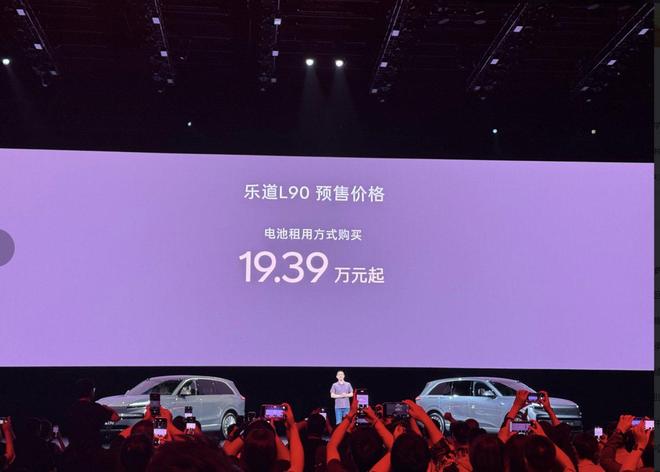
Core Insights - The launch of the L90 marks a significant strategic shift for NIO, aiming to penetrate the sub-200,000 RMB market for electric SUVs, a move that emphasizes value for money [2][4] - The L90 is positioned to address the underperformance of the L60 and is critical for NIO's profitability goals in Q4, reflecting the company's urgent need to boost sales [2][9] - NIO's pricing strategy for the L90 is not seen as a price war but rather a calculated approach to ensure sustainable profitability while appealing to family-oriented consumers [3][4] Pricing and Market Positioning - The L90 is priced starting at 279,900 RMB, with a battery rental option bringing the price down to 193,900 RMB, significantly undercutting competitors in the same segment [2][4] - NIO aims to fill the gap in the 250,000 to 300,000 RMB price range for electric three-row SUVs, avoiding direct competition with high-end models while targeting family users [4][5] - The pricing strategy is supported by a robust cost control system established during the product development phase, ensuring a reasonable profit margin despite aggressive pricing [4][5] Product Features and Innovations - The L90 features a spacious design, including a 240L smart storage compartment and a 430L trunk, catering to the needs of family users [6][8] - It incorporates advanced technology such as the 900V high-voltage architecture and a comprehensive charging network, addressing common concerns about range and charging convenience for families [8][12] - The vehicle's design philosophy shifts from a focus on "tech sophistication" to "functional practicality," aligning with the needs of family-oriented consumers [5][6] Sales Strategy and Market Challenges - NIO has set an ambitious target of doubling its sales by 2025, with the L90 expected to play a crucial role in achieving this goal, especially after the underwhelming performance of the L60 [9][10] - The company faces significant competition in the electric SUV market, particularly from models like the Ideal i8, necessitating that the L90 not only meets but exceeds consumer expectations [12][14] - Continuous sales momentum and effective supply chain management are critical for the L90's success, as past models have struggled with delivery issues [14][15] Brand Development and Future Outlook - The launch of the L90 is seen as a pivotal moment for NIO's brand evolution, moving towards a more family-centric approach while maintaining its high-end image [5][17] - NIO is gradually refining its market strategy, focusing on user demographics and brand narrative to enhance its competitive edge in the rapidly evolving electric vehicle market [17] - The success of the L90 will be a litmus test for NIO's ability to adapt and thrive in a highly competitive landscape, with implications for its overall market position and brand perception [12][17]

2025上半年消金融资图谱:金融债121亿、ABS近100亿,利率普降至2%创历史新低
Sou Hu Cai Jing· 2025-07-11 08:41
Group 1 - Haier Consumer Finance successfully issued 1 billion yuan in financial bonds at a record low interest rate of 2.20%, following a previous issuance of 1.5 billion yuan in ABS with a rate as low as 2.03% [1] - In the first half of 2025, seven licensed consumer finance institutions raised a total of 12.1 billion yuan through financial bonds, with the issuance amount being less than half of the 25.5 billion yuan raised in the same period of 2024 [2] - The financial bond market is becoming a key tool for leading consumer finance companies to optimize their asset-liability structure, with Haier Consumer Finance indicating that the funds will be used to supplement long-term financing [2] Group 2 - Asset-backed securities (ABS) have become an important tool for consumer finance companies to improve capital turnover efficiency, with several companies issuing nearly 10 billion yuan in ABS this year [3][4] - The continuous decline in ABS issuance rates reflects market recognition of quality consumer credit assets, with rates dropping from 2.50% to 2.04% within a year for Zhongyuan Consumer Finance [3] - The funds raised through ABS are primarily used for new personal consumption loans, targeting underserved customer segments [3] Group 3 - Despite the expansion of financing channels and decreasing costs, the consumer finance industry faces challenges, including a decline in short-term consumer loans, which fell below 10 trillion yuan [5] - In May 2025, eight consumer finance institutions transferred over 8 billion yuan in non-performing assets, indicating a focus on asset disposal [6] - Companies are also seeking to replace high-cost liabilities with low-cost financing to strengthen their financial positions [7] Group 4 - The financing market in the first half of 2025 exhibited a "Matthew effect," with several institutions building competitive barriers through diversified financing channels [8] - Haier Consumer Finance raised a total of 12.2 billion yuan through six ABS and two financial bond issuances, with financing costs decreasing significantly [8] Group 5 - The financing environment for the consumer finance industry is expected to continue improving, with more companies likely to issue ABS and financial bonds regularly [9] - Regulatory focus is shifting towards enhancing consumer finance companies' customer acquisition and risk control capabilities, emphasizing the need for reasonable loan interest rates [9] - The future competition in the consumer finance sector will shift from scale expansion to refined operations, necessitating a transformation in business philosophy to effectively utilize low-cost funds [10]
零售业迭代:人人乐摘牌退场,比优特37天开14店
Xin Lang Cai Jing· 2025-07-09 08:02
Core Insights - The article highlights the end of the capital market journey for Renrenle, a once-prominent retail company in China, which delisted from the Shenzhen Stock Exchange after 15 years due to financial struggles and a significant decline in market value [1][3][4] - In contrast, the article discusses the rapid expansion of regional retailer Biyoute in Heilongjiang, which opened 14 new stores in just 37 days, showcasing a successful growth strategy in a challenging market environment [3][5][6] Company Overview: Renrenle - Renrenle's stock price fell to 0.36 yuan per share, with its market capitalization shrinking from approximately 13.6 billion yuan at its peak to about 158 million yuan [3] - The company faced a series of financial difficulties, including a negative net asset value of -387 million yuan in 2023, which worsened to -404 million yuan in 2024, leading to a "disclaimer of opinion" audit report [3][4] - Despite a profit forecast of 410 million to 460 million yuan for 2024, Renrenle reported a loss of 17.2965 million yuan, indicating severe operational challenges [4] Company Overview: Biyoute - Biyoute has rapidly expanded its presence in Northeast China, with plans to reach a total of 100 stores, including 50 in Heilongjiang, 38 in Liaoning, and 7 in Jilin [5][6] - The company has adopted a strong supply chain strategy, focusing on direct sourcing of fresh products to reduce costs and improve quality [5][6] - Biyoute's operational model emphasizes self-management over traditional joint ventures, allowing for greater control over product selection, pricing, and display [5][6] Industry Trends - The delisting of Renrenle signifies the end of an era characterized by aggressive expansion without sustainable practices, while Biyoute's rise illustrates the potential for regional retailers to thrive through refined operations and supply chain innovations [6] - The retail industry is shifting towards models that prioritize speed, precision, and specialization, indicating that adaptability and innovation are key to success in the evolving market landscape [6]

禁酒令后的便利店
虎嗅APP· 2025-07-07 14:23
Core Viewpoint - The article discusses the significant impact of recent alcohol bans on the retail liquor industry, highlighting a drastic decline in sales and a shift in business models for liquor stores and convenience stores due to changing consumer behavior and regulatory pressures [2][3][4]. Group 1: Impact of Alcohol Ban - The ban has led to a sales decline of over 80% for many liquor stores, with more than 90% of stores experiencing severe damage [2]. - The core business model of liquor stores, which relied heavily on corporate bulk orders (50-70% of sales), has been disrupted, forcing them to operate as regular retail stores [3]. - High-end liquor brands like Moutai and Wuliangye are particularly affected, with inventory turnover days increasing from 45 to over 70 days [4]. Group 2: Decline in Convenience Stores - Convenience stores are facing a "chronic consumption battle," with average daily customer traffic down by about 15% compared to the previous year [7]. - The average number of items purchased per customer has decreased from 3.9 to 2.8, indicating a shift towards more targeted shopping behavior [8]. - The decline in customer traffic and average purchase quantity is leading to a continuous drop in the average transaction value [8][10]. Group 3: Industry Transformation - The retail landscape is shifting from a focus on information asymmetry and channel advantages to a more competitive environment where operational efficiency is crucial [10]. - Convenience stores must adapt by either reducing physical space or diversifying their service offerings to attract more customers [12][15]. - The transition to a "community service node" model is essential for survival, as traditional liquor sales are no longer sufficient [15]. Group 4: Strategic Adjustments - The article emphasizes the need for convenience stores to embrace a "small but refined" strategy, focusing on cost reduction and efficiency [12]. - In high-density urban areas, convenience stores must evolve into brand-oriented establishments that offer not just products but also experiences and social interactions [14]. - The survival of retail businesses now hinges on continuous operational refinement, market sensitivity, and the willingness to adapt to changing consumer demands [15].

创新供给繁荣餐饮消费
Jing Ji Ri Bao· 2025-07-06 21:43
Core Viewpoint - The article emphasizes the importance of enhancing consumer rights protection mechanisms and regulating market competition in the restaurant industry, while also highlighting the need for innovation in products and services to strengthen core competitiveness [1][4]. Group 1: Market Trends and Performance - The ongoing "Su Super" events have significantly boosted local cuisine, with notable increases in sales, such as a 58% rise in orders for saltwater duck during a match between Nanjing and Wuxi [1]. - National restaurant revenue is projected to reach 5.5 trillion yuan in 2024, accounting for over 11% of total retail sales, with more than 10 million operating entities in the sector [2]. - From January to May this year, national restaurant revenue increased by 5% year-on-year, with revenue from large-scale units rising by 4.5% [2]. Group 2: Policy and Consumer Behavior - The positive trend in restaurant consumption is attributed to effective policy measures, such as the "Special Action Plan to Boost Consumption," which encourages the integration of various consumption formats [2]. - Local initiatives, like Jiangsu's "ticket + dining" packages and Beijing's "Lets Beijing: Night Capital 2.0" activities, have created new consumer experiences and stimulated market growth [2]. Group 3: Innovation and Competition - The shift in consumer demand towards experiential and diverse dining options is driving restaurants to innovate and create new consumption scenarios [3]. - Restaurants are increasingly focusing on enhancing consumer experiences, such as offering cultural experiences alongside dining, which not only boosts consumer enthusiasm but also positions dining as a cultural experience [3]. - To thrive, restaurants must innovate their offerings and improve operational efficiency through digital upgrades and service quality, addressing challenges like supply chain fluctuations and rising costs [4].
前中乔CEO接管亚玛芬大中华区,安踏在下一步大棋
Sou Hu Cai Jing· 2025-07-04 10:06
Core Insights - Anta's acquisition of Jack Wolfskin and the appointment of Yao Jian as president of the brand signifies a strategic move to enhance global operations and brand importance [1][2] - The transition from Yao Jian to Ma Lei as the new general manager of Amer Sports Greater China indicates a shift in leadership style and market focus, contrasting high-end international brands with local sports brands [2][8] Group 1: Leadership Changes - Yao Jian's extensive experience in the industry, including roles at The North Face and Nike, positions him well to lead Jack Wolfskin [1] - Ma Lei's unexpected appointment as the new general manager of Amer Sports Greater China reflects a strategic choice to leverage his experience in rapidly growing companies and understanding of consumer needs [2][8] Group 2: Business Performance - Amer Sports has successfully transformed from a loss-making entity to a publicly listed company with annual revenues exceeding $5 billion in just five years [4] - The company has established a stable operational foundation, with key brands like Arc'teryx and Salomon becoming significant revenue contributors [4] Group 3: Brand Strategies - Arc'teryx aims to solidify its high-end outdoor brand image through a diverse and high-quality store network [4] - Salomon plans to accelerate its expansion, targeting over 300 stores by the end of the year while emphasizing its professional sports identity [4] - Wilson is shifting its growth focus towards footwear, particularly in tennis, with plans to open nearly 50 new stores by 2025 [4] Group 4: Challenges for Jack Wolfskin - Jack Wolfskin faces the challenge of stabilizing its internal structure and brand image, similar to the early challenges faced by Amer Sports [13][15] - The brand must navigate competition within Anta's portfolio, which includes multiple outdoor brands, to establish a clear market position [15][19] - Balancing the operational styles of foreign and domestic brands will be crucial for Jack Wolfskin's success under Anta's management [16][18] Group 5: Market Positioning - Anta's strategy aims to capture the entire outdoor consumer market, focusing on the price segment that Jack Wolfskin targets [19][24] - The overlap in user demographics between Anta's main brand and Jack Wolfskin is expected to facilitate market penetration and brand growth [22][24]