
首发经济

Search documents
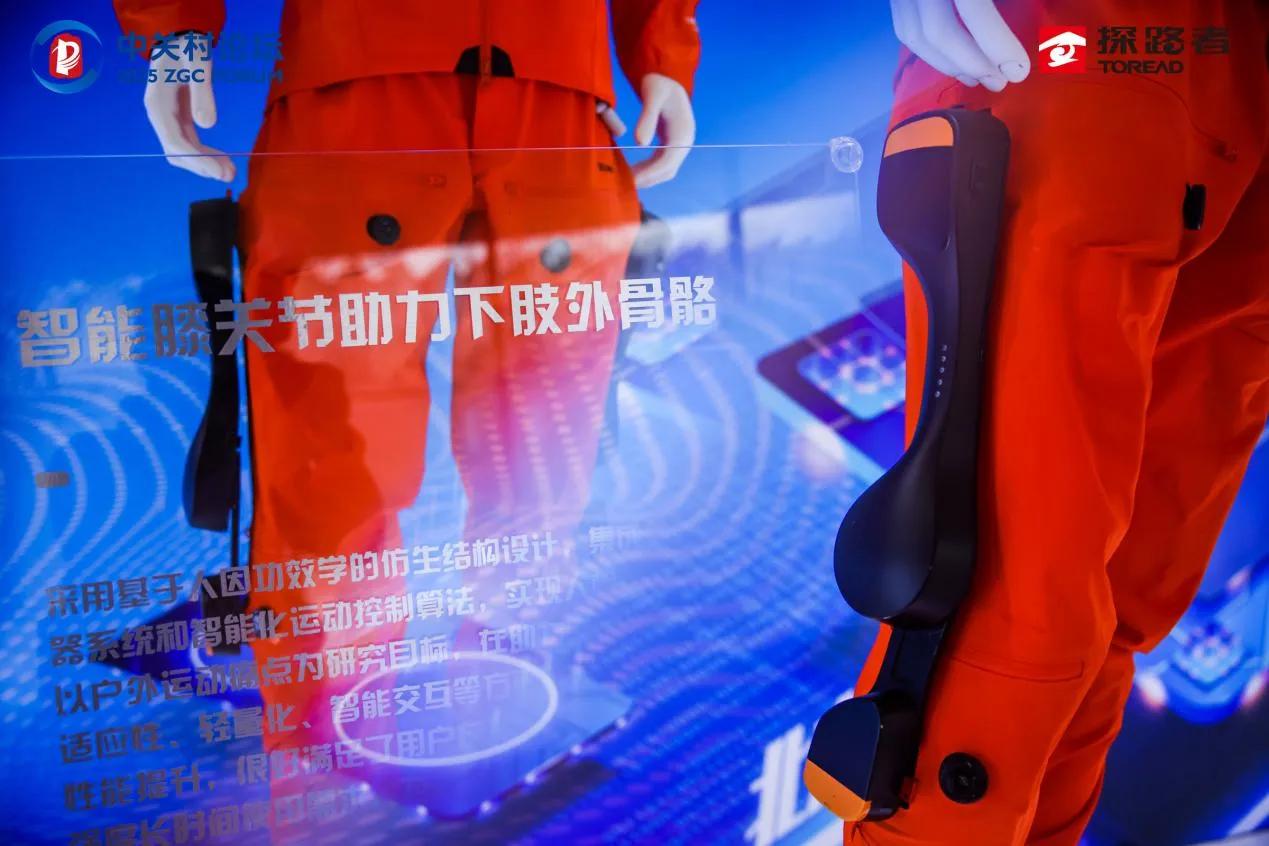
探路者全渠道布局第二代外骨骼,卡位首发经济和银发经济
Cai Jing Wang· 2025-12-08 03:28
Core Insights - The article highlights the launch of the second-generation exoskeleton by the company, marking its entry into a new market that integrates artificial intelligence, bionic technology, and precision manufacturing [1][3]. Product Development - The second-generation exoskeleton builds on the success of the first generation, featuring multiple significant upgrades and is set to be launched across various channels, including offline stores, e-commerce platforms, and rental services at popular tourist sites [3][5]. - The first-generation exoskeleton achieved full autonomy in materials, structure, and control systems, utilizing bionic design and integrating multi-modal sensor systems for intelligent human-machine interaction [3][5]. Market Strategy - The company is strategically positioning itself in the burgeoning markets of the silver economy, health industry, and intelligent equipment, aiming to capture a share of the trillion-dollar potential in these sectors [3][9]. - The second-generation exoskeleton has undergone systematic upgrades in performance, intelligence, and cost, enhancing features such as lightweight design, battery life, waterproofing, and environmental adaptability [5][9]. Consumer Engagement - The company has established dedicated experience zones in key cities, allowing consumers to test the exoskeleton in simulated outdoor scenarios, which helps to alleviate consumer concerns and strengthen brand recognition [7]. - The collaboration with well-known scenic spots for rental services not only lowers the entry barrier for consumers but also provides real-world data for further product development [7][9]. Industry Outlook - With over 310 million people aged 60 and above in China by the end of 2024, and a projected global market for elderly care robots exceeding $100 billion by 2030, the demand for exoskeletons in the elderly care and rehabilitation sectors is expected to grow significantly [9][10]. - The company's commitment to intelligent equipment extends beyond a few innovative products, indicating a strategic elevation and a clear path for future growth in both consumer and professional markets [9][10].


南京五大商圈上榜《中国商圈商业力TOP100指数榜单》
Nan Jing Ri Bao· 2025-12-08 02:21
Group 1 - The 2025 "China Business Circle Commercial Power TOP 100 Index" was announced, with Nanjing's Xinjiekou business circle ranking second nationally, following Beijing CBD and ahead of Shanghai's Lujiazui-Zhangyang Road [1][2] - The ranking is based on a comprehensive evaluation system developed by Ying Shang Co., which includes factors such as population size, transportation infrastructure, commercial scale, diversity, vitality, and potential, covering over 3,000 business circles across 368 cities [1] - Nanjing's Xinjiekou business circle is recognized as a commercial center in East China, with significant foot traffic and a high concentration of luxury brands, including four shopping centers with annual sales exceeding 4 billion yuan [2][4] Group 2 - The introduction of new high-end and trendy brands in Nanjing's commercial landscape has enhanced consumer engagement, with the first store economy becoming a key driver for attracting younger demographics [4][5] - Nanjing has seen a significant increase in the number of first stores, with over 1,500 new stores opened in recent years, including 8 global first stores and 4 Asian first stores, showcasing a diverse and competitive retail ecosystem [5][6] - The commercial landscape in Nanjing is evolving into a "multi-core era," with multiple business circles gaining prominence, indicating a shift from a single dominant business area to a more diversified commercial environment [6]
重磅文件引导培育消费新场景新业态 海宁皮城加速打造时尚消费新地标
Quan Jing Wang· 2025-12-07 11:57
Core Insights - The article emphasizes the role of consumption as a fundamental driver of economic growth, highlighting a joint implementation plan by six departments to enhance the adaptability of supply and demand in consumer goods, aiming to cultivate new consumption scenarios and business formats [1] Group 1: Transformation and Strategy - Haining China Leather City has transformed from a single leather trading market to a "full-category fashion source," aligning with the policy's goal of enhancing core business district capabilities [2] - The center now encompasses a diverse product matrix, including leather, fur, cashmere, down, and seasonal fashion, consolidating approximately 90% of the country's leather jacket production capacity and over 60% of new leather design [2] - Haining has created a strong industrial cluster effect by seamlessly integrating design, production, exhibition, and live streaming across the entire industry chain, positioning itself as a "first-release center" encouraged by policy [2] Group 2: Globalization and International Cooperation - Haining Leather City is actively pursuing a globalization strategy, as outlined in the implementation plan, by establishing international partnerships and participating in global fashion networks [3] - In September 2025, Haining's chairman led a delegation to Europe, forming strategic collaborations with top leather exhibitions in Milan and luxury marketing institutions in Paris to facilitate resource exchange between Asia and Europe [3] - This marks a shift from merely exporting products to proactively building a global fashion cooperation network and engaging in international dialogue on rules [3] Group 3: Cultural Experience and Consumer Engagement - Haining Leather City is elevating its industry value from commercial transactions to cultural experiences, aligning with the trend of consumer demand for emotional resonance and cultural identity [4] - The integration of "leather + cultural tourism" is being promoted, with government initiatives connecting Haining Leather City to cultural landmarks, creating themed tourism routes [4] - The market features immersive experiences where visitors can create leather goods, blending shopping with cultural engagement, thus transforming one-time purchases into memorable experiences [4] Group 4: Comprehensive Development and Future Vision - Haining Leather City is not just a passive follower but a proactive leader in the transformation of the leather industry, supported by a full industry chain and innovative digital systems [5] - The company aims to expand its consumer reach through an online and offline integration matrix and foster global cooperation to open up international markets [5] - The strategic focus on cultural integration enhances the intrinsic value of consumer experiences, positioning Haining Leather City as a global fashion consumption landmark that leads autumn and winter fashion trends [5]

各地多措并举促进新消费
Yang Shi Wang· 2025-12-06 12:25
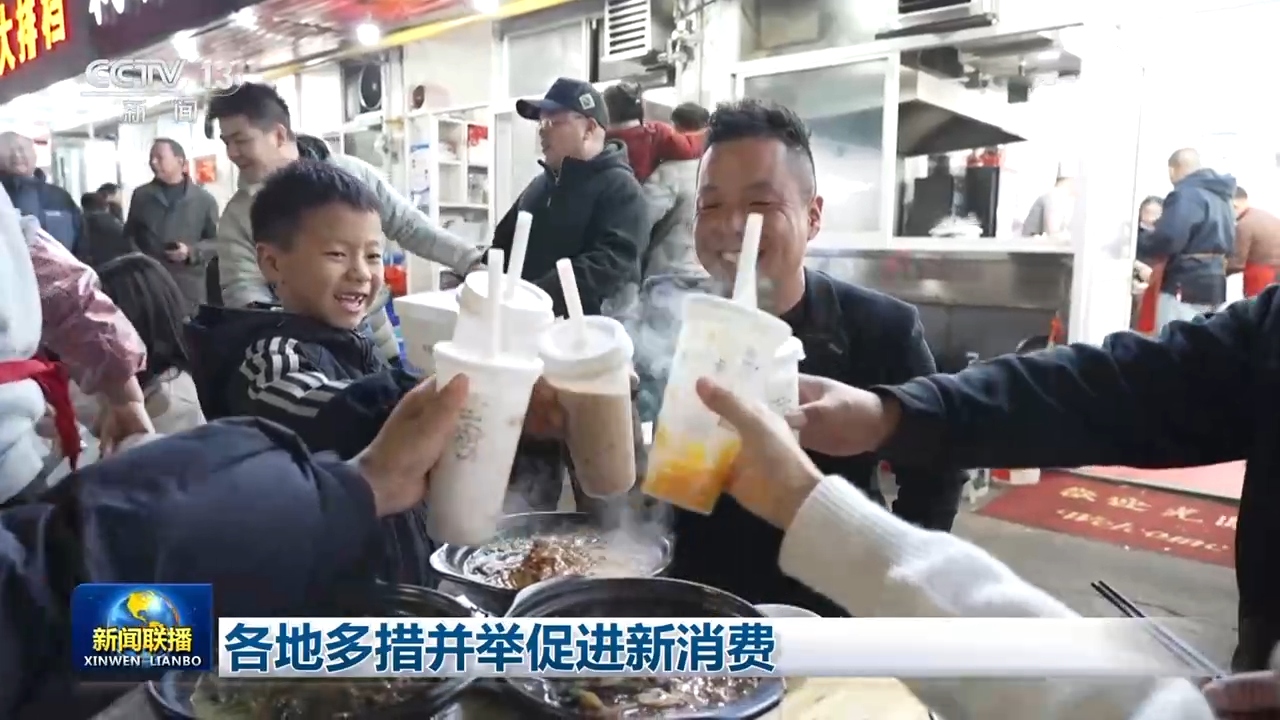
Core Viewpoint - Various regions are implementing multiple measures to cultivate new consumption scenarios and promote the "first launch economy," injecting new momentum into economic development [1] Group 1: New Consumption Scenarios - The "Guangde Three-piece Set," consisting of stewed pot, milk tea, and peach crisp, has gained popularity, attracting a large number of tourists from the Yangtze River Delta, with 573,500 visitors recorded in the past week, a year-on-year increase of 33.65% [3] - Guangde, located at the intersection of Jiangsu, Zhejiang, and Anhui provinces, has leveraged the opening of the Hu-Su-Hu high-speed railway to enhance its appeal, launching special activities and providing free parking and bus services to meet the consumption needs of young consumers [5] Group 2: Promotion of First Launch Economy - Dalian has transformed its former electronics market into an immersive consumption space centered around "trendy play culture," integrating e-sports, anime themes, and smart technology, with over 1,000 promotional events held this year and 133 million yuan in consumption vouchers distributed to boost consumer activity [7] - Chengdu has seen the establishment of over 710 first stores this year, with more than 280 events such as first exhibitions and performances held. The city plans to establish 6,500 first stores and 100 economic landmark projects by the end of 2027 to continuously release consumption potential and enhance urban competitiveness [9]
AIE“秀场”变“市场”,全球采购商共享大湾区产业与开放红利
2 1 Shi Ji Jing Ji Bao Dao· 2025-12-06 11:33
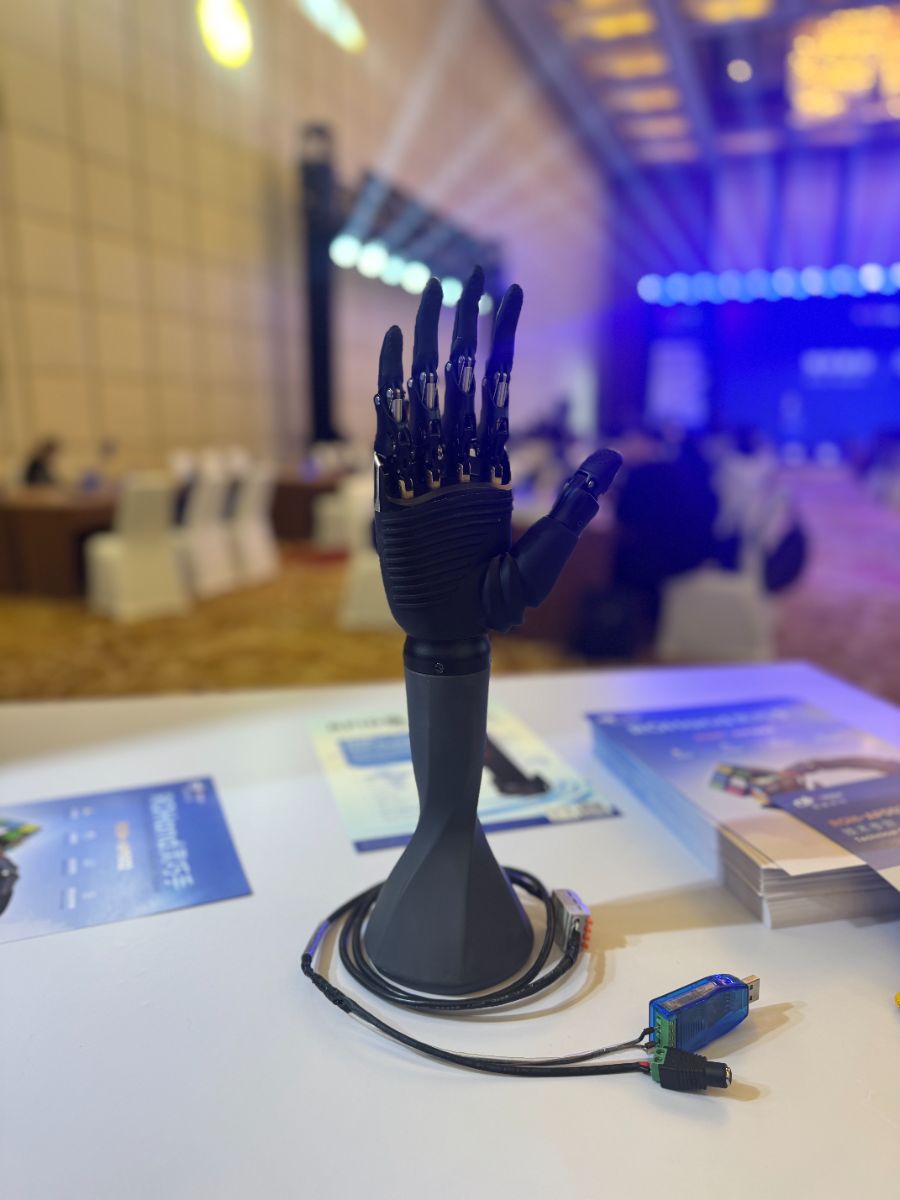
Core Insights - The Greater Bay Area (GBA) is positioning itself as a global hub for technological innovation, attracting international businesses to collaborate and share development opportunities [1][2] - The recently concluded AIE Expo showcased cutting-edge technologies from Guangdong enterprises and leveraged Macau's market advantages to facilitate order conversion and attract foreign investment [2][6] - The GBA's comprehensive advantages in manufacturing, technology innovation, and openness are creating new opportunities for the tech industry [2][6] Industry Developments - AIE Expo featured the launch of the ROH-AP00 by Aoyi Technology, a pioneering product in the field of robotic technology, which integrates multi-dimensional force feedback and control [3][5] - Aoyi Technology is transitioning from a research-focused company to one that combines R&D with manufacturing, emphasizing its commitment to the GBA [5][6] - The GBA's robust supply chain and manufacturing capabilities are enabling companies like Toshiba to enhance their production capacity significantly, exemplified by a new production line in Dongguan that has doubled its output [7][8] Market Dynamics - The AIE Expo highlighted the "first-release economy," showcasing numerous products with global or national significance, such as the upgraded "Dolphin 3" rescue robot [10][11] - The event's unique model of integrating exhibition, forums, and investment is supported by a 30 billion yuan technology industry fund, creating a closed loop for innovation and commercialization [10][11] - The GBA's flexible market response mechanisms allow for rapid adaptation to global consumer demand, distinguishing it from more rigid markets in Europe and Japan [11][12] Collaborative Opportunities - The GBA's integration of different regions is enhancing its appeal as a hub for cross-border technology trials and innovation, particularly in attracting Portuguese-speaking countries [12][14] - Companies from various backgrounds are finding opportunities to share development benefits through platforms like the AIE, which facilitates connections between global buyers and the GBA's complete supply chain [11][12] - The region's unique "one country, two systems" framework and comprehensive industrial ecosystem are positioning it as a leading testbed for technological innovation [14]
首发经济火热、国际大牌“扎堆” 成都释放消费新活力
Sou Hu Cai Jing· 2025-12-06 02:55
Core Insights - Chengdu is emerging as a preferred destination for international brands, highlighted by the opening of Decathlon's first outdoor concept store in Asia and Vivienne Westwood's jewelry exhibition, indicating the city's commercial vitality and consumer potential [1][2] Group 1: Economic Performance - From January to October, Chengdu's total retail sales of consumer goods reached 946.96 billion yuan, with a year-on-year growth of 7.0%, and a particularly strong performance in October with an 11.0% increase [1] - The "first store economy" is thriving, with 710 new stores opened in the first ten months of this year and over 280 high-profile launch events held, reflecting the city's efforts to build an international consumption center [2][3] Group 2: Brand Penetration - Chengdu has seen over 4,000 first stores established since 2019, maintaining positive growth for six consecutive years, with 93.5% penetration of international representative brands [3] - The city has welcomed 17 luxury brand stores, including Hermes and Louis Vuitton, further solidifying its status as a key market for high-end fashion brands [3] Group 3: Tax Refund Policies - Chengdu's implementation of a departure tax refund policy has significantly improved the shopping experience for international tourists, with a 253% year-on-year increase in tax refund transactions from January to October [4][5] - The city has developed a comprehensive tax refund service network, including 600 tax refund stores and over 170 "immediate refund" stores, enhancing the convenience for foreign travelers [4][5]
天津扩大开放建设国际消费中心城市
Zhong Guo Jing Ji Wang· 2025-12-05 15:39
Core Viewpoint - Tianjin is focusing on building a new open economic system and accelerating the development of an international consumption center city, with significant growth in commercial space and consumer activities planned for the "14th Five-Year Plan" period [1][2]. Group 1: Economic Development Initiatives - During the "14th Five-Year Plan," approximately 4 million square meters of new commercial space will be added, and 2.408 million square meters of idle commercial facilities will be revitalized [1]. - The core business district, Tianjin Jin Street, has been awarded the title of "National Demonstration Pedestrian Street," with expected increases in foot traffic and sales revenue by 68% and 110% respectively by 2025 compared to the end of the "13th Five-Year Plan" [1]. - The city is promoting a "first-release economy" by introducing flagship stores from brands like Hermes and Huawei, and hosting over 1,000 unique launch events annually [1]. Group 2: Consumption and Trade Policies - Tianjin has implemented a series of policies to support the "big consumption" framework, including the promotion of night economy and the establishment of a supportive policy system for consumption expansion [1]. - The city has become a pilot for second-hand goods circulation, with nearly 300 companies in the second-hand e-commerce industry park and a cumulative transaction volume exceeding 1.3 billion yuan [1]. - The city has established trade relations with 232 countries and regions, with exports to Belt and Road countries and Shanghai Cooperation Organization countries growing annually by 9.1% and 15.7% respectively [2]. Group 3: International Trade and Logistics - Tianjin is enhancing its international consumption environment by integrating various sectors such as commerce, tourism, culture, and sports, aiming to create city IPs like cruise tourism and duty-free shopping [3]. - The city is expanding high-level openness and aims to become a strategic hub for connecting domestic and international dual circulation in northern China [3]. - The Tianjin Free Trade Zone is set to conduct pressure tests for international high-standard economic and trade rules, fostering innovation in collaboration with national economic development zones [3].
以场景为媒引凤来,深圳文旅与商贸主题招商激活千亿投资潜力
Nan Fang Du Shi Bao· 2025-12-05 13:28
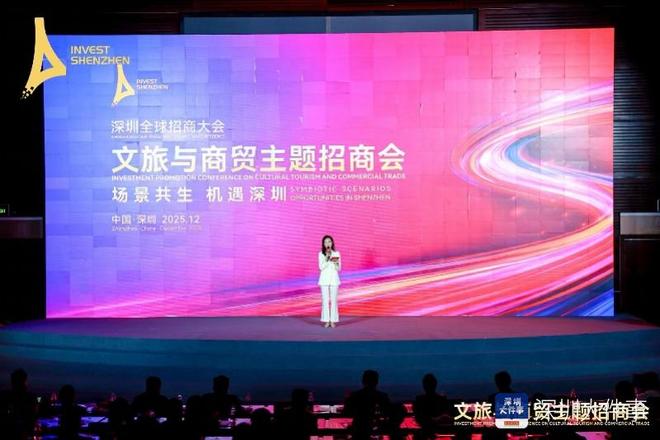
Core Insights - The 2025 Shenzhen Global Investment Promotion Conference focused on cultural tourism and commerce, attracting nearly 300 representatives from relevant sectors, showcasing 306 project opportunities, and signing several key cooperation agreements to enhance Shenzhen's status as an international consumption center and world-class tourism destination [1][18]. Group 1: Event Overview - The event was themed "Scene Symbiosis · Opportunities in Shenzhen" and was held at the Shenzhen Convention and Exhibition Center on December 5 [1]. - The conference featured a performance of the original dance drama "Yongchun" and a 3D promotional video titled "Next Stop Shenzhen," highlighting the city's cultural innovation and openness [2]. Group 2: Strategic Directions - Shenzhen's cultural tourism sector aims to achieve significant growth by focusing on four strategic directions: developing world-class cultural facilities, becoming an international performing arts hub, diversifying tourism offerings, and fostering emerging industries like sports and outdoor activities [4]. Group 3: Policy Support - The Shenzhen Municipal Bureau of Culture, Radio, Television, Tourism, and Sports emphasized a comprehensive policy support system to provide full-cycle assistance to enterprises [5]. - Recent data showed that Shenzhen's retail sector has seen substantial growth, with total retail sales exceeding 1 trillion yuan for two consecutive years and the wholesale and retail industry expanding from 4 trillion yuan to 6 trillion yuan [6]. Group 4: Regional Collaboration - The Luo Hu and Bao An districts are leveraging their unique advantages to create a complementary development model, enhancing Shenzhen's cultural tourism and commerce [10]. - Luo Hu plans to develop a vibrant urban area by integrating commerce and culture, while Bao An is transitioning from an industrial zone to a cultural tourism and commerce innovator [12]. Group 5: Investment Opportunities - The conference highlighted 306 specific investment projects across various sectors, including major cultural venues, digital tourism, and smart business districts, providing tangible opportunities for investors [13]. - Key projects promoted included the Qianhai Ice World, the Luo Hu Dawangtong Ecological Integration Zone, and the Shenzhen City Duty-Free Shop, each designed to enhance the city's tourism and economic landscape [15]. Group 6: Collaborative Efforts - The event resulted in multiple cooperation agreements, with Luo Hu and Bao An districts signing contracts with six enterprises each, indicating a strong collaborative effort to build a robust ecosystem for cultural tourism and commerce in Shenzhen [18]. - The conference showcased Shenzhen's commitment to connecting global resources and creating a vibrant market environment, inviting global enterprises and investors to collaborate [18].
商务部部长王文涛:完善促进消费制度机制 建立健全适应消费新业态新模式新场景的管理办法
Xin Hua She· 2025-12-05 11:55
(文章来源:新华社) 商务部部长王文涛接受采访时表示,创新打造消费场景。完善促进消费制度机制,建立健全适应消费新 业态新模式新场景的管理办法,加力推进"三新"试点工作,支持50个城市开展试点。培育国际消费中心 城市,集聚全球优质消费资源。落实好离境退税政策,拓展入境消费。发展首发经济,促进商旅文体健 融合发展,打造一批带动面广、显示度高的消费新场景,进一步释放多样化、差异化消费潜力。 ...
2小时卖出1000斤!智利车厘子广州龙穴开柜火爆销售
2 1 Shi Ji Jing Ji Bao Dao· 2025-12-05 07:52
Group 1 - The core event is the launch of the Chilean cherry sales at Nansha Port, which saw 1,000 pounds sold within 2 hours, with prices ranging from 288 to 318 yuan per box [1] - The event is part of a three-day fresh market festival aimed at integrating international trade with local consumption, enhancing the economic impact of the port [2] - The festival features a variety of products including seasonal fruits, Australian steaks, deep-sea fish, and local specialties, catering to the diverse needs of consumers [1][2] Group 2 - The event promotes the transformation of "port flow" into "economic increment" by creating high-visibility consumer scenarios, thus supporting the construction of an international consumption center [2] - Future plans include leveraging the port's advantages for global procurement and direct sales, ensuring that cherries reach consumers quickly throughout the winter season [2] - The festival also aims to explore new paths for the integration of culture, commerce, and tourism, positioning Nansha as a new tourism landmark in the Greater Bay Area [2]