
产业升级

Search documents
非洲首条沙漠重载铁路全线通车
Zhong Guo Qing Nian Bao· 2026-02-03 14:22
Core Viewpoint - The Algeria Western Railway Mining Line project, constructed by China Railway Construction Corporation (CRCC), has officially opened, marking a significant achievement in infrastructure development for both China and Algeria [1][3]. Group 1: Project Overview - The railway spans 950 kilometers, with CRCC and local state-owned enterprises constructing 575 kilometers of it [1]. - The project was completed in just 24 months, showcasing the "China speed" in desert heavy-load railway construction, despite temperatures exceeding 50 degrees Celsius in the Sahara Desert [1][3]. Group 2: Economic Impact - The railway is expected to transport 50 million tons of iron ore annually and facilitate the transportation of 25 million tons of finished and semi-finished products from the Bechar industrial zone, while also catering to passenger needs [3]. - The project will create at least 3,000 jobs during its operational phase, contributing to connectivity and industrial upgrading in southwestern Algeria [3]. Group 3: Technological and Human Resource Development - This project marks the first overseas output of China's heavy-load railway concrete sleeper technology, setting a new benchmark for practical cooperation between China and Algeria in infrastructure [3]. - It has also led to the systematic training of local management talents and railway industry technical workers [3].



奋进五载结硕果 聚势赋能新陇南——“十四五”期间招商引资为陇南高质量发展注入强劲动能
Xin Lang Cai Jing· 2026-02-03 12:53
Core Viewpoint - The article highlights the significant progress made in Longnan's investment attraction and economic development during the "14th Five-Year Plan" period, emphasizing the establishment of a robust investment environment and the successful implementation of various projects that contribute to high-quality growth [2][27]. Investment Attraction Mechanism - Longnan has positioned investment attraction as a key strategy for high-quality development, implementing actions to attract major and strong enterprises while continuously improving the investment mechanism [27][29]. - The local government has established a "1+N" investment work system, ensuring efficient operation through dynamic management of intended projects and regular updates [30]. Achievements in Investment - Over the past five years, Longnan has successfully attracted 85 projects from "three hundred strong" and listed companies, with 472 key projects exceeding 100 million yuan in funding [26][27]. - The investment attraction results are evident, with a significant increase in signed projects from 59 in 2021 to 298 in 2025, and the total signed investment amount rising from 11.754 billion yuan to 57.641 billion yuan [34]. Industrial Upgrading - Longnan has focused on upgrading its industrial structure by developing 16 advantageous industrial chains, including renewable energy, non-ferrous metallurgy, and modern logistics, thereby transitioning from a resource-rich area to an industrial hub [35][36]. - The establishment of industrial parks and agricultural parks has facilitated the growth of various sectors, with 41 projects introduced during the "14th Five-Year Plan" period, amounting to an investment of 13.924 billion yuan [41]. Innovative Investment Strategies - The city has developed a comprehensive and multi-dimensional investment network, shifting from broad-based to targeted investment strategies, and has successfully hosted high-profile investment events to attract businesses [38][39]. - Longnan has also implemented a "smart investment platform" to streamline the investment process and enhance the efficiency of project management [43]. Future Development Plans - Looking ahead, Longnan aims to build a modern industrial system and enhance its investment environment by focusing on specific agricultural products and advanced manufacturing sectors [45][46]. - The city plans to continue improving its investment services and create a favorable ecosystem for investors, ensuring a steady flow of quality projects [49].
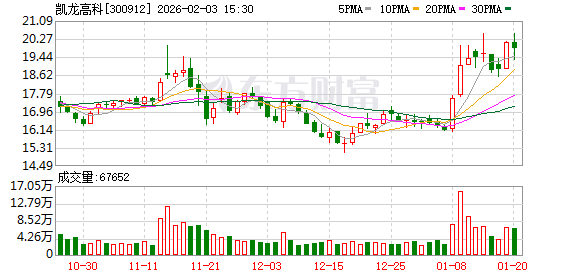
披露重组预案,凯龙高科2月4日起复牌
Bei Jing Shang Bao· 2026-02-03 12:41
Core Viewpoint - Kailong High-Tech (300912) announced a major asset restructuring plan, which will involve the acquisition of a 70% stake in Jinwangda through share issuance and cash payment, with shares also being issued to the actual controller for supporting funds [2] Group 1: Acquisition Details - The acquisition will make Jinwangda a subsidiary of Kailong High-Tech, enhancing its capabilities in precision transmission components [2] - The transaction is expected to constitute a significant asset restructuring and is classified as a related party transaction [2] Group 2: Strategic Implications - This acquisition will allow the company to quickly obtain a technical system for precision transmission components, mature production capacity, and high-quality customer resources [2] - The move is aimed at expanding the company's business in precision transmission components, thereby improving its robotics industry chain layout and accelerating the implementation of its industrial upgrade strategy [2]
警惕短期波动加剧,长期向好势头未变
Datong Securities· 2026-02-03 11:01
Group 1 - The core viewpoint indicates that the equity market and commodity market experienced a surge followed by a decline, with significant emotional amplification observed. The resource sector became the main focus of the market, leading to increased trading volume, but a subsequent profit-taking wave caused a sharp drop in precious and base metals, impacting the equity market as well [1][8][11] - The report highlights that the A-share market is experiencing increased volatility, with resource sectors like non-ferrous metals and gold taking over as the short-term market leaders. However, the market is cautioned against high-level risks due to the lack of performance support in low-performing sectors like liquor and real estate [2][12][11] - The report suggests a "barbell strategy" for asset allocation, recommending a focus on sectors that have undergone sufficient corrections, such as innovative pharmaceuticals and communications for the offensive side, while defensive opportunities may be found in dividend-paying sectors like banks [4][13] Group 2 - The bond market is showing signs of recovery, driven by expectations of increased liquidity and a shift of funds seeking safety from the equity market's volatility. This trend is expected to continue in the short term, although long-term challenges remain due to competition for capital from the commodity and equity markets [5][36] - The commodity market is under pressure after a period of rapid growth, with significant corrections observed in precious metals and other commodities. The report warns of potential volatility in the short term but notes that long-term demand for gold and industrial metals remains strong due to technological advancements [6][45][44] - The report emphasizes the importance of monitoring the dual innovation narrative in the equity market, as it is expected to drive future growth amid ongoing liquidity support and a global easing cycle [12][11][13]
河南郏县:产业提质 服务提效
Zhong Guo Jing Ji Wang· 2026-02-03 08:54
Group 1 - The core viewpoint of the articles highlights the rapid economic development and project advancements in the Jiajian County, particularly in the manufacturing and new energy sectors, driven by a supportive business environment and government initiatives [1][3][4] Group 2 - Tiancheng Electric has seen a 60% year-on-year increase in orders, with production scheduled until June, and an average daily shipment of over 30 transformers since the New Year, exporting to over 90 countries [1] - The company has implemented a two-shift system to ensure timely delivery, reflecting the robust demand in both domestic and international markets [1] Group 3 - The lithium battery project in Jiajian County has a total investment of 1.25 billion yuan, with an expected annual output of 560 million batteries, and is projected to generate an annual output value of 930 million yuan by 2025 [2] - The project has already secured orders until August 2026, with a first-quarter output value expected to exceed 300 million yuan [2] Group 4 - The county is set to start 18 new projects in the first quarter of 2026, with a total investment of 2.228 billion yuan, covering high-end equipment, new materials, green energy, and food processing [2] - The compound seasoning production project by Fengjia Sauce Industry is expected to achieve an annual output value of 600 million yuan and create over 500 jobs [2] Group 5 - Jiajian County has introduced 22 measures to optimize the business environment, including tax reductions and streamlined approval processes, resulting in over 88 million yuan in tax relief for businesses [3] - The county has cultivated 54 national high-tech enterprises and 79 national technology-based small and medium-sized enterprises, enhancing the local industrial ecosystem [3] Group 6 - The county aims to leverage technological innovation to drive industrial upgrades and enhance the quality of economic development, with a focus on building a hundred billion-level industrial cluster in the green food sector [4] - The leadership emphasizes the importance of project speed and industrial efficiency to improve the quality of life for residents and achieve economic growth targets [4]
重庆科创平台赋能长江经济带产业升级
Ke Ji Ri Bao· 2026-02-03 08:09
Core Viewpoint - Chongqing has made significant progress in integrating technological innovation with industrial development over the past decade, positioning itself as a key player in the Yangtze River Economic Belt's high-quality development [1][2]. Group 1: Technological Innovation and Policy Framework - Chongqing's Science and Technology Bureau emphasizes technological innovation as the primary driver for the development of the Yangtze River Economic Belt [1]. - The city has established a comprehensive support system for innovation development, including top-level design, policy guidance, and mechanism guarantees [1]. - During the 14th Five-Year Plan period, key metrics such as high-tech enterprises, technology-based companies, high-level innovation platforms, R&D personnel, and technology contract transaction volume have increased by 2.5 times, 2.9 times, 2 times, 2 times, and 7.1 times, respectively [1]. Group 2: Innovation Platforms and Achievements - Chongqing has built 231 national and provincial-level platform bases and has maintained the highest comprehensive technological innovation index in Western China for seven consecutive years [2]. - The city has been recognized for its innovative reforms, with five experiences being promoted nationwide, including the approval of four pilot projects for the national innovation points system by 2025 [2]. - Chongqing focuses on creating high-energy innovation platforms in sectors such as smart technology, life health, new materials, and green low-carbon initiatives [2]. Group 3: International Collaboration and Future Directions - The city has successfully hosted two "Belt and Road" technology exchange conferences, enhancing its global innovation collaboration [2]. - Chongqing has established technological cooperation relationships with 71 countries and built 16 international technology cooperation bases, attracting 18 countries to set up R&D platforms in the city [2]. - The city is advancing research in cutting-edge disruptive technologies, including artificial intelligence and brain-computer interfaces, while implementing major technology projects in core software, high-end devices, and biomedicine [2].
中国乳企跨界大变局,为何它们不再只卖牛奶?
3 6 Ke· 2026-02-03 07:48
Core Insights - The Chinese dairy industry is facing growth challenges, with a slowdown in production and consumption rates, leading to a phase of stock competition [1][2] - Companies are diversifying into new markets such as pet food and nutritional products to seek new growth opportunities, leveraging their existing R&D capabilities and supply chain experience [1][6] - The industry is experiencing a dual pressure of supply-demand imbalance and intense competition, particularly in the liquid milk segment, which is leading to profit erosion [3][4] Industry Trends - The total milk production in China is projected to decline by 2.8% in 2024, marking the first negative growth since 2017, indicating the end of the era driven by population dividends and consumption expansion [2] - The traditional liquid milk market is facing shrinkage, with companies struggling to maintain profitability amid price wars and product homogenization [4][5] Competitive Landscape - The competition in the dairy sector is intensifying, with brands engaging in aggressive pricing strategies, leading to a "low-margin scale trap" where increased sales do not translate to higher profits [4][5] - Financial markets are shifting their valuation logic, now prioritizing companies that can demonstrate growth resilience during industry adjustments [6] Strategic Shifts - Dairy companies are not merely expanding blindly; they are strategically leveraging their established capabilities in quality control, R&D, and supply chain management to enter new markets [8][10] - The transition from being a "milk provider" to a "health solution provider" reflects a significant shift in the industry's value chain, as companies aim to meet specific health needs of consumers [19][20] Innovation and R&D - Companies are investing in R&D to develop high-value products and reduce reliance on imported ingredients, with examples including the development of HMO technology by Mengniu [21][24] - The focus on creating a comprehensive ecosystem around nutrition and health is evident, with companies aiming to provide solutions that span from infant nutrition to pet health [27][36] Market Dynamics - The future competition in the dairy sector will likely revolve around building a more open and innovative health ecosystem that can earn deep trust from consumers and partners [28] - Companies are expected to navigate a landscape where short-term performance fluctuations are inevitable, but the long-term goal is to establish a world-class nutrition and health service provider rooted in Chinese consumer markets [36]
转型中的坚守与突破:王麻子的传承、创新与市场引领
Zhong Guo Shi Pin Wang· 2026-02-03 07:48
Core Insights - The Chinese knife and scissors industry is entering a critical phase of deep integration and value reconstruction driven by quality consumption and manufacturing transformation by 2025 [1] - The government's emphasis on the systematic protection of cultural heritage aligns with the industry's upgrade trends, indicating a path for high-quality development through "innovation while preserving tradition" [1] Group 1: Industry Transformation - Wang Mazi is becoming a typical example of industry transformation through technological innovation, quality upgrades, and cultural outreach, aiming to integrate over 300 years of craftsmanship into brand and product innovation [3] - The Chinese chef knife market is undergoing a profound consumer transformation, with a shift from basic cutting functions to a comprehensive pursuit of professionalism, health safety, design aesthetics, and ultimate experience [4] - "Design empowerment" is emerging as a core element for enhancing product added value, transforming consumer needs into specific product methodologies [4][6] Group 2: Quality Assurance - Wang Mazi achieved significant milestones in quality credibility in 2025, receiving titles such as "National Industry Quality Leading Brand" and "National Product and Service Quality Integrity Commitment Enterprise" during the 3.15 period, supported by a record of "36 consecutive months of national inspection compliance" [7] - The brand is the only designated knife brand for the "World Culinary Arts Championship," validating its product quality in rigorous professional settings [7] - The integration of traditional craftsmanship and modern quality control systems underpins Wang Mazi's commitment to quality integrity [9] Group 3: Cultural Leadership - Wang Mazi is committed to cultural transmission and industry responsibility, exemplified by its initiative to establish China's first knife and scissors industry museum, aimed at preserving and promoting global knife and scissors civilization [10] - The brand's approach to integrating 59 core processes with intelligent production lines demonstrates that traditional craftsmanship and modern manufacturing can mutually enhance each other [10] - Wang Mazi's product series continues to receive positive market feedback, with chef knives achieving cumulative sales of over 300 million units, validating its development path [12]
结构变革的“质变”信号:佛山正跨越产业升级关键门槛
Nan Fang Du Shi Bao· 2026-02-03 05:54
Core Insights - The report highlights a significant increase in the proportion of advanced manufacturing value added in Foshan, rising from 50.2% to 55.7% over the past five years, indicating a profound structural transformation in the city's economy [1][20] - This shift represents not just an optimization of industrial data but a fundamental change in development logic, marking Foshan's efforts to cross a critical threshold in industrial upgrading [1][2] Group 1: Industrial Transformation - The increase of 5.5 percentage points signifies a transition from scale expansion to quality-driven transformation, with high-tech industries like robotics, new energy storage, pharmaceuticals, and semiconductors becoming the main drivers of industrial growth [2][5] - Foshan's industrial investment has averaged 12.2% annually, with a digital transformation rate of 80% among regulated enterprises, showcasing the successful conversion of investment into industrial momentum [2][3] Group 2: Economic Resilience - The rise in advanced manufacturing enhances the economic resilience of Foshan, as these industries typically have higher technical barriers and more stable market demand, acting as a "ballast" for the industrial system [6][12] - Despite the progress, traditional manufacturing still accounts for approximately 44.3%, indicating ongoing pressure for transformation and upgrade [11][12] Group 3: Strategic Upgrading - The report outlines a strategic shift in Foshan's development model, emphasizing the need to climb to higher segments of the industrial and value chains, rather than relying on past successes [5][9] - The "14th Five-Year Plan" sets ambitious targets, including a 10% annual growth in high-tech manufacturing value added and an 8% increase in R&D investment, focusing on revitalizing traditional industries and fostering new and future industries [14][15] Group 4: Innovation and Ecosystem - The focus of innovation is shifting from platform construction to ecosystem operation, aiming to enhance the efficiency of technology transfer and commercialization [15][16] - The plan emphasizes the need for a more integrated approach to development, addressing regional imbalances and enhancing the overall competitiveness of Foshan's industrial landscape [16][17] Group 5: Global Integration - Foshan aims to transition from domestic competition to global connectivity, establishing an overseas comprehensive service system to support enterprises in expanding their brands and industrial chains internationally [18][20] - This strategic vision is intended to enhance Foshan's international competitiveness and adaptability to global market dynamics [18][20]
美股纳斯达克指数包含哪些行业企业?
Jin Rong Jie· 2026-02-03 04:52
Group 1 - The technology sector is a significant component of the NASDAQ index, encompassing software and application services, computer hardware, semiconductor chips, internet technology, and social media, with a focus on technological innovation driving the digital economy [1] - The healthcare industry holds a notable share in the NASDAQ index, including biotechnology research, medical device manufacturing, healthcare services, and pharmaceuticals, closely linked to global medical demand and research advancements [1] - The consumer sector is also represented in the NASDAQ index, involving retail trade, e-commerce platforms, and daily consumer goods manufacturing, directly addressing consumer needs through diverse products and services [1] Group 2 - The financial and industrial sectors are part of the NASDAQ index, with financial companies focusing on fintech, payment solutions, and asset management, while industrial firms cover aerospace, renewable energy equipment manufacturing, and industrial automation [2] - The NASDAQ index showcases a diversified industry composition, reflecting both emerging sectors like technology and traditional industries such as consumer and industrial, providing a comprehensive view of growth and innovation in the U.S. capital market [2] - This diversity in industry structure offers market participants valuable insights into the development status of related companies and highlights the capital market's acceptance of innovation and growth potential across different sectors [2]