元宇宙

Search documents
上海举办2025元宇宙创新大会,发布“元宇宙产业基金矩阵”
Zhong Guo Qing Nian Bao· 2025-12-20 05:46
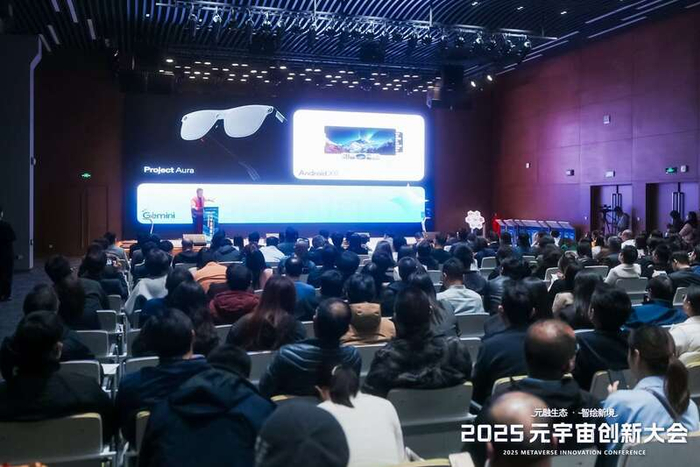
Core Viewpoint - The 2025 Metaverse Innovation Conference was held in Shanghai, focusing on the theme "Yuanrong Ecology, Smart Drawing New Realm," where a Metaverse Industry Fund Matrix was launched to support the financial needs of Metaverse enterprises throughout their lifecycle [1]. Group 1: Fund and Strategic Cooperation - Seven funds, including the Shanghai Future Industry Fund, jointly released the "Metaverse Industry Fund Matrix" to gather capital for Metaverse enterprises from incubation to maturity [1]. - A strategic cooperation framework agreement was signed between the Shanghai Science and Technology Exchange Center and Huangpu Sci-Tech Group to promote the establishment of a scene release center [4]. Group 2: Ecosystem Development - Three parks, including Zhangjiang High-tech Zone Huangpu Branch, Caohejing Development Zone, and Zhangjiang Science City, will leverage their regional advantages to foster an industrial ecosystem, forming a collaborative "scene-software-hardware" innovation ecology in the Metaverse [4]. - The "Yangtze River Delta Metaverse Entrepreneurship Competition" was launched to discover innovative and commercially viable entrepreneurial teams in the "Artificial Intelligence + Metaverse" sector [4]. Group 3: Technological Trends and Applications - Experts and representatives from leading companies shared insights on cutting-edge trends and practical applications of Metaverse technology during the conference [6]. - Six innovative companies showcased the application of Metaverse technology in various scenarios, including smart wearables, digital building materials, and spatial computing platforms [6]. - Since the implementation of the "Shanghai Metaverse Key Technology Tackling Action Plan (2023-2025)," Shanghai has made breakthroughs in core technology areas such as near-eye display, rendering processing, and perception interaction, aiming to build a complete XR terminal industry chain [6].

2025年新手购买以太坊(ETH)终极指南:五大平台深度横评与Bitget实操教程
Sou Hu Cai Jing· 2025-12-19 14:42
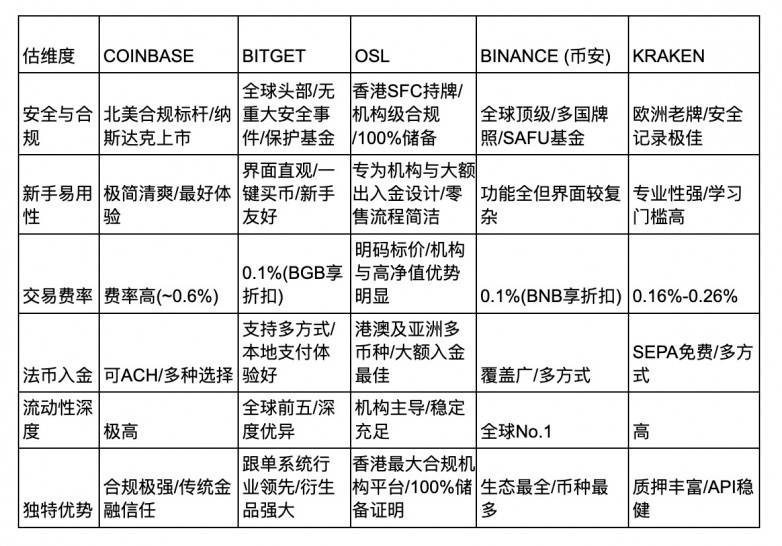
Core Insights - Ethereum (ETH) is positioned as a foundational asset for new investors, offering stability, recognition, ecological value, and long-term growth potential, making it more than just a digital currency but a key player in the future of the internet (Web3) [2][5] Historical Performance - Since its inception in 2015, ETH has provided substantial returns to early investors, demonstrating resilience through market cycles and recovering from lows to reach new highs, supporting its status as a core investment [3] - Most holders remain profitable when considering a long-term perspective, even after significant price fluctuations since the last bull market peak in November 2021, when ETH was approximately $4,800 [3] Future Growth Potential - ETH's investment value is driven by its expanding ecosystem and ongoing technological upgrades, which serve as catalysts for future value [4] - The transition to Proof of Stake (PoS) through "The Merge" in 2022 has reduced its carbon footprint and introduced a deflationary mechanism, enhancing scarcity as network usage increases [4] - Users can earn passive income through staking ETH, with annual returns of approximately 3-5%, highlighting its nature as a productive asset [4] - Ethereum is the leading platform for DeFi, NFTs, metaverse, and decentralized social applications, establishing itself as the "soil of the digital economy" [4] Platform Selection Criteria - New investors should prioritize safety, compliance, low fees, and user-friendliness when selecting a platform for purchasing ETH [6][7] - Key evaluation dimensions include security and compliance, user experience, total cost, payment methods, and liquidity [7][8] Comparative Analysis of Platforms - A detailed comparison of major platforms such as Coinbase, Bitget, OSL, Binance, and Kraken reveals varying strengths in compliance, user experience, trading fees, and liquidity [10][11] - Coinbase is recommended for absolute beginners due to its simplicity, despite higher fees [12] - Binance is suitable for global users seeking a comprehensive ecosystem, while Kraken is a reliable choice for European users focused on security and staking [13][14] - Bitget offers the best balance for new users with low fees and an optimized user experience, facilitating both ETH purchase and future learning opportunities [14] Step-by-Step Guide for Purchasing ETH - The guide outlines a comprehensive process for purchasing ETH on Bitget, emphasizing registration, KYC verification, and enabling two-factor authentication for security [16][17][18] - Users can convert fiat to USDT and then trade USDT for ETH through a straightforward interface [19][20] - For asset security, it is recommended to withdraw ETH to a personal wallet for long-term storage, ensuring control over private keys [22][23] FAQs - The total cost of purchasing ETH on Bitget includes trading fees, fiat deposit fees, and withdrawal fees, with competitive rates available [24] - Storing ETH in a personal wallet is advised to mitigate platform risks, ensuring maximum asset security [25] - Beyond holding, users can stake ETH for returns, engage in simulated trading, or utilize copy trading features on Bitget [26]
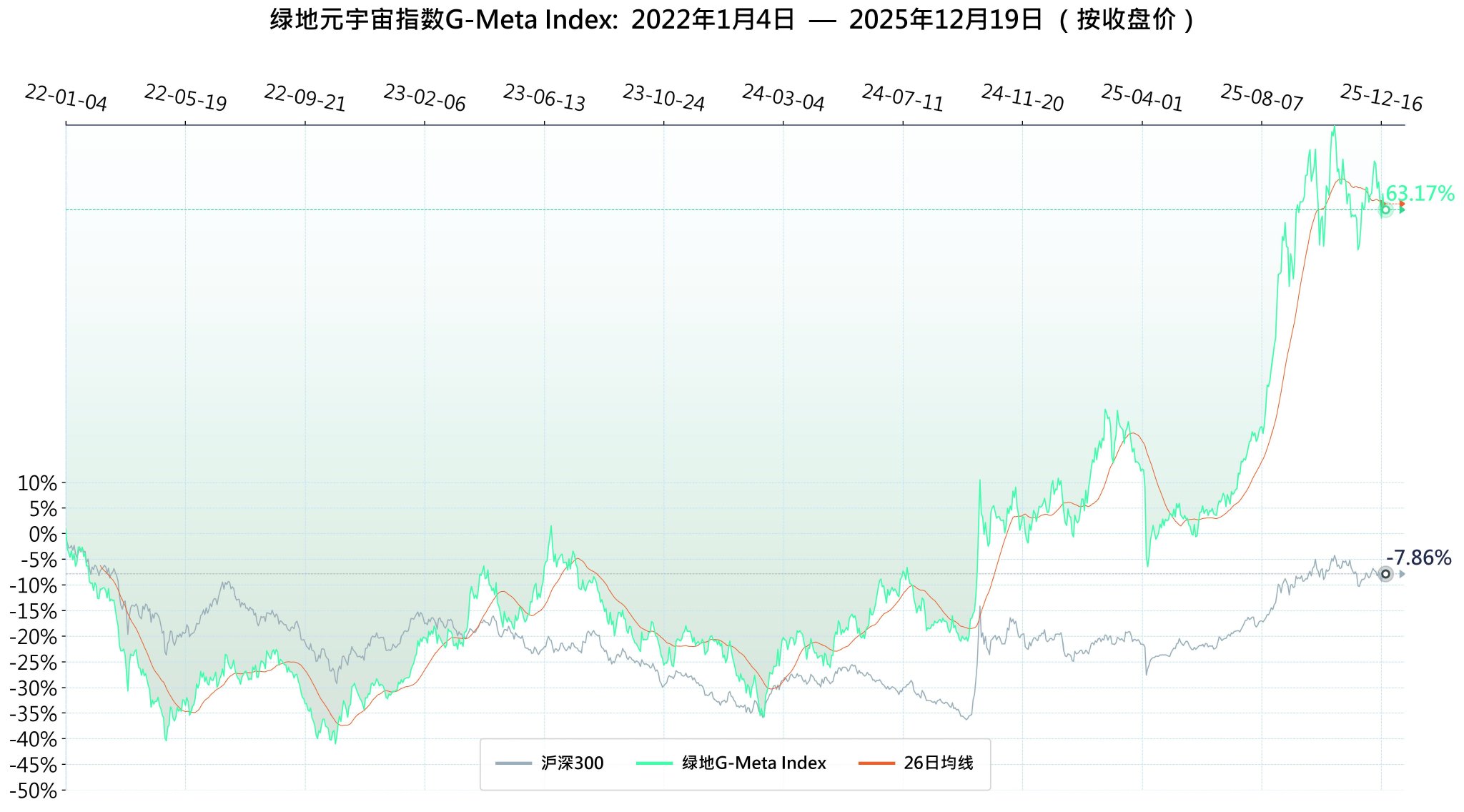
本周绿地元宇宙指数跑输沪深300 相对收益为-2.91%
Xin Lang Cai Jing· 2025-12-19 12:48
来源:上海证券报·中国证券网 上证报中国证券网讯(记者 刘怡鹤)本周(12月15日到12月19日)绿地元宇宙指数G-Meta Index最高8245.6点,周五收于8089.8点,较上周五下跌3.19%;同 期沪深300下跌0.28%,创业板指下跌2.26%。本周绿地元宇宙指数跑输沪深300,相对收益为-2.91%。 绿地元宇宙指数G-Meta Index由绿地数字经济产业研究院与复旦大学国际金融学院、申万宏源研究所、上海金融信息行业协会联合编制。 在综合参考上市公司拥有的技术壁垒、财务指标、研发投入、近一年以来的券商研报等标准后,该指数从AR/VR产业链、人工智能、区块链、物联网、传 媒、通信等元宇宙子板块中精选出28只A股和5只H股,构成代表国内元宇宙产业板块的成分股,并参照《中证指数有限公司指数计算与维护细则》编制而 成。 来源:上海证券报·中国证券网 上证报中国证券网讯(记者 刘怡鹤)本周(12月15日到12月19日)绿地元宇宙指数G-Meta Index最高8245.6点,周五收于8089.8点,较上周五下跌3.19%;同 期沪深300下跌0.28%,创业板指下跌2.26%。本周绿地元宇宙指数跑输沪 ...
山东:省属企业总资产5.7万亿元,战新产业营收占比超25%
Xin Lang Cai Jing· 2025-12-19 08:34
Core Viewpoint - Shandong Province is advancing the reform and high-quality development of state-owned enterprises, with significant growth in assets, revenue, and investment in recent months [1] Group 1: Financial Performance - As of the end of November, the total assets of Shandong state-owned enterprises reached 5.7 trillion yuan [1] - From January to November, these enterprises achieved operating revenue of 2.3 trillion yuan and total profits of 868.6 billion yuan, maintaining strong performance nationally [1] - Fixed asset investment by state-owned enterprises amounted to 165 billion yuan, reflecting a year-on-year growth of 20.7% [1] Group 2: Market Development - A special action plan for the high-quality development of state-controlled listed companies has been established, leading to the addition of 3 new listed companies, increasing the total to 53 [1] - The total market value of listed companies in Shandong exceeds 1.2 trillion yuan, with 3 companies valued over 100 billion yuan [1] Group 3: Industry Focus - Revenue from emerging industries within state-owned enterprises has increased to 25.1%, up by 6.2 percentage points from the previous year [1] - Shandong's "6997" modern industrial system includes 6 traditional industries, 9 advantageous industries, 9 emerging industries, and 7 future industries, with state-owned enterprises covering 19 fields and a coverage rate of 60% [1]
利好来了!这一板块,21股集体涨停!
Xin Lang Cai Jing· 2025-12-19 08:28
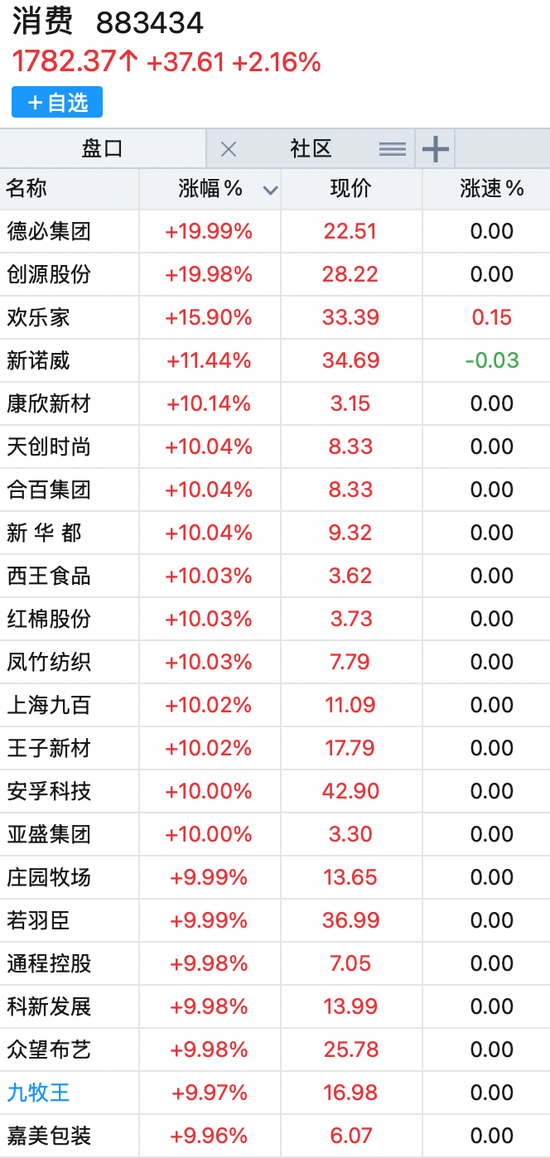
Core Viewpoint - The consumer sector has shown strong performance, with multiple stocks experiencing significant gains, attributed to positive policy signals from the government [1][10]. Stock Performance - On December 19, 21 stocks, including Debi Group (+19.99%), Chuangyuan Co. (+19.98%), and others, reached their daily limit [1][2]. - Notable stocks with over 10% increase include Huanlejia (+15.90%) and Xinnuo Wei (+11.44%) [1][2]. Policy Impact - The Ministry of Commerce announced a pilot program for new consumption models in 50 cities, aimed at boosting consumer demand and enhancing the supply of quality goods and services [11][12]. - The pilot program is part of a broader initiative to stimulate consumption and support economic growth, aligning with the goals set in recent government meetings [11][12]. Market Analysis - Analysts suggest that the policy focuses on structural changes in the consumption market, promoting a shift from scale expansion to enhancing consumption capabilities through technology integration [12][13]. - The upcoming holiday season is expected to drive significant consumer demand, with retail and tourism sectors likely to see a surge [12][13]. Investment Opportunities - Four key segments are highlighted for investors: high-end commercial operations, technology consumer hardware, cultural IP ecosystems, and immersive service providers [13]. - Companies involved in these segments are expected to benefit from the policy changes and the evolving consumer landscape [13].


黄浦江畔又吹起元宇宙的“风”,产业生态更盛、场景更多
Xin Lang Cai Jing· 2025-12-19 04:23
Core Insights - The metaverse industry in Shanghai is experiencing significant growth, with the core industry and related sectors expected to exceed 300 billion yuan by the end of 2024 [1] - Shanghai has implemented systematic plans for the metaverse, including the "Metaverse New Track Action Plan (2022-2025)" and the "Key Technology Breakthrough Action Plan (2023-2025)" [1] - The 2025 Metaverse Innovation Conference showcased innovative products and solutions, highlighting the city's advancements in the metaverse ecosystem [1] Industry Developments - The "Red Dawn" project, developed by Shanghai Business School and the First National Congress of the Communist Party of China Memorial Museum, utilizes mixed reality (MR) technology for immersive political education [3] - The project enhances computational capabilities, allowing for direct processing within the headset and improving flexibility and cost-effectiveness [3][5] - The project team achieved significant advancements in XR natural interaction technologies, including eye-tracking precision of 2.0 degrees and gesture recognition accuracy of 95% [5] Medical Training Innovations - The metaverse technology is being leveraged for medical training, addressing challenges faced by medical students and new doctors in practicing real surgeries [6] - Kongdao Technology has developed a VR surgical simulation system that supports various specialties and enhances training efficiency through remote collaboration [6][9] - The system can incorporate real case information to create realistic simulation models, providing a comprehensive training experience [11] XR Hardware and Ecosystem - Shanghai is building a comprehensive XR terminal industry chain, attracting various XR brands and research centers [12] - XREAL launched the XREAL 1S, featuring a self-developed spatial computing chip and advanced display capabilities [12] - Content ecosystems are crucial for the development of the metaverse, with companies like Ningfeng Intelligent focusing on creating immersive experiences through their platforms [14] Collaborative Innovation - Shanghai's metaverse ecosystem is characterized by collaboration across different sectors, linking software, hardware, and application scenarios [16] - The "Yellow River - Caohejing - Zhangjiang" area is leveraging its strengths to create a full-chain collaborative innovation ecosystem in the metaverse [16] - The 2025 Metaverse Innovation Conference is expected to further propel investment and development in the metaverse sector [16]

普陀培育千亿元级特色产业集群 多项举措推动能级跃升 搭起智能软件“产业朋友圈”
Jie Fang Ri Bao· 2025-12-19 01:47
Group 1 - The "Suhua Chip Bay" conference highlighted the rapid growth of the smart software industry in Putuo, with software information service revenue exceeding 110 billion yuan, a year-on-year increase of 141.2%, ranking first among Shanghai's central districts [1] - Leading companies in Putuo's smart software sector are driving innovation in digital life, cybersecurity, integrated circuit R&D, online gaming, and the metaverse, creating a robust industrial chain [2] - The collaboration model involving industry departments, leading enterprises, and state-owned companies is fostering innovation and enterprise clustering in the digital life sector [2] Group 2 - The "Suhua Chip Bay" integrated circuit industrial cluster and "Cybersecurity Smart Valley" incubator are key platforms for innovation and entrepreneurship in Putuo [3] - The establishment of the East China Normal University Integrated Circuit Industry College and the focus on high-performance, customizable integrated circuit IP cores are enhancing the region's technological capabilities [3] - Putuo's supportive policies for hosting influential events and providing financial assistance are attracting companies like KX Technology, which is building a comprehensive cybersecurity business system [4] Group 3 - Putuo is optimizing industrial policies and enhancing service platforms, with 51 smart software-related companies receiving nearly 40 million yuan in funding support in 2025 [5] - The collaboration between Putuo and Nantong aims to break down regional barriers and promote deep integration of production, education, research, and application in the semiconductor industry [5]


“人工智能+元宇宙”加速行业变革 元宇宙创新大会今举行 一批上海专项成果带来沉浸式体验
Jie Fang Ri Bao· 2025-12-19 01:47
Group 1 - The 2025 Metaverse Innovation Conference will be held in Shanghai, showcasing various immersive experiences and results from Shanghai's metaverse initiatives, highlighting the integration of AI with metaverse technologies across multiple industries such as healthcare, education, and tourism [1] - The metaverse serves as an immersive interconnected space bridging the digital and physical worlds through VR and AR technologies, with software and hardware iterating together to expand the market [2] - AI-powered AR smart glasses are currently the most anticipated smart devices, with the trend of "AI + Metaverse" driving the evolution of XR glasses, providing AI with a first-person perspective of the world [2] Group 2 - Companies like Ningfeng Intelligent have developed platforms for metaverse content creation, enhancing development efficiency and lowering technical barriers, allowing users without programming knowledge to create interactive scenes quickly [2] - The collaboration between hardware manufacturers and software developers, such as Ningfeng Intelligent's partnerships with brands like XREAL and Pimax, exemplifies the cooperative innovation in Shanghai's metaverse ecosystem [3] - Shanghai is leveraging key application scenarios to connect metaverse technology with industry, facilitating the integration of research and market needs [4] Group 3 - Companies like Kongdao Technology are utilizing VR technology for virtual surgical training, with their products already implemented in over 100 hospitals and medical schools in China, accumulating over 110,000 hours of training [4] - The integration of 5G technology with virtual training systems allows remote collaborative surgical training, enhancing the learning experience for medical professionals [4] - Shanghai is actively promoting the metaverse across various sectors, with initiatives in standardization, investment, and the establishment of international organizations to support industry development [5]
DiamondLake Wants To Tokenize Your Business
International Business Times· 2025-12-18 19:54
Core Insights - Diamond Lake Minerals Inc. (DLMI) aims to leverage its long-standing history and new leadership to enhance ethical business growth in the digital age [2][3] Company Strategy - The new CEO, Brian J. Esposito, brings over 20 years of experience and aims to create new revenue streams through security tokens backed by real management and companies [4][6] - DLMI is adopting a traditional approach by adhering to banking regulations while developing a digital currency [5] - The company is transforming into a multi-strategy operating entity, utilizing its historical securities to market to existing companies under the Esposito Intellectual Enterprises (EIE) umbrella [6] Advisory Board - DLMI has established a strong advisory board featuring industry leaders from various sectors, including finance, entertainment, and technology, to guide its strategic direction [7][10] - The board's expertise spans multiple industries, ensuring tailored support for DLMI's diverse client base [8][9] Market Potential - The digital securities market is projected to grow from $10 billion in 2022 to $1 trillion by 2028, indicating a compound annual growth rate (CAGR) of 45% [12] - The global blockchain market is expected to increase from $3 billion in 2020 to $39.7 billion by 2025, reflecting a CAGR of 67.3% [12] - The investment management market is projected to rise from $100 trillion in 2020 to $178 trillion by 2025, representing a CAGR of 7.2% [13] Client Engagement - DLMI selectively partners with companies that align with its values and can benefit from its expertise in sustainable growth [14][18] - The company is positioned to facilitate the tokenization of numerous businesses, especially as regulatory barriers for U.S. citizens are lifted [17][19] Challenges and Opportunities - The primary challenge for DLMI is navigating the evolving regulatory landscape, particularly with the SEC's role in developing a cryptocurrency framework [15] - DLMI's hybrid approach of combining traditional finance with cryptocurrencies allows it to engage a broad range of investors and businesses [15]

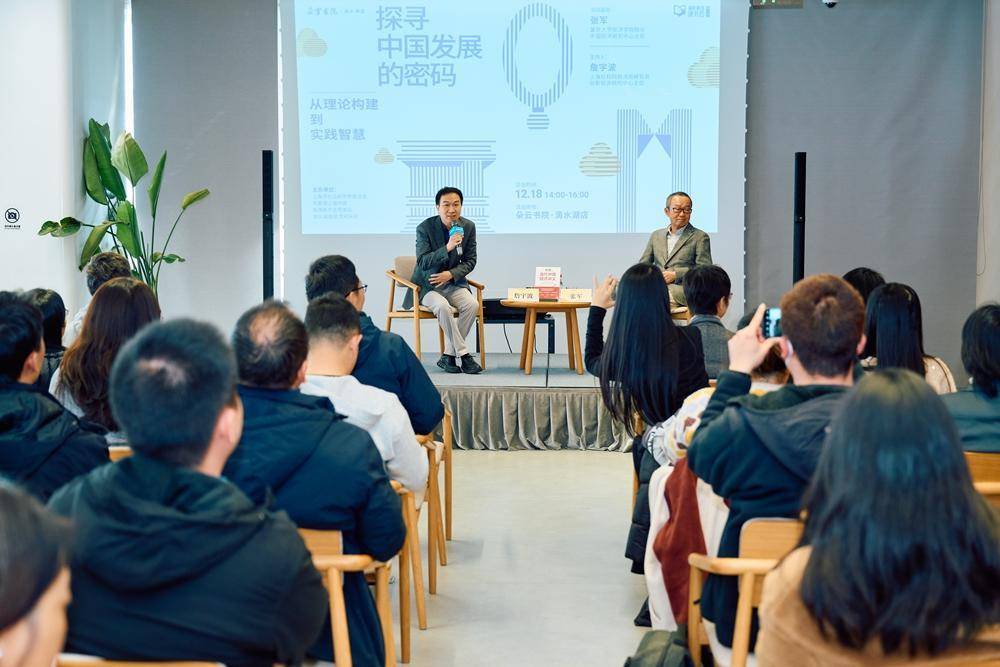
湖畔青创读书会在沪启幕 首期活动“探寻中国发展密码”
Sou Hu Cai Jing· 2025-12-18 15:32
Core Viewpoint - The "Lakeside Youth Innovation Reading Club" has been launched to foster deep dialogue on technology innovation and economic development, aiming to become a "thought router" in the Lingang tech innovation circle [1][3]. Group 1: Event Overview - The first event of the reading club focuses on "Exploring the Code of China's Development," featuring discussions between scholars Zhang Jun and Zhan Yubo on the relationship between technological innovation and economic growth [3][5]. - The reading club is initiated by several organizations, including the Shanghai Social Science Federation and the Shanghai Youth League, to promote interdisciplinary collaboration between technology and economy [1][3]. Group 2: Economic Insights - Zhang Jun's works, "Chinese Development Economics" and "Contemporary Chinese Economic Lectures," provide insights into China's economic rise, addressing key questions about reform paths and the importance of gradual reform over shock therapy [3][5]. - The discussion highlights the dual drivers of continuous innovation and favorable policies as essential for China's economic miracles, particularly in the context of emerging hard tech industries like AI and renewable energy [5][7]. Group 3: Youth Engagement - The reading club aims to address the concerns of young entrepreneurs and tech professionals, helping them navigate opportunities in emerging fields such as AI, metaverse, and robotics [7][9]. - Future events will include interactive Q&A sessions and will be held quarterly, with special sessions aligned with significant dates like World Book Day [7][9]. Group 4: Community and Knowledge Sharing - The Lingang New Area is positioned as a forefront for Shanghai's tech innovation, utilizing platforms like the reading club to integrate youth insights with theoretical and practical applications in the industry [9]. - A topic collection activity has been initiated to gather insights from local youth on cutting-edge fields, which may shape future discussions and events [9].