
物理AI

Search documents
中巴新能源巨头携手,物理AI助力巴西打造全球绿色能源枢纽
中国能源报· 2026-01-09 02:16
Core Viewpoint - The partnership between Envision Group and Casa dos Ventos marks a significant step in advancing renewable energy solutions in Brazil, focusing on wind energy and AI technology integration [1][3]. Group 1: Partnership Details - Envision Group signed a supply agreement for 630MW wind turbines and a 30-year service agreement with Casa dos Ventos, aimed at supporting new business demands in Brazil [1]. - The project will utilize the 8.x MW Galileo AI wind turbine, one of the largest wind turbines in Brazil, integrating advanced AI models for optimized performance [3]. Group 2: Strategic Collaboration - The collaboration will focus on digital management of the wind turbine lifecycle, energy storage, and comprehensive solutions for green hydrogen and ammonia [3]. - Both companies aim to enhance the local supply chain for wind turbines, promoting manufacturing, engineering services, and technical training in Brazil [3]. Group 3: Market Context - Brazil is a leader in renewable energy, with over 90% of its electricity generated from clean sources like hydropower, wind, and solar [3]. - The Brazilian government is pushing for a diversified energy structure, making non-hydropower renewable energy a key development area [3]. Group 4: Economic Impact - Casa dos Ventos is diversifying its revenue by focusing on contracts, self-generation, and new markets like data centers and green hydrogen [4]. - The partnership is expected to create green jobs and provide lasting socio-economic benefits while supporting Brazil's energy transition [4].

英伟达新一代Rubin平台 欲重构AI与世界的联结
Zhong Guo Jing Ying Bao· 2026-01-09 02:08
Core Insights - The main focus of the article is on NVIDIA's introduction of the Vera Rubin AI computing platform at CES 2026, highlighting its transition from a chip manufacturer to an AI infrastructure company [2][9]. Group 1: Rubin Platform Overview - The Rubin platform is NVIDIA's first AI platform that integrates six chips, including Vera CPU and Rubin GPU, and has fully entered production [4][5]. - The Rubin GPU shows significant performance improvements over the previous Blackwell GPU, with NVFP4 inference performance increasing to 50 PFLOPS (5 times), training performance to 35 PFLOPS (3.5 times), and HBM4 memory bandwidth to 22TB/s (2.8 times) [5]. - The design of the Vera Rubin NVL72 system allows for faster assembly of computing nodes, reducing assembly time from 2 hours to 5 minutes, while the system operates at 100% liquid cooling [7]. Group 2: AI Infrastructure and Storage Solutions - The introduction of the BlueField-4 DPU supports a new AI storage infrastructure, addressing the growing memory requirements for complex AI tasks [6]. - NVIDIA aims to become a major player in the storage market, not by building storage systems but through partnerships with companies like HP and Dell [6]. Group 3: Open Source Models and AI Applications - Open source models are gaining traction, with 25% of tokens generated from these models, and NVIDIA is leading the open source model ecosystem [2][8]. - The company has expanded its open source model ecosystem across six domains, including biomedical AI and robotics, showcasing the rapid advancement of open source models [8][10]. - The concept of "Physical AI" is emphasized, with NVIDIA's Cosmos model enabling AI to understand physical laws and perform reasoning tasks [9][10].

小鹏2026年第一弹:人形机器人今年要规模量产
Nan Fang Du Shi Bao· 2026-01-09 00:52
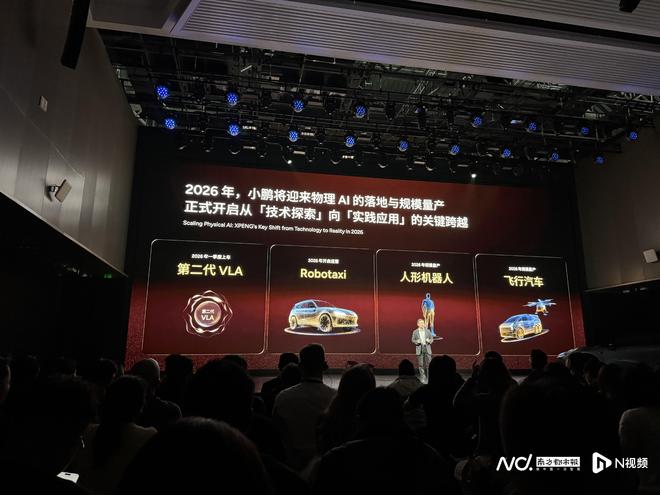
Core Insights - Xiaopeng Motors announced the commencement of physical AI's implementation and mass production phase at the 2026 global product launch, marking a significant transition from "technological exploration" to "practical application" [1] - The company revealed plans for four major physical AI applications and confirmed that the mass production version of its humanoid robot has completed initial debugging, set to begin mass production in 2026 [1] Group 1: Development and Technology - Xiaopeng Motors has been developing robotics for seven years, initially focusing on quadruped robots due to technological limitations, but shifted to humanoid robots as large model capabilities advanced [3] - The upcoming humanoid robot, IRON, features 82 degrees of freedom for movement and is equipped with three Turing AI chips, providing a computing power of 2250 TOPS [5] - IRON utilizes a high-level brain capability combination of "VLT+VLA+VLM" to achieve advanced intelligence in operations, walking, and interaction [5] Group 2: Market Position and Future Outlook - Xiaopeng's approach contrasts with traditional software-driven robots, focusing instead on AI-driven integration that allows for greater adaptability and generalization across various scenarios [5][7] - The company anticipates that the robotics industry will transition from early exploration to large-scale commercial applications between 2028 and 2038, with significant growth expected as technology matures [6][7] - The CEO expressed confidence that the market for robotics could reach $20 trillion, suggesting that sales could surpass those of automobiles in the future [7]


Arm成立物理AI部门,加注机器人赛道
Zheng Quan Shi Bao Wang· 2026-01-09 00:49
Core Insights - Arm Holdings has completed a restructuring and officially established a Physical AI department, merging its automotive and robotics businesses [1] - The company views robotics technology as a market with long-term growth potential [1] - The head of technology for the Physical AI department, Drew Henry, stated that Physical AI can fundamentally improve labor efficiency, save time, and potentially have a significant impact on GDP [1] - Arm's Chief Marketing Officer, Ami Badani, indicated plans to hire additional staff specifically focused on robotics technology [1]

小鹏2026第一卷:连发4款车,增程续航破纪录,Robotaxi和机器人今年量产
3 6 Ke· 2026-01-09 00:19
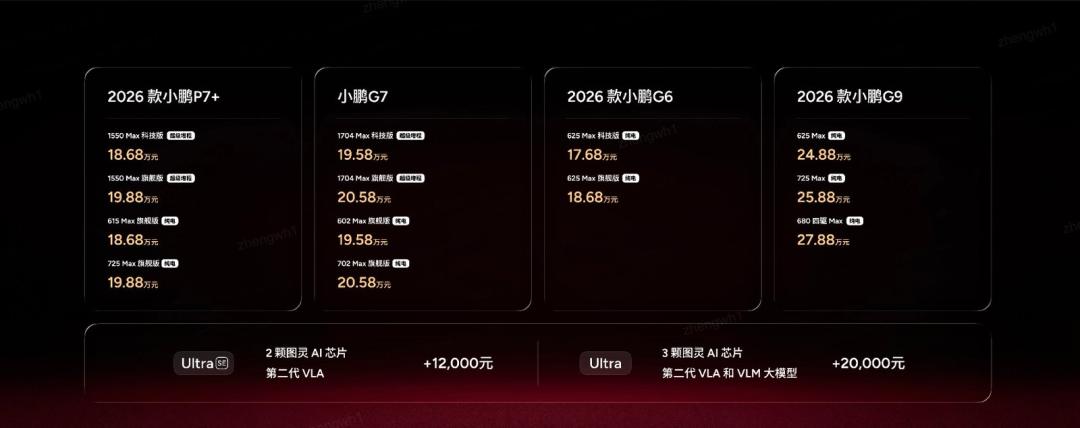
Core Insights - Xiaopeng Motors launched four new models, including the P7+ and G7 super range versions, as well as the 2026 versions of the G6 and G9, effectively introducing six new products [1] - The company emphasized two key themes for 2026: physical AI and globalization, indicating a shift from technology exploration to practical application [1] - The second-generation VLA (Vehicle Language Architecture) is set to enable L4 autonomous driving capabilities, with significant advancements in understanding the physical world [5][11] Product Launch Details - The P7+ features a 49.2 kWh battery with a pure electric range of 430 km and a combined range of 1550 km, making it the world's longest-range extended-range sedan [22] - The G7 super range version has a 55.8 kWh battery and a combined range of 1704 km, claiming the title of the longest-range SUV [24] - Both models utilize an 800V high-voltage platform and support ultra-fast charging, with the P7+ achieving 80% SOC in just 12 minutes [24][26] Technological Advancements - The second-generation VLA aims to eliminate the language translation step in autonomous driving, allowing for direct generation of action commands from visual signals [7] - The VLM (Vehicle Language Model) enhances the in-car experience by adapting to passenger needs, such as adjusting climate control based on passenger attire [15] - The new AIOS 6.0 system and VLM will be integrated into all new models, enhancing user interaction and driving experience [36] Market Strategy - Xiaopeng Motors is focusing on expanding its presence in international markets, particularly in regions less favorable to electric vehicles, by promoting its extended-range models [19] - The company has seen significant sales growth, with the X9 super range model achieving record pre-orders and sales in November [21] - The introduction of the P7+ and G7 models is part of a broader strategy to capture market share in both domestic and international markets [19][21] Future Outlook - The company plans to launch Robotaxi services and scale production of flying cars by 2026, indicating ambitious growth and innovation plans [3] - Xiaopeng Motors aims to establish itself as a leader in the autonomous driving space, with the second-generation VLA expected to bring significant advancements in driving capabilities [11]
21社论丨以人工智能赋能制造业,促进经济高质量增长
21世纪经济报道· 2026-01-09 00:18
Group 1 - The core viewpoint of the article emphasizes the acceleration of artificial intelligence (AI) integration into manufacturing, aiming for significant advancements in technology and industry scale by 2027, as outlined in the "Implementation Opinions" issued by multiple government departments [1] - The transition from "digital AI" to "physical AI" is highlighted, indicating a shift in public perception and application of AI from software to its integration in manufacturing processes [1][2] - The concept of "physical AI" is defined as intelligent systems that can understand and interact with the physical world, marking a new wave of AI that goes beyond mere information processing [2] Group 2 - The collaboration between hardware and software is projected to be a major trend in 2026, driven by the complex demands of manufacturing environments that require real-time, precise, and stable AI solutions [2] - AI is optimizing resource allocation across traditional industries, leading to cost reduction and efficiency improvements, while also giving rise to new business models, such as embodied intelligent robots in assembly lines [3] - The emphasis on the secure and reliable supply of core AI technologies is crucial for ensuring the resilience of industrial supply chains, especially in the context of a complex international environment [3]
观展手记:中国军团从配角到主角,从制造到定义|直击CES
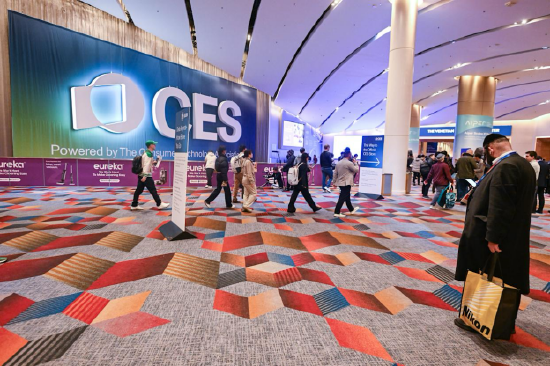
Xin Lang Cai Jing· 2026-01-09 00:15
Group 1: CES Overview - Las Vegas hosts over 22,000 commercial events annually, contributing more than $10 billion in revenue and attracting over 6 million visitors, accounting for one-seventh of the city's annual visitors [2][26] - The International Consumer Electronics Show (CES) is the most significant event, showcasing technological trends and industry shifts for nearly 60 years [2][26] Group 2: Technological Trends - The evolution of CES has followed a technology maturity curve, with significant trends including the rise of ultrabooks, consumer drones, smart home devices, and AI voice assistants [3][27] - The focus has shifted to embodied AI and humanoid robots, indicating a transition from novelty to serious commercial discussions [3][28] Group 3: Rise of Chinese Companies - Chinese exhibitors have dramatically increased their presence at CES, moving from peripheral areas to central exhibition halls, with over 1,300 companies participating this year [5][29] - In 2019, Chinese exhibitors peaked at approximately 30% of total participants, and despite pandemic interruptions, they have regained their status as the largest overseas group at CES [5][29] Group 4: Quality of Exhibits - Chinese companies won over 40% of the CES 2026 Innovation Awards, showcasing advancements in optical systems, AI algorithms, and materials science, reflecting a shift from assembly to core technology output [7][31] - The trajectory of Chinese exhibitors illustrates a transition from "manufacturing" to "defining" industry standards, emphasizing integrated hardware and software capabilities [7][31] Group 5: Lenovo's Tech World - Lenovo hosted its Tech World event at the Sphere, marking a significant moment in showcasing its industry position and technological strength [9][34] - The event featured prominent leaders from major tech companies, highlighting Lenovo's role in the global consumer electronics landscape [9][34] Group 6: Sponsorship and Marketing - FIFA President Gianni Infantino attended CES to support Lenovo and Hisense as official sponsors for the upcoming World Cups, emphasizing the integration of AI and technology in enhancing fan experiences [13][39] - Both companies are leveraging their sponsorships to elevate brand recognition and align with global sports marketing strategies [16][42] Group 7: Robotics Industry - Humanoid robots emerged as a key focus at CES 2026, showcasing advancements in AI and commercial viability, with costs reaching a threshold of $20,000 [17][45] - The competition in the robotics sector is intensifying among China, the U.S., and South Korea, with Chinese companies demonstrating a robust presence and commercial readiness [18][47] Group 8: Commercialization of Robotics - Chinese robotics firms are transitioning from showcasing prototypes to presenting commercially viable products, with 21 out of 38 exhibitors at CES being Chinese [20][47] - The industry is shifting focus from mere functionality to long-term operational capabilities, with significant government contracts indicating market validation [21][48]


早报|特朗普称心中已定美联储下任主席;万科郁亮辞去所有职务;海底捞回应锅里被扔尿不湿事件;雷军宣布小米未来5年研发再投2000亿
虎嗅APP· 2026-01-09 00:10
Group 1 - The next Federal Reserve chairman is yet to be announced, but President Trump has indicated he has a decision in mind [2] - Minimax's IPO in Hong Kong saw a subscription rate of 1,837.17 times for retail investors, raising a total of 4.8 billion HKD [3] - Apple is reportedly accelerating succession planning for CEO Tim Cook, with potential internal candidates being groomed for the role [4] Group 2 - Nestlé (China) is under scrutiny for recalling specific batches of infant formula following preventive measures taken in Europe [5] - Trump claims the U.S. has begun profiting from Venezuelan oil resources, expecting to control the country long-term [6][7] - OpenAI has acquired the core team of executive coaching AI tool Convogo to enhance its AI cloud business [8] Group 3 - Vanke's executive vice president, Yu Liang, has resigned due to retirement [10] - Huiyuan Group has announced plans to regain control of the Huiyuan brand amid disputes with its restructuring party [11] - Sinopec and China Aviation Oil are undergoing a restructuring process approved by the State Council [12] Group 4 - Wang Teng, former Xiaomi executive, has founded a new company named "Today Yixiu" focused on sleep health products [15] - IKEA China will close seven stores starting February 2, citing a need for resource reallocation and efficiency improvement [21][22] - Aima Technology has faced rumors of significant layoffs, but the company claims the adjustments are normal and not as severe as reported [23] Group 5 - Shanghai Mobile has denied allegations of pressuring employees to disconnect customers' internet services for revenue generation [24] - MiniMax is set to list on the Hong Kong Stock Exchange today, with shares priced at the upper limit of 165 HKD [25] - The Shanghai Futures Exchange is implementing measures to cool down the silver futures market due to overheating [26]



黄仁勋CES最新演讲:这,是所有人的机会
Sou Hu Cai Jing· 2026-01-08 23:23
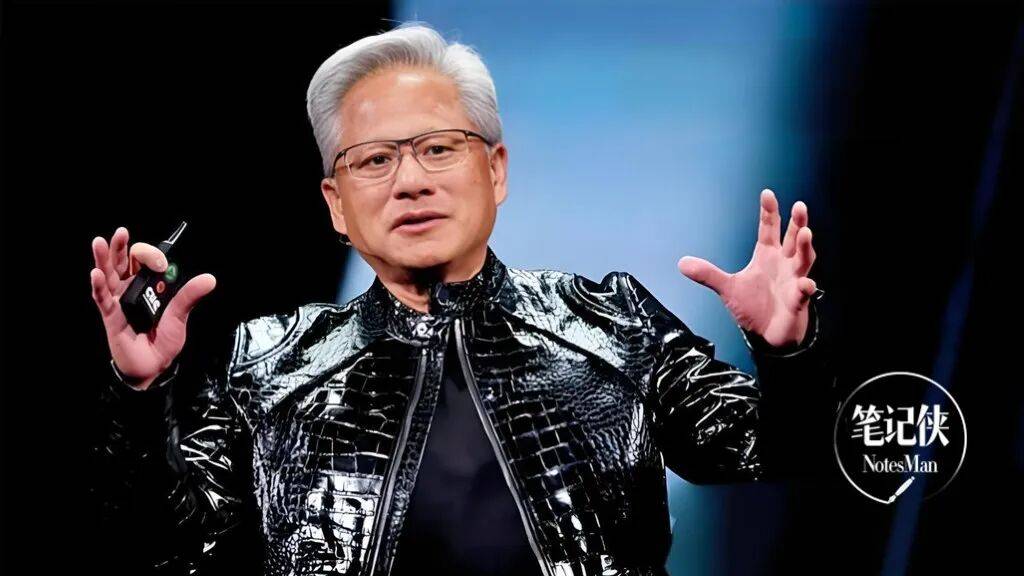
Core Insights - AI is transitioning from being a tool to becoming an integral part of all software applications, indicating a significant shift in how technology is utilized in various industries [3][4] - The concept of "double relocation" in AI signifies that it is moving from traditional applications to a new paradigm that includes both physical and digital environments [2][4] - The emergence of open-source models is democratizing AI, allowing a wider range of participants, including startups and researchers, to engage in AI development [5][8] Group 1: AI's Evolution - AI is no longer just a tool but is becoming foundational to all software, indicating a shift in application development [3] - The technology stack for software development is being completely overhauled, moving from CPU-based programming to GPU-based training, which allows for more dynamic and context-aware applications [4] - The modernization of approximately $10 trillion worth of computing infrastructure is underway to accommodate this new AI-driven approach, with significant venture capital flowing into this transformation [4] Group 2: Open-Source Models - The introduction of open-source models, such as DeepSeek R1, has sparked widespread interest and participation in AI development across various sectors [6][8] - The rapid growth in the download of open-source models indicates a global enthusiasm for AI, with contributions from startups, large companies, and academic institutions [8][9] - Open-source initiatives are seen as crucial for building trust among developers and fostering innovation in the AI space [9] Group 3: Physical AI - AI is evolving from being a digital assistant to a physical worker, capable of understanding and interacting with the real world [10][11] - The development of "physical AI" involves training AI to comprehend physical laws and realities, which is essential for applications like autonomous driving and robotics [11][12] - NVIDIA's Cosmos platform is designed to generate synthetic data for training AI in real-world scenarios, enhancing its ability to perform tasks in various environments [13][14] Group 4: Computational Power Upgrade - The introduction of the Rubin platform aims to address the challenges of computational power and cost associated with AI, significantly improving training efficiency and reducing operational costs [20][22] - Key advantages of the Rubin platform include a fourfold increase in training speed, a tenfold reduction in token costs, and a sixteenfold increase in context memory, enabling more complex tasks without loss of information [23][25][26] - The platform is designed to enhance energy efficiency, allowing for greater computational output with lower energy consumption, which is critical for the sustainability of AI operations [28][35] Group 5: Industry Insights - NVIDIA's CEO emphasizes the importance of competition, particularly from Chinese AI chip companies, as a driving force for innovation and improvement within the company [30][32] - The advice for robotics startups includes focusing on either broad technologies applicable across various sectors or specializing in specific verticals to create competitive advantages [33][34] - The energy demands of AI operations are acknowledged, with a focus on improving energy efficiency to ensure sustainable growth in the industry [35][36]
21社论丨以人工智能赋能制造业,促进经济高质量增长
Xin Lang Cai Jing· 2026-01-08 23:08
Group 1 - The core viewpoint of the news is that the Chinese government is accelerating the integration of artificial intelligence (AI) into the manufacturing sector, aiming for significant advancements in AI technology and its application by 2027 [1][3] - The "Implementation Opinions" issued by multiple departments emphasize the importance of ensuring the safe and reliable supply of key core technologies in AI, particularly in the context of a complex international environment [3] - The transition from "digital AI" to "physical AI" is highlighted as a critical shift, indicating that AI is moving beyond software applications to become integral in manufacturing processes [1][2] Group 2 - NVIDIA's CEO Jensen Huang discussed the trend of "physical AI" at CES 2026, describing it as a new wave of AI that interacts with the physical world, enhancing the capabilities of industrial systems [2] - The integration of hardware and software is expected to be a major trend in 2026, driven by the demands of complex manufacturing environments that require real-time, precise, and stable AI solutions [2] - AI is optimizing resource allocation across traditional industries, leading to cost reduction and efficiency improvements, while also giving rise to new business models such as embodied intelligent robots in assembly lines [3]