
PMI

Search documents
国庆长假将至,做好假期风险管理
Hua Tai Qi Huo· 2025-09-28 09:46
1. Report Industry Investment Rating No relevant content provided. 2. Core Viewpoints of the Report - During the upcoming National Day holiday (October 1 - 8), the market has certain seasonal patterns, such as the risk of pre - holiday adjustment in the stock index and post - holiday upward movement, and pre - holiday depreciation and post - holiday repair of the RMB exchange rate. Gold has a relatively low risk for holding positions during the holiday, and there may be opportunities in commodity sectors like coking coal, steel, and non - metallic building materials in the month after the holiday [1]. - The gap between strong domestic expectations and weak reality has intensified. In August, China's economic data showed signs of weakness, and external tariff pressure increased. Recently, the government has frequently mentioned pro - growth policies, and attention should be paid to post - holiday policy expectations and the possible correction of the current "off - peak in peak season" expectation [1]. - The outlook for US inflation is clearer. The US economic data in August shows a mixed picture, with the ISM manufacturing index in contraction, CPI rising, PPI falling, and employment data underperforming expectations, which further supports the Fed's interest rate cut. The Fed has cut interest rates by 25 basis points, and the subsequent interest rate cut cycle is expected to be smooth. Meanwhile, the risk of a US government shutdown has increased, and the US has imposed additional tariffs [2]. - In the commodity market, the black and new energy metal sectors are sensitive to domestic supply - side factors, while precious metals and agricultural products are related to overseas inflation expectations. Different commodity sectors have different fundamentals and investment opportunities [3]. 3. Summary by Relevant Catalogs Market Analysis - **Holiday Risk Management**: During the National Day holiday, there are 6 overseas trading days. Historically, the stock index has a risk of pre - holiday adjustment and post - holiday rise, and the RMB exchange rate has a pattern of pre - holiday depreciation and post - holiday repair. Gold has a low risk for holding positions during the holiday, and post - holiday opportunities can be found in coking coal, steel, and non - metallic building materials. Important events during the holiday include the US government's temporary spending bill, US September non - farm payroll data, and the OPEC+ meeting [1]. - **Domestic Economic Situation**: In August, China's economic data showed "slow industry, weak investment, and sluggish consumption". External tariff pressure increased, and the government has frequently mentioned pro - growth policies. Attention should be paid to post - holiday policy expectations and the possible correction of the "off - peak in peak season" expectation [1]. US Economic Situation - **Inflation and Interest Rates**: The US ISM manufacturing index in August was in contraction for the sixth consecutive month, with new orders improving and the price index falling again. The CPI rose to 2.9% year - on - year, while the PPI growth slowed. The employment data was worse than expected, supporting the Fed's interest rate cut. The Fed cut interest rates by 25 basis points, and the subsequent interest rate cut cycle is expected to be smooth [2]. - **Other Economic Indicators**: The US retail sales in August increased by 0.6% month - on - month, and new home sales unexpectedly soared to an annualized 800,000 units. The risk of a US government shutdown has increased, and the US has imposed additional tariffs on various imported products [2]. Commodity Market - **Black and New Energy Metal Sectors**: These sectors are sensitive to domestic supply - side factors. The black sector is still dragged down by downstream demand expectations, and attention should be paid to the "anti - involution" situation. The long - term supply limitation in the non - ferrous sector has not been alleviated, but the marginal supply has slightly increased recently [3]. - **Precious Metals and Agricultural Products**: Precious metals and agricultural products are related to overseas inflation expectations. Although gold experienced "selling on the fact" after the Fed's interest rate cut, it is still expected to strengthen due to the de - dollarization trend and the interest rate cut cycle. Agricultural products are driven by tariffs and inflation expectations in the short term but need fundamental support and are subject to Sino - US negotiation disturbances [3]. - **Energy and Chemical Sectors**: The medium - term fundamental supply of energy is considered relatively loose, as OPEC+ plans to increase production in October. In the chemical sector, the "anti - involution" space of products like methanol, PVC, caustic soda, and urea is worth noting [3]. Strategy - For commodities and stock index futures, it is recommended to allocate long positions in industrial products and precious metals at low prices [4]. Macroeconomic Data - **US Economic Heat Map**: It shows various economic indicators such as GDP growth, investment, employment, inflation, consumption, fiscal revenue and expenditure, and trade from January 2024 to September 2025, reflecting the overall economic situation of the US [7]. - **European Economic Heat Map**: Presents data on GDP growth, industrial confidence, investment, employment, consumption, inflation, trade, credit, and fiscal surplus in Europe from October 2024 to September 2025 [8]. - **Chinese Economic Heat Map**: Displays China's GDP growth, trade, investment, consumption, inflation, financial, and fiscal data from September 2024 to August 2025, showing the characteristics of China's economic operation [9].
冠通期货早盘速递-20250924
Guan Tong Qi Huo· 2025-09-24 10:27
Group 1: Economic Data - In August, the total social electricity consumption reached 1015.4 billion kWh, a year-on-year increase of 5%. The national manufacturing electricity consumption in the same month increased by 5.5% year-on-year, the highest this year [2] - The OECD's mid-term outlook report predicts that the global economic growth rate in 2025 will be 3.2%, an upward revision of 0.3 percentage points from the June forecast, and the 2026 forecast remains at 2.9%. The economic growth forecasts of the US, Eurozone, Japan, and the UK for this year have been slightly raised [2] - The preliminary value of the US S&P Global Manufacturing PMI in September was 52, in line with expectations, and the final value in August was 53. The preliminary value of the Services PMI was 53.9, and the preliminary value of the Composite PMI was 53.6, both lower than expected and at a three-month low [2] - In September, the arrival volume of imported soybeans in China remained high. The soybean crushing volume of major oil mills in the country has remained above 2.3 million tons for four consecutive weeks, and this week's crushing volume is expected to be around 2.4 million tons. As of September 19, the soybean meal inventory of major oil mills has exceeded 1.2 million tons, and it is expected to rise above 1.25 million tons by the end of September [2] Group 2: Project News - The first-phase lithium carbonate project of Luopu Xihai New Energy Materials Co., Ltd. was put into operation. The total investment of the project is 4.6 billion yuan. After the first phase reaches full production, it can process 300,000 tons of lithium concentrate annually and produce 30,000 tons of battery-grade lithium carbonate [3] Group 3: Plate Performance - Key focus: urea, Shanghai copper, soybean meal, crude oil, plastic [4] - Night trading performance: non-metallic building materials 2.58%, precious metals 32.68%, oilseeds 10.34%, soft commodities 2.53%, non-ferrous metals 18.74%, coal, coke, steel, and minerals 13.97%, energy 3.01%, chemicals 11.88%, grains 1.05%, agricultural and sideline products 3.23% [4] Group 4: Plate Position - The chart shows the position changes of commodity futures plates in the past five days [6] Group 5: Performance of Major Asset Classes | Category | Name | Daily Change (%) | Monthly Change (%) | Year-to-Date Change (%) | | --- | --- | --- | --- | --- | | Equity | Shanghai Composite Index, SSE 50 | -0.18, -0.09 | -0.94, -1.91 | 14.02, 8.74 | | | CSI 300 | -0.06 | 0.51 | 14.86 | | | CSI 500 | -0.61 | 1.94 | 25.41 | | | S&P 500 | -0.55 | 3.04 | 13.18 | | | Hang Seng Index | -0.70 | 4.31 | 30.40 | | | German DAX | 0.36 | -1.22 | 18.60 | | | Nikkei 225 | 0.00 | 6.50 | 14.03 | | | UK FTSE 100 | -0.04 | 0.39 | 12.85 | | Fixed Income | 10-year Treasury Bond Futures | -0.21 | -0.09 | -1.11 | | | 5-year Treasury Bond Futures | -0.13 | 0.10 | -0.86 | | | 2-year Treasury Bond Futures | -0.05 | -0.07 | -0.61 | | Commodity | CRB Commodity Index | 0.00 | -1.52 | 0.35 | | | WTI Crude Oil | 2.22 | -0.61 | -11.48 | | | London Spot Gold | 0.46 | 9.17 | 43.40 | | | LME Copper | 0.21 | 0.92 | 13.80 | | | Wind Commodity Index | 0.94 | 11.20 | 28.57 | | Other | US Dollar Index | -0.08 | -0.63 | -10.37 | | | CBOE Volatility Index | 0.00 | 4.82 | -7.20 | [8]
Nasdaq Tumbles Over 200 Points As Nvidia Shares Decline: Investor Sentiment Falls, But Fear Index Remains In 'Greed' Zone
Benzinga· 2025-09-24 04:39
Market Sentiment - The CNN Money Fear and Greed index showed a decline in overall market sentiment, remaining in the "Greed" zone with a reading of 61.7, down from 62.3 [5] - U.S. stocks settled lower, with the Nasdaq Composite falling more than 200 points and the S&P 500 ending a three-day winning streak [1] Economic Indicators - The S&P Global U.S. Composite PMI slowed to 53.6 in September from 54.6 in August, indicating softer growth in services and manufacturing [2] - The U.S. current account deficit decreased by 42.9% to $251.3 billion in the second quarter [2] Sector Performance - Most sectors on the S&P 500 closed positively, with energy, real estate, and utilities stocks showing the biggest gains [3] - Information technology and consumer discretionary stocks closed lower, bucking the overall market trend [3] Company Earnings - Investors are awaiting earnings results from Cintas Corp., Thor Industries Inc., and KB Home [4]


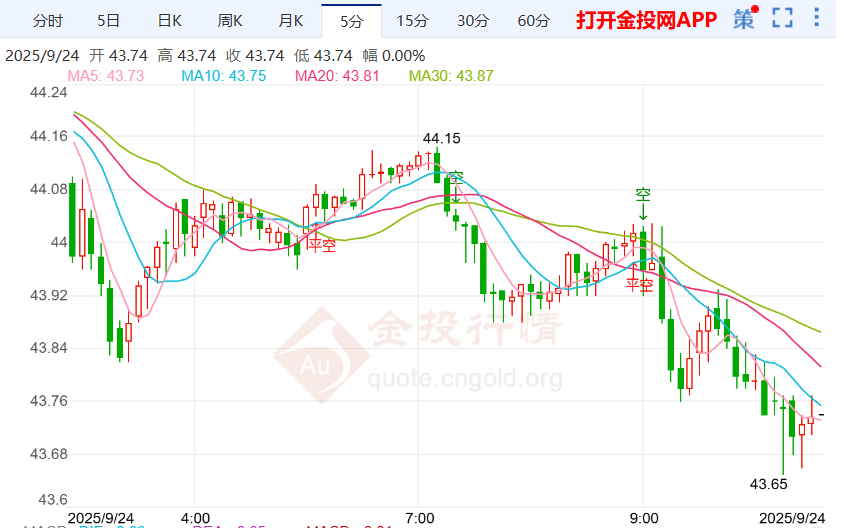
伦敦银空头态势增强 美国9月PMI数值符合预期
Jin Tou Wang· 2025-09-24 03:31
周二公布的美国9月标普全球服务业PMI初值录得53.9,低于市场预期54,前值位54.5;美国9月标普全球制造业PMI初值 录得52,符合市场预期,前值位53。 标普全球首席经济学家威廉姆森表示,9月份产出进一步强劲增长,为美国企业今年迄今表现最好的一个季度画上了圆 满的句号。PMI调查数据与美国经济第三季度2.2%的年化增长率一致。然而,月度数据显示,经济增长已从7月份的近 期峰值放缓,9月份企业也缩减了招聘,未来生产面临一些下行风险。需求疲软的情况限制了企业定价权。尽管关税再 次被认为是制造业和服务业投入成本上升的一个驱动因素,但能够提高销售价格并将这些成本转嫁给客户的公司数量有 所下降,这暗示利润率受到挤压,但对通胀放缓是个好兆头。制造业方面也有迹象表明,令人失望的销售增长已导致库 存以前所未有的速度积累,这也可能在未来几个月进一步帮助缓解通胀。尽管如此,调查数据仍表明,未来几个月消费 者通胀仍将高于央行2%的目标。 美联储主席鲍威尔表示,关税对消费者通胀的影响"并非主要因素",我们预计关税将是一次性传导效应,到明年年底就 会结束。我们从不考虑政治因素。很多人不相信我们,很多人说我们是出于政治动机,这纯 ...


欧元区PMI分化欧元获支撑
Jin Tou Wang· 2025-09-24 03:03
Group 1 - The core viewpoint of the articles indicates a divergence in the Eurozone's economic performance, with services outperforming manufacturing, leading to a mixed economic outlook [1] - The Eurozone's September PMI preliminary value shows a significant split, with services rising to 51.4, surpassing the expected 50.5, while manufacturing fell to 49.5 from 50.7, indicating contraction [1] - Germany's manufacturing PMI dropped to 48.5, below the neutral line, while services rebounded to 52.5, reflecting strong domestic demand [1] - France's economic indicators show weakness, with manufacturing PMI declining to 48.1 and services dropping to 48.9, suggesting greater economic pressure [1] - Overall, the Eurozone economy remains on the edge of moderate expansion, with service sector performance offsetting ongoing manufacturing weakness, alleviating some concerns about a deep recession [1] Group 2 - The Euro to USD exchange rate is stabilizing above the simple moving average (SMA) support at around 1.1730, indicating a mild bullish trend [2] - The 100-day and 200-day simple moving averages are rising steadily below the short-term averages, aligning with limited demand for the USD [2] - Short-term momentum indicators show a neutral overall trend, with the relative strength index (RSI) slightly retreating to around 53 [2] - The Euro to USD is trading above all moving averages, with the 20-period simple moving average providing intraday support at approximately 1.1770 [2]
大越期货沪铜周报-20250922
Da Yue Qi Huo· 2025-09-22 03:46
1. Report Industry Investment Rating - No information about the industry investment rating is provided in the report. 2. Core Viewpoints - Last week, Shanghai copper prices rose first and then fell. The main contract of Shanghai copper decreased by 1.42%, closing at 79,910 yuan/ton. Geopolitical factors and US tariff issues affected copper prices, and global instability persists. Domestically, the consumption season is approaching, but downstream consumption willingness is average. In the industrial sector, domestic spot trading is mediocre, mainly driven by rigid demand. In terms of inventory, LME copper inventory was 148,875 tons, with a slight decrease last week, while SHFE copper inventory increased by 11,760 tons to 105,814 tons compared to the previous week [3]. - The copper market will be in a tight balance in 2024 and face an oversupply in 2025 [10]. 3. Summary by Relevant Catalogs 3.1 Market Review - Last week, the main contract of Shanghai copper decreased by 1.42%, closing at 79,910 yuan/ton. Geopolitical factors and US tariff issues affected copper prices, and global instability persists. Domestically, the consumption season is approaching, but downstream consumption willingness is average. In the industrial sector, domestic spot trading is mediocre, mainly driven by rigid demand. LME copper inventory was 148,875 tons, with a slight decrease last week, while SHFE copper inventory increased by 11,760 tons to 105,814 tons compared to the previous week [3]. 3.2 Fundamentals 3.2.1 PMI - No specific content about PMI is provided in the report. 3.2.2 Supply - Demand Balance - The copper market will be in a tight balance in 2024 and face an oversupply in 2025. The Chinese annual supply - demand balance table shows production, import, export, apparent consumption, actual consumption, and supply - demand balance data from 2018 to 2024 [10][13]. 3.2.3 Inventory - Exchange inventory is in the process of destocking, and bonded area inventory remains at a low level [14][18]. 3.3 Market Structure 3.3.1 Processing Fees - Processing fees are at a low level [21]. 3.3.2 CFTC Positions - There is an outflow of non - commercial net long positions in CFTC [23]. 3.3.3 Futures - Spot Price Spread - No specific content about the futures - spot price spread is provided in the report. 3.3.4 Import Profits - No specific content about import profits is provided in the report. 3.3.5 Warehouse Receipts - No specific content about warehouse receipts is provided in the report.
Markets Weekly Outlook - PMI And PCE In The Spotlight As U.S. Dollar Remains Sensitive To U.S. Labor Data
Seeking Alpha· 2025-09-20 07:10
Group 1 - The article does not provide any specific content related to a company or industry, as it appears to be a technical issue regarding browser settings and ad-blockers [1]
经济继续修复筑底 消费和投资仍需加力
Jing Ji Guan Cha Wang· 2025-09-19 15:51
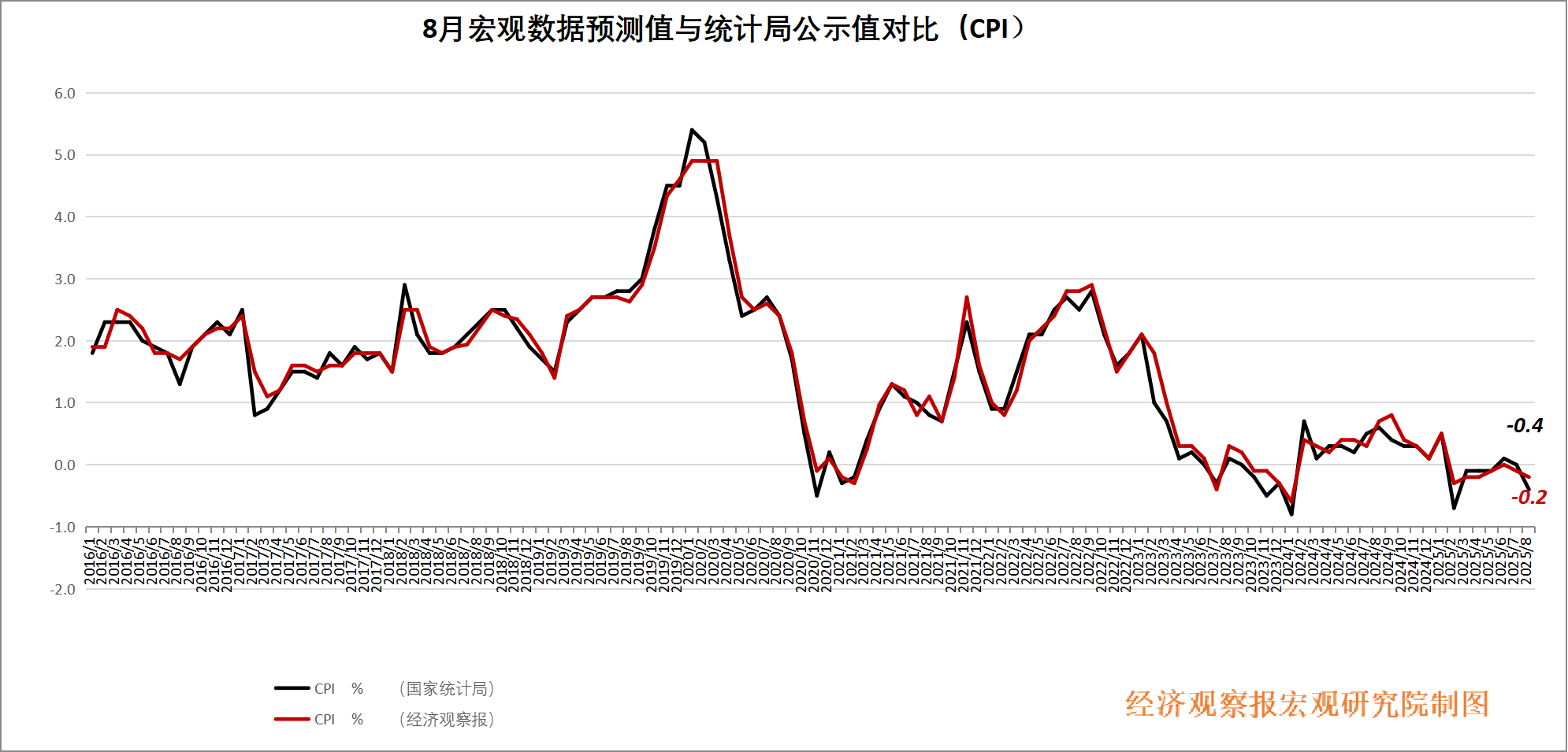
Economic Overview - The economy is in a critical phase of bottoming out and recovery, with some indicators showing marginal improvement, but still facing multiple challenges [1] - Consumer internal momentum is weak, with household credit affected and housing prices expected to face significant downward pressure in Q4 [1] - Key factors for financial data improvement include corporate profitability and fiscal stimulus [1] CPI Analysis - August CPI year-on-year growth decreased to -0.4%, down from 0%, with a month-on-month change remaining flat [4] - Pork prices fell by 0.5% month-on-month, while egg prices increased by 1.5%, below the seasonal average [4] - Future CPI trends will depend on pork price stability, overall food price stability, supply-demand challenges, and weak consumer internal momentum [4] PPI Insights - August PPI year-on-year growth improved to -2.9% from -3.6%, marking the highest level since May [7] - The month-on-month PPI remained flat, ending an eight-month decline, influenced by improved supply-demand relationships in some sectors [7][8] - Expectations for PPI in October suggest a narrowing decline to -2.6%, with potential recovery in Q4 [8] PMI Developments - August manufacturing PMI rose to 49.4%, indicating slight recovery in both supply and demand sides [11] - New orders and export orders showed minor increases, but overall demand recovery remains weak [11] - Production activities are expanding, with positive business expectations continuing [11] Fixed Asset Investment - Fixed asset investment growth slowed to 0.5% year-on-year, down from 1.6% [15] - Real estate investment continues to decline, with signs of improvement in new home sales [15] - Manufacturing investment is constrained by tariff disruptions and internal competition policies [15] Credit and Financial Data - New credit in August was 590 billion yuan, a significant increase from a negative value in the previous month [18] - Corporate loans showed divergence, with short-term loans increasing significantly [18] - Overall financial data reflects a pattern of government debt supply reduction and insufficient credit demand [18] M2 Growth - M2 growth remained steady at 8.8% year-on-year, with a slight decrease in the M2-M1 spread [21] - Government debt financing has been a key factor in maintaining M2 and social financing growth [21] - Future M2 growth may face challenges due to reduced government debt financing and insufficient loan demand [21]
博弈加剧,延续震荡
Hong Yuan Qi Huo· 2025-09-15 07:10
Report Title - The report is titled "Black Metal Weekly - Steel Products" [1] Report Date - The report is dated September 15, 2025 [3] Industry Investment Rating - No industry investment rating is provided in the report Core Viewpoint - The game in the steel market intensifies, and the market will continue to fluctuate. After the military parade, the supply pressure quickly rebounds due to the recovery of production. The current supply - demand gap remains at a relatively high level, lacking the impetus for a rebound. After the contraction of ton - steel profit, the driving force for further decline slows down, and the raw material varieties are significantly differentiated. In the short term, it is still mainly about squeezing profits, and the difficulty of unilateral operation increases. Attention should be paid to the cost fluctuations, and cautious operation is recommended [6][8] Summary by Relevant Catalogs 1. Supply and Demand Fundamentals Price - As of Friday, the price of rebar in East China's Shanghai was 3190 yuan/ton, down 10 yuan/ton week - on - week; the price of hot - rolled coil in Shanghai was 3400 yuan/ton, up 30 yuan/ton week - on - week [7] Production - As of September 11, the overall output of five major steel products decreased by 3.41 tons. The output of rebar decreased by 6.75 tons, and the output of hot - rolled coil increased by 10.9 tons. The 247 - steel - enterprise blast furnace capacity utilization rate was 90.2% on September 12, up 5.12% from September 5, and the daily average molten iron output was 240.6 tons, up 5.12% [7][12][42] Inventory - As of September 11, the factory inventory of five major steel products decreased by 3.5 tons, and the social inventory increased by 17.41 tons. The rebar factory inventory was 166.63 tons (-4.71), the social inventory was 487.23 tons (+18.57), and the total inventory was 653.86 tons (+13.86). The hot - rolled coil factory inventory increased by 0.9 tons, the social inventory decreased by 1.92 tons, and the total inventory decreased by 1.02 tons [7][12][72] Demand - The apparent demand for five major steel products was 843.33 tons, up 15.5 tons week - on - week. The apparent demand for hot - rolled coil was 326.16 tons, up 20.8 tons week - on - week [7][75] Scrap Steel - As of September 11, the price of scrap steel in Zhangjiagang was 2080 yuan/ton, up 10 yuan/ton week - on - week. The capacity utilization rate of 89 independent electric arc furnace enterprises was 35.1%, up 1 percentage point. The daily consumption of 255 sample steel mills was 54.7 tons, up 0.62 tons. The daily arrival of 255 sample steel mills was 48.5 tons, down 2.04 tons (a 4% decrease), and the scrap steel inventory of 255 steel enterprises was 428.5 tons, down 14.07 tons (a 3.2% decrease) [8] 2. Macroeconomic Data Steel Output - In 2024, the national crude steel output was 1.005 billion tons, a decrease of 13.99 million tons (a 1.7% decrease) compared with 2023; the pig iron output was 852 million tons, a decrease of 13.27 million tons (a 2.3% decrease) compared with 2023. From January to July 2025, the cumulative pig iron output was 506 million tons, a decrease of 1.3% compared with the same period in 2024, and the cumulative crude steel output was 595 million tons, a decrease of 3.1% compared with the same period in 2024 [18] Financial Data - In July 2025, the newly - added medium - and long - term loans of enterprises (institutions) decreased by 39 billion yuan year - on - year, and the newly - added scale turned negative for the first time since September 2016 [20] PMI - The PMI in August 2025 was 49.4% [23] Investment Data - From January to July 2025, the national fixed - asset investment (excluding rural households) was 2.88229 trillion yuan, a year - on - year increase of 1.6%. In July, infrastructure investment (excluding electricity, heat, gas, and water production and supply industries) decreased by 5.07% year - on - year, manufacturing investment decreased by 0.25% year - on - year, and real estate development investment decreased by 17% [26] Real Estate Data - From January to July, the floor area under construction of real estate development enterprises was 6.38731 billion square meters, a year - on - year decrease of 9.2%, the newly - started floor area was 352.06 million square meters, a year - on - year decrease of 19.4%, and the completed floor area was 250.34 million square meters, a year - on - year decrease of 16.5% [29] 3. Arbitrage Strategy Tracking - The spread between hot - rolled coil and rebar remained at a high level this week [39]
金融周报:股市高位震荡,股指观望债回暖-20250915
Guo Xin Qi Huo· 2025-09-15 03:56
1. Report Industry Investment Rating - Not provided in the report 2. Core View of the Report - Stock index fluctuations increase and bonds recover. Stock index futures should be put under observation, and light long positions in treasury bond futures are recommended [121][123][124] 3. Summary According to the Table of Contents 3.1 Market Review - **1.1 Shanghai Stock Exchange 50 (SSE 50) and CSI 300 Market Review**: The SSE 50 is approaching a new high, and the CSI 300 has reached a new high [9] - **1.2 CSI 500 and 10 - year Treasury Bond Market Review**: The CSI 500 has reached a new high, and treasury bond futures have rebounded slightly [15][16] 3.2 Market Momentum Analysis - **2.1.1 Trading Volume of SSE 50 and CSI 300**: The trading volume of the SSE 50 has declined, while that of the CSI 300 has increased [21] - **2.1.2 Trading Volume of CSI 500 and CSI 1000**: The trading volumes of the CSI 500 and CSI 1000 have declined [25] - **2.1.2 Margin Trading Balance**: The margin trading balance exceeds 2 trillion [29] - **2.1.3 Turnover Rate - Free - Float Market Capitalization**: The turnover rates of the SSE 50 and CSI 300 have increased, and those of the CSI 500 and CSI 1000 have increased significantly [32] - **2.2.1 CSI 300 Sector**: The sectors are relatively consistent [39] - **2.2.2 CSI 300 Sector ALPHA**: The ALPHA values of the materials, information, and telecommunications sectors are positive, while those of the energy, finance, and utilities sectors are negative over the full cycle [43] - **2.3 Newly Listed Companies**: In July, the number of listed companies increased by 3 [49] - **2.4.1 Stock Index Positions**: Not elaborated in the provided content - **2.4.2 Stock Index Premium or Discount**: Not elaborated in the provided content - **2.5.2 Treasury Bond Basis - Cheapest - to - Deliver Bond**: Not elaborated in the provided content 3.3 Fundamental Analysis - **3.1.1 Open Market Operations**: Not elaborated in the provided content - **3.1.2 Treasury Bond Yield to Maturity - CSI**: Not elaborated in the provided content - **3.1.2 Treasury Bond Futures (10 - year) IRR**: The IRR of the next - quarter 10 - year treasury bond futures has declined significantly [84] - **3.1.2 Treasury Bond Futures (5 - year) IRR**: The IRR of the next - quarter 5 - year treasury bond futures is stable [87] - **3.1.3 Inter - bank Repo Rate**: The inter - bank repo rate has declined slightly [91] - **3.1.4 Shibor**: The short - term Shibor has declined significantly [95] - **3.2.1 CPI - PPI**: In August, the CPI was - 0.4%, showing a slight recovery, and the PPI growth rate reached - 2.9% [99] - **3.2.2 Manufacturing and Non - manufacturing Activities**: In August, the PMI dropped to 49.4, and the non - manufacturing PMI was 50.3, indicating weak economic recovery [103] - **3.3.1 Consumption Situation**: In July 2025, the year - on - year growth rate of total retail sales of consumer goods was 3.7%, showing a slight increase [108] - **3.3.2 Consumer Confidence**: Consumer confidence is on a downward trend [111] - **3.4.1 Overall Money Supply**: In August, the year - on - year growth rate of M2 was 8.8%, credit accelerated, and M1 was 6% (Note: The central bank revised the M1 indicator). The newly added RMB loans in August were 590 billion [113][115] - **3.4.2 Newly Added RMB Loans**: Not elaborated in the provided content 3.4 Outlook for the Future - **Stock Index Futures**: The stock market trading volume is at the level of 2.5 trillion. Market sentiment shows that the number of limit - up stocks exceeds 100, and the number of falling stocks increases significantly. Hot sectors such as AI, the chip industry chain, and communications are experiencing significant high - level fluctuations. Funds are flowing into low - valuation sectors. Institutions have net inflows, while the main players, large - scale investors, and retail investors all have net outflows. Stock market fluctuations increase, and stock index futures should be put under observation [123] - **Treasury Bond Futures**: At the money market level, the central bank has a net reverse - repurchase injection of 196.1 billion. The money liquidity is relatively sufficient, and domestic market interest rates remain low. The yield to maturity of 10 - year treasury bonds fluctuates around 1.7895%. With significant stock market fluctuations, investors' risk preferences may be more cautious, and light long positions in treasury bond futures are recommended [124]