景区服务业

Search documents
高技术制造业PMI连续两个月为52.0%及以上 新动能延续扩张态势
Jing Ji Ri Bao· 2026-02-01 01:30
Group 1: Manufacturing Sector - In January 2026, the Manufacturing Purchasing Managers' Index (PMI) was reported at 49.3%, indicating a decline of 0.8 percentage points from the previous month, reflecting a decrease in economic activity [1] - The production index stood at 50.6%, indicating continued expansion, while the new orders index fell to 49.2%, suggesting a drop in market demand [2] - High-tech manufacturing PMI was at 52.0%, remaining above 52.0% for two consecutive months, indicating a positive trend in related industries [2] Group 2: Non-Manufacturing Sector - The Non-Manufacturing Business Activity Index was reported at 49.4%, down 0.8 percentage points from the previous month, indicating a general decline in the sector's economic performance [4] - The financial services sector showed strong performance with a business activity index exceeding 65%, providing a favorable financing environment for growth [4] - The service sector's business activity expectation index rose to over 57%, indicating optimism regarding the impact of the upcoming Spring Festival on service-related consumption [4][5] Group 3: Economic Outlook - Experts suggest that while manufacturing activity may slow down in February due to the Spring Festival, there are signs of stabilizing market demand and ongoing expansion in production activities [3] - The construction industry is expected to rebound post-Spring Festival, driven by policy guidance and market demand, which may enhance overall economic conditions [5]
高技术制造业PMI连续两个月为52.0%及以上—— 新动能延续扩张态势
Jing Ji Ri Bao· 2026-01-31 22:09
Group 1: Manufacturing Sector - In January 2026, the Manufacturing Purchasing Managers' Index (PMI) was reported at 49.3%, indicating a decline of 0.8 percentage points from the previous month, reflecting a decrease in economic prosperity levels [1] - The production index stood at 50.6%, indicating continued expansion in manufacturing production, while the new orders index fell to 49.2%, suggesting a drop in market demand [2] - High-tech manufacturing PMI was at 52.0%, remaining above 52.0% for two consecutive months, indicating a positive development trend in related industries [2] Group 2: Non-Manufacturing Sector - The Non-Manufacturing Business Activity Index was reported at 49.4%, down 0.8 percentage points from the previous month, indicating a decline in overall non-manufacturing prosperity levels [4] - The financial sector's business activity index rose above 65%, showing a significant increase compared to the same period last year, providing a favorable financing environment for growth [4] - The service sector's business activity expectation index rose to over 57%, indicating that businesses are optimistic about the impact of the upcoming Spring Festival on service sector demand [4][5] Group 3: Economic Outlook - The manufacturing production and operational activity expectation index was at 52.6%, remaining above the critical point, indicating strong confidence among enterprises regarding recent industry developments [3] - Seasonal factors and external influences are expected to cause fluctuations in manufacturing operations in February, but a stable recovery is anticipated post-Spring Festival [3] - Investment-related demand is expected to be released after the Spring Festival, potentially boosting the construction industry's prosperity [5]
视频丨制造业生产保持扩张、服务业运行稳定 1月中国采购经理指数发布
Yang Shi Xin Wen Ke Hu Duan· 2026-01-31 14:01
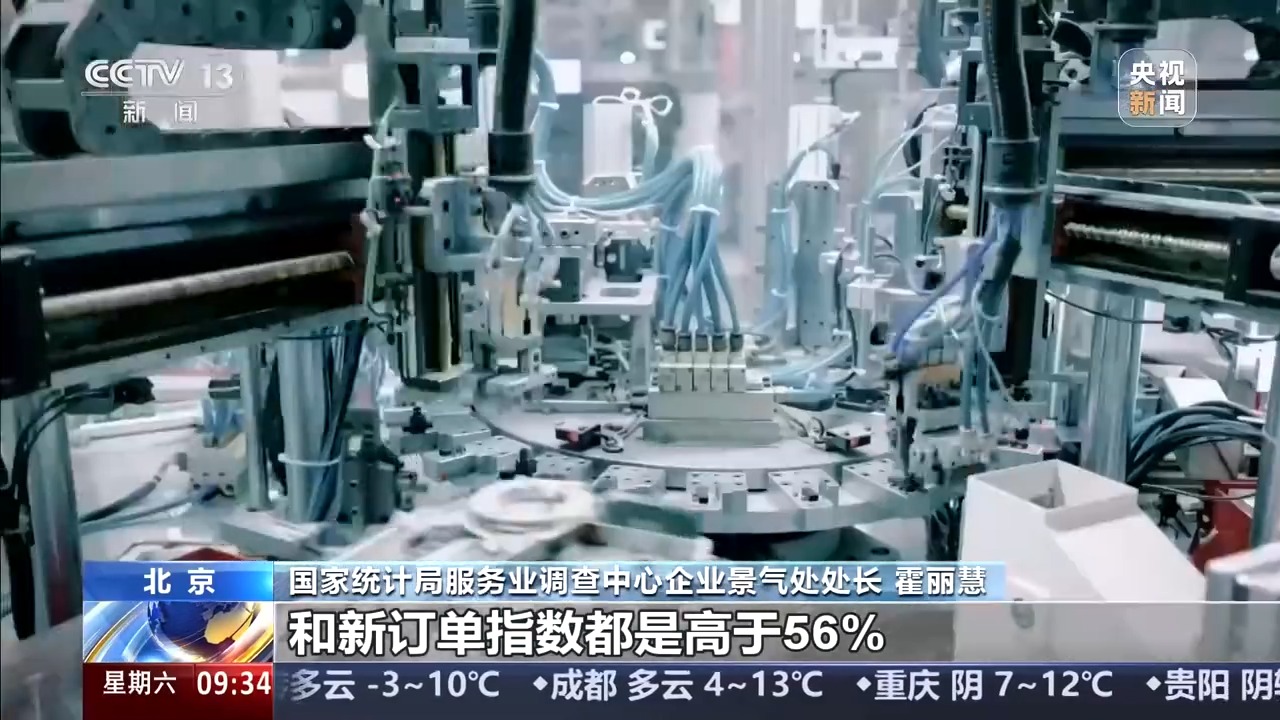
Group 1 - The core viewpoint of the article indicates that in January 2026, China's manufacturing market demand has tightened, but production remains in an expansionary phase, with ongoing optimization of the industrial structure [2] - The manufacturing Purchasing Managers' Index (PMI) for January 2026 is reported at 49.3%, while the equipment manufacturing PMI is at 50.1% and the high-tech manufacturing PMI is at 52%, indicating stable and positive development in these sectors [2] - The service sector shows a relatively stable operational trend, with the non-manufacturing business activity index at 49.4% for January 2026 [4] Group 2 - Specific industries such as agricultural and food processing, railways, shipbuilding, and aerospace equipment have production and new order indices exceeding 56%, indicating rapid release of production and demand [4] - The financial sector maintains a high prosperity level above 65%, supporting the real economy and contributing to the stability of the service sector [6] - The business activity index for railway transportation remains above 53%, and the business activity index for scenic services has risen to over 51%, reflecting positive performance in consumer-related sectors [6]

制造业PMI为何超季节性回落?:——2025年10月PMI点评
EBSCN· 2025-10-31 12:32
Manufacturing Sector - The manufacturing PMI for October 2025 is reported at 49.0%, a significant decrease of 0.8 percentage points from the previous month, which is notably higher than the seasonal average decline of 0.4 percentage points observed from 2020 to 2024[2][5] - The production index fell by 2.2 percentage points to 49.7%, while the new orders index decreased by 0.9 percentage points to 48.8%[5][15] - The new export orders index dropped to 45.9%, down 1.9 percentage points, marking the second-lowest level since the introduction of high tariffs in April 2025[5][20] - Small enterprises experienced a notable decline in PMI, falling 1.1 percentage points to 47.1%, while large enterprises' PMI decreased to 49.9%[6] Non-Manufacturing Sector - The non-manufacturing PMI for October 2025 is at 50.1%, slightly up from 50.0% in the previous month, driven by holiday consumption[2][28] - The service sector showed improvement, with indices for transportation, retail, and entertainment exceeding 60%, indicating strong performance in consumer-related services[28] - The construction PMI fell to 49.1%, but new orders and business activity expectations increased, suggesting a potential recovery in infrastructure activities[34] Economic Outlook - The report highlights that the construction sector may benefit from the introduction of 500 billion yuan in new policy financial tools and an additional 200 billion yuan in special bond issuance, which could support infrastructure investment[4][34] - The overall economic environment remains cautious due to external trade uncertainties and domestic demand stability, particularly in high-energy-consuming industries[16][20]
10月制造业采购经理指数为49%,制造业短期波动仍有趋稳基础
Bei Ke Cai Jing· 2025-10-31 03:36
Group 1: Manufacturing Sector - The manufacturing Purchasing Managers' Index (PMI) decreased to 49% in October, down 0.8 percentage points from the previous month, indicating a slowdown in production activities [1][2] - Various sub-indices, including production, new orders, and export orders, showed declines ranging from 0.1 to 2.6 percentage points, reflecting weakened demand and production activities across enterprises of all sizes [2][3] - The overall economic imbalance of supply exceeding demand continues to develop, leading to increased downward pressure on the economy, necessitating stronger macroeconomic policy adjustments [3] Group 2: Non-Manufacturing Sector - The non-manufacturing business activity index rose slightly to 50.1%, with several sub-indices, such as inventory and input prices, showing increases between 0.2 and 1.1 percentage points [1][4] - The new orders index remained stable compared to the previous month, indicating steady operational activities in the non-manufacturing sector, supported by holiday consumption [4][5] - Significant increases were observed in sectors like transportation, retail, and construction, with business activity indices exceeding 60%, suggesting a positive trend in investment and consumption-related activities [5]
制造业PMI连续两月回升,下阶段走势如何
Di Yi Cai Jing· 2025-09-30 02:53
Group 1: Macroeconomic Policy and Manufacturing Sector - The macroeconomic policy is expected to be strengthened and implemented, with the manufacturing PMI showing a slight recovery to 49.8% in September, up 0.4 percentage points from the previous month, indicating ongoing policy effects [1] - The production index rose to 51.9%, marking a continuous expansion for five months, while the new orders index increased to 49.7%, suggesting a stabilization in market demand [4] - The manufacturing sector is experiencing a seasonal peak in production and sales, with procurement activities and employment showing positive trends [4] Group 2: Price Trends and Future Outlook - The purchasing price index for manufacturing decreased to 53.2%, while the factory price index fell to 48.2%, indicating a mixed price trend across different industries [5] - There is an expectation of improved market conditions in the fourth quarter, driven by holiday demand and infrastructure projects, which will likely boost consumption and production activities [5] - The manufacturing production expectation index rose to 54.1%, reflecting increased optimism among manufacturers regarding market developments [6] Group 3: Non-Manufacturing Sector Performance - The non-manufacturing business activity index remained stable at 50.0%, with slight declines in the service sector and construction industry, indicating a mild slowdown [9] - The postal industry showed significant growth, with business activity and new orders indices rising over 5 percentage points, reflecting strong online shopping trends [9][10] - Overall, the non-manufacturing sector is expected to stabilize and recover in the fourth quarter, supported by seasonal effects and ongoing macroeconomic policies [10]
制造业PMI低于荣枯线 国常会部署贴息政策促消费
Di Yi Cai Jing· 2025-07-31 13:51
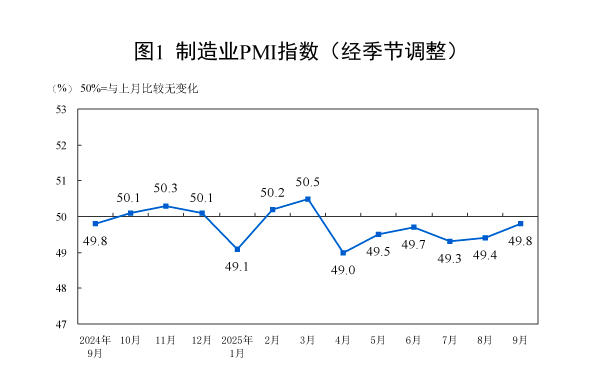
Economic Overview - The Central Political Bureau emphasized the need to enhance macroeconomic policy effectiveness and stimulate internal economic growth [1] - The State Council reiterated the implementation of personal consumption loan interest subsidy policies to better stimulate consumption potential [1][7] Manufacturing Sector - The manufacturing Purchasing Managers' Index (PMI) for July was reported at 49.3%, a decrease of 0.4 percentage points from the previous month, marking the fourth consecutive month below the growth threshold [1][4] - The new orders index for manufacturing fell to 49.4%, down 0.8 percentage points, indicating a contraction in market demand [6] - Despite the decline in demand, the production index remained at 50.5%, indicating continued expansion in manufacturing activities [6] Price Trends - The manufacturing raw material purchase price index rose to 51.5%, an increase of 3.1 percentage points, indicating a recovery in raw material prices [6] - The ex-factory price index increased to 48.3%, up 2.1 percentage points, marking the second-highest point this year [6] Business Confidence - The production and business activity expectation index rose to 52.6%, reflecting increased confidence among manufacturing enterprises regarding market development [8] - Large enterprises maintained a PMI of 50.3%, while medium-sized enterprises improved to 49.5%, indicating a mixed outlook across different enterprise sizes [8] Non-Manufacturing Sector - The non-manufacturing business activity index was reported at 50.1%, a decrease of 0.4 percentage points, but still within the expansion range [10] - The construction business activity index fell to 50.6%, influenced by seasonal weather conditions, while infrastructure-related activities continued to show robust growth [10] Consumer Behavior - The summer consumption effect began to show, with retail and postal service indices rising above 50%, indicating strong consumer spending intentions [11] - However, the accommodation and catering sectors remained below 50%, suggesting that summer consumption has not yet significantly impacted these areas [11][12] Policy Implications - The Central Political Bureau's meeting highlighted the importance of releasing internal demand potential and implementing consumption-boosting actions [12] - The focus on service consumption is expected to play a crucial role in meeting public needs and driving consumption industry upgrades [12]
制造业PMI低于荣枯线,国常会部署贴息政策促消费
Di Yi Cai Jing· 2025-07-31 13:22
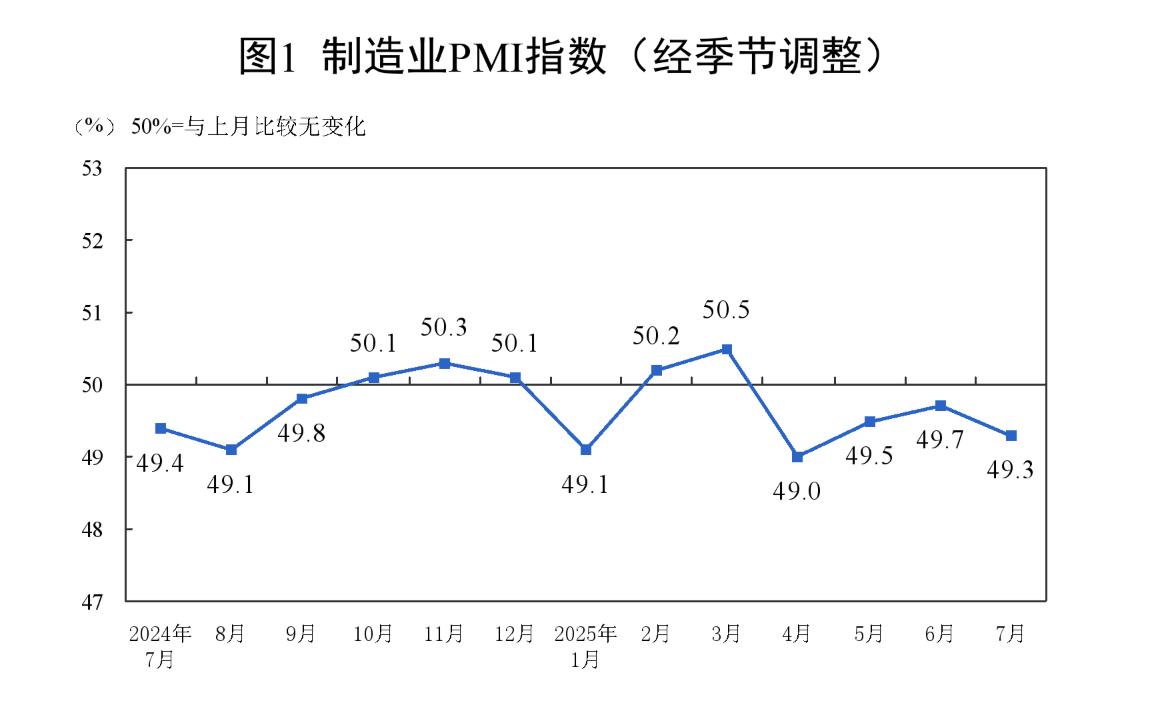
Economic Policy and Measures - The State Council emphasizes the need to anchor annual development goals and enhance the effectiveness of macroeconomic policies, focusing on stimulating internal economic momentum [1][4] - Implementation of personal consumption loan interest subsidy policies and service industry loan interest subsidy policies aims to better stimulate consumption potential [1][7] Manufacturing Sector Performance - In July, the manufacturing Purchasing Managers' Index (PMI) was 49.3%, a decrease of 0.4 percentage points from the previous month, remaining below the expansion threshold for four consecutive months [1][4] - The new orders index for manufacturing was 49.4%, down 0.8 percentage points, indicating a contraction in market demand [6] - Despite weak demand, manufacturing production activities expanded, with a production index of 50.5%, although it decreased by 0.5 percentage points from the previous month [6][9] Price Trends - The manufacturing raw material purchase price index rose to 51.5%, an increase of 3.1 percentage points, indicating a recovery in raw material prices [6] - The ex-factory price index for manufactured goods was 48.3%, up 2.1 percentage points, marking the second-highest point this year [6] Business Confidence and Expectations - The production and business activity expectation index for July was 52.6%, reflecting an increase in confidence among manufacturing enterprises regarding market development [8] - Large enterprises maintained a PMI of 50.3%, while medium-sized enterprises improved to 49.5%, indicating a mixed outlook across different enterprise sizes [8] Non-Manufacturing Sector Insights - The non-manufacturing business activity index was 50.1%, a decrease of 0.4 percentage points, but still within the expansion range [10] - The construction industry index was 50.6%, indicating a slowdown in construction activities due to seasonal weather impacts [10] Consumer Behavior and Seasonal Trends - Summer consumption effects began to show, with retail and postal service indices rising above 50%, indicating strong consumer spending intentions [11] - However, the accommodation and catering sectors remained below 50%, suggesting that summer spending was more focused on outdoor and entertainment activities rather than dining [13] Future Economic Outlook - The Central Political Bureau meeting highlighted the need to effectively release internal demand potential and implement actions to boost consumption [14] - The focus on service consumption is expected to play a crucial role in meeting public needs and driving consumption industry upgrades [14]
制造业PMI季节性回落至49.3%,下阶段走势如何
第一财经· 2025-07-31 06:06
Economic Overview - The manufacturing PMI for July is reported at 49.3%, a decrease of 0.4 percentage points from the previous month, indicating a slight contraction in manufacturing activity [1] - The non-manufacturing business activity index stands at 50.1%, also down by 0.4 percentage points, but still indicates expansion [1] - The comprehensive PMI output index is at 50.2%, down 0.5 percentage points, remaining above the critical point, suggesting overall expansion in business activities [1] Manufacturing Sector Analysis - The new orders index for manufacturing is at 49.4%, down 0.8 percentage points, indicating a contraction in market demand [6] - The new export orders index is at 47.1%, a decrease of 0.6 percentage points, reflecting weakened demand [6] - Despite the decline in demand, the production index is at 50.5%, indicating continued expansion in manufacturing activities for the third consecutive month [6] Price Trends - The raw materials purchase price index for manufacturing is at 51.5%, up 3.1 percentage points, indicating a recovery in raw material prices [7] - The ex-factory price index is at 48.3%, an increase of 2.1 percentage points, marking the second-highest point this year [7] - Price stability in the manufacturing sector is primarily driven by the basic raw materials industry, with significant increases in both purchase and ex-factory price indices [7] Business Expectations - The production and business activity expectation index is at 52.6%, up 0.6 percentage points, indicating increased confidence among manufacturing enterprises [8] - Large enterprises maintain a PMI of 50.3%, while medium and small enterprises show PMIs of 49.5% and 46.4%, respectively, indicating varying levels of economic health across different enterprise sizes [8] Non-Manufacturing Sector Insights - The non-manufacturing business activity index is at 50.1%, down 0.4 percentage points, but still indicates expansion [13] - The construction sector's business activity index is at 50.6%, down 2.2 percentage points, reflecting a slowdown due to seasonal weather impacts [13] - Summer consumption shows positive trends, with retail and postal service indices rising above 50%, indicating strong consumer spending [15] Future Outlook - The construction sector is expected to rebound post-rainy season, with infrastructure activities projected to grow steadily [14] - Continued implementation of macroeconomic policies aimed at boosting demand is anticipated to support economic recovery in the second half of the year [9][16]

反内卷改善企业预期!7月份PMI数据出炉
券商中国· 2025-07-31 05:59
Core Viewpoint - The manufacturing PMI for July is 49.3%, a decrease of 0.4 percentage points from the previous month, primarily influenced by seasonal production slowdowns and adverse weather conditions [1][3]. Group 1: Economic Recovery and Manufacturing Performance - The foundation for economic recovery remains solid, with the equipment manufacturing and high-tech manufacturing PMIs continuing to expand, indicating ongoing structural optimization [2][3]. - Large enterprises are maintaining stable expansion, acting as a "ballast" for the economy [2][3]. - The rebound in the major raw material purchasing price index, which rose above the critical point for the first time since March, reflects improved market conditions in certain industries [4]. Group 2: Impact of Anti-Competition Measures - The anti-competition measures have positively influenced corporate expectations, as indicated by rising indices for purchasing prices, output prices, employment, supplier delivery times, and production activity expectations [4][5]. - The purchasing price index for major raw materials increased to 51.5%, while the output price index rose to 48.3%, showing significant recovery in specific sectors like petroleum and black metal processing [4]. Group 3: Consumer Activity and Seasonal Trends - The non-manufacturing business activity index for July is 50.1%, reflecting a slight decline but showing initial signs of summer consumption boosting economic activity [6][7]. - Retail activity is on the rise, with the retail business activity index surpassing the critical point, and new order indices showing significant increases [7]. - Travel and leisure activities are also gaining momentum, with indices for railway and air transport exceeding 60%, indicating strong consumer willingness to travel [7][8]. Group 4: Future Outlook - The summer consumption boost is expected to continue into August, supported by ongoing macroeconomic policies aimed at expanding domestic demand [8].