
绿色低碳转型

Search documents
中国石化与中国航油实施重组带来哪些利好?航空业向“新”向“绿”向优发展
Yang Shi Wang· 2026-01-09 01:55
Core Viewpoint - The restructuring of China Petroleum & Chemical Corporation (Sinopec) and China Aviation Oil Group aims to enhance the integration of the aviation fuel industry chain, reduce supply costs, and accelerate the green and low-carbon transformation of aviation energy supply, thereby improving international competitiveness [1][4][8]. Group 1: Industry Growth and Demand - During the 14th Five-Year Plan period, China's aviation fuel demand is expected to grow at an annual rate of approximately 4%, reaching around 50 million tons by 2030 and about 75 million tons by 2040 [3]. Group 2: Innovation and Integration - The merger is expected to facilitate the construction of an innovative system for aviation fuel technology, accelerating the integration of the innovation and industry chains [4][6]. - The restructuring will leverage Sinopec's research and development capabilities in oil products and China Aviation Oil's market supply advantages, promoting the integration of the aviation fuel industry's innovation and supply chains [6]. Group 3: Sustainable Development - The merger will support the high-quality development of sustainable aviation fuel industries and assist the aviation sector in its green and low-carbon transition [8][10]. - Sustainable aviation fuel technology is recognized as a primary route for reducing carbon emissions in the aviation sector, which is one of the most challenging areas for emissions reduction in transportation [8]. - Sinopec is the first company in Asia to have independent research and production capabilities for bio-jet fuel, which will accelerate the research, use, and continuous iteration of sustainable aviation fuel technologies post-restructuring [10][12].



迈向“十五五”的美丽图景·一线见闻丨大船凭风好扬帆
Yang Guang Wang· 2026-01-09 01:33
Group 1 - The central economic work conference emphasizes the need for a "dual carbon" approach to promote comprehensive green transformation in industries [1] - The Huai Bin Center Port, located on the main channel of the Huai River, is the largest comprehensive inland port in Henan province, actively pushing for the upgrade of traditional shipbuilding towards high-end, intelligent, and green manufacturing [1] - The local shipbuilding industry is transitioning to produce high-value-added vessels, such as electric and natural gas ships, as well as workboats and law enforcement vessels for export [1] Group 2 - The shipbuilding industry in Xinyang is expanding beyond Huai Bin to surrounding counties, with several shipbuilding and repair projects accelerating, indicating a clustering effect in the industry [2] - A new green shipbuilding industrial park is set to be completed by 2027, which will consolidate all shipbuilding and supporting enterprises in Huai Bin [2] - The annual shipbuilding output in Huai Bin exceeds 600 vessels, generating over 4 billion yuan in production value, showcasing the shift from low-end to high-end intelligent manufacturing [2]
中国石化与中国航油实施重组,助力航空业绿色低碳转型
Bei Jing Ri Bao Ke Hu Duan· 2026-01-09 01:32
Core Viewpoint - The restructuring of China Petroleum & Chemical Corporation (Sinopec) and China National Aviation Fuel Group Corporation (CNAF) aims to enhance the integration of the aviation fuel industry chain, reduce supply costs, and promote a green and low-carbon transition in aviation energy supply [1][3]. Group 1: Industry Integration and Innovation - The merger will leverage Sinopec's oil product R&D technology and CNAF's market supply advantages, facilitating the integration of innovation within the aviation fuel industry chain [3]. - Currently, there is a disconnect between the R&D, production, sales, and application sectors in China's aviation fuel industry, which the restructuring aims to address [1]. Group 2: Green and Low-Carbon Transition - The restructuring is expected to support the high-quality development of sustainable aviation fuel, aiding the aviation industry's transition to a green and low-carbon model [3][5]. - Sustainable aviation fuel technology is recognized as a primary route for reducing carbon emissions in the aviation sector, which faces significant challenges in emission reductions [3]. Group 3: Sustainable Aviation Fuel Development - Sinopec is the first company in Asia to develop and commercialize bio-jet fuel production technology, and the merger will accelerate the R&D and application of sustainable aviation fuel technologies [5]. - The restructuring is anticipated to create new business models covering the entire sustainable aviation fuel industry chain, enhancing international competitiveness and contributing to carbon reduction in China's aviation sector [5][7]. Group 4: Market Potential - According to the International Air Transport Association, global sustainable aviation fuel consumption is projected to reach 6 million tons by 2025 and 18 million tons by 2030 [7]. - Sinopec has filled a gap in the application of domestic sustainable aviation fuel in local aircraft models, positioning itself as a leader in this emerging market [7].
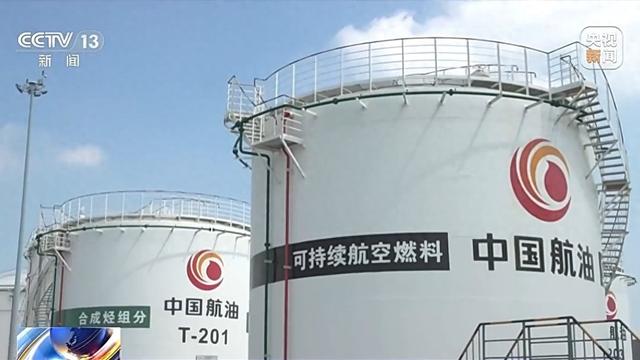
中国石化与中国航油实施重组 助力航空业绿色低碳转型
Huan Qiu Wang· 2026-01-09 01:24
Core Viewpoint - The restructuring of China Petroleum & Chemical Corporation (Sinopec) and China National Aviation Fuel Group Corporation (CNAF) aims to enhance the integration of the aviation fuel industry chain, reduce supply costs, and promote a green and low-carbon transition in aviation energy supply [1][3]. Group 1: Industry Integration and Innovation - The merger will leverage Sinopec's oil product research and development capabilities alongside CNAF's market supply advantages, facilitating the integration of innovation within the aviation fuel industry chain [3]. - Currently, there is a disconnect between the research, production, sales, and application sectors in China's aviation fuel industry, which the restructuring aims to address [1]. Group 2: Green and Low-Carbon Transition - The restructuring is expected to support the high-quality development of sustainable aviation fuel, contributing to the aviation industry's green and low-carbon transition [3][5]. - Sustainable aviation fuel technology is recognized as a key pathway for reducing carbon emissions in the aviation sector, which faces significant challenges in emission reductions [3]. Group 3: Sustainable Aviation Fuel Development - Sinopec is the first company in Asia to develop and commercialize bio-jet fuel production technology, and the restructuring will accelerate the research, usage, and iteration of sustainable aviation fuel technologies [5]. - The global sustainable aviation fuel consumption is projected to reach 6 million tons by 2025 and 18 million tons by 2030, highlighting the growing demand for such fuels [7].
上海实践:智慧电力驱动一流营商环境
Xin Lang Cai Jing· 2026-01-09 00:32
Core Viewpoint - The article highlights Shanghai's significant advancements in the electricity service sector, showcasing its top rankings in World Bank assessments and the transformative "FREE" service brand initiative that emphasizes user experience and proactive service delivery [1][2]. Group 1: Electricity Service Revolution - Shanghai has transitioned from a passive electricity service model to an active service approach, exemplified by the "FREE" service brand, which focuses on being Free, Rapid, Easy, and Excellent [1]. - The city has optimized electricity access processes, achieving an average connection time of 2 days, which ranks it among the best globally, just behind Hong Kong and Singapore [2]. - The "zero investment" policy for small and micro enterprises has been expanded to all user types, significantly reducing initial operational costs for businesses [2]. Group 2: Digital Empowerment and Reliability - Shanghai has prioritized the resilience of its power grid, achieving a supply reliability rate that ranks among the top in major global cities, with minimal average outage times [4]. - The implementation of automated monitoring and predictive maintenance systems has led to a significant reduction in overloaded transformer stations, enhancing the grid's capacity [4]. - A digital command system has improved the efficiency of fault repair processes, resulting in a decrease in outage incidents and repair quality complaints [4]. Group 3: Green Energy and Urban Development - Shanghai is actively leading the transformation of energy consumption to support the city's green and low-carbon transition, establishing a provincial-level virtual power plant management center [6]. - The city has initiated large-scale vehicle-to-grid (V2G) projects, enhancing the integration of electric vehicles into the power system [6]. - The scale of green electricity trading has reached a historical high, with annual transactions amounting to 90 billion kilowatt-hours, meeting the demands of multinational and export-oriented companies [6]. Group 4: Overall Impact on Urban Governance - The continuous service revolution, technological empowerment, and innovative models have redefined Shanghai's electricity service environment, making it more user-friendly and efficient [7]. - The advancements reflect not only technological progress but also an evolution in urban governance philosophy, supporting high-quality economic development [7].
央企“巨无霸”重组启幕!超2000亿元航空燃油市场或将重构
Zheng Quan Shi Bao· 2026-01-08 22:53
Group 1 - The core viewpoint of the news is the restructuring of Sinopec and China Aviation Oil, which is expected to reshape the trillion-level energy and chemical market and enhance the competitiveness of state-owned enterprises [1][4][5] - The restructuring is seen as a response to the historical turning point in China's refined oil consumption, driven by the rapid development of the new energy vehicle industry and the electrification of end-use energy [2][3] - Sinopec's integration with China Aviation Oil aims to create a vertically integrated supply chain from refinery to wing, enhancing operational resilience and market competitiveness [4][6][7] Group 2 - The aviation fuel market is projected to grow, with China expected to consume approximately 40 million tons of aviation fuel in 2024, reflecting a 13% year-on-year increase [3] - The restructuring may lead to a redistribution of market share among major energy state-owned enterprises in the aviation fuel segment, providing Sinopec with new growth opportunities [3][6] - The integration is anticipated to improve the stability of aviation fuel supply for airlines, potentially reducing transaction costs and maximizing efficiency [6][9] Group 3 - The restructuring is part of a broader trend of state-owned enterprise consolidation aimed at optimizing the layout of state-owned economies and enhancing operational efficiency [5][8] - There are concerns among airlines regarding the potential impact on their bargaining power and cost control due to the consolidation of aviation fuel supply [9][10] - The restructuring may prompt a reevaluation of market strategies among airlines, especially if it leads to a dominant player in the aviation fuel market [9][10]
扩大有效投资、培育未来产业、推进“人工智能+制造”助力“十五五”良好开局 地方稳工业锚定三大重点
Xin Lang Cai Jing· 2026-01-08 21:02
(来源:经济参考报) 巩固工业经济稳中向好态势,多地还将扩大制造业有效投资作为重要着力点。 1月4日,河南省召开2026年全省重大项目建设暨制造业高质量发展动员部署会,奋力夺取"十五五"开门 红。会议明确深度对接国家新一轮重点产业链高质量发展行动,促进强链补链延链建链,让链式项 目"多起来"、产业链条"强起来"。河北提出2026年实施工业领域"项目建设年"行动,重点抓竣工投产达 效项目,同时推动新兴产业发展壮大,实施新一轮电子信息三年"倍增"计划,滚动实施百项亿元以上重 点项目建设等。 资金支持力度加大。日前,湖南省工业和信息化厅联合省财政厅等四部门修订了《湖南省工业企业设备 更新和技术改造项目融资补贴实施办法》,将项目申报门槛降低、补贴力度加大。 关兵分析认为,2026年工业投资增速有望缓中趋稳。一方面,"十五五"重大工程项目将启动,我国将在 新质生产力发展、重大基础设施建设、绿色低碳转型等领域,加快推出一批具有牵引带动作用的重大工 程,从而有力带动工程机械、钢铁、建材等相关制造行业投资。另一方面,投资环境持续优化,如扩大 准入、打通堵点、强化保障等,有望激发和释放民间投资活力。 值得一提的是,随着中央经济 ...
国家铁路局:加快铁路规划建设和绿色低碳转型
Zhong Guo Zheng Quan Bao· 2026-01-08 20:50
Core Insights - The meeting highlighted the achievements of China's railway development during the 14th Five-Year Plan period and outlined key tasks for 2026, marking the beginning of the 15th Five-Year Plan [1][3] Group 1: Achievements During the 14th Five-Year Plan - The national railway operating mileage reached 165,000 kilometers, with high-speed rail exceeding 50,000 kilometers [1] - Passenger and freight volumes increased by 12.6% and 25.7% respectively compared to the 13th Five-Year Plan, maintaining the world's highest levels in passenger turnover, freight volume, and transport density [1] - Significant advancements in new technologies and equipment, including the successful launch of CR450 trains and 600 km/h magnetic levitation trains, alongside rapid development in intelligent and green technologies [1] Group 2: 2025 Railway Performance - Fixed asset investment in railways reached 901.5 billion yuan, with 3,109 kilometers of new lines completed, including 2,862 kilometers of high-speed rail [2] - Passenger volume reached 4.588 billion, a year-on-year increase of 6.4%, with daily passenger numbers hitting a historical high [2] - Freight volume totaled 5.273 billion tons, up 2.0% year-on-year, and intermodal transport increased by 15.1% [2] Group 3: Key Tasks for 2026 - Emphasis on enhancing railway safety and regulatory effectiveness, focusing on transportation safety and engineering quality [3] - Acceleration of railway planning and construction, promoting green and low-carbon transitions to support national strategies [3] - Improvement of transportation service capabilities to facilitate economic circulation and reduce logistics costs [3] - Development of a modern railway industry system through technological innovation and digital transformation [3] - Strengthening governance in the railway sector and expanding openness to support the Belt and Road Initiative [3]
2025年铁路固定资产投资完成9015亿元 国家铁路局:加快铁路规划建设和绿色低碳转型
Zhong Guo Zheng Quan Bao· 2026-01-08 20:49
Core Insights - The meeting highlighted the achievements of China's railway development during the "14th Five-Year Plan" period, with a focus on the expansion and quality improvement of the railway network, reaching a total operating mileage of 165,000 kilometers, including over 50,000 kilometers of high-speed rail [1] - In 2025, significant investments were made in railway infrastructure, with fixed asset investments totaling 901.5 billion yuan and the commissioning of 3,109 kilometers of new lines, including 2,862 kilometers of high-speed rail [2] - The meeting outlined seven key tasks for the railway industry in 2026, emphasizing safety, green transformation, service enhancement, modernization, governance, openness, and strengthening party building [3] Group 1 - The railway network's operating mileage reached 165,000 kilometers, with high-speed rail exceeding 50,000 kilometers [1] - Passenger and freight volumes increased significantly, with passenger sending volume at 4.588 billion people, a 6.4% year-on-year growth, and freight sending volume at 5.273 billion tons, a 2.0% increase [2] - The meeting set a target for 2026 to enhance safety measures and regulatory effectiveness in the railway sector [3] Group 2 - The railway industry aims to accelerate green and low-carbon transformation while supporting national strategic implementation [3] - The focus will be on improving logistics efficiency and service quality to facilitate economic circulation [3] - The meeting emphasized the importance of expanding the railway sector's openness to support the high-quality development of the Belt and Road Initiative [3]
决胜“十四五” 擘画“十五五”·地方资本市场高质量发展之内蒙古篇:夯实资本市场“天骏方阵” 护航北疆战略产业安全
Zheng Quan Shi Bao· 2026-01-08 18:13
Group 1 - The core viewpoint of the article highlights the significant progress made in the Inner Mongolia capital market during the "14th Five-Year Plan" period, focusing on the development of a multi-level enterprise listing cultivation system and supporting regional economic transformation [1][2] - Inner Mongolia added 12 new listed companies during the "14th Five-Year Plan," with the total market capitalization of A-share listed companies exceeding 1 trillion yuan, marking a 68% increase since the end of 2020 [2][3] - The region's capital market has seen the emergence of industry clusters in rare earths, energy, and dairy, with direct financing steadily expanding and the clean energy REITs breaking new ground in the northwest [1][3] Group 2 - The "Tianjun Plan" was implemented to cultivate enterprises for listing, resulting in 12 companies successfully entering the domestic and international capital markets, with 7 listed on the Shanghai and Shenzhen stock exchanges [2] - The Inner Mongolia equity trading center was approved as the first pilot for regional equity market innovation, transitioning to a listing "nursery" and "preparatory class" [2] - The region has established a complete and controllable rare earth listing company chain, supporting the construction of a national strategic resource base [3][4] Group 3 - Inner Mongolia's listed companies have undergone significant asset restructuring, raising approximately 23.77 billion yuan through refinancing, with notable acquisitions aimed at green transformation [4] - Cash dividends from 28 listed companies reached 93.026 billion yuan, doubling the amount from the previous five-year period, indicating enhanced investor returns [4] - The region's capital market has developed a multi-faceted financial system integrating stocks, bonds, funds, and futures, supporting the new ecological integration of production and finance [6] Group 4 - The region's private equity fund management scale has surpassed 35 billion yuan, focusing on long-term capital support for sectors like new energy and rare earth materials [6] - The "insurance + futures" pilot projects have been implemented to safeguard farmers' income, with over 20 projects launched [7] - The Inner Mongolia Securities Regulatory Bureau has strengthened regulatory measures to ensure market stability and investor protection, including the establishment of a comprehensive investor education mechanism [8] Group 5 - Looking ahead to the "15th Five-Year Plan," the Inner Mongolia Securities Regulatory Bureau aims to align with national strategies, focusing on cultivating new productive forces and enhancing the collaborative efficiency of the multi-level capital market [9] - The goal is to create a safe, transparent, and vibrant capital market that supports innovation and green development while solidifying the region's economic foundation [9]



