
中性利率

Search documents
日本央行审议委员田村直树:我们有望在今年春季前后确定通胀已稳定在2%左右
Jin Rong Jie· 2026-02-13 03:45
日本央行审议委员田村直树:我认为,我们有望在今年春季前后确定通胀已稳定在2%左右。利率距离 被视为对经济影响为中性的水平仍有相当一段距离。 ...
美联储降息卡在哪?双重指标暗藏玄机
Sou Hu Cai Jing· 2026-02-12 01:54
美联储官员一席话彻底浇灭市场降息幻想——达拉斯联储主席洛根最新表态显示,通胀回落并非降息 的"通行证",美国货币政策正在进入前所未有的复杂博弈阶段。 在2月10日的讲话中,洛根给市场泼了一盆冷水:当前通胀降温还远远不够。这位美联储重量级人物明确 表示,3.5%-3.75%的利率区间很可能将持续更长时间,除非就业市场出现"实质性疲软"。这番表态直接击 碎了投资者对快速降息的期待。 值得注意的是,美联储的决策逻辑正在发生微妙变化。过去单纯盯着通胀数据的时代已经结束,现在必须 同时权衡就业市场的表现。如果未来几个月通胀持续下降而就业保持稳定,当前利率就是合适的;反之, 才需要考虑降息。这种"双轨制"判断标准,让政策走向变得更加难以预测。 更耐人寻味的是洛根对"中性利率"的界定。她认为当前利率既没有刺激经济,也没有抑制增长,这种精妙 的平衡状态给了美联储难得的操作空间。要知道,经过三次降息后,利率已经从4.25%-4.5%的高位回落, 现在正处在政策效果的"甜蜜点"。 但现实远比理论复杂。最新经济数据就像一锅"大杂烩":消费者信心创一年半新高,可长期通胀预期却不 降反升;失业率仍在历史低位徘徊,但工资上涨的压力始终存 ...

堪萨斯城联储主席:通胀仍高于目标水平 应维持“略具限制性”利率立场
Zhi Tong Cai Jing· 2026-02-11 15:45
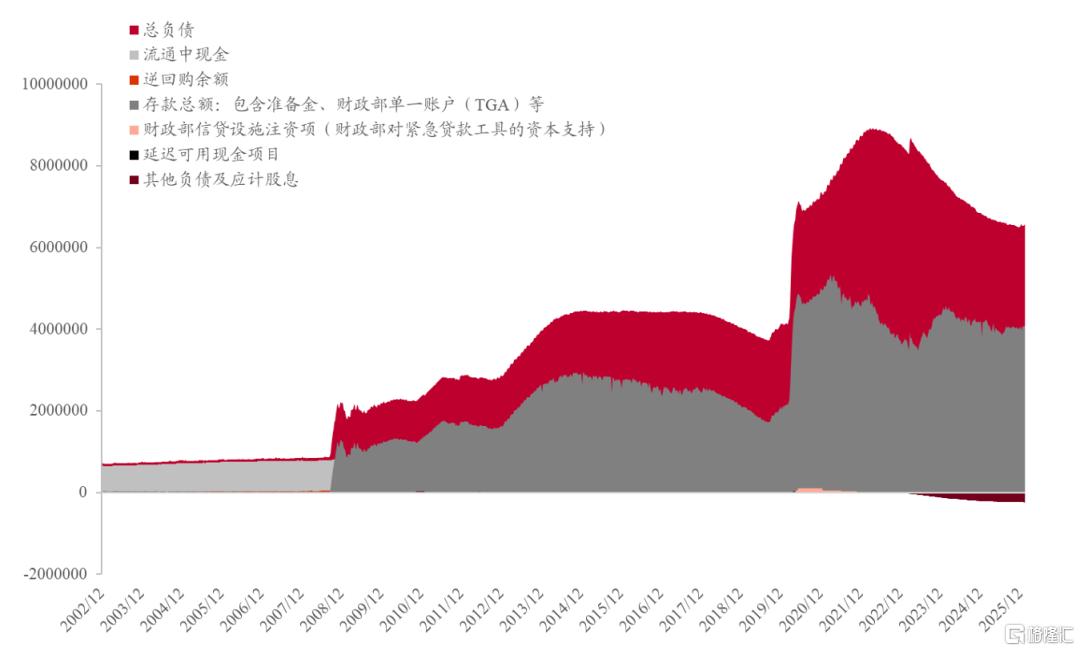
美国央行官员再度释放偏鹰派信号。 堪萨斯城联邦储备银行行长杰弗里.施密德表示,在通胀仍高于目标水平的背景下,美联储应将利率维 持在"略具限制性"的区间,过早或进一步降息可能导致高通胀持续更长时间。 施密德周三在新墨西哥州阿尔伯克基发表事先准备的讲话时指出,当前利率水平理应对经济活动形成一 定约束,但现实中这种抑制效果并不明显。"在经济增长仍具动能、通胀依然偏热的情况下,我没有看 到足够多的经济降温迹象。" 美联储上月决定维持利率不变,联邦基金利率目标区间为3.5%至3.75%。施密德表示支持这一决定,此 前美联储在2025年最后几个月已连续三次降息。目前利率水平被视为接近多数官员估计的"中性利率", 即既不刺激也不抑制经济的水平。 施密德认为,持续的价格压力表明美国经济中需求仍在多个领域超过供给。尽管人工智能等新技术未来 可能推动生产率提升,从而在不推高通胀的情况下支撑经济扩张,"目前尚未到达这一阶段"。他的表态 发布之际,最新数据显示,美国1月非农就业增幅创一年多新高,失业率意外降至4.3%。施密德指出, 2025年经济表现强劲,美国在进入2026年时仍具"相当的增长动能"。 在资产负债表问题上,施密德再次 ...
机构:若非农强劲数据得以保持 距中性利率或比市场预期更近
Xin Lang Cai Jing· 2026-02-11 14:39
格隆汇2月11日|Gammaroad Capital Partners首席投资官Jordan Rizzuto表示,潜在的就业形势似乎比预 期的要强劲,甚至可能比美国联邦公开市场委员会(FOMC)近期评估和描述的情况更为乐观。如果这 些数据在后续月份的修订中得以保持,对货币政策的影响意味着我们距离中性利率比市场先前定价的更 近。 ...
美联储的“沃什时代”:资本市场会迎来什么变化?
Ge Long Hui· 2026-02-11 10:26
SHMET 网讯: 引 言 正文 近期,随着特朗普正式提名凯文·沃什(Kevin Warsh)出任下届美联储主席。市场的反应剧烈:现货黄金录得 1983 年以来最大的单日跌幅,迅速击穿 5000 美元大关,最大跌幅超 10%;白银更是跌幅一度突破 30%。比特币在 48 小时内从 10 万美元高位附近连续跌破多道心理防线,下探至 7万美元区 间,回撤幅度接近 30%;纳斯达克 100 指数则在折现率上移与缩表预期的双重预期之下,单周回撤明显。 沃什的缩表+降息: 美联储换帅预期变化、沃什的"降息+缩表"措施的登场,仿佛宣告了美联储从"最后贷款人"向"流动性守门人"的根本性转向。然而,真正决定全球资产走 向的,不是沃什"想做什么",而是他能做什么、做到什么程度。 用缩表管通胀,用降息管融资 本篇报告从沃什的政策偏好与履历出发,系统梳理他面临的政治环境、他的政策主张,推演中期选举前后两阶段政策节奏,最终落到全球各类资产的重定 价逻辑与A股市场的影响传导上;并试图理解——在沃什时代,应该如何理解美联储政策转向对资本市场的真实影响。 而沃什的出发点则完全不同:他更在意的是"这算不算央行该做的事情"。在他看来,央行的职 ...
美联储的“沃什时代”:资本市场会迎来什么变化?
李迅雷金融与投资· 2026-02-10 09:24
Core Viewpoint - The appointment of Kevin Warsh as the next Federal Reserve Chairman marks a significant shift in market expectations, moving away from an overly accommodative monetary policy to a more disciplined approach focused on the long-term consequences of financial conditions and the costs of balance sheet expansion [2][3]. Group 1: Warsh's Policy Preferences - Warsh is characterized as a "disciplinarian," emphasizing the importance of the central bank's boundaries and the long-term effects of financial conditions, showing a natural aversion to the normalization of unconventional tools like quantitative easing (QE) [3][5]. - He opposes QE not because he is against easing per se, but because he believes it distorts asset prices and exacerbates wealth inequality. He views the use of QE as a crisis response tool rather than a regular option [5][6]. - Warsh acknowledges the necessity of interest rate cuts but emphasizes that lowering rates does not equate to flooding the market with liquidity. He believes current rates may be 50-100 basis points above neutral rates, which he estimates to be around 3% [5][6]. Group 2: Structural Changes in Monetary Policy - Warsh advocates for a reduction in the Federal Reserve's power boundaries, questioning whether the Fed has taken on too many responsibilities that should not fall under its purview. This suggests a higher threshold for intervention during market turmoil [6][7]. - He criticizes the current "ample reserves" framework of the Fed, proposing a return to pre-crisis methods of controlling the federal funds rate through open market operations rather than maintaining excessive reserves [10][11]. - The market anticipates that Warsh's focus on liquidity could lead to increased volatility in the money market, as interbank liquidity would no longer be unlimited, requiring financial institutions to manage liquidity more actively [11][12]. Group 3: Warsh's Background and Political Context - Warsh's career trajectory—from Wall Street to the White House and then to the Federal Reserve—has shaped his critical perspective on monetary policy and institutional costs associated with unconventional tools [13][16]. - His appointment is seen as a strategic choice by Trump, balancing the need for loyalty and the ability to maintain the Fed's independence while addressing market concerns about inflation and monetary discipline [18][19]. - The upcoming midterm elections in 2026 create additional pressure for Warsh to align with the White House's political objectives, particularly in managing interest rates to avoid exacerbating living costs for voters [20][21]. Group 4: Market Implications - The midterm elections in November 2026 will likely serve as a pivotal point for Warsh's policy implementation, with a focus on gradual reforms rather than aggressive tightening measures [27][28]. - The communication strategy of the Fed under Warsh may shift to reduce the frequency of forward guidance and limit public statements from officials, leading to increased market uncertainty and volatility [27][29]. - Overall, the market is expected to experience heightened volatility as Warsh's cautious approach to interest rate cuts and potential balance sheet reductions unfolds, particularly affecting high-valuation and leveraged assets [29][30].
Warsh联储如何影响商品市场
2026-02-10 03:24
Summary of Key Points from the Conference Call Company/Industry Involved - The discussion revolves around the Federal Reserve and its new chairman, Kevin Warsh, focusing on monetary policy and its implications for various asset markets. Core Insights and Arguments 1. **Monetary Policy Stance of Kevin Warsh** Warsh's monetary policy is characterized by a hawkish stance, emphasizing inflation risks and opposing excessive quantitative easing. However, recent comments indicate a shift towards a more neutral position regarding AI's impact on inflation and neutral interest rates [1][3][4]. 2. **Impact of Warsh's Appointment on Global Asset Markets** Following Warsh's appointment, global asset markets experienced significant volatility as investors reassessed market dynamics based on his monetary policy background and experience [2]. 3. **Challenges in Asset and Balance Sheet Policy** Warsh is expected to maintain the current balance sheet policy without major adjustments. The Fed may slow down technical balance sheet expansion and face challenges in restarting balance sheet reduction and modifying regulatory terms [6][8]. 4. **Interest Rate Policy Adjustments** The likelihood of significant shifts in interest rate policy under Warsh is low. Current economic indicators show weak employment and inflation trends, limiting the Fed's ability to adopt a more hawkish or dovish stance [9][10]. 5. **Future Economic Conditions and Rate Cuts** In the absence of significant changes in economic fundamentals, the probability of substantial rate cuts is low. The Fed's decisions will depend on unemployment rates and other economic indicators [10][11][24]. 6. **Differences Between Warsh and Powell** Warsh's approach contrasts with that of former Chairman Powell, as he favors trend-based policy formulation over data dependency, which may lead to increased volatility in macroeconomic and asset markets [12]. 7. **Market Volatility and Underlying Causes** Recent market fluctuations are attributed more to deleveraging trades rather than Warsh's appointment. The bond market's response to Warsh has been relatively stable, indicating that professional investors do not expect drastic changes in monetary policy [13]. 8. **Commodity Market Trends** The commodity market is experiencing a long-term upward trend driven by geopolitical uncertainties and concerns over fiscal sustainability, resembling the inflationary environment of the 1970s [20][22]. 9. **Oil and Precious Metals Price Projections** Oil prices are expected to rebound to $70-$75 per barrel, while gold and other precious metals are driven by investor concerns rather than cyclical pricing [17][18]. 10. **Dollar Index Forecast** The dollar index is projected to remain stable in the first half of 2026 but may weaken in the latter half due to potential changes in fiscal policy and market sentiment [27]. Other Important but Possibly Overlooked Content 1. **Potential Major Events Impacting Markets** Several potential events could lead to significant market shifts, including global fiscal tightening, advancements in AI technology, changes in U.S.-China relations, and renewed central bank independence [22][23]. 2. **Long-term Neutral Interest Rate Considerations** The determination of the neutral interest rate involves both cyclical and structural factors, with current estimates around 3%. However, advancements in productivity due to AI could necessitate a reevaluation of this rate [29]. 3. **Political Influences on Financial Markets** The Trump administration's approach to influencing financial markets through administrative means rather than direct intervention in financial variables is noteworthy, as it aims to achieve political goals without disrupting market pricing [25][26]. This summary encapsulates the key points discussed in the conference call, providing insights into the implications of Kevin Warsh's leadership at the Federal Reserve and its potential impact on various markets.
欧洲央行官员Simkus称下一步加息或降息的概率相同
Xin Lang Cai Jing· 2026-02-09 09:46
欧洲央行管理委员会成员Gediminas Simkus表示,政策制定者下一步行动在加息或降息方面的概率均 等。 欧洲央行管理委员会成员Gediminas Simkus表示,政策制定者下一步行动在加息或降息方面的概率均 等。 这位立陶宛官员周一表示,经济增长接近潜在水平,但风险平衡随时可能发生变化。 "在当前不确定的国际地缘政治环境下,我们必须做好应对任何情况的准备,"Simkus在维尔纽斯对记者 说。"目前加息或减息的可能性相同——各有一半。" 这位立陶宛官员周一表示,经济增长接近潜在水平,但风险平衡随时可能发生变化。 "在当前不确定的国际地缘政治环境下,我们必须做好应对任何情况的准备,"Simkus在维尔纽斯对记者 说。"目前加息或减息的可能性相同——各有一半。" Simkus还说:"经济正处于一种微妙的平衡状态,我们现在正在努力维持这种平衡。经济接近潜在水 平,我们正处于中性利率水平"。 "如果没有意外情况发生,我们将继续按照预测的路线前进"。 关于欧元,"我不认为我们会因为欧元升值而必须做出决定"。 责任编辑:李肇孚 Simkus还说:"经济正处于一种微妙的平衡状态,我们现在正在努力维持这种平衡。经济接 ...
还未上任便遭反击!经济学家怒批沃什“AI降息论”站不住脚
Sou Hu Cai Jing· 2026-02-09 06:24
一边是特朗普的政治压力,一边是经济学家的专业质疑,凯文·沃什还未上任,就已陷入了一场关于 AI、通胀与货币政策的激烈论战…… 根据《金融时报》的一项即时经济学家调查,顶尖学者驳斥了凯文·沃什(Kevin Warsh)关于人工智能 (AI)引发的生产力繁荣将为降息创造空间的说法,这突显了特朗普挑选的美联储主席人选所面临的 挑战。 特朗普在一月底提名沃什接替鲍威尔。沃什认为,AI将引发"我们过去、现在和未来所未见过的最强生 产力提升浪潮"。他表示,这将扩大产出,并为美联储在不引发物价上涨的情况下,将美国借贷成本从 当前的3.5%-3.75%水平降下来铺平道路。 芝加哥大学克拉克全球市场中心(Clark Center for Global Markets)本周调查了45位经济学家,近60%的 人表示,未来两年该技术对物价和借贷成本的影响可能微乎其微,预计未来两年PCE通胀和中性利率的 下降幅度将不到0.2个百分点。 "我不认为AI繁荣是一种抑制通胀的冲击,"约翰霍普金斯大学经济学家、前美联储官员Jonathan Wright 表示,"但我认为在短期内,它也不会引发严重的通胀。" 约三分之一的受访者表示,AI繁荣甚至 ...
美联储理事杰斐逊暗示近期无需调整政策
Sou Hu Cai Jing· 2026-02-06 18:22
美联储理事杰斐逊表示,该央行的利率立场对于稳健的经济状况而言"处于有利位置",这表明他并不急 于恢复美联储在1月份暂停的降息。杰斐逊周五在华盛顿的布鲁金斯学会(Brookings Institution)发表讲话 时承认,通胀率停滞在美联储2%的目标之上,但他预计今年晚些时候通胀将重拾回落势头。他估计, 与此同时,经济看起来总体健康,可能在2026年实现约2.2%的增长。根据一份公布的讲话稿,杰斐逊 说:"我看到有迹象表明,劳动力市场正在企稳,通胀率可以回到我们2%的目标轨道上,可持续的经济 增长将继续。"杰斐逊说,去年9月至12月期间的三次降息已将美联储的目标利率降至3.5%至3.75%的区 间,接近中性利率预估水平,中性利率既不刺激也不抑制经济。他说,这一立场正在美联储面临的两个 风险之间取得合理的平衡,即劳动力市场招聘放缓和物价持续上涨。 来源:滚动播报 ...