代工业务

Search documents
洁雅股份20250716
2025-07-16 15:25
Summary of the Conference Call for Jieja Co., Ltd. Company Overview - Jieja Co., Ltd. focuses on the wet wipes market, with a strategic shift towards international clients and a plan to expand production capacity in the U.S. by 2026 [2][5][7]. Key Points Industry and Market Dynamics - The wet wipes market is experiencing rapid growth in demand, particularly in the international market, despite intense domestic competition leading to lower profit margins [10][11]. - The global wet wipes contract manufacturing market is estimated to be around 100 billion RMB, with the U.S. accounting for nearly 40% of the global market share [26]. Revenue and Profitability - Jieja Co., Ltd. has seen a slight revenue increase in the first half of the year compared to last year, with expectations for accelerated growth in the second half, particularly in net profit [3][34]. - The company anticipates a revenue growth of approximately 20%-30% year-on-year by 2025, driven by an optimized customer and order structure [4][34]. Customer Structure and Orders - The customer base has shifted from primarily international brands during the pandemic to domestic e-commerce clients, with a recent return to international clients like Kimberly-Clark and Procter & Gamble [2][4]. - The current export distribution is approximately 30% to Europe, 30% to Australia and Southeast Asia, 10% to the U.S., and 30% to the domestic market [6]. Production Capacity and Expansion Plans - The company maintains a high capacity utilization rate of 80%-90% and can quickly ramp up production through continuous shifts if urgent orders arise [2][30]. - Plans to establish a factory in the U.S. are underway, expected to be operational by early 2026, despite higher labor costs, which are projected to yield a gross margin of about 15% and a net margin of 7-8% [8][9]. Pricing and Cost Management - Jieja Co., Ltd. employs a cost-plus pricing strategy with clients, allowing for price adjustments in response to fluctuations in raw material costs and exchange rates [14]. - The company has established a mechanism to adjust prices when raw material or exchange rate changes exceed certain thresholds [14]. Competitive Landscape - The company has built strong relationships with major clients through long-term cooperation and trust, which is a significant competitive advantage [22]. - The domestic wet wipes market is characterized by intense competition and low profit margins, prompting Jieja Co., Ltd. to focus on international markets for growth [11][25]. Future Outlook - The company is exploring further expansion into new product categories and markets, particularly in the U.S. and Southeast Asia, to leverage existing client relationships [27][17]. - Jieja Co., Ltd. is considering additional incentive plans to enhance internal momentum and performance [33]. Challenges and Risks - The company faces challenges from fluctuating raw material prices and intense competition in the domestic market, which could impact profitability [11][14]. - The uncertainty in client demand and the speed of order transitions from in-house production to contract manufacturing pose risks to growth projections [28]. Conclusion Jieja Co., Ltd. is strategically positioning itself to capitalize on international market opportunities while managing domestic competition. The company's focus on optimizing its customer base and expanding production capabilities, particularly in the U.S., is expected to drive significant revenue and profit growth in the coming years.
预警五年首降! 小米家电工厂尚未投产,长虹“代工依赖症”已发作? | BUG
Xin Lang Ke Ji· 2025-07-16 00:32
Core Viewpoint - Sichuan Changhong's profit forecast for the first half of 2025 indicates a significant increase in net profit, but a decline in net profit excluding non-recurring gains, marking the first drop since 2021, raising concerns about the company's financial health and competitive position in the home appliance industry [2][3][4]. Financial Performance - The forecasted net profit attributable to shareholders for the first half of 2025 is expected to be between 439 million to 571 million yuan, representing an increase of approximately 56.53% to 103.59% year-on-year. However, the net profit excluding non-recurring gains is projected to decline to between 138 million to 182 million yuan, a decrease of about 2.17% to 25.82% compared to the previous year [2][3]. - Since 2021, both the net profit and net profit excluding non-recurring gains have shown a downward trend, with net profits of 284.6 million, 467.9 million, 687.7 million, and 703.5 million yuan from 2021 to 2024, reflecting a significant decline in growth rates [4][5]. Business Segments - The real estate and overseas appliance businesses have been identified as major factors dragging down the company's growth, with the real estate sector experiencing a 33.87% decline and overseas business gross margins decreasing by 3.86% [3][4]. - The home appliance segment, which accounts for 43.93% of total revenue, reported a 15.29% growth in 2024, but this came at the cost of an 18.06% increase in costs and a decrease in gross margin [5][6]. Competitive Landscape - Sichuan Changhong has faced challenges in maintaining its market position, with its gross and net profit margins significantly lower than competitors like Hisense and Skyworth [9][10]. - The impending launch of Xiaomi's smart home appliance factory, which is expected to produce 3 million air conditioners annually by 2026, poses a threat to Sichuan Changhong's existing partnership and order volume, potentially exacerbating its profitability issues [10][11]. Management and Strategic Direction - The company has been undergoing management changes, with the new leadership needing to address the declining profitability and competitive pressures in the home appliance market [7][12]. - The focus on transforming and recovering its former glory in the home appliance sector is critical, especially in light of the intensified competition and price wars [11][12].


英特尔先进工艺,有变
半导体芯闻· 2025-07-02 10:21
Core Viewpoint - Intel's new CEO, Lip-Bu Tan, is considering significant changes to the company's contract manufacturing business to attract major clients, which may incur high costs compared to previous plans [1][2]. Group 1: Strategic Changes - The new strategy for Intel's contract manufacturing will not include marketing certain long-developed chip manufacturing technologies to external clients [1]. - Intel's 18A process, which has seen substantial investment, is reportedly losing appeal to new customers, prompting the need for potential write-downs [1][2]. - The company is focusing more resources on the 14A process, which is expected to be more competitive than TSMC's N2 technology, aiming to attract major clients like Apple and Nvidia [2]. Group 2: Financial Implications - Intel is projected to incur losses of up to $18.8 billion in 2024, marking its first loss since 1986 [3]. - The potential costs associated with the shift in strategy could lead to losses in the hundreds of millions or even billions of dollars [1][2]. Group 3: Production Plans - Intel plans to achieve mass production of the 18A chips later this year, with internal chips expected to be delivered ahead of external customer orders [4]. - The timely delivery of 14A chips to secure large contracts remains uncertain, and Intel may continue with its existing 18A chip plans [4][5].


英特尔陈立武,艰难任务
半导体行业观察· 2025-06-03 01:26
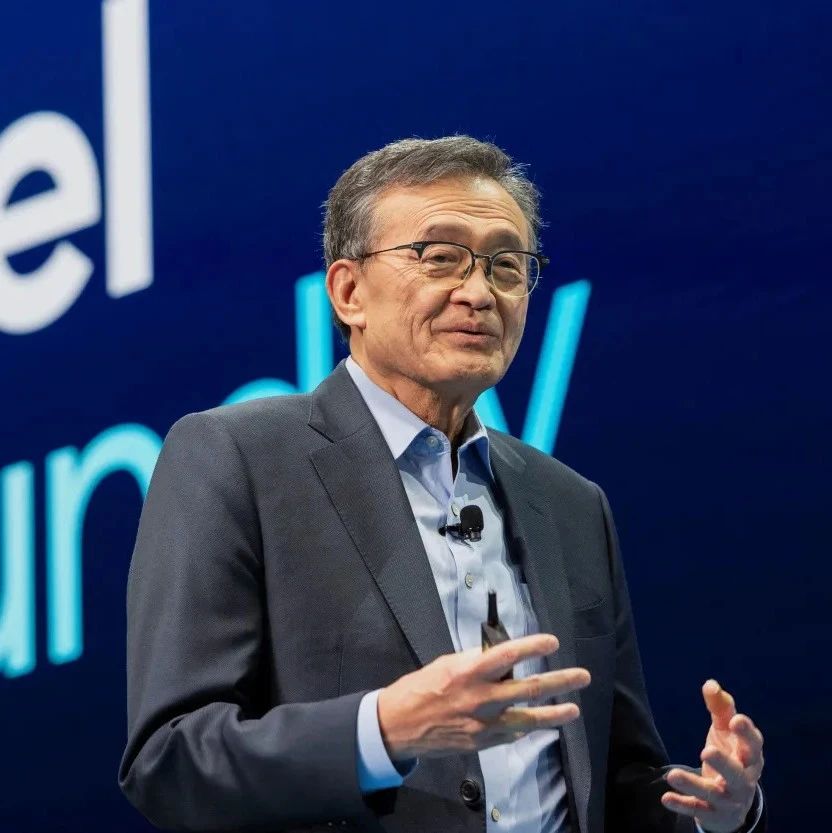
Core Viewpoint - The article discusses the challenges and strategic shifts faced by Intel under the leadership of newly appointed CEO Lip-Bu Tan, emphasizing the need for the company to regain its competitive edge in the semiconductor industry, particularly in the foundry business [1][2]. Group 1: Leadership and Background - Lip-Bu Tan, appointed as Intel's CEO, has a strong background in the semiconductor industry, having previously worked at Cadence Design Systems and as a venture capitalist [1][3]. - Tan's extensive network in the semiconductor sector is highlighted, with CFO David Zinsner noting his unique Rolodex and recent meetings with 22 potential clients and partners [1][2]. Group 2: Strategic Challenges - Intel has seen a 70% decline in market value since early 2020, and since Tan's appointment, the company's market value has remained stable [1]. - The company is transitioning from being a chip manufacturer to focusing on foundry services, especially in light of U.S. investments in critical technology [2]. - Under former CEO Pat Gelsinger, Intel invested $90 billion from 2021 to 2024 to build its foundry business, but investor confidence in the returns from this investment has waned [2]. Group 3: Market Competition - Intel's traditional dominance in CPU manufacturing is being challenged by NVIDIA's AI chips and AMD's significant market share in CPUs and server chips [2]. - The company aims to compete with leading foundries like TSMC by improving its manufacturing processes and technology offerings [6]. Group 4: Operational Changes - Tan is focused on improving internal company culture and reducing bureaucracy, emphasizing the need for a more streamlined organization [10][11]. - The company plans to lay off 15,000 employees and is exploring portfolio cuts to enhance operational efficiency [10]. Group 5: Customer Engagement and Trust - A key strategy for Tan is to secure major foundry clients, which would signal to the market that Intel's investments are translating into revenue [5]. - Tan has emphasized the importance of understanding customer needs and building trust within the industry, marking a significant shift from Intel's previous focus on proprietary chip sales [7][8].
新任CEO能否力挽狂澜,重塑英特尔昔日辉煌
Huan Qiu Wang· 2025-05-30 02:16
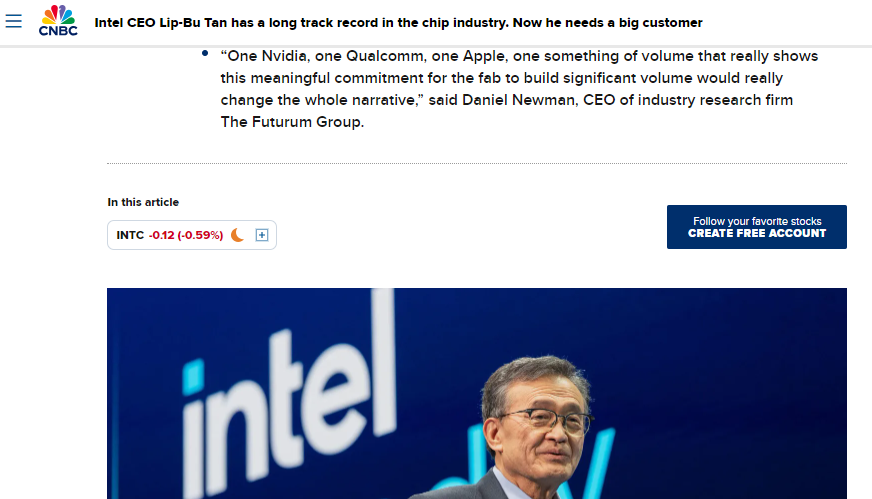
Core Insights - Intel's new CEO, Pat Gelsinger, aims to restore the company to its status as a world-class product company and a leading foundry, focusing on customer satisfaction and innovation in response to the rise of artificial intelligence and competitive pressures [1][3] Group 1: Company Transformation - Intel has seen a 70% decline in market value since early 2020, and its stock price has remained stable since Gelsinger's appointment on March 12 [3] - The company is transitioning from being a semiconductor leader to focusing on foundry services, particularly as the U.S. emphasizes domestic investment in critical technologies [3] - Gelsinger is prioritizing the foundry business, aiming to regain customer trust through advanced process technologies and improved service quality [3][4] Group 2: Leadership and Strategy - Gelsinger's extensive industry experience and connections are viewed positively, with expectations that he will streamline operations, reduce costs, and enhance customer focus, particularly in the foundry sector [4] - The transition to a foundry model is challenging due to significant investment requirements and competitive pressures, necessitating strong leadership in manufacturing [4] - Gelsinger's previous success in revitalizing Cadence and understanding the semiconductor supply chain positions him as a capable leader for Intel's turnaround [4]
品牌商的选择题:代工订单接不接
经济观察报· 2025-05-11 06:34
Core Viewpoint - The article discusses the dilemma faced by a dairy company in East China regarding whether to accept private label orders from channel partners, highlighting the pressure on brand owners as retailers increasingly develop their own brands, which can lead to price competition and reduced brand value [2][12][16]. Group 1: Market Dynamics - Retailers' private label sales growth is significantly outpacing overall fast-moving consumer goods (FMCG) sales, with a reported 40% increase in private label sales compared to just 2% for overall FMCG sales in the first half of 2024 [2]. - Major retailers like Sam's Club have seen their private label, Member's Mark, capture over 0.5% market share in certain categories [2]. Group 2: Manufacturer Challenges - Manufacturers face extreme transparency in cost structures when competing for private label contracts, with channel partners demanding detailed breakdowns of all costs, including minor expenses like packaging and utilities [9][10]. - The profit margins for contract manufacturing can be significantly lower, with some products yielding gross margins that are half of those for proprietary brands [8][12]. Group 3: Strategic Responses - Some manufacturers, like a leading grain and oil company, have opted to engage in contract manufacturing to maintain market presence, acknowledging that if they do not participate, competitors will [4][15]. - Companies are increasingly focusing on building their own brands while balancing the need for immediate cash flow from contract manufacturing, which can help establish trust with channel partners for future brand collaborations [17]. Group 4: Competitive Landscape - The entry of retailers into private label production has led to increased competition, particularly in categories that were previously dominated by established brands, such as dairy products [20]. - Retailers are not only looking for low-cost products but also for unique offerings, which can create opportunities for brand manufacturers to negotiate better terms based on their product quality [21]. Group 5: Long-term Implications - The reliance on contract manufacturing can weaken brand value and increase vulnerability to price competition, as seen in the experiences of various manufacturers [12][15]. - The article suggests that while contract manufacturing can provide short-term revenue, it may also pose risks to long-term brand positioning and market stability [16][23].
品牌商的选择题:代工订单接不接
Jing Ji Guan Cha Wang· 2025-05-10 03:56
Group 1 - A dairy company with annual sales of less than 10 billion yuan faces a dilemma regarding whether to accept private label orders from channel partners, which could alleviate excess milk supply but also lead to intense price competition and brand dilution [1][10] - The Kantar Consumer Index indicates that in the first half of 2024, the overall sales growth of private label products in monitored fast-moving consumer goods categories is 40%, significantly higher than the 2% growth of overall fast-moving consumer goods [1] - The trend of channel partners launching private label products is causing brand manufacturers to feel threatened, as they must compete directly with these private labels on supermarket shelves [1][14] Group 2 - A leading grain and oil company has adopted an open mindset towards the trend of channel partners launching private labels, acknowledging that if they do not participate, others will [2] - The company has decided to engage in contract manufacturing for channel partners, aiming to maximize profits despite the pressure to lower prices from these partners [3][11] - Contract manufacturing often results in lower profit margins, with some products yielding profits that are only half of those from self-branded products [5][11] Group 3 - The transparency required by channel partners during the bidding process for private label products puts significant pressure on manufacturers, as they must disclose all cost details [6][8] - The shift towards private labels has led to increased competition, with channel partners leveraging their pricing power to negotiate lower costs from manufacturers [9][12] - The dairy company’s market representative noted that the demand from channels includes both straightforward orders and specific product requirements, which can increase supply chain costs if not met [13] Group 4 - The emergence of private labels in traditionally branded categories, such as dairy, indicates a shift in strategy by channel partners, who are now competing in higher brand equity segments [14][15] - The collaboration between channel partners and manufacturers is evolving, with some partners seeking to create unique products rather than simply relying on low-cost options [16] - The competitive landscape is forcing manufacturers to consider high-end positioning for their own brands to differentiate from private labels, which often dominate shelf space [16][17]
开润股份:2024年箱包代工收入增长20%,服装代工并表嘉乐-20250502
Guoxin Securities· 2025-05-02 05:05
Investment Rating - The investment rating for the company is "Outperform the Market" [3][36][41] Core Views - The company is expected to achieve a revenue growth of 37% in 2024, driven by the acquisition of Shanghai Jiale, which will contribute both one-time gains and ongoing performance post-consolidation [1][36] - The main business segments include bag and clothing OEM, with the OEM business accounting for 83% of total revenue in 2024 [1] - The company reported a significant increase in net profit, with a year-on-year growth of 229.5% to 381 million yuan in 2024, aided by the consolidation of Jiale [1][36] - The overall gross margin is expected to decline slightly due to the lower margin of Jiale, with a year-on-year decrease of 1.5 percentage points to 22.9% [1][36] - The company anticipates continued high growth in Q1 2025, with revenue of 1.234 billion yuan, a 35.6% increase year-on-year, and a net profit of 85 million yuan, up 20.1% [2][36] Summary by Sections Financial Performance - In 2024, the company achieved operating revenue of 4.24 billion yuan, a 36.6% increase year-on-year, and a net profit of 381 million yuan [1][38] - The first quarter of 2025 saw revenue of 1.234 billion yuan, reflecting a 35.6% growth, with net profit reaching 85 million yuan [2][38] - The gross margin for Q1 2025 improved slightly to 24.7%, despite the impact of Jiale's lower margin [2][38] Business Segments - Bag OEM revenue for 2024 is projected to grow by 20.3% to 2.372 billion yuan, benefiting from client replenishment and increased orders from major clients like Nike and Decathlon [2][36] - Clothing OEM revenue is expected to surge by 146.43% to 1.162 billion yuan, primarily due to the consolidation of Jiale [2][36] - Brand business revenue grew by 5.1% to 658 million yuan, driven by collaboration with Xiaomi [2][36] Future Outlook - The company is optimistic about expanding its OEM business in Indonesia, with production capacity expected to ramp up in the next two years [36] - Profitability is anticipated to improve as Jiale's margins align with industry peers, with significant potential for margin expansion [36] - The target price is set between 22.8 and 23.8 yuan, corresponding to a PE ratio of 15-16x for 2025 [36][38]

英特尔2024年动荡与2025年扭转之路
傅里叶的猫· 2025-05-01 14:49
Core Viewpoint - Intel experienced significant turmoil in 2024, facing intense competition in the chip design and manufacturing market, leading to substantial losses. In 2025, under new CEO Lip-Bu Tan, the company is taking measures to address systemic issues and streamline operations, although a full turnaround will take several quarters [1][10]. Financial Performance - In Q1 2025, Intel reported revenue of $12.7 billion, flat year-over-year but down 11% quarter-over-quarter. The gross margin was 36.9%, a decline of 4.1 percentage points year-over-year and 2.3 percentage points quarter-over-quarter. The net loss was $888 million, a 115% decrease year-over-year and a 604% decline quarter-over-quarter [2][3]. - Despite the losses, Intel achieved a non-GAAP profit of $580 million, indicating that core operations are not entirely in distress. However, restructuring and compensation costs have significantly impacted overall performance [3]. Business Unit Developments - Intel's Foundry division generated $4.7 billion in revenue, a 7% increase year-over-year, but faced an operating loss of $2.3 billion, with an operating margin of -50%. The division is striving to become a key player in the contract manufacturing space [4][5]. - The Data Center and AI Group (DCAI) reported revenue of $4.1 billion, an 8% increase year-over-year, with operating income of $575 million and an operating margin of 13.9%, marking the best performance in over a year. AI hardware sales were below expectations, but CPU and storage sales exceeded forecasts [7]. - The Client Computing Group (CCG), Intel's primary revenue source, saw revenue of $7.6 billion, an 8% decline year-over-year, with operating income of $2.4 billion and an operating margin of 30.9%. The group absorbed the edge computing business, but overall performance was affected by inherited underperforming product lines [8]. Strategic Changes - Intel completed the divestiture of its NAND business, selling it to SK Hynix, and is in the process of selling a majority stake in FPGA manufacturer Altera to Silver Lake, retaining 49% ownership. The valuation for Altera is approximately $8.75 billion [2][9]. - The company is also restructuring its operations, with plans to reduce capital expenditures from $20 billion to $18 billion and operating expenses by $500 million to $17 billion in 2025, with further reductions planned for 2026 [10]. Future Outlook - Intel's Q2 2025 revenue outlook is projected at $11.8 billion (±$600 million), with GAAP and non-GAAP gross margins expected to be 34.3% and 36.5%, respectively. The company anticipates challenges due to U.S. trade policies and potential economic downturns [9][10].

裁员瘦身、押注代工量产,"救火队长"陈立武能拯救英特尔吗?
Xin Lang Cai Jing· 2025-04-30 11:12
Core Viewpoint - Intel's new CEO, Pat Gelsinger, is focused on restructuring the company to ensure the success of its foundry business, amidst a challenging macroeconomic environment and significant internal changes [1][2][4]. Financial Performance - Intel's Q1 financial results exceeded market expectations, but the Q2 revenue forecast fell short, with expected revenue between $11.2 billion and $12.4 billion, averaging $11.8 billion, significantly lower than the analyst average of $12.9 billion [1]. - The company's stock price dropped by 5% following the Q2 earnings forecast [1]. Restructuring and Cost-Cutting - Intel plans to continue its cost-cutting measures, including a 20% workforce reduction, which could result in over 20,000 job cuts by the end of 2024, marking the largest organizational adjustment since its founding in 1968 [4][5]. - The new CEO aims to streamline operations and reduce complexity within the company, emphasizing a shift in management culture towards efficiency and effectiveness [2][10]. Foundry Business Strategy - Intel's foundry business is a critical focus, with plans to produce the Intel 18A (1.8nm) chips by the end of 2025, and the 14A (1.4nm) chips expected to be produced a year ahead of TSMC [1][14]. - The company has faced significant losses in its foundry business, with projected losses of $52 billion, $70 billion, and $134 billion over three years, leading to a total loss of $188 billion in 2024 [11][12]. Leadership and Market Position - The new CEO, Chen Liwu, is viewed as a key figure in revitalizing Intel, having a strong background in the semiconductor industry and a history of successful leadership in previous roles [7][8]. - Intel's market share in the foundry sector is currently minimal, with only 1% as of Q2 2023, compared to TSMC's 67% [11][12].