供应链本土化

Search documents
瑞迈特(301367) - 2025年10月17日投资者关系活动记录表
2025-10-17 09:40
Company Overview - Founded in 2003, the company launched its first multi-channel sleep monitor in 2003 and its first CPAP sleep breathing machine in 2007. It received CE certification in 2008 and FDA certification in 2012, with successful listing on the Shenzhen Stock Exchange in 2016 [2][3]. - The company specializes in providing comprehensive treatment solutions for OSA and COPD patients, covering diagnosis, treatment, and chronic disease management, and is a leading domestic manufacturer of non-invasive ventilators and masks [2][3]. Product and Market Development - As of June 30, 2025, the company holds 666 valid domestic patents, including 116 invention patents, 404 utility model patents, and 146 design patents. It also has 266 overseas patents, including 45 in the U.S. and 38 in Europe [3]. - The G3 X model non-noise cotton ventilator has received FDA approval and is now eligible for sale in the U.S. market, with sales commencing in July 2025 [4]. - The company has established a European cloud platform, facilitating the transition from non-mainstream to mainstream insurance markets, which supports sustainable development in Europe [5]. Financial Performance - The company has seen a continuous improvement in gross margin, attributed to effective cost control and an increase in the proportion of high-margin consumables [6]. - The company has achieved significant localization in its supply chain, ensuring domestic supply chain safety and cost advantages [7]. Competitive Advantages - The company has a deep understanding of global medical device regulations and a well-established distribution network, having entered major insurance markets in the U.S., Germany, the U.K., France, and Italy [7]. - It has a professional intellectual property department, securing patents and trademarks in key global markets, which strengthens its overseas market position [7]. - Since 2023, the company has focused on localizing its operations and hiring international talent to enhance its global operational capabilities [7].
奥乐齐中国迎来首位女掌门,挑战有多大?
3 6 Ke· 2025-10-16 02:17
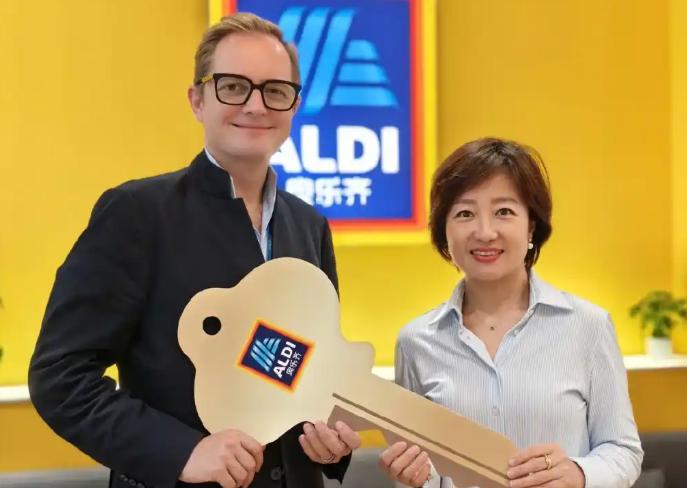
Core Insights - The article discusses the transition of Aldi China as it appoints Jacqueline Chen as the new CEO, indicating a shift towards deeper localization and accelerated expansion beyond Shanghai [1][3][12]. Group 1: Leadership Transition - Christoph Schwaiger, the former CEO of Aldi China, has stepped down, handing over leadership to Jacqueline Chen, who will report directly to the global headquarters [1]. - Chen's appointment signals a focus on local market adaptation and a need to compete more aggressively in the Chinese retail landscape [3][12]. Group 2: Market Strategy - Aldi China has been primarily focused on the Shanghai market since its entry in 2019, with only 79 stores currently, highlighting the need for rapid expansion to keep pace with competitors [3][12]. - The company aims to enhance its brand localization, team localization, and supply chain localization to cater to diverse regional market characteristics and consumer preferences [3][12]. Group 3: Product and Pricing Strategy - Aldi China has increased its private label product share to 90%, which helps in building consumer trust and offers competitive pricing by eliminating middlemen [4][9]. - The company emphasizes a low-price strategy with a significant portion of its SKUs priced at 9.9 yuan or below, aiming to reshape its image as a community supermarket offering good quality at low prices [4][6][11]. Group 4: Competitive Landscape - The retail environment in China is becoming increasingly competitive, with various players like Hema, Meituan's Happy Monkey, and JD's discount supermarkets entering the market, all focusing on quality and affordability [12][13]. - Aldi's unique selling proposition of combining quality with affordability is being challenged as competitors adopt similar strategies, necessitating a swift response from Aldi [12][15]. Group 5: Future Plans - Aldi plans to expand its presence in Jiangsu province, with a target of opening 15 new stores within two years and achieving a local procurement rate of 30% by 2026 [15]. - The company is also working on a supply chain collaboration model to reduce operational costs, aiming for logistics costs to remain below 5% [15].

恒生指数早盘涨0.04% 上海电气大涨超15%
Zhi Tong Cai Jing· 2025-10-09 04:11
Group 1 - The Hang Seng Index rose by 0.04%, gaining 11 points to close at 26,840 points, while the Hang Seng Tech Index increased by 0.63% [1] - Shanghai Electric (601727) surged by 15.72%, hitting the upper limit in A-shares, driven by recent positive developments in the controllable nuclear fusion sector [1] - Hua Hong Semiconductor (01347) climbed 6.75%, reaching a new high as local supply chain integration accelerates, with domestic foundry demand expected to expand rapidly [1] - Jiangxi Copper (600362) shares rose by 11%, as the company is a leading copper smelter in China, with First Quantum's copper mine expected to resume production [1] - Luoyang Molybdenum (603993) increased by 8%, following a significant rise in cobalt prices, which surged over 11% in the previous two days due to strict export controls from the Congo [1] Group 2 - Hang Seng Bank (00011) saw a 26% increase, following HSBC's recommendation for its privatization [2] - Solar energy stocks experienced gains, with upstream prices rising more than downstream prices in September; New Special Energy (01799) rose 4.52%, Flat Glass (601865) increased by 7.67%, and GCL-Poly Energy (03800) gained 3.73% [2] - High-speed rail infrastructure stocks led the gains, with record railway investment progress; China Railway (601390) rose 9%, China Metallurgical Group (601618) increased by 6%, and CRRC Corporation (601766) gained 4.17% [2] - ZTE Corporation (00763) saw both A and H shares rise, with the launch of Co-Sight super intelligent system indicating positive growth potential in the enterprise AI market; H shares increased by 10.73% [2] Group 3 - Mixue Group (02097) rose 8.96% despite market trends, as it made a forward-looking investment in fresh beer brand Fulu, expanding its "tea + coffee + fresh beer" portfolio [3] - The Hang Seng Biotechnology Index fell by 3.52%, with notable declines in stocks such as Innovent Biologics (09969) down over 9%, I-Mab (01801) down over 6%, and China Biologic Products (01177) down over 6% [3] Group 4 - Smoore International (06969) dropped over 9%, having fallen more than 30% from its year-to-date high, with UBS projecting lower earnings than market consensus [4]

港股午评|恒生指数早盘涨0.04% 上海电气大涨超15%
智通财经网· 2025-10-09 04:06
Group 1 - Hong Kong's Hang Seng Index rose by 0.04%, gaining 11 points to close at 26,840 points, while the Hang Seng Tech Index increased by 0.63% [1] - Shanghai Electric (02727) surged by 15.72%, with its A-shares hitting the daily limit, driven by positive developments in the controllable nuclear fusion sector [1] - Huahong Semiconductor (01347) climbed 6.75%, reaching a new high as domestic supply chain localization accelerates, with local foundry demand expected to expand rapidly [1] - Jiangxi Copper (00358) increased by 11%, being a leading copper smelting company in China, with a potential resumption of production at a copper mine owned by First Quantum [1] - Luoyang Molybdenum (03993) rose by 8%, as cobalt prices surged over 11% in the previous two days due to strict export controls in the Democratic Republic of Congo [1] - Hang Seng Bank (00011) jumped 26% following HSBC's recommendation to privatize the bank [1] - Solar stocks saw gains in early trading, with prices in the photovoltaic industry chain continuing to rise in September, particularly in upstream sectors [1] - High-speed rail infrastructure stocks led the gains, with record railway investment progress and the initiation of the "14th Five-Year" railway development planning [1] Group 2 - ZTE Corporation (00763) saw both A and H shares rise, with the overseas debut of its Co-Sight super intelligent system indicating positive growth potential in the enterprise AI market [2] Group 3 - Mixue Group (02097) rose 8.96% despite market trends, making a forward-looking investment in fresh beer brand Fulu, expanding its "tea + coffee + fresh beer" portfolio [3] - The Hang Seng Biotechnology Index fell by 3.52%, with several constituent stocks like Innovent Biologics (09969) and Sino Biopharmaceutical (01177) experiencing declines of over 6% [3] - Smoore International (06969) dropped over 9%, having fallen more than 30% from its yearly high, with UBS projecting lower earnings than market consensus [3]
华虹半导体涨超6%再创新高 供应链本土化继续加速 本土代工需求有望迅速扩大
Zhi Tong Cai Jing· 2025-10-09 02:48
该行表示,大华虹"一体化"战略布局下,包括华虹半导体在内的华虹集团技术能力有望提升;看好九厂 产能爬坡和华力微并入上市公司增厚收入及利润,募资完成后有望开启下一轮扩产周期。 华泰证券发布研报称,需求端,国产AI芯片生态快速走向成熟正重构晶圆代工格局,该行测算2024年 中国设计公司先进工艺代工需求达95亿美元。随着华为昇腾系列等AI芯片迭代加速,对本土代工需求 有望迅速扩大;供给端,BIS新规将限制范围扩至持股>50%子公司,政策收紧或将加速供应链本土化。 华虹半导体(01347)涨超6%,高见97.3港元,再创历史新高。截至发稿,涨6.48%,报96.95港元,成交 额31.49亿港元。 ...
港股异动 | 华虹半导体(01347)涨超6%再创新高 供应链本土化继续加速 本土代工需求有望迅速扩大
智通财经网· 2025-10-09 02:28
华泰证券发布研报称,需求端,国产AI芯片生态快速走向成熟正重构晶圆代工格局,该行测算2024年 中国设计公司先进工艺代工需求达95亿美元。随着华为昇腾系列等AI芯片迭代加速,对本土代工需求 有望迅速扩大;供给端,BIS新规将限制范围扩至持股>50%子公司,政策收紧或将加速供应链本土化。 该行表示,大华虹"一体化"战略布局下,包括华虹半导体在内的华虹集团技术能力有望提升;看好九厂 产能爬坡和华力微并入上市公司增厚收入及利润,募资完成后有望开启下一轮扩产周期。 智通财经APP获悉,华虹半导体(01347)涨超6%,高见97.3港元,再创历史新高。截至发稿,涨6.48%, 报96.95港元,成交额31.49亿港元。 ...
因关键设备依赖进口存不确定新,武汉凡谷终止入股武汉光钜
Ju Chao Zi Xun· 2025-09-27 03:53
Core Viewpoint - Wuhan Fangu announced the termination of its investment in Wuhan Guangju Microelectronics to protect the company's and shareholders' interests and control investment risks [2][3] Group 1: Investment Decision - On March 12, 2025, Wuhan Fangu approved a capital increase plan to invest RMB 100 million in Wuhan Guangju, with RMB 11.2068 million allocated to registered capital and RMB 88.793194 million to capital reserves [2] - The investment aimed to support Wuhan Guangju's business development and capacity expansion [2] Group 2: Challenges Faced by Wuhan Guangju - The operating environment for Wuhan Guangju has significantly changed due to external policy fluctuations and intensified domestic industry competition, leading to increased uncertainty in its medium to long-term development [2] - Supply chain challenges include geopolitical impacts on core raw material supplies, limited procurement channels, and rising material prices, particularly for key materials like photoresist and high-purity electronic gases [2] - Capacity expansion challenges arise from reliance on imported key production equipment, with uncertainties in procurement costs and delivery timelines, despite efforts to localize the supply chain [2] Group 3: Market Competition - The domestic RF front-end market is experiencing intensified competition with severe product homogeneity, leading to irrational price competition in 2025, which has significantly reduced product prices for Wuhan Guangju [3] - The company faces challenges in turning profitable in the short term due to these competitive pressures [3] Group 4: Termination Agreement - Following a reassessment of the investment project, Wuhan Fangu decided to terminate the investment to mitigate uncertainties and enhance capital efficiency [3] - On September 25, 2025, a termination agreement was signed, requiring Wuhan Guangju to refund the RMB 100 million investment and corresponding interest within 30 days [3]

在中国考察后,多家欧美风投机构投资人:西方清洁能源几乎失去投资价值
Sou Hu Cai Jing· 2025-09-22 15:41
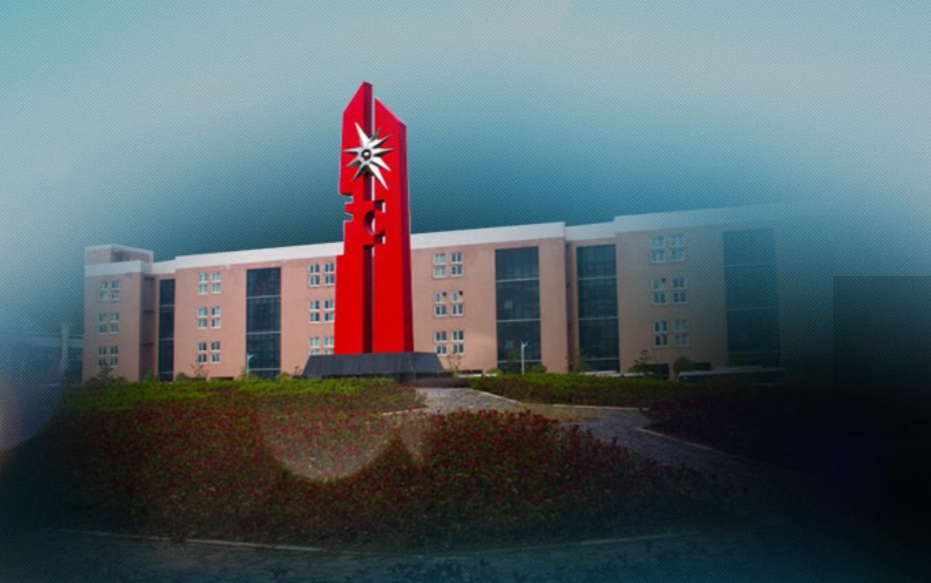
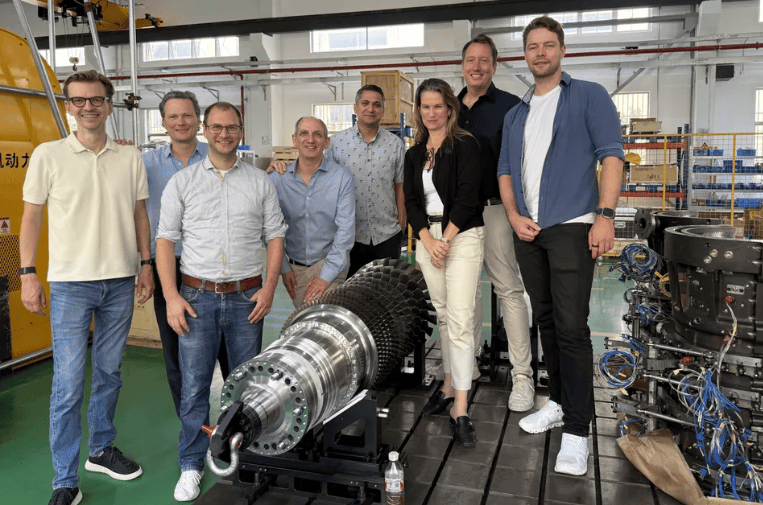
【文/观察者网 张菁娟】8位来自西方风投机构的投资人,在今年七月踏上了一场重塑认知的中国之行。他们 深入工厂车间,与初创企业创始人及其投资者交谈。当这场旅程结束时,他们带回纽约气候周的不是投资意 向书,而是西方清洁能源几乎失去投资价值的消息。 "每个人都应该进行一次这样的旅行。"高盛和巴克莱前投资银行家、Kompas VC合伙人拉法埃利(Talia Rafaeli)告诉彭博社,尽管出发前他们就已知晓中国在电池和"所有与能源相关"领域已经领先,但亲眼目睹 到如此巨大的差距,让他们不禁怀疑欧洲和北美的竞争对手如何生存。 在宁德时代的生产基地,风投公司2150的联合创始人布罗(Jacob Bro)看到了令其震撼的场景,"12条并行 的全自动化生产线,周围还有更多。当你看到这些时,就会意识到追赶是徒劳的:这根本不可能实现。" 总部位于柏林的风投公司Planet A Ventures的联合创始人福格(Nick de la Forge)则明确表示,该公司已经决 定不再投资西方的电池制造与回收、电解器、太阳能和风电硬件等领域的初创企业。他说,此行前他怀疑中 国的领先地位,但去过之后,这些领域现在"被严格排除在考虑范围内"。 ...

意大利光伏拍卖首设“中国门槛”
Zhong Guo Dian Li Bao· 2025-09-17 02:16
Core Points - Italy's Ministry of Environment and Energy Security (MASE) has implemented a new decree that excludes Chinese photovoltaic components, battery cells, and inverters from a 1.6 GW solar project auction, indicating a significant shift in market access standards in Europe [1][2] - The auction model adopted by Italy is a typical bidding process for renewable energy project development, where developers compete for project rights based on set capacity targets and electricity price bids [1] - The new auction rules introduce strict pre-qualification standards for solar projects over 1 MW, requiring that at least one solar technology component meets EU standards and is not of Chinese origin [1][2] - The Italian government has reserved 20% of the total quota for "special auctions" exclusively for projects that meet local manufacturing requirements, reflecting a strong policy direction towards domestic production [1] Industry Implications - The ban primarily affects government-led large project auctions and does not constitute a blanket market ban, but it signals a potential shift in market dynamics that could influence future projects [2] - Italy's solar industry has been heavily reliant on Chinese supply chains, with over 70% of photovoltaic component imports coming from China, raising concerns about the ability to meet demand with local production [2] - The current government, led by Prime Minister Meloni, is aligning with a protectionist industrial policy, aiming to increase local manufacturing to meet the EU's target of 40% domestic production of net-zero technologies by 2030 [2][3] - The auction's restrictions may lead to increased project costs and delays in energy transition if local manufacturing capabilities do not develop quickly enough to fill the gap left by Chinese products [3] Auction Process - The registration phase for the first round of bidding ended on September 12, with 870 applications submitted, totaling nearly 12 GW of declared generation capacity, significantly exceeding the planned capacity [4] - The government is expected to allocate approximately 30 days for the bidding period and 45 days for evaluation, with the entire process projected to conclude by the end of 2025 [4] - The ability of Chinese photovoltaic companies to adapt and compete for the remaining 80% of the general quota, as well as the effectiveness of the "special auction," will be critical indicators of the future direction of the European solar market [4]

苹果发布会“牙膏挤爆”,但缺了最性感的部分
首席商业评论· 2025-09-11 03:37
Core Viewpoint - The recent Apple product launch showcased significant upgrades in the iPhone lineup, particularly with the iPhone 17 and the introduction of the iPhone Air, which aims to address previous criticisms of incremental updates. However, the positioning of the iPhone Air appears awkward, and the company faces challenges in maintaining its market dominance amid increasing competition, especially in China and India [3][4][9][11]. Group 1: iPhone 17 and iPhone Air - The iPhone 17 standard version features a 120Hz refresh rate and is powered by the A19 chip, built on a 3nm process, enhancing GPU efficiency by 20% compared to the A18 [3]. - The iPhone Air, touted as the thinnest iPhone at 5.6mm, replaces the Plus version and is positioned between the standard and Pro models, but its value proposition is questioned due to the need for an additional MagSafe battery for better battery life [4][6]. - The iPhone 17 Pro and Max models received standard upgrades, including a new cooling system and improved camera sensors, with battery life extended to 39 hours [6]. Group 2: AirPods Pro 3 - The AirPods Pro 3 features significant enhancements in noise cancellation, achieving four times the active noise cancellation effect, and introduces real-time translation capabilities [7]. Group 3: Market Performance and Challenges - Apple's iPhone revenue for Q3 2025 reached $40.26 billion, a 5.8% year-over-year increase, but the company faces declining market share in China, ranking fifth behind local competitors [9][11]. - Despite a recent revenue increase in the Greater China region, Apple has struggled with consecutive quarters of decline, attributed to insufficient innovation and fierce competition from local brands [11][12]. - Apple is shifting production of iPhone 17 models to India, with 80% of U.S. iPhone imports now coming from India, indicating a strategic pivot to diversify its supply chain [12][13]. Group 4: AI Strategy and Market Perception - Apple's AI initiatives, particularly the Apple Intelligence, have faced criticism for delays and perceived inadequacies compared to competitors, impacting market sentiment and stock performance [19][20]. - Internal challenges regarding AI development have been highlighted, with reports suggesting that Apple's AI capabilities lag behind those of competitors like ChatGPT [22][23]. - The company's historical approach of entering markets later with refined products may not suffice in the rapidly evolving AI landscape, raising concerns about its future competitiveness [22][23].