全球供应链重构

Search documents
9亿出售医疗资产,一家制造业上市公司选择战略退出
思宇MedTech· 2025-12-12 03:58
Core Viewpoint - Kosen Technology (603626.SH) announced the sale of its wholly-owned subsidiary, Kosen Medical, to Jiangsu Yaolingke Medical Technology Co., Ltd. for 915 million RMB, marking a significant strategic shift as the company exits the medical device sector [2] Group 1: Transaction Details - The transaction is based on an income approach, with the total equity value assessed at 913 million RMB as of September 30, 2025, reflecting an increase of 615 million RMB and a growth rate of 206.45% [2] - Kosen Technology expects to recognize approximately 600 million RMB in investment income from this divestiture, which will be recorded as non-recurring gains [2] - The deal is seen as a strategic acquisition for Yaolingke, enhancing its position in the precision medical device manufacturing sector [2] Group 2: Kosen Medical's Background - Kosen Medical has established itself as a competitive player in the medical device manufacturing industry, contributing to the high premium in the sale [7] - The company has collaborated with major clients like Medtronic, Zimmer, and Johnson & Johnson, providing critical components for various medical devices [9][10] - Despite its capabilities, Kosen Medical's revenue contribution has been low, accounting for about 10% of Kosen Technology's overall revenue, indicating its role as a supplementary business [6] Group 3: Reasons for Divestiture - Kosen Technology faced significant financial pressure, reporting cumulative losses of 873 million RMB from 2023 to the first three quarters of 2025, alongside high accounts receivable of 1.17 billion RMB [13] - The differing operational models between the consumer electronics and medical device sectors led to insufficient synergy, negatively impacting the efficiency of the core business [14] - The company aims to refocus on its core business in consumer electronics and energy storage, necessitating capital for overseas expansion projects [17] Group 4: Strategic Implications - The sale reflects broader challenges faced by manufacturing companies attempting to diversify into different sectors, particularly when operational demands and resource allocation become strained [26] - The entry of LYFE Capital into the medical manufacturing space signifies a shift towards asset acquisition in the global medical device sector, moving beyond previous focuses on R&D investments [27]



结束访华才2天,马克龙就变脸了,要是中国不进口欧洲东西,或对华加税
Sou Hu Cai Jing· 2025-12-09 21:29
中欧贸易格局在全球经济复苏进程中显现出显著不平衡,欧盟对华逆差持续扩大,主要源于双方产业分工差异和出口结构调整。 中国制造业通过技术升级和供应链优化,提升了产品竞争力,如电动汽车和高端装备出口增速明显,而欧盟出口以传统优势领域为主,受内部管制影响,高 科技产品对华输出受限。 这种局面反映出欧洲经济体内部协调难题,法国作为欧盟重要成员,其对华贸易逆差已达数百亿欧元规模,凸显需通过对话寻求互惠路径。 马克龙访华后迅速转变立场,强调如果中国不增加从欧洲进口商品,欧盟可能征收关税,这暴露了法国对贸易失衡的焦虑。 欧盟内部对华政策分歧明显,德国作为对华贸易额最大的成员国,依赖中国市场深度投资,尤其在汽车和化工领域,通过本地化生产规避部分壁垒,与法国 单一出口模式形成对比。 德国企业在中国投资存量远超法国,这推动了技术转移和就业创造,贸易额突破2000亿美元,显示互利合作的可行性。 马克龙呼吁中国反向投资欧洲,类似于25年前欧洲对华投资模式,但当前中国企业在欧洲已设立多家工厂,涵盖新能源和制造业,投资规模逐年扩大,这种 双向流动有助于平衡逆差,却被法国视为威胁。 欧盟此前对中国电动汽车的反补贴调查虽征收关税,但中国出口仍 ...
俄印互动背后美国因素凸显
Sou Hu Cai Jing· 2025-12-06 23:06
Core Viewpoint - The visit of Russian President Putin to India marks a significant moment for strengthening bilateral relations, particularly in energy and defense sectors, amidst geopolitical pressures from the U.S. and the ongoing Ukraine crisis [1][2]. Group 1: Energy and Defense Cooperation - Both countries agreed to enhance cooperation in energy and defense, with Putin emphasizing Russia's commitment to supply oil, gas, and coal to India [2]. - The leaders expressed intentions to encourage technology transfer and joint ventures for producing Russian defense equipment in India [2]. Group 2: New Areas of Cooperation - The discussions highlighted a shift towards expanding cooperation into new areas such as technology innovation, connectivity, and local currency settlements, aiming to build a more resilient bilateral relationship [4]. - The goal is to increase annual bilateral trade to $100 billion, with a focus on diversifying trade beyond energy and defense [4]. Group 3: Strategic Context - The timing of the visit coincides with the 25th anniversary of the Russia-India strategic partnership and U.S. pressures on India regarding its oil purchases from Russia [1]. - Analysts suggest that India is leveraging this visit to showcase its economic diversification strategy and maintain a balance between its relations with Russia and the U.S. [1][2]. Group 4: Infrastructure and Logistics - Agreements were signed to enhance cooperation in transportation and logistics, focusing on developing stable and efficient transport corridors to reduce dependence on Western shipping routes [5]. - This initiative reflects both countries' desire for greater autonomy in the context of global supply chain restructuring [5].

现场画面曝光!普京与莫迪同车密谈
Xin Lang Cai Jing· 2025-12-06 14:24
Core Viewpoint - The visit of Russian President Putin to India on December 4-5 marks his first visit since the escalation of the Ukraine crisis, coinciding with the 25th anniversary of the Russia-India strategic partnership and amidst U.S. pressure on India regarding oil purchases from Russia [1][15]. Group 1: Energy and Defense Cooperation - Both countries agreed to strengthen cooperation in energy and defense, with a focus on ensuring uninterrupted oil supply from Russia to India [21]. - Putin emphasized Russia's role as a reliable supplier of oil, gas, and coal, while Modi highlighted energy security as a crucial pillar of the India-Russia relationship [21]. - The leaders announced plans to encourage technology transfer and joint ventures for the production of Russian defense equipment in India [21]. Group 2: Expanding Cooperation into New Areas - The visit signifies a push to extend bilateral cooperation beyond traditional sectors like energy and defense into areas such as technology innovation, connectivity, and local currency settlements [23]. - Both leaders aim to increase annual bilateral trade to $100 billion and gradually promote trade in local currencies [23]. - Modi stated that India and Russia are entering a new phase of "innovation, co-production, and co-creation," focusing on high-tech, green energy, pharmaceuticals, biotechnology, and textiles [25]. Group 3: Structural Trade Imbalances - Despite unprecedented trade levels, structural imbalances remain, with India exporting less than $5 billion to Russia out of a projected $68.7 billion bilateral trade for the fiscal year 2024-2025 [26]. - The trade relationship still heavily relies on energy security and defense cooperation, necessitating a significant expansion into non-energy goods, services, and industrial chain collaboration to mitigate external pressures from the West [26]. Group 4: Connectivity Agreements - Russia and India signed multiple agreements in transportation and logistics, emphasizing the development of stable and efficient transport corridors, including the International North-South Transport Corridor and the Eastern Maritime Corridor [28]. - This strategic layout aims to reduce dependence on Western-dominated shipping systems, reflecting both countries' desire for greater autonomy in the context of global supply chain restructuring [28].
【环球财经】普京访印 印俄合作有哪些新情况
Xin Hua She· 2025-12-06 05:49
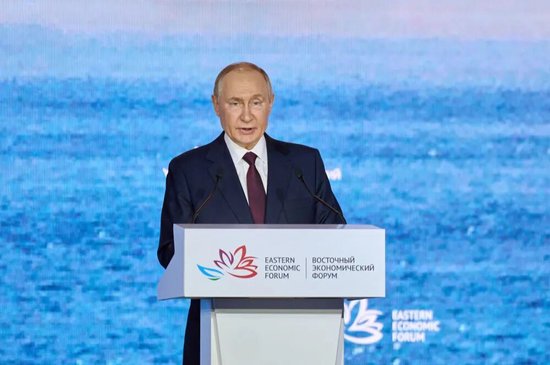
新华财经科伦坡12月6日电(记者陈冬书)俄罗斯总统普京4日至5日对印度进行国事访问。这是乌克兰 危机升级后普京首次访印,也正值美国以印度购买俄石油为由对印加征惩罚性关税之时。 经贸方面,双方签署《2030年愿景》,提出力争将双边贸易额提升至1000亿美元,扩大本币结算比重, 并加快推动印度与欧亚经济联盟自由贸易协定谈判。在印俄商业论坛上,莫迪提出两国正迈入"创新、 共同生产与共同创造"的新时代。 劳动力合作方面,双方签署移民协议,为印度技术人才提供新就业渠道,以缓解美国临时工作类签证紧 缩带来的压力。 在互联互通领域,双方签署多项协议,强调在建设"稳定、高效运输走廊"方面深化合作,旨在提高物流 效率、降低对西方航运体系的依赖,并在全球供应链重构背景下提升自主性。 双方作何评价 普京专机落地后,莫迪亲赴机场迎接,并用英俄双语连续发布三条社交媒体消息。他称普京为"我的朋 友",强调"印俄友谊经受住了时间考验",还晒出两人握手拥抱、车内热切交谈以及向普京赠书的照 片。 双方会谈结束后,印度外交秘书唐勇胜表示,此访的核心目标是扩大经济合作、加强产业链协同和提升 投资伙伴关系,在当前地缘政治紧张背景下,印俄关系被视为" ...
普京莫迪同车密谈 俄印互动背后美国因素凸显
Xin Hua She· 2025-12-06 05:31
Core Viewpoint - The visit of Russian President Putin to India marks a significant moment in the context of the ongoing geopolitical tensions, particularly with the U.S. pressure on India regarding its oil purchases from Russia. The visit aims to strengthen the strategic partnership between Russia and India, especially in energy and defense sectors, while also exploring new areas of cooperation such as technology and innovation [1][2]. Group 1: Energy and Defense Cooperation - The primary focus of the visit was on enhancing cooperation in energy and defense, with both leaders expressing commitment to strengthen ties in these areas. Putin emphasized Russia's role as a reliable supplier of oil, gas, and other energy resources to India, while Modi highlighted energy security as a crucial pillar of the bilateral relationship [3][4]. - Both countries agreed to encourage joint production of Russian defense equipment in India through technology transfer and joint ventures, indicating a deepening of defense collaboration [3]. Group 2: Expanding Bilateral Relations into New Areas - The discussions during the visit aimed to extend cooperation beyond traditional sectors into new areas such as technology innovation, connectivity, and local currency settlements. The goal is to build a more resilient framework for bilateral relations that can withstand external pressures [4][5]. - The leaders set an ambitious target to increase annual bilateral trade to $100 billion and gradually promote trade in local currencies, reflecting a strategic shift towards economic diversification [4]. Group 3: Trade Imbalances and Structural Issues - Despite the record levels of trade between India and Russia, structural imbalances remain a concern, particularly with India's exports to Russia being significantly lower. In the projected $68.7 billion bilateral trade for the fiscal year 2024-2025, Indian exports to Russia are expected to be less than $5 billion [5]. - The need to diversify trade beyond energy and defense is emphasized to mitigate vulnerabilities from Western pressures, highlighting the importance of expanding non-energy goods and services trade [5]. Group 4: Infrastructure and Connectivity Initiatives - Agreements were signed to enhance cooperation in transportation and logistics, focusing on building stable and efficient transport corridors. Key initiatives include the International North-South Transport Corridor and the Eastern Maritime Corridor, aimed at reducing dependence on Western shipping routes [5].
特朗普与中国推迟中国首期采购美国大豆份额履约时间浅析:8700万吨协议背后的战略博弈与未来走向
Xin Lang Cai Jing· 2025-12-04 17:13
Group 1: Overview of the Procurement Agreement - A significant trade agreement was reached post the October 2025 summit between the US and China, where China committed to purchasing 12 million tons of US soybeans by the end of 2025 and a guaranteed annual purchase of 25 million tons over the next three years, totaling 87 million tons [1] - The procurement actions commenced from November 17 to 19, 2025, with Chinese buyers purchasing approximately 1.6 million tons of US soybeans, marking the highest weekly purchase since November 2023 [1] Group 2: Adjustments and Logistics Challenges - By the end of November, China had only procured about 2 million tons of US soybeans, achieving only 16% of the target, leading to a decision to postpone part of the 12 million tons target to 2026 [2] - The adjustment reflects a pragmatic approach from both sides to avoid supply chain disruptions while fulfilling political commitments [2] Group 3: Price Disparities and Market Mechanisms - US soybeans face a significant price disadvantage, with costs around 4,419-4,465 RMB/ton compared to Brazilian soybeans at approximately 3,817 RMB/ton, creating a price gap of 600-650 RMB/ton [3] - The price disadvantage is primarily due to the 13% import tariff on US soybeans, while Brazilian soybeans incur only a 3% tariff, impacting the speed of commercial procurement [3] Group 4: Geopolitical Dynamics - The US government's push for the soybean agreement is driven by domestic political considerations, as agricultural states are crucial for Trump's electoral prospects [4] - China is using soybean procurement as a diplomatic tool, recently suspending imports from five Brazilian exporters due to quality issues, signaling flexibility in supplier choices [5] Group 5: Global Supply Chain Restructuring - Despite recent purchases from the US, Brazil remains China's primary soybean supplier, with exports to China expected to exceed 100 million tons in 2025 [7] - China's soybean import structure has fundamentally changed, with imports reaching 95.67 million tons from January to September 2025, where Brazil accounted for about 70% [8] Group 6: Future Outlook - The implementation of the 87 million tons procurement agreement faces challenges, including price disparities and logistical bottlenecks, with only 2 million tons confirmed by late November [9] - The soybean trade will reflect the broader US-China trade relationship, with potential tariff reductions influencing commercial procurement dynamics [10] Group 7: Conclusion - The soybean procurement agreement represents a strategic negotiation between the two economic powers, ensuring short-term supply chain stability while enhancing China's international image [11] - The normalization of soybean trade indicates a new state of US-China relations, characterized by seeking cooperation amidst competition [12]
李光满:中国对美反击,直击美国命门!
Sou Hu Cai Jing· 2025-11-30 07:40
Core Points - The trade war initiated by the U.S. against China has escalated significantly, with both countries imposing tariffs on each other's goods, impacting global trade dynamics [1][3][5][7] - China's response to U.S. tariffs has been strategic and coordinated, targeting key industries such as energy, automotive, and high-tech sectors, demonstrating its resilience and ability to counteract U.S. measures [3][5][7] - The trade conflict has led to a shift in global supply chains, with companies increasingly looking towards ASEAN countries to mitigate risks associated with U.S.-China tensions [5][7] Summary by Category Tariff Measures - The U.S. imposed a 10% tariff on Chinese goods and 25% on Canadian and Mexican goods, which was later increased to 20% and then 34% [1][5] - China retaliated with tariffs on U.S. coal, LNG, and agricultural products, including a 10% to 15% tariff on U.S. soybeans, directly affecting American farmers [3][5] Strategic Responses - China implemented export controls on critical minerals essential for military and high-tech industries, impacting U.S. missile and chip production [3][5] - The Chinese government placed U.S. companies like PVH Group on an unreliable entity list, restricting their market access [3][5] Global Trade Impact - The trade war has resulted in a 1% reduction in global trade, with the most vulnerable countries suffering the most [5][7] - The conflict has highlighted the limitations of unilateral trade policies, as U.S. allies like the EU and Japan have not joined in the actions against China [7] Long-term Implications - The trade war reflects deeper issues within the U.S. economy, such as manufacturing hollowing out and rising debt, while underestimating China's strategic resilience [7] - The ongoing conflict is pushing the global economic landscape towards multipolarity, challenging the effectiveness of unilateralism [7]
谈不拢了!稀土坚决不给美国军工,中国必须保持军事领先
Sou Hu Cai Jing· 2025-11-25 15:05
Group 1 - The U.S. government announced a 34% reciprocal tariff on goods from major trading partners, including China, affecting shipping, logistics, and shipbuilding, which violates WTO rules and disrupts the U.S.-China maritime agreement [1] - This policy has led to a more than 30% increase in bilateral trade costs, reflecting a typical unilateralism aimed at reshaping global supply chains and promoting manufacturing return to the U.S. [1] - China responded swiftly by imposing equivalent tariffs on U.S. imports and implementing export controls on seven categories of rare earth elements, emphasizing national security and international non-proliferation responsibilities [4] Group 2 - The U.S. and China engaged in high-level economic talks in Geneva, agreeing to gradually reduce tariffs within 90 days and temporarily suspend some non-tariff countermeasures, showcasing a willingness to dialogue [6] - However, the U.S. quickly violated the agreement by suspending the supply of LEAP-1C engines needed for China's C919 aircraft, tightening restrictions on chip and design software exports, which impacts China's aviation supply chain [6][8] - The ongoing trade tensions have led to an 8.1% year-on-year decline in bilateral trade, while China's export structure has improved, with high-tech products now accounting for 35% of exports [10] Group 3 - Rare earth elements are crucial for high-tech industries, with China controlling 60% of global extraction and 90% of refining, particularly dominating the heavy rare earth sector at 99% [12] - U.S. automakers have already reduced production by 20% due to supply disruptions, with General Motors and Ford warning of potential factory relocations to China if the situation does not improve [12] - China's export control measures are efficient, with a tiered approval system for exports, ensuring that any product containing over 0.1% Chinese rare earths requires a license, particularly for military applications [15] Group 4 - The U.S. military faces significant challenges, with the F-35 fighter jet requiring 920 pounds of rare earths, and Virginia-class submarines needing over 9,000 pounds, leading to increased production costs and delays [17] - The Pentagon's reserves are only sufficient for 18 months, and development of the F-47 sixth-generation fighter has been paused due to supply issues [17] - In contrast, China's military prioritizes domestic supply, achieving an 85% recovery rate of rare earths at one-third of the cost compared to the U.S., highlighting the asymmetrical nature of the ongoing competition [17]
墨西哥蒙特雷:北美“新东莞”?
财富FORTUNE· 2025-11-24 13:07
Core Insights - Monterrey is emerging as a key node in North American supply chains, driven by a shift from "efficiency-first" to "resilience-first" strategies in global supply chains [3][5] - The rise of Monterrey is not about replacing "Made in China" but rather represents a "China Plus" strategy, positioning itself as the "North American Dongguan" [3][5] Geopolitical and Economic Factors - Geopolitical tensions and the COVID-19 pandemic have prompted companies to seek manufacturing bases outside of China, with Mexico surpassing China as the largest source of imports to the U.S. in 2023 [5][6] - U.S. imports from China fell by 20% to $427.2 billion, while imports from Mexico reached $475.6 billion [5] - The USMCA agreement has provided policy certainty for local manufacturing, requiring a 75% North American content ratio for automobiles [5][6] Industrial Ecosystem Development - Monterrey is developing an industrial ecosystem similar to that of Dongguan, focusing on automotive, electronics, and renewable energy sectors [6][8] - Major companies like Tesla are investing significantly in Monterrey, creating a "magnet effect" that attracts other businesses [8][9] Chinese Investment in Monterrey - Chinese companies are increasingly establishing a presence in Monterrey to bypass USMCA barriers, with notable investments from Hisense and Trina Solar [10][11][12] - Estimates suggest that Chinese foreign direct investment (FDI) in Mexico could exceed $10 billion from 2023 to 2025, with a significant portion in Nuevo León, where Monterrey is located [13] Comparative Advantages and Challenges - Monterrey shares similarities with Dongguan, such as industrial clusters and competitive labor costs, but faces unique challenges like infrastructure limitations and water shortages [14][15][16] - The average manufacturing wage in Monterrey is projected to rise from $3.70 in 2023 to around $6.10 by 2025, posing a challenge for companies [16] Future Outlook - The emergence of Monterrey signals a restructuring of global supply chains into major regional hubs, with potential for "three major Dongguans" in North America, Europe, and Asia [18] - Companies must adapt to new risks and manage local relationships, emphasizing the importance of ESG and community engagement [17][19]