Workflow
去美国化
icon
Search documents
140位投资人眼中的2025上半年
Tai Mei Ti A P P· 2025-07-18 11:57
Group 1 - The primary market is experiencing a "real but not dramatic" recovery in the first half of 2025, with investors showing a "calm confidence" in their investment decisions [2][4] - The frequency of investments has increased, with many institutions making more than five investments in the first half of the year, a significant rise compared to the previous year [4][18] - The valuation structure is stabilizing, with a reduction in valuation discrepancies between primary and secondary markets, which is crucial for investor confidence in exits [6][7] Group 2 - Hong Kong has surpassed A-shares as the primary exit channel for investments, with over half of the surveyed investors preferring IPOs in Hong Kong [8][15] - The main reasons for favoring Hong Kong IPOs include high process certainty, improved liquidity, and reasonable issuance valuations [13][15] - Nearly 50% of investors believe that the pace of Hong Kong IPOs will continue to rise, with many actively communicating with portfolio companies to expedite IPO preparations [15][17] Group 3 - The most active sectors in the primary market are embodied intelligence and AI applications, driven by significant financing events and the gradual industrialization of AI [20] - However, many projects in these sectors are still in the demo stage, leading to concerns about high valuations without clear revenue support [20][22] - Investors are shifting focus towards projects with proven revenue capabilities and those with technological barriers in hardware components [20][27] Group 4 - There is a notable decline in interest in sectors like aerospace and low-altitude economy, attributed to their reliance on policy support and unclear commercialization paths [24] - The investment sentiment in the medical sector has shifted from "cold observation" to "selective investment," focusing on profitable projects and AI applications in healthcare [25][27] - The focus on North America has decreased significantly, with Southeast Asia and Europe emerging as new focal points for investment [29][32] Group 5 - Companies are encouraged to reduce reliance on the U.S. market by diversifying supply chains and exploring alternative overseas markets to mitigate risks associated with tariffs [38] - The global strategy is evolving from "going out" to leveraging international capital markets for returns, highlighting the importance of diverse market opportunities [38][39] - Investors are now more focused on evaluating exit paths, technological barriers, and industry linkages rather than chasing high valuations [39]
等待新一轮政策信号前的结构性机会
2025-07-16 06:13
Summary of Conference Call Industry or Company Involved - The conference call primarily discusses the macroeconomic environment, policy signals, and various industry sectors including oil and gas, chemicals, construction materials, and transportation. Core Points and Arguments 1. **Policy Signals and Economic Outlook** - The discussion highlights the anticipation of new policy signals before identifying structural opportunities in the market. The recent easing of tariffs between the US and China is noted, although uncertainty remains regarding future negotiations [1][2][3]. 2. **Impact of Tariffs on Trade** - In April, the US collected approximately $1-2 billion in additional tariffs from China, which is insufficient to offset the fiscal risks posed by tax cuts. This indicates a potential expansion risk in the US fiscal situation [2]. 3. **Domestic Economic Conditions** - The domestic economy shows signs of slowing down, particularly in exports to the US, which have declined due to tariff tensions. There is a concern that the temporary boost in exports may not be sustainable [3][4]. 4. **Fiscal Policy and Debt Issuance** - The Chinese government has been proactive in fiscal policy, issuing a significant amount of debt to stimulate the economy. Approximately 2 trillion yuan of bonds were issued in the last quarter, with expectations for continued issuance [4][5][6]. 5. **Monetary Policy Outlook** - The potential for further monetary easing is discussed, especially as inflation indicators (CPI and PPI) are expected to decline. This could provide more room for liquidity support in the economy [7][8]. 6. **Oil and Gas Sector Analysis** - The oil and gas sector is experiencing a decline in capital expenditure, with a noted 18% drop in the previous year. Demand uncertainties, particularly due to US-China trade relations, are highlighted as a significant concern [10][11]. 7. **Construction Materials and Steel Industry** - The construction materials sector is entering a seasonal downturn, with prices under pressure. However, there are expectations for a rebound in demand as the market transitions from a slow to a peak season [24][26]. 8. **Transportation Sector Insights** - The shipping industry has seen a significant price increase, with container shipping rates doubling in the past month. However, a potential decline in demand is anticipated as the rush for shipping eases [31][32]. 9. **Investment Recommendations** - The call suggests focusing on companies with strong dividend yields and stable fundamentals, particularly in the construction materials and transportation sectors. Specific companies like China Shenhua and Shaanxi Coal are recommended for their strong dividend attributes [29][36]. Other Important but Possibly Overlooked Content 1. **Emerging Opportunities in New Materials** - Companies involved in domestic substitutes for new materials are highlighted as long-term investment opportunities [24]. 2. **Market Sentiment and Stock Performance** - The performance of small-cap stocks is noted, with fluctuations indicating a lack of strong market direction. However, some stocks have shown resilience and potential for recovery [24]. 3. **Global Economic Factors** - The call acknowledges ongoing global uncertainties, including geopolitical tensions and their potential impact on market dynamics, particularly in the commodities sector [19][20]. 4. **Sector-Specific Risks** - The chemical sector faces challenges due to demand uncertainties and potential overcapacity, which could hinder price recovery despite favorable cost conditions [11][12]. 5. **Future Monitoring of Policy Changes** - The need for ongoing observation of policy developments, particularly in fiscal and monetary areas, is emphasized as critical for future investment strategies [6][8].
邓正红软实力思想解析:征收30%关税系统性削弱美国在全球格局中的软实力价值
Sou Hu Cai Jing· 2025-07-13 10:10
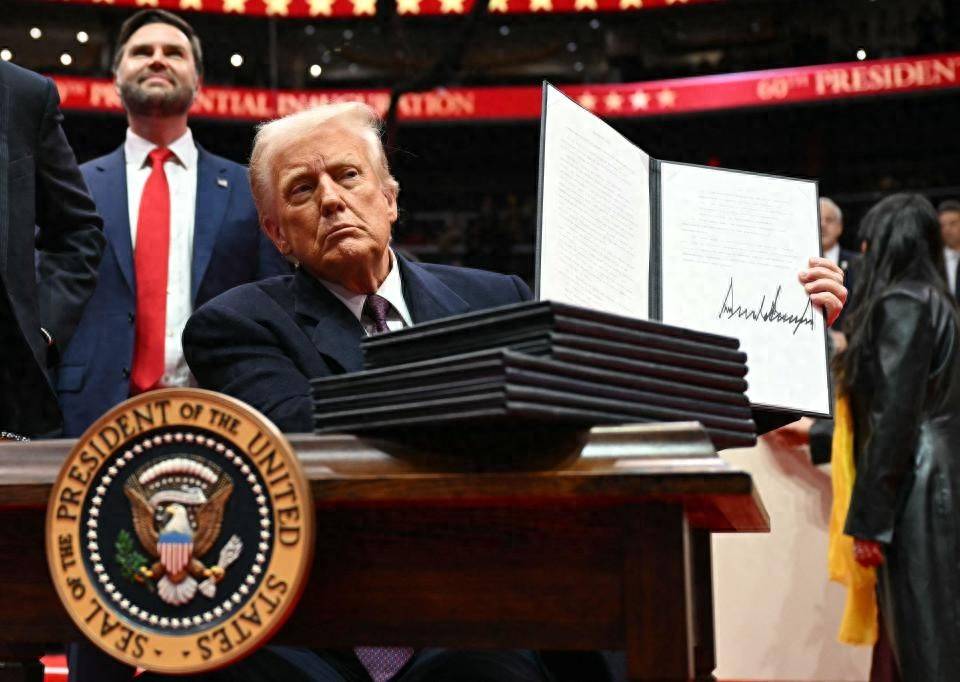
Core Viewpoint - Trump's imposition of tariffs on the EU and Mexico is perceived as a short-term show of strength but ultimately undermines U.S. soft power and accelerates the "de-Americanization" of allies, potentially harming U.S. interests in the long run [1][6]. Group 1: Economic Impact - The 30% tariffs are punitive and exceed typical trade barriers, damaging the stability of supply chains and business expectations for EU and U.S. companies [2]. - The U.S. image as a "reliable trading partner" is significantly diminished, leading to a decline in operational efficiency within its economic environment [2]. - Economic models suggest that the tariffs may have a more negative impact on the U.S. economy, including inflation and slowed growth, than on the EU [4]. Group 2: Ideological Conflict - The EU's commitment to a "rules-based international trading system" contrasts sharply with Trump's unilateral approach, damaging the ideological foundation of U.S.-EU relations [2][3]. - Trump's "America First" stance erodes the mutual trust that has historically underpinned transatlantic relations, as allies feel blamed for issues like trade deficits [3]. Group 3: Diplomatic Relations - The tariffs have deepened rifts within the transatlantic alliance, with strong reactions from EU leaders emphasizing the need to defend European interests [2][5]. - The EU's response includes a unified stance against U.S. actions, indicating a shift towards strategic autonomy and reduced reliance on the U.S. [3][5]. Group 4: Soft Power Dynamics - The tariffs have triggered a backlash that diminishes U.S. global reputation and moral authority, leading to a "negative soft power" effect [4][6]. - The EU and Mexico are actively seeking to strengthen their own soft power and reduce dependence on the U.S., which could lead to a more fragmented international order [6].
关税战步步紧逼,特朗普屠刀砍向8国,鲍威尔再遭死亡点名!
Sou Hu Cai Jing· 2025-07-10 05:43
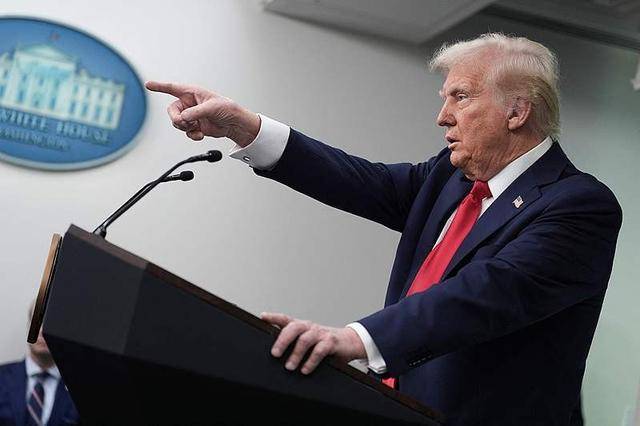
Group 1: Tariff Imposition - The Trump administration announced new tariffs on products from several countries, including a 50% tariff on all Brazilian products starting August 1, 2025, which exceeded market expectations [2] - Tariffs of 25% will be imposed on products from Brunei and Moldova, 30% on Algeria, Iraq, Libya, and Sri Lanka, and 20% on the Philippines [2] - The announcement led to a significant depreciation of the Brazilian real, with the USD/BRL exchange rate surpassing 5.60, reflecting a nearly 2.9% increase in the dollar's value [2] Group 2: International Reactions - Leaders from Japan and South Africa expressed regret and deemed the U.S. tariff actions as unreasonable, indicating a potential need for stronger countermeasures [3] - The European Union is preparing to respond to the U.S. tariffs, with ongoing disputes primarily focused on specific industries such as steel, automotive, and pharmaceuticals [3] - Analysts suggest that the trade war initiated by the Trump administration may accelerate a trend of "de-Americanization" as countries reassess their economic dependencies on the U.S. [3] Group 3: Federal Reserve Criticism - The Trump administration intensified criticism of Federal Reserve Chairman Jerome Powell, claiming that current interest rates are at least 3 percentage points too high [4] - If the Fed were to lower rates as Trump suggested, it would bring rates down to a range of 1.25%-1.50%, the lowest in three years [5] - The administration's criticism is linked to rising national debt levels due to the passage of the "Big and Beautiful" bill, prompting urgency in addressing interest rates [6]
最后24小时美国改主意,除了中方这个特例外,14国需缴纳巨额关税
Sou Hu Cai Jing· 2025-07-08 09:33
Group 1 - The U.S. government, led by President Trump, unexpectedly extended the deadline for "reciprocal tariffs" to August 1, indicating a shift in trade policy just hours before the original deadline [3][5] - The U.S. trade deficit surged by 18% year-on-year in Q1 2025, with over 35% attributed to trade with China, highlighting a structural imbalance in the U.S. economy [5] - The potential for significant economic backlash from tariff increases is evident, as major retailers like Walmart and Home Depot warned of price hikes of 15%-20%, which could severely impact low- and middle-income families [10] Group 2 - China's strategic advantage in rare earth resources is significant, with the U.S. relying on China for 83.7% of its rare earth imports, and up to 97% for heavy rare earths [12][15] - The U.S. semiconductor industry faces a 20% capacity shortfall if tariffs are imposed on Malaysia, which supplies 40% of advanced packaging materials globally [7] - The trade negotiations between the U.S. and China have seen China leverage its resource control to negotiate favorable terms, such as linking rare earth exports to the lifting of U.S. technology restrictions [17][18] Group 3 - The U.S. tariff policy is reshaping global trade dynamics, prompting retaliatory measures from other countries, including a 25% retaliatory tariff from the EU on U.S. agricultural products [19] - Emerging market countries are increasingly seeking to reduce reliance on the U.S. dollar, with initiatives like the BRICS currency settlement mechanism and ASEAN's digital trade negotiations [21][23] - China's investments in ASEAN countries increased by 37% in the first half of 2025, focusing on critical sectors like semiconductors and renewable energy, thereby enhancing its strategic positioning against U.S. tariffs [25]
A股向资金推动型上涨演化,从经济四周期配置大类资产7月篇
Ge Lin Qi Huo· 2025-07-01 05:47
Report Industry Investment Rating No relevant content provided. Core Viewpoints of the Report - Global financial assets are being reallocated, with funds flowing to Chinese assets, and A-shares are expected to evolve into a capital-driven upward trend [2][3][4] - Multiple factors, including US debt monetization, countervailing tariffs, crude oil price surges, and China's anti-involution efforts, are contributing to a global inflationary trend [2][14][18] - Various factors such as Fed rate cut expectations and China's anti-involution are influencing the prices of different asset classes, including equities, commodities, gold, bonds, and foreign exchange [3][4][32] Summary by Related Catalogs Geopolitical Situation - The Israel-Iran ceasefire is a prelude to a larger conflict, and Iran may become "Gaza-like." Israel's actions against Iran are likely to occur in four steps [10] Crude Oil Market - The crude oil price surge in June was likely the first wave. In the context of the Israel-Iran conflict, future disruptions to Iran's oil production and potential blockades of the Strait of Hormuz could cause oil prices to skyrocket, similar to the 1970s [12][16] Global Inflation - US debt monetization, countervailing tariffs, crude oil price pulses, and China's anti-involution efforts are jointly contributing to a global inflationary curve [2][14][18] Global Financial Asset Reallocation - Global investment institutions are "de-Americanizing," selling US stocks, bonds, and the dollar, and reallocating funds to Chinese assets [2][20][23] Equity Market - Global financial asset reallocation and the migration of household savings and insurance funds to the stock market are driving A-shares towards a capital-driven upward trend [2][3][32] Commodity Market - China's anti-involution and Fed rate cut expectations are expected to help industrial product prices recover [3][32][36] Gold Market - Stablecoins are replacing the dollar in trade settlements, accelerating the decline of the dollar's credit, while gold is still in a technical adjustment phase [3][41][43] Bond Market - With a large-scale bond issuance and the central bank removing the mention of "timely reserve requirement ratio and interest rate cuts," the bond market faces certain pressures [44] Foreign Exchange Market - China is expected to achieve a double surplus in trade and capital, and the offshore RMB exchange rate is expected to continue strengthening [3][4][45] July Outlook for Various Asset Classes - **Equity Assets**: Global financial asset reallocation and the migration of household savings are driving funds into Chinese equities [4][46] - **Commodities**: Anti-involution and Fed rate cut expectations are expected to boost industrial product prices [4][36][46] - **Gold Assets**: Stablecoins are replacing the dollar in trade, and gold is in a technical adjustment [4][41][46] - **Bond Assets**: The central bank's policy adjustment and large-scale bond issuance are putting pressure on the bond market [4][44][46] - **Foreign Exchange Assets**: A double surplus in trade and capital is expected to strengthen the offshore RMB [4][45][46]
全球经济和大类资产半年报:全球经济进入冲顶期
Ge Lin Qi Huo· 2025-06-26 07:48
Report Information - Report Title: Global Economic and Major Asset Semi-Annual Report [1] - Date: June 26, 2025 [2] - Analyst: Yujunli [3] - Contact Email: yujunli@greendh.com [3] Key Points Global Economic Landscape - Global manufacturing PMI contracted in April and May due to reciprocal tariff impacts [7] - On May 12, China and the US reached an agreement in Switzerland to significantly reduce reciprocal tariffs, with tariffs lowered to 10%, and an additional 24% of reciprocal tariffs to be discussed after 90 days. The 20% tariff imposed by the US on China over fentanyl will be negotiated separately. The first meeting of the China-US economic and trade consultation mechanism in London (June 9 - 10) reached a principled framework agreement [11] Capital Flows - According to a Citi report on May 28, large global funds are collectively "de-Americanizing", reducing allocations in US stocks, bonds, and the US dollar, and increasing allocations in European and Asian stocks, gold, and non-US currencies. Institutions' overall allocation of US stocks has dropped to a neutral level, making it the least favored market globally. There is a consensus among large global funds to "buy Asia and Europe". European and Japanese stocks have been upgraded, and emerging market stocks remain overweight [12] - Institutions generally reduced holdings of US and Japanese bonds and shifted to increasing positions in UK, German, Italian government bonds, and emerging market local bonds [13] - In the foreign exchange market, selling of the US is more evident. The US dollar continues to be under-allocated, while the euro and yen continue to be added to portfolios [14] - According to a report from Bank of America on June 16, global central banks have sold $48 billion worth of US Treasury bonds since the end of March, and foreign investors' holdings in the Fed's reverse repurchase facility have also decreased by approximately $15 billion [15] US Economic Indicators - In May, US manufacturing prices continued to rise rapidly, and service prices accelerated their increase [23] - US retail and food sales reached $715.4 billion, remaining at a high level, with a year-on-year increase of 3.3% in the current month, indicating strong consumer demand [26] - In April, the monthly value of US goods imports recovered to normal at $277.9 billion, mainly affected by reciprocal tariffs [29] - In April, the monthly value of US consumer goods imports recovered to normal at $69.8 billion, with a year-on-year growth rate of 5.2%. US retailers stocked up on a large scale before the implementation of reciprocal tariffs, and imports decreased significantly after the tariffs were imposed in April [32] - In April, the monthly value of US intermediate goods imports was $51.9 billion, showing a significant month-on-month decline due to tariff impacts. Manufacturers stocked up on a large scale before the tariffs [35] - In April, the monthly value of US capital goods imports was $90.5 billion, second only to March, with a year-on-year growth rate of 18.2%, indicating an acceleration in the reshoring of US manufacturing and the "re-industrialization" of the US [38] - In April, the monthly value of the US goods trade deficit decreased significantly to $87.4 billion due to reciprocal tariff impacts [41] - In April, the monthly value of US service exports reached a new high for the year at $98.8 billion, indicating the continued strength of the US service industry [44] - In May, the year-on-year growth rate of the US core CPI was 2.8%, the same as the previous value, with a month-on-month increase of 0.2%. The market expects the Fed to start cutting interest rates in September [47] - In May, the US PPI was 2.6% year-on-year and 0.1% month-on-month [50] - In April, the number of job openings in the US increased to 7.39 million, and the number of hires reached a one-year high, indicating a tightening labor market [53] - In May, the hourly wage of US non-farm enterprises was $36.24, with a year-on-year growth rate of 3.9% [56] - In April, the year-on-year growth rate of US wholesalers' inventories was 2.3%, and that of manufacturers' inventories was 0.9%, indicating an active inventory replenishment phase [59] Other Regions' Economic Indicators - In May, the monthly value of China's manufacturing fixed investment was 2.93 trillion yuan, with a year-on-year growth rate of 7.8%. China continues to make large-scale investments in emerging and future industries [62][65][68] - The ceasefire between Israel and Iran boosted global risk appetite [71] - The China-US reached a phased framework agreement, stabilizing global economic expectations. The final value of the US Markit Manufacturing PMI in June was 52.0, continuing to expand. The manufacturing material procurement price index rose significantly by 5.4 points to 70, the largest increase in four years [72] - The Swiss National Bank cut interest rates by 25 basis points to 0% [73] - China carried out comprehensive rectification of involutionary competition. The European Central Bank has cut interest rates eight times. Germany significantly expanded its military by 30%, driving the recovery of European manufacturing [74] - Elon Musk's Robotaxi was put into operation [75] Major Asset Strategies - The rebound of US stocks after April was mainly driven by retail investors, while institutions withdrew one after another, and short positions of hedge funds reached a new high [78] - The US "Great Beauty" tax cut plan passed in the House of Representatives, and the yield of 30-year US Treasury bonds once exceeded 5% [80] - Inflation in Japan rose, and the yields of 40-year and 30-year Japanese government bonds increased significantly [83] - As a representative of China's offshore assets, the Hang Seng Tech ETF is expected to benefit from the reallocation of global financial assets [86] - Driven by the continuous inflow of various funds, the A-share market is expected to shift from a volatile recovery to a trending upward market. There is a bullish view on Chinese equity assets [89] - The savings of the household sector continue to shift to high-dividend sectors, and the Bank ETF has continuously reached new highs [91] - In May, the issuance of China's 50-year Treasury bonds was oversubscribed, and long-term Treasury bonds are under pressure. The flattening of the domestic yield curve is unsustainable [93] - The ceasefire between Israel and Iran is only a temporary respite, and peace is short-lived. Iran is likely to face a situation similar to Gaza. The pulse increase in crude oil prices in June is likely to be just the first wave [96] - Gold is still in a technical adjustment phase, mainly fluctuating within a range [99] - The RMB is expected to achieve a double surplus in trade and capital accounts, and there is continued optimism about the RMB [102]
伦敦谈判落幕!特朗普7字坦言中美交锋,稀土博弈暴露美国软肋?
Sou Hu Cai Jing· 2025-06-11 04:58
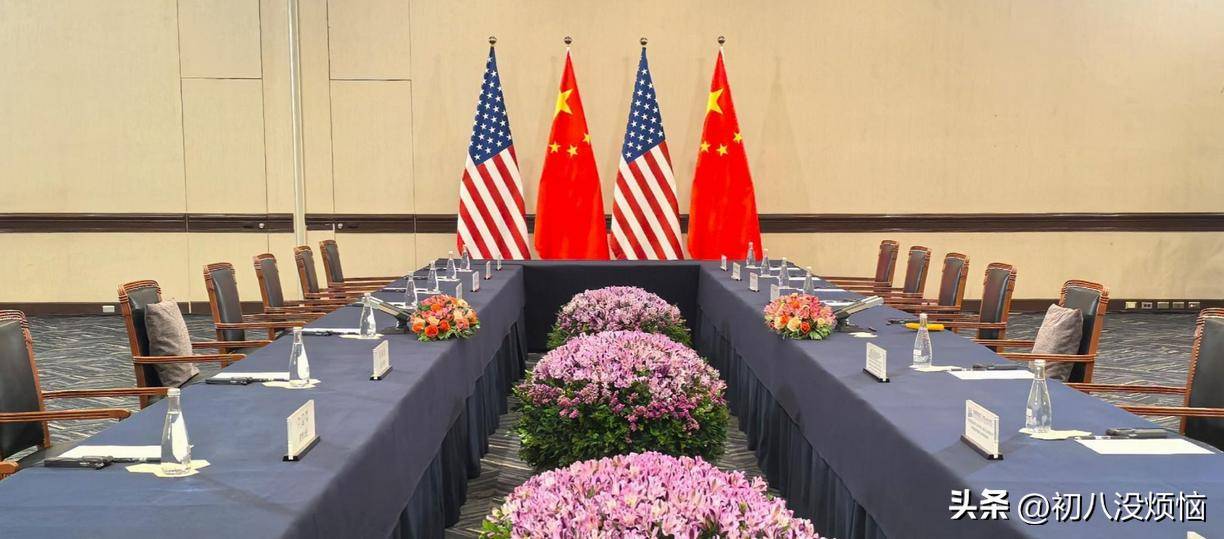
Group 1 - The core issue of the negotiations revolves around the U.S. desire for China's rare earth resources, which are critical for various industries, including military and technology [1][12] - China has implemented export controls on seven types of heavy rare earths, significantly impacting U.S. manufacturing, with over 80% of global rare earth processing capacity located in China [1][12] - The U.S. military and technology sectors are highly dependent on rare earths, with a reliance rate exceeding 60%, leading to supply chain vulnerabilities for companies like Toyota and Boeing [1][9] Group 2 - The U.S. attempted to leverage three major strategies: upgrading AI chip bans, halting engine supplies for China's C919 aircraft, and tightening student visa regulations for Chinese STEM students [4] - These strategies have proven ineffective, highlighting vulnerabilities in U.S. dominance as China controls critical segments of the global supply chain [6][12] - The negotiations revealed that unilateral pressure from the U.S. could accelerate the "de-Americanization" process in global supply chains [6][12] Group 3 - The U.S. offered to relax some restrictions on chip design software and jet engine components in exchange for China lifting its rare earth export controls, indicating a zero-sum game approach [8] - China's countermeasures have effectively disrupted the U.S. military supply chain, with the F-35 production facing shutdown due to shortages of critical materials [9] - The U.S. has suffered significant losses, estimated at over $120 billion, due to its technology blockade against China, while China's domestic production rates in key sectors have improved significantly [10] Group 4 - The negotiations signify a shift in global power dynamics, with the era of coercive tactics yielding diminishing returns for the U.S. [12][13] - Rare earths are recognized as strategic resources essential for modern industries, and China's control over this resource is reshaping global supply chains [13] - China's proposal for a "rare earth industry community" aims to build a cooperative framework with ASEAN and EU countries, countering U.S. unilateralism [13][14]
最新资管调查:卖出美元是“共识”,美股成“最不受欢迎股市”,增持欧股和日股
Hua Er Jie Jian Wen· 2025-05-29 09:44
Group 1 - Major asset management institutions have reached a consensus to "sell America," collectively reducing allocations in US stocks, US bonds, and the US dollar [1][2] - The largest 15 asset management firms, managing over $20 trillion, are seen as a barometer for global capital flows [1][2] - There is a growing consensus among these institutions to increase allocations in Asian and European markets [1][2] Group 2 - US stocks have become the least favored globally, with overall allocations reduced to neutral levels since the beginning of the year [2][8] - European and Japanese stocks have been upgraded, becoming consensus long positions, while emerging markets remain in an overweight status [2][8] Group 3 - Institutions are generally reducing holdings in US and Japanese bonds, while increasing positions in UK, German, and Italian government bonds, as well as local bonds in emerging markets [4][5] - There is a strong preference for European credit bonds, while opinions on US credit bonds remain divided [4][5] Group 4 - In the foreign exchange market, there is a clear trend of reducing exposure to the US dollar while increasing positions in the euro and yen [6][8] - The Swiss franc has been upgraded but remains in a bearish stance overall, indicating a strong consensus against the US dollar [6][8] Group 5 - Precious metals, particularly gold, have been upgraded, while oil and other cyclical commodities have been downgraded [7][8] - The strongest consensus long positions include European and Japanese stocks, the euro, the yen, and gold, while the clear short consensus includes the US dollar, Swiss franc, Japanese bonds, US bonds, and oil [7][8] Group 6 - In April, emerging market stocks rebounded strongly, particularly in Latin America, as market tensions eased following changes in US policy [11] - The bond market performed well due to rising risk aversion, while credit bonds underperformed with widening spreads [11] Group 7 - By May, asset prices generally recovered, with global stock markets rising, led by US stocks, and credit bond spreads narrowing [13] - The improvement in market sentiment was driven by reduced tariff risks and lower global recession expectations, although the bond market showed signs of divergence due to concerns over fiscal deficits, particularly in the US [13]
“去美国化”急剧加速,非美股票基金单月吸金破纪录!
Jin Shi Shu Ju· 2025-05-21 09:25
Group 1 - European and Asian investors have injected a record $2.5 billion into non-U.S. global equity funds from December last year to April this year, with over $2.1 billion flowing in during the last three months alone, marking a reversal of a three-year trend of net outflows [1][4] - The surge in demand for non-U.S. equity funds has prompted institutions like BlackRock, DWS, and Amundi to launch new ETFs, indicating a shift in investor sentiment towards non-U.S. markets [3][4] - Kenneth Lamont from Morningstar noted that the role of the U.S. in the global economy is being questioned, with sustained outflows from the U.S. market for the first time in years [3][4] Group 2 - Historically, U.S. stocks attracted foreign investors, but from 2022 to 2024, there was a net withdrawal of $2.5 billion from non-U.S. equity funds, while the MSCI World ex-USA index rose only 7% compared to a 25% increase in the S&P 500 [4] - Concerns over Trump's proposed tariffs have led to a rapid recovery of funds into non-U.S. equity funds, reversing previous outflows within five months [4][6] - The inflow into non-U.S. equity funds is partly attributed to European investors' "patriotic rebalancing" and the relatively high valuations of non-U.S. stocks, as well as a desire for portfolio diversification [6]