多传感器融合

Search documents
厘米级精度的三维场景实时重构!这款三维激光扫描仪太好用了~
自动驾驶之心· 2025-07-19 10:19
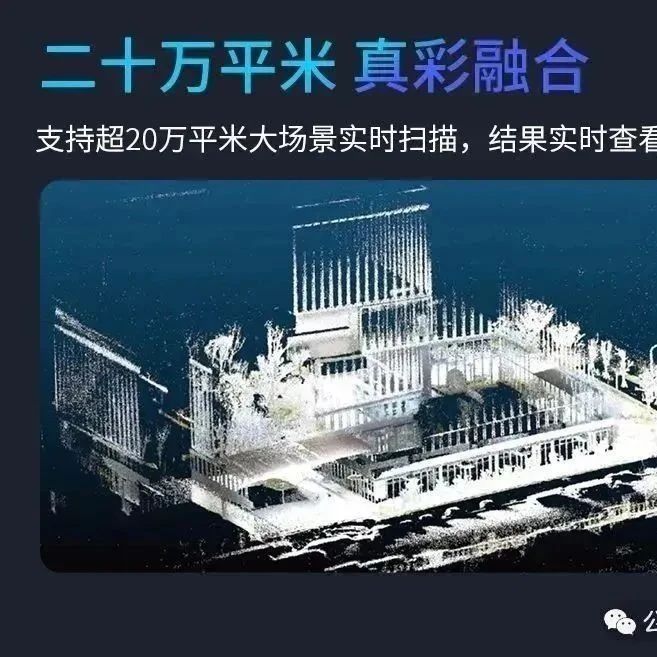
Core Viewpoint - GeoScan S1 is presented as a highly cost-effective handheld 3D laser scanner, designed for various operational fields with features such as lightweight design, one-button startup, and centimeter-level precision in real-time 3D scene reconstruction [1][4]. Group 1: Product Features - The GeoScan S1 can generate point clouds at a rate of 200,000 points per second, with a maximum measurement distance of 70 meters and 360° coverage, supporting large scenes over 200,000 square meters [1][23][24]. - It integrates multiple sensors, including RTK, 3D laser radar, and dual wide-angle cameras, allowing for high precision and efficiency in mapping [7][28]. - The device operates on a handheld Ubuntu system and includes various sensor devices, with a power supply integrated into the handle [2][16]. Group 2: Usability and Efficiency - The device is designed for ease of use, allowing for simple operation with immediate export of scanning results without complex deployment [3][4]. - It features a small and integrated design that maximizes hardware performance, making it suitable for complex indoor and outdoor environments [7][32]. - The scanner supports real-time modeling and high-fidelity restoration of scenes, utilizing advanced multi-sensor SLAM algorithms [21][28]. Group 3: Market Position and Pricing - GeoScan S1 is marketed as the most affordable option in the industry, with a starting price of 19,800 yuan for the basic version [4][51]. - The product has undergone extensive validation through numerous projects, backed by collaborations with academic institutions [3][4]. Group 4: Application Scenarios - The scanner is capable of accurately constructing 3D scene maps in various environments, including office buildings, parking lots, industrial parks, tunnels, forests, and mines [32][40]. - It can be integrated with unmanned platforms such as drones and robotic vehicles, facilitating automated operations [38].

每秒20万级点云成图,70米测量距离!这个3D扫描重建真的爱了!
自动驾驶之心· 2025-07-16 04:05
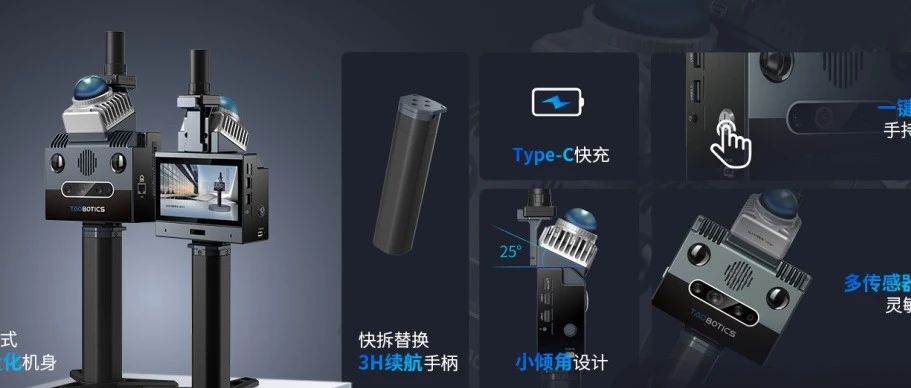
Core Viewpoint - GeoScan S1 is presented as a highly cost-effective handheld 3D laser scanner, designed for various operational fields with features such as lightweight design, one-button operation, and centimeter-level precision in real-time 3D scene reconstruction [1][4]. Group 1: Product Features - The GeoScan S1 can generate point clouds at a rate of 200,000 points per second, with a maximum measurement distance of 70 meters and 360° coverage, supporting large scenes over 200,000 square meters [1][23][24]. - It integrates multiple sensors, including RTK, 3D laser radar, and dual wide-angle cameras, allowing for high-precision mapping and real-time data output [7][21][28]. - The device operates on a handheld Ubuntu system and features a built-in power supply for various sensors, enhancing its usability [2][3]. Group 2: Performance and Efficiency - The scanner is designed for ease of use, with a simple one-button start for scanning tasks and immediate usability of the exported results without complex deployment [3][4]. - It boasts high efficiency and accuracy in mapping, with relative accuracy better than 3 cm and absolute accuracy better than 5 cm [16][21]. - The device supports real-time modeling and detailed restoration through multi-sensor fusion and microsecond-level data synchronization [21][28]. Group 3: Market Position and Pricing - GeoScan S1 is marketed as the most cost-effective option in the industry, with a starting price of 19,800 yuan for the basic version, and various configurations available for higher prices [4][51]. - The product has been validated through numerous projects and collaborations with academic institutions, indicating a strong background and reliability [3][4]. Group 4: Application Scenarios - The scanner is suitable for a wide range of environments, including office buildings, parking lots, industrial parks, tunnels, forests, and mines, effectively completing 3D scene mapping [32][40]. - It can be integrated with various platforms such as drones, unmanned vehicles, and robots, facilitating unmanned operations [38][40]. Group 5: Technical Specifications - The device dimensions are 14.2 cm x 9.5 cm x 45 cm, weighing 1.3 kg without the battery and 1.9 kg with the battery, with a battery life of approximately 3 to 4 hours [16][17]. - It supports various data export formats, including PCD, LAS, and PLY, and features a storage capacity of 256 GB [16][17].
头部Robotaxi专家小范围交流
2025-07-01 00:40
Summary of Key Points from the Conference Call Industry Overview - The conference call primarily discusses the **L4 level autonomous driving** industry, focusing on various companies and their technological approaches, including **Tesla**, **Vivo**, **Baidu**, and **Pony** [1][2][6][7]. Core Insights and Arguments - **Current Autonomous Driving Models**: The mainstream approach for autonomous driving combines local end-to-end two-stage models, utilizing CNN and LLM for perception and prediction, while planning and control rely on rule-based methods to ensure safety [1][2]. - **Tesla's Technology**: Tesla employs a pure end-to-end visual model, which offers fast response times and excels in complex scenarios. However, it faces challenges such as complex training processes and difficulties in data labeling, leading to potential dangerous behaviors in unseen data [3][4]. - **Domestic L4 Systems**: Domestic L4 autonomous driving systems outperform Tesla in driving comfort, safety in complex road conditions, and path planning in sharp turns. Companies like Baidu and Pony enhance perception capabilities through multi-sensor fusion, making them more suitable for complex domestic traffic environments [6][7]. - **Lidar Necessity**: Lidar is deemed essential for L4 autonomous driving, especially in low visibility conditions, as it effectively identifies object shapes, addressing the shortcomings of pure visual systems [9]. - **Cost and Performance of Chips**: The performance and stability of chips are critical for L4 functionality. While domestic chips are improving, they still lag behind Nvidia in peak performance and ecosystem support. However, U.S. sanctions are driving a trend towards domestic alternatives, significantly reducing costs [12][13]. - **Testing and Simulation**: L4 companies utilize extensive testing and simulation technologies to address common issues, moving away from solely relying on real-world testing, which is labor-intensive and limited [14]. Additional Important Points - **Regulatory Environment**: The operation of Robotaxi services requires prior data submission to government authorities for area approval, indicating a structured regulatory framework [17][18]. - **Challenges in Scaling**: The high cost of individual vehicles, regulatory restrictions, and the need for infrastructure development are significant barriers to scaling operations for companies like Pony and WeRide [16]. - **Talent Acquisition**: Companies are focusing on recruiting high-end talent from both domestic and international sources, with a strong emphasis on graduates from top Chinese universities [25][26]. - **Future Technological Iterations**: While no major technological shifts are expected in the short term, the integration of large language models into autonomous driving systems is anticipated to significantly enhance capabilities [28]. This summary encapsulates the key discussions and insights from the conference call, highlighting the current state and future prospects of the L4 autonomous driving industry.
车企“倒戈”纯视觉,激光雷达为何“失宠”
Zhong Guo Qi Che Bao Wang· 2025-06-16 07:10
Core Viewpoint - The competition between lidar and pure vision systems in the automotive industry is intensifying, with more companies shifting towards pure vision technology for advanced driver assistance systems (ADAS) [2][3][5] Group 1: Technology Comparison - Companies like Xiaomi are equipping their vehicles with lidar, while others like Xpeng are adopting pure vision systems for their ADAS [2] - Xpeng's senior director argues that the long-range detection capability of lidar is a "false proposition" due to its technical limitations, such as energy decay and point cloud density [3] - Lidar's performance is significantly reduced in adverse weather conditions, with effective detection range dropping to under 30 meters during heavy rain, while pure vision systems show better performance in similar conditions [4] Group 2: Cost and Market Dynamics - The primary reason for the shift to pure vision systems is cost-effectiveness, as they are significantly cheaper than lidar systems [5] - Xpeng's MONA M03 MAX is the first model to offer full-featured intelligent driving assistance at a price point below 150,000 yuan (approximately 22 million USD) [5] - The competition in the automotive market is pushing companies to adopt more affordable solutions to equip mid-range vehicles with ADAS capabilities [9] Group 3: Future Trends - The trend is moving towards a combination of pure vision and lidar systems to leverage the strengths of both technologies, especially for high-end models [9][10] - Companies are increasingly focusing on the integration of AI algorithms and self-developed chips to enhance the performance of pure vision systems [6][10] - The ultimate goal for autonomous driving technology is a multi-sensor fusion system that combines cameras and lidar to achieve a comprehensive solution [10]


激光雷达:AEBS新规催化标配预期,割草机+无人城配快速放量
2025-06-12 15:07
Summary of Key Points from Conference Call Industry and Company Involved - The conference call focuses on the **LiDAR (Light Detection and Ranging)** technology industry, particularly its applications in the automotive sector and emerging markets like smart lawn mowers and unmanned urban delivery vehicles. Core Insights and Arguments 1. **Impact of AEBS Regulations**: The release of the AEBS (Advanced Emergency Braking System) regulation draft is expected to catalyze the adoption of LiDAR in L2 and below vehicles, enhancing basic safety and perception functions [3][12][10]. 2. **Market Growth in Smart Lawn Mowers**: The demand for LiDAR in smart lawn mowers and unmanned urban delivery is rapidly increasing, with expected shipment volumes to expand significantly by 2025, potentially reaching a market size of **5 to 6 billion** [5][17]. 3. **High Potential in LiDAR Market**: The global automotive-grade LiDAR market is projected to cultivate companies with a market value of **hundreds of billions** of RMB, although current valuations of leading companies like Hesai and RoboSense do not fully reflect their growth potential [6][9]. 4. **Concentration of Supply and Demand**: The supply side is highly concentrated with strong certainty, while the pricing and valuation have not yet fully captured the accelerating demand, indicating a high potential for returns [8][7]. 5. **Trends in LiDAR Technology**: LiDAR technology is trending towards downscaling, diffusion, and high-end applications, with prices rapidly decreasing, making it more accessible for various vehicle types [4][14][16]. 6. **Unmanned Delivery Vehicles**: The use of LiDAR in unmanned delivery vehicles (RoboVan) is justified by significant cost savings in last-mile delivery, with potential reductions in delivery costs by **67%** [19][20]. 7. **Growth of Unmanned Freight Vehicles**: The unmanned freight vehicle market is expanding quickly, with major companies planning substantial deliveries in 2025, indicating a market potential of **200 to 400 billion** [21][23]. 8. **Technological Advancements**: The latest models of unmanned freight vehicles are equipped with multiple LiDAR units, with costs decreasing significantly, enhancing their commercial viability [22][23]. 9. **Future Market Dynamics**: The future of the unmanned delivery vehicle market is promising, with a focus on cost control and the need for stricter automotive-grade requirements as speeds increase [24][25]. Other Important but Possibly Overlooked Content 1. **LiDAR's Role in Technology**: LiDAR is crucial for simulating human interaction with the environment, serving as a key technology in various sectors including smart driving and safety monitoring [2]. 2. **Market Penetration of LiDAR in Smart Lawn Mowers**: The penetration rate of LiDAR in smart lawn mowers is expected to rise significantly, with a notable increase from **10% to 30%** in just one year [18]. 3. **Regulatory Changes**: The shift of AEBS from a recommended to a mandatory standard will require M1 and N1 class vehicles to install AEBS systems, directly impacting the adoption of LiDAR technology [12]. 4. **Long-term Investment Opportunities**: Companies like Hesai and RoboSense are positioned for long-term growth, with the potential for significant returns in the high-risk, high-reward segments of the market [26].
红外热成像:智能汽车的“全天候之眼”
汽车商业评论· 2025-05-15 14:32
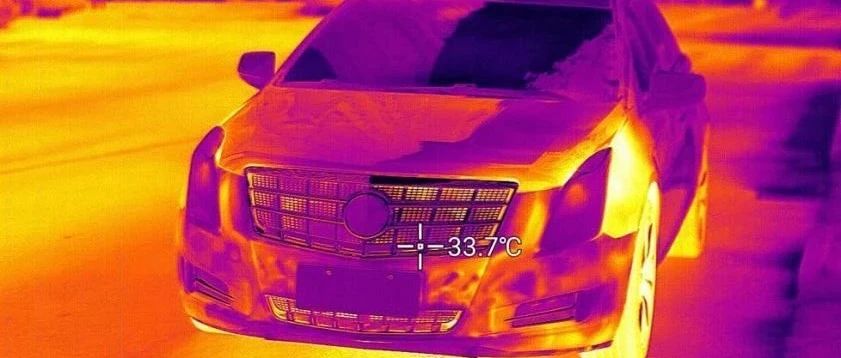
Core Viewpoint - Infrared thermal imaging technology is transitioning from a luxury feature in high-end vehicles to a core standard in smart cars, driven by technological advancements, market demand, and industry collaboration [3][20]. Group 1: Technological Breakthroughs and Industry Upgrades - Infrared thermal imaging captures infrared radiation to create temperature distribution images, functioning effectively in extreme conditions unlike traditional cameras [7]. - The development of non-cooled detectors has significantly reduced costs from 600,000 yuan to a few hundred yuan, enabling mass production and improved stability [7][11]. - Companies like Gaode Infrared and Ruichuang Micro-Nano have achieved significant technological advancements, including the production of high-resolution infrared chips and automated production lines [11][12]. Group 2: Application Scenarios and Safety Enhancements - Infrared thermal imaging technology enhances safety in various driving conditions, such as night driving and adverse weather, by detecting living beings and obstacles [13][14]. - The technology is crucial for intelligent driving, providing redundancy in sensor systems and monitoring vehicle health by detecting temperature anomalies in critical components [15][12]. - Smart cabin applications utilize infrared technology to monitor driver behavior and adjust environmental controls for enhanced comfort and safety [15][16]. Group 3: Market Dynamics and Competitive Landscape - The infrared thermal imaging market is shifting from being dominated by international giants like FLIR and Bosch to rapid advancements by Chinese companies [20][22]. - Cost reductions due to technological advancements have increased the penetration of infrared systems in mid-range vehicles, with market share expected to grow significantly [22][23]. - The North American market leads in production and consumption of infrared detectors, while the Chinese market is rapidly expanding [23]. Group 4: Challenges and Future Trends - The technology faces challenges such as performance optimization in extreme weather and the need for standardized testing methods [25][26]. - Future developments will focus on technology integration, cost reduction, and enhanced environmental perception capabilities through multi-spectral sensing [26][27]. - The trend indicates that infrared thermal imaging will become a standard feature in vehicles, redefining automotive safety and functionality [27].
【半导体新观察】国产半导体企业“献计”具身智慧 大脑小脑协同发展
Zheng Quan Shi Bao Wang· 2025-05-14 10:58
Group 1: Forum Overview - The 2025 Summit will focus on "Embodied Intelligent Robots," featuring ten semiconductor companies presenting solutions in areas such as computation, perception, motion control, and communication [1] - Key challenges in the industrialization of embodied intelligent robots include precise motion control and generalized action capabilities [1][6] Group 2: Chip Developments - Chipsea Technology introduced the D9-Max, a high-performance edge AI SoC designed for embodied intelligence applications, emphasizing functional safety and meeting automotive standards [2] - Aixin Yuan Zhi's AX8850 processor integrates an eight-core A55 CPU and a high-performance NPU, supporting mainstream large model structures and real-time spatial interaction [2] - Wan You Jing Li launched the EB100 chip for low-power spatial rendering and display, already adopted by leading clients like Goer and Zhi Yuan Robotics [3] - Shanghai Xianji Semiconductor's HPM6E8Y chip features a RISC-V dual-core architecture for high-precision motion control in robotics [4] - Nasta's G32R501 chip is the world's first high-end real-time control MCU based on a dual-core Arm Cortex-M52 architecture, designed for harsh environments [5] Group 3: Industry Trends and Challenges - The integration of multi-sensor fusion is seen as crucial for enhancing perception and cognition in robots, with expectations that future robots will surpass human capabilities in perception [6] - The transition from copper to optical networks in robot communication is anticipated to address data transmission challenges and improve efficiency [7] - The most promising applications for humanoid robots in the next three years are expected to be in warehousing, logistics, hazardous environments, and security inspections [7]

申万宏源:首予速腾聚创(02498)“增持”评级 激光雷达配置需求进入爆发期
智通财经网· 2025-05-14 03:58
Core Viewpoint - The report from Shenwan Hongyuan indicates that SUTENG JUCHUANG (02498) is expected to experience significant revenue growth from 2025 to 2027, with projected revenues of 2.62 billion, 3.66 billion, and 4.70 billion yuan respectively, while the net profit is forecasted to be -238 million, 106 million, and 320 million yuan respectively. The company is currently not profitable, leading to a PS valuation method being employed for its assessment [1]. Group 1 - The company is rapidly leading the global LiDAR industry, focusing on providing quality solutions in the field of embodied intelligence. The sales of LiDAR products have seen a non-linear high growth, confirming the explosive demand from automotive companies for LiDAR configurations under the trend of increasing intelligence [2]. - In 2024, the total sales of LiDAR products are expected to reach approximately 544,000 units, representing a significant year-on-year increase of 109.6%. The sales of LiDAR products for ADAS applications are projected to be around 520,000 units. The company is expected to maintain a leading market share of 26% in 2024, ranking first globally [2]. - The product matrix of the company is comprehensive, covering various technical paths including mechanical, semi-solid, and solid-state LiDAR, with performance ranging from short to ultra-long distances and low to high beam configurations. This allows the company to meet a wide range of demands across different price segments [2]. Group 2 - The first driving force is the end-to-end vehicle integration and equalization of intelligent driving. The previous debate over LiDAR configurations in vehicles has been influenced by Tesla's insistence on a pure vision and neural network approach. With advancements in computing power and the maturity of end-to-end algorithms, the integration of multi-sensor fusion with pure vision is becoming more feasible [3]. - The LiDAR industry is expected to enter the "thousand-yuan machine era" by 2025, with prices dropping to the range of 25,000 to 30,000 yuan. This price reduction is anticipated to significantly increase the configuration rate of LiDAR as an "invisible safety airbag" for autonomous driving [3]. - The global market for LiDAR in passenger vehicles is estimated to reach approximately 7 billion yuan by 2025, with the Chinese market accounting for about 6.3 billion yuan. The overseas market is expected to gradually open up and grow rapidly, representing an important direction for LiDAR's incremental growth [3]. Group 3 - The second driving force is the strategic positioning of the robotics technology platform. The company focuses on the development of incremental components such as robotic vision and dexterous hands, launching solutions based on hand-eye coordination for upper body operations and lower body mobility [4]. - The year 2025 is viewed as the year of mass production for humanoid robots, with companies like Tesla aiming to produce 5,000 units of Optimus this year, and domestic companies like Zhiyuan Robotics achieving deliveries in the thousands [4]. - In the niche market of robotic lawn mowers, the demand for LiDAR products is projected to exceed 400,000 units by 2025 and is expected to surpass 900,000 units by 2028 [4].

2025年中国机器狗核心零部件方案对比 多传感器融合为重要趋势(组图)
Qian Zhan Wang· 2025-04-28 10:27
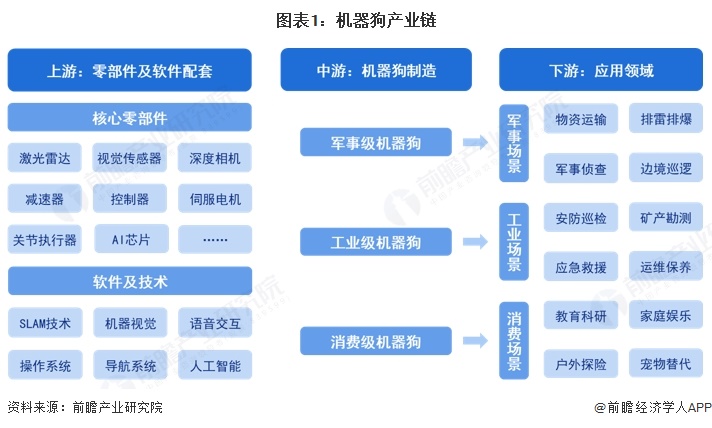
Industry Overview - The machine dog industry can be divided into upstream core components and software system development, midstream manufacturing of machine dogs, and downstream personal consumers and various application scenario commercial users [1] - The industry chain involves high-tech fields such as communication and artificial intelligence, with high technical barriers at each link [1] Upstream Components - Upstream components include sensors, reducers, motors, controllers, and joint actuators, as well as software and technologies like SLAM, machine vision, voice interaction, and operating systems [1] - The most commonly used reducers in machine dogs are harmonic reducers and planetary gear reducers, with planetary reducers being the preferred choice due to their compact structure, high reduction ratio, high torque transmission efficiency, and reliability [3][5] Midstream Manufacturing - Midstream manufacturing of machine dogs is categorized into military-grade, industrial-grade, and consumer-grade robots [1] Downstream Applications - Downstream applications include education, healthcare, security, reconnaissance, firefighting, and personal consumers [1] Sensor Technology - Environmental perception is crucial for machine dogs to achieve autonomy and adapt to complex environments, with multi-sensor fusion technology becoming an important trend [5][6] - Machine dogs require high perception capabilities, covering visual, tactile, auditory, and force perception [6] Sensor Types - Visual sensors utilize camera hardware and algorithms for environmental perception, with various types including structured light, ToF, and laser scanning [8] - LiDAR provides precise distance measurement and is effective in low-light or adverse weather conditions, making it essential for obstacle avoidance [8][9] - Ultrasonic sensors are cost-effective for long-distance obstacle detection but have limitations in detecting small or sound-absorbing objects [8] - Infrared sensors are compact and low-cost but can be affected by environmental light conditions [8] - Auditory sensors simulate human hearing for sound signal recognition [8] - Force/torque sensors monitor contact forces and joint stresses for dynamic balance and movement efficiency [8] - Inertial sensors (IMU) track the position and motion trajectory of machine dogs [8] Perception Technology Routes - The perception technology routes for machine dogs are divided into pure visual perception and LiDAR-based perception, with each having its advantages and disadvantages [11] - Multi-sensor fusion is a significant trend in sensor design for machine dogs to meet various downstream application needs, with high-end products using LiDAR and cost-effective products using ToF and cameras [12]