
提振消费专项行动

Search documents
开好局、起好步“数”里行间感知信心 多领域亮眼表现积聚发展澎湃动能
Yang Shi Wang· 2026-01-10 02:43
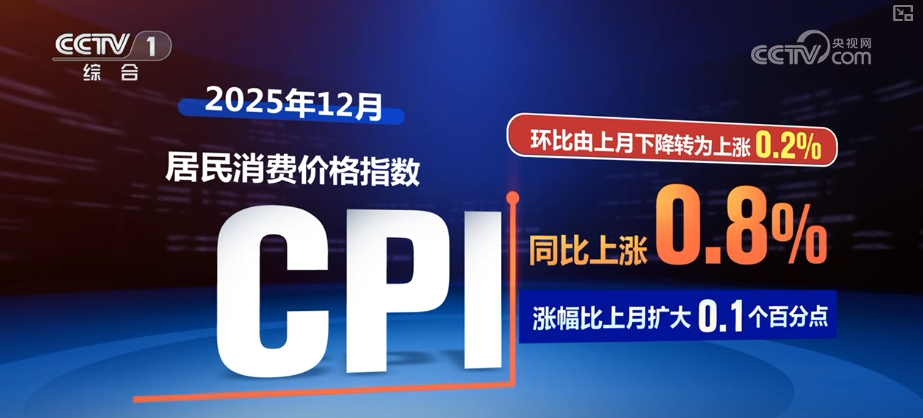
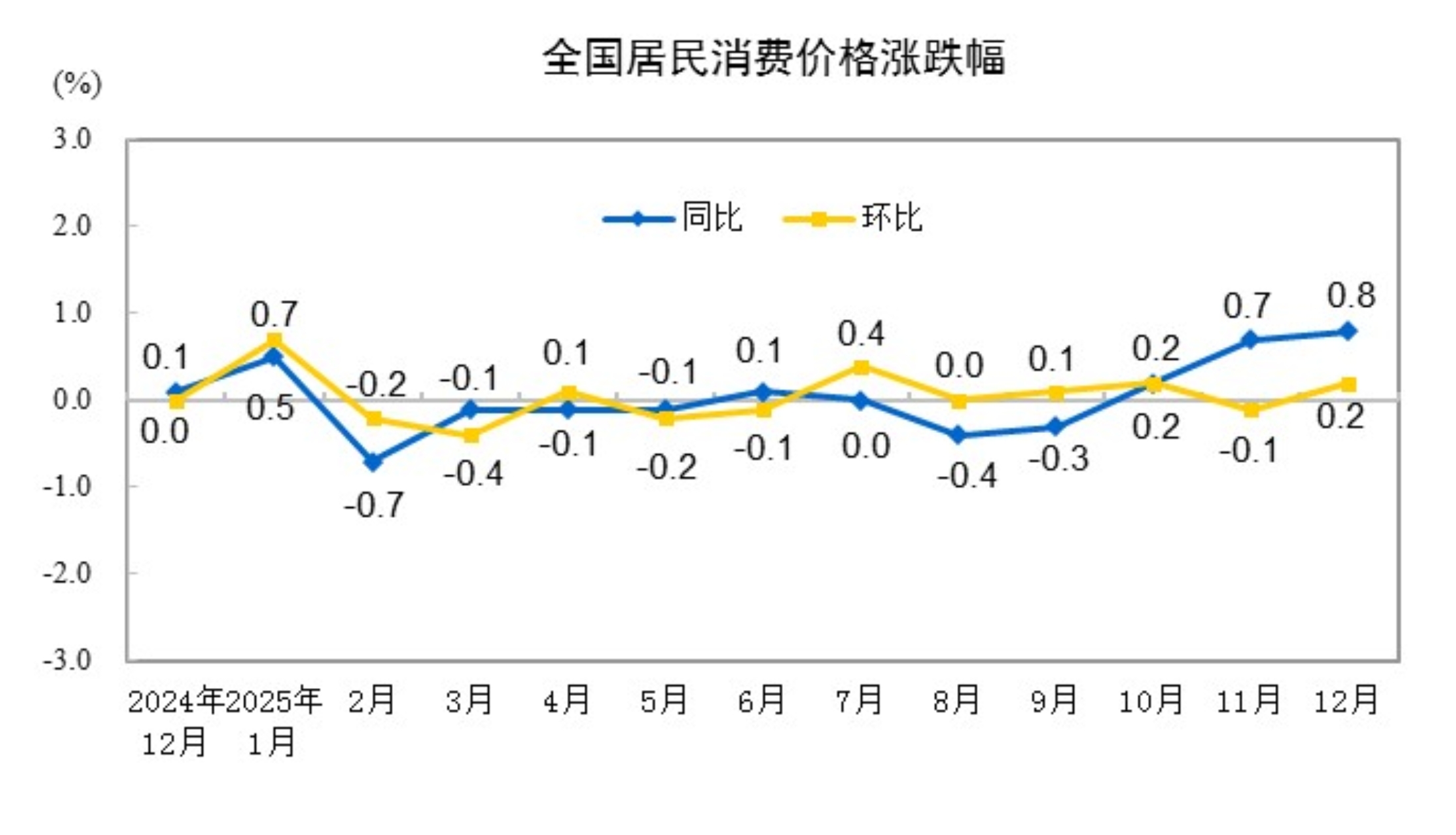
Group 1 - In December 2025, the Consumer Price Index (CPI) increased by 0.8% year-on-year, with the growth rate expanding by 0.1 percentage points compared to the previous month, and a month-on-month increase of 0.2% [4] - The implementation of policies promoting the replacement of consumer goods has boosted consumption, particularly in sectors such as automobiles, mobile phones, and home appliances [7] Group 2 - In December, the Producer Price Index (PPI) rose by 0.2% month-on-month, marking the third consecutive month of increase, with the growth rate also expanding by 0.1 percentage points compared to the previous month [11] Group 3 - The national rural water supply coverage has reached 96%, with significant progress in water infrastructure projects, including the completion of 9,420 rural water supply projects benefiting 134 million rural residents [15] - During the "14th Five-Year Plan" period, 181 major water conservancy projects are underway, which is an increase of 65 projects compared to the previous five-year plan [18] Group 4 - Since the implementation of the "Australian and Hong Kong vehicles northbound" policy in 2023, over 200,000 vehicles have been registered, with a total of 8.43 million crossings recorded at the border, averaging 18,000 vehicles per day [23]

扩内需政策助力供需关系改善
Zheng Quan Ri Bao· 2026-01-09 22:52
Group 1: CPI Analysis - In December 2025, the Consumer Price Index (CPI) increased by 0.2% month-on-month and 0.8% year-on-year, with core CPI (excluding food and energy) rising by 1.2% year-on-year [1][3] - The rise in CPI was primarily driven by increased prices in non-energy industrial consumer goods, with a 0.6% increase in these prices contributing approximately 0.16 percentage points to the month-on-month CPI increase [2] - Food prices rose by 0.3%, contributing about 0.05 percentage points to the month-on-month CPI increase, with notable increases in fresh fruits and seafood prices due to heightened pre-holiday demand [2][4] Group 2: PPI Analysis - The Producer Price Index (PPI) rose by 0.2% month-on-month in December 2025, marking the third consecutive month of increase, while the year-on-year decline narrowed to 1.9% [5] - The month-on-month PPI increase was attributed to improved supply-demand dynamics in certain industries and rising prices in non-ferrous metals, reflecting a seasonal demand increase [6] - Positive changes in PPI were noted in various sectors, including a reduction in price declines for coal mining, lithium-ion battery manufacturing, and photovoltaic equipment, indicating a strengthening market competition [6] Group 3: Economic Outlook - The overall changes in CPI and PPI in December indicate a stable and improving economic environment in China, with a gradual recovery in demand and ongoing structural optimization in supply [7]
解读:12月份CPI同比涨幅继续扩大,PPI同比降幅收窄
Guo Jia Tong Ji Ju· 2026-01-09 01:57
Group 1: CPI Analysis - The Consumer Price Index (CPI) increased by 0.2% month-on-month and 0.8% year-on-year, with the core CPI rising by 1.2% year-on-year, indicating a recovery in consumer demand as the New Year approaches [1][2][3] - The month-on-month increase in CPI was primarily driven by rising prices of industrial consumer goods, excluding energy, which rose by 0.6%, contributing approximately 0.16 percentage points to the CPI increase [2] - Food prices rose by 1.1% year-on-year, with significant increases in fresh vegetables (18.2%) and fresh fruits (4.4%), contributing approximately 0.17 percentage points to the year-on-year CPI increase [3] Group 2: PPI Analysis - The Producer Price Index (PPI) rose by 0.2% month-on-month, marking the third consecutive month of increase, with the growth rate expanding by 0.1 percentage points compared to the previous month [4] - The month-on-month PPI increase was supported by improved supply-demand dynamics, with notable price increases in coal mining (1.3%) and lithium-ion battery manufacturing (1.0%) [4] - Year-on-year, the PPI decreased by 1.9%, but the decline rate narrowed by 0.3 percentage points, reflecting positive price changes in certain industries due to ongoing macroeconomic policies [5]
国家统计局:12月CPI同比上涨0.8% PPI环比涨幅扩大
Guo Jia Tong Ji Ju· 2026-01-09 01:47
Group 1: Consumer Price Index (CPI) Insights - In December 2025, the national Consumer Price Index (CPI) increased by 0.8% year-on-year, with urban areas rising by 0.9% and rural areas by 0.6% [1][3][22] - Food prices rose by 1.1%, while non-food prices increased by 0.8%. The prices of consumer goods went up by 1.0%, and service prices saw a 0.6% increase [1][3][24] - The core CPI, excluding food and energy, rose by 1.2%, marking a continuous increase for four months [22][24] Group 2: Producer Price Index (PPI) Insights - In December 2025, the Producer Price Index (PPI) decreased by 1.9% year-on-year, but the decline was narrower than the previous month by 0.3 percentage points. Month-on-month, the PPI increased by 0.2%, with the growth rate expanding by 0.1 percentage points [12][13][27] - The prices of industrial producers' outgoing products were influenced by a 2.1% decline in production materials, which affected the overall PPI level [16][21] - The prices of coal mining and washing, as well as lithium-ion battery manufacturing, showed positive changes, with respective increases of 1.3% and 1.0% month-on-month [25][27] Group 3: Price Changes in Specific Categories - In December, the prices of food, tobacco, and alcohol rose by 0.8% year-on-year, contributing approximately 0.24 percentage points to the CPI increase [6][22] - Fresh vegetable prices surged by 18.2%, while fresh fruit prices increased by 4.4%, significantly impacting the CPI [6][24] - The prices of industrial producer inputs, particularly in the construction materials and non-metallic categories, saw a decline of 6.4% year-on-year [19][21] Group 4: Overall Economic Context - The expansion of domestic demand and consumption policies continued to show effects, with increased consumer demand leading to a rise in the CPI [22][23] - The overall industrial production prices reflected a mixed trend, with some sectors experiencing price increases due to improved supply-demand structures [25][27] - The overall economic environment is characterized by a combination of rising consumer prices and declining producer prices, indicating a complex economic landscape [22][27]
国泰海通|策略:周期资源品价格上涨,科技硬件景气延续
国泰海通证券研究· 2025-12-31 08:48
Group 1: Economic Overview - The mid-term economic performance shows divergence, with significant price increases in chemical and non-ferrous resources due to supply constraints, while the AI industry continues to drive strong demand in the electronics sector [1] - Service consumption is showing marginal improvement, with Shanghai Disneyland's crowd index remaining high and the Hainan tourism price index increasing by 2.5% week-on-week due to border closure impacts [2] Group 2: Consumer Trends - In the real estate sector, the transaction area of commercial housing in 30 major cities decreased by 30.5% year-on-year, with first, second, and third-tier cities seeing declines of 38.2%, 27.0%, and 32.7% respectively [2] - The average daily retail of passenger cars decreased by 11% year-on-year, although the decline has narrowed [2] Group 3: Technology and Manufacturing - The electronics industry remains robust, driven by AI infrastructure investment, with DRAM prices increasing by 12.4% for DDR4 and 5.3% for DDR5 week-on-week [3] - Chemical raw material prices have significantly increased, with PX and PTA prices rising by 0.5% and 7.4% respectively, attributed to supply constraints [3] Group 4: Logistics and Transportation - Domestic and international flight operations saw a slight increase of 0.3% and a decrease of 2.6% respectively, indicating a decline in long-distance travel demand [4] - Nationwide highway truck traffic and railway freight volume decreased by 0.5% and 6.1% respectively, reflecting weakened logistics demand [4]

2025:25个关键词里的中国与世界
第一财经· 2025-12-31 04:11
Core Insights - The article summarizes key developments in China and the world in 2025, focusing on economic policies, market trends, and significant events that shaped various industries. Group 1: Economic Policies and Reforms - The main theme of 2025's economic work is the comprehensive rectification of "involution" in competition, with government reports emphasizing the need to regulate low-price competition and improve product quality [4] - The year marks the conclusion of the deepening reform of state-owned enterprises, with significant progress in strategic restructuring and improved governance [6] - The implementation of the "Private Economy Promotion Law" aims to create a fair business environment and protect the rights of private enterprises [7] Group 2: Debt Management and Fiscal Policies - A plan to replace 10 trillion yuan of hidden local government debt over five years was launched, with nearly 6 trillion yuan replaced by the end of 2025, significantly reducing debt risks [8] - The issuance of ultra-long special government bonds reached 1.3 trillion yuan, supporting major projects and expanding policies to boost consumption [9] Group 3: Consumer and Market Trends - A special action plan to boost consumption was introduced, focusing on increasing residents' income and improving consumer confidence [10] - The A-share market saw the Shanghai Composite Index reach 4,000 points for the first time in ten years, with total trading volume exceeding 400 trillion yuan [13] Group 4: Industry Developments - The gold market experienced a historic surge, with prices rising from $2,625 to a peak of $4,550 per ounce, driven by macroeconomic factors and central bank purchases [14] - The introduction of the "Science and Technology Innovation Growth Layer" on the STAR Market accelerated the IPO process for unprofitable companies, marking a significant shift in capital market dynamics [19] Group 5: Corporate Events and Challenges - The external delivery market saw increased competition with new entrants like JD and Taobao, reshaping the landscape and enhancing consumer choices [22] - The controversy surrounding Wahaha highlighted family disputes and governance issues within the company, affecting its market position [23] - The restaurant industry faced challenges as the crisis at Xibei over pre-made dishes prompted a reevaluation of consumer trust and operational practices [29]



【央广时评·坚定信心②】苦练内功 应对外部挑战
Yang Guang Wang· 2025-12-23 07:44
Group 1 - The core viewpoint of the article emphasizes the need for China to strengthen its internal capabilities to address external challenges, particularly in the context of a complex and uncertain global environment [1] - The article highlights the importance of focusing on domestic demand and innovation to enhance resilience against external uncertainties, advocating for a strong domestic market and the cultivation of new growth drivers [1] Group 2 - The article identifies a "strong supply and weak demand" contradiction, where supply is abundant but structurally imbalanced, leading to intensified competition in low-end products and insufficient high-end supply [3] - It points out that weak consumer growth is influenced by factors such as low expectations for income growth and inadequate service quality, alongside investment vitality issues and external demand pressures from a sluggish global economic recovery [3] Group 3 - The meeting proposes to implement special actions to boost consumption, including urban and rural income increase plans and optimizing policies for new consumption, such as subsidies for upgrading digital products [4] - Data from the Ministry of Commerce indicates that from January to November this year, the old-for-new consumption policy has driven sales exceeding 2.5 trillion yuan, benefiting over 360 million people [4] Group 4 - On the supply side, the meeting calls for expanding the supply of quality goods and services, emphasizing innovation-driven strategies and the need for market-oriented reforms to facilitate the allocation of resources across regions [5] - It also stresses the importance of optimizing the implementation of key projects to expand effective investment and stabilize investment growth [5] Group 5 - The article concludes that the upcoming "14th Five-Year Plan" period will focus on addressing the "strong supply and weak demand" structural contradiction through dual efforts on both supply and demand sides, ensuring a solid foundation for economic stability and growth [7]
多维数据“增长”表现亮眼 数字消费、绿色消费、健康消费成为新热点
Yang Shi Wang· 2025-12-15 05:47
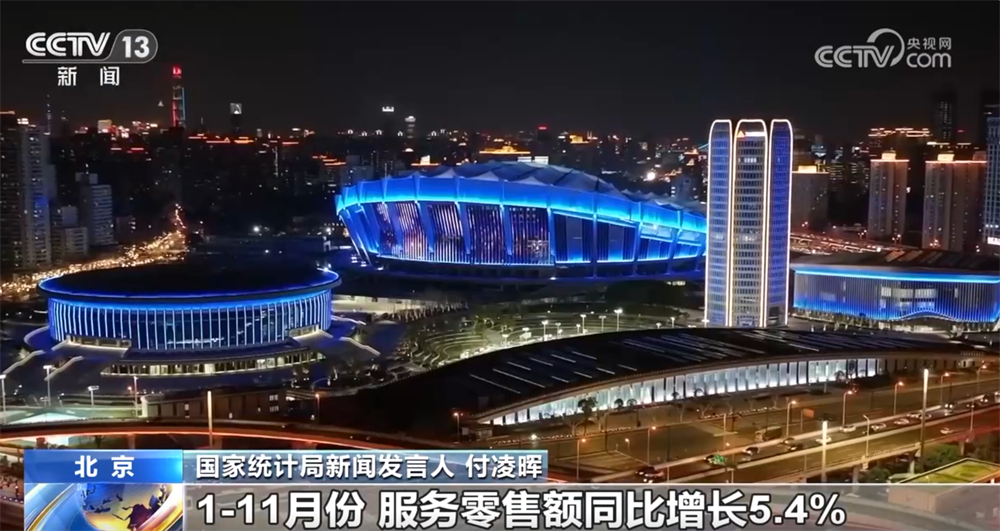
发布会上,国家统计局新闻发言人介绍,今年11月份,服务业平稳增长,现代服务业发展向好。 付凌晖介绍,11月份,全国服务业生产指数同比增长4.2%。1—11月份,全国服务业生产指数同比增长5.6%。1—10月份,规模以上服务 业企业营业收入同比增长7.6%。11月份,服务业商务活动指数为49.5%,服务业业务活动预期指数为55.9%。 付凌晖介绍,1—11月份,社会消费品零售总额同比增长4%,增速不仅快于上年同期,也快于上年全年。1—11月份,服务零售额同比增 长5.4%,增速比上月加快0.1个百分点,连续3个月回升,而且快于商品零售额增速,文体休闲服务类零售额保持两位数增长。1—11月份,实 物商品网上零售额同比增长5.7%,增速快于社会消费品零售总额1.7个百分点,占社会消费零售总额的比重达到25.9%。数字消费、绿色消费、 健康消费日益成为消费新热点,对消费的引领和支撑作用日益显现。 央视网消息:12月15日,国务院新闻办公室举行新闻发布会,国家统计局相关负责人介绍,今年11月份,工业生产稳定增长,装备制造业 和高技术制造业增长较快。 国家统计局:前11个月社会消费品零售总额同比增长4% 国家统计局新闻发 ...
实现全年预期目标,有较好条件
Zhong Guo Zheng Quan Bao· 2025-12-15 05:12
Economic Performance - In November, the industrial added value above designated size increased by 4.8% year-on-year, with a month-on-month growth of 0.44% [1][2] - The service production index rose by 4.2% year-on-year, indicating stable growth in the service sector [1] - The total retail sales of consumer goods reached 43,898 billion yuan, growing by 1.3% year-on-year [1] Investment Trends - From January to November, fixed asset investment (excluding rural households) totaled 444,035 billion yuan, showing a year-on-year decline of 2.6% [1] - Excluding real estate development investment, fixed asset investment grew by 0.8% [1] Consumption Dynamics - The retail sales of consumer goods increased by 4% year-on-year from January to November, surpassing the growth rate of the previous year [3] - In November, retail sales of cosmetics and gold and silver jewelry grew by 6.1% and 8.5% respectively, reflecting a shift towards higher-quality consumer goods [2][3] Economic Outlook - The spokesperson emphasized that despite challenges, China's economic resilience and strong macro policy support create favorable conditions for achieving annual growth targets [4][5] - Recent international organizations have raised their growth forecasts for China, indicating confidence in the country's economic development [4]
国家统计局新闻发言人付凌晖:下阶段要加强重点行业产能治理 推动价格合理回升
Qi Huo Ri Bao Wang· 2025-12-15 04:29
Core Viewpoint - The overall market prices are operating at a low level due to multiple factors, but measures to promote a reasonable price recovery are gradually showing positive effects, leading to a favorable change in the price situation [1] Consumer Prices - In November, the consumer price index (CPI) for residents increased by 0.7% year-on-year, with the growth rate expanding by 0.5 percentage points compared to the previous month, marking three consecutive months of recovery [1] - The core CPI, excluding food and energy, has shown a continuous increase since May [1] Industrial Prices - The producer price index (PPI) for industrial products decreased by 2.2% year-on-year in November, with the decline rate showing a narrowing trend since August [1] - Efforts to strengthen capacity governance in key industries and regulate market competition have been implemented [1] Future Actions - The company plans to continue implementing special actions to boost consumption, advance the construction of a unified national market, strengthen capacity governance in key industries, regulate market competition, increase high-quality supply, and promote reasonable price recovery to foster healthy economic development [1]