
新动能

Search documents
A股年内指数体系全面“焕新”释放多重积极信号 “含科量”进一步增强
Yang Shi Wang· 2025-12-15 08:20
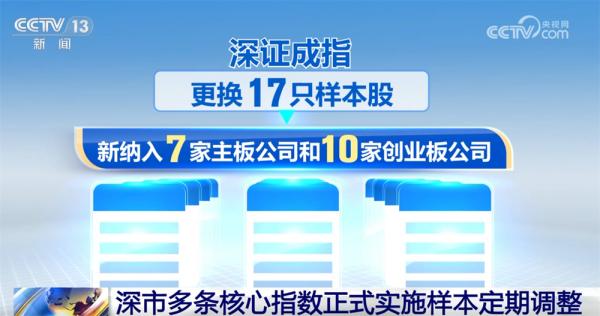
Core Insights - The recent adjustment of core indices in the Shenzhen market reflects a significant shift towards emerging industries, with the weight of strategic emerging industries in the ChiNext Index reaching 93% and 98% in the ChiNext 50 Index, highlighting a strong focus on sectors like artificial intelligence and semiconductors [3][5]. Group 1: Index Adjustments - The Shenzhen Stock Exchange announced a periodic adjustment of core indices, with the Shenzhen Component Index replacing 17 constituent stocks, including 7 from the main board and 10 from the ChiNext board [1]. - The Shanghai Stock Exchange also completed adjustments, with the SSE 50 Index changing 4 stocks, the SSE 180 Index changing 7, and the SSE 380 Index changing 38 stocks, indicating a comprehensive overhaul of the index system [1]. Group 2: Implications for Investors - The adjustments are expected to trigger significant reallocation of passive funds, with estimates suggesting over 100 billion yuan will be reallocated due to the changes in major indices [11]. - For index fund investors, the inclusion of new constituent stocks enhances the technological focus of their portfolios, allowing them to benefit from China's high-quality economic development [12]. Group 3: Market and Economic Significance - The adjustments serve as a market-driven incentive for listed companies to focus on their core businesses, innovate, and improve quality and returns, thereby attracting more medium to long-term capital [16]. - The changes in indices are seen as a calibration of the capital market's ability to serve the real economy, reflecting China's achievements in innovation-driven development [18][20].

实现全年预期目标,有较好条件
Zhong Guo Zheng Quan Bao· 2025-12-15 05:12
国家统计局12月15日发布数据显示,11月份,全国规模以上工业增加值同比增长4.8%,环比增长 0.44%;全国服务业生产指数同比增长4.2%;社会消费品零售总额43898亿元,同比增长1.3%。1—11月 份,全国固定资产投资(不含农户)444035亿元,同比下降2.6%;扣除房地产开发投资,全国固定资 产投资增长0.8%。 国家统计局新闻发言人付凌晖在同日举行的新闻发布会上表示,从全年情况看,尽管有困难有压力,但 我国经济韧性强,宏观政策支持有力,新动能稳步成长,实现全年预期目标有较好条件。 保持稳中有进发展态势 数据显示,生产增势平稳。付凌晖表示,工业生产稳定增长。11月份,规模以上工业增加值同比增长 4.8%,增速和上月基本持平。在产业升级发展带动下,技术含量和附加值较高的装备制造业快速发 展。11月份,装备制造业增加值同比增长7.7%,继续快于全部规模以上工业增长,对规模以上工业增 加值增长的贡献率达到59.4%。 市场销售扩大。付凌晖表示,商品销售持续增长。11月份,社会消费品零售总额同比增长1.3%,居民 消费品质提升,部分升级类商品销售较快增长。11月份,限额以上商品零售额中化妆品类和金银珠宝 ...
“八个坚持”拓开2026年中国经济大视野
Guo Ji Jin Rong Bao· 2025-12-15 03:12
Group 1: Macroeconomic Policy and Domestic Market - The core macroeconomic policy emphasizes a more proactive approach, focusing on quality and efficiency as key development themes, with the "Eight Persistences" as critical directives for economic work in the first year of the 14th Five-Year Plan [1] - Domestic demand has become the main driver of economic growth, contributing an average of 93.1% to economic growth from 2013 to 2024, highlighting the importance of a strong domestic market as a long-term strategy [2][3] Group 2: Innovation and New Growth Drivers - The necessity of innovation-driven growth is underscored, as new momentum is essential for future development and competitive positioning, requiring a systemic reshaping of production factors and business models [4][5] - The development of new momentum must support both high-end industries and traditional industry upgrades, creating high-quality employment and meeting the needs of the populace [5] Group 3: Reform and High-Quality Development - Continuous reform is essential to inject vitality into high-quality development, addressing deep-seated issues that have emerged due to changing development stages [6][7] - Emphasis on technological innovation as a key driver for high-quality development, necessitating a deep integration of innovation systems and breaking down institutional barriers [7] Group 4: Open Economy and International Cooperation - China aims for a higher level of openness, promoting multi-faceted cooperation to adapt to global economic changes and challenges, emphasizing the importance of collaborative networks in various fields [8][9] - The need for innovative cooperation mechanisms to address challenges posed by protectionism and geopolitical tensions is highlighted, focusing on quality and resilience in partnerships [9] Group 5: Coordinated Development and Urban-Rural Integration - The strategy of promoting coordinated development aims to address the growing disparities between urban and rural areas, emphasizing the need for a balanced and inclusive development approach [10][11] - Regional integration strategies like the Beijing-Tianjin-Hebei collaboration and the Yangtze River Economic Belt are examples of efforts to optimize resource allocation and promote high-quality regional economic layouts [11] Group 6: Green Transformation and Carbon Neutrality - The commitment to achieving carbon peak by 2030 and carbon neutrality by 2060 reflects China's responsibility in global climate governance and the need for a comprehensive green transformation [12][13] - Innovation is identified as the core engine for achieving carbon goals, requiring advancements in renewable energy, energy efficiency, and the establishment of supportive institutional frameworks [14] Group 7: Focus on People's Livelihood - The emphasis on prioritizing people's livelihoods reflects the increasing complexity of public demands, necessitating a responsive governance approach that addresses specific community needs [15][16] - Establishing long-term mechanisms to ensure sustainable improvements in public welfare is crucial, with a focus on resource allocation and social governance [16] Group 8: Risk Management - The need to manage risks in key areas such as real estate and local debt is highlighted, with a focus on maintaining stability while actively addressing potential threats [17][18] - A balanced approach to risk management is essential, combining immediate responses with long-term structural improvements to foster sustainable development [18]
11月份物价数据彰显经济韧性与潜力
Zheng Quan Ri Bao· 2025-12-14 16:16
Group 1 - The core viewpoint of the articles highlights that the recent increase in consumer prices indicates a synchronized improvement in supply and demand, reflecting economic resilience and potential [1][2] - In November, the Consumer Price Index (CPI) rose by 0.7% year-on-year, the highest since March 2024, with the core CPI (excluding food and energy) increasing by 1.2% for three consecutive months [1] - The Producer Price Index (PPI) saw a month-on-month increase of 0.1%, marking two consecutive months of growth, indicating a positive trend in industrial pricing [1] Group 2 - The increase in consumer prices is attributed to effective policy measures and the growth of new economic drivers, with specific sectors like arts and crafts, sports equipment, and nutritional foods seeing price increases of 20.6%, 4.3%, and 1.1% respectively [1] - The prices of household appliances and clothing rose by 4.9% and 2.0% year-on-year in November, while prices for services such as airline tickets and home services also increased, reflecting a shift in consumer spending patterns [2] - The sustained rise in core CPI suggests a steady increase in consumer confidence, supported by macroeconomic policies and efforts to optimize market competition and production capacity [2]
从政策到投资、从壮大新动能到“人工智能+”,怎么干?
Yang Shi Wang· 2025-12-14 01:50
中央经济工作会议指出,2026年继续实施更加积极的财政政策。如何理解2026年财政政策的取向? 中国财政科学研究院院长杨志勇表示,2026年继续实施更加积极的财政政策,这是基于对国内外经济形势判断所作出的选择。这也 可以看到政策是一以贯之的,是保持相当力度的。跟2026年的经济工作的目标来说是相称的,它能够支撑经济目标的实现。 中央经济工作会议指出,要继续实施更加积极的财政政策,保持必要的财政赤字、债务总规模和支出总量。专家表示,2026年的财 政政策取向与2025年保持了一致。 粤开证券首席经济学家、研究院院长罗志恒表示,从量的角度,要确保必要的财政赤字规模,新增债务总规模以及必要的财政支出 力度。通过政府的支出,比如政府采购以及基建工程项目来扩大社会的总需求,形成居民部门、企业部门的收入,推动经济运行的 循环。第二是结构的优化,要坚持将投资于物和投资于人的结合,提高居民的医疗、教育和养老,这样居民的后顾之忧得到了缓 解,进而有利于去释放潜在的消费需求。 提高财政资金使用效率 更多资金投到民生 实施更加积极的财政政策,如何确保财政资金使用更加高效,让每一分钱都花到"刀刃"上? 中央经济工作会议指出,加强财政 ...

东方证券研究所所长黄燕铭:中国经济长期向好具有三大核心驱动力
Zheng Quan Ri Bao· 2025-12-12 16:25
Core Insights - The Central Economic Work Conference held on December 10-11, 2025, highlighted the core contradiction of "strong supply but weak demand," indicating a future focus on policies that stimulate demand and optimize supply [1] Group 1: Economic Potential and Policy Focus - The conference emphasized the need to fully tap into economic potential, combining policy support with reform and innovation, ensuring both flexibility and effective management [1] - Five essential strategies were outlined to support long-term economic growth, including the development of new productive forces, a vibrant unified national market, and macro policies that address both short-term issues and long-term space [1] Group 2: Innovation and New Momentum - The conference underscored the importance of innovation-driven growth and the cultivation of new momentum, with specific measures targeting education, international technology innovation centers, intellectual property protection, and the enhancement of service industries [2] - The definition of "new momentum" has broadened to encompass not only technology but also the institutional, industrial, social governance, financial, and service sector upgrades driven by technology [2] Group 3: Support for Industries - Three key directions were identified for supporting strategic emerging industries and upgrading traditional industries: 1. Promoting a dual approach of private investment and fiscal support, leveraging tools like special government bonds and encouraging private sector involvement [3] 2. Driving industrial upgrades through demand-side initiatives, including government procurement of major technological equipment and encouraging innovation in smart and green products [3] 3. Enhancing financial support for technological innovation and industrial upgrades, with reforms in capital markets to better serve "hard tech" companies and provide comprehensive financing support [3]


中信建投证解读中央经济工作会议:积极政策取向未变,扩大内需为重点工作之首
Xin Lang Cai Jing· 2025-12-11 14:46
Core Insights - The central economic work conference concluded that current economic issues are primarily related to developing and transitioning challenges, which can be resolved through effort [1] - The conference outlined a 2026 economic vision focusing on expanding domestic demand, stabilizing investment, managing local government debt, advancing anti-involution measures, stabilizing the real estate market, and fostering new growth drivers [1][2] - Incremental policies were introduced, with a more proactive fiscal stance, maintaining a high deficit rate, expanding debt issuance, and tax reforms, while monetary policy remains "appropriately loose" targeting a reasonable recovery in prices [1][4] Fiscal Policy - The fiscal policy remains expansionary, with an emphasis on maintaining necessary fiscal deficits and total debt levels, with expectations for the deficit rate to stay at 4% and special bonds potentially expanding to 5 trillion yuan [5][17] - Local special bonds are expected to increase significantly to address fiscal difficulties and support local governments in debt management, with a notable rise in new special bonds issued this year [5][17] Monetary Policy - Monetary policy is anticipated to continue with rate cuts and reserve requirement ratio reductions, focusing on stabilizing economic growth and ensuring ample liquidity [6][18] - The emphasis on guiding financial institutions to support key areas such as domestic demand, technological innovation, and small and medium enterprises indicates the potential for more structural policy tools [7][19] Domestic Demand and Investment - Expanding domestic demand is prioritized, with strategies to boost consumption through income growth plans and optimizing policy implementations, while also addressing supply-side improvements [8][20] - Investment strategies aim to stabilize and increase central budget investments, optimize project implementations, and enhance urban renewal efforts, with expectations for infrastructure investment to improve [8][20] Real Estate Market - The real estate market is targeted for stabilization, with policies to control inventory and encourage the acquisition of existing homes for affordable housing, alongside potential demand-side support measures [9][21] - Despite stabilization efforts, real estate investment is likely to remain in negative growth territory due to ongoing constraints [9][21] Industry Trends - The focus on new growth drivers, including artificial intelligence, service industries, new energy, and marine economy, highlights the importance of innovation and industrial upgrading for economic development [10][22] - The commitment to addressing involution and enhancing service quality indicates a strategic shift towards sustainable economic practices, although consumer recovery remains uncertain [10][22]

中央经济工作会议部署产业政策:培育新动能,深入整治“内卷”
2 1 Shi Ji Jing Ji Bao Dao· 2025-12-11 14:45
Group 1: Economic Policy Focus - The core focus of the Central Economic Work Conference is to adhere to innovation-driven development and accelerate the cultivation of new growth drivers [1][3] - The shift in policy from "leading new quality productivity development through technological innovation" to "accelerating the cultivation of new growth drivers" reflects a deeper emphasis on implementation pathways and practical results [2][4] - The conference highlights the importance of optimizing the service industry structure through a dedicated action plan, which aligns with the strategy to expand domestic demand [5][6] Group 2: Service Industry Development - The service industry is recognized for its strategic importance in the national economy, with a projected contribution of 56.7% to GDP by 2024, although structural imbalances exist [6][7] - The action plan for enhancing the service industry aims to improve service quality, thereby boosting consumer confidence and creating a virtuous cycle of service upgrades, consumption growth, and industrial expansion [7][8] - The government plans to support private capital in the production service sector, focusing on high-value service industries such as industrial design and quality certification [7][8] Group 3: Artificial Intelligence Governance - The policy regarding "Artificial Intelligence+" has evolved from "initiating actions" to "deepening and expanding" while also emphasizing the need for improved governance [8][9] - The focus on AI reflects its critical role in driving productivity across various industries, necessitating a balance between innovation and risk management [9][10] - The governance framework aims to address challenges such as data misuse and algorithmic bias, ensuring that the development of AI aligns with ethical standards and societal needs [9][10] Group 4: Competition Regulation - The conference reiterates the need for deeper regulation of "involutionary competition," transitioning from a broad initial assessment to targeted governance measures [10][11] - The establishment of a national unified market construction regulation is aimed at eliminating local protectionism and market fragmentation, which are key contributors to involutionary competition [11] - The emphasis on precise governance reflects an understanding of the complexities involved in addressing the root causes of involutionary competition, promoting high-quality development through enhanced competition standards [11]
培育壮大新动能 充分发挥资本市场枢纽功能
Zheng Quan Ri Bao· 2025-12-10 16:25
本报记者 郭冀川 中共中央政治局12月8日召开会议。会议提出,坚持创新驱动,加紧培育壮大新动能。 中国移动通信联合会教育与科学技术研究院执行院长陈晓华在接受《证券日报》记者采访时表示,培育壮大新动能内涵丰 富且多元,其中培育新质生产力与新兴支柱产业是重要着力点。以人工智能、商业航天、生物制造等产业为例,这些产业正凭 借其独特的技术优势和广阔的发展前景,逐渐成为具有国际竞争力的新兴支柱产业。人工智能作为引领新一轮科技革命和产业 变革的战略性技术,正深刻改变着人类生产生活方式。从智能语音助手到自动驾驶汽车、从医疗影像诊断到金融风险预测,人 工智能的应用场景不断拓展,为各行业带来了前所未有的效率提升和创新机遇。 萨摩耶云科技集团首席经济学家郑磊补充表示,新动能还包括新能源、新材料、高端装备制造等产业。新能源产业是实现 能源转型和可持续发展的关键,随着太阳能、风能、水能等可再生能源技术的不断进步和成本的不断降低,新能源产业将迎来 更加广阔的发展空间。新材料产业是其他产业发展的基础和先导,高性能合金、新型复合材料、纳米材料等新材料的应用,将 推动航空航天、电子信息、汽车等产业的升级换代。高端装备制造产业则是衡量一个国家 ...
创新驱动培育壮大新动能 夯实经济发展根基
Zheng Quan Shi Bao· 2025-12-08 18:17
Group 1 - The core viewpoint emphasizes the importance of innovation-driven development as a fundamental shift from factor-driven growth to innovation-driven growth, aligning with the "14th Five-Year Plan" goals [1] - The essence of technological innovation during the "14th Five-Year" period is defined by three guiding principles: strategic positioning, demand-oriented development paths, and a collaborative ecosystem involving government, market, and society [1] - High-level technological innovation requires an open, collaborative, and inclusive innovation ecosystem that promotes deep integration of industry, academia, and research [1] Group 2 - Current innovation practices face structural shortcomings, including insufficient investment in basic research, lagging digitalization in traditional industries, and disconnection between research outcomes and practical application [2] - To overcome these bottlenecks, precise policy measures are necessary, such as establishing long-term investment mechanisms for original innovation and enhancing the integration of digital and real economies [2] - In the context of increasing global technological competition, innovation-driven strategies are crucial for ensuring industrial chain security and expanding international markets [2]