
新能源转型

Search documents
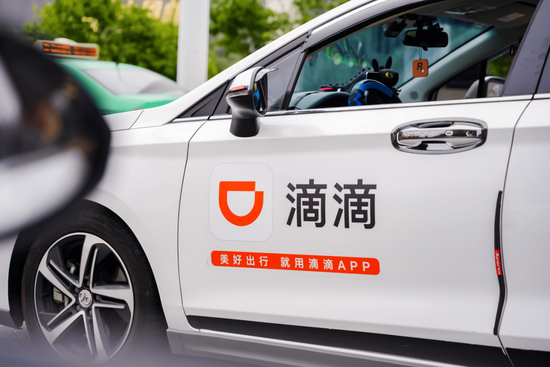
滴滴:4508亿规模下的盈利隐忧与全球化赌局
Xin Lang Cai Jing· 2026-03-19 09:33
Core Insights - Didi achieved a total order volume of 18.24 billion and a total transaction value of 450.8 billion in 2025, demonstrating its dominance in the global mobility market [1][13] - Domestic business has shown double-digit growth for 12 consecutive quarters, while international market orders surged by 24.7%, indicating a strategic focus on "stabilizing domestic, expanding internationally, and investing in technology" [1][13] - However, the company faced a decline in net profit by over 20% year-on-year, with international business losses expanding to 6.05 billion, and sales expenses increasing by 46.1% [1][13] Financial Performance - Didi's financial report for 2025 shows a stark contrast: a net profit of 0.992 billion, recovering from a loss of 0.973 billion in the first nine months, but the quality of profit is declining [3][16] - The quarterly profit fluctuations reveal a "roller coaster" trend, with a net profit of 1.463 billion in Q3, but a subsequent adjusted EBITA loss of 2.115 billion in Q4, marking the highest quarterly loss since 2022 [3][16] - Domestic business contributed 75% of total order volume, but its profit contribution is being eroded by international expansion, with domestic adjusted EBITA at 12.35 billion and international losses at 6.05 billion [3][16] Growth and Profitability Discrepancy - Despite continuous double-digit growth in domestic orders, profit margins slowed in Q4 due to short-term factors like holiday subsidies and equipment investments [4][17] - The international business is caught in a cycle where larger scale leads to greater losses, with Q4 overseas GTV increasing by 47.1% but order volume only growing by 24.5% [5][17] Strategic Challenges - The decline in profitability quality reflects a clash of strategic choices, operational models, and external environments [7][19] - The domestic market is facing growth bottlenecks, with increasing pressure on monetization and user retention, leading to a potential loss of drivers due to rising costs [7][19] - The international expansion strategy is heavily reliant on subsidies, with local competition intensifying, particularly in markets like Brazil and Mexico [7][19] Future Outlook - Didi plans to adjust its strategy for 2026, focusing on balancing domestic stability, controlling international expansion, and improving efficiency [10][22] - The company aims to shift from increasing commission rates to expanding value-added services, with expectations of maintaining around 10% growth in domestic orders and adjusted EBITA potentially exceeding 15 billion [10][22] - For international markets, Didi intends to reduce reliance on subsidies and enhance local operations, with a target to narrow international losses to within 4 billion [10][22] Strategic Investments - Didi's investments in autonomous driving and new energy are consuming significant cash flow, with R&D spending reaching 8.4 billion in 2025 [8][20] - The focus will shift towards commercializing autonomous driving and collaborating with vehicle manufacturers to reduce costs and secure government subsidies [11][23] - The core logic for improving profitability in 2026 hinges on releasing domestic profits and narrowing international losses, with a potential net profit growth of 15-20% if targets are met [12][24]


第一创业晨会纪要-20260317
First Capital Securities· 2026-03-17 03:52
Macroeconomic Overview - In January-February 2026, industrial added value increased by 6.3% year-on-year, rebounding by 1.1 percentage points from December 2025 and by 0.4 percentage points from the previous year [3] - The total retail sales of consumer goods in January-February 2026 nominally grew by 2.8% year-on-year, up by 1.9 percentage points from December 2025 but down by 0.9 percentage points from the previous year [3] - Fixed asset investment in January-February 2026 saw a cumulative year-on-year growth rate of 1.8%, rebounding by 5.6 percentage points from the previous year, with manufacturing investment growing by 3.1% and infrastructure investment (excluding electricity) growing by 11.4% [3] Real Estate Sector - Despite improvements in real estate investment in January-February 2026, specific data indicates ongoing challenges, with new housing starts down by 23.1% year-on-year and housing sales area down by 13.5% [4] - The funding sources for real estate development saw a year-on-year decline of 16.5%, with domestic loans down by 13.9% and other funding sources (prepayments) down by 25.1% [4] - The price index for new residential properties in 70 large and medium-sized cities in February 2026 was down by 3.5% year-on-year, while the second-hand housing price index fell by 6.3% [5] Trade and Export - Exports in January-February 2026 grew by 21.8%, significantly higher than the 5.5% growth in the previous year, with a trade surplus of 213.6 billion USD, an increase of 26.2% year-on-year [6] - The contribution rate of net exports to GDP reached 32.7% in 2025, the highest since 1998, indicating a strong reliance on external demand amidst rising trade protectionism and global trade complexities [6] Industry Insights - The Chinese Ministry of Commerce reported stable progress in US-China trade negotiations, with discussions on tariff levels and potential extensions of non-tariff measures [8] - Nvidia's GTC conference highlighted a projected demand of at least 1 trillion USD by 2027 for AI-related products, indicating a doubling of expected demand compared to previous forecasts [8] Consumer Sector - Chuangmeng Tiandi (1119.HK) announced a positive profit forecast for FY2025, expecting a net profit of 10 million to 30 million CNY, a significant turnaround from a loss of approximately 545 million CNY in FY2024 [10] - The improvement in profitability is attributed to successful commercialization of self-developed games, particularly "Karabichu," and a shift from high R&D investment to operational efficiency [10]
比亚迪中东遇袭安然无恙,美团战地送餐引全球关注
Sou Hu Cai Jing· 2026-03-13 02:05
Core Viewpoint - Chinese companies are gaining prominence in the Middle East amidst ongoing conflicts, showcasing resilience and adaptability in challenging environments [2][24]. Group 1: BYD's Global Presence and Safety Features - A missile strike in Jerusalem highlighted the durability and safety of BYD's ATTO 3 vehicle, which survived significant damage while protecting its occupants [1][5]. - BYD's blade battery technology is a key differentiator, providing enhanced safety and reliability compared to traditional lithium batteries, which are prone to thermal runaway [5][10]. - The company has established a strong international presence, with overseas sales reaching 242,800 units in 2023, a 334% increase year-on-year, and projected to grow to 417,200 units in 2024 [10][14]. Group 2: BYD's Strategic Expansion - BYD was one of the first Chinese automakers to enter international markets, starting with battery sales in Europe in 1998 and expanding into electric buses and passenger vehicles [8][9]. - The company has successfully penetrated high-standard markets in Europe and Japan, achieving over 60% market share in Tokyo's electric bus sector [9]. - By 2025, BYD aims to sell 1,049,600 vehicles overseas, accounting for 22.8% of total sales, with production facilities established in multiple countries [10][14]. Group 3: Meituan's International Growth - Meituan's international delivery service, Keeta, launched in Hong Kong in 2023 and has rapidly expanded into the Middle East, achieving a 10% market share in Saudi Arabia within months [15][17]. - The company plans to invest $1 billion over five years to expand its services in Latin America, leveraging high-value markets in the Middle East and Latin America [18][20]. - Meituan's overseas operations are still in the early stages, with a reported revenue of 3.2 billion yuan and a loss of 1.9 billion yuan in the first half of 2025 [18]. Group 4: Broader Chinese Corporate Influence in the Middle East - Chinese enterprises, including major players like Sinopec and China National Petroleum, are deeply involved in the Middle East's energy and infrastructure sectors, contributing to local economic transformations [21][22]. - The presence of Chinese companies in the region extends beyond automotive and food delivery, encompassing energy, construction, digital economy, and consumer retail, establishing a comprehensive network of cooperation [21][23]. - These companies are not merely conducting business but are actively participating in the economic development and modernization efforts of Middle Eastern nations, enhancing China's soft power in the region [24].



研报掘金丨长江证券:维持长城汽车“买入”评级,2月海外表现亮眼,销量占比近60%
Ge Long Hui A P P· 2026-03-11 07:48
Core Viewpoint - The report from Changjiang Securities indicates that Great Wall Motors experienced a total sales volume of 73,000 units in February, reflecting a year-on-year decline of 6.8% and a month-on-month decline of 19.6% [1] Group 1: Sales Performance - In February, the overseas sales reached 42,675 units, marking a year-on-year increase of 37.4% and a month-on-month increase of 6.0%, with overseas sales accounting for 58.8% of total sales [1] Group 2: Strategic Initiatives - The company is accelerating its global expansion and is committed to transitioning towards new energy vehicles, actively pursuing innovation and transformation, which is expected to drive both sales and performance growth [1] - In the short to medium term, the combination of accelerated overseas expansion and the domestic shift towards new energy vehicles, along with an increase in the proportion of high-value models like the Tank, is anticipated to boost the company's sales and performance [1] Group 3: Long-term Outlook - In the long term, the company's four strategic expansion initiatives are expected to open up long-term growth potential for sales, while the shift towards intelligent transformation is set to enhance profitability across the entire industry chain [1] - The projected net profit attributable to the parent company for 2025-2027 is estimated to be 9.91 billion, 14.20 billion, and 17.40 billion yuan, respectively, with corresponding A-share P/E ratios of 17.4X, 12.2X, and 9.9X, and Hong Kong stock P/E ratios of 9.9X, 6.9X, and 5.6X [1] - The report maintains a "buy" rating for the company [1]

长城汽车:2月海外表现亮眼,销量占比近60%-20260311
Changjiang Securities· 2026-03-11 02:45
Investment Rating - The investment rating for Great Wall Motors is "Buy" and is maintained [5]. Core Views - In February 2026, Great Wall Motors sold 73,000 vehicles, a year-on-year decrease of 6.8% and a month-on-month decrease of 19.6%. Export sales accounted for 58.8% of total sales, with 43,000 vehicles exported. New energy vehicle sales reached 13,000 units, representing 21.0% of total sales [1][9]. - The company is accelerating its global expansion and is committed to transitioning to new energy vehicles. The ongoing new vehicle cycle is expected to drive improvements in sales and performance. Long-term strategies are anticipated to open up growth opportunities, while the shift towards smart technology is expected to enhance profitability across the entire industry chain [1][9]. Summary by Sections Sales Performance - In January and February 2026, total sales reached 163,000 vehicles, a slight year-on-year increase of 2.6%. New energy vehicle sales totaled 31,000 units, a year-on-year decrease of 17.7% [9]. - In February, the breakdown of sales by brand included Haval at 94,173 units (+2.5% YoY), Tank at 24,541 units (-0.3% YoY), WEY at 13,488 units (+55.9% YoY), Ora at 3,320 units (-18.8% YoY), and Great Wall pickups at 27,361 units (-7.5% YoY) [9]. Global Expansion - In February, Great Wall achieved overseas sales of 42,675 units, a year-on-year increase of 37.4% and a month-on-month increase of 6.0%. The overseas sales accounted for 58.8% of total sales, marking an increase of 18.9 percentage points year-on-year [9]. - The company has implemented the "ONE GWM" strategy to accelerate its international presence, covering over 170 countries and regions with more than 1,400 overseas sales channels [9]. Strategic Initiatives - Great Wall is focusing on product, channel, and supply chain adjustments domestically, emphasizing the new energy transition and launching multiple new models across its brands [9]. - The company is investing in smart technology, enhancing its capabilities in data, algorithms, and computing power, which are expected to strengthen its competitive position in the smart vehicle market [9]. Financial Projections - The projected net profits for Great Wall Motors from 2025 to 2027 are 9.91 billion, 14.20 billion, and 17.40 billion yuan, respectively. The corresponding A-share price-to-earnings ratios are expected to be 17.4X, 12.2X, and 9.9X [9].
长城汽车(601633):点评:2月海外表现亮眼,销量占比近60%
Changjiang Securities· 2026-03-10 13:14
Investment Rating - The investment rating for the company is "Buy" and is maintained [7] Core Views - In February 2026, the company sold 73,000 vehicles, a year-on-year decrease of 6.8% and a month-on-month decrease of 19.6%. Among these, export sales reached 43,000 vehicles, accounting for 58.8% of total sales. New energy vehicle sales were 13,000 units, representing 21.0% of total sales [2][10] - The company is accelerating its global expansion and is committed to transitioning to new energy vehicles. The ongoing new vehicle cycle is expected to drive improvements in sales and performance. Long-term strategies are set to open up growth opportunities for sales, while the shift towards smart technology is expected to enhance profitability across the entire industry chain [2][10] Summary by Relevant Sections Sales Performance - In January and February 2026, total sales reached 163,000 vehicles, showing a slight year-on-year increase. In February alone, total sales were 73,000 vehicles, with new energy vehicle sales at 13,000 units, down 15.7% year-on-year [10] - The company’s brands showed varied performance: Haval brand sold 94,173 vehicles (+2.5% YoY), Tank brand 24,541 vehicles (-0.3% YoY), WEY brand 13,488 vehicles (+55.9% YoY), Ora brand 3,320 vehicles (-18.8% YoY), and pickup trucks 27,361 vehicles (-7.5% YoY) [10] Global Expansion - In February, the company achieved overseas sales of 42,675 vehicles, a year-on-year increase of 37.4% and a month-on-month increase of 6.0%, with overseas sales accounting for 58.8% of total sales [10] - The company’s "ONE GWM" strategy is accelerating its international presence, covering over 170 countries and regions, with more than 1,400 overseas sales channels established [10] Future Outlook - The company is focusing on product, channel, and supply chain adjustments domestically, with a strong emphasis on new energy vehicle development. The introduction of multiple new models across various brands is expected to contribute significantly to future sales growth [10] - The company is enhancing its technological capabilities in the smart vehicle sector, focusing on data, algorithms, and computing power to strengthen its competitive edge [10] - Profit forecasts for the company indicate net profits of 99.1 billion, 142.0 billion, and 174.0 billion yuan for 2025, 2026, and 2027 respectively, with corresponding A-share P/E ratios of 17.4X, 12.2X, and 9.9X [10]
央企新能源转型迎来重大突破!东风集团股份资本重组方案落地,岚图汽车将独立登陆港股
Hua Xia Shi Bao· 2026-03-10 09:19
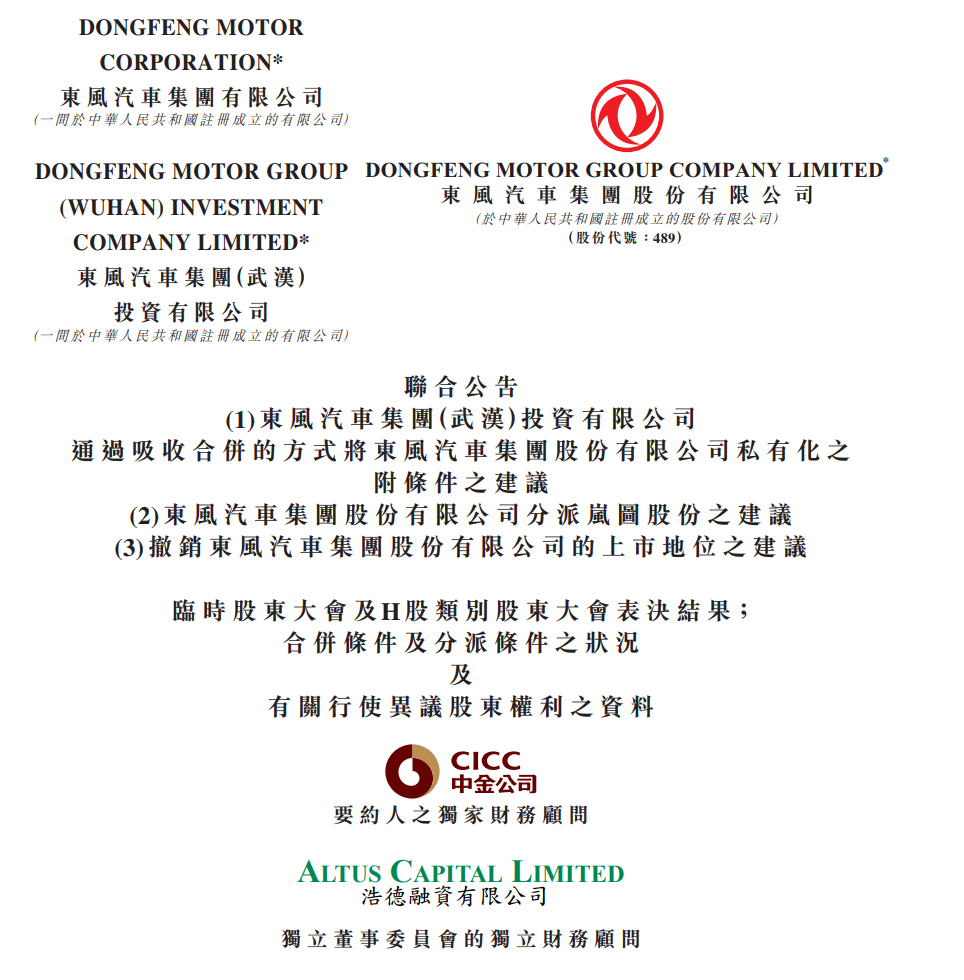
Core Viewpoint - The capital restructuring plan of Dongfeng Group marks a significant breakthrough in the company's transition to renewable energy, allowing Lantu Automobile to independently list on the Hong Kong stock market, providing a reference for capital operations in the industry [1][3]. Group 1: Capital Restructuring Details - The capital restructuring involves two main operations: privatization of the listed company and an introduction listing for Lantu Automobile, where existing shareholders will receive shares without issuing new stocks [2]. - The transaction employs a "share distribution + absorption merger" model, with Lantu Automobile's 79.67% stake being distributed to all shareholders, followed by its introduction listing on the Hong Kong Stock Exchange [2]. - The restructuring plan balances the preservation and appreciation of state-owned assets, protection of minority shareholders' rights, and strategic development of the enterprise [2]. Group 2: Strategic Implications - The completion of the transaction will result in Dongfeng Group achieving 100% state-owned control, removing obstacles for future transformation reforms [3]. - The successful vote at the shareholders' meeting reflects strong support from minority shareholders for the restructuring plan, indicating market and public recognition of Dongfeng's renewable energy strategy [3]. - This transaction is seen as a pivotal starting point for Dongfeng in the new energy era, enabling a comprehensive strategic reshaping and enhancing competitiveness in the electric vehicle sector [3][7]. Group 3: Lantu Automobile's Role - Lantu Automobile is positioned as a key asset in Dongfeng's high-end new energy strategy, showing significant growth in sales, revenue, and profitability [4]. - Sales are projected to grow from 50,285 units in 2023 to 150,169 units in 2025, with a compound annual growth rate of 73%, indicating strong market acceptance [5]. - Revenue is expected to increase from 12.75 billion yuan in 2023 to 34.86 billion yuan in 2025, with a net profit of 1.02 billion yuan in 2025, marking a turnaround to profitability [5]. Group 4: Market Positioning and Future Prospects - Lantu's successful models, such as the Dreamer, have gained market recognition, driving the brand's growth and establishing a solid product foundation in the high-end electric vehicle market [5]. - The introduction listing on the Hong Kong Stock Exchange will enhance Lantu's international brand influence and provide a new channel for capital market engagement, supporting its global expansion [6]. - The restructuring is expected to provide Dongfeng with a competitive edge in the new energy vehicle industry and serve as a practical model for state-owned enterprises in their capital operations and industrial upgrades [7].

东风集团股份资本重组方案获股东大会通过 岚图汽车拟以介绍方式登陆港股
Zheng Quan Ri Bao· 2026-03-09 16:44
Group 1 - Dongfeng Motor Group Co., Ltd. announced the successful approval of the privatization and introduction of Lantu Automotive Technology Co., Ltd. to the Hong Kong Stock Exchange, marking the implementation of a capital operation strategy combining privatization and the spin-off of quality new energy assets [1] - The transaction structure involves a combination of "equity distribution and absorption merger," allowing Dongfeng Company to achieve 100% state-owned control of Dongfeng Group and enabling Lantu Automotive to operate as an independent new energy vehicle platform [1][2] - The introduction listing of Lantu Automotive is not aimed at immediate fundraising but rather to enhance asset transparency and market governance, paving the way for future financing and global expansion [2] Group 2 - Lantu Automotive's sales are projected to grow from 50,300 units in 2023 to 150,200 units by 2025, with revenue increasing from 12.75 billion yuan to 34.86 billion yuan, and a net profit of 1.02 billion yuan expected in 2025 [2] - The company has secured 1,874 patents and has 5,405 patents pending, covering various fields such as intelligent networking and new energy, which supports its capital operation [3] - The restructuring is seen as a significant step for Dongfeng Group in advancing its new energy transition, aiming to improve decision-making efficiency and concentrate resources on new energy and intelligent business [2][3]
东风集团股份资本重组方案获高票通过,央企新能源转型打造改革新范本
Zhong Guo Qi Che Bao Wang· 2026-03-09 14:26
Group 1 - Dongfeng Group's privatization and Lantu Automotive's introduction to the Hong Kong Stock Exchange have been approved by shareholders, indicating strong support for the transaction and recognition of the company's new energy transition strategy [1][3] - The transaction employs a "share distribution + absorption merger" model, allowing Dongfeng Group to achieve 100% state-owned control and enabling Lantu Automotive to independently enter the international capital market as a high-end new energy vehicle entity [3][5] - This reform is a concrete manifestation of Dongfeng Group's commitment to state-owned enterprise reform and aims to eliminate institutional barriers, enhance decision-making efficiency, and focus resources on new energy and intelligent industries [3][7] Group 2 - Lantu Automotive, as a high-end smart new energy brand cultivated by Dongfeng, will leverage its listing to enhance capital support for technology development and global market expansion, while also increasing its international brand influence [5][7] - The successful implementation of the privatization and listing plan reflects the proactive adaptation of state-owned automotive enterprises to industry changes and their commitment to high-quality development [7] - Dongfeng Group's transformation serves as a new model for state-owned enterprises to deepen reform and promote industrial upgrades, contributing to the high-quality development of China's new energy vehicle industry [7]
铜月报:地缘风险压制风偏,铜价陷入震荡-20260309
Tong Guan Jin Yuan Qi Huo· 2026-03-09 13:12
1. Report Industry Investment Rating No information provided in the report. 2. Core Views of the Report - Geopolitical risks have temporarily cooled global risk appetite, but copper still faces a supply shortage. The trend of global electrification transformation and AI-driven industrial change is irreversible, and major economies will strengthen the competition for strategic metals. It is expected that copper prices will return to a volatile upward trend after adjustment in March, with the LME copper price likely to fluctuate between $12,500 - $13,500 per ton [3][73]. 3. Summary According to the Table of Contents 3.1 2026 February Copper Market Review - In February 2026, copper prices showed a high-range volatile trend. LME copper fluctuated from a minimum of $12,400 at the beginning of the month to a maximum of $13,500 and then declined. SHFE copper fluctuated in the range of 98,000 - 105,000 yuan/ton, and the overall price center remained basically the same as the previous month. As of February 27, LME copper closed at $13,296/ton, with a monthly increase of 1.7%; SHFE copper closed at 103,920 yuan/ton, with a monthly increase of 0.2% [8]. - After the Spring Festival, the terminal consumption of refined copper in China was weak. Traditional industries were still in the off - season, but the demand for new energy vehicles, PCB boards, and other emerging industries was good. The domestic social inventory increased to over 550,000 tons at the end of February, and the spot premium was mostly at a discount. It is expected that in March, traditional industries will gradually adapt to the high copper prices, and emerging industries will provide stable marginal increments [10][11]. 3.2 Macroeconomic Analysis - **Impact of the US - Iran conflict**: The US - Iran conflict has led to a short - term surge in oil prices, raising global inflation expectations and restricting the Fed's interest - rate cut space in the first half of the year. The US employment market is weak, which has worried the market about the economic growth prospects. In the short - to - medium term, inflation rebound may limit the interest - rate cut space in the second quarter, but the Fed may maintain a neutral to moderately loose policy stance in the second half of the year [13][14][15]. - **Manufacturing situation**: The US manufacturing industry in January far exceeded expectations, and the ISM manufacturing PMI rose significantly. The eurozone manufacturing industry returned to the expansion range in February, with Germany's manufacturing industry rebounding, while France's manufacturing industry faced some challenges. Excluding geopolitical risks, the eurozone economy may maintain a stable growth trend, and the ECB's monetary policy will remain cautiously neutral [16][17][18]. - **China's economic goals and policies**: China's GDP growth target for 2026 is 4.5% - 5%. The government will implement a more proactive fiscal policy and a moderately loose monetary policy. It will also cultivate and expand emerging industries and future industries, and the development of emerging industries will provide broad demand growth for refined copper consumption [19][20]. 3.3 Fundamental Analysis - **Global copper concentrate shortage**: The shortage of global copper concentrates continues, with the spot TC negative value expanding to - $50/ton. It is expected that the supply growth rate of global copper concentrates in 2026 will be less than 1.5%. Some major overseas mines have not shown obvious signs of resumption of production, and the logistics of copper exports in the Congo (Kinshasa) has been interrupted [23][28]. - **Domestic and overseas refined copper production**: In February, China's refined copper production decreased seasonally. The by - product profits of smelters were relatively healthy, but the domestic cold material supply was slightly tight. Overseas, due to the significant contraction of copper concentrate long - term processing fees, some overseas refined copper production capacities were forced to stop or reduce production [30][31][32]. - **Import situation**: In December 2025, the import of refined copper decreased by more than 30%, mainly due to factors such as the tariff premium of US copper and freight blockages. The import of scrap copper increased marginally, and China will continue to expand the import of scrap copper from Southeast Asia [46][49]. - **Inventory situation**: Since February, the domestic visible inventory has increased significantly, and the global inventory has continued to rise. The growth rate of COMEX copper inventory has slowed down, but its proportion is still high. It is expected that the global visible inventory will peak in March and then gradually decline [52][54][55]. - **Demand situation**: Traditional industries are in the off - season, with slow demand recovery. Emerging industries such as new energy vehicles, AI data centers, and smart grids have strong growth momentum. It is expected that domestic refined copper consumption will gradually recover steadily in March [58][68][71]. 3.4 Market Outlook - Macroeconomic factors: The US - Iran conflict has restricted the Fed's interest - rate cut space in the first half of the year, and the US economic growth prospects are worrying. In China, the government will promote the construction of a strong domestic market and support the development of emerging industries [73]. - Fundamental factors: Global mines' resumption of production is difficult, and the release of refined copper production capacity is slow. Traditional industries' demand is sluggish, while emerging industries' demand is strong. The global copper inventory is rising, with a high proportion of US copper [73]. - Price trend: It is expected that copper prices will return to a volatile upward trend after adjustment in March, with the LME copper price likely to fluctuate between $12,500 - $13,500 per ton [73].