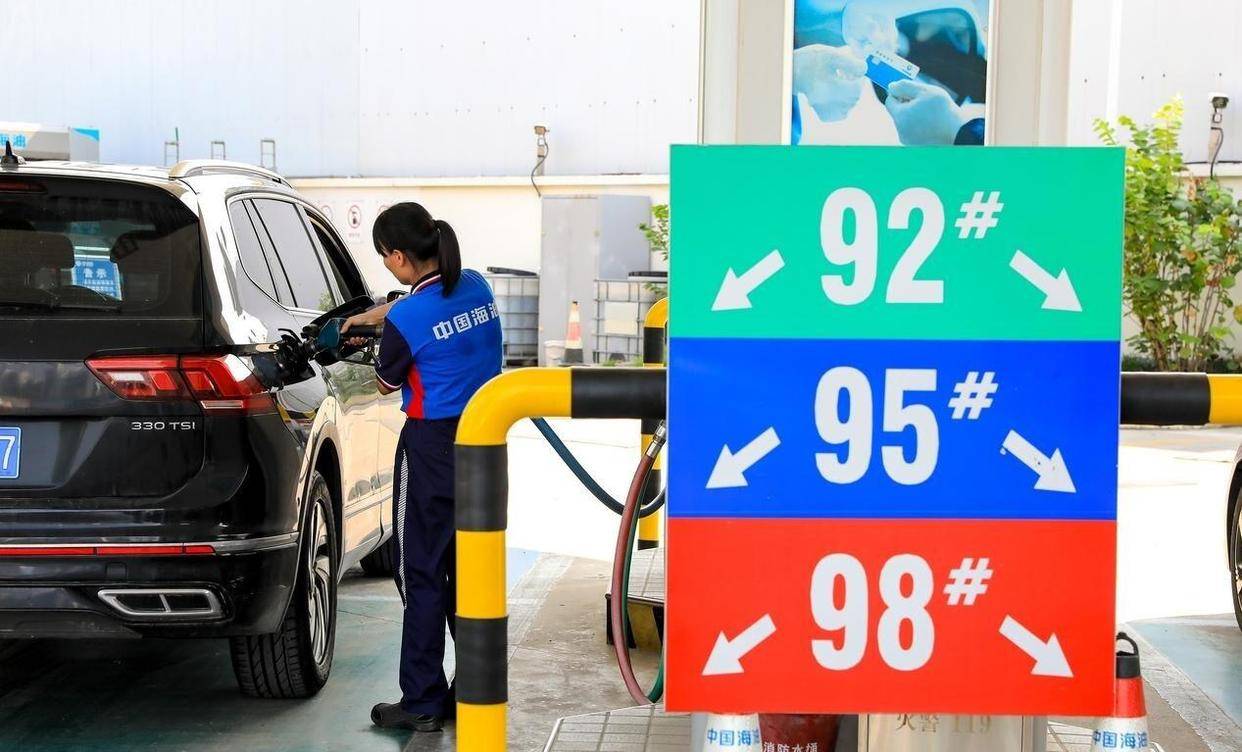
油价下跌

Search documents
低油价拖累前三季度净利润,中国海油管理层这样看明年油价和市场
第一财经· 2025-10-30 12:35
Core Viewpoint - China National Offshore Oil Corporation (CNOOC) reported a decline in revenue and net profit for the first three quarters of the year, primarily due to falling international oil prices, but managed to mitigate some impacts through production increases and cost control measures [3][4]. Financial Performance - CNOOC's revenue for the first three quarters decreased by 4.1% year-on-year to 312.5 billion yuan, while net profit fell by 12.6% to 101.97 billion yuan [3]. - In Q3, revenue increased by 5.7% year-on-year to 104.89 billion yuan, but net profit decreased by 12.2% to 32.44 billion yuan [3]. - The average selling price of oil liquids dropped by 13.6% to $68.92 per barrel, contributing to a 5.9% decline in oil and gas sales revenue to 255.48 billion yuan [3]. Production and Cost Management - CNOOC's oil and gas net production rose by 6.7% year-on-year to 578.3 million barrels of oil equivalent, supported by contributions from domestic and overseas projects [4]. - The company successfully reduced its barrel of oil cost by 2.8% to $27.35 [4]. - Natural gas production reached 777.5 billion cubic feet, a nearly 12% increase, with sales revenue growing by 15.2% to 41.53 billion yuan due to a 1% rise in average selling price to $7.86 per thousand cubic feet [4]. Strategic Outlook - CNOOC's management highlighted the importance of natural gas as a key development direction, emphasizing its longer stable production period and lower operational costs compared to oil projects [4]. - The company plans to maintain a focus on high-quality development and effective production growth while ensuring cost competitiveness amid uncertain international oil price conditions [5]. - The ongoing decline in international oil prices has led to layoffs in several major international oil companies, indicating broader industry challenges [5].



今年油价新低,10月迎两连跌,油价两连跌是陷阱还是馅饼?
Sou Hu Cai Jing· 2025-10-27 17:48
Core Viewpoint - Domestic fuel prices are set to experience the largest drop of the year, with 92-octane gasoline expected to decrease by 0.24 CNY per liter, bringing the national average below 6.8 CNY for the first time in four years [1][3]. Price Changes - The current average price of 92-octane gasoline is around 7.04 CNY per liter, and after the price adjustment, it will no longer be in the "yuan era" [3]. - Compared to the beginning of the year when prices were over 8 CNY, filling a tank now saves over 60 CNY, equivalent to the cost of two cups of milk tea [3]. - The price difference for 98-octane gasoline varies significantly across regions, with prices in Guangdong at 9.66 CNY and in Gansu at 8.09 CNY, a difference of 1.5 CNY [5]. International Oil Prices - Despite a 7% rebound in international oil prices this week, domestic prices continue to decline, with the current adjustment expected to reach a drop of 290 CNY per ton, totaling a decline of 670 CNY per ton for the year [3][5]. - Brent crude oil has recently reached 65.94 USD per barrel, indicating a disparity between domestic and international pricing mechanisms [5]. Market Dynamics - The current domestic fuel pricing reflects the average international prices from two weeks prior, highlighting a lag in the domestic pricing mechanism [5]. - Transportation costs contribute significantly to regional price differences, with diesel in Tibet priced at 7.25 CNY per liter, nearly 1 CNY higher than in Shandong [5]. Future Outlook - There are concerns regarding the sustainability of low fuel prices, especially with rising geopolitical risks that could affect oil exports and potentially increase international crude prices [5][6]. - The current low prices may not last long, prompting speculation about how long the 6 CNY range will be maintained [6].
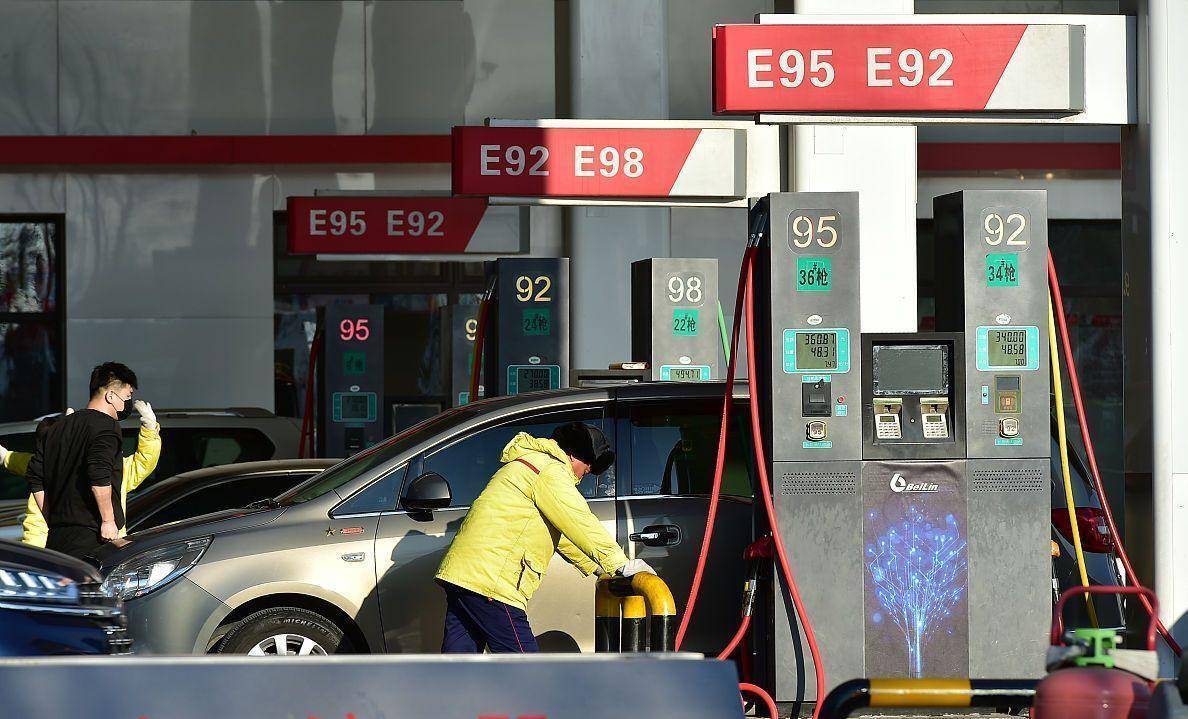
康菲石油将从下月开始在加拿大裁员
Xin Lang Cai Jing· 2025-10-24 00:17
Core Viewpoint - ConocoPhillips is set to lay off employees in its Canadian operations as part of a global plan to reduce its workforce by 25%, starting in November [1] Group 1: Layoff Details - The layoffs will begin in the first week of November, with notifications for Calgary employees on November 5 and for those in the northern Alberta and British Columbia operations on November 6 [1] - The internal memo did not specify the number of employees affected by the layoffs [1] Group 2: Company Operations - As of the end of 2024, ConocoPhillips employs 950 people in Canada, with a projected production of 164,000 barrels of oil equivalent per day [1] Group 3: Industry Context - The decline in oil prices has pressured ConocoPhillips and its U.S. competitors, leading to layoffs, reduced capital expenditures, and decreased drilling activities [1] - Other major energy companies, including Chevron, Schlumberger, and BP, have also announced significant layoffs this year [1]

油价可能重返6元!创2021年以来最低
Sou Hu Cai Jing· 2025-10-22 03:27
Core Viewpoint - The latest monitoring data indicates that the price of 92-octane gasoline is expected to drop back to the 6 yuan per liter range, marking a four-year low since 2021, with the next price adjustment scheduled for October 27 at 24:00 [1] Price Adjustments - As of October 21, the crude oil price change rate has fallen to -7.93%, leading to an anticipated reduction of 320 yuan per ton for gasoline and diesel prices, which translates to a decrease of 0.24 to 0.27 yuan per liter [1] - The current average price of 92-octane gasoline is 7.04 yuan per liter, which is expected to decrease to a range of 6.77 to 6.80 yuan per liter after the adjustment [1] - The average price of 95-octane gasoline is currently 7.52 yuan per liter, projected to drop to 7.25 to 7.28 yuan per liter [1] - The average price of 0-diesel is 6.67 yuan per liter, expected to fall to 6.40 to 6.43 yuan per liter [1]
原油大降12.45%,汽柴油统计“下跌565元/吨”,10月油价“连降”中,下次10月27日调价,汽柴油创2025年新低!
Sou Hu Cai Jing· 2025-10-21 03:48
Core Viewpoint - The oil price adjustment in October is expected to lead to a significant decrease in gasoline and diesel prices, potentially reaching a new low for 2025 [1][5][7] Group 1: Oil Price Adjustment Schedule - Two oil price adjustments are planned for October, occurring on October 13 and October 27 [3] - The previous adjustment saw a decrease of 75 yuan for gasoline and 70 yuan for diesel, with a total drop of 235 yuan per ton [3][5] Group 2: Market Dynamics - The international oil market experienced a significant drop, with WTI crude oil falling by 12.45% and Brent crude by 12.6% since the end of September [5] - Current estimates suggest a further decrease of approximately 330 yuan per ton for gasoline and diesel, translating to a reduction of 0.26 to 0.28 yuan per liter [5][7] Group 3: Future Outlook - The upcoming price adjustment on October 27 could result in gasoline and diesel prices reaching a new low for 2025, marking a potential consecutive decline in October [7] - The market remains under pressure due to concerns over weak energy demand and geopolitical tensions, which may influence future oil price movements [5][7]

OPEC+稳步释放产能 原油价格易跌难涨
Qi Huo Ri Bao· 2025-10-21 00:24
Core Viewpoint - The global crude oil supply-demand structure is undergoing significant adjustments, with increasing supply and weak demand creating a contrasting scenario that is leading to a downward trend in oil prices [1][2][3][4] Supply Side Analysis - OPEC+ is shifting from a production cut strategy to a competitive "increase production to maintain market share" approach, with plans to increase output by 137,000 barrels per day in November, maintaining the same increase as in October [1][2] - Major oil-producing countries like Saudi Arabia and Iraq are maintaining high export levels, with Saudi exports stable at 9 million barrels per day and Iraq at 4 million barrels per day, contributing to an overall surplus in the Middle East [2] - Non-OPEC+ countries, particularly in South America, are expanding production, with U.S. crude oil production reaching an average of 13.636 million barrels per day, a year-on-year increase of 136,000 barrels per day, nearing historical highs [2] Demand Side Analysis - Demand for oil is weakening, particularly as the summer travel season ends, leading to a seasonal decline in refinery operations. U.S. refinery utilization dropped to 85.7%, a significant decrease of 6.7 percentage points week-on-week [3] - In Asia, China's main refineries are operating at a low rate of 73.48%, with Shandong's independent refineries at 54.95%, further suppressing crude oil processing demand and increasing refined oil inventory pressure [3] Pricing Dynamics - The pricing logic for domestic crude oil futures is shifting from a "cost + premium" model, reliant on geopolitical risk and OPEC+ cuts, to a "supply-demand + inventory" driven model, reflecting a stronger correlation with WTI and Brent prices [4] - Domestic refinery profit margins are narrowing, leading to reduced willingness to accept high-cost crude, which further suppresses the potential for price rebounds [4] - The recent weak performance of domestic crude oil futures is a natural outcome of the global supply-demand restructuring, with supply outpacing demand recovery and diminishing geopolitical risk impacts [4]
突然“起飞”!多重利好,重磅来袭!
券商中国· 2025-10-20 08:27
Core Viewpoint - The aviation sector is experiencing a significant rally, with major airlines seeing substantial stock price increases due to improved operational metrics and favorable market conditions [1][3][6]. Group 1: Market Performance - Hong Kong aviation stocks rose collectively, with China Eastern Airlines up over 10%, China Southern Airlines up over 7%, and Air China up over 5% [1][3]. - The overall aviation sector in the Hong Kong market saw a 3.5% increase, with notable gains in A-shares as well [3][4]. Group 2: Operational Metrics - The Civil Aviation Administration of China reported a reduction in domestic flight slots for the upcoming winter-spring season, with decreases of 1.0% and 1.8% for 2024 and 2025 respectively [6]. - Domestic average ticket prices increased by 5.9%, and the average passenger load factor rose to 87.9%, an increase of 3.5 percentage points compared to the previous year [6]. Group 3: Industry Drivers - The recent price hikes by global shipping giants are attributed to a combination of factors, including reduced port capacity in Europe and North America, adjustments in the Red Sea and African routes, and global manufacturing restocking [6]. - The recovery in business travel demand has led to improved revenue levels, with domestic ticket prices turning positive, increasing by 3.0% compared to a decline of 6.5% in the previous months [8]. Group 4: Currency Impact - The appreciation of the Renminbi against the US dollar, reaching a new high in over 11 months, is expected to benefit the aviation sector, supported by expectations of US Federal Reserve interest rate cuts and stable domestic economic policies [9].


定了,这天调价!油价或迎下半年最大跌幅
Mei Ri Shang Bao· 2025-10-20 06:18
Core Viewpoint - The article discusses the upcoming adjustment in refined oil prices in China, indicating a potential significant drop in prices due to declining international crude oil prices [1][4]. Group 1: Price Adjustments - After the recent holiday, refined oil prices in China experienced a slight decrease, with expectations of a larger drop of 0.25-0.3 CNY per liter, bringing 92 gasoline back to the 6 CNY range [1]. - As of October 20, the average price of crude oil was reported at 60.14 USD per barrel, with a change rate of -6.69%, suggesting a corresponding decrease of 330 CNY per ton in domestic gasoline and diesel prices [7]. Group 2: Market Dynamics - The International Energy Agency (IEA) reported a larger-than-expected oversupply in the global crude oil market, leading to increased inventories and downward pressure on oil prices [4]. - The geopolitical situation in the Middle East has stabilized with a ceasefire agreement between Israel and Hamas, reducing risk premiums and further contributing to the decline in oil prices [4]. - Despite the bearish sentiment, there are mixed signals from U.S.-China trade relations, with indications that tariffs may not be increased, providing some support for oil prices [4]. Group 3: Historical Context - In 2023, refined oil prices in China have undergone 20 adjustments, characterized by six increases, eight decreases, and six periods of no change [6].

油价跌势难止?花旗:俄乌局势缓和或致原油跌至50美元
Zhi Tong Cai Jing· 2025-10-18 01:13
Core Viewpoint - The potential easing of the Russia-Ukraine conflict could lead to a drop in oil prices to $50 per barrel, according to Citigroup strategist Eric Lee, which would accelerate the market's movement towards Citigroup's pessimistic forecast [1] Group 1: Oil Price Trends - Brent crude oil prices have decreased by approximately 18% this year and are currently trading near $61 per barrel, primarily due to anticipated supply surplus [1] - A predicted decline of about $10 per barrel in oil prices poses a threat to the shale oil industry, which requires higher prices than some state-owned exploration companies to sustain drilling activities [1] Group 2: Geopolitical Implications - Traders are closely monitoring the progress of high-level talks in the U.S. aimed at achieving a ceasefire, which could lead to Western countries easing restrictions on the Russian energy sector and halting drone strikes in Ukraine that have severely damaged Russian oil infrastructure [1] - The potential drop in oil prices raises questions about whether Saudi Arabia, as the de facto leader of OPEC, will take measures to protect oil prices or align with Washington's preference for lower prices [1] Group 3: Diplomatic Considerations - At lower oil price levels, there may be a higher willingness to use oil as a tool of foreign policy, as a price drop to $60 per barrel or lower could embolden the White House to take more aggressive actions that disrupt oil supply [1] - Conversely, if oil prices reach $80 per barrel, there may be less enthusiasm for taking actions against Iran or Russia that could lead to price spikes [1]
有车的要注意了!油价八连跌后!10月27日或迎来更大降幅
Sou Hu Cai Jing· 2025-10-15 18:55
Core Insights - The recent adjustment in fuel prices has led to a decrease of 75 yuan per ton for gasoline and 70 yuan per ton for diesel, resulting in a drop of 0.06 to 0.07 yuan per liter for 92 and 95 octane gasoline and 0 diesel [1] - The average price of 92 octane gasoline has decreased from 7.8 yuan per liter at the beginning of the year to approximately 7.3 yuan, marking a cumulative decline of 0.5 yuan per liter [3] - The upcoming price adjustment window on October 27 may see further reductions in fuel prices, with estimates suggesting a decrease of 230 to 290 yuan per ton [3] Price Trends and Market Dynamics - International oil prices have seen significant declines, with WTI crude futures dropping to 57.328 USD per barrel and Brent crude futures to 61.547 USD per barrel [5] - Russia's maritime crude oil exports have reached a 28-month high, averaging 3.74 million barrels per day, contributing to the downward pressure on global oil prices [5] - OPEC has announced an increase in production by 137,000 barrels per day in November as part of a gradual rollback of previous production cuts [5] Economic Impact - The transportation sector accounts for 53.5% of total logistics costs in China, with fuel expenses constituting nearly half of corporate costs, indicating that lower oil prices will lead to direct cost savings for businesses [7] - Some airlines have reduced fuel surcharges following the price drop, and there has been a notable increase in sales of fuel-related products on e-commerce platforms [7] - The decline in fuel prices has not significantly impacted the demand for new energy vehicles, with only a 3% decrease in orders observed [7] Regulatory Framework - China's refined oil pricing mechanism, in place since 2013, links domestic prices to international oil market fluctuations, with adjustments occurring when the price change rate reaches ±4% [9] - The mechanism includes a "floor price" and "ceiling price" to prevent excessive volatility, ensuring market stability while allowing for energy transition policies [9] Future Outlook - Future oil price trends will be influenced by multiple factors, including OPEC's production meeting on November 2, developments in US-China trade negotiations, potential US government shutdowns, and the Federal Reserve's interest rate decisions [11]