科教融汇

Search documents
教育告别象牙塔:实践成果可抵论文,学生站上生产一线
2 1 Shi Ji Jing Ji Bao Dao· 2025-09-23 09:31
Group 1: Core Insights - The "14th Five-Year Plan" period has seen significant advancements in education, contributing to social and economic development [1] - Higher education institutions have become the main force in national basic research and a source of major technological breakthroughs, providing a rich talent resource for economic resilience [1][2] - The "Double First-Class" initiative is a key project for building a strong education nation, with universities producing over 50% of master's and 80% of doctoral graduates in the country [2] Group 2: Talent Development and Evaluation Reform - The "Double First-Class" universities have undertaken over 90% of national high-level talent training tasks, focusing on cultivating strategic talents like excellent engineers [2][5] - A major reform allows students to apply for master's and doctoral degrees based on innovative achievements such as patents and product designs, rather than traditional thesis requirements [2][5] - As of now, 40 national excellent engineer colleges have been established in collaboration with top enterprises, enhancing the integration of education and industry [5][6] Group 3: Technology Transfer and Innovation - Over 75% of national natural science and technology invention awards during the "14th Five-Year Plan" period have come from higher education institutions [7] - Universities are establishing regional technology transfer centers and optimizing university science parks to facilitate the conversion of scientific achievements into practical applications [8][9] - New university technology parks are significantly contributing to technological transformation and regional economic development [9][10] Group 4: Vocational Education and Industry Support - China has the largest vocational education system globally, with 34 million students across various levels, supporting the transition from "Made in China" to "Created in China" [11] - The vocational education system is expanding, with 12,000 new professional points added during the "14th Five-Year Plan" period, focusing on engineering and technology [11][12] - Initiatives like the "High-Skilled Talent Cluster Training Plan" are being implemented to enhance the practical skills of students through real-world industry exposure [12][13]

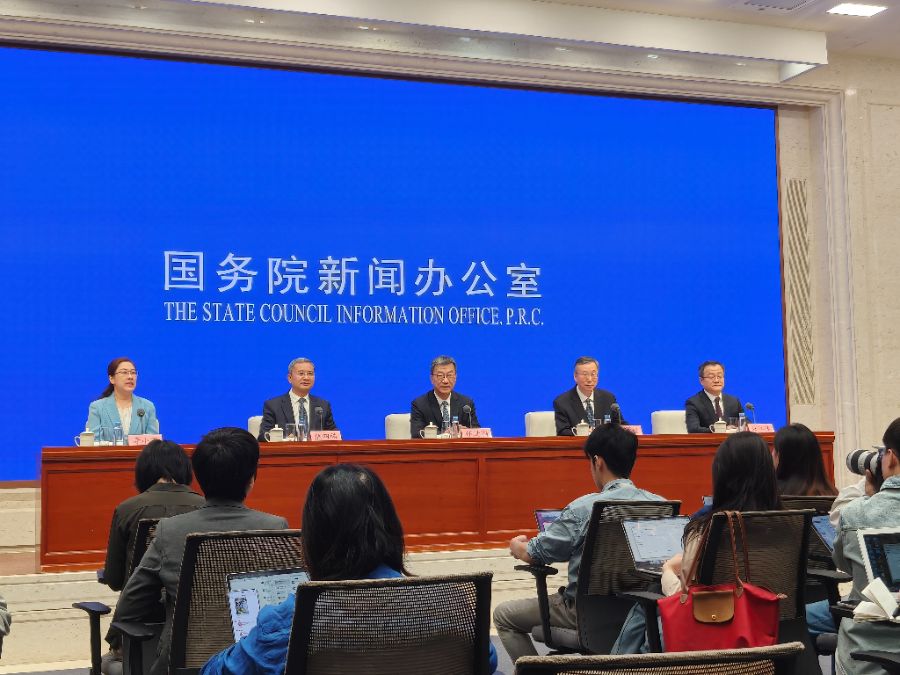
中国已进入高等教育普及化阶段:高等教育毛入学率达60.8%
Xin Jing Bao· 2025-09-23 07:49
Group 1 - The core achievement of the "14th Five-Year Plan" is the significant improvement in China's education system, with a focus on expanding and enhancing the quality of education [1][2] - The gross enrollment rate for preschool education has increased from 64.5% in 2012 to 92%, benefiting over 12 million children this year [1] - The gross enrollment rate for higher education has more than doubled from 30% in 2012 to 60.8%, marking a transition to a recognized stage of popularization [1][2] Group 2 - During the "14th Five-Year Plan," higher education has contributed 55 million talents to society, with vocational education supplying over 70% of new high-quality skilled talents in modern industries [2] - Over 75% of national natural science awards and technology invention awards, as well as over 55% of technological progress awards, have been obtained by universities [2] - The implementation of the "Strong Foundation Program" and the establishment of pilot programs in cutting-edge fields like artificial intelligence and integrated circuits are ongoing to enhance talent cultivation [2] Group 3 - Comprehensive education reforms are being promoted, with a focus on revitalizing county-level education and reducing competition and anxiety associated with exams [3] - The "New Double High" reform in vocational education aims to enhance educational capabilities and quality, aligning talent development with regional economic and social needs [3] - Graduate students in the engineering field can now apply for degrees based on innovative achievements, breaking the traditional requirement of a thesis [3]
创新地方高校研究生育人机制 打造卓越工程师培养“生态矩阵”
Jing Ji Ri Bao· 2025-09-07 21:59
Core Viewpoint - The training of outstanding engineers is a key initiative to integrate education and industry, aligning with national strategies and local industrial needs, particularly in high-end equipment and new energy sectors [1][4]. Group 1: Strategic Guidance - The establishment of the Outstanding Engineer College is seen as a critical support for the deep integration of education, talent, industry, and innovation chains, focusing on strategic fields like high-end equipment and new energy [1]. - The school has a budget of 43 million yuan for resource integration, with an average annual investment of nearly 20 million yuan from partner enterprises and an additional 10 million yuan from the school [1]. Group 2: Academic Foundation - The school has developed a comprehensive academic system with six undergraduate programs included in the "Outstanding Engineer Education and Training Program" pilot, and 13 programs certified by engineering education [1]. - It offers four doctoral programs and 34 master's degree programs, with five disciplines ranked in the top tier globally, supporting industries like high-end equipment manufacturing and new energy [1]. Group 3: Industry-Education Integration - The school employs a "dual mentor system" and real enterprise projects to create a training mechanism that emphasizes practical experience and mutual empowerment [3]. - Collaborations with leading companies have resulted in the establishment of 15 joint training bases for graduate students, developing high-quality teaching cases and practical courses [3]. Group 4: International Perspective - The school has established strategic partnerships with over 100 universities in more than 30 countries, facilitating international exchanges and collaborative doctoral programs [4]. - Each year, the school sends over 50 graduates to companies like China Railway and Yutong, contributing to the development of skilled professionals in the industry [4].
吴桂英开展“十五五”规划专题调研并慰问一线教师代表
Chang Sha Wan Bao· 2025-09-06 01:57
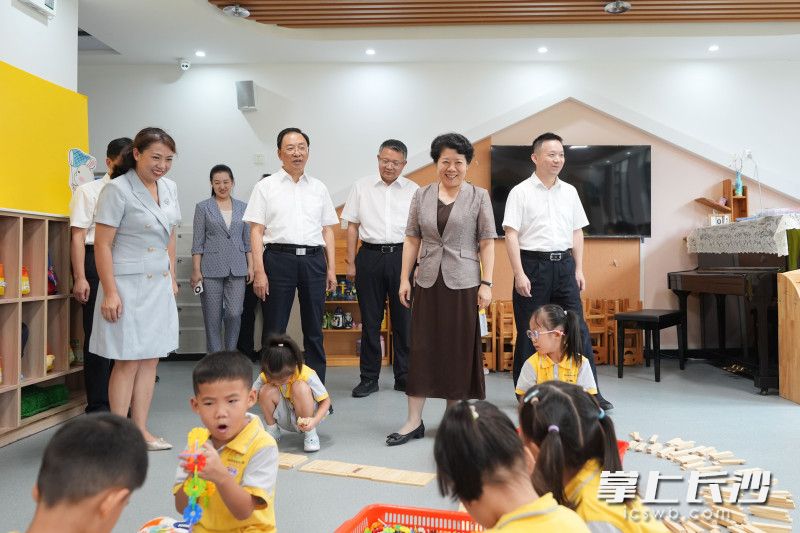
Group 1 - The core theme of the research is "Education Strong City," focusing on the "15th Five-Year Plan" and the importance of education in the development of Changsha [1][19] - The city aims to strengthen the leadership of the Party in education and ensure that education meets the needs of the people, emphasizing the need for high-quality education [1][19] - The research includes visits to various educational institutions, such as kindergartens, high schools, and vocational colleges, to understand the current state of education and gather feedback from educators [10][19] Group 2 - The city is committed to integrating education with social needs, fostering talent development, and enhancing the contribution of education to high-quality development in Changsha [10][19] - Emphasis is placed on the importance of moral education and educational equity, with plans to deepen educational reforms and address development bottlenecks [22][19] - The goal is to create a supportive environment for teachers, improve the quality of the teaching workforce, and promote a culture that values and respects educators [22][23]
产科教融合:要从追求短期转向可持续
Zhong Guo Hua Gong Bao· 2025-08-29 03:02
Core Viewpoint - The integration of education, technology, and talent is a key strategy for enhancing national innovation capabilities and supporting industrial transformation and upgrading, although challenges remain in talent quality and research outcome efficiency [1] Group 1: Achievements in Integration - China University of Petroleum (East China) has invested over 800 million yuan to establish 13 national key research platforms and has formed partnerships with companies like Shandong Energy Group to create a dual leadership system in education [2] - The university has developed a "four-stage" training pathway and implemented order-based talent classes, enhancing the alignment between educational and industrial chains [2] - The establishment of the Jixia Academy's integration research center aims to create a new ecosystem for collaborative education, successfully implementing the "N1N integration model" to drive efficient research outcome transformation [3] Group 2: Challenges in Integration - The shift of higher education management to local authorities has weakened the direct support from industries, leading to a decline in education quality and reduced willingness for collaboration from enterprises [4] - There are discrepancies in the evaluation standards and growth paths between enterprises, which focus on economic benefits, and universities, which prioritize comprehensive student development [4] - A lack of unified quantitative assessment standards for various stakeholders in the integration process has been identified as a core challenge [4] Group 3: Future Directions - Experts emphasize the need for a long-term investment mindset in the integration process, advocating for a shift from short-term gains to sustainable development [7] - The establishment of a mutually beneficial goal between educational institutions and enterprises is crucial for aligning talent development with industry needs [7] - A collaborative effort among universities, enterprises, governments, and associations is essential to create a scientific benefit-sharing and evaluation mechanism for deeper integration [7]
创新驱动高校治理变革的四维路径
Xin Hua Ri Bao· 2025-08-27 23:57
Core Viewpoint - The report emphasizes the need for higher education institutions to implement systemic breakthroughs in governance across four dimensions: value guidance, curriculum innovation, management reform, and digital empowerment [1] Group 1: Value Restructuring - Higher education governance must begin with the reconstruction of value concepts, establishing three guiding value coordinates: prioritizing innovation, fostering a culture of collaboration, and adopting a student-centered approach [2] - The core driving force of new productive forces is innovation, necessitating a shift from resource-dependent to innovation-driven governance [2] - Institutions should break down traditional barriers between disciplines and industries, promoting interdisciplinary collaboration and integrating research into teaching [2] Group 2: Curriculum Reconstruction - Curriculum is the foundation of talent cultivation and requires significant upgrades to meet the demands of new productive forces [3] - Course content must be updated to include cutting-edge knowledge and technologies, emphasizing problem-solving skills aligned with national strategies [3] - A modular curriculum system should be developed, enhancing practical training and integrating learning with doing [3] Group 3: Management Innovation - Management system innovation is crucial for empowering higher education governance, requiring the establishment of efficient and flexible governance structures [4] - Institutions should implement decentralized management reforms to enhance grassroots vitality and create project-based teams [4] - A diversified evaluation mechanism should be established, focusing on innovation value and practical contributions across various dimensions [4] Group 4: Digital Empowerment - Digital technology is a key engine for new productive forces, necessitating the construction of a smart educational ecosystem [5] - Institutions should build a comprehensive digital infrastructure and establish unified data governance to support personalized teaching and decision-making [6] - Enhancing digital literacy and ensuring data privacy protection are essential for fostering a secure digital environment [6]
瞭望 | 北航航空航天工程:定义世界空天教育新坐标
Xin Hua She· 2025-08-19 02:21
Core Viewpoint - Beijing University of Aeronautics and Astronautics (BUAA) has established itself as a leading institution in aerospace education and research, achieving significant milestones in service to national strategic needs and innovation in the aerospace sector [1][2][5]. Group 1: Historical Context and Development - BUAA was founded in 1952 to address the strategic needs of China's aviation sector, evolving from a merger of various aviation departments from other universities [2]. - The university has a rich history, including the development of China's first light passenger aircraft, "Beijing-1," showcasing its commitment to national aerospace development [3]. Group 2: Research and Innovation - BUAA has implemented an organized research system that integrates various disciplines, addressing challenges such as resource fragmentation and insufficient collaboration [4]. - The university has established specialized research institutes and laboratories, leading to numerous world-class innovations, including a solar-powered micro-drone and a biomimetic compass [4][5]. Group 3: Educational Initiatives - BUAA has launched a comprehensive educational strategy that includes 100% of provincial-level laboratories offering "research classrooms" for undergraduates, enhancing hands-on learning experiences [10][11]. - The university emphasizes interdisciplinary collaboration, creating a "disciplinary ecosystem" that integrates aerospace studies with other fields such as artificial intelligence and materials science [7][8]. Group 4: Industry Collaboration and Practical Training - BUAA has strengthened its ties with industry through initiatives like the "social classroom" concept, allowing students to engage deeply with real-world projects and industry practices [12]. - The university's National Excellence Engineer Academy focuses on practical training, bridging the gap between academic knowledge and industry requirements [12].

高考风向变了!新型研究型大学“八小龙” 搅了985名校的局
2 1 Shi Ji Jing Ji Bao Dao· 2025-07-31 23:15
Core Viewpoint - The emergence of new research-oriented universities in China is reshaping the landscape of higher education, attracting high-scoring students and challenging traditional 985 universities [1][2][3]. Group 1: New Research-Oriented Universities - Eight new research-oriented universities have been established in China, including Southern University of Science and Technology, ShanghaiTech University, and Fuyou University, among others [1]. - Fuyou University, funded by entrepreneur Cao Dewang, has gained attention for its high admission scores, with the lowest score being 658 in Henan province [2]. - The new universities are characterized by smaller student bodies and a focus on popular and emerging fields of study, which enhances their appeal to high-achieving students [7]. Group 2: Admission Performance - New research-oriented universities have successfully attracted high-scoring candidates, with some students scoring above 680, which is competitive with top traditional universities like Zhejiang University [5][6]. - In Guangdong province, Southern University of Science and Technology and Shenzhen University have surpassed traditional 985 universities in admission scores, indicating a shift in student preferences [3]. Group 3: Educational Approach - New universities emphasize research and practical experience, with students spending significant time in laboratories and engaging in research projects from their first year [9][10]. - The educational model includes a "4+1" system, allowing students to balance coursework with hands-on research, thereby enhancing their academic and practical skills [11]. Group 4: Industry Collaboration - New universities are actively collaborating with industries to enhance their educational offerings, with partnerships established for joint research and development projects [12][13]. - Fuyou University and Ningbo Oriental University have formed alliances with major companies to create integrated education and research environments, aligning academic training with industry needs [12][14].
高考风向变了 新型研究型大学“八小龙” 搅了985名校的局
2 1 Shi Ji Jing Ji Bao Dao· 2025-07-31 23:04
Core Points - The emergence of new research-oriented universities in China is reshaping the higher education landscape, attracting high-scoring students and challenging traditional 985 universities [1][2][3] - New research universities like Fuyou University and Ningbo Oriental University are gaining attention for their unique admission strategies and high academic standards [2][3][6] - The competitive admission scores of these new universities indicate a shift in student preferences towards institutions with clear educational goals and strong industry connections [6][7] Group 1: New University Landscape - Eight new research-oriented universities have been established in China, including Fuyou University and Ningbo Oriental University, with some achieving impressive admission scores [1][2] - Fuyou University, funded by entrepreneur Cao Dewang, has become a standout institution, attracting high-scoring students in various provinces [2][3] - The admission scores of these new universities often exceed those of traditional 985 universities, indicating a significant shift in the higher education landscape [3][5] Group 2: Admission Trends - New research universities are successfully attracting high-scoring candidates, with some students achieving scores above 680, comparable to top-tier institutions like Zhejiang University [5][6] - The admission strategies of these universities, which focus on popular and emerging fields, contribute to their appeal among prospective students [6][7] - The competitive nature of admissions at these new institutions reflects a changing dynamic in student choices, moving away from traditional universities [2][3] Group 3: Educational Approach - New research universities emphasize a hands-on, research-oriented educational model, allowing students to engage in scientific research from early in their academic careers [8][9][10] - Institutions like Shenzhen University implement innovative training models, such as the "4+1" system, to enhance students' practical skills and industry exposure [9][10] - The focus on integrating education with industry needs positions these universities as key players in developing talent for emerging sectors [11][12] Group 4: Industry Collaboration - New universities are forming partnerships with leading companies to create joint research and training programs, enhancing their educational offerings [11][12] - Fuyou University and Ningbo Oriental University have established collaborations with major corporations, facilitating resource sharing and practical training opportunities for students [11][12] - The emphasis on industry collaboration aligns with national strategies to cultivate skilled engineers and innovators, reflecting a commitment to bridging the gap between academia and industry [12][13]
8所新型研究型大学,凭什么冲击985名校
21世纪经济报道· 2025-07-30 13:41
Core Viewpoint - The emergence of new research-oriented universities in China is reshaping the landscape of higher education, attracting high-scoring students and challenging traditional 985 universities [1][2][5]. Group 1: New Research-Oriented Universities - Eight new research-oriented universities have been established in China, including Southern University of Science and Technology, ShanghaiTech University, and others, with some like Fuyou University and Ningbo Oriental University recently enrolling their first undergraduate students [1][2]. - These universities have shown impressive admission scores, with some surpassing traditional 985 universities in terms of minimum admission scores [2][5]. Group 2: Admission Performance - New research-oriented universities have successfully attracted high-scoring candidates, with institutions like Westlake University and Fuyou University recording minimum scores that are competitive with top-tier universities [5][6]. - In Guangdong, Southern University of Science and Technology and Shenzhen University of Technology have achieved high admission scores, surpassing established universities like Sun Yat-sen University [7]. Group 3: Educational Approach - New research-oriented universities emphasize a "small but elite" model, focusing on popular and emerging fields of study, which influences their admission performance [10]. - Institutions like Shenzhen University of Technology implement innovative educational models, allowing students to engage in research from the first semester and spend significant time in laboratories [14][15]. Group 4: Industry Collaboration - New research-oriented universities are actively engaging in industry collaboration, with Fuyou University and Ningbo Oriental University partnering with major companies to enhance their educational offerings and research capabilities [18][19]. - The focus on practical engineering skills is evident, with a strong emphasis on producing graduates who are ready to tackle real-world challenges in the industry [20].