诚信经营

Search documents
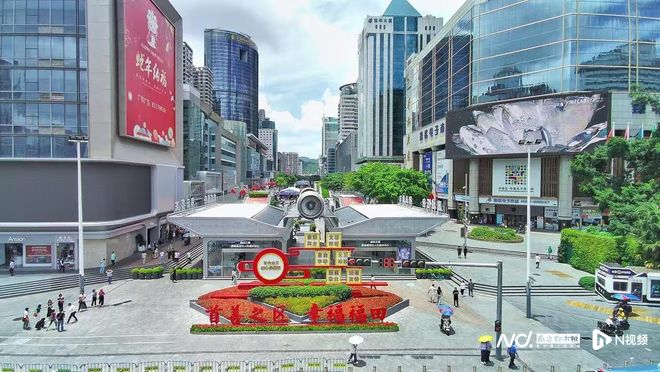
从消费热土到诚信高地,华强北将“双十一”定为诚信倡议日
Nan Fang Du Shi Bao· 2025-11-11 15:59
Core Perspective - The establishment of the "Integrity Management Eleven Articles" in Huaqiangbei aims to promote a culture of integrity among business entities, especially during high-traffic shopping events like "Double Eleven" [1][3]. Group 1: Integrity as a Foundation - Integrity has been the cornerstone of Huaqiangbei's 45-year development and is viewed as its primary competitive advantage and bottom line [3]. - The release of the integrity management guidelines signifies a collective consensus among the market, government, business associations, and consumers, aiming to transform Huaqiangbei into a "Global Integrity First Street" [3][4]. Group 2: Government and Market Collaboration - The "Integrity Management Eleven Articles" were developed through extensive consultations with over 11,500 business entities and stakeholders, gathering more than 430 suggestions [4][6]. - The guidelines cover various aspects such as pricing transparency, quality assurance, credit compliance, payment security, data confidentiality, and green operations, reflecting a comprehensive approach to market governance [6]. Group 3: New Production Relationships - On the day of the "Huaqiangbei Integrity Initiative Day," the guidelines were simultaneously launched across all markets, fostering a new environment of collective commitment to integrity among all business entities [7]. - The initiative aims to create a transparent and predictable market environment that facilitates the free flow and efficient allocation of resources, thereby supporting innovation and economic growth [7][8]. Group 4: Building Trust and Market Confidence - The integrity system is expected to enhance market flexibility, reduce innovation costs, and stimulate domestic demand through mechanisms like credit guarantees and intellectual property protection [8]. - The integration of integrity governance into community evaluation systems aims to promote a culture of trust and integrity within the market [8]. Group 5: Global Market Positioning - As the APEC Leaders' Meeting approaches in 2025, Huaqiangbei is positioning itself as a model of market civilization, using integrity as a universal language to build trust with global partners [9]. - The "Integrity Management Eleven Articles" serve as a commitment to international business, aiming to establish credit recognition mechanisms and create a transparent procurement environment for global customers [9].

明白运营商套餐无需套路
Jing Ji Ri Bao· 2025-11-11 00:37
Core Insights - The article highlights the complexity and hidden terms in telecommunications service packages, which can mislead consumers and lead to increased spending [1][2] - It emphasizes the need for regulatory actions to protect consumer rights and ensure transparency in the telecommunications industry [1][2] Group 1: Industry Challenges - Telecommunications operators are facing significant operational pressure due to intensified competition and the need to reduce costs while maintaining service quality [2] - The use of complex rules and hidden information by operators is seen as a tactic to shift business risks onto consumers, infringing on their rights to informed decision-making and fair trading [1] Group 2: Regulatory Actions - Regulatory bodies have initiated multiple campaigns to address issues related to telecommunications service packages, including the "Clear and Safe Use" initiative launched by the Ministry of Industry and Information Technology in April [1] - Operators have responded to these initiatives by issuing service commitments and addressing public concerns, indicating a move towards better consumer protection [1] Group 3: Consumer Participation - Consumers are encouraged to actively participate in combating misleading practices by carefully reading contract terms and reporting any irregular charges through appropriate channels [2] - The article suggests that maintaining a focus on integrity and customer satisfaction is essential for the long-term success of telecommunications companies in a large market with 1.79 billion mobile phone users and 1.014 billion 5G users projected by the end of 2024 [2]
明白套餐无需套路
Jing Ji Ri Bao· 2025-11-10 22:20
Group 1 - The core issue highlighted is the complexity and hidden terms in telecom operators' service plans, which mislead consumers and infringe on their rights [1] - Telecom operators are accused of creating information asymmetry to shift business risks onto consumers, violating their right to know and fair trading [1] - Regulatory bodies have initiated multiple corrective actions, including the "Clear and Reassuring Use" campaign launched by the Ministry of Industry and Information Technology in April, aimed at addressing industry pain points [1] Group 2 - Operators are encouraged to provide high-quality services to achieve a win-win situation in economic and social benefits, despite facing operational pressures due to intensified competition and cost reductions [2] - The long-term strategy for operators should focus on integrity and customer-centric practices, as short-term gains from misleading practices can damage corporate reputation [2] - As of the end of 2024, the mobile phone user base in China is projected to reach 1.79 billion, with 5G users at 1.014 billion, indicating significant market opportunities for honest business practices [2]
观车 · 论势 || 摒弃“大字宣传,小字免责” 诚意比噱头更重要
Zhong Guo Qi Che Bao Wang· 2025-11-05 00:55
Core Viewpoint - The article discusses the issue of misleading advertising practices, particularly the phenomenon of "big word promotion, small word exemption," which undermines consumer trust and highlights the need for companies to prioritize integrity in their marketing strategies [1][4]. Group 1: Misleading Advertising Practices - The practice of "big word promotion, small word exemption" is not new and has been prevalent across various industries, from instant noodles to automobiles, raising concerns about corporate integrity [1][2]. - The difference in consumer perception between low-cost items like instant noodles and high-value products like cars is significant, as misleading claims in the automotive sector can lead to severe financial and safety consequences for consumers [2][3]. Group 2: Consequences of Misleading Advertising - Misleading advertising in the automotive industry can result in irreversible consequences, such as accidents caused by consumers over-relying on advertised features that are not adequately explained [3]. - A specific case highlighted involved a car company promoting an advanced driving assistance system while downplaying the need for driver supervision, leading to serious accidents and a loss of consumer trust [3]. Group 3: Need for Change in Marketing Practices - Companies often rely excessively on traffic-driven marketing strategies while neglecting user-centric approaches, which can damage brand reputation and consumer trust in the long run [3][4]. - Building brand loyalty requires consistent product quality, transparent information disclosure, and responsible service, rather than just short-term promotional tactics [4][5]. Group 4: Collaborative Efforts for Improvement - Addressing the issue of misleading advertising requires collaboration among regulators, companies, and consumers to create a transparent market environment [4]. - Regulatory bodies should enhance the scrutiny of advertising authenticity, while companies need to prioritize user interests and improve information transparency in their marketing [4][5].
严格规范视频广告时长
Jing Ji Ri Bao· 2025-10-24 00:01
Group 1 - The issue of discrepancies between the advertised and actual duration of ads on video platforms has drawn attention from consumers and regulatory authorities [1][2] - The extension of ad duration, even by a few seconds, can accumulate to significant hidden revenue for platforms, raising concerns about consumer rights and the ethical implications of such practices [1] - The practice of extending ad time without consent undermines the implicit contract between platforms and users, potentially leading to a loss of trust and a risk of regulatory penalties for platforms [1] Group 2 - Regulatory bodies are urged to establish clear guidelines on ad duration discrepancies and create accessible complaint channels for consumers [2] - Platforms are encouraged to enhance self-regulation and utilize technology to ensure accurate ad playback, respecting the time agreements with users [2] - Consumers are advised to be proactive in asserting their rights when faced with extended ad durations, contributing to a healthier and more trustworthy industry environment [2]
伊吾广汇能源物流获评全国AAA级信用企业
Jiang Nan Shi Bao· 2025-10-16 05:25
Core Insights - Yihu Guanghui Energy Logistics Co., Ltd. has been recognized as a "National AAA Credit Enterprise," highlighting its commitment to integrity and excellence in the energy logistics sector [1][3] - The company has established a robust integrity system and operational management, which has contributed to its strong reputation in the industry [1][2] Company Overview - Yihu Guanghui Energy Logistics Co., Ltd. was founded in April 2015 and is a wholly-owned subsidiary of Guanghui Energy Co., Ltd. (stock code: 600256) [1] - The company focuses on ordinary road freight transportation and aims to strengthen the transportation foundation for regional energy supply and industrial development [1] Integrity and Operational Excellence - The company integrates integrity into its entire operational process, leveraging Guanghui Energy's abundant coal resources to fulfill its commitments [2] - It has successfully collaborated with over 40 large transportation enterprises, consolidating a fleet of more than 3,000 coal transportation vehicles [2] Commitment to Green Development - The company extends its commitment to integrity into social responsibility, actively promoting the transition to cleaner coal transportation [3] - It has introduced LNG vehicles, hydrogen vehicles, methanol fuel vehicles, and electric vehicles to enhance the environmental sustainability of its operations [3] Future Outlook - The recognition as a "National AAA Credit Enterprise" marks a new starting point for the company, which plans to deepen its integrity system and maintain its commitments in various fields [3] - The company aims to contribute to high-quality development in the energy logistics industry through more standardized management and reliable services [3]

出租车主擅自调整计价器致挂靠公司被行政处罚
Ren Min Wang· 2025-10-11 00:49
Core Viewpoint - The actual owners of the taxis are held primarily responsible for the administrative penalties due to unauthorized adjustments of the taxi meters, despite their claims of "industry unwritten rules" [1][3]. Summary by Sections Contractual Agreement - In 2022, individuals Tan and Yang signed an agreement with Tian Company to transfer ownership of a taxi while retaining operational rights, requiring them to pay management fees [1]. Administrative Penalty - Tian Company was fined 50,000 yuan for tampering with the taxi meters, which resulted in inflated fare displays, constituting a violation of measurement accuracy and consumer rights [2]. Court Ruling - The Chongqing Second Intermediate Court ruled that Tan, Yang, Liu, and Jia, as the direct controllers of the vehicles, are primarily responsible for the illegal adjustments, while Tian Company bears secondary responsibility due to management failures [3]. Industry Implications - Unauthorized meter adjustments harm consumer rights and disrupt market order, leading to decreased public trust in the taxi industry and damaging its reputation [4].
以法治化手段 重塑公平市场秩序
Sou Hu Cai Jing· 2025-10-09 23:35
Core Viewpoint - The newly revised Anti-Unfair Competition Law of the People's Republic of China will officially take effect on October 15, 2025, focusing on regulating new forms of competition issues in the digital economy, particularly false transactions and malicious returns that disrupt market order [1][2]. Group 1: Regulation of Digital Economy - The law addresses the rampant issues of false transactions and malicious returns, which have become survival tactics for some e-commerce platforms, indicating a need for a profound transformation in the competitive order of the digital economy [1][2]. - The revision aims to establish a standard of integrity in digital competition, shifting the mindset of operators from data falsification and rule exploitation to a long-term approach based on genuine service quality [2][3]. Group 2: Price Competition and Market Integrity - The law critically examines low-price competition, prohibiting platforms from forcing merchants to sell below cost, which is seen as a corrective measure against harmful competition practices that can lead to industry-wide profit depletion and quality decline [3]. - By preventing capital forces from distorting market signals, the law encourages companies to compete through technological innovation and service enhancement, fostering a sustainable industry environment [3]. Group 3: Legislative Insight - The revision reflects a deep understanding of the competitive dynamics in the digital economy, tailoring solutions to new characteristics and issues rather than applying traditional regulatory frameworks [3]. - The legislative approach demonstrates a balance between accommodating market innovation and maintaining a firm commitment to fair competition, paving the way for a transparent, equitable, and innovation-driven digital economy [3].
源于分享,成于共赢艾多美正能量的源泉何在
Sou Hu Cai Jing· 2025-10-08 06:32
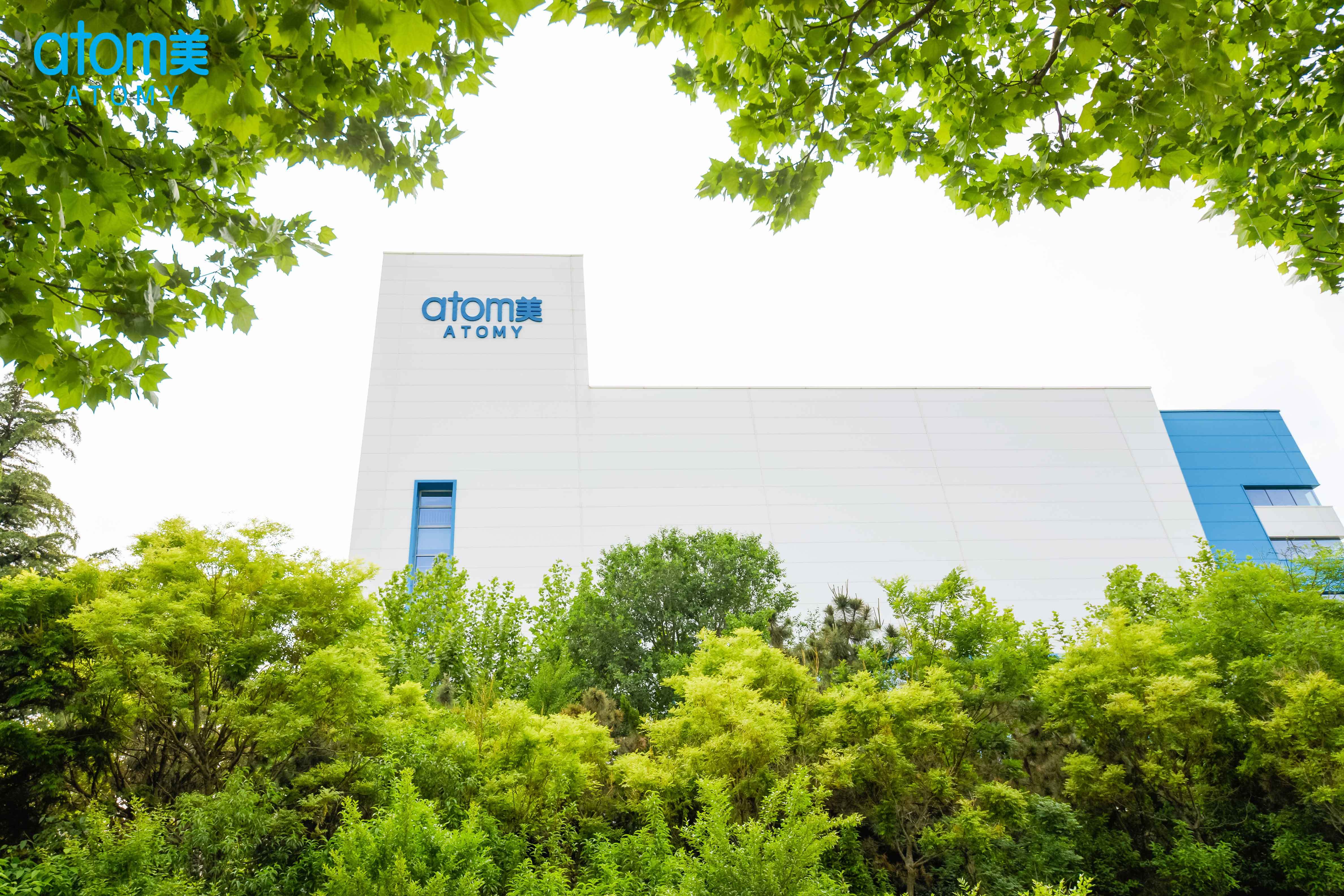
Core Idea - Atomy embodies a unique philosophy of "sharing" and "win-win," creating a positive energy that fosters a multi-win situation among the company, consumers, and partners [1] Group 1: Sharing - Atomy's positive energy originates from its commitment to "sharing," encouraging users to share quality products based on genuine experiences rather than exaggerated marketing [4] - The "mass premium" strategy ensures that each product balances quality and cost-effectiveness, making sharing a natural behavior among users [4] - This approach reduces the commercial promotion's utilitarian nature and allows users to experience the joy of altruism during the sharing process, creating a positive emotional cycle [4] Group 2: Win-Win - Atomy's positive energy is also reflected in its "win-win" ecosystem, where a reasonable profit distribution mechanism forms a community of interests among consumers, members, and the platform [4] - Members earn rewards based on actual product sales rather than a hierarchical commission structure, promoting sustainable growth [4] - The company emphasizes long-term cooperation with suppliers, enhancing quality and efficiency through stable orders and technical support, creating a closed-loop ecosystem that benefits all participants [4] Group 3: Integrity - The foundation of Atomy's positive energy lies in its commitment to "integrity," adhering to compliance, transparency in product information, and responsive after-sales service [7] - This dedication to integrity builds user trust, which catalyzes sharing and win-win dynamics [7] Group 4: Community - Atomy fosters positive energy through community culture, creating online and offline user groups that serve as platforms for product discussions and lifestyle sharing [8] - Members exchange insights on healthy living and organize community activities, enhancing emotional connections beyond mere transactions [8] - This sense of belonging reinforces brand cohesion, leading to a virtuous cycle of "more sharing leads to more growth, and more win-win leads to more warmth" [8] Conclusion - Atomy's positive energy is not merely a marketing construct but is realized through sharing, win-win relationships, integrity, and community engagement, transforming business into a bridge for warmth and value [10]
我从新疆来|“赛米米”的承诺:把家乡味做成“文化桥”
Zhong Guo Xin Wen Wang· 2025-10-03 07:32
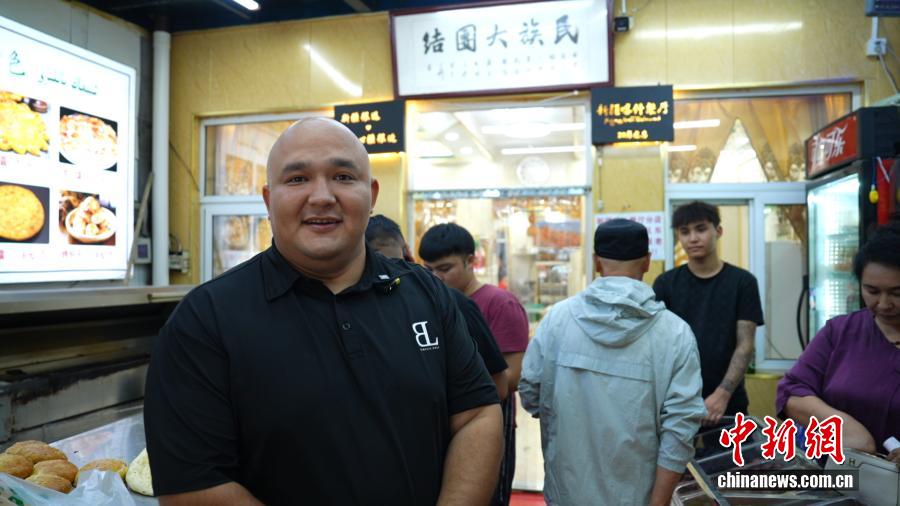
Core Viewpoint - The article highlights the journey of a Uyghur veteran, Naibijiang, who has established a cultural bridge between Kashgar, Xinjiang, and Beijing through his restaurant business, showcasing the importance of food in cultural exchange and community building [2][11]. Group 1: Personal Journey and Business Development - Naibijiang moved to Beijing from Kashgar over thirty years ago, initially starting with a street barbecue stall and later opening two restaurants, reflecting his entrepreneurial spirit and adaptation to a new environment [2][3]. - The family business began with Naibijiang's grandfather selling raisins, and his father expanded it by opening a restaurant, which became a community hub in the neighborhood [6][8]. - Naibijiang's experiences in Beijing, including the warmth of local residents, have deeply influenced his approach to business and community engagement [7][8]. Group 2: Business Philosophy and Cultural Impact - The restaurant named "Saimimi," meaning "integrity" in Uyghur, embodies Naibijiang's commitment to honesty and quality in his food service, which has garnered a loyal customer base [8][9]. - Naibijiang emphasizes the importance of fresh ingredients and fair pricing, reflecting his military background and sense of responsibility [9][10]. - The restaurant serves as a cultural exchange platform, where customers can experience Xinjiang cuisine and learn about its cultural significance, fostering understanding between different ethnic groups [11][12]. Group 3: Community and Cultural Exchange - Naibijiang's restaurants facilitate interactions between locals and Xinjiang residents, promoting cultural understanding through shared meals and celebrations of various festivals [11][12]. - The article illustrates how food serves as a medium for cultural connection, allowing people from different backgrounds to come together and appreciate each other's traditions [11][12]. - Naibijiang's future plans include expanding the menu to incorporate more modern elements while continuing to promote Xinjiang culture, highlighting the ongoing evolution of cultural exchange through cuisine [12].