
超大规模市场

Search documents
2026年中国经济展望:在变化中破局开新
工银国际· 2025-11-20 09:52
Economic Growth Outlook - China's economy is expected to maintain a growth rate of around 5% in 2026, supported by internal structural upgrades and policy stability[1] - The global economic environment remains uncertain, but China's strategic path focuses on institutional certainty and long-term potential release[1] Structural Upgrades - The economic structure is evolving towards systematic optimization, with traditional, emerging, and future industries increasingly collaborating[2] - The focus of industrial competitiveness is shifting from cost advantages to innovation advantages, enhancing overall productivity[3] - There is a strengthening two-way cycle between industrial structure evolution and demand structure upgrades, fostering a robust domestic market[4] Consumption Dynamics - By 2024, household final consumption is projected to account for approximately 40% of GDP, indicating significant consumption potential[9] - The marginal propensity to consume among residents is around 66%, which is notably lower than in major developed economies, suggesting room for growth[9] - The retail sales growth rate for social consumer goods is expected to rise to 4.6% in 2026, driven by improvements in income and consumption structure[10] Policy Framework - Fiscal policy will focus on balancing growth, improving livelihoods, and managing risks, with a projected deficit rate of around 4% in 2026[18] - Monetary policy is expected to remain moderately loose, with the one-year Loan Prime Rate (LPR) forecasted to be around 2.80% in 2026[21]
媒体报道︱超大规模市场看优势 打通绿电到绿氨全链条
国家能源局· 2025-11-20 07:14
Core Viewpoint - China's unique advantages in large-scale markets and diverse scenarios serve as both a "touchstone" for industrial upgrades and an "incubator" for innovation, showcasing the country's hard-core strength and immense potential in various innovation fields [2] Group 1: Green Energy and Hydrogen Production - China is set to become the world's largest "green oil" production base, with a complete renewable energy industry chain and an expected installed capacity of wind and solar power reaching 3.6 billion kilowatts by 2035 [4] - The world's largest integrated green hydrogen and ammonia project is located in Jilin Songyuan, which will produce green ammonia from renewable energy sources and is expected to be operational by the end of this year [6][10] - The project has developed the largest hydrogen storage facilities globally, with 15 hydrogen storage tanks, each with a capacity of 2,000 standard cubic meters, to stabilize the supply of green hydrogen for ammonia synthesis [12] Group 2: Technological Innovations and Cost Reductions - The project employs flexible ammonia synthesis technology, allowing production loads to be adjusted between 30% and 110%, enhancing operational efficiency [12] - The hydrogen production facility features 64 electrolysis units, each capable of producing 1,050 cubic meters of hydrogen per hour, marking the largest scale of such equipment worldwide [14] - The cost of hydrogen production has decreased by over 10% compared to the previous year, with expectations for further reductions, enhancing the economic viability of hydrogen [21] Group 3: Market Potential and Future Outlook - Global traditional ammonia production exceeds 200 million tons, with China accounting for one-third of this output; green ammonia demand is projected to surpass 10 million tons by 2035 as technology matures and costs decline [25] - The National Energy Administration is planning renewable energy hydrogen and ammonia production bases in regions with significant wind and solar potential [26] - China's total installed capacity of wind and solar power has surpassed 1.7 billion kilowatts, becoming the largest power source, with annual new renewable capacity exceeding 200 million kilowatts [28] Group 4: Innovation and Policy Support - The unique advantages of large-scale markets amplify the innovation chain, enabling rapid scaling of innovative results [30] - To further activate the innovation potential of the large market, it is essential to leverage market forces and financial services to guide capital towards cutting-edge technological innovation [34] - Recent government policies emphasize the importance of utilizing China's large-scale market and diverse application scenarios to promote large-scale applications of new scenarios, stimulating innovation vitality [36]


国务院常务会议提出“增强供需适配性”,提振消费释放新信号
Xin Jing Bao· 2025-11-19 10:58
Core Insights - The State Council's recent meeting emphasized enhancing the adaptability of supply and demand to stimulate consumption, signaling a strategic shift towards innovation and technology integration in key industries [1][2][3] Group 1: Supply and Demand Adaptability - The concept of supply and demand adaptability aims to improve the match between supply and demand, addressing issues of excess low-end supply and insufficient high-quality supply, thereby facilitating economic circulation and unlocking consumption potential [2][3] - The meeting outlined key paths to solve supply-demand adaptability, including accelerating the application of new technologies and models, focusing on developing new products and value-added services in key industries, and expanding new consumption increments [1][3] Group 2: Consumer Trends and Market Dynamics - There is a notable shift in consumer behavior from quantity to quality, with increasing demand for diversified, personalized, and high-quality products, indicating a need for industry and consumption upgrades to create a virtuous cycle between supply and demand [2][4] - The meeting highlighted the importance of fostering new consumption scenarios and business models, enhancing consumer financial products and services, and creating a favorable consumption environment [3][4] Group 3: Policy and Structural Reforms - The government is implementing policies to boost consumption, including promoting income growth and reducing burdens on residents, which are expected to enhance consumer confidence and spending [4][5] - Experts suggest that the potential of a large-scale market as a "demand engine" relies on effectively addressing the issue of "income-supported consumption demand," advocating for reforms in income distribution to strengthen the middle-income group [5]
诸多完整产业链“世界之最”强底气 如何用好超大规模市场?
Yang Shi Wang· 2025-11-19 08:16
Core Insights - China's modernization is characterized by its unprecedented scale, with over 1.4 billion people, making it the only country with all industrial categories recognized by the United Nations [1] - By 2024, China's manufacturing value added is expected to account for nearly 30% of the global total, maintaining its position as the world's largest manufacturing nation for 15 consecutive years [1] - China leads in the production of over 220 major industrial products, with more than 50% of global output in crude steel, cement, and electrolytic aluminum [1] - The country produces over 80% of the world's photovoltaic components and 70% of wind power equipment, with new energy vehicle production leading globally for 10 years [1] - China's shipbuilding industry ranks first globally in completion volume, new orders, and orders on hand, holding over 50% of the global market share [1] - The renewable energy sector boasts a total installed capacity of 2.16 billion kilowatts, accounting for over 40% of the global total [1] - China has the largest and most complete information and communication network globally, leading in 5G base stations, mobile phone users, and fixed broadband network scale [1] - The number of "lighthouse factories," representing the highest level of smart manufacturing and digitalization, is the highest globally, accounting for over 40% [1] - Industrial robot installations account for over 50% of the global total [1] Industry Development - The super-large market advantage provides continuous support for industrial development, ensuring autonomous and rapid response in production and manufacturing through a complete supply chain system [2] - In Suzhou, a service robot manufacturing company is experiencing a busy logistics scene, with nearly 30,000 service robots produced daily, showcasing the efficiency gained from intelligent supply chain optimization [2] - The local supply chain, with over half of its components sourced within a one-hour transport radius, has achieved near-zero inventory management for frequently used parts [2] - Collaborative innovation among upstream and downstream enterprises in the supply chain enhances technological resource sharing and capability complementarity [3] Market Dynamics - The closed-loop model of "market demand—joint R&D—mass production" significantly shortens the R&D cycle, aligning products more closely with practical application scenarios [4] - The robot and artificial intelligence industry in Suzhou has gathered over 1,600 related enterprises, with service robots accounting for over 60% of national production, and the industry scale expected to exceed 200 billion yuan by 2025 [4] Strategic Insights - Experts emphasize the need to convert the super-large market advantage into a competitive edge for the industrial chain, highlighting the importance of a unified national market to facilitate resource flow [5] - The vast domestic market provides unique opportunities for innovation and growth, particularly in the manufacturing sector, driving it towards higher-end and greener development [5] - Addressing local protectionism and market segmentation is crucial for enabling effective resource allocation across regions [5]
诸多完整产业链“世界之最”强底气!如何用好超大规模市场?| 观察↓
Yang Shi Wang· 2025-11-19 07:20
Core Insights - China's modernization is characterized by a scale unprecedented globally, with a population exceeding 1.4 billion, making it the only country with all industrial categories recognized by the United Nations [1] - By 2024, China's manufacturing value added is expected to account for nearly 30% of the global total, maintaining its position as the world's largest manufacturing nation for 15 consecutive years [1] - China leads the world in the production of over 220 out of 500 major industrial products [1] Manufacturing and Industrial Production - The production of new energy vehicles has ranked first globally for ten consecutive years [3] - China produces over 50% of the world's crude steel, cement, and electrolytic aluminum, as well as over 80% of global photovoltaic components and 70% of wind power equipment [4] Information and Communication Technology - China has the largest information and communication network globally, leading in metrics such as the number of 5G base stations, mobile phone users, and fixed broadband network scale [6] Shipbuilding and Renewable Energy - China's shipbuilding industry has led the world in completion volume, new orders, and hand-held orders for several years, holding over 50% of the global market share [7] - The total installed capacity of renewable energy generation in China has reached 2.16 billion kilowatts, accounting for over 40% of the global total [7] Smart Manufacturing and Robotics - China has the highest number of "lighthouse factories," representing the pinnacle of smart manufacturing and digitalization, accounting for over 40% globally [9] - The installation of industrial robots in China accounts for over 50% of the global total [11] Supply Chain and Market Advantages - The super-large market advantage provides continuous and strong support for industrial development, ensuring autonomous and rapid responses in production and manufacturing through a complete supply chain system [12] - The efficiency improvements in supply chains are evident in the case of a service robot manufacturing company in Suzhou, which produces nearly 30,000 service robots daily, benefiting from local supply chain collaboration [15] Industry Innovation and Collaboration - The collaborative innovation process among upstream and downstream players in the industrial chain allows for shared technology resources and complementary capabilities, significantly shortening R&D cycles [16] - The "market demand—joint R&D—mass production" closed-loop model enhances product relevance to actual application scenarios, supported by the vast space for trial and error in R&D [16] Economic Growth and Market Dynamics - The vast domestic market in China is seen as a fertile ground for nurturing the entire industrial chain, providing strong backing for enhancing competitive advantages [19] - To convert the super-large market advantage into industrial chain competitiveness, it is crucial to facilitate market circulation and ensure the free flow of resources and factors [20]

超大规模市场!又一万亿元风口,来了
Jing Ji Wang· 2025-11-18 00:24
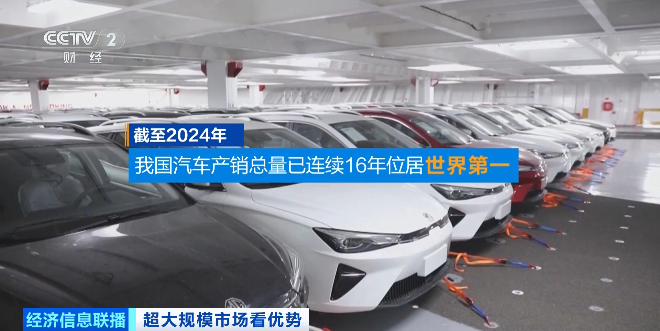
Core Viewpoint - The article emphasizes the significance of China's super-large market as a unique advantage, highlighting the need to leverage this market for economic growth and development strategies [1] Group 1: Consumption Market - China has the world's largest consumer market, supported by 1.4 billion consumers, which is crucial for high-quality economic development [2] - As of 2024, China has maintained its position as the world's largest automobile producer and seller for 16 consecutive years, with leading sales in home appliances and agricultural products [4] - The online retail market in China is the largest globally, with online retail sales reaching 12.79 trillion yuan in the first ten months of this year, a year-on-year increase of 9.6% [8] - The instant retail market in China is projected to reach 780 billion yuan in 2024, with an expected annual growth rate exceeding 25% until 2030 [15] Group 2: Service Consumption - Service consumption is rapidly rising, becoming a new engine for economic growth, with diverse offerings in cultural tourism, healthcare, and entertainment [19] - The night economy is gaining traction, with night-time consumer spending in Shanghai's key districts increasing by 15.3% during the recent holidays [24] Group 3: Innovation and Trends - The article highlights the importance of innovative consumption scenarios and environments to unlock the potential of the domestic market [25] - The rise of personalized and experiential consumption preferences among young consumers is driving new demand, with "IP + consumption" becoming a popular trend [22] - The interaction between new consumption scenarios, business models, and consumer demand is crucial for activating the potential of the super-large market [26]
超大规模市场看优势之一——消费之大:众口能调 各自精彩
Sou Hu Cai Jing· 2025-11-17 15:16
Core Insights - China's super-large market advantage is widely recognized, rooted not only in its 1.4 billion population but also in its deep economic potential [1][2] - The country has the world's largest middle-income group, which shows a strong willingness to upgrade consumption across various sectors such as education, healthcare, and cultural tourism [1] - The proportion of the middle-income group in China's total population is still significantly lower than that in developed countries, indicating substantial growth potential in the consumer market [1] Consumption Capacity - China's overall consumption capacity is robust, supported by a large and continuously upgrading middle-income demographic [1] - The diverse consumption habits and preferences across different regions of China contribute to a rich tapestry of consumer behavior [1][2] Consumption Diversity - The variety of consumption levels reflects the vast geographical and cultural differences within China, leading to unique consumer preferences [1] - The coexistence of different consumption cultures enhances the vibrancy of the market, as seen in the interactions between northern and southern consumer behaviors [1] Consumption Model Evolution - Recent years have seen rapid iterations in consumption models, introducing terms like "self-satisfaction consumption," "national trend consumption," and "green consumption," among others [2] - These new consumption models signify a shift in consumer values from material satisfaction to spiritual pursuits and from singular choices to diverse experiences [2] Market Dynamics - China's consumer market is characterized by its vastness and depth, accommodating differences while fostering integration [2] - The super-large market's true advantage lies in its potential, diversity, and innovative consumption models, which are vital sources of vitality for the Chinese economy [2]
超大规模市场优势体现在哪,怎样用好
Sou Hu Cai Jing· 2025-11-14 12:02
Core Insights - The article emphasizes the importance of China's super-large market advantage as a strategic asset for economic development and modernization [1][5][6] - It highlights the continuous growth of domestic consumption and the shift towards service consumption as key trends in the market [2][3] Group 1: Market Growth and Consumption Trends - China's social retail sales reached 36.5877 trillion yuan in the first three quarters of this year, with a year-on-year growth of 4.5%, accelerating by 1.2 percentage points compared to the previous year [2] - The retail sales of social consumer goods are projected to grow from 39.1 trillion yuan in 2020 to 48.3 trillion yuan in 2024, with an average annual growth rate of 5.5% [1] - Service retail sales are expected to grow by 6.2% in 2024, outpacing goods retail sales by 3 percentage points, indicating a shift towards service-oriented consumption [2] Group 2: New Consumption Patterns - New consumption formats are emerging, integrating experiences such as shopping, exhibitions, and entertainment, enhancing leisure experiences for consumers [3] - Innovative products and cultural items, including traditional clothing and local specialties, are gaining popularity both domestically and internationally [3] Group 3: Strategic Initiatives and Future Outlook - The "14th Five-Year Plan" emphasizes expanding domestic demand as a strategic foundation, focusing on three key tasks: expanding increments, improving efficiency, and ensuring smooth circulation [5][6] - The plan aims to enhance government investment in public welfare and infrastructure, optimize investment structures, and eliminate market barriers to fully leverage the benefits of the super-large market [6] - The eighth China International Import Expo saw a record high in participating enterprises, with intended transaction amounts reaching 83.49 billion USD, reflecting strong market engagement [5]

从进博会看中国“搬不走的优势”
Zhong Guo Jing Ji Wang· 2025-11-10 23:55
Core Insights - The eighth China International Import Expo concluded successfully, showcasing 4,108 participating companies across 430,000 square meters, highlighting foreign enterprises' confidence in investing and deepening their presence in China due to its unique and irreplaceable core advantages [1][3] Group 1: Market Opportunities - The vast market size in China provides unparalleled demand depth, making it essential for foreign companies to treat China as a core market for sustained performance growth [1] - New demands in digital and green economies are continuously emerging, prompting new supply opportunities, as demonstrated by New Zealand's Fonterra launching its "Fonterra 4.0 Grass-fed Omega-3 High Protein Milk" at the expo [1] Group 2: Competitive Advantages - A complete industrial chain in China offers significant cost advantages, allowing foreign companies to quickly find partners and achieve efficient collaboration, which is unique globally [2] - The high efficiency and resilience of the supply chain make deep integration into China's supply chain a wise choice for foreign enterprises, as evidenced by ABB's local supplier ratio exceeding 80% [2] Group 3: Institutional Environment - Continuous improvements in institutional openness provide a stable and predictable development environment for foreign companies, with policies reducing the negative impacts of external uncertainties [3] - The reduction of the foreign investment negative list and comprehensive opening of the manufacturing sector illustrate China's commitment to being a "must-choose" market for foreign enterprises [3]
进博会规模为何再创新高(现场评论)
Ren Min Ri Bao· 2025-11-07 22:00
Group 1 - The eighth China International Import Expo (CIIE) attracted participation from 155 countries, regions, and international organizations, with 4,108 overseas enterprises exhibiting, marking a record high exhibition area of over 430,000 square meters [1] - The CIIE has shown continuous growth since its inception in 2018, with cumulative intended transaction amounts exceeding $500 billion over the first seven sessions, enhancing brand value for exhibitors [1] - The CIIE serves as a bridge for investment and procurement, transforming first-time participants into repeat and regular attendees, thus fostering long-term cooperation [1] Group 2 - China has maintained its position as the world's second-largest import market for 16 consecutive years, with imports of goods and services expected to exceed $15 trillion during the 14th Five-Year Plan period [2] - The CIIE reflects the advantages of China's large-scale market, attracting more companies to participate, as evidenced by agreements such as the collaboration between Thailand's IFBH Group and a Shanghai enterprise, and AstraZeneca's additional investment of $136 million to expand production capacity in Qingdao [2] - The CIIE showcases China's commitment to high-level opening-up through tangible measures and fruitful outcomes, reinforcing its role in global trade [3] Group 3 - In the face of global economic challenges, the CIIE's increasing popularity indicates a strong global demand for openness and cooperation [4] - The expo not only facilitates business opportunities but also fosters emotional connections and deeper relationships among participants, highlighting its role as an international public good [4] - The CIIE provides a platform that meets the global expectations for openness, cooperation, and development, contributing to a more stable and positive global environment [4]