跨界经营

Search documents
业绩疲软分红高企 富森美老模式如何打新仗
Bei Jing Shang Bao· 2025-07-30 08:17
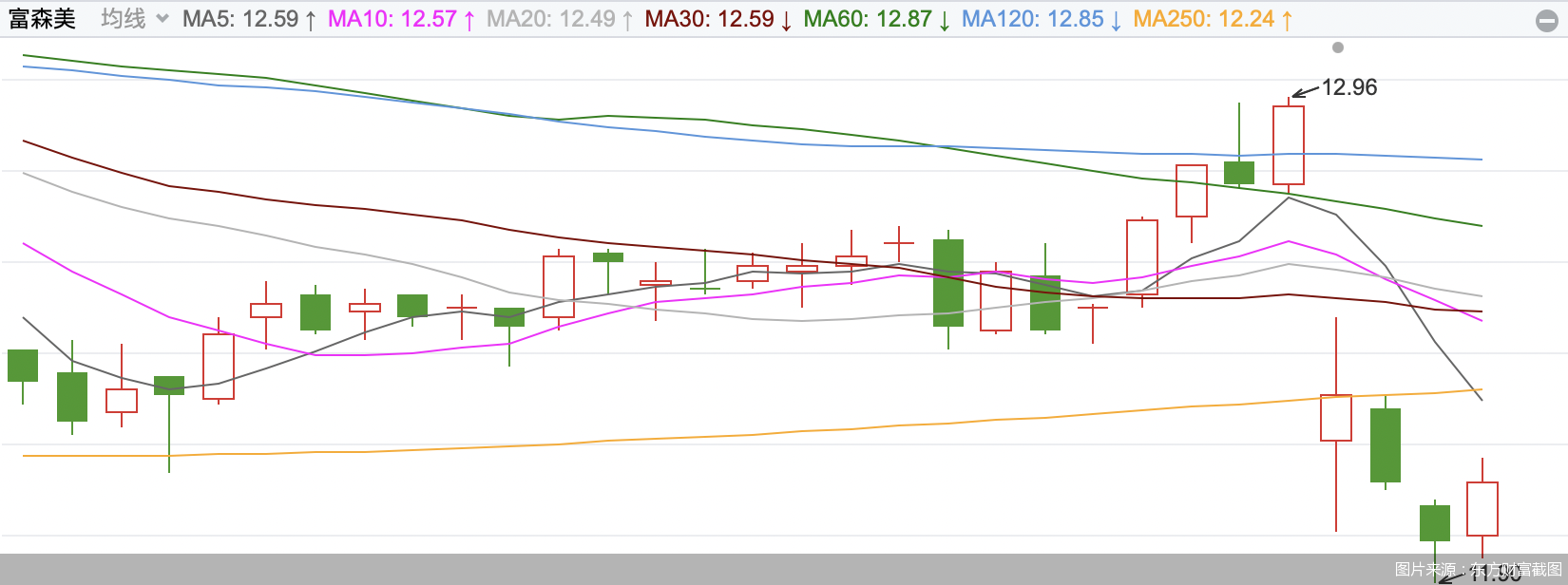
Core Viewpoint - Chengdu Fusenmei Home Co., Ltd. is facing significant challenges with declining performance, highlighted by a 13.19% drop in revenue and a 21.06% decrease in net profit for Q1 2025, while simultaneously maintaining a high dividend payout ratio of 117.11% for 2024, which exceeds its annual net profit [1][4][7] Financial Performance - In Q1 2025, Fusenmei reported revenue of 330 million yuan, down 13.19% year-on-year, and net profit of 148 million yuan, down 21.06% year-on-year [4] - Revenue has been declining for six consecutive quarters since Q4 2023, with year-on-year declines of 6.74%, 2.46%, 7.95%, 10.08%, and 4.19% for Q4 2023 and the four quarters of 2024 [7] - Despite a 6.18% decline in revenue and a 14.39% drop in net profit for 2024, Fusenmei distributed 808 million yuan in cash dividends, marking a dividend payout ratio of 117.11% [7] Dividend Policy - Fusenmei's high dividend payout is seen as a sign of "value release anxiety," indicating a lack of growth projects and a strategy to maintain market value by returning cash to shareholders [7][10] - Since its listing in 2016, Fusenmei has distributed a total of 4.668 billion yuan in dividends, with a payout ratio close to 70%, and over 2.4 billion yuan in dividends in the last three years, accounting for 88% of the company's net profit during that period [7][10] Market Dependency - Fusenmei's revenue is heavily reliant on its core market, with 87.20% of its total revenue coming from market leasing and services, which also saw a decline of 4.52% in 2024 [8] - The company has shown a strong dependency on the Chengdu market, with revenue from this region accounting for over 95% of total revenue from 2021 to 2024, peaking at 97.76% in 2024 [8][9] Industry Challenges - The home furnishing industry is facing intense competition, with a reported 3.85% decline in sales for large-scale building materials and home furnishing markets in 2024 [11] - The crisis in the home furnishing industry is attributed to the end of real estate dividends and the failure of traditional business models, necessitating a shift towards asset-light, service-oriented, and digital strategies [11] Strategic Initiatives - Fusenmei is actively seeking transformation by enhancing its online presence, with the "Fusenmei Online 3.0" program achieving over 6 million customer visits and 320 million yuan in online payments in 2024 [12] - Future strategies include integrating design, material selection, construction, and delivery into a closed loop, creating a content ecosystem around home living, and embedding digital technology into operations [12]


资本腾挪后业绩倍增 海利生物遭问询
Zhong Guo Jing Ying Bao· 2025-07-04 19:51
Core Insights - The company, Haili Biological (603718.SH), reported a significant net profit increase of 172.28% in 2024, with non-recurring gains accounting for 93.82% of net profit, despite a revenue decline in Q1 2025 [2][5][8] - Haili Biological has transitioned from animal health products to human health products, leading to a substantial restructuring of its business model [2][9] Financial Performance - In 2024, Haili Biological's net profit reached approximately 1.71 billion yuan, with a notable increase attributed to asset disposals and acquisitions [4][5] - The company achieved an investment return exceeding 1 billion yuan from the sale of a 30% stake in WuXi Vaccines, which had previously generated low returns [5][6] - The sale of Yangling Jinhai at a nominal price of 1 yuan was a strategic move to eliminate ongoing losses, with the company recovering all debts owed by Yangling Jinhai [6][8] Asset Management - Haili Biological completed the acquisition of a 55% stake in Shaanxi Ruisheng Biotechnology, which is focused on oral tissue repair and regeneration materials, resulting in a goodwill of approximately 782 million yuan [9][10] - The company has prioritized finding quality projects in the oral and IVD sectors following the restructuring, although it acknowledges the challenges in identifying such opportunities [3][9] Market Dynamics - The oral vaccine market, particularly for foot-and-mouth disease, is facing increased competition and declining profitability, prompting Haili Biological to divest from Yangling Jinhai [7][8] - The revenue from Ruisheng Biotechnology in 2024 was approximately 265 million yuan, slightly below expectations, but the net profit exceeded targets [11]


环球产业观丨跨界品牌入局能否破解卫生巾“信任危机”?
Huan Qiu Wang· 2025-07-04 03:29
Core Insights - The sanitary napkin industry is facing a crisis of trust due to multiple quality issues, including misleading product lengths and contamination concerns, which are eroding consumer confidence in product safety [1][2][4] - The market is witnessing an influx of cross-industry brands entering the sanitary napkin sector, aiming to capture a share of the rapidly growing market valued at over 980 billion yuan [4][6][7] Industry Challenges - Recent scandals, such as the revelation of "refurbished sanitary napkins" and the production of substandard products, have highlighted significant safety concerns within the industry [2][4] - Consumers are increasingly aware of product safety, with many expressing uncertainty about which brands can be trusted, leading to a potential shift towards higher-priced medical-grade products [2][3] Market Dynamics - The sanitary napkin market is experiencing a transformation, with brands like Huang Zitao's and Dongfang Zhenxuan entering the market and achieving significant sales in a short time, indicating strong consumer demand for new entrants [4][5] - The average price of sanitary napkins is rising, with medical-grade products costing approximately 1.5 yuan per piece compared to the previous average of 0.9 yuan, increasing the financial burden on consumers [3][6] Consumer Behavior - The growing awareness of health and safety among consumers is driving demand for higher quality products, prompting brands to implement stricter quality control measures [6][7] - The market is characterized by high repurchase rates and strong user loyalty, making it an attractive target for investment and innovation [6][7] Future Outlook - The entry of new brands is expected to disrupt the existing market structure, potentially leading to improved product quality and consumer choice [7] - The sanitary napkin industry is poised for significant changes, with an emphasis on material innovation, quality enhancement, and personalized product offerings becoming key competitive factors [5][7]
泡泡玛特疑跨界家电行业,涉及复古小冰箱、电水壶等产品
news flash· 2025-06-24 14:34
Group 1 - The core point of the article is that Pop Mart may be entering the home appliance industry, as indicated by job postings for related talent on a recruitment platform [1] - Media reports suggest that a user on social media has claimed Pop Mart is hiring for positions in the home appliance sector [1] - Pop Mart has not yet responded to inquiries from Sina Technology regarding these claims [1]

泰禾智能收购新控股股东亏损资产跨界储能 实控人半年前刚变更为阳光电源曹仁贤
Xin Lang Cai Jing· 2025-06-18 09:12
Core Viewpoint - Hefei Taihe Intelligent Technology Group Co., Ltd. announced the acquisition of 100% equity in Anhui Sunshine Yuchu New Energy Co., Ltd. for 45.8 million yuan, which raises concerns due to the target company's ongoing losses and high debt levels [1][2][4]. Group 1: Acquisition Details - The acquisition involves Anhui Sunshine Yuchu, a subsidiary of Sunshine New Energy, which focuses on energy storage projects for commercial users [1]. - The transaction is classified as a related party transaction, as Sunshine New Energy is both the parent company of Anhui Sunshine Yuchu and the controlling shareholder of Taihe Intelligent [1]. - The asset evaluation report indicates that as of March 31, 2025, the book value of Anhui Sunshine Yuchu's equity was 43.116 million yuan, with an assessed value of 45.8 million yuan, reflecting a value increase of 2.684 million yuan (6.23%) [1]. Group 2: Financial Performance - Anhui Sunshine Yuchu reported a revenue of 19.7761 million yuan in 2024, accounting for 3.51% of Taihe Intelligent's total revenue, with a net loss of 6.1321 million yuan [2]. - In Q1 2025, the company's revenue increased to 15.7029 million yuan, representing 15% of Taihe Intelligent's revenue, but the net loss expanded to 22.6566 million yuan [2]. - The significant loss in Q1 2025 was attributed to asset impairment, with a provision of 26.5775 million yuan for fixed asset impairment [2]. Group 3: Strategic Implications - Taihe Intelligent has acknowledged that it lacks experience in the commercial energy storage sector and that the acquisition of a loss-making asset poses significant cross-industry operational risks [2][4]. - The company is undergoing a change in control, with Sunshine New Energy becoming the new controlling shareholder, which may influence its strategic direction [3]. - The acquisition raises questions about the rationale behind a profitable AI visual recognition company acquiring a loss-making energy storage asset, especially given the financial performance disparity [4].


实际营收未达承诺值的5%,*ST星光子公司元生信息股东需补偿上市公司上百万元
Mei Ri Jing Ji Xin Wen· 2025-06-10 12:22
Core Viewpoint - The performance of Guangzhou Yuansheng Information Technology Co., Ltd. (Yuansheng Information), a subsidiary of ST Xingguang, significantly underperformed its promised financial targets for 2024, leading to a cash compensation agreement with the performance guarantor, Tu Jing [1][2][3]. Group 1: Performance and Financials - Yuansheng Information achieved a main business revenue of only 297.93 million yuan and a net profit of 34.24 million yuan from October to December 2024, which is only 4.3% and 11.4% of the promised targets of 7000 million yuan and 300 million yuan respectively [2][3]. - The company had a registered capital of 20 million yuan and was established in December 2011, with Tu Jing as the controlling shareholder [2]. - In 2023, Yuansheng Information reported a revenue of 7011.89 million yuan but incurred a net loss of 2131.29 million yuan, indicating financial instability [4]. Group 2: Acquisition and Strategic Intent - ST Xingguang acquired a 51% stake in Yuansheng Information for 10 million yuan in August 2023, aiming to expand into the information security sector [2][4]. - The acquisition was part of a broader strategy to create new growth points, despite Yuansheng Information's financial difficulties and being in a state of insolvency as of May 2023 [4][5]. Group 3: Future Commitments and Management Actions - The controlling shareholder, Dai Junwei, has committed to ensuring that both Yuansheng Information and another subsidiary, Xingguang Quantum, achieve positive net profits by 2025, with a willingness to take over their shares if performance targets are not met [6].

金字火腿再度易主:主力产品火腿毛利率下滑,频繁跨界收效甚微
Bei Ke Cai Jing· 2025-06-04 13:40
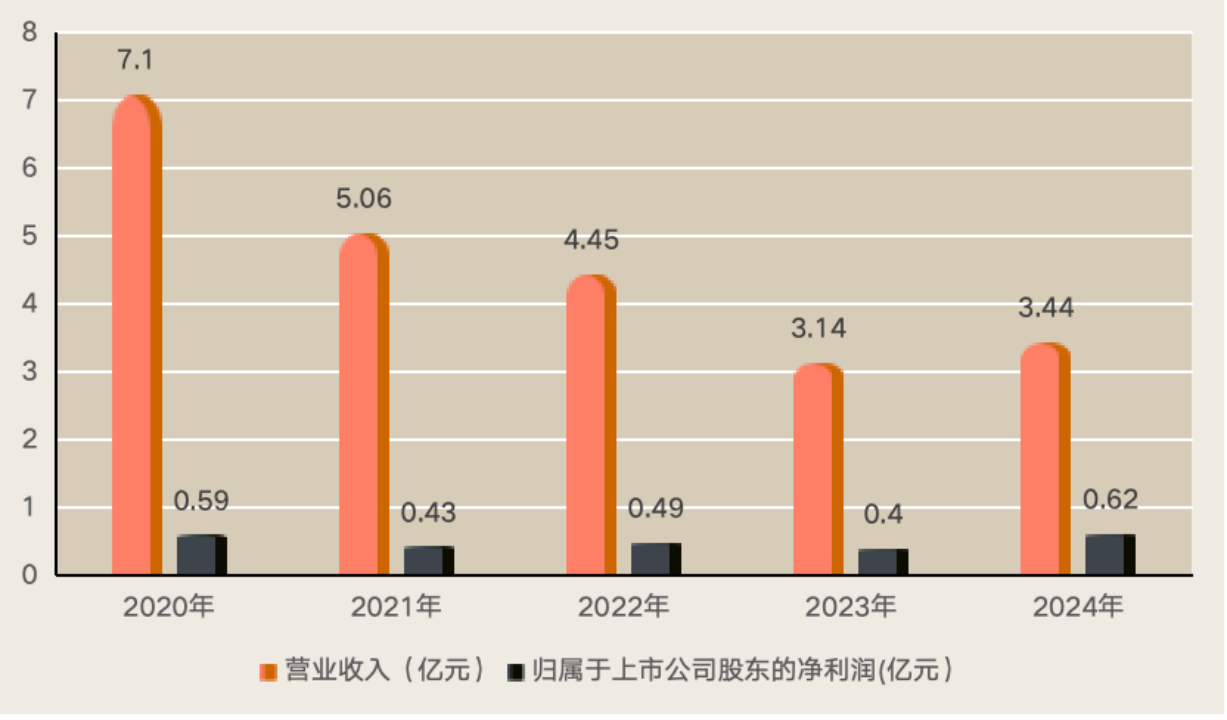
Core Viewpoint - The transfer of shares from Ren Guilong to Zheng Qingsheng has been completed, making Zheng the controlling shareholder of Jinzi Ham, which may lead to new strategic directions for the company [1][4][6]. Share Transfer Details - Ren Guilong transferred 145 million shares to Zheng Qingsheng, who now holds 11.98% of the company's shares and 18.83% of the voting rights, becoming the largest shareholder [1][5]. - The share transfer was valued at 870 million yuan [4][7]. Financial Performance - Since Ren Guilong took control in 2021, Jinzi Ham's revenue has been on a downward trend, although 2024 showed a year-on-year increase in revenue and net profit [2][12]. - In 2024, Jinzi Ham achieved approximately 344 million yuan in revenue, a 9.62% increase, and a net profit of about 62.17 million yuan, a 55.19% increase [13]. - Despite revenue growth, the gross margin for ham products decreased by 1.51% to 26.14% in 2024, indicating challenges in maintaining profitability [14][15]. Strategic Challenges - Jinzi Ham has been diversifying into various sectors since 2013, including mining, banking, e-commerce, and new energy vehicles, but these ventures have not significantly supported its performance [3][19]. - The company's total market value has halved from its peak, reflecting the impact of its strategic decisions [18][23]. Future Outlook - Zheng Qingsheng's background in real estate and automotive sectors raises questions about his ability to navigate the food industry, which may present both opportunities and risks for Jinzi Ham [7][9]. - The company plans to focus on cost reduction, sales expansion, and structural adjustments in 2025, with an emphasis on developing ham-related products [16][17].

观酒|主业增长乏力布局饮料等外业,啤酒公司能做好副业吗?
Nan Fang Du Shi Bao· 2025-05-13 09:23
Core Viewpoint - The beer industry is experiencing performance pressure, leading companies to explore diversification through cross-industry ventures to boost growth and attract investment [1][4][5]. Group 1: Industry Trends - Major beer companies in China, including Chongqing Beer, Qingdao Beer, and Yanjing Beer, are increasingly engaging in cross-industry expansions, particularly into beverage and liquor sectors, as a response to declining beer sales [1][2][4]. - The trend of diversification is seen as a way to build a "second growth curve" and create a competitive advantage, although it may take around five years for these new ventures to significantly impact performance [1][6]. Group 2: Company Strategies - Chongqing Beer has launched new beverage products, such as Cang'e soda, leveraging existing distribution channels in strong markets like Xinjiang and Chongqing [2][3]. - Qingdao Beer is pursuing a full acquisition of a Huangjiu (yellow wine) factory and has integrated its beverage business with existing operations, aiming to avoid competition with its beer products [2][3]. - Yanjing Beer has introduced a new soda brand, Best, and plans to utilize its beer distribution channels to penetrate the market quickly, focusing on dining establishments [3][4]. Group 3: Performance Insights - Despite some positive signs in Q1, overall performance for major beer companies remains mixed, with revenue and profit declines reported for several firms in 2024 [4][5][7]. - The sales volume for beer has decreased, with notable declines for companies like China Resources Beer and Qingdao Beer, attributed to high previous year bases and changing consumer preferences [5][6]. Group 4: Market Outlook - Analysts suggest that while cross-industry ventures are necessary for growth, the actual benefits may take time to materialize, with successful examples from other industries taking over a decade to develop [6]. - The diversification trend among beer companies is expected to continue, driven by changing consumer environments and the need for companies to establish strong brand recognition [6].




面包5.8元起!海底捞要当“烘焙界小米”?
FBIF食品饮料创新· 2025-05-13 00:35
Core Viewpoint - The article discusses the recent launch of Haidilao's bakery brand "拾㧚耍·SCHWASUA" in Hangzhou, exploring its potential success in the competitive bakery market, characterized by short brand replacement cycles and a focus on affordability and quality [1][10]. Summary by Sections Brand Launch and Initial Performance - Haidilao's bakery brand "拾㧚耍" opened in Hangzhou and has maintained high customer interest since its launch during the May Day holiday, with some popular products selling out by 11 AM [2][5]. Product Offering and Pricing Strategy - The bakery emphasizes affordability, with many products priced below 10 yuan, including a 5.8 yuan rye cranberry bread and a 6.8 yuan white sesame sea salt roll. The average customer spending is reported to be over 10 yuan [6][7]. - The product range includes over 50 types of baked goods, featuring both traditional items like baguettes and innovative flavors such as "West Lake Longjing" bread. The coffee bread has been particularly popular, selling over 200 units daily [7]. Store Design and Customer Engagement - The store features a minimalist black and gold design, with a unique circular glass display for products and interactive elements like a lottery machine for customer engagement. There is also an outdoor dining area accommodating 30-40 customers [8]. Market Context and Competitive Landscape - The bakery market is highly competitive, with rapid brand turnover. Examples include brands like "熊猫不走" and "虎头局·渣打饼行," which experienced quick rises and falls within a few years [11][12]. - New entrants focusing on high cost-performance ratios, such as 2 yuan bakeries, are emerging, while established brands like "石头先生的烤炉" are expanding into major cities [13][16]. Haidilao's Strategic Positioning - Haidilao's entry into the bakery sector represents a significant strategic move, combining elements of both affordable and premium bakery offerings. This dual approach aims to attract a broad customer base while maintaining a focus on quality [10][18].


17家调味品企业年报披露:跨界风潮持续,“零添加”产品需调整
Bei Ke Cai Jing· 2025-05-11 06:41
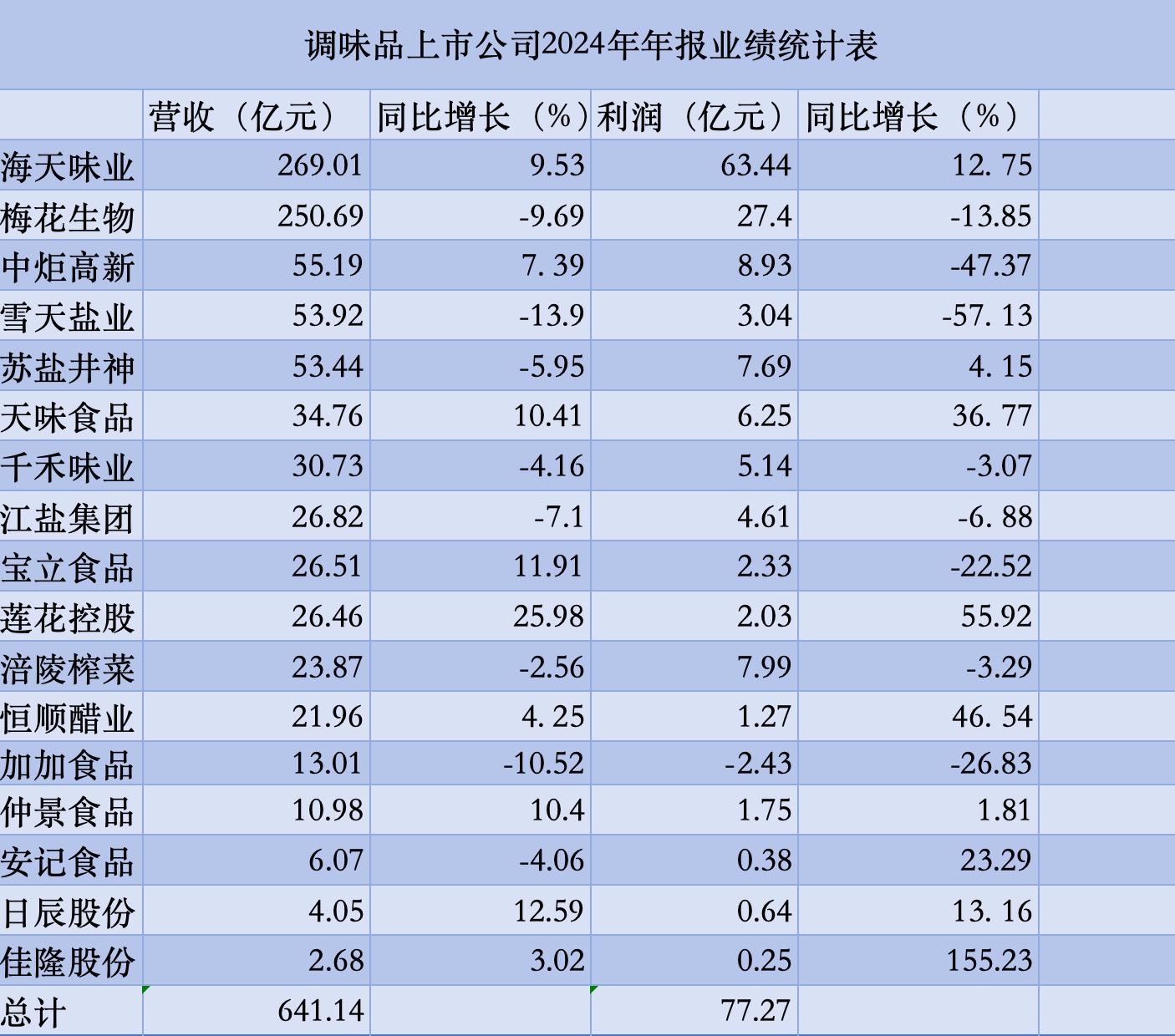
Core Insights - The A-share condiment companies reported a total revenue of 64.1 billion yuan and a net profit of 7.72 billion yuan for 2024, with 7 companies achieving growth in both revenue and profit [1][2] - The leading company, Haitian Flavoring, maintained its dominance with over 20 billion yuan in revenue and a net profit of 6.34 billion yuan, accounting for 82.1% of the industry's total profit [1][6] - The condiment industry is entering a phase of stock competition, with product innovation becoming crucial for breaking through market stagnation [1][8] Revenue and Profit Performance - In 2024, 7 condiment companies achieved both revenue and profit growth, including Haitian Flavoring, Tianwei Food, Lianhua Holdings, Hengshun Vinegar, Zhongjing Food, Richen Co., and Jialong Co. [2] - Conversely, 6 companies experienced declines in both revenue and profit, including Meihua Biological, Xue Tian Salt Industry, Qianhe Flavor, Jiangyan Group, Fuling Pickles, and Jiajia Food [2] - Total revenue for the 17 companies was 64.1 billion yuan, with a total net profit of 7.72 billion yuan [3][4] Company-Specific Highlights - Haitian Flavoring reported a revenue of 26.9 billion yuan, a year-on-year increase of 9.53%, and a net profit of 6.34 billion yuan, a 12.75% increase [6][4] - Lianhua Holdings showed significant growth with a revenue increase of 25.98% and a net profit increase of 55.92% [5][4] - Jiajia Food was the only company to report a loss, with a revenue of 1.3 billion yuan, a decline of 10.52%, and a net loss of 243 million yuan [5] Market Trends and Innovations - The condiment industry is experiencing a shift towards "zero-additive" products, with companies like Haitian Flavoring and Qianhe Flavor actively developing these offerings [10][11] - The new regulations on "zero-additive" products will require companies to adapt their product lines by 2027, pushing for a return to quality competition [11][10] - Cross-industry ventures are becoming a trend, with companies like Lianhua Holdings diversifying into computing power while maintaining their traditional condiment business [12][13] Competitive Landscape - The soy sauce market is showing signs of saturation, with per capita demand dropping significantly from 28 kg in 2015 to less than 5 kg in 2023 [8] - Companies are facing intensified competition, necessitating innovation and differentiation to maintain market share [9][8] - The industry is witnessing a dual flow of cross-industry collaboration, as seen with partnerships between condiment companies and other sectors [13]