
防范化解风险

Search documents
坚持服务实体 筑牢风控根基 推动高质量发展
Xin Lang Cai Jing· 2025-12-11 13:48
Core Viewpoint - The Central Economic Work Conference outlines a clear blueprint for high-quality economic development in China, emphasizing the role of capital markets in serving the real economy and mitigating risks [1][5]. Group 1: Commitment to Real Economy - The conference calls for financial institutions to enhance support for expanding domestic demand, technological innovation, and small and micro enterprises, while also integrating ongoing assistance into rural revitalization strategies [2][6]. - The company, as a futures firm with an industrial background, emphasizes its commitment to serving the real economy by leveraging its expertise in risk management tools such as futures, options, and swaps to help enterprises hedge against price risks [2][6]. - Future efforts will focus on building a distinctive service system for industrial clients, enhancing research and development capabilities centered on hedging, and promoting the "insurance + futures" model to support rural revitalization [2][6]. Group 2: Risk Management and Compliance - The conference stresses the importance of maintaining a bottom line and actively managing risks in key areas, highlighting that a stable financial market is essential for economic stability [3][7]. - The implementation of the Futures and Derivatives Law and other regulatory measures reflects a commitment to risk prevention, strong regulation, and promoting high-quality development [3][7]. - The company adopts a "risk first" operational philosophy, enhancing internal monitoring, establishing compliance management mechanisms, and improving investor education through various media platforms to strengthen risk awareness and self-protection among clients [3][7]. Group 3: Future Direction - The company aims to align its operations with the spirit of the Central Economic Work Conference, maintaining its commitment to serving the real economy while prioritizing risk prevention [4][8]. - The focus will be on leveraging professional capabilities and stable operations to contribute significantly to financial services for the real economy [4][8].


新华全媒头条·2025中国经济回眸|筑牢发展安全根基 守住风险防控底线——解码中国经济稳健前行的底气
Xin Hua She· 2025-12-09 16:26
Group 1 - The core viewpoint emphasizes the importance of safety as a prerequisite for development and vice versa, highlighting China's efforts to balance development and security under the leadership of the central government [1] - Energy security is identified as a strategic foundation for high-quality economic development, with ongoing efforts to enhance safety capabilities across key sectors [3][4] - The construction of major infrastructure projects is seen as a stabilizing force for safe development, with significant financial support and private capital involvement [6][7] Group 2 - The real estate market is being stabilized through various policies, with over 60 cities implementing measures to support housing demand, resulting in a reduction in the sales decline of new homes [11] - Financial stability is crucial, with measures taken to address risks in small financial institutions, including the establishment of a new bank to enhance risk resistance [12][13] - Local government debt risks are being effectively mitigated through a series of measures, including the issuance of special bonds to replace hidden debts, which has saved significant interest expenses [14] Group 3 - The importance of reform in addressing development challenges and risk mitigation is highlighted, with initiatives aimed at creating a new model for real estate development and improving market mechanisms [20] - The release of a new generation of ultra-high-speed oscilloscopes is noted as a significant advancement for China's semiconductor and 6G communication sectors, enhancing the country's technological capabilities [21] - The overall economic outlook remains positive, with expectations for the total economic output to reach 140 trillion yuan, reinforcing China's position as the world's second-largest economy [7]
21评论丨着力扩大内需 增强经济持续向好态势
2 1 Shi Ji Jing Ji Bao Dao· 2025-12-04 22:40
Core Viewpoint - The upcoming Central Economic Work Conference will set the development tone for 2026, focusing on expanding domestic demand and addressing insufficient effective demand while maintaining economic stability and growth potential [1] Group 1: Domestic Demand Expansion - The primary task of macroeconomic policy is to comprehensively expand domestic demand, with a focus on boosting consumption and increasing effective investment [3] - To enhance consumption, policies will emphasize both quantity and quality, including measures like promoting trade-in programs and improving subsidy processes to unlock market potential [3] - Investment will focus on improving efficiency, targeting major national strategies and key areas such as infrastructure and digital economy, while also optimizing the business environment to attract more private investment [3] Group 2: Supply-Side Policies - Supply-side policies will center on technological innovation to cultivate new productive forces, enhancing the quality and momentum of economic growth [4] - The core driving force for economic growth will shift towards a modern industrial system characterized by advanced manufacturing, strategic emerging industries, and a deep integration of the digital economy with the real economy [4][5] - Efforts will be made to optimize traditional industries and foster new industries, creating clusters in sectors like renewable energy and aerospace to generate new growth drivers [5] Group 3: Risk Prevention and Financial Stability - Ensuring safety in key areas and effectively preventing risks is crucial for solidifying economic foundations, with a focus on stabilizing the real estate market and managing local government debt [5] - Fiscal policy is expected to maintain an expansionary stance, optimizing expenditure structures to support strategic emerging industries and enhance social safety nets [5] - Monetary policy will likely continue a moderately loose tone, closely coordinating with fiscal policy to support key sectors like technology and green transformation [6]

2026年债市展望:蛰伏反击
HTSC· 2025-11-03 05:50
Group 1: Macroeconomic Outlook - The report highlights that both the US and China are entering critical years, with global investment driven by three and a half engines: AI investment, defense spending, and industrial restructuring [1][14] - The nominal GDP growth rate is expected to recover, with a focus on domestic demand and technology as key policy areas [1][2] - The transition from old to new economic drivers in China is anticipated to gain momentum, leading to a rebalancing of supply and demand [2][11] Group 2: Policy Environment - The "15th Five-Year Plan" sets a supportive policy tone, with monetary policy expected to remain accommodative, albeit with less room than in the current year [3][15] - Fiscal policy is projected to maintain a certain level of expansion, with total tools estimated at 15.7 trillion yuan, an increase of approximately 1.2 trillion yuan from this year [3][15] - The report emphasizes the importance of structural tools and the coordination between monetary and fiscal policies to support various sectors [3][15] Group 3: Supply and Demand Dynamics - The narrative of "asset scarcity" in the bond market is expected to weaken, with a focus on the verification of corporate profits and capacity utilization [4][18] - The report notes that government bond supply is likely to increase, but market pressure will be manageable due to central bank support [4][18] - Institutional behavior is identified as a major source of market volatility, with a reduction in stable funding leading to increased market fluctuations [4][18] Group 4: Bond Market Strategy - The bond market is expected to maintain a "low interest rate + high volatility" characteristic, with the central rate likely remaining stable or slightly increasing [5][18] - The report suggests a strategy of segment trading, coupon strategies, and equity exposure as priorities over duration adjustment and credit downgrading [5][18] - The ten-year government bond yield is projected to fluctuate between 1.6% and 2.1%, with a widening of term spreads anticipated [5][18]
厚植产业沃土滋养科创种苗
Jing Ji Ri Bao· 2025-08-07 22:50
Group 1 - The core viewpoint emphasizes the need for deep integration of technological innovation and industrial innovation to achieve high-quality development and address current economic risks and challenges [1][4] - The integration of technology and industry is not merely a parallel process but should be a symbiotic relationship, akin to roots and branches, requiring the removal of barriers to facilitate this connection [1][3] - The article highlights the importance of aligning technological innovation with industrial needs, ensuring that research and development are driven by market demands and pain points [2][4] Group 2 - The article discusses the necessity of creating a conducive environment for the efficient flow and optimal allocation of innovation elements within the industrial ecosystem, which includes dismantling invisible barriers and fostering a virtuous cycle among technology, industry, and finance [2][3] - It stresses that deep integration requires reform as a key to breaking down institutional barriers that hinder the synergy between technology and industry, including optimizing resource allocation and enhancing intellectual property protection [3][4] - The ultimate goal of promoting deep integration is to cultivate new emerging pillar industries with global influence, thereby enhancing international competitiveness and ensuring sustainable economic growth [3][4]
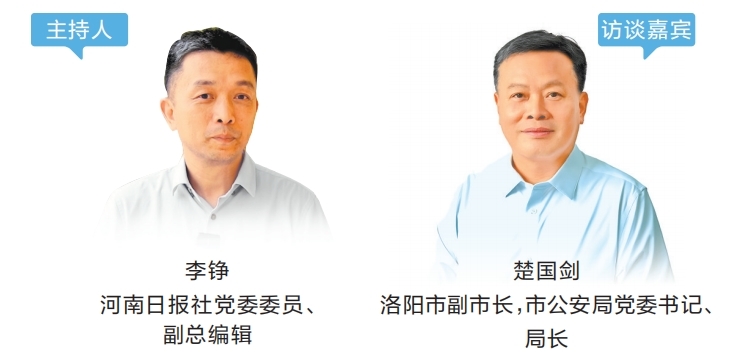
总编有约·“两高四着力”大家谈丨防范化解风险 筑牢平安防线
He Nan Ri Bao· 2025-08-03 23:35
Group 1 - The core viewpoint emphasizes the importance of risk prevention and social stability in the context of cultural tourism development in Luoyang, as highlighted by Xi Jinping's recent visit [2][3] - Luoyang is accelerating its development as a world-class cultural tourism city, implementing innovative measures to ensure safety for citizens and tourists, including enhanced police presence and proactive policing strategies [2][3] - The local police force is focusing on integrating various police functions and enhancing community policing to improve public safety and address tourism-related issues [2][3][4] Group 2 - The Luoyang police are committed to strengthening grassroots foundations by increasing police presence in communities and enhancing the standardization of police work [3][4] - There is a focus on improving public security capabilities through strategic patrols and rapid response mechanisms to address potential risks effectively [4][5] - The police are adopting a new model of "police integration and offense-defense connection" to enhance the efficiency of law enforcement and public safety measures [5][6] Group 3 - Luoyang is advancing legal governance in policing by implementing a "director handling cases" system and establishing one-stop law enforcement centers to improve the quality of law enforcement [6] - The city is promoting a culture of legal awareness and enhancing the effectiveness of law enforcement through various initiatives, including public campaigns [6] - Future plans include deepening the integration of legal thinking in policing and optimizing the legal environment to ensure social stability and safety [6]
国新证券每日晨报-20250731
Guoxin Securities Co., Ltd· 2025-07-31 03:09
Domestic Market Overview - The domestic market experienced a mixed performance on July 30, with the Shanghai Composite Index closing at 3615.72 points, up 0.17%, while the Shenzhen Component Index fell to 11203.03 points, down 0.77% [1][10] - Among the 30 sectors tracked, 14 sectors saw gains, with notable increases in the oil and petrochemical, steel, and food and beverage sectors, while comprehensive finance, electric equipment and new energy, and computer sectors faced significant declines [1][10] - The total trading volume of the A-share market reached 18710 billion, showing an increase compared to the previous day [1][10] Overseas Market Overview - On July 30, the three major U.S. stock indices closed mixed, with the Dow Jones down 0.38%, the S&P 500 down 0.12%, and the Nasdaq up 0.15% [2] - Precious metals and copper concepts saw significant declines, with U.S. gold prices dropping over 7% [2] - The Federal Reserve maintained interest rates but showed rare internal disagreements, leading to a sharp drop in the market's expectation for a rate cut in September from 68% to 45% [2] Key News Highlights - The Central Political Bureau of the Communist Party of China held a meeting to discuss the economic situation and set the agenda for the upcoming Fourth Plenary Session of the 20th Central Committee [12][20] - The National Development and Reform Commission is soliciting public opinions on guidelines for government investment funds [24][25] - The National Health Commission announced measures to reduce the costs of childbirth, childcare, and education, and to improve maternity leave policies [27][28] - The Federal Reserve has maintained interest rates unchanged for the fifth consecutive time [29] Driving Factors - The Central Political Bureau emphasized the need for stable and flexible macroeconomic policies to support economic growth, including active fiscal policies and moderately loose monetary policies [11][16] - The meeting highlighted the importance of enhancing domestic demand and promoting consumption while ensuring the stability of employment and businesses [16][18] - The focus on technological innovation and the integration of industry and technology was reiterated as a key driver for future economic development [17][22]
中央政治局定调下半年经济工作
Bei Jing Shang Bao· 2025-07-30 16:40
Core Points - The meeting of the Central Political Bureau emphasized the importance of the 14th Five-Year Plan and the upcoming Fourth Plenary Session of the 20th Central Committee, focusing on economic and social development strategies [1][2] - The meeting highlighted the need to maintain strategic confidence and adapt to complex changes in the economic environment, while leveraging China's institutional advantages and market potential [1][2] - The meeting called for a proactive macroeconomic policy to ensure stable economic growth and to address risks and challenges in the current economic landscape [3][4] Economic Development Strategy - The meeting underscored the necessity of adhering to Marxist principles and Xi Jinping's thoughts to achieve the goal of building a modern socialist country and promoting national rejuvenation [2] - Emphasis was placed on achieving qualitative improvements in the economy while ensuring reasonable quantitative growth, focusing on comprehensive development and common prosperity [2][3] Policy Recommendations - The meeting advocated for a continuation of active fiscal policies and moderately loose monetary policies to enhance policy effectiveness and support economic recovery [3][4] - It was recommended to stimulate domestic demand, particularly through consumption initiatives and effective investment strategies [3][4] Reform and Innovation - The meeting stressed the importance of deepening reforms and fostering technological innovation to enhance productivity and develop competitive emerging industries [4][5] - There was a call to optimize market competition and regulate local investment behaviors to ensure a fair business environment [4] Employment and Social Welfare - The meeting highlighted the priority of employment policies, particularly for vulnerable groups such as graduates and migrant workers, while ensuring social safety nets are in place [5] - It emphasized the need for food security and maintaining reasonable prices for essential agricultural products to support rural development [5]
宏观政策要持续发力、适时加力!政治局会议定调下半年经济工作
Bei Ke Cai Jing· 2025-07-30 14:36
Core Viewpoint - The Central Political Bureau meeting emphasized the need for proactive macroeconomic policies to address ongoing economic challenges while maintaining growth momentum, highlighting the importance of stability and flexibility in policy implementation [1][2][3]. Economic Performance - China's GDP grew by 5.3% year-on-year in the first half of the year, laying a solid foundation for achieving the annual growth target of around 5% [2]. - The meeting acknowledged the positive performance of major economic indicators and the effective prevention of risks in key areas [1][2]. Macroeconomic Policy - The meeting called for continuous and timely strengthening of macroeconomic policies, focusing on stability and progress, and promoting domestic and international dual circulation [3][6]. - It was noted that fiscal policy should be more proactive, while monetary policy should remain moderately accommodative [5][7]. Key Focus Areas for the Second Half - The meeting outlined key tasks for the second half of the year, including releasing domestic demand potential, deepening reforms, and expanding high-level opening-up [9][14]. - Specific actions include implementing consumption-boosting initiatives, enhancing support for small and micro enterprises, and stabilizing foreign trade [10][12]. Financial Measures - The meeting proposed accelerating the issuance and utilization of government bonds to improve funding efficiency and support economic recovery [7][8]. - It was suggested that new significant measures may be introduced in the second half to bolster growth, including potential interest rate cuts and increased fiscal spending [7][8]. Employment and Social Welfare - Emphasis was placed on prioritizing employment, particularly for key groups such as college graduates and veterans, and ensuring the implementation of social welfare policies [16]. - The meeting highlighted the importance of maintaining food security and preventing large-scale poverty [16].
2025年政府工作报告学习体会:春雷响,万物新
China Securities· 2025-03-13 12:40
Investment Rating - The report suggests a stable economic growth target of around 5% for 2025, indicating a positive outlook for the industry [3][7]. Core Viewpoints - The report emphasizes the need to address complex global challenges while maintaining confidence in domestic economic strengths, highlighting a clear focus on boosting consumption, expanding employment, and stabilizing the real estate market [3][4]. - It outlines ten key areas of focus for 2025, including consumption enhancement, modern industrial construction, and risk prevention [14][19]. Summary by Sections Overall Situation Assessment - The global economic environment is increasingly complex and severe, with insufficient growth momentum and rising geopolitical tensions impacting trade and technology sectors [4]. - There is a recognition of domestic challenges, including weak consumer demand and employment pressures, but also a strong belief in China's institutional advantages and long-term economic potential [4][5]. Main Economic Goals - The GDP growth target is set at approximately 5%, with a CPI growth target of around 2% [7][9]. - The fiscal deficit is projected at 4% of GDP, with a total deficit scale of 5.66 trillion yuan, an increase of 1.6 trillion yuan from the previous year [8][9]. Main Policy Directions - The report advocates for a proactive fiscal policy and a moderately loose monetary policy, emphasizing the importance of adjusting policies dynamically based on changing circumstances [11][12]. - It stresses the need for policies to focus on improving people's livelihoods and stimulating consumption to drive economic growth [12][13]. Key Work Areas for 2025 - The ten key work areas include boosting consumption, modern industrial development, and risk prevention, with specific measures outlined for each area [14][19]. - For consumption, around 18 specific measures are proposed to expand domestic demand and enhance investment efficiency [15][19]. - Employment stabilization efforts include support for labor-intensive industries and enhancing job opportunities for vulnerable groups [16][19]. - The report also emphasizes the importance of stabilizing the real estate market and managing local government debt risks [18][19].