阿尔法收益

Search documents
香港证监会、港交所、上交所 最新发声!
Zheng Quan Shi Bao· 2025-10-22 14:08
Core Insights - The Hong Kong Stock Exchange is focusing on enhancing its fixed income and currency markets, with a series of initiatives planned for the next six months to attract issuers and investors [1][4][2] Group 1: Market Development - The Hong Kong Securities and Futures Commission (SFC) aims to promote government bond issuance to lead market development and expand the investor base, including family offices and corporate treasury centers [1][4] - The total trading volume of collective investment schemes reached a historical high, with sales surging by 76% to HKD 22.4 trillion, while the proportion of money market funds is expected to rise from 76% in 2023 to 80% in 2024 [2][4] Group 2: Liquidity and Infrastructure - The SFC has identified four pillars for the fixed income and currency market: promoting issuance, increasing liquidity, expanding offshore RMB business, and new generation infrastructure [4][6] - Plans to enhance liquidity include implementing an over-the-counter fixed income and currency derivatives system and developing a central counterparty for repurchase transactions [4][6] Group 3: Geopolitical and Economic Trends - The global economic growth model is changing, with a shift towards active management funds as investors seek alpha returns amid slowing growth and declining traditional asset yields [1][7] - Geopolitical risks have become the primary concern for sovereign wealth funds, surpassing inflation worries, with 83% of respondents expressing concern about geopolitical risks [9] Group 4: Cross-Border Cooperation - The Shanghai Stock Exchange (SSE) and Hong Kong Stock Exchange (HKEX) are working together to optimize the Stock Connect mechanism, enhancing cross-border investment opportunities [11][14] - Since its inception, the Stock Connect has seen significant growth in trading volumes, with foreign capital through the Northbound channel reaching a cumulative total of CNY 90.1 trillion by September 2025 [13][14]


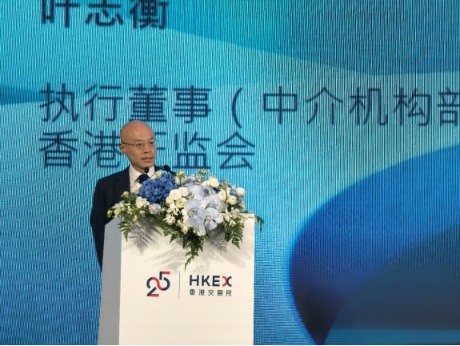
香港证监会、港交所、上交所,最新发声!
Zheng Quan Shi Bao· 2025-10-22 10:40
Core Insights - The Hong Kong Securities and Futures Commission (SFC) is set to advance key initiatives in the next six months to promote the development of the fixed income and money markets in Hong Kong [1][4] - The global economic growth model is changing, with a shift towards active management and alternative assets as traditional asset returns decline [1][7] - The Shanghai Stock Exchange (SSE) and Hong Kong Stock Exchange (HKEX) are collaborating to optimize the Stock Connect mechanism, enhancing the competitiveness of both markets [1][10] Group 1: Market Development Initiatives - The SFC plans to lead market development through government bond issuance and promote Hong Kong's advantages to targeted issuers and investors [1][4] - The total trading volume of collective investment schemes reached a historical high, with sales surging by 76% to HKD 22.4 trillion, and the proportion of money market funds is expected to rise from 76% in 2023 to 80% in 2024 [2][4] - The SFC aims to enhance liquidity by implementing an over-the-counter fixed income and derivatives framework and developing a central counterparty for repurchase transactions [4][6] Group 2: Strategic Insights - The global debt growth is unsustainable, leading to a redefinition of traditional safe assets, with gold and Bitcoin prices rising due to concerns over fiat currency purchasing power [7][9] - Geopolitical risks have become the primary concern for sovereign wealth funds, surpassing inflation worries, with 83% of respondents expressing concern over geopolitical risks [9] - Hong Kong is positioned as a "super connector" and "super value creator," leveraging its status as an international financial center to facilitate cooperation in technology and data exchange [9] Group 3: Stock Connect Mechanism - The Stock Connect mechanism has evolved since its inception, with significant enhancements including the removal of total quota limits and the inclusion of various stock types [10][12] - As of September 2025, foreign capital through the Stock Connect has reached a cumulative transaction total of CNY 90.1 trillion, with daily trading volumes increasing significantly [12][13] - The SSE plans to continue optimizing the Stock Connect mechanism to better serve domestic and foreign investors, fostering a collaborative market environment [10][13]

港交所董事总经理巴曙松:全球原有的经济增长模式已无法持续 资产配置基本逻辑发生改变
Ge Long Hui A P P· 2025-10-22 03:53
Core Insights - The global economic growth model is no longer sustainable, leading to a shift in asset allocation logic [1] - With the slowdown in global economic growth and declining traditional asset returns, relying solely on beta returns is insufficient for investors' yield targets [1] - The proportion of actively managed funds is continuously increasing, indicating a growing pursuit of alpha returns in the new market environment, particularly evident in alternative assets [1]
香港交易所董事总经理巴曙松:全球原有的经济增长模式已无法持续 资产配置基本逻辑发生改变
Zheng Quan Shi Bao Wang· 2025-10-22 03:53
Group 1 - The core viewpoint presented by the Hong Kong Stock Exchange's Chief China Economist, Ba Shusong, is that the traditional economic growth model is no longer sustainable, leading to a shift in asset allocation logic [1] - Ba Shusong anticipates a slowdown in global economic growth and a continuous decline in traditional asset returns, making it increasingly difficult for investors to achieve their return objectives solely through beta returns [1] - There is a rising trend in the proportion of actively managed funds globally, indicating that investors are increasingly pursuing alpha returns in the new market environment, particularly evident in the alternative asset sector [1]
银行理财参与权益投资的路径选择
2 1 Shi Ji Jing Ji Bao Dao· 2025-10-10 06:31
Core Viewpoint - The demand for diversifying asset allocation and enhancing strategy diversification in bank wealth management is increasingly urgent in a low interest rate environment, with a focus on increasing participation in equity markets as a necessary measure for supporting the long-term stable development of capital markets [1] Summary by Sections Current State of Equity Investment - Wealth management companies have made efforts to establish equity investment frameworks, but progress has been relatively slow, with over 93% of assets still in fixed-income categories [2] - The historical focus on fixed-income products has created a "path dependence" that limits the development of equity investment capabilities [2] - Client preferences for the stability of fixed-income products further constrain wealth management companies' ability to increase equity investment [2] Four Main Paths for Equity Market Participation - **Path One: Direct Stock Investment** Wealth management companies can build a comprehensive equity research and investment team, allowing for direct control over equity investments. This model requires significant investment in resources and time [3] - **Path Two: Commissioned Investment** Companies can select external managers to design customized equity investment strategies, leveraging external expertise while avoiding the need for extensive internal research capabilities. However, this method has high post-investment management costs and limited flexibility [4] - **Path Three: Active Management Equity Funds** With over 5,300 active equity and mixed funds available, this path allows for flexible investment adjustments based on market changes, though it requires strong market trend analysis and fund selection capabilities [5] - **Path Four: Passive Index Funds** Passive index funds, with a total market size of approximately 4.5 trillion yuan, offer low fees and transparency, making them suitable for achieving beta returns. However, they lack the ability to capture excess returns through active adjustments [6] Recommendations for Planning Equity Market Participation - Wealth management companies should tailor their equity investment paths based on their resources and client preferences, with a gradual approach to building equity research capabilities [7] - Companies with limited equity research foundations should start with commissioned investments and gradually extend to passive and active funds [7] - For companies with stronger research capabilities, a combination of commissioned investments and active funds is recommended, transitioning to direct stock investment as capabilities mature [7] Supporting Actions for Equity Investment - Companies need to strengthen macroeconomic and asset allocation research to effectively capture key variables affecting equity prices [8] - Establishing robust evaluation and assessment mechanisms for equity investments is crucial for effective post-investment management [8] - A long-term perspective is essential for developing equity research capabilities, particularly in complex industries, to ensure sustainable investment outcomes [8]
774只,翻倍!
Zhong Guo Ji Jin Bao· 2025-09-24 02:15
Group 1 - The A-share market has entered a bull market since September 24, 2024, with major indices significantly rising, such as the North Exchange 50 Index increasing by 158.01% [1] - The average daily trading volume in the market surged from less than 500 billion to over 2 trillion [1] - 13 mutual funds have seen a net value growth rate exceeding 200%, while 774 funds have surpassed 100% [1][2] Group 2 - The performance of equity mixed funds has rebounded, with the index rising by 57.88% since September 24, 2024 [2] - Notable funds include Debon Xinxing Value Mixed Fund, which achieved a net value growth of 280.31% [2] - The strong performance is attributed to the robust market rally and the significant returns from technology stocks [2] Group 3 - Key factors driving the market's rise include ongoing stock market reforms, improved policy expectations, and breakthroughs in various sectors such as innovative drugs and robotics [3] - The market's risk appetite has notably increased, with more retail investors entering the market since June [6][7] Group 4 - The A-share market has shown significant improvement in valuation, liquidity, and investor structure, with the overall valuation rising from 15.63 times to 22.16 times [6] - The market is expected to maintain a "slow bull" trend, supported by continuous policy backing and structural upgrades in industries [7] Group 5 - Investment opportunities are seen in sectors like AI, innovative drugs, and electric new energy, driven by supportive industrial policies and technological breakthroughs [8][9] - The focus on sectors such as AI computing, electric new energy, and innovative pharmaceuticals is expected to yield significant returns [9][10]

“老登经济”悄然间席卷全球! 炼油股上演逆袭 跑赢90%标普成分股
智通财经网· 2025-09-22 12:11
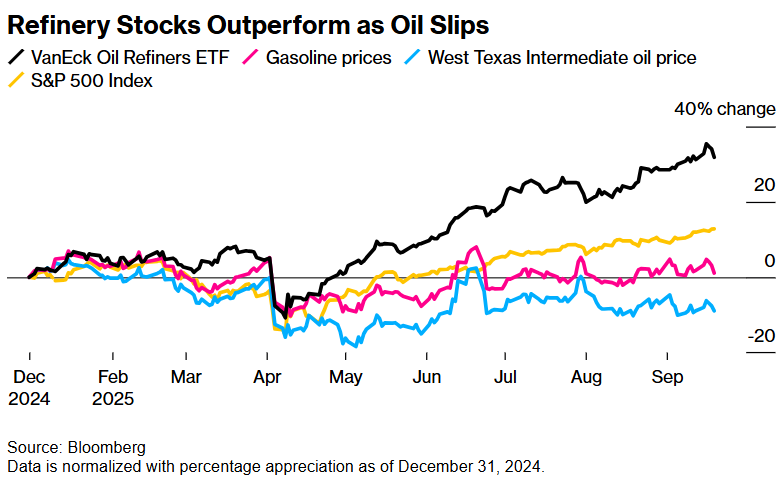
Core Viewpoint - Despite the focus on large tech stocks and AI-related companies, traditional oil refining companies have seen significant gains, with their performance nearly matching that of leading AI infrastructure firms like Nvidia and Broadcom [1][2]. Group 1: Market Performance - Major refining companies such as Valero Energy Corp and Marathon Petroleum Corp have seen stock price increases of at least 30% this year, outperforming approximately 90% of S&P 500 constituents, including tech giants like Microsoft and Apple [2]. - Smaller refining firms like Par Pacific Holdings Inc. and CVR Energy Inc. have experienced even stronger stock performance, with Par Pacific's stock doubling and CVR Energy's stock rising by 83% year-to-date [2]. Group 2: Profitability Factors - The profitability of global refining companies has significantly increased due to falling crude oil prices and stable gasoline prices, leading to expanded profit margins [3]. - The market anticipates further declines in Brent crude oil prices, which could enhance the earnings outlook for refineries and catalyze additional stock price increases [1][9]. Group 3: Energy Sector Dynamics - The weight of energy stocks, including oil and gas, in the S&P 500 index has been steadily declining, currently accounting for less than 3% [6]. - The so-called "Magnificent Seven" tech giants dominate the S&P 500 and Nasdaq 100 indices, comprising about 35% of their market weight, while also benefiting from the AI boom [6]. Group 4: Future Outlook - Analysts suggest that as oil prices decline, it is typical to sell large oil company stocks and buy refining stocks, which may have a "scarcity value" due to the limited number of new facilities being built [11]. - The recent proposal to exempt small refineries from renewable fuel standards could serve as a tailwind for the sector, contributing to stock price increases for mid-sized refiners [11]. - Factors such as attacks on Russian energy infrastructure, low diesel inventories, and unprecedented electricity demand from AI data centers create a unique bullish outlook for the refining sector over the next 6-12 months [12].
行业集中度不断提升 私募“百亿俱乐部”格局生变
Zhong Guo Zheng Quan Bao· 2025-09-18 20:19
Group 1 - The core viewpoint of the articles highlights the significant growth of the private equity industry in China, particularly the expansion of the "billion club" with 92 billion-level private equity firms as of September 12, 2023, compared to 80 at the end of January 2023 [2][3] - The rise of quantitative private equity firms is notable, with 45 such firms now in the billion club, accounting for nearly 50% of the total, indicating a shift in the competitive landscape of the industry [1][2] - The overall market environment, driven by policy support and marginal improvements in fundamentals, has favored larger private equity firms, particularly those employing quantitative strategies [2][3] Group 2 - Despite the growth in the number of billion-level private equity firms, fundraising within the industry shows a dichotomy, with top quantitative firms attracting significant capital while smaller firms struggle [3][4] - There is a noticeable trend where mainstream capital is increasingly favoring quantitative strategies, although interest in subjective long/short strategies is also rising among larger institutions [3][4] - The competitive landscape is evolving, with a focus on research capabilities and service quality becoming critical for both large and mid-sized private equity firms to maintain investor trust and attract capital [4] Group 3 - The articles emphasize the importance of differentiation in competition, suggesting that mid-sized firms should focus on unique strategies and enhance their research and risk management capabilities to stand out [4] - The future of the private equity industry is expected to see a diversification of strategies, with quantitative firms leveraging technological advancements and subjective firms deepening their research and risk management [4] - The industry is moving towards a phase where the ability to generate alpha returns will be paramount, as firms that can better understand the market and create sustained value will gain a competitive edge [4]
STARTRADER星迈:黄金重磅信号!华尔街传出重大配置转向信号
Sou Hu Cai Jing· 2025-09-17 03:26
Group 1 - The current market environment suggests that a 60% equity, 20% fixed income, and 20% gold investment strategy is more effective in hedging against inflation risks, as the historical yield advantage of U.S. stocks over government bonds is at a low point [1][3] - The traditional 60/40 investment portfolio is being challenged, with gold now seen as a more valuable asset for resilience compared to U.S. Treasuries, while high-quality stocks can maintain profit growth in inflationary conditions [3] - Historical data indicates that September is typically a weak month for U.S. stocks, yet in 2023, the S&P 500 and Nasdaq indices have repeatedly reached new highs [3] Group 2 - The return of alpha returns indicates a shift from a broad market movement to structural opportunities, allowing investors to achieve above-average returns through precise industry selection and stock picking, with gold providing foundational risk hedging [4] - Spot gold prices have surpassed $3,700 per ounce, setting a new historical record, driven by potential interest rate cuts from the Federal Reserve, which would lower the opportunity cost of holding gold and weaken the dollar [3]

富国基金曹晋:保持Day One精神的科技长跑者
点拾投资· 2025-09-16 11:05
Core Viewpoint - The article highlights the exceptional performance of Cao Jin, a fund manager specializing in technology growth, who has achieved significant alpha in the A-share market, challenging the common perception of technology stocks as high-beta and volatile investments [4]. Group 1: Performance Metrics - Cao Jin manages the Fu Guo Small and Medium Cap Select Fund, which has a latest net value of 4.9250 and a ten-year return rate of 435.9%, significantly outperforming the benchmark return of 34.6% during the same period [5][12]. - Over the past five complete years (2020-2024), the fund's net value growth rates were 83.69%, 8.91%, -21.92%, -5.06%, and 10.11%, compared to the benchmark returns of 23.06%, 9.53%, -17%, -5.28%, and 8.62% respectively [5][12]. Group 2: Risk Management and Investment Strategy - Cao Jin has demonstrated effective risk management, particularly during market downturns, such as the tariff storm on April 7, where his fund recovered faster than major indices like the CSI 300 and ChiNext [6]. - His investment framework focuses on technology stocks while avoiding extreme concentration in specific sectors. He has consistently identified emerging investment opportunities across various technology trends over the past decade [6][7]. Group 3: Investment Philosophy - Cao Jin emphasizes the importance of independent thinking and continuous learning in investment, maintaining a balance between long-term vision and short-term performance [8][21]. - He believes that understanding the essence of a business is crucial, as many industries share common operational principles, which can be leveraged for investment decisions [41][42]. Group 4: Market Insights - The article discusses the significant growth premium in the A-share market, with data showing that from 2003 to 2023, the CSI 300 index yielded 219.2%, while the total A-share index yielded 387.0%, indicating a notable growth premium [29]. - Cao Jin argues that China's competitive advantage lies in advanced manufacturing and technology, rather than consumer spending, which is often misperceived [30][31]. Group 5: Lessons and Quotes - Several key investment insights from Cao Jin are shared, including the idea that short-term performance is as important as long-term results, and that investment should be approached as a personal journey of improvement rather than competition with others [10][18]. - He stresses the importance of avoiding forced trades and making decisions based on thorough research rather than market pressure [21][49].