60/40投资组合

Search documents
突发!伊朗宣布,袭击美国航母,“失去作战能力”!
券商中国· 2026-03-13 07:13
Core Viewpoint - The article discusses escalating military tensions between Iran and the United States, particularly focusing on the reported attack on the USS Abraham Lincoln aircraft carrier by the Iranian Revolutionary Guard Navy, which has allegedly rendered the carrier combat ineffective and forced its return to the U.S. [1][3] Group 1: Military Actions and Responses - The Iranian military claims to have attacked the USS Abraham Lincoln, stating it serves as a warning to aggressors, with further threats of increased losses for enemy forces as hostilities continue [3] - The U.S. Central Command asserts that the Lincoln strike group is actively projecting power at sea in support of military operations against Iran [2] - Israeli Prime Minister Netanyahu announced recent attacks on Iranian nuclear scientists and emphasized Israel's commitment to countering Iran's military capabilities, describing ongoing operations to dismantle Iran's nuclear infrastructure [7][8] Group 2: Broader Implications for Investment Strategies - The article highlights a shift in traditional investment strategies due to the ongoing conflict, noting that the typical inverse relationship between stocks and bonds is breaking down, leading to simultaneous declines in both asset classes [9][10] - Investors are adapting by exploring new strategies, including focusing on the U.S. dollar, selective stocks, and commodities like aluminum and soybean, as traditional hedging methods become less effective [10][11] - There is a growing interest in defensive strategies that include nuclear and digital economy-related stocks, with Chinese equities emerging as unexpected safe havens due to reduced reliance on oil imports [12]


“头条主宰市场”的一周——格陵兰岛开启,随后是日债崩盘、特朗普TACO,日元干预收尾
华尔街见闻· 2026-01-24 10:34
Group 1 - The global capital markets experienced significant volatility driven by geopolitical tensions and sudden shifts in monetary policy, leading to a week characterized by extreme market fluctuations [2][3][4] - Key catalysts included Trump's comments on Greenland and subsequent tariff threats, which triggered one of the most synchronized market sell-offs since the pandemic, alongside a collapse in the Japanese bond market referred to as the "Truss moment" [4][9] - The week ended with a highly divided market: stock indices saw slight declines, volatility surged, the dollar faced significant losses, while precious metals reached new highs [5][13][19][21] Group 2 - The correlation between stocks and bonds broke down again, prompting investors to reassess the effectiveness of traditional hedging strategies [7][29] - The market saw a notable divergence in asset performance, with the Nasdaq managing to hold slight gains while other major indices declined, marking the first consecutive two-week drop for the S&P 500 since June 2025 [13][15] - Gold prices rose for five consecutive days, nearing $5,000, while silver surged to a peak of $103, reflecting strong demand amid geopolitical tensions [21][23][24] Group 3 - The market faced a significant challenge as traditional 60/40 investment strategies (60% stocks, 40% bonds) experienced their largest single-day loss since October of the previous year, raising debates about hedging strategies [28][29] - Concerns about synchronized market reactions have intensified, driven by structural changes where bonds no longer serve as reliable hedges against stocks, leading to increased volatility [31] - As earnings season approaches, the market is set for new tests, with major tech companies like META, Microsoft, Tesla, and Apple preparing to release their results, which could influence risk asset pricing [37]


格陵兰岛开启,随后是日债崩盘、特朗普TACO,日元干预收尾--“头条主宰市场”的一周结束了
Hua Er Jie Jian Wen· 2026-01-24 01:51
Core Viewpoint - The global capital markets experienced significant volatility driven by geopolitical tensions and sudden shifts in monetary policy, leading to a week characterized by extreme fear and rapid rebounds, highlighting the fragility and unpredictability of the current macro environment [1]. Group 1: Market Reactions - The week began with Trump's comments regarding Greenland and subsequent tariff threats, triggering one of the most synchronized market sell-offs since the pandemic [2]. - The collapse of the Japanese bond market, referred to as the "Truss moment," further destabilized the largest bond market globally [2]. - Oil prices surged due to escalating tensions in Iran, while uncertainty surrounding the selection of the Federal Reserve chair intensified market volatility [1][2]. Group 2: Asset Performance - The stock market showed significant divergence, with the Nasdaq barely maintaining slight gains while other major indices declined, marking the first consecutive two-week drop for the S&P 500 since June 2025 [5]. - The Russell 2000 index underperformed the S&P 500 for the first time this year, ending a record 14-day winning streak [7]. - Gold prices rose for five consecutive days, nearing $5,000, while silver reached a peak of $103, reflecting strong demand amid market turmoil [13][15]. Group 3: Investor Sentiment and Strategies - Investors faced a dilemma regarding whether to view the extreme volatility as a structural risk requiring hedging or merely as noise to be ignored [3]. - The traditional 60/40 investment strategy (60% stocks, 40% bonds) faced its largest single-day loss since October of the previous year, prompting discussions on the effectiveness of hedging strategies [20]. - Nearly half of the respondents in a recent Bank of America fund manager survey indicated a lack of protective measures against significant stock market declines, the highest level since 2018 [23]. Group 4: Upcoming Challenges - The upcoming earnings season poses a new test for the market, with major tech companies like META, Microsoft, Tesla, and Apple set to report their results [25]. - The market is at a crossroads, determining whether earnings data can stabilize the situation or if macro uncertainties will continue to dominate risk asset pricing [25].
黑石:重新审视60%的股票配置
Xin Lang Cai Jing· 2025-12-15 12:29
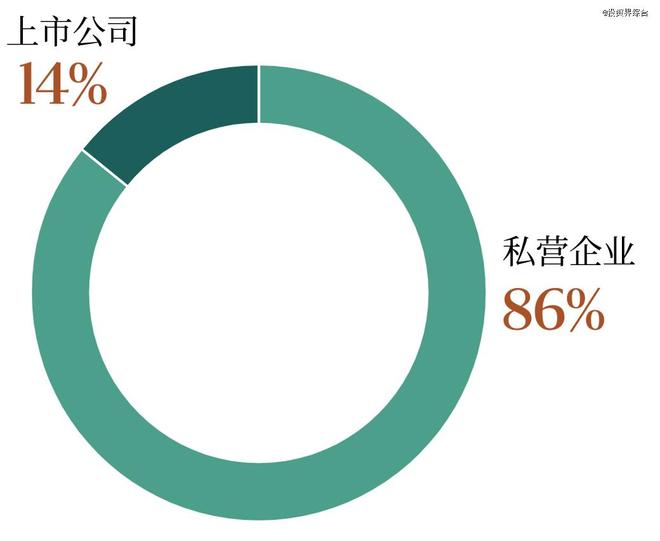
Core Viewpoint - The traditional 60/40 investment portfolio is being re-evaluated due to unprecedented challenges in the fixed income segment and structural changes in the equity market, highlighting the complementary advantages of private equity in driving growth and providing risk diversification [1][9]. Group 1: Market Dynamics - Approximately 86% of companies with revenues exceeding $250 million are private enterprises, offering investors access to diverse industries and business models that are often underrepresented in public markets [2][3]. - Private equity-backed companies have historically outpaced public companies in revenue growth by about 6% [2]. - The concentration of major stocks in the public market is raising concerns, with the top ten stocks in the S&P 500 accounting for 40% of its market capitalization, the highest in modern history [4][19]. Group 2: Value Creation Shift - The average time for companies to go public has increased from six years in 2000 to fourteen years today, indicating a shift in value creation from public to private markets [5][9]. - The largest private companies now have an average valuation exceeding $250 billion, significantly higher than the valuations of the top public companies at their IPOs [5]. - The private equity market is projected to grow to over $18 trillion by 2027, up from less than $3 trillion in 2010, indicating a significant shift in capital allocation [9][10]. Group 3: Performance and Management - Over the past 20 years, private equity has delivered an average annual return of approximately 13%, compared to 8% for public market equities, demonstrating a consistent performance advantage [11][12]. - Private equity firms leverage long-term patient capital to drive innovation and operational efficiency, allowing for deep operational improvements without the pressures of public market volatility [12][13]. - The active management approach of private equity firms enables them to identify long-term trends and collaborate with management teams to implement strategic visions, enhancing value creation [12][13]. Group 4: New Investment Strategies - The evolving investment landscape necessitates a reconfiguration of the traditional 60/40 portfolio, with private equity providing essential return potential and risk diversification [15][17]. - Improved liquidity arrangements and lower investment thresholds are making private equity more accessible to individual investors, transforming it from an alternative to a core investment strategy [17].
“债券之王”冈拉克:美股市场深陷“狂热”,黄金是避风港
财富FORTUNE· 2025-11-25 13:14
Core Viewpoint - The current investment landscape is characterized by extreme speculation in the U.S. stock market, which is deemed unhealthy, with a strong emphasis on gold as a true asset class and a recommended allocation of around 15% in investment portfolios [2][3][4]. Group 1: Market Assessment - The U.S. stock market is described as one of the most unhealthy markets in the history of the speaker's career, with classic valuation metrics like price-to-earnings ratios and market capitalization ratios reaching unsustainable levels [2][3]. - The current enthusiasm for artificial intelligence is compared to past market frenzies, such as the electric power boom, suggesting that while transformative technologies can change the world, they often lead to overpricing of future earnings [3]. Group 2: Gold as an Investment - Gold is highlighted as a key asset in investment portfolios, with the speaker expressing a strong bullish outlook, stating it is now recognized as a legitimate asset class rather than just a refuge for survivalists or speculators [4][5]. - The performance of gold has been exceptional, being the best-performing asset this year and over the past 12 months, despite a recent consolidation phase [5]. Group 3: Portfolio Strategy - A significant reduction in exposure to traditional financial assets is recommended, with a shift away from the conventional 60/40 stock-bond allocation. The speaker suggests that stocks should not exceed 40% of the portfolio, and fixed income should only account for about 25% [6]. - The remaining portion of the portfolio should be allocated to tangible assets like gold and cash, reflecting a cautious approach given the high market valuations and potential economic risks [6].
鲍威尔已提前变成“跛脚鸭”?“老债王”做出选择:抛售美债!
Jin Shi Shu Ju· 2025-11-03 05:01
Group 1 - The stock market has risen for six consecutive months, driven by optimism around artificial intelligence, strong corporate earnings, and a loose financial environment [1] - The Federal Reserve's Chairman Powell indicated that a rate cut in December is "far from certain," with a split among officials regarding the decision [1][2] - The bond market reacted sharply, with significant increases in bond yields and a rise in the dollar, as the likelihood of a December rate cut dropped from 90% to about 50% [1] Group 2 - The divergence in opinions within the Federal Reserve complicates the balance between inflation and employment, leading to potential inefficacies in bond trading strategies [2] - Bill Gross, a prominent investor, is selling U.S. Treasury futures, betting on high fiscal deficits and massive debt issuance to continue pushing yields higher [2][5] - The Nasdaq 100 index rose by 2% despite bond market volatility, indicating resilience in tech stocks [3] Group 3 - High U.S. Treasury yields make holding cash in dollars more attractive for global investors, potentially supporting the dollar against major currencies [4] - Morgan Stanley's currency trading team shifted to a neutral stance on the dollar after previously being bearish, suggesting a change in market sentiment [4] - TS Lombard is betting that U.S. short-term rates will exceed Japan's by year-end, reflecting differing central bank policy paths [4] Group 4 - Bill Gross warns of excessive risks in the U.S. financial system due to expanding deficits and a weakening dollar, maintaining a bearish outlook on U.S. Treasuries [5]
黄金远未陷入“投机狂热”,投资策略转向或真正引爆金价!
Jin Shi Shu Ju· 2025-09-24 10:16
Core Viewpoint - Gold prices continue to rise, approaching $3,800 per ounce, driven by strong demand and ongoing economic uncertainty, enhancing gold's appeal as a safe-haven asset [2] Group 1: Market Sentiment - A key survey of institutional investors indicates that "speculative frenzy" has not yet formed, suggesting potential for further price increases [2] - According to the Bank of America Global Fund Manager Survey, 39% of fund managers reported zero allocation to gold in their portfolios, down from 47% in August, indicating significant untapped investment potential [2][3] Group 2: Demand Drivers - Strong physical demand from key markets supports the current gold price increase, with China's non-monetary gold imports soaring to 104 tons in July, significantly above the five-year average [2] - Anticipated demand in India is expected to rise with the upcoming festival season, particularly during Navratri, which may lead to increased buying activity [2] Group 3: Price Projections - Market experts maintain a bullish outlook, with Goldmoney founder James Turk setting a short-term target price of $4,000 per ounce for gold [2] - Economist Peter Schiff supports this optimistic view, noting Morgan Stanley's adjustment of the classic "60/40 portfolio" to include gold, which he interprets as a "sell" rating for U.S. Treasuries [3]
STARTRADER星迈:黄金重磅信号!华尔街传出重大配置转向信号
Sou Hu Cai Jing· 2025-09-17 03:26
Group 1 - The current market environment suggests that a 60% equity, 20% fixed income, and 20% gold investment strategy is more effective in hedging against inflation risks, as the historical yield advantage of U.S. stocks over government bonds is at a low point [1][3] - The traditional 60/40 investment portfolio is being challenged, with gold now seen as a more valuable asset for resilience compared to U.S. Treasuries, while high-quality stocks can maintain profit growth in inflationary conditions [3] - Historical data indicates that September is typically a weak month for U.S. stocks, yet in 2023, the S&P 500 and Nasdaq indices have repeatedly reached new highs [3] Group 2 - The return of alpha returns indicates a shift from a broad market movement to structural opportunities, allowing investors to achieve above-average returns through precise industry selection and stock picking, with gold providing foundational risk hedging [4] - Spot gold prices have surpassed $3,700 per ounce, setting a new historical record, driven by potential interest rate cuts from the Federal Reserve, which would lower the opportunity cost of holding gold and weaken the dollar [3]

每日机构分析:5月29日
Xin Hua Cai Jing· 2025-05-29 09:46
Group 1: Global Economic Outlook - Analysts from Swissquote Bank indicate that improved global economic growth expectations may enhance investor confidence, leading to a potential rise in major stock indices as corporate earnings outlook improves and risk appetite increases [1] - The lifting of tariffs could reduce friction costs in international trade, promoting operational efficiency for multinational companies and boosting overall economic activity [1] - The US dollar is expected to attract investment as risk aversion diminishes and economic growth prospects improve [1] Group 2: Impact of US Court Ruling on Tariffs - Moody's analysts highlight that the US court's decision to block tariff increases is a positive development for emerging markets severely affected by high reciprocal tariffs, as it may alleviate the cost burden on exports [2] - The uncertainty surrounding the government's potential appeal against the court ruling may lead investors to adopt a wait-and-see approach before making significant investment decisions [2][3] Group 3: Regional Economic Indicators - Westpac Banking's economists report a significant decline in New Zealand's business confidence index from 49.3% in April to 36.6%, indicating heightened concerns over trade conflicts [2] - The construction sector experienced the largest drop in confidence, reflecting specific challenges faced by the industry [2] - The Korean International Trade Association anticipates a reduction in the trade surplus between South Korea and the US, projecting a surplus of $55.6 billion in 2024, a 25% increase year-on-year [4] Group 4: Market Reactions and Investment Strategies - Analysts from ABC Refinery note that the US court ruling has led to a significant rise in the US dollar, which in turn has pressured gold prices lower [4] - Goldman Sachs suggests that traditional 60/40 investment portfolios face greater challenges amid rising global macro uncertainty, recommending increased allocations to gold and oil to enhance portfolio resilience [3]
股债双杀时代如何避险?高盛“开方”:买黄金!
Jin Shi Shu Ju· 2025-05-29 05:44
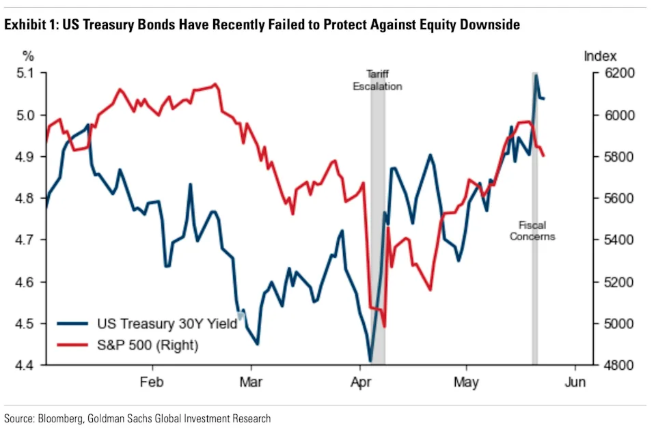
Core Insights - The traditional 60/40 investment portfolio is underperforming due to ineffective hedging against market downturns caused by tariff policies and economic uncertainties [1][3] - Goldman Sachs analysts recommend alternative assets like gold and oil to better hedge against inflation shocks affecting stock and bond returns [3][6] Group 1: Market Performance - Recent U.S. Treasury bonds have failed to protect against stock market declines, particularly during periods of heightened economic concerns and rising borrowing costs [1][3] - Historical trends show that stocks and bonds can experience simultaneous declines, especially during inflation or commodity shocks [3] Group 2: Alternative Investment Recommendations - Goldman Sachs suggests incorporating gold and oil futures into the 60/40 portfolio to reduce annual volatility from 10% to below 7% [3] - For investors with a holding period of over five years, it is advised to overweight gold assets due to their negative correlation with stocks and bonds [6] Group 3: Gold Market Insights - Gold has risen 26.6% since 2025, driven by concerns over U.S. policy, with expectations that these concerns will persist in the short term [6] - Factors such as fiscal sustainability, debt issues, and threats to the Federal Reserve's independence are seen as bullish for gold [6] - If concerns escalate, private investors may push gold prices beyond current forecasts of $3,700 per ounce by year-end and $4,000 per ounce by mid-2026 [6] Group 4: Oil Market Insights - Goldman Sachs recommends maintaining a positive but underweight position in oil, as supply concerns are expected to diminish due to anticipated ample production capacity in 2025-2026 [6]