非理性繁荣

Search documents
橡树资本马克斯预警:美股初现泡沫迹象,但调整临界点未至
Zhi Tong Cai Jing· 2025-08-21 00:17
Group 1 - Howard Marks warns that the U.S. stock market is in the early stages of a bubble, despite not yet reaching a critical adjustment point [1] - Current market valuations are considered high, with investors having not experienced a significant market correction for 16 years [1] - Marks draws parallels to the late 1990s tech bubble, noting that the market continued to rise for years before the bubble burst [1] Group 2 - The ratio of total U.S. stock market capitalization to GDP has reached a historical high, indicating potential underlying issues [1] - Marks suggests that now is the time to increase defensive positions in investment portfolios, with credit investments being a viable option compared to stocks [1] - Despite a slight deterioration in the fundamental investment environment, the U.S. remains the best investment destination globally [2]
2025,钢琴市场崩盘之后
商业洞察· 2025-08-08 09:37
Core Viewpoint - The piano industry in China is experiencing a significant downturn, with over 7,000 piano stores closing and annual sales plummeting to 190,000 units, a 50% drop from peak levels [2][3]. Group 1: Industry Overview - In the first quarter of 2025, the only two publicly listed piano companies in China reported severe losses: Helen Piano with a net loss of 9.68 million yuan, a 154.56% decline year-on-year, and Pearl River Piano with a loss of 51.68 million yuan, a 162.52% decrease [5]. - The peak of the piano market was marked by a massive demand surge, with over 40 million piano students in China, accounting for 80% of the global total [7][11]. - The piano industry reached its zenith in 2019, with annual sales exceeding 400,000 units and an industry value approaching 200 billion yuan [11]. Group 2: Market Dynamics - The decline in the piano market is attributed to the abolition of art examination policies that previously incentivized piano learning, leading to a decrease in student enrollment [12][14]. - The oversupply of music graduates has resulted in a saturated job market, with only 15% of music graduates securing positions in professional orchestras, while 60% become teachers in training institutions [9][12]. - By 2025, only 46.3% of music professionals earn over 6,000 yuan per month, with many relying on multiple part-time jobs to make ends meet [15]. Group 3: Future Trends - As the piano market cools, parents are shifting their focus to programming and artificial intelligence education, with the coding training market expected to grow by 40%-50% annually, reaching 48.8 billion yuan in 2024 [20]. - The employment landscape is changing, with engineering and technology fields becoming more attractive compared to the uncertain job prospects in the arts, leading to a significant shift in educational investment priorities among parents [21].


钢琴市场崩盘之后
投资界· 2025-08-04 07:28
Core Viewpoint - The Chinese piano industry is experiencing a significant downturn, with over 7,000 piano stores closing and annual sales plummeting to 190,000 units, a 50% drop from peak levels. The industry is facing a bleak future as it enters 2025, with many businesses struggling to survive [5][10]. Industry Overview - The piano boom in the late 1990s was driven by educational policies that incentivized music education, leading to a surge in demand for pianos and related services. At its peak, there were over 40 million piano students in China, accounting for 80% of the global total [7][9]. - The piano industry saw substantial growth, with major companies like Pearl River Piano and Helen Piano achieving significant market shares and revenues. By 2019, the annual sales of pianos in China exceeded 400,000 units, with the industry value approaching 2 trillion yuan [9][10]. Current Challenges - The cancellation of art examination policies in 2018 and a declining birth rate have led to a surplus of music graduates and a shrinking pool of piano students. This shift has resulted in a significant drop in income for piano teachers and a challenging job market for music graduates [11][12]. - By 2025, many piano training institutions are struggling to attract students, with some reporting zero enrollments for the first time. The industry is witnessing a wave of teachers transitioning to other fields due to unsustainable income levels [12][13]. Market Transition - The decline of the piano market is prompting a shift in parental investment towards more lucrative fields such as programming and artificial intelligence. The coding education market is experiencing rapid growth, with a projected market size of 1.4 trillion yuan by 2027 [16][17]. - The focus on STEM education is becoming more pronounced, with parents prioritizing subjects that align with job market demands, further diminishing interest in traditional music education [16][17].



2025,钢琴市场崩盘之后
36氪· 2025-08-03 09:07
Core Viewpoint - The piano industry in China is experiencing a significant downturn, with over 7,000 piano stores closing and annual sales plummeting to 190,000 units, a 50% drop from peak levels [3][4]. Group 1: Industry Performance - In 2025, the only two publicly listed piano companies in China reported severe losses, with Helen Piano losing 9.68 million yuan, a 154.56% decline year-on-year, and Pearl River Piano losing 51.68 million yuan, a 162.52% decrease [4]. - The piano market's collapse has not only affected businesses but also shattered the musical dreams of countless families, with many graduates from music institutions struggling to find jobs [6][28]. - The peak of the piano market was in 2019, with annual sales exceeding 400,000 units and an industry value nearing 200 billion yuan, making China the largest piano producer and consumer globally [19]. Group 2: Historical Context - The piano boom began in the late 1990s, driven by educational policies that included music certificates in exam scoring, leading to a surge in demand [7][8]. - At the height of the piano craze, over 40 million children were learning piano in China, accounting for 80% of the global total [9]. Group 3: Market Dynamics - The rapid growth of the piano market led to a proliferation of training institutions, with many teachers earning substantial incomes, particularly in first- and second-tier cities [11][12]. - The music education sector has created a self-sustaining cycle where graduates often become teachers, perpetuating the demand for piano education [15][16]. Group 4: Current Challenges - The cancellation of art examination policies in 2018 significantly impacted the piano industry, coinciding with a decline in birth rates and a subsequent drop in the number of children learning piano [23]. - By 2025, only 46.3% of music professionals earned over 6,000 yuan per month, with many relying on multiple part-time jobs to make ends meet [28]. Group 5: Future Outlook - The decline in the piano market is indicative of broader trends in the arts education sector, with other musical disciplines also facing challenges [30]. - As the piano market contracts, parents are shifting their focus to fields like programming and artificial intelligence, which are perceived to offer better employment prospects [34][36].

“泡沫先生”朱宁:伟大技术变革伴随着泡沫,也孕育伟大的公司
创业邦· 2025-07-16 03:44
Core Viewpoint - The emergence of great companies often coincides with the process of bubbles forming and bursting, particularly in the context of technological revolutions and economic cycles [6][38]. Group 1: Macro Economic Insights - The Chinese real estate market has been in a correction phase since 2021, with expectations that it will stabilize around 2027 [6][64]. - The adjustment in the real estate market has seen a general decline in property prices by 20%-30% since 2021, with predictions of further declines of 20%-30% in the coming years [64][66]. - The rental yield in major Chinese cities is significantly lower than international standards, indicating a potential overvaluation of real estate [65]. Group 2: Behavioral Finance and Market Dynamics - Behavioral biases such as overconfidence, linear extrapolation, and reluctance to cut losses are prevalent among investors, leading to irrational market behaviors [21][22][23]. - The strong local preference among investors can lead to a lack of diversification in investment portfolios, increasing vulnerability to market downturns [19][20]. - The social network effects in East Asian societies amplify these behavioral biases, leading to herd behavior in investment decisions [26][27]. Group 3: Industry-Specific Observations - The technology and innovation sectors, including AI and new energy vehicles, are experiencing significant investment interest, but historical patterns suggest that such enthusiasm often leads to bubbles [54][57]. - The new energy vehicle industry faces challenges of overcapacity, with reports indicating that production capacity in certain sectors exceeds global demand by 150% [58]. - The government’s role in guiding industry development has led to both opportunities and challenges, including the risk of overcapacity due to competitive local government policies [82]. Group 4: Recommendations for Stakeholders - Entrepreneurs should maintain their passion for innovation while being realistic about the challenges of the entrepreneurial journey [42][88]. - Investors, particularly in venture capital and private equity, should focus on understanding the underlying value of projects and avoid speculative investments [49][50]. - The government should shift its focus from traditional infrastructure investments to enhancing social welfare systems to boost consumer confidence and spending [78][81].

美股强势收高,标普与纳指创纪录新高!
第一财经· 2025-07-03 23:48
Core Viewpoint - The U.S. stock market experienced significant gains, with the S&P 500 and Nasdaq indices reaching all-time closing highs, driven by strong employment data indicating a resilient labor market [1][4]. Economic Data Summary - In June, the U.S. non-farm payrolls increased by 147,000, surpassing analysts' expectations of 110,000, marking a 33% increase. The unemployment rate fell to 4.1%, better than the expected 4.3% [5][6]. - Average hourly earnings rose by 0.2% month-over-month and 3.7% year-over-year, indicating moderate wage growth that may help alleviate inflationary pressures [5]. - Government sector jobs increased by 73,000, primarily in state and local education, while healthcare added 39,000 jobs [6]. - Initial jobless claims fell to 233,000, a six-week low, but continuing claims remained high at 1.964 million, the highest level since 2021, indicating challenges for some unemployed individuals in finding new jobs [7]. Market Performance Summary - The S&P 500 index rose by 1.72% over the week, while the Nasdaq index increased by 1.62%, and the Dow Jones index gained 2.3%. The Russell 2000 index, which reflects small-cap stocks, saw a 3.41% increase [4]. - Major tech stocks saw gains, with Nvidia rising by 1.3% to a market cap of $3.89 trillion, approaching Apple's record [1]. Legislative Developments - The "Big and Beautiful" bill was narrowly passed in the U.S. House of Representatives, projected to increase federal debt by $3.4 trillion over the next decade, with the current federal debt at approximately $36.2 trillion [4].

美股强势收高,标普与纳指创纪录新高,英伟达市值逼近4万亿美元
Di Yi Cai Jing· 2025-07-03 23:25
Group 1 - The U.S. non-farm payrolls increased by 147,000 in June, exceeding analysts' expectations of 110,000, marking a 33% increase [4] - The unemployment rate fell to 4.1%, better than the expected 4.3% [4] - Average hourly earnings rose by 0.2% month-over-month and 3.7% year-over-year, indicating moderate wage growth [4] Group 2 - The S&P 500 and Nasdaq indices both reached record closing highs, with the S&P 500 up by 51.94 points (0.83%) to 6279.36 and Nasdaq up by 207.97 points (1.02%) to 20601.10 [1] - The Dow Jones Industrial Average rose by 344.11 points (0.77%) to 44828.53, just 0.41% away from its historical peak [1] - Small-cap stocks, as reflected by the Russell 2000 index, increased by 3.41% over the week [3] Group 3 - Major tech stocks saw significant gains, with Nvidia rising by 1.3% to a market cap of $3.89 trillion, approaching Apple's record [1] - Amazon increased by 1.59%, Microsoft by 1.58%, and Meta Platforms by 0.76%, while Tesla saw a slight decline of 0.1% [1] - Datadog surged by 14.9% after being added to the S&P 500 index, and Tripadvisor rose by 16.7% due to activist investor interest [1] Group 4 - The U.S. Congress passed the "Big and Beautiful" bill with a narrow margin of 218 votes in favor and 214 against, projected to increase federal debt by $3.4 trillion over the next decade [3] - The current federal debt stands at approximately $36.2 trillion [3] Group 5 - The ADP report indicated a rare decline in private sector employment, with a decrease of 33,000 jobs in June [5] - The U.S. trade deficit widened to $71.5 billion in May, higher than the expected $70.9 billion, with exports down 4% [5] - International oil prices fell, with WTI crude settling at $67.0 per barrel, down 0.67% [5]

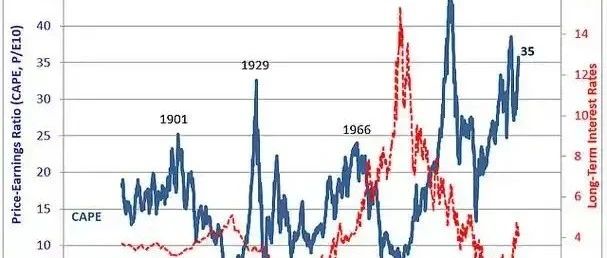
泡沫预警信号!美股创新高之际 一项 “非理性繁荣 “指标破警戒线
贝塔投资智库· 2025-07-03 03:50
Core Viewpoint - The "Irrational Exuberance Index" developed by Barclays has surpassed the warning threshold of 10.7%, indicating a resurgence of speculative trading in the U.S. stock market, reminiscent of past market bubbles [1][2]. Group 1: Market Indicators - The "Irrational Exuberance Index" has reached a monthly average of 10.7%, the first time it has crossed the double-digit threshold since February, with a historical average of around 7% [1]. - The index is based on derivatives market data, volatility indicators, and options market sentiment signals, and has previously peaked during the late 1990s internet bubble and the 2021 retail trading frenzy [1]. - The market is currently characterized by speculative trading, with significant increases in popular concept stocks and traditional fundamental analysis becoming less effective [2]. Group 2: Market Sentiment and Performance - Optimism in the market is driven by expectations of trade agreements between the U.S. and major partners, as well as speculation that the Trump administration may delay tariff implementation [2]. - The SPAC issuance has rebounded significantly, with the number of new SPACs in 2025 already exceeding the total for the previous two years [2]. - The ARK Innovation ETF has recorded one of its highest annual gains, with specific sectors showing extreme performance: Bitcoin-related stocks surged by 78%, quantum computing stocks rose by 69%, and meme stocks averaged a 44% increase [2]. Group 3: Risk and Recommendations - The index readings indicate overly exuberant investor sentiment, which poses a risk of increased market volatility [2]. - There is a strong correlation between the index and net borrowing positions in margin accounts, reflecting high retail participation [2]. - Despite the presence of bubble signals, timing the market remains challenging, and historical trends suggest bubbles can last longer than expected [2].
美越关税协议点燃“非理性繁荣”?标普500四日三破记录 小盘股强势反弹
智通财经网· 2025-07-02 23:37
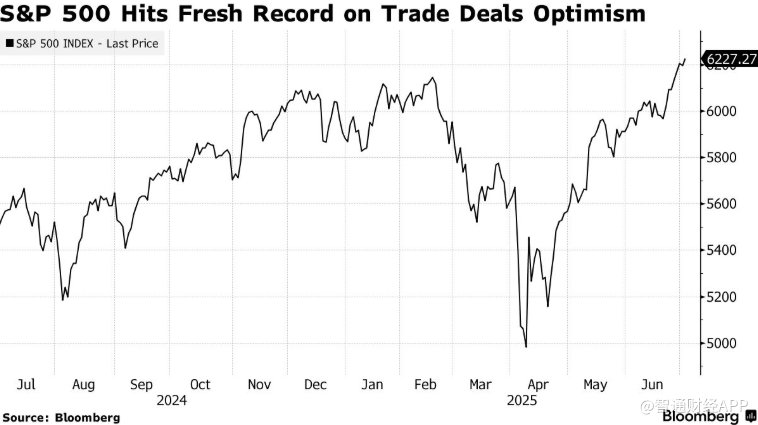
Group 1 - The US stock market reached new highs, driven by optimism surrounding a trade agreement with Vietnam, which includes a 20% tariff on goods exported to the US and a 40% tariff on goods deemed to be transshipped through Vietnam [1][3] - The S&P 500 index rose by 0.5%, with energy, materials, and information technology sectors leading the gains, while utilities and healthcare sectors underperformed [1] - The Nasdaq 100 index increased by 0.7%, and the Russell 2000 index saw a rise of 1.3% [1] Group 2 - The S&P 500 index achieved its third historical high in four trading days, indicating a strong market momentum and pushing Barclays' measure of "irrational exuberance" to a two-digit level for the first time since February [4] - The trend of global stock markets shifting from US dominance to international markets slowed down in June, suggesting that the US market may continue to perform well in the short term [4] - The Russell 2000 index surged as investors flocked to small-cap stocks, although it has not reached a new high in 913 days, marking one of the longest periods since the 1970s [4] Group 3 - OpenAI has agreed to lease significant computing resources from Oracle's data center, highlighting the urgent demand for advanced AI products [5] - Tesla's stock surged as the reported decline in vehicle sales was not as severe as the most pessimistic analysts had feared [5] - Health insurance company Centene's stock plummeted by 40% after it withdrew its 2025 earnings forecast, citing market trends that did not align with expectations, potentially impacting $1.8 billion in revenue [5]
利好来袭!深夜,集体大涨!
券商中国· 2025-07-02 14:51
Core Viewpoint - The renewable energy sector has experienced a sudden surge, particularly in the solar energy segment, following the U.S. Senate's passage of a significant tax reform bill that alleviated concerns regarding tax credits for wind and solar projects [2][6]. Group 1: Market Performance - On July 2, U.S. stock indices showed mixed results, with the Nasdaq rising by 0.67%, while the Dow Jones fell by 0.12% and the S&P 500 increased by 0.21% [4]. - The solar energy sector saw substantial gains, with companies like Canadian Solar rising over 9%, and Sunrun, First Solar, Array Technologies, and SolarEdge all increasing by more than 4% [5][6]. - Chinese concept stocks in the new energy sector also surged, with an increase of over 16% [5]. Group 2: Legislative Impact - The U.S. Senate passed the "big and beautiful" tax reform and spending bill with a narrow vote of 51 to 50, which did not include any tax provisions for wind and solar projects, easing market fears [6][2]. Group 3: Employment Data - The ADP employment report for June revealed a surprising decline of 33,000 jobs, marking the worst performance since March 2023 and significantly below the expected increase of 98,000 jobs [11][12]. - The report indicated a notable drop in service sector employment, with a loss of 66,000 jobs, attributed mainly to declines in professional and business services, as well as healthcare and education sectors [14]. Group 4: Market Sentiment and Predictions - Barclays reported a sharp increase in its proprietary indicator of "irrational exuberance," which has risen to 10.7%, suggesting that investor optimism may be excessive and could lead to increased market volatility [18][19]. - BCA Research analysts have shifted their focus from concerns about bubble sentiment to worries about the U.S. economic outlook, predicting a significant decline in the S&P 500 index by year-end, with a target of 4,450 points, representing a drop of over 28% [21][23].