
滞胀

Search documents
原油周报:美国就业数据爆冷叠加OPEC+增产打压油价-20250808
Dong Wu Qi Huo· 2025-08-08 09:09
1. Report Industry Investment Rating - Not mentioned in the provided content 2. Core Viewpoints of the Report - The report maintains a long - term bearish view on oil prices from the perspectives of fundamentals, OPEC+ industry policies, and the sudden cooling of the US employment market. However, the market may be overly optimistic about the risk of Russian oil disruptions. Short - term oil prices may be slightly undervalued, but it still depends on event developments [6]. 3. Summary by Directory 3.1 Weekly Viewpoints - Last week's monthly report view: In August, attention should be paid to the trend of diesel cracking. In the case of poor gasoline consumption, diesel cracking led the refinery's refining economy. If diesel cracking continues to weaken, it will damage the refinery's operating rate, making it difficult for the crude oil consumption side to resist the increasing supply pressure, putting pressure on oil prices in August [6]. - This week's trend analysis: Oil prices continued to decline this week. With the upcoming meeting between the US and Russian presidents and the potential US - Russia - Ukraine talks, concerns about Russian oil disruptions have eased, and the pressure of OPEC+ production increase has been magnified as crude oil gradually moves out of the traditional consumption peak season [6]. - Specific influencing factors: Western near - month spreads are continuously weakening; OPEC+ is increasing production steadily and has further room for production increase; the situation of negotiating while imposing sanctions is more likely, and attention should be paid to the negotiation progress; the US employment data has a significant negative impact, triggering a black - swan event and increasing the probability of the Fed's interest rate cut, which is bearish for the market [6]. 3.2 Weekly Highlights - Western near - month spreads: WTI and Brent spreads in the Western market are continuously weakening, indicating a slowdown in immediate supply and demand. The spreads in the Eastern market are also at a relatively low level after the contract roll - over, but Saudi Arabia's increase in the official selling price in Asia is expected to drive a slight upward movement in the spreads [10]. - Oil price decline and cracking: As oil prices have weakened recently, cracking in the Western market has stabilized, while the Eastern market remains weak [12]. - Global spot cracking: Gasoline cracking has been boosted by the decline in the cost side, but the overall performance this year is mediocre, and the rebound space is limited. Diesel cracking has generally fluctuated and has not expanded with the decline in the cost side. Asian cracking is weak mainly due to the limited rebound in gasoline cracking and the continuous decline in diesel cracking [14]. - Global refining economy: The recent decline in refining economy is synchronized with the decline in diesel cracking. The refining economy in Asia is relatively worse and has even entered a loss - making state, which is in line with the relatively weak Asian cracking. A decline in refining economy is generally expected to affect the future refinery operating rate, i.e., crude oil demand [17]. - Global diesel inventory: The diesel inventories of the world's major consumer countries, the US and China, are at multi - year lows. The diesel inventory in Northwest European ports is relatively neutral, and the middle - distillate inventory in Singapore has been declining and is at a low level. The low diesel inventory is mainly due to raw material issues, such as the Western rejection of Russian Urals crude oil and Russian refined products, and OPEC+ Middle Eastern countries' preference for producing higher - priced light crude oil during the additional voluntary production cuts [20]. - US gasoline demand: This year, the demand data during the US driving peak season has been dismal. The four - week smoothed gasoline implied demand has been below the 9 million barrels per day mark for four consecutive weeks. The weak demand is consistent with the weak gasoline cracking. The relatively low gasoline price this year has not stimulated the demand, which may reflect that Americans are choosing shorter - distance self - driving trips and reducing travel budgets, especially among low - income groups [23]. - OPEC+ production increase: Except for Kazakhstan, which has been over - producing sustainably, the other seven countries have well - implemented the production plan by June. OPEC+ policy has shifted from price protection to market - share protection. OPEC+ plans to increase production by 547,000 barrels per day in September and end the 2.2 million barrels per day voluntary production cuts by the end of September, one year earlier than the original plan. OPEC+ still has room to further reduce production cuts, which will imbalance the market supply - demand gap as the crude oil demand gradually declines from the traditional peak season [24][25]. - Russian oil disruptions: Recent statements by US and Russian officials have led the market to believe that Russian oil disruptions have eased, and oil prices have declined after giving up the risk premium. However, it is more likely that the US will promote the Russia - Ukraine peace talks while imposing sanctions on Russia. Attention should be paid to the details of Trump's sanctions on August 8 and the negotiation process. Unless a large amount of Russian oil is trapped in Russia and unable to be exported, the impact of changes in oil trade flows on the global supply - demand pattern is limited. If the Russia - Ukraine peace talks are successful and Russian oil returns to the Western market, it will be bearish for the market [29]. - US employment data: The US non - farm payrolls data has been significantly revised downward, triggering a black - swan event. This has led to an increase in the probability of the Fed's interest rate cut, and the market's basic expectation for the US economy has shifted back to stagflation. The credibility of future economic data may be questioned, which will lead to irrational interpretations [30]. 3.3 Price, Spread, and Cracking - Crude oil futures and spot trends: The report presents various price trends of crude oil futures and spot, including OPEC basket price, Cushing WTI, European Brent, Dubai crude, etc. [38]. - Crude oil positions: It shows the net long positions of Brent and WTI futures and options, as well as the relationship between prices and the net long - position ratios of different types of traders [40][43]. - Crude oil futures structure and spreads: It includes the futures structure of WTI, Brent, Oman, and SC, as well as month - on - month spreads such as M1 - M2, M1 - M3, etc. [46][49]. - Cross - market futures and spot spreads: Presents cross - market spreads such as Brent - WTI, Brent - Oman, etc., in both futures and spot markets [52][55]. - Saudi OSP: Saudi Arabia has adjusted the official selling prices for different regions in September. It has increased the premiums for Asia and the Americas and decreased the premiums for Europe [26]. - Refined product prices and cracking: It shows the prices and cracking spreads of refined products in futures and spot markets, including gasoline, diesel, and other products in different regions such as the US, Europe, and Asia [67][72]. 3.4 Supply - Demand Inventory Balance Sheet - Global crude oil supply: It includes the total supply of global, non - OPEC+, OPEC, and OPEC+ crude oil, as well as the supply from major non - OPEC countries such as the US, the former Soviet Union region, China, and Brazil [88][91]. - Global crude oil demand: It includes the total demand of OECD, non - OECD, and global crude oil, as well as the demand from major countries such as the US, China, India, and Brazil [112][118]. - Crude oil inventory: It shows the inventory data of different regions, including the US, OECD, Europe, Japan, etc., as well as the inventory of different types of refined products such as gasoline, diesel, and jet fuel [121][128]. - EIA balance sheet: The EIA balance sheet shows that the global crude oil supply has exceeded demand from 2025Q1 to 2026Q2, and the surplus is gradually increasing [142]. 3.5 EIA Weekly Report and Others - EIA weekly report main data: It includes data on crude oil production, commercial crude oil inventory, refinery operating rate, and total crude oil chain inventory [157]. - Supply: It shows the production data of various refined products such as gasoline, distillate oil, jet fuel, residual fuel oil, and propane - propylene [160][163]. - Refining demand: It includes data on refinery crude oil input, refinery operating rate, and refinery refining capacity [166]. - Terminal apparent demand: The four - week smoothed terminal apparent demand data for total demand, gasoline, distillate oil, jet fuel, etc. are presented [169]. - Inventory: It includes data on crude oil inventory (commercial crude oil inventory, strategic petroleum reserve, etc.) and refined product inventory (gasoline, distillate oil, jet fuel, etc.) [175][178]. - Import and export: It shows data on crude oil imports, exports, net imports, and refined product net exports [184]. - Other data: It also includes data on domestic subway passenger volume, traffic delay and congestion index, flight numbers in China, PMI of Western and other major countries, Fed's monetary policy, interest rate market, and related energy prices [204][213][223].
一周内数据频闪危险信号:美国经济正走向“滞胀”结局
Feng Huang Wang· 2025-08-08 08:02
从过去一周公布的一系列数据来看,经济学家们愈发认为,美国经济走向"最糟糕"结局的可能性越来越 大了。他们表示,经济环境正接近滞胀——这是一种可怕的情况,即通胀上升,经济增长放缓,失业率 飙升。 经济学家们认为,这种情况比典型的经济衰退更让决策者难以解决,因为高通胀阻碍了美联储通过降息 来刺激经济增长。 事实上,在美国总统特朗普于4月初宣布"解放日关税"后,滞涨首次出现在了华尔街的"雷达"上。关税 被认为会加剧通胀,因为企业可能会通过提高价格来转嫁至少一部分进口关税成本。与此同时,关税还 会通过提高依赖进口投入的企业的成本来减缓增长。 据经济预测人士称,现在这一趋势开始在数据中显现出来。 以下是他们在过去一周观察到的滞胀信号: 美联储偏爱的通胀指标高于预期 经济学家们指出,美联储青睐的通胀指标——个人消费支出通胀率6月份同比上升2.6%,高于经济学家 预期的2.5%,也略高于5月份的2.4%。 "虽然短期内放松管制和减税可能会部分抵消这一影响,但最终结果将是增长放缓和通胀上升。"他补充 道。 招聘正在放缓 美国就业市场在7月份出现下滑,当月新增7.3万个就业岗位,低于经济学家预期的10万个。与此同时, 5月和6 ...
滞胀环境下的美联储应对与大类资产表现
Sou Hu Cai Jing· 2025-08-08 05:31
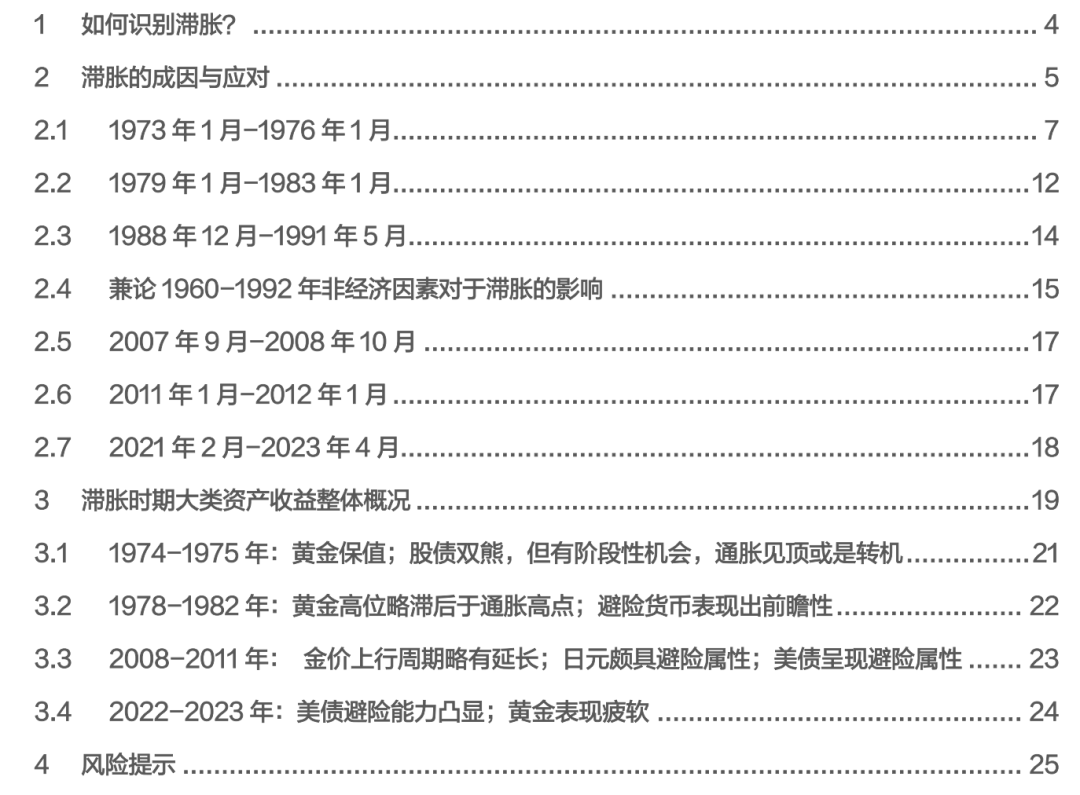
Group 1 - The article discusses the concerns regarding stagflation in the U.S. economy, highlighting recent downward revisions in non-farm data and resilient core PCE, indicating that stagflation risks are spreading [1][5] - Historical stagflation periods are identified, including 1973-1976, 1979-1982, 1988-1991, 2007-2008, 2011-2012, and 2021-2023, correlating with significant macroeconomic events such as oil crises and financial crises [1][6] - The Federal Reserve's response to stagflation has evolved, focusing on balancing inflation control and economic growth, with a preference for gradual adjustments rather than abrupt policy shifts [3][14] Group 2 - Stagflation typically arises from supply shocks, with historical examples including food price shocks, oil price shocks, and wage price shocks, leading to persistent high inflation and economic stagnation [2][12] - The article outlines the Federal Reserve's monetary policy framework changes over the years, emphasizing transparency, stability in inflation targeting, and a focus on broad-based employment [3][16] - The performance of major asset classes during stagflation periods is analyzed, noting that equities generally struggle to yield positive returns, while gold and silver often serve as resilient hedges against inflation [4][36] Group 3 - The article emphasizes the importance of understanding the macroeconomic context and the role of external shocks, such as geopolitical events, in driving stagflation [12][36] - It highlights the need for a comprehensive approach to monetary policy that includes not only interest rate adjustments but also considerations of wage and price controls to address underlying inflationary pressures [31][28] - The analysis of past stagflation periods reveals that the interplay between supply shocks and monetary policy responses significantly influences economic outcomes [33][37]

Juno markets 外匯:关税正将美国拖向滞胀,降息押注恐成泡影
Sou Hu Cai Jing· 2025-08-08 02:41
君諾外匯发现华尔街策略师近期接连发出警报,称随着贸易关税的影响逐步显现,美国经济正朝着滞胀 的方向演进,而这一趋势可能会限制美联储大幅降息的能力。这一判断打破了市场对美国经济 "软着 陆" 的乐观预期,为复杂的经济前景再添一层不确定性。 但策略师们警告,这种乐观预期可能被即将生效的关税政策颠覆。美国总统特朗普大范围的新关税已于 周四正式实施,其影响可能远超市场当前的预估 —— 更高的进口成本将通过供应链层层转嫁,最终由 消费者和企业承担,直接推高各类商品和服务的价格。例如,电子产品、汽车零部件等依赖进口的商 品,其终端售价可能出现明显上涨;而企业为应对关税成本,可能被迫削减投资或裁员,进一步抑制经 济增长动能。 从历史经验看,关税对通胀的推升往往具有滞后性和持续性。上一轮美国加征关税期间,多项研究显 示,约 90% 的关税成本最终由美国国内消费者承担,核心 PCE 通胀率因此被推高约 0.3 个百分点。而 此次关税覆盖范围更广、税率更高,对通胀的冲击可能更为显著。若 CPI 数据因关税出现反弹,市场 对通胀 "已受控" 的认知将被打破,进而动摇对美联储降息的预期。 更关键的是,滞胀风险将直接制约美联储的政策空 ...

华尔街集体预警:关税正将美国拖向滞胀,降息押注恐成泡影
Jin Shi Shu Ju· 2025-08-08 02:22
华尔街策略师发出警报,称随着贸易关税的影响开始显现,美国经济正走向滞胀,这可能限制美联储大幅降息的能力。 分析师们表示,尽管投资者迄今在很大程度上对这些预警信号不以为意,但数据显示,一段通胀粘性强且经济增长乏力的时期即将到来。 除美元外,其他资产尚未显现出这些担忧的迹象,美元兑一篮子货币汇率年初至今下跌了8%。标普500指数今年多次创下纪录,美国国债指数有望迎来2020 年以来的最佳表现。 交易员认为通胀已得到控制,正大举押注美联储今年将降息两次,首次降息最早可能在下月。上周五美国劳动力市场报告显示近几个月就业增长放缓后,这 种押注进一步升温。 但策略师们警告,美国总统特朗普大范围的新关税已于周四生效,可能颠覆这一前景——因更高的价格将转嫁给消费者和企业,可能推高物价。 "市场显然预期美联储会降息,但通胀上行风险显著,"阿波罗全球管理公司首席经济学家托尔斯滕·斯洛科(Torsten Slok)周四在报告中写道,"核心结论 是,滞胀担忧正加剧。" "通胀卡在目标上方,"美国银行全球研究部分析师周一在报告中写道,并补充称他们坚持认为美联储今年不会降息,"我们看到的是滞胀,而非衰退。" 明尼阿波利斯联储主席尼尔·卡 ...
美股三大指数表现分化 苹果延续涨势
Huan Qiu Wang· 2025-08-08 02:06
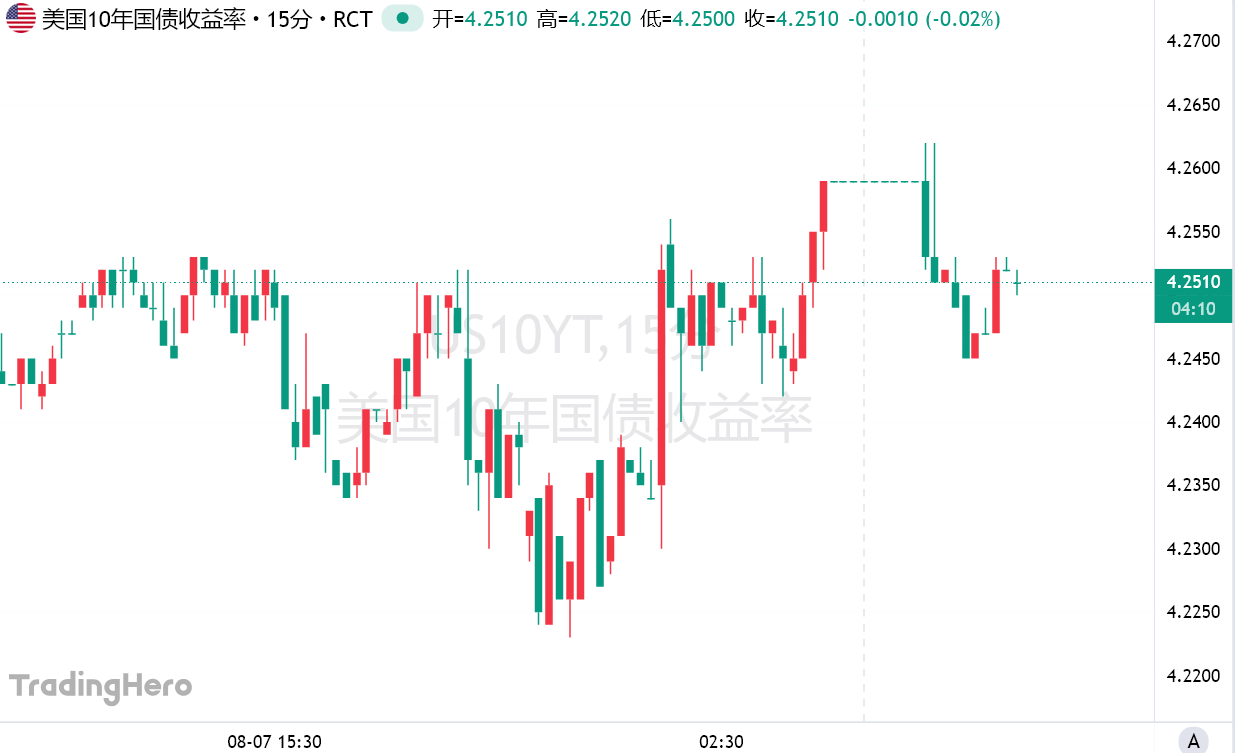
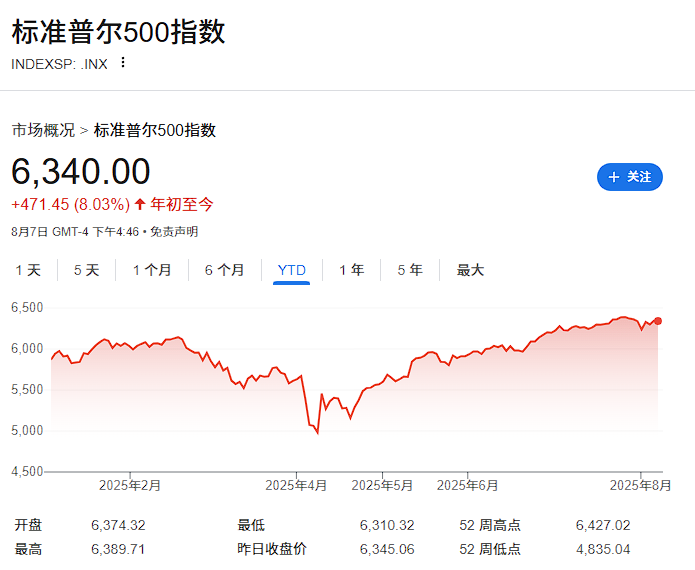
市场对关税及货币政策走向关注度较高。Ameriprise首席市场策略师Anthony Saglimbene指出,围绕关税和贸易有诸多因素需消化,当前市场更专注于经济背 景和企业盈利等可消化因素。 【环球网财经综合报道】截至收盘,美股三大指数呈现分化走势。道琼斯工业平均指数下跌0.51%,报43968.64点;标普500指数微跌0.08%,报6340点;纳 斯达克综合指数上涨0.35%,报21242.70点,盘中一度涨超1%。 道指30只成分股中,14家上涨、16家下跌。赛富时跌幅居前,下跌3.33%;卡特彼勒下跌2.48%。苹果表现亮眼,继前一交易日涨超5%后,当日再涨 3.18%。此前在8月6日,苹果宣布将向美国新增1000亿美元投资并推进"美国制造计划",美国总统特朗普在相关会议上表示,苹果将可豁免芯片和半导体关 税。 交易员普遍押注美联储今年将降息两次,其中一次或于下月实施,但有策略师警告,特朗普关税政策可能影响这一预期。阿波罗管理公司首席经济学家 Torsten Slok认为,市场虽预期降息临近,但通胀上行风险巨大,滞胀主题正在加剧。 尾盘消息显示,特朗普已选定现任白宫经济顾问委员会主席斯蒂芬·米兰( ...

关税落地引爆华尔街滞胀警报 美联储降息路径生变?
Zhi Tong Cai Jing· 2025-08-08 01:17
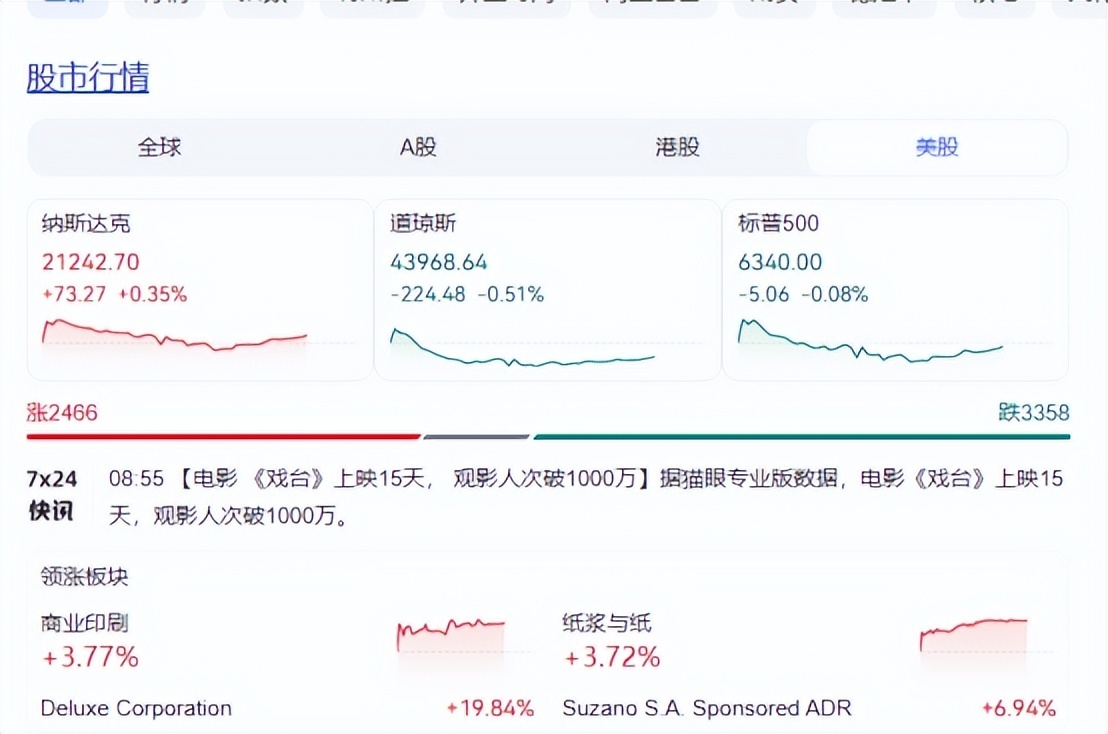
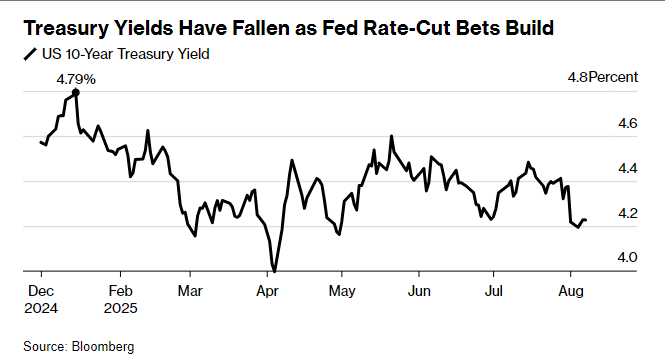
随着新一轮关税政策效应逐步显现,华尔街策略师纷纷发出警告:美国经济正滑向滞胀泥潭,这可能严 重制约美联储降息操作空间。 尽管投资者目前尚未重视这些预警信号,但多项经济数据显示,美国即将面临通胀高企与经济疲软并存 的困境。分析师指出,当前市场除美元外尚未显现明显恐慌迹象——标普500指数年内屡创新高,美债 指数有望创2020年以来最佳表现,而美元指数已较一篮子货币下跌8%。 认为通胀得到控制的交易员大举押注美联储今年将降息两次,首次降息预期已提前至下月。这种预期在 周五疲软的就业报告公布后进一步强化。但策略师们警告,特朗普政府周四生效的全面关税政策可能颠 覆市场预期,随着涨价压力向消费端传导,通胀风险正急剧上升。 "市场对降息预期强烈,但通胀上行风险不容忽视,"阿波罗全球管理首席经济学家Torsten Slok周四在研 报中强调,"关键在于,市场中的滞胀叙事正在持续强化。"就业数据公布后美债虽创下2023年底以来最 大涨幅,但本周十年期国债收益率稳定在4.22%,显示市场重归平静。 Slok的观点获得包括纽约梅隆银行、美国银行、TD Securities和Brown Brothers在内的多家机构策略师呼 应。 ...
纽约联储:美国消费者对未来一年通胀预期升至3.1%
Zhong Guo Xin Wen Wang· 2025-08-08 00:27
纽约联邦储备银行7日发布的一份月度调查显示,今年7月,美国消费者对未来一年的通货膨胀预期升至 3.1%。 调查显示,受访者感知到的一年内失业概率上升0.4个百分点至14.4%。更多受访家庭表示获得信贷的难 度加大,且未来三个月无力偿还最低还款额的可能性有所上升。 消费者通胀预期的上升将强化那些希望暂时"按兵不动"的美联储官员立场。今年以来,美联储一直维持 联邦基金利率目标区间在4.25%至4.5%之间的水平不变。 报道称,除通胀数据外,美联储官员也在密切关注劳动力市场数据。近期美国招聘活动呈现急剧放缓迹 象,这或许将为美联储降息提供更多依据。 有华尔街策略师警告称,随着加征关税的影响逐步显现,美国经济正面临滞胀风险。在此背景下,投资 者需警惕高通胀与低增长并存的经济局面。 根据纽约联储发布的2025年7月《消费者预期调查》,受访者对未来三年的通胀预期维持在3%,对未来 五年的通胀预期升至2.9%,达到今年2月以来的最高水平。 资讯编辑:沈一冰 021-26093395 资讯监督:乐卫扬 021-26093827 资讯投诉:陈跃进 021-26093100 当天,美国劳工部发布的数据显示,截至7月26日当周,全 ...
滞胀阴霾笼罩美股
Hua Er Jie Jian Wen· 2025-08-08 00:27
Group 1 - Wall Street strategists warn that the U.S. economy is sliding into stagflation, with tariff policies beginning to show their impact, potentially limiting the Federal Reserve's ability to cut interest rates significantly [1][4] - Analysts believe inflation is under control, betting on two rate cuts by the Federal Reserve this year, with the first cut possibly as early as next month [4] - Multiple investment banks have issued warnings about stagflation, with Apollo Management's chief economist stating that the market's expectation of rate cuts contrasts with significant inflation risks [5] Group 2 - The evolving tariff landscape is expected to be stagflationary, reducing growth while pushing up inflation, as noted by a macro strategist from Bank of New York Mellon [6][7] - Recent inflation data shows that the U.S. Consumer Price Index (CPI) rose by 2.7% year-on-year in June, the highest since February, slightly above the expected 2.6% [7] - Minneapolis Fed President Neel Kashkari acknowledged that tariffs are a major variable affecting the economy and could alter expectations for rate cuts if inflation rises due to tariffs [7]
黄金定价逻辑生变?央行连续出手,华尔街巨头转向
Wind万得· 2025-08-07 22:38
Central Bank Actions - The People's Bank of China has increased its gold reserves to 7.396 million ounces as of the end of July, marking a month-on-month increase of 60,000 ounces and continuing a trend of nine consecutive months of accumulation, aligning with a global central bank gold buying spree [3][5] - The World Gold Council reported that global central bank gold purchases in the first half of 2024 exceeded the ten-year average by 40%, highlighting the importance of central bank demand for gold [3] ETF Inflows - As of August 6, the lowest fee gold ETF (518660) saw a net inflow of 98 million yuan over five days, with a total market size of 3.59 billion yuan and a year-to-date share growth rate of 182%, making it a preferred choice for investors [7] - The World Gold Council forecasts that global gold demand will reach 1,249 tons by the second quarter of 2025, with ETF investments contributing 170 tons, and the first half of 2024 recorded the highest ETF demand since 2020 at 397 tons [7] Changing Price Expectations - Citibank, known for its bearish stance on gold, has revised its price forecast upward, increasing the three-month target price from $3,300 to $3,500 per ounce, with a trading range of $3,300 to $3,600 per ounce [9] - The shift in Citibank's outlook is attributed to increasing risks of "stagflation" in the U.S. economy, with July non-farm payrolls increasing by only 73,000 and the unemployment rate rising to 4.1%, leading to heightened expectations for aggressive rate cuts by the Federal Reserve [10] Market Sentiment and Risks - Standard Chartered maintains an optimistic view, predicting gold prices could reach $3,400 per ounce in the next three months and remain at $3,500 per ounce over the next 12 months [11] - However, there are concerns about short-term upward momentum for gold prices, with risks of overheating in the market, as noted by招商证券, which suggests focusing on structural opportunities rather than broad bets on rising gold prices [12][13] - Key risk factors identified include potential policy reversals by the Federal Reserve, technical overbought conditions, competition from alternative assets like Bitcoin, and the possibility of reduced geopolitical premiums due to easing trade tensions [13]
