
美元指数

Search documents
多因素支撑人民币汇率走强 双向波动仍将是常态
Zhong Guo Zheng Quan Bao· 2025-12-28 22:17
Core Viewpoint - The recent strengthening of the Renminbi (RMB) against the US dollar is influenced by a weakening US dollar index, increased demand for currency settlement by enterprises at year-end, and the rising attractiveness of RMB assets [1][2][3]. External Factors - The US dollar index has weakened significantly, dropping 1.41% since December, primarily due to the Federal Reserve's 25 basis point interest rate cut, which has led to a general appreciation of non-USD currencies, including the RMB [2][3]. - The demand for currency settlement from export enterprises has increased, contributing to the seasonal strengthening of the RMB as companies are encouraged to settle in RMB due to its rising value [2][3]. Internal Factors - The attractiveness of RMB assets has increased, with foreign capital continuously flowing into China's capital markets and a growing scale of international investors holding Chinese government bonds, which enhances the buying power of the RMB [3]. Future Outlook - Experts predict that the RMB will experience two-way fluctuations in the future, as a sustained one-sided trend is deemed unsustainable. The potential for the US dollar index to rise again poses a risk to the RMB's strength [4]. - The current interest rate differential between domestic and foreign currencies remains significant, which could reduce the willingness of enterprises to settle in RMB if the appreciation trend slows down [4]. Recommendations for Enterprises - Companies, especially those engaged in foreign trade, are advised to adopt a risk-neutral approach and avoid speculating on one-sided RMB trends. They should focus on managing exchange rate risks effectively [6]. - Practical measures include optimizing commercial contracts to use RMB for pricing and settlement, and utilizing financial instruments such as forward foreign exchange contracts and swaps to hedge against long-term risks [6].
人民币对美元中间价年内涨幅超一千五百基点 专家提醒——汇率双向波动是常态
Jing Ji Ri Bao· 2025-12-28 21:56
今年以来,全球汇市波动加剧,而人民币对美元走势稳中偏强。从人民币对美元汇率中间价来看,年内 涨幅超过1500个基点,并于近日升至2024年9月以来最高。这引发市场广泛讨论,其间不乏"人民币会继 续升值"的猜想。就此,记者采访了有关专家。 "中长期来说,经济是汇率的基本盘,汇率走势在根本上取决于经济基本面。短期来看,汇率的影响因 素则比较多元,比如,经济增长、货币政策、金融市场、地缘政治、风险事件等。"国家金融与发展实 验室特聘高级研究员庞溟表示,本轮人民币升值的直接推动力,来自美元环境的转变。伴随美联储开启 降息,市场预期美元长期走势将受进一步压制,为人民币提供了外部升值空间。 接下来,人民币汇率是否会呈现单边升值态势?专家认为,对此还需客观、理性看待。"美联储面临通 胀和就业的艰难平衡,进一步降息面临的约束不少,并不像部分媒体所说的明年会超预期大幅降息,目 前市场预期明年会降息2次。近期美元指数跌幅较大,未来存在回调走升的可能。"中国民生银行首席经 济学家温彬说。 作为货币之间的比价,汇率双向波动是常态。温彬提醒,未来人民币汇率走势仍存在较大不确定性,企 业和金融机构切忌盲目跟风、赌汇率走势,要坚持风险中性 ...
汇率没有单边走势 双向波动是常态
Xin Lang Cai Jing· 2025-12-28 18:23
Group 1 - The recent appreciation of the RMB against the USD has attracted market attention, with a notable increase of approximately 1.7% since mid-October [1] - The strengthening of the RMB is influenced by external factors such as the Federal Reserve's interest rate cuts leading to a weaker USD index, as well as seasonal demand for currency settlement towards the year-end [1] - Despite the typical year-end peak in currency settlement, the latest data indicates that the foreign exchange market remains balanced, with stable bank settlement and sales, suggesting that the demand for currency settlement may not remain high [1] Group 2 - The RMB's exchange rate is affected not only by domestic supply and demand but also by the trends in the USD index, with potential downward pressure on the USD in the coming months due to the Fed's pause in interest rate cuts [2] - The CFETS RMB index, which measures the RMB against a basket of currencies, has remained relatively stable, indicating that while the RMB has appreciated, it is still maintaining a reasonable equilibrium level [2] - The central bank is likely to take measures to prevent one-sided expectations in the exchange rate market, especially if the RMB appreciates too quickly [2]


时报观察 | 汇率没有单边走势 双向波动是常态
Zheng Quan Shi Bao· 2025-12-28 18:13
Core Viewpoint - The recent appreciation of the RMB against the USD has sparked market interest, but there is a divergence regarding whether this trend will continue, with expectations of two-way fluctuations becoming the norm [1][2]. Group 1: RMB Exchange Rate Trends - Since mid-October, the RMB has appreciated by nearly 1.7% against the USD, influenced by factors such as the Federal Reserve's interest rate cuts and seasonal demand for currency settlement [1]. - The exchange rate is currently at a critical point around 7.0, which is seen as a battleground for bullish and bearish sentiments [1]. - Despite the typical year-end surge in currency settlement, recent data shows that the foreign exchange market remains balanced, with stable bank settlement and sales volumes in November [1]. Group 2: Market Influences and Expectations - The RMB's performance is not only dependent on domestic supply and demand but also on the trends of the USD index [2]. - The upcoming pause in interest rate cuts by the Federal Reserve may alleviate downward pressure on the USD, despite the recent appreciation of the RMB [2]. - The CFETS RMB index has remained stable over the past two months, indicating that while the USD weakens, the RMB is maintaining a reasonable equilibrium against a basket of currencies [2]. Group 3: Risk Management and Regulatory Considerations - The central bank is vigilant about preventing one-sided expectations in the exchange rate market and may intervene if the RMB appreciates too quickly [2]. - Market participants, including enterprises and financial institutions, should adopt a risk-neutral approach and utilize foreign exchange derivatives for effective risk management [2].
张瑜:美联储降息≠人民币升值≠出口承压——汇率升值叙事的三重纠偏
一瑜中的· 2025-12-28 16:03
Core Viewpoint - The article discusses the narrative that the Federal Reserve's interest rate cuts lead to the appreciation of the Renminbi (RMB), which may harm export competitiveness. However, this narrative is questioned for its logical consistency [2][5]. Group 1: Popular Narrative and Core Logic - The core narrative is that the Federal Reserve's interest rate cuts lead to a weaker dollar, resulting in RMB appreciation, which could negatively impact China's export competitiveness [5]. - The narrative's logical inconsistencies include: 1) The relationship between Federal Reserve rate cuts and a weaker dollar is not guaranteed; 2) RMB appreciation does not necessarily equate to a loss of export competitiveness [2][3]. Group 2: Assessment of RMB Exchange Rate Outlook - The RMB exchange rate is currently considered fairly valued, with no significant overvaluation or undervaluation issues. The deviation from the "value center" is around 0% to 2% [10][61]. - Internally, the RMB's stability is supported by export resilience and policy support, but significant upward momentum for appreciation may require further accumulation of fundamental support [10][89]. - Externally, the Federal Reserve's preventive rate cuts may help sustain economic growth and relative asset price advantages, limiting the pressure for a continuous decline of the dollar [10][79]. Group 3: Analysis of RMB Appreciation in 2023 - The RMB's appreciation in 2023 can be divided into two phases: 1) From mid-April to November, where policy support was the main driver, with the RMB middle price rising from approximately 7.21 to around 7.08 [38][44]. 2) From late November to the present, where market supply and demand became the primary driver, with the RMB middle price further appreciating to just above 7.04 [39][47]. Group 4: Factors Influencing Future RMB Exchange Rate - Four key factors to consider for future RMB exchange rate trends include: 1) Valuation factors indicate that the RMB is not significantly overvalued or undervalued [10][61]. 2) Policy orientation has shifted from guiding stable appreciation to preventing excessive appreciation volatility [64][67]. 3) Internal supply and demand dynamics, particularly the flow logic of trade surplus and net settlement rates, are crucial for understanding RMB trends [72][73]. 4) External responses, particularly the behavior of the dollar index, suggest limited potential for sustained dollar weakness due to the current economic context [79][80].

汇率升值叙事的三重纠偏:美联储降息≠人民币升值≠出口承压
Huachuang Securities· 2025-12-28 10:45
Group 1: Core Narrative and Logic - The popular narrative suggests that the Federal Reserve's interest rate cuts lead to a weaker dollar, which in turn causes the renminbi to appreciate, potentially harming export competitiveness[1] - The logic of this narrative is questioned on two fronts: 1) Federal Reserve rate cuts do not necessarily equate to a weakening dollar; 2) Renminbi appreciation does not necessarily harm export competitiveness[1] - The correlation between the Federal Reserve's policy rate adjustments and the dollar index is weak, with a monthly correlation coefficient of only 0.04 since October 1982[3] Group 2: Renminbi Exchange Rate Analysis - The renminbi's exchange rate is currently considered fairly valued, with deviations from the "value center" ranging from 0% to 2%[7] - The renminbi's appreciation since May has released some corporate foreign exchange positions, widening the potential volatility range of the exchange rate[1] - The exchange rate's future trajectory will depend on several factors, including valuation, policy direction, internal supply and demand, and external responses[11]
【首席观察】2026年,人民币汇率会怎么走?
经济观察报· 2025-12-28 08:45
Core Viewpoint - The article discusses the implications of currency exchange, particularly the timing for exchanging RMB for USD or EUR, emphasizing the importance of managing future payment capabilities and controlling cash flow impacts from exchange rate fluctuations [1][4]. Group 1: Currency Exchange Trends - The offshore RMB to USD exchange rate (CNH) broke 7, reaching around 6.99 on December 25, 2025 [2]. - In 2025, the RMB appreciated approximately 4% against the USD, making the exchange of 10,000 USD cheaper by about 3,000 RMB compared to the beginning of the year [3]. - Conversely, the RMB depreciated by 9%-10% against the EUR in 2025, meaning exchanging 10,000 EUR at year-end would cost an additional 7,000-7,800 RMB compared to the start of the year [3]. Group 2: Market Dynamics and Influences - The RMB's appreciation against the USD is attributed to several factors, including a weaker USD index, increased attractiveness of RMB assets, rising demand for currency exchange from export enterprises, and policy guidance for orderly appreciation [6][8]. - The RMB's strength in late December 2025 is seen as a response to external factors, including a significant decline in the USD index, which fell approximately 9.9% over the year, marking its worst performance since 2003 [8]. Group 3: Future Outlook for RMB - For 2026, the RMB is expected to maintain a strong position against the USD, with 6.8 being a critical level, although caution is advised regarding potential pullbacks [4]. - Five key triggers are identified for the RMB's performance in 2026: continued USD weakness, stable trade surpluses, recovery in real estate expectations, marginal improvements in capital inflows, and effective policy measures to manage exchange rate volatility [11][12][13][14]. - The overall expectation for 2026 is a dual-directional fluctuation of the RMB, with a higher probability of upward trends, emphasizing the importance of confidence in monetary policy and economic structure [15].
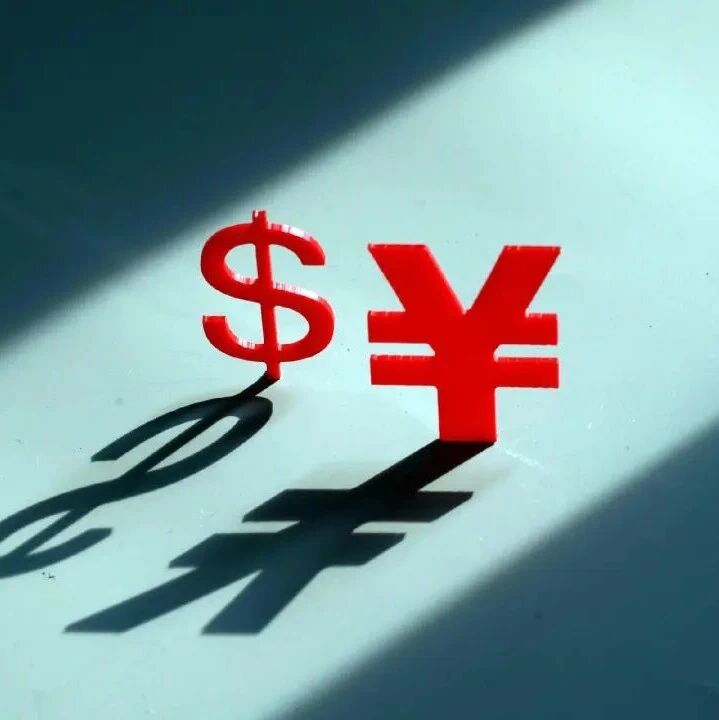
人民币破7,但“6时代”真的那么容易吗?
Sou Hu Cai Jing· 2025-12-27 01:19
近日,离岸人民币对美元汇率盘中突破7.0整数关口,创下15个月以来的新高,距离市场期待的"6"字头 仅一步之遥。自今年4月以来,人民币兑美元开启持续升值通道,累计升值幅度已达6%,打破了此前两 年多的震荡格局。这波升值行情不仅牵动着金融市场的神经,也与普通民众的留学、旅游消费,以及企 业的进出口经营息息相关。 作为两种核心货币的比价,人民币兑美元的走势从来都是内外因素共同作用的结果。从美元走弱的外部 推力,到中国经济韧性的内部支撑,再到市场季节性行为的叠加,多重力量共同促成了本轮升值行情。 而展望未来,人民币是否会顺利迈入"6"时代,又将受到哪些变量的扰动? 如果说美元走弱是"东风",那么中国经济的稳健表现与人民币资产吸引力的提升,则是人民币能够接住 这波东风的根本底气。 经济基本面的韧性不断超出市场预期。2025年11月,中国国民经济运行数据显示,出口增速由降转升, 达到5.7%,前11个月货物贸易顺差更是首次突破1万亿美元,创下历史同期新高。充足的贸易顺差带来 了稳定的外汇流入,为人民币汇率提供了直接的流动性支撑。同时,国际机构纷纷为中国经济投出"信 任票",国际货币基金组织、世界银行先后上调2025年中 ...
ICE美元指数涨0.05%,报98.024点
Mei Ri Jing Ji Xin Wen· 2025-12-26 22:33
Core Viewpoint - The ICE Dollar Index increased by 0.05% to 98.024 points at the end of trading on Friday, December 26, while experiencing a cumulative decline of 0.68% over the week (four trading days) [1] - The Bloomberg Dollar Index remained relatively stable at 1200.61 points, with a cumulative drop of 0.79% for the week [1] Group 1 - The ICE Dollar Index's slight increase contrasts with its overall weekly decline, indicating potential volatility in the currency market [1] - The Bloomberg Dollar Index's stability suggests a mixed sentiment among investors regarding the dollar's performance [1]
人民币汇率重返 6 时代,对投资有什么影响?
雪球· 2025-12-26 13:01
以下文章来源于郭施亮 ,作者郭施亮 郭施亮 . 财经评论员、专栏作家,2013年度搜狐最佳行业自媒体人。香港大公财经特约评论员、每经智库专栏作家,并多次受邀广东省人民政府发展研究中心等权 威机构撰写多篇学术文章。其作品刊登于香港文汇报、新华社《瞭望》、人民日报海外版等数十家权威报刊。 ↑点击上面图片 加雪球核心交流群 ↑ 风险提示:本文所提到的观点仅代表个人的意见,所涉及标的不作推荐,据此买卖,风险自负。 作者: 郭施亮 在美元大幅走弱的影响下 , 促使人民币汇率被动升值 , 同时也促使大部分与美元指数呈现出负相关的资产出现了可观的涨幅 。 在投资市场中 , 常有一句话是这样说的 , " 一鲸落 , 万物生 " , 美元指数涨跌对大部分资产价格带来较大的影响 。 这一轮美元贬值潮 , 不 仅带动了金价的持续上涨 , 而且还带动了股市等资产的持续回暖 。 美元指数持续下跌 , 促使人民币汇率的被动升值 。 不过 , 影响人民币汇率走向的因素 , 远不止美元指数这一项指标 。 例如 , 国内经济基本 面的持续改善 、 市场投资情绪升温以及外资的积极流入等 , 都会对人民币汇率起到积极的提振影响 。 在人民币汇率重 ...
