
美联储货币政策

Search documents
布米普特拉北京投资基金管理有限公司:生产率与AI驱动增长 高盛预测美国经济前景乐观
Sou Hu Cai Jing· 2026-01-12 09:56
Group 1 - Goldman Sachs economists predict multiple positive factors will boost the US economy this year, including tax cuts, rising real wages, and accumulated household wealth [1] - The report forecasts that the Federal Reserve will likely implement two rate cuts of 25 basis points each in mid-year and the second half of the year due to increased uncertainty in the labor market [4] - The structure of GDP growth in the US is expected to differ from previous cycles, relying more on productivity improvements rather than labor supply growth, with productivity showing signs of rebound driven by technology [4] Group 2 - Core inflation is predicted to decline to near long-term target levels by year-end, indicating a trend of easing price growth [6] - The unemployment rate is expected to remain relatively stable, although there is a potential risk of "no job growth" as companies may optimize costs using AI technologies [6] - Consumer spending is anticipated to grow steadily due to the dual support of tax cuts and real income growth, while corporate investment is expected to be the strongest driver of annual economic growth [6]



山金期货贵金属策略报告-20260112
Shan Jin Qi Huo· 2026-01-12 09:45
投资咨询系列报告 山金期货贵金属策略报告 更新时间:2026年01月12日16时47分 报告导读: 今日贵金属震荡偏强,沪金主力收涨2.57%,沪银主力收涨14.42%,铂金主力收涨4.65%,钯金主力收涨涨3.59%。①核心逻辑, 短期避险方面,贸易战避险消退,地缘异动风险上升;美国就业走弱通胀温和,降息预期支撑仍存。②避险属性方面,美联储主席 鲍威尔因总部翻修案深陷刑事调查这一"黑天鹅"事件,直接动摇了货币政策独立性与美元信用基石,导致长期通胀预期脱锚。特 朗普政府正在讨论获取格陵兰岛的方案,包括军事选项。美国抓捕马杜罗震惊世界,地缘异动风险上升。③货币属性方面,美国 12月就业增长几乎停滞,失业率下降缓解劳动力市场恶化担忧。美国11月核心CPI同比上涨2.6%,创下2021年初以来最慢增速, 低于市场预期的3%。美联储12月在重重分歧中下调利率,暗示将暂停行动明年或仅降息一次。鲍威尔指出,美联储的利率政策已 处于良好位置,可以应对未来经济走势。目前市场预期美联储26年1月不降息概率维持在80%附近,下次降息或到4月。美元指数 和美债收益率震荡偏强;④商品属性方面,白银受到供应偏紧支撑。铂金氢能产业铂基催 ...
长江有色:12日铅价上涨 交仓预期初现观望氛围浓厚
Xin Lang Cai Jing· 2026-01-12 08:45
Core Viewpoint - The recent increase in lead prices is driven by a combination of macroeconomic factors, geopolitical tensions, and industry dynamics, leading to a positive outlook for the lead market [2]. Group 1: Market Performance - The Shanghai lead futures market saw an increase, with the main contract closing at 17,440 yuan per ton, up 125 yuan or 0.72% [1]. - The latest price for London lead is reported at 2,057.5 USD, an increase of 11 USD [1]. - The average price for domestic lead in the ccmn market rose to 17,400 yuan per ton, an increase of 150 yuan from the previous day [1]. Group 2: Supply and Demand Dynamics - The supply side is constrained by seasonal maintenance and slow release of new capacity, leading to limited growth in primary lead production [2]. - Recycled lead production is also affected by tight raw material supply and high costs, with some companies planning early holidays [2]. - The global visible inventory of lead has dropped to historical lows, increasing price sensitivity to supply disruptions or demand recovery [2]. Group 3: Industry Structure - The lead industry is characterized by a "tight upstream and stable downstream" structure, with profits concentrated in the resource sector due to tight supply and low processing fees [3]. - The midstream smelting sector faces increased competition and pressure from raw material costs and environmental regulations, leading to higher industry concentration [3]. - Downstream battery manufacturers are experiencing pressure on profit margins due to high raw material prices and elevated finished goods inventory [3]. Group 4: Market Outlook - Short-term support for lead prices is expected from improved macro sentiment, geopolitical risk premiums, low industry inventory, and tight supply conditions [4]. - Long-term price trends will depend on key variables such as the Federal Reserve's monetary policy, developments in geopolitical risks, and sustained demand growth in the energy storage sector [4]. - There is a need to be cautious of potential resistance from downstream sectors and changes in market sentiment following rapid price increases [4].

【2026年汇市展望】美联储政策仍是关键变量 2026年印尼卢比走势取决于内外博弈
Xin Hua Cai Jing· 2026-01-12 08:16
Core Viewpoint - The Indonesian Rupiah has undergone a pressure test in 2025 amidst increasing global financial uncertainty and diverging monetary policies among major economies, showing resilience despite external shocks and maintaining a dynamic balance with domestic fundamentals [1][2]. Exchange Rate Performance - In 2025, the USD/IDR exchange rate increased by 2.74%, with the Rupiah showing weaker performance among major Asian emerging market currencies but avoiding uncontrolled depreciation [2][7]. - The exchange rate fluctuated between 15,785 and 16,974, with a maximum amplitude of nearly 11% throughout the year [2][3]. Economic Fundamentals - Indonesia's GDP growth is projected at approximately 5% for 2025, remaining relatively high among major emerging markets, with Q1 growth at 4.87%, Q2 at 5.12%, and Q3 at 5.04% [5][6]. - The country maintained a trade surplus of $38.54 billion from January to November 2025, marking the 67th consecutive month of surplus, with foreign exchange reserves rising to $150.1 billion [6][7]. Inflation and Monetary Policy - The consumer price index rose by 2.92% year-on-year in December 2025, remaining within the central bank's target range of 1.5% to 3.5% [6]. - The central bank cut policy rates five times in 2025, maintaining a benchmark rate of 4.75% from October to December, and indicated potential for further easing depending on inflation and external conditions [9][10]. Future Outlook - For 2026, the Rupiah is expected to maintain a range-bound trading pattern rather than a unilateral trend, with the central bank targeting an exchange rate around 16,500 [8][10]. - The outlook for the Rupiah will depend on external financial conditions and domestic structural reforms, with potential for the exchange rate to range between 15,500 and 16,200 by the end of 2026 [10].
美国通胀三维六体分析框架(上篇):美国2026年通胀展望:前高后低,整体可控
NORTHEAST SECURITIES· 2026-01-12 04:14
Group 1: Report Industry Investment Rating No relevant content provided. Group 2: Report's Core View - The report constructs a multi - dimensional analysis framework based on long - term expectations, medium - term cycles, and short - term shocks to systematically sort out the core driving forces and future trends of US inflation [3]. - The Fed's "risk - management style" rate cuts will not restructure the inflation pattern as this round of cuts occurs in a non - recession environment and is more about maintaining economic resilience rather than causing a significant rebound in inflation [3]. - Long - term inflation expectations are anchored, and the Fed's independence remains a key stabilizer, with limited risk of long - term inflation getting out of control [3]. - Endogenous inflation momentum is slowing, and most structural sub - items show downward pressure, except for possible mild rebounds in durables and core services (excluding rent) inflation [3]. Group 3: Summary According to Related Catalogs 1. Inflation Analysis's Three - Dimensional Framework: Long - term Expectations, Core Dynamics, and Short - term Shocks - The Fed assesses inflation trends through a three - dimensional framework: long - term inflation expectations, core inflation, and short - term price shocks [11]. - Long - term inflation is anchored by monetary policy through expectations, core inflation's mid - term fluctuations are driven by the economic cycle, and external factors cause short - term disturbances [12]. - Long - term inflation expectations are the core pillar of the Fed's inflation management, core inflation reflects the domestic demand and labor market, and short - term shocks are usually temporary and exogenous [13]. - "Risk - management style" rate cuts generally do not lead to a significant inflation rebound based on historical experience and logical reasons [20][21]. 2. Is the Fed's Long - term Inflation Anchor Failing? - Although inflation has been persistently above the Fed's 2% target, the 5 - year/5 - year forward break - even inflation rate shows that the market's long - term inflation expectations remain stable [33]. - A quantitative model shows that the Fed's 2% inflation target has played a decisive role in guiding and stabilizing market expectations, and currently, the market may overestimate Trump's short - term impact on the Fed's independence [36][40]. 3. Reconstructing US Inflation Analysis: A Six - Sub - item Analysis Framework 3.1 Food and Beverage: Obvious Dual - Factor Drive of Commodity and Labor Costs - The cost of US food mainly concentrates on the middle and lower reaches of processing and circulation. The CRB food index and salary growth indicators are in a downward trend, so the food sub - item's upward momentum for overall inflation will weaken [3][51]. 3.2 Energy: Inflation Thrust Easing under Changing Supply - Demand Patterns - Energy has a significant impact on overall inflation. In 2025 - 2026, the global crude oil market's supply growth is expected to exceed demand, reducing the risk of a significant upward movement in US inflation [3][56][58]. 3.3 Rent: Lags US Housing Prices by about 15 Months - Rent is a key driver of CPI. In 2026, the year - on - year growth rate of rent is expected to slow to about 2.88%, leading to a 0.3% decline in overall inflation [3][71]. 3.4 Durables: May Face Some Upward Pressure in 2026 - Durables inflation may face upward pressure in 2026, but the pulling effect on inflation is expected to be mild due to the slowdown in the job market and consumer pressure [3][88]. 3.5 Non - durables: Obvious Cost - Driven Characteristics - Non - durables demand is rigid, and prices are mainly cost - driven. Based on the prediction of a decline in the crude oil price center in 2026, non - durables inflation is expected to cool down or fluctuate narrowly [91]. 3.6 Core Services: The Labor Market is the Core Driver - Core services inflation (excluding rent) is mainly driven by the labor market's tightness. Currently, the labor market is demand - driven, and there is no sustainable upward momentum for this type of inflation [3][111].
2025年多次刷新历史纪录,金价将走向何方?
Ren Min Ri Bao· 2026-01-10 04:03
Core Insights - The international gold price experienced a significant increase in 2025, with an annual rise of nearly 70%, marking the largest annual increase since the 1979 oil crisis [1] - The surge in gold prices is attributed to rising global risk aversion and a decline in the credibility of the US dollar, as well as geopolitical tensions and economic uncertainties [2] Group 1: Gold Price Trends - The current upward trend in international gold prices began in the second half of 2019, with a rise of approximately 18% that year [1] - By 2024, international gold prices surpassed $2800 per ounce, with a yearly increase of about 27%, and in 2025, prices broke through $3000 in March and $4000 in October, reaching nearly $4600 by year-end [1] - Domestic gold prices also rose significantly, with gold jewelry prices increasing from around 800 yuan per gram to approximately 1360 yuan per gram [1] Group 2: Factors Influencing Gold Prices - Geopolitical risks, such as the US tariff war, the ongoing Russia-Ukraine conflict, and instability in the Middle East, have heightened market risk aversion, leading to increased demand for gold as a traditional safe-haven asset [2] - Central banks globally have accelerated diversification of reserves, significantly increasing gold holdings, which has been a crucial factor in driving up gold prices [2] - From early 2025 to late November, global central banks reported a net purchase of 297 tons of gold, indicating robust demand [2] Group 3: Broader Precious Metals Market - The rise in international gold prices has also led to substantial increases in other precious metals, with silver and platinum prices rising over 140% and palladium over 100% [3] - The strong performance of gold has activated a rotation in the precious metals sector, attracting capital into silver and platinum group metals [3] - Industrial demand for certain precious metals, driven by sectors like photovoltaics and electric vehicles, has also supported price increases [3] Group 4: Future Outlook - The future trajectory of gold prices will be influenced by factors such as the direction of US monetary policy, ongoing central bank purchases, geopolitical developments, and the stability of the US dollar credit system [3] - The gold market is expected to enter a new phase characterized by multiple interwoven forces and dynamic balance, with persistent structural demand from investors and central banks likely to support prices [3]
金价,涨近4%!全球资本市场,一周复盘解析
Sou Hu Cai Jing· 2026-01-10 03:12
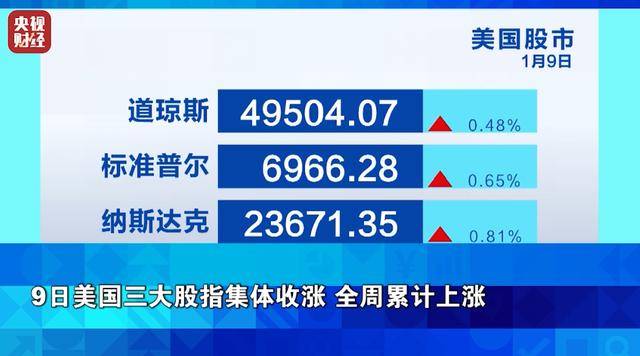
Group 1: Market Overview - Precious metal prices rose throughout the week, driven by ongoing market risk aversion, with COMEX gold futures increasing by 3.96% and silver futures rising by 11.72% [1][15] - On December 9, the three major U.S. stock indices collectively rose, with the Dow Jones up by 0.48%, S&P 500 increasing by 0.65%, and Nasdaq gaining 0.81% [3][6] - European stock indices also saw collective gains, with the FTSE 100 up by 0.80%, CAC 40 rising by 1.44%, and DAX increasing by 0.53% [9][7] Group 2: Employment Data - The U.S. non-farm payroll report for December showed an increase of 50,000 jobs, which was below expectations, while the unemployment rate fell to 4.4% [4][6] - The employment data was mixed, with significant downward revisions of 76,000 jobs in the previous two months, leading to the weakest annual job growth since 2020 [6][4] - Despite the disappointing employment figures, market expectations for the Federal Reserve's monetary policy remained unchanged, with predictions of at least two rate cuts in 2026 [6] Group 3: Commodity Prices - International oil prices continued to rise due to geopolitical tensions and supply risks, with WTI crude oil futures up by 3.14% and Brent crude oil futures increasing by 4.26% over the week [12][10] - The precious metals market saw support from expectations of a loose monetary policy from the Federal Reserve, contributing to the rise in gold and silver prices [15]
从美国非农数据中解读的四大信号:经济预期、政策路径与资产联动
Sou Hu Cai Jing· 2026-01-09 08:47
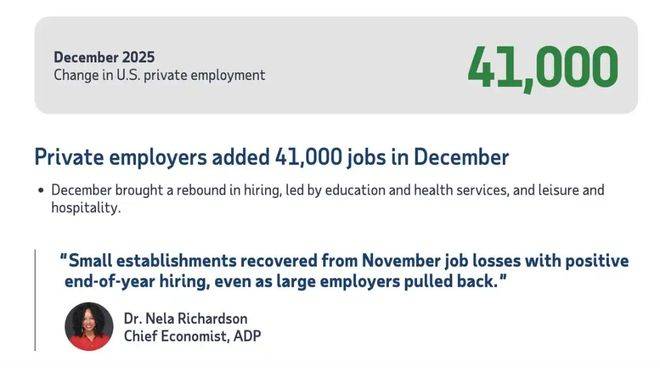
Group 1 - The non-farm payroll data is a key indicator for assessing the "soft landing" of the U.S. economy, with expectations of 73,000 new jobs in December and an unemployment rate of 4.5%, indicating labor market resilience [2][4] - The upcoming non-farm report is the first released on time after a 43-day government shutdown, enhancing its reliability compared to previous alternative indicators like ADP data [4] - Strong non-farm data could lead to a reduction in market expectations for significant interest rate cuts by the Federal Reserve, while weak data may reinforce expectations for monetary easing [5] Group 2 - Non-farm data influences global liquidity expectations and can lead to adjustments in U.S. Treasury yields, with a recent rise in yields reflecting market speculation on strong non-farm data [5] - Positive non-farm data typically supports the U.S. dollar and negatively impacts precious metals, while weak data has the opposite effect, influencing stock market performance across different sectors [6] - It is essential to analyze the quality of non-farm data and consider subsequent economic indicators to avoid misinterpretation, as discrepancies between non-farm data and other metrics may indicate structural economic issues [7]
铸造铝合金期货反弹走强,现货交投温和
Xin Lang Cai Jing· 2026-01-09 08:21
Group 1 - The core viewpoint of the articles indicates that the casting aluminum market is experiencing price fluctuations influenced by macroeconomic factors and seasonal demand changes [1][2]. - The main contract for casting aluminum alloy (2603) opened lower but rebounded, closing at 22,985 yuan, up 165 yuan, with a trading volume of 20,035 lots and an open interest of 21,648 lots [1]. - The average price for various types of casting aluminum ingots remained stable, with A356.2 at 25,600 yuan/ton, A380 at 24,800 yuan/ton, ADC12 at 23,400 yuan/ton, ZL102 at 25,000 yuan/ton, and ZLD104 at 24,900 yuan/ton [1]. Group 2 - The macroeconomic environment shows that U.S. unemployment claims are at a low level, indicating resilience in the economy, although there are signs of structural weakness in the labor market [1]. - Domestic stock indices rose, supported by favorable macro policies and a rebound in aluminum prices, which positively impacted casting aluminum prices [2]. - The supply of raw materials, including imported and domestic scrap aluminum, is tight, providing strong support for casting aluminum prices, while demand remains weak due to seasonal factors [2].
12月非农或不温不火,真正的行情引爆点在前值修正中?
Jin Shi Shu Ju· 2026-01-09 05:55
Core Viewpoint - The U.S. labor market is expected to show moderate growth in December, which may instill some confidence in investors for the new year, but it is not enough to cause excessive market excitement [2] Employment Data Summary - The consensus forecast predicts an addition of 60,000 non-farm jobs in December, with the unemployment rate slightly decreasing to 4.5%. The range for job additions is between 25,000 and 155,000, highlighting uncertainty in hiring conditions [2] - If the forecast is accurate, the job addition will be a slight increase compared to the average monthly addition of 55,000 jobs from January to November 2025, and slightly higher than the preliminary figure of 64,000 jobs in November [2] - The unemployment rate is currently 0.5 percentage points higher than at the beginning of 2025, indicating a divergence between job growth and unemployment rate trends [2][4] Market Impact - The upcoming non-farm payroll report is crucial for influencing Federal Reserve policy expectations and may lead to significant fluctuations in stock, bond, currency, and precious metal markets [2] - A weak non-farm employment report could reinforce market expectations for further interest rate cuts by the Federal Reserve, likely leading to a weaker dollar and a potential initial rebound in U.S. stocks, followed by renewed concerns about economic growth [2][3] - Conversely, a strong non-farm report would weaken the market's rate cut bets, support the dollar, and potentially suppress U.S. stock valuations [3] Labor Market Indicators - The recent JOLTS report indicated a significant decline in job vacancies, which is a leading indicator of future hiring intentions. This decline suggests a weakening demand for labor and supports the expectation of weak job additions in December [5] - The ongoing decrease in the labor turnover rate indicates that employees are less confident in external job opportunities, further signaling a cooling labor market [5] Data Revisions - Experienced traders recognize that revisions to previous months' employment data can significantly alter market perceptions of labor market strength. A substantial downward revision of October and November's job additions could paint a more severe picture of the employment landscape than the December figures alone suggest [6] - Historical trends show that conflicting signals between initial and revised non-farm data often lead to market volatility [6] Future Employment Outlook - Economists generally expect the U.S. labor market to stabilize in 2026, with a more optimistic outlook compared to the beginning of 2025. There are signs of improved hiring activity and a slowdown in layoffs [7] - The employment market is anticipated to remain within a moderate range, with fluctuations expected but overall resilience confirmed [7] - The focus for 2026 will also be on employee retention strategies, as employers prioritize retaining existing staff over aggressive hiring or layoffs [8]