
积极财政政策

Search documents
前10个月广义财政支出增速放缓至5.2%
第一财经· 2025-11-21 02:53
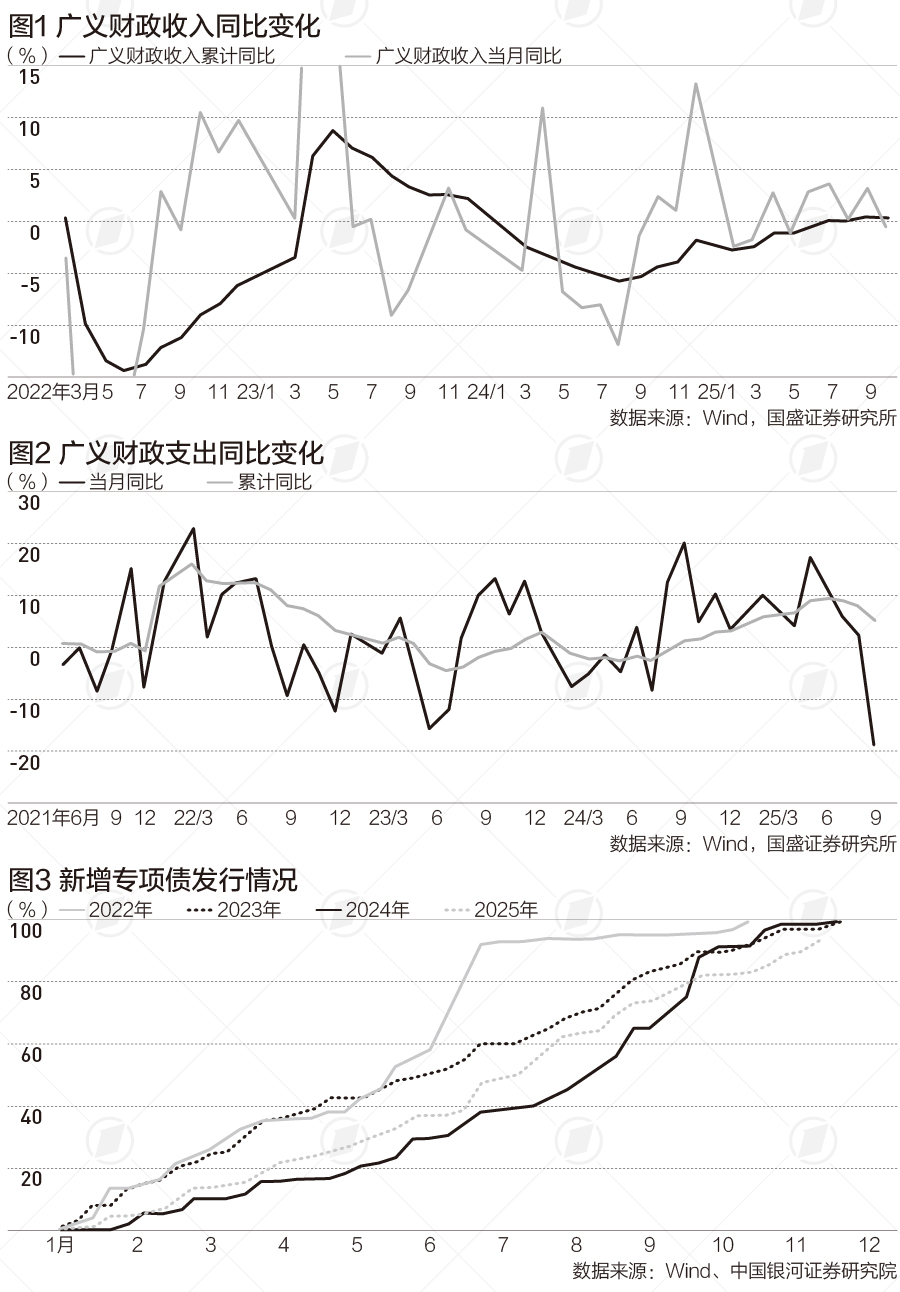
Core Viewpoint - China's fiscal policy has become more proactive this year, with fiscal spending maintaining a certain level of intensity, which supports the continuous recovery of the economy [3]. Fiscal Revenue and Expenditure - In the first ten months of this year, the broad fiscal revenue was approximately 22.1 trillion yuan, a year-on-year increase of about 0.2%, while broad fiscal expenditure was about 30.7 trillion yuan, a year-on-year increase of 5.2% [3]. - The broad fiscal expenditure exceeded revenue by approximately 8.6 trillion yuan, a year-on-year increase of 21% [3]. Fiscal Spending Structure - The structure of fiscal spending has shown a clear tilt towards the livelihood sector, aligning with the government's report advocating for more resources to be "invested in people" [4]. - In the first ten months, the general public budget expenditure was approximately 22.6 trillion yuan, with social security and employment spending reaching 3.8 trillion yuan, education spending at 3.4 trillion yuan, and health spending at 1.7 trillion yuan, all showing growth rates above the average of 2% [4]. Infrastructure Spending - Due to increased funding directed towards livelihood, infrastructure spending in the general public budget has seen an overall decline [5]. - Expenditures on agriculture, forestry, and water, as well as urban and rural community spending, decreased by 11.7% and 7.3% respectively [7]. Government Fund Expenditure - Government fund budget expenditure was approximately 8.1 trillion yuan, a year-on-year increase of 15.4%, primarily due to accelerated use of bond funds [7]. - The issuance of special bonds and long-term special treasury bonds has supported the commencement of numerous major projects, stabilizing investment and the economy [7]. Future Fiscal Policy Measures - To maintain a certain level of fiscal spending, new policies have been introduced, including allowing local governments to issue an additional 500 billion yuan in special bonds [9]. - As of mid-November, over 10 billion yuan in new special bonds had been issued, surpassing the total for October [9].


前10个月广义财政支出增速放缓至5.2%,年末两月待发力|财税益侃
Di Yi Cai Jing· 2025-11-20 12:28
Core Insights - China's fiscal policy has become more proactive this year, with fiscal spending maintaining a certain level of intensity to support economic recovery [2] - The broad fiscal expenditure has outpaced revenue growth, indicating a strong push for active fiscal policies [2][6] - Increased fiscal spending is notably directed towards social welfare, aligning with government goals to invest more in human resources [3][4] Fiscal Performance - In the first ten months of this year, broad fiscal revenue was approximately 22.1 trillion yuan, a year-on-year increase of about 0.2%, while broad fiscal expenditure reached about 30.7 trillion yuan, growing by approximately 5.2% [2] - The gap between fiscal expenditure and revenue was about 8.6 trillion yuan, marking a year-on-year increase of 21% [2] - The growth rate of broad fiscal expenditure aligns with the economic growth rate of 5.2% for the first three quarters, supporting stable economic performance [2] Social Welfare Spending - National general public budget expenditure for the first ten months was about 22.6 trillion yuan, with a year-on-year growth of 2% [3] - Key areas of social welfare spending, including social security and employment, education, and health, saw growth rates exceeding the average of 2%, with social security and employment spending increasing by 9.3% [3] - The government has allocated around 100 billion yuan in childcare subsidies for children under three years old, benefiting numerous families [3] Infrastructure Spending - Due to increased focus on social welfare, infrastructure spending within the national general public budget has generally declined [4] - Government fund expenditures, supported by local government special bonds and long-term special treasury bonds, have maintained rapid growth, facilitating the commencement of major projects [6] Debt and Future Projections - In the first ten months, government fund budget expenditure was approximately 8.1 trillion yuan, reflecting a year-on-year increase of 15.4% [6] - To meet the initial budget goals, a significant increase in expenditure is required in the last two months of the year, with projections indicating a need for a 12.9% year-on-year growth in general public budget expenditure [6][8] - New policies have been introduced to maintain fiscal spending, including allowing local governments to issue an additional 500 billion yuan in special bonds [8]
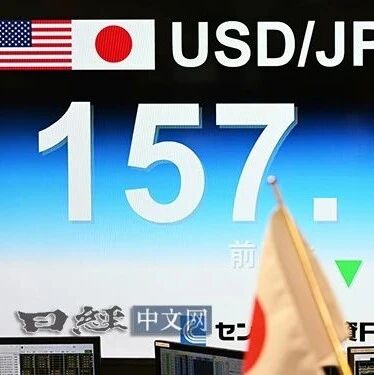
日元汇率兑美元跌至157日元区间
日经中文网· 2025-11-20 02:44
Core Viewpoint - The article discusses the depreciation of the Japanese yen against the US dollar and euro, driven by market concerns over Japan's fiscal deterioration amid the government's active fiscal policies. Group 1: Yen Depreciation - The yen fell to the 157 yen per dollar range on November 19, marking its lowest level in about 10 months since mid-January [2] - The yen also weakened against the euro, reaching over 181 yen per euro, indicating a new record low [2] - The depreciation of the yen is attributed to market fears regarding Japan's fiscal situation, leading to increased selling pressure on the currency [2] Group 2: Government and Central Bank Response - A meeting was held among Japan's finance minister, economic minister, and the Bank of Japan governor, but no specific discussions on yen depreciation or the strengthening of the dollar were reported [4] - The lack of mention regarding currency intervention by the government and the Bank of Japan has led to decreased market expectations for such actions [4] Group 3: Impact of US Federal Reserve Policies - The uncertainty surrounding the Federal Reserve's interest rate decisions has also influenced the yen's performance [6] - The minutes from the October Federal Open Market Committee meeting indicated that many participants expect to maintain the policy rate unchanged at least until the end of the year, with over 60% probability for this outcome in December [6]
科技当自强,五年再出发-从十五五规划初窥
2025-11-20 02:16
Summary of Key Points from Conference Call Industry and Company Overview - The conference call primarily discusses China's economic development goals and macroeconomic policies as outlined in the 14th and 15th Five-Year Plans, focusing on high-quality development and technological self-reliance [1][4][5]. Core Insights and Arguments - **Economic Growth Targets**: By 2035, China's per capita GDP is targeted to exceed $20,000, implying a nominal growth rate of approximately 3.5% and a real growth rate of about 4.17% over the next decade [1][2]. - **High-Quality Development**: The 15th Five-Year Plan emphasizes high-quality development and technological advancement, marking a shift from previous plans that prioritized economic growth alone [4][5]. - **Supply-Side Policies**: Future demand-side policies will focus on supply-side stimulation, such as providing financial support to enterprises and encouraging innovation, rather than direct fiscal stimulus [9][10]. - **Consumer Spending**: There is an increasing market focus on the consumer sector, with expectations for policies aimed at boosting consumer spending, although the effectiveness of these measures may be gradual [6][7]. - **Export Performance**: China's strong export performance in 2025 is attributed to the expansion into non-U.S. markets and increased overseas investment, rather than a strategy of "grabbing exports" [3][14][15]. - **Fiscal Policy Outlook**: Despite a projected fiscal deficit rate of 4.0% in 2025, the overall fiscal policy will remain prudent, focusing on enhancing fiscal efficiency and supporting national strategic tasks [12][13]. Additional Important Insights - **Technological Self-Reliance**: The emphasis on technological self-reliance indicates a significant shift in policy priorities, reflecting the need to enhance domestic capabilities in the face of global competition [4][5]. - **Impact of Global Economic Environment**: The anticipated shift towards expansive fiscal and monetary policies in developed countries by 2026 is expected to improve the global demand environment, benefiting China's exports [16]. - **Consumer Services Expansion**: Efforts to expand high-quality service consumption include large-scale events and reforms to reduce barriers to consumer spending, such as easing restrictions on car purchases [8][11]. - **AI and Economic Outlook**: The discussion on AI suggests that current valuations in the tech sector do not indicate a bubble similar to the 2000 internet bubble, as AI's impact on economic growth is still developing [17][18]. This summary encapsulates the key points discussed in the conference call, providing insights into China's economic strategies and the implications for various sectors.
日本遭遇股债汇“三杀”
Xin Hua She· 2025-11-19 11:52
在东京债券市场,日本长期国债普遍因遭到抛售而价格下跌,导致收益率不断上扬,接连突破历史高 点。19日,由于投资者购债意欲低下,作为长期利率指标的新发行10年期国债收益率一度升至 1.775%,为2008年6月以来最高。 在东京外汇市场,自高市当选日本自民党总裁进而当选日本首相后,日元重新进入下降通道,不断走 软。近日,由于媒体纷纷报道日本政府拟推出大规模财政刺激计划,日元贬值势头再度加剧,日元对美 元汇率下探至1美元兑换155日元左右。(完) 新华社东京11月19日电(记者刘春燕)由于日本首相高市早苗力推积极财政政策并主张保持宽松货币政 策等多重因素,投资者对日本政府财政状况恶化的忧虑不断上升,日本金融市场连日来遭遇股债汇"三 杀"。 截至19日,东京股市两大股指连续4个交易日下跌,日经股指累计下跌2700多点。投资者担心高市早苗 日前发表的涉台严重错误言论导致日中关系持续恶化,不仅百货、运输、酒店等与入境消费关系密切的 行业股票大跌,一些倚重中国市场的公司股票也因业绩前景难料遭到投资者抛售。此外,由于纽约股市 近日频繁调整,三大股指多次全面下跌,日本股市很多投资者选择获利了结、离场观望。 责任编辑:刘万里 ...
【环球财经】日本连续两日遭遇股债汇“三杀”
Xin Hua Cai Jing· 2025-11-19 09:55
新华财经东京11月19日电(记者刘春燕)由于日本首相高市早苗力推积极财政政策并主张货币政策应保 持宽松,市场对日本财政状况恶化的忧虑不断上升,日本最近两日连续遭遇股债汇"三杀"。 截至19日,东京股市两大股指连续4个交易日下跌,日经股指累计跌去2700多点。由于投资者担心中日 关系恶化,不仅百货、运输、酒店等与入境消费关系密切的行业股票大跌,一些在倚重中国市场的公司 也因业绩变得不透明遭到投资者抛售。此外,由于纽约股市近日频繁调整,三大股指多次全面下跌,很 多投资者选择获利了结、离场观望。 在东京债券市场,高市早苗上台以来,投资者对日本政府财政恶化的忧虑不断加深,各种期限的长期国 债普遍遭到投资者抛售,导致长债价格下跌、收益率不断上扬,接连突破历史高点。19日,由于投资者 购债意欲低下,作为长期利率指标的新发10年期国债收益率一度升至1.775%,创下2008年6月以来的最 高。 在东京外汇市场,10月3日日元对美元汇率还徘徊于1美元兑147日元区间,其后随着高市当选日本自民 党总裁并进而当选日本首相,日元重新进入下降通道,不断走软。近日,由于此间媒体纷纷报道日本政 府拟推出大规模财政刺激计划,市场对政府增发 ...
乘用车零售增速明显回落——每周经济观察第46期
一瑜中的· 2025-11-18 14:33
Economic Outlook - The macroeconomic environment shows mixed signals, with external trade indicators improving while domestic consumption and real estate sales decline [2][3][15] - The container throughput at Chinese ports has increased by 1.4% week-on-week as of November 9, with a four-week year-on-year growth of 8.9% [2][28] - Commodity prices, including oil, gold, and copper, have seen upward trends, with the South China Comprehensive Index rising by 0.9% [2][40] Consumer Demand - Retail sales of passenger vehicles have turned negative, with a year-on-year decline of 19% as of November 9, compared to a growth of 5.8% in October [3][15] - Real estate sales have worsened, with a 38% year-on-year drop in transaction volume across 67 cities in the first two weeks of November [3][15] - The average land premium rate has decreased, indicating a cooling real estate market [15] Production and Infrastructure - Infrastructure activity continues to decline, with cement shipment rates dropping to 33.4% in the first week of November, down from 38.2% year-on-year [3][19] - The asphalt plant operating rate has also decreased to 29%, reflecting a slowdown in construction activities [19] Trade Dynamics - The number of vessels departing from major Chinese ports has decreased by 3.3% year-on-year in mid-November, indicating a potential slowdown in trade [28] - Direct trade flow between China and the U.S. has seen a significant drop, with the number of cargo ships falling by 35.8% year-on-year [29] Price Trends - Domestic and international commodity prices have rebounded, with significant increases in gold, copper, and oil prices [40][41] - The second-hand housing market has experienced a notable decline, with first-tier cities seeing a 0.8% drop in listing prices [42] Interest Rates and Financing - Funding rates have slightly increased, with DR001, DR007, and R007 rising by 4.08bps, 5.43bps, and 2.68bps respectively as of November 14 [4][60] - The issuance of local government bonds has been updated, with a total of 102.6 billion yuan planned for the week of November 17 [46]

前10月财政“成绩单”:质效提升 支撑有力
Zhong Guo Jing Ying Bao· 2025-11-18 13:20
Core Insights - The article highlights the positive trends in China's fiscal operations from January to October, indicating a steady recovery in revenue and optimized expenditure structure, which supports high-quality economic development and modernization efforts [1][2]. Revenue Summary - From January to October, the national general public budget revenue reached 18.649 trillion yuan, a year-on-year increase of 0.8%, with a notable monthly growth trend [1]. - Tax revenue was particularly strong, amounting to 15.336 trillion yuan, reflecting a year-on-year growth of 1.7%, while non-tax revenue decreased by 3.1% to 331.26 billion yuan [1]. - Key tax categories showed growth, with domestic value-added tax at 588.58 billion yuan (up 4%) and corporate income tax at 391.82 billion yuan (up 1.9%) [1]. - The securities transaction stamp duty surged to 162.9 billion yuan, marking an 88.1% increase year-on-year, contributing to an overall stamp duty growth of 29.5% [1]. Expenditure Summary - National general public budget expenditure for the same period totaled 22.5825 trillion yuan, reflecting a year-on-year increase of 2% [2]. - Expenditure allocation favored social welfare and strategic sectors, with social security and employment spending at 377.42 billion yuan (up 9.3%), education spending at 341.17 billion yuan (up 4.7%), and health spending at 168.77 billion yuan (up 2.4%) [2]. - The focus on key areas such as technology, environmental protection, and social welfare demonstrates the government's commitment to stabilizing employment and improving living standards [2]. Policy Direction - The Ministry of Finance emphasizes the importance of proactive fiscal policies during the 14th Five-Year Plan period, aiming to support the realization of socialist modernization [3]. - Key strategies include maintaining a strong expenditure intensity, optimizing fiscal resource allocation towards high-quality development sectors, and ensuring policy coherence across fiscal, monetary, and industrial strategies [3].
建信期货国债日报-20251118
Jian Xin Qi Huo· 2025-11-18 11:58
行业 国债日报 日期 2025 年 11 月 18 日 研究员:何卓乔(宏观贵金属) 18665641296 hezhuoqiao@ccb.ccbfutures.com 期货从业资格号:F3008762 研究员:黄雯昕(国债集运) 研究员:聂嘉怡(股指) 021-60635735 niejiayi@ccb.ccbfutures.com 期货从业资格号:F03124070 宏观金融团队 请阅读正文后的声明 #summary# 每日报告 | | | 表1:国债期货11月17日交易数据汇总 | | | | | | | | | --- | --- | --- | --- | --- | --- | --- | --- | --- | --- | | 合约 | 前结算价 | 开盘价 | 收盘价 | 结算价 | 涨跌 | 涨跌幅 (%) | 成交量 | 持仓量 | 仓差 | | TL2512 | 116.070 | 116.220 | 116.450 | 116.460 | 0.380 | 0.33 | 88270 | 103541 | -3316 | | TL2603 | 115.850 | 116.010 | 116 ...
财政收入稳步回升
Jing Ji Wang· 2025-11-18 00:24
Group 1 - The core viewpoint of the article highlights the steady recovery of national public budget revenue, with a year-on-year increase of 3.2% in October, indicating a positive economic trend [1] - In the first ten months, the total public budget revenue reached 18.65 trillion yuan, growing by 0.8%, with a 0.3 percentage point increase compared to the previous nine months [1] - Tax revenue in October was 2.07 trillion yuan, reflecting an 8.6% growth, which supports the notion of a resilient economy [1] Group 2 - The stamp duty revenue for the first ten months was 378.1 billion yuan, showing a significant year-on-year increase of 29.5%, with securities transaction stamp duty rising by 88.1%, indicating an active capital market [2] - Key industries such as equipment manufacturing and modern services showed strong tax revenue performance, with notable growth in sectors like computer communication equipment manufacturing (12.7%) and scientific research services (14.8%) [2] - Total public budget expenditure for the first ten months was 22.58 trillion yuan, up by 2%, with significant increases in social security and employment (9.3%) and education (4.7%) expenditures [2] Group 3 - Government fund budget revenue decreased by 2.8% to 3.45 trillion yuan, while expenditure increased by 15.4% to 8.09 trillion yuan, driven by accelerated use of bond funds [3] - The article emphasizes the need for continued active fiscal policies to support key expenditures and stimulate effective demand, contributing to economic recovery and sustainable fiscal health [3] - The Ministry of Finance plans to enhance fiscal support in line with major strategic goals, maintaining spending intensity and utilizing various fiscal tools to support economic and social development [3]